Wednesday, 19 August 2026 Stay informed. No noise.

How To Invest In A Volatile Dollar Market?

The US dollar is the world’s most widely used currency, accounting for about 60% of global trade transactions. However, the dollar has been losing ground against other major currencies such as the euro, the yuan and the ruble in recent months. This has raised some concerns among investors who hold dollar-denominated assets or trade with dollar-based partners.

So you are wondering how to invest in a volatile dollar market? In this article, I will explain why the dollar has been weakening, how it affects different asset classes such as gold and stocks, and what strategies you can use to protect your portfolio and take advantage of the opportunities in a volatile dollar market.

Invest In A Volatile Dollar Market: Why Is The Dollar Weakening?

Before we look at how to invest in a volatile dollar market, we should look at what causes the dollar to weaken. The dollar’s weakness can be attributed to several factors, including:

  • The Federal Reserve’s accommodative monetary policy, which has kept interest rates near zero and expanded its balance sheet through quantitative easing. This has increased the supply of dollars and reduced their value relative to other currencies.
  • The fiscal stimulus measures enacted by the US government to support the economy during the COVID-19 pandemic, which have increased the budget deficit and the public debt. This has raised doubts about the long-term sustainability of the US fiscal position and its creditworthiness.
  • The recovery of the global economy from the pandemic-induced recession, which has boosted the demand for riskier assets such as emerging market currencies and commodities. This has reduced the demand for safe-haven assets such as the dollar.
  • The geopolitical tensions between the US and its rivals such as China and Russia, which have undermined the confidence in the US leadership and its role as the global reserve currency.

Read: Lessons From Silicon Valley Bank (SVB) and Lehman Brothers: How Islamic Financial Principles Offer More Robust Risk Management In Investments

Invest In A Volatile Dollar Market: How Does A Weak Dollar Affect Different Asset Classes?

Man Holding Us Dollar Bill

A weak dollar has different implications for different asset classes, depending on their exposure to currency fluctuations and their sensitivity to inflation. Here are some examples:

Gold

Gold is traditionally seen as a hedge against inflation and currency devaluation, as it retains its purchasing power over time. Therefore, gold tends to benefit from a weak dollar, as it becomes cheaper for foreign buyers and more attractive as an alternative store of value. However, gold is also influenced by other factors such as supply and demand dynamics, investor sentiment and opportunity cost.

For instance, gold underperformed the dollar in 2022, despite high inflation, due to lower demand from central banks and investors who preferred higher-yielding assets. Gold performed slightly worse than the US Dollar in 2022, with a return of -0.22%, while the US Dollar outperformed Gold by +7.87%. However, YTD performance has been impressive for Gold, as it gained +9.06% while the US Dollar lost -1.88%.

Stocks

Stocks are generally positively correlated with a weak dollar, as it boosts the earnings and competitiveness of US companies that derive a large portion of their revenues from overseas markets. It also makes US stocks more attractive for foreign investors who can buy them at a lower price. However, not all stocks benefit equally from a weak dollar.

For instance, companies that rely heavily on imported inputs or face strong competition from foreign rivals may suffer from higher costs and lower margins. Moreover, stocks are also affected by other factors such as earnings growth, valuation and market sentiment.

Bonds

Bonds are generally negatively correlated with a weak dollar, as it erodes the real value of their fixed income streams and makes them less appealing for foreign investors who face currency risk. It also increases the likelihood of higher inflation and interest rates, which reduce the present value of future cash flows and lower bond prices. However, not all bonds react similarly to a weak dollar.

For instance, short-term bonds are less sensitive to interest rate changes than long-term bonds. Moreover, bonds are also influenced by other factors such as credit quality, duration and liquidity.

Read: SPY vs SPUS: A 2023 Comparison of S&P 500 ETFs

What Strategies Can You Use To Invest In A Volatile Dollar Market?

Count Us Dollar Bill

Given the uncertainty and volatility in the currency market, it is important to adopt a diversified and flexible approach to investing. Here are some strategies on how to invest in a volatile dollar market, so that you can use to protect your portfolio and take advantage of the opportunities:

Diversify your currency exposure

One of the ways to invest in a volatile dollar market, is by holding assets denominated in different currencies or investing in currency-hedged funds or ETFs. This lets you reduce your exposure to currency risk and benefit from diversification benefits. You can also use currency derivatives such as futures or options to hedge your existing positions or speculate on currency movements.

The US Dollar has been weak this year, with a year-to-date (YTD) performance of -1.88% as of April 2023. This contrasts with the same period last year (Jan – Apr 2022), when the US Dollar appreciated by +6.03%. The overall performance of the US Dollar in 2022 was strong, as it gained +7.87% in value.

Adjust your asset allocation

Next on how to invest in a volatile dollar market, is by adjusting your allocation among different asset classes or sectors based on their relative performance and outlook in a weak or strong dollar environment, which lets you enhance your returns and reduce your risk. For instance, you may want to increase your exposure to gold or commodities if you expect further dollar weakness or inflationary pressures. Conversely, you may want to reduce your exposure to bonds or emerging markets if you expect a stronger dollar or higher interest rates.

The weakness of the US Dollar has benefited other major currency pairs, such as the EUR/USD, which rose by +2.94% (YTD) as of April 2023. This is a reversal from the same period last year (Jan – Apr 2022), when the EUR/USD fell by -5.78%. The overall performance of the EUR/USD in 2022 was poor, as it declined by -5.86% due to inflationary pressures on the Euro.

Seek professional advice

Final tip on how to invest in a volatile dollar market, is by consulting with a qualified financial advisor or planner who can assess your risk profile, investment objectives and time horizon. All this so you can get personalized recommendations on how to invest wisely in a volatile dollar market. You can also benefit from their expertise and access to various tools.

Smart investor should diversify their portfolio and allocate their assets according to their risk appetite and profit potential with such traditional assets.
Financial literacy is essential for an investor to grow their wealth.

Read: Investing With Recession Fears Looming, Are We Nearing Market Bottom?

About the Author

Mukhriz Mangsor

Mukhriz Mangsor, ACSI, MSTA, CFTe is currently the Head Global Market Strategist at Quantdynamic Research Company. His expertise includes financial education, financial institutions, and property trading with clients, including Brunei, Canada, Malaysia, Singapore, and the United States firms.

Increase Your Chances Of Getting IPO Via MITI Application

Initial Public Offering (IPO) is the process of selling shares of a private company to the public for the first time. Companies usually go public to raise funds for their expansion or to provide an exit opportunity for their early investors.

IPOs are highly sought after by investors because they can offer significant returns, especially if the company is successful. However, getting an allocation in an IPO can be a challenging task, but you can increase your chances of getting an IPO via MITI.

But What Is MITI?

The Malaysian government, through the Ministry of International Trade and Industry (MITI), provides a special avenue for Bumiputera investors to apply for IPOs. This special avenue is called the MITI Application, and it is only available to Bumiputera investors.

Increase Your Chances To Get IPO Via MITI Application

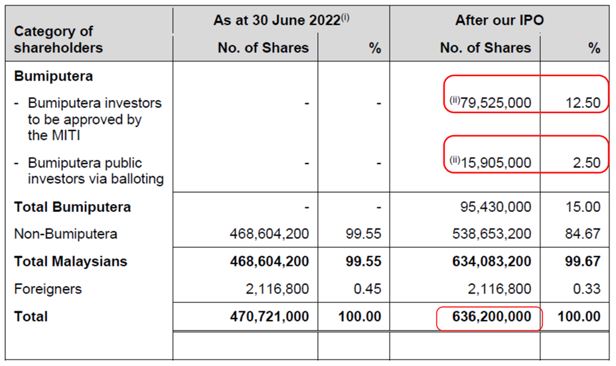
Source: Oppstar Prospectus

Bumiputera investors who apply for IPOs through MITI have a higher chance of getting the IPO via MITI application than through the normal public application process. The allocation of shares for Bumiputera investors through MITI is usually around 12% of the total shares allocated for all investors.

In contrast, the allocation for public applications is typically around 2.5% to 5%.

Read: Create Your Stock Watchlist With These Simple Steps

Benefit Of Applying IPO Via MITI Application

When applying for IPOs through MITI, Bumiputera investors can enjoy several benefits. Firstly, they can apply for IPOs first and pay later. This is because MITI allows investors to secure their allocation before making any payments, which is particularly advantageous if they do not have enough funds available at the time of application.

Secondly, Bumiputera investors only compete among themselves, which reduces the level of competition for the shares. This increases their chances of getting an allocation, particularly for popular IPOs that tend to be oversubscribed.

Thirdly, they can apply for IPOs earlier than through the normal application process, which means that they have a higher chance of securing shares at a lower price. Lastly, the higher allocation of shares for Bumiputera investors through MITI increases their chances of getting an allocation compared to applying through the public application process.

Read: Using The CANSLIM Formula To Choose Good Stocks

Disadvantages Of Applying IPO Via MITI Application

However, there are also some disadvantages to applying for IPO via MITI application. Firstly, investors cannot read the final prospectus of the company before applying. This can be a disadvantage because the prospectus contains important information about the company’s financials, business strategy, and risks, which can be useful for making informed investment decisions. Investors may have to rely on the preliminary prospectus, which may not contain all the relevant information.

Secondly, some IPO prices may not be available when applying for IPO via MITI application. This means that investors may not know the final price of the IPO until after they have applied. This can be a disadvantage if the final price significantly differs from the initial price range, affecting the investor’s investment decision.

Thirdly, the waiting time for the IPO shares to be allocated is usually longer than the normal application process, which can be a disadvantage if the investor needs the funds for other purposes or if the market conditions change significantly during the waiting period.

Lastly, investors who do not proceed with their application after being allocated shares may be subject to penalties, which can affect their creditworthiness and investment reputation.

Read: 7 Signs Of Bad IPO, Avoid Them If You See These Red Flags

Conclusion

In conclusion, the IPO via MITI application is a special avenue for Bumiputera investors to apply for IPOs in Malaysia. Applying through MITI can increase their chances of getting an allocation compared to the normal public application process. However, there are some disadvantages to applying through MITI, such as not being able to read the company’s final prospectus before applying and longer waiting times for the IPO shares to be allocated.

Investors should weigh the benefits and disadvantages before deciding to apply for IPO via MITI application or through the normal public application process.

Read: Guide To Apply For IPO In Malaysia (Via Maybank2u And CIMB Clicks)

5 Reasons Why We Lose Money In The Stock Market

A wonderful option to invest your money and increase your wealth is through the stock market. Success is not always simple to achieve, though. Despite their best efforts, many investors continue to lose money.

Here’s five reasons why we lose money in the stock market.

1. A Lack Of Study

The primary reason why we lose money in the stock market, is because we don’t conduct enough research before making an investment. Without thorough study, it’s possible that we won’t fully comprehend the business in which we are investing in, the sector in which it works, or the risks associated with it.

The more information you have about the business, the more prepared you will be to make wise investment choices.

Spend time studying the companies and their financials before investing in any stocks. To determine how financially stable it is, look at its balance sheet, income statement, and cash flow statement. Get a sense of the company’s overall performance and prospects for the future by reading news articles, analyst reports, and industry publications.

Read: Create Your Stock Watchlist With These Simple Steps

2. Emotions And Snap Judgements

Emotional Moment Man Sitting Holding Head Hands Stressed Sad Young Male Having Mental

The next reason why we lose money in the stock market is because we tend to make rash decisions and allow emotions to control them. It’s simple to get sucked into the hoopla around a hot stock or to freak out when the market declines.

But making investment decisions based on feelings rather than logic can be disastrous. Instead, make conclusions based on study and analysis while maintaining composure. Create a long-term investing plan and adhere to it, even when the market is declining.

Keep in mind that stock market investment is a marathon, not a sprint.

3. A Lack Of Diversity

Investing all of one’s capital in one or a small number of stocks is a common error made by novice investors. This technique has huge risks as well as high potential returns. You run the risk of suffering a substantial financial loss if the stock(s) you buy perform poorly.

Reducing stock market risk requires diversification. Invest in a variety of stocks from various sectors and companies, as well as in other asset classes such as bonds and real estate. This way, you have backup investments in case one doesn’t do well.

Read: Using The CANSLIM Formula To Choose Good Stocks

4. Market Timing

Stockbroker Shirt Is Working Monitoring Room With Display Screens

Another typical error that can contribute to why we lose money in the stock market, is by attempting to time the market. Investors may attempt to purchase low and sell high, but doing so is very challenging, if not impossible.

Focus on the long term rather than trying to time the market. Invest in businesses you are confident in and that have a proven track record of expansion. If you’ve made investments in strong companies with sound fundamentals, they’re likely to recover over the long run even if the market declines temporarily.

5. High Brokerage Fee

The final reason why we lose money in the stock market, is due to the exorbitant fees that might reduce our investment returns and cause losses. For trading, account maintenance, and other services, some brokers and investing platforms charge a certain fees.

Research costs are charged by various platforms and brokers before you invest. Look for inexpensive choices that lets you make investments with few costs but provide excellent services.

Some brokers have different products with different fee structures, so make sure you choose the right product that is suitable to your trading strategies and style. Not all cheap brokerages are good and not all expensive brokerages are useful to you.

In conclusion, investing in stocks can greatly increase your wealth, but you should proceed carefully and adopt a long-term perspective. To reap the rewards, do your homework, don’t make snap decisions, diversify your investments, keep an eye on the long term, and hunt for affordable options. You may improve your chances of making money and preventing losses in the stock market by paying attention to these suggestions.

Now you know why we lose money in the stock market, let’s do our best to avoid it.

Read: 7 Signs Of Bad IPO, Avoid Them If You See These Red Flags

SC Allows Dealer’s Representatives To Expand Scope And Services

The Securities Commission Malaysia (SC) has introduced a framework that will benefit dealer’s representatives (DRs) in the capital market. The new framework, which took effect on 14 April 2023, will allow them to expand their scope of activities and roles beyond just dealing in securities.

The SC recognises the importance of promoting competition and enhancing the quality of services in the capital market. In this regard, this framework will also provide DRs greater flexibility to develop their careers and meet the evolving needs of investors.

In addition to facilitating share transactions for their clients, DRs who meet certain requirements can apply for additional licenses to engage in a variety of activities, such as investment advice, financial planning, restricted dealing in unit trust and dealing in private retirement schemes. The new framework also removes the requirement for DRs to be employed on a full-time basis.

These flexibilities are only available to DRs who have been licensed for more than five years and meet the competency requirements for the relevant regulated activity. To ensure effective supervision and oversight of DRs performing these additional regulated activities, they are required to be undertaken within the same broking firm or within its group of companies.

The expansion of DRs permitted activities is facilitated through amendments to Chapter 4 of the Licensing Handbook. The Licensing Handbook and accompanying FAQ are available on the SC website here.

About the Securities Commission Malaysia

The Securities Commission Malaysia (SC), a statutory body reporting to the Minister of Finance, was established under the Securities Commission Malaysia Act 1993. It is the sole regulatory agency for the regulation and development of capital markets. The SC has direct responsibility for supervising and monitoring the activities of market institutions, including the exchanges and clearing houses, and regulating all persons licensed under the Capital Markets and Services Act 2007. More information about the SC is available on its website at www.sc.com.my. Follow the SC on twitter at @SecComMy for more updates.

ICMR Research Series: How Millennial And Gen Z Malaysians Are Getting Information On Finance And Investments

In the first article in our series, we took a closer look at the current financial attitudes and behaviours of millennials and Gen Z Malaysians. Based on findings from ICMR’s nationwide survey, we highlighted that the investment behaviours of young investors could be grouped into three categories linked to differences in their income, financial knowledge or confidence, and risk tolerance.

Beyond these individual differences, it is also important to understand how broader social trends and structural issues could shape investment preferences and behaviours. This includes media consumption trends, as young investors increasingly turn to digital sources of information, which could impact how they make financial and investment decisions.

Online Channels Are Preferred Sources

The Internet or online resources are the most popular source of information on investment products, reported by 69% of respondents in ICMR’s survey. Within this group, Facebook/Instagram (75%), websites/blogs (68%), and YouTube (65%) are the most frequented online platforms. The preference for online sources of information is particularly more prevalent among those under 30 years old.

These findings are unsurprising as the younger generations grew up during the Internet age and feel more comfortable conducting their online lives. Millennials generally led the adoption of new technology, and a McKinsey study in the Asia Pacific found that 50 to 60% of the primary influence in brand decisions for Gen Zs comes from social media and online sites.

ICMR Article 2 Figure 1
Figure 1: Source of Information (Data Source: ICMR)

But while online platforms like Instagram and YouTube provide an opportunity to reach out directly to millennials and Gen Zs, they do not always reach those who, ironically, may need this information the most. Although the Internet is abundant with resources catered for different levels of financial literacy, most of these resources still require users to seek out this information actively.

“I know there [are] a lot of videos out there, but I find most of it boring or too long. I tune out after a few minutes. I just want something easy to understand. It helps if I don’t have to seek it out actively.”

– Haris, 25, journalist

Confirmation Bias In New Social Networks

In contrast to other social platforms, TikTok delivers content to its users using a recommendation system. What users see on their TikTok feed is less determined by who they follow but curated by an algorithm based on their interests. Some respondents interviewed by ICMR mentioned they came across financial education videos on TikTok even without actively seeking financial information online.

Social networks that deploy recommendation systems thus provide a promising opportunity to reach target segments that do not actively seek out financial information. Nonetheless, these same segments might not have the right skills or knowledge to assess the trustworthiness of all the financial content they come across and determine the most suitable information for themselves.

For instance, the #fintok hashtag on TikTok (which has had more than 500 million views at the time of writing) includes everything from basic budgeting tips to advice on specific stock picks. Just as too little information can impact decision-making, too much information can lead to selective information filtering due to confirmation bias or the tendency to reinforce pre-held beliefs.

“I’ve never looked for financial information before, I don’t consider myself very financially literate. But I saw a TikTok video on money-saving tips and then slowly started watching more personal finance content there. My friends and I also started talking about property investments and passive income after watching it on TikTok.”

Farish, 30, Cafe manager

ICMR Article 2 Image 1
 #FinTok, also known as Financial TikTok, is a subcommunity of TikTok users who provide advice, education, and discussions on personal finance via short video clips (Image Source: SECCL)

Increased Susceptibility To Financial Scams

Technology is a double-edged sword, especially regarding impacting financial behaviour. ICMR previously explored this in our report, Enhancing Financial Literacy in a Digital World: Global Lessons from Behavioural Insights and Implications for Malaysia. The report highlights how technological advances introduce new pitfalls for investors and open up potential avenues for fraud.

By applying behavioural concepts to financial decision-making, we can better understand how investors become susceptible to scams. Social preferences refer to the notion that community members’ and peers’ savings and investment decisions have a causal effect on individual decisions through social interactions or pressures for conformity, acceptability, and social identity.

Leveraging social preferences might help engage investors but can make them more susceptible to misinformation and herding behaviour. Herding behaviour is when people do what others do instead of using their information or making independent decisions. This could lead to individuals being involved in scams, misled, or creating investment bubbles.

For example, Malaysia’s Ombudsman for Financial Services (OFS) said in 2020 that the rise of financial scams is due to scammers using social engineering tactics to exploit victims’ financial insecurities during the pandemic. Since social networks provide access to a wealth of personal information, scammers use this data to target and manipulate consumers with higher vulnerability easily.

ICMR Article 2 Image 2
In behavioural economics, social preferences describe the human tendency to care about not only one’s material payoff but also the reference group’s payoff (Image Source: iStock / oatawa)

Developing Financial Literacy As The Way Forward

In today’s fast-paced and information-overloaded environment, it is becoming more important for young investors to improve their financial literacy proactively. The rise of non-traditional and unregulated sources of information means investors need to take ownership of their financial decisions with the right skills, knowledge, and tools to make better investments.

Fortunately, many online financial courses and training are available for individual capacity-building. Leveraging behavioural insights can also provide new ways to think about managing finances. Developing an awareness of their biases and how they can be exploited can help young investors build safer, more strategic long-term investing habits.

This article is part of a content series by the Institute for Capital Market Research (ICMR). Follow ICMR’s Facebook page to stay updated on behavioral tips and insights for better investing habits. To learn more about ICMR’s research on millennials and Gen Z, visit www.icmr.my or download the full report.

About the Authors

ICMR Datin Aida
Datin Aida Jaslina Jalaludin, Head of Research, ICMR
ICMR Nadhirah Ibrahim
Nadhirah Ibrahim, Research Analyst, ICMR

Fed Turns The Tide In War On Inflation, But It’s Too Early To Declare Victory

There has been something for everyone in the recent economic data from the US. Rate hawks concerned about inflation and a tight labour market can point to a fall in the unemployment rate to 3.5%, close to the lowest level on record.

Meanwhile, doves looking for evidence that the Federal Reserve (Fed) has already done enough will highlight the moderation in payroll growth and average hourly earnings, alongside a fall in job openings. Upward revisions to the weekly initial unemployment claims figures add to the case that the labour market is responding to tighter monetary policy.

However, whilst the labour market is showing signs of cooling, it remains hot. The number of job openings has fallen below 10 million, but with just under six million unemployed, the ratio of openings to applicants is historically high at 1.7. Likewise, initial unemployment claims may have moved up, but at around 200,000, they are well below the levels associated with a loose labour market.

The labour market is headed in the right direction but needs to slow considerably further to turn the direction of policy. Judging from the Fed’s latest projections from the 21-22 March meeting of the Federal Open Market Committee this would mean an unemployment rate of at least 4.5%, one percentage point (pp) above current levels.

At the same meeting, the Fed also discussed the problems in the banking sector and the potential impact of tighter credit conditions on the economy. As chair Jerome Powell remarked in his post-meeting press conference, these events are the equivalent of at least one hike in rates and led the Fed to dial back on a bigger rise in March.

Markets have stabilised since then and fears of a credit crunch have receded. Alongside the continuing tight labour market, this might encourage the Fed to revert back to a more aggressive tightening path. We would note though, that despite more benign financial conditions, the actual bank lending numbers are weak, with loans to business, real estate and consumers all decelerating sharply over the past three months.

Although the failure of SVB and other regional banks will have played a role, the origins of the weakness in lending began earlier as banks had been tightening credit conditions for some time. The Senior Loan Officer survey showed a considerable tightening and fall in demand for loans in all these areas back in January this year.

This supports our view that although the problems in the banking sector have idiosyncratic causes, they are also a symptom of monetary tightening impacting the economy. They are a classic sign that policy is biting. As the IMF indicated at their current gathering, we should be wary of treating recent bank failures as isolated incidents.

Meanwhile, inflation is falling as headline CPI edged up just 0.1% in March after a 0.4% rise in the previous period, dragging the annual comparison down from 6% to 5%. However, the softening was almost entirely due to the food and energy categories, with food prices flat and gasoline prices falling 4.6% over the month.

Taking these out of the equation, underlying inflation remained firm. Core inflation rose by 0.4%, broadly unchanged from its pace over the prior three months. Much of this stickiness has been concentrated in the rent of shelter category, which comprises 40% of core CPI. This is moderating, albeit slowly, given the infrequency at which rents are negotiated.

To get a better gauge of domestic price pressures, our preference is to focus on core services less rent of shelter, given how closely it tracks labour market conditions. Whilst an admittedly noisy and narrow-based measure, it has trended down since the middle of last year and is now running at around 4% on a three-month annualised basis.

Even so, along with the tightness of the labour market, this is likely to be uncomfortably high for the Fed. Barring another major bank failure, we expect policymakers to focus on inflation and raise rates by another 25 basis points at their next meeting on 3 May. Beyond this, if the recent softening in labour demand is sustained as we expect, then inflation should moderate more convincingly, reassuring the committee that further policy tightening is not required.

By Keith Wade, Chief Economist & Strategist, Schroders & George Brown, Economist

Financial Planning Firms Clone Scams

The public is advised to be wary of dubious investment schemes that use the name of legitimate financial planning firms. Please check the Securities Commission Malaysia website for the latest Alert List.

The current modus operandi of the scammers are:

  1. Use financial planning companies key names on bogus companies to confuse the public,
  2. Add members of the public to social media chat groups while pretending to be represent legitimate financial planning firms,
  3. Offer dubious investment schemes that promise high returns,
  4. Post bogus investor testimonials to show proof of transfer receipts and making profits to gain the confidence of potential victims.

It has also come to the attention of the Financial Planning Association of Malaysia (FPAM) that nine financial planning firms who are FPAM’s Corporate Members had their names cloned to promote illegal schemes. Their actual names are:

  1. Wealth Vantage Advisory Sdn. Bhd. (eCMSL/A0349/2018)
  2. Genexus Advisory Sdn. Bhd. (eCMSL/A0338/2017)
  3. Excellentte Consultancy Sdn. Bhd. (eCMSL/A0320/2013)
  4. Alpine Advisory Sdn. Bhd. (eCMSL/A0362/2020)
  5. UOB Kay Hian Securities (M) Sdn Bhd (eCMSL/A0018/2007)
  6. CC Advisory Sdn. Bhd. (eCMSL/A0342/2017)
  7. Harveston Wealth Management Sdn Bhd (CMSL/A0275/2010)
  8. iFast Capital Sdn. Bhd. (eCMSL/A0229/2008)
  9. Kenanga Investors Berhad (eCMSL/A0227/2008)

To protect yourselves from being scammed, please do the following before making any payments or investments:

Anyone who have fallen victim to these scams should do the following:

  1. Immediately report to the National Scam Response Centre’s (NSRC) by calling their hotline 997
  2. Report to Securities Commission Malaysia (SC)

This article is brought to you by Financial Planning Association Of Malaysia (FPAM).

FPAM Logo

FPAM is a non-profit organization with a vision and mission to establish the global CFP CERT TM mark as the leading symbol of excellence for personal financial planning and to promote its recognition as a profession to benefit all Malaysians. We also strive to promote Financial Literacy across the breath of the population of Malaysia.

Bursa Malaysia And Petronas Sign Memorandum Of Collaboration

Bursa Malaysia (“Exchange”) signed a Memorandum of Collaboration (“MOC”) with PETRONAS to help drive environmental, social, and corporate governance (ESG) adoption and practices through Bursa Malaysia’s Centralised Sustainability Intelligence Platform (“Platform”). Working in collaboration with the London Stock Exchange Group (“LSEG”), Bursa Malaysia is developing and testing the Platform which can allow corporates and their listed or non-listed suppliers, both domestically and internationally, to calculate their carbon emissions impact and disclose standardised, common ESG data.

The purpose of this Platform is to ease companies in their sustainability disclosures and encourage effective management of their carbon emissions, including those from their supply chain, while facilitating decarbonisation through banks’ green financing products and services.

With the formalisation, PETRONAS would be participating in the Early Adopter Programme (“EAP”) of the Platform to advocate standardised ESG reporting and disclosures while exploring creation of further value throughout its supply chain. Participation in the Platform is envisaged to further reinforce adoption among Malaysian companies through improved ESG data transparency and interoperability.

PETRONAS will continue to leverage technology and digital to accelerate ESG adoption and readiness across its supply chain to ensure sustainable operational and commercial excellence. These efforts shall be supported by University Teknologi PETRONAS with its fundamental research and academic exchanges.

The MOC was signed by Datuk Muhamad Umar Swift, Chief Executive Officer of Bursa Malaysia and Datuk Tengku Muhammad Taufik, President and Group Chief Executive Officer of PETRONAS and witnessed by Wong Chiun Chiek, Director, Bursa Intelligence and Aadrin Azly, Vice President of Group Technology and Commercialisation, PETRONAS.

Datuk Muhamad Umar Swift said, “I applaud PETRONAS, being custodian of Malaysia’s natural oil and gas reserves, in raising the bar to promote sustainable practices in the energy sector. The Centralised Sustainability Intelligence Platform deployed for the collaboration is intended to facilitate and ease PETRONAS’ decarbonisation efforts across its supply chain. We encourage other industry captains, particularly those with significant stakes in the global supply chain, to also tap into this avenue and take the helm for change within their respective verticals.”

Datuk Tengku Muhammad Taufik said, “PETRONAS strongly believes that a just and responsible energy transition can only be achieved when stakeholders within and across sectors work together. Critically, partnerships with forward-looking entities like Bursa Malaysia will offer a valuable avenue for the entire OGSE sector to further embrace and strengthen ESG compliance for operational improvements. This is increasingly unavoidable to preserve a license to operate in a rapidly transforming energy landscape. Amidst an ever-intensifying push for a lower-carbon future, PETRONAS is determined to continue advocating good governance and transparency among the oil and gas players towards becoming a trusted ESG partner to deliver energy responsibly in a secure, affordable and sustainable manner.”

Datuk Muhamad Umar Swift added, “Bursa Malaysia is also delighted to have CIMB Group on board for this initiative, continuing our partnership with them under the #financing4ESG programme since May 2022. As part of this collaboration, CIMB Group will offer sustainable supply chain financial solutions to help businesses in PETRONAS’ supply chain adopt low carbon and sustainable practices.”

This follows the recent signing of Bursa Malaysia’s Memorandum of Collaboration with UMW Corporation Sdn Bhd and Malayan Banking Berhad.

About Bursa Malaysia

Bursa Malaysia is an exchange holding company incorporated in 1976 and listed in 2005, and has grown to be one of the largest bourses in ASEAN today. Bursa Malaysia operates and regulates a fully-integrated exchange offering a comprehensive range of exchange-related facilities, and is committed to Creating Opportunities, Growing Value. Learn more at www.bursamalaysia.com.

About PETRONAS

We are a dynamic global energy group with presence in over 50 countries. We produce and deliver energy and solutions that power society’s progress in a responsible and sustainable manner. We seek energy potential across the globe, optimising value through our integrated business model. Our portfolio includes cleaner conventional and renewable resources and a ready range of advanced products and adaptive solutions. Sustainability is at the core of what we do as we harness the good in energy to elevate and enrich lives. People are our strength and partners for growth, driving our passion for innovation to progress towards the future of energy sustainability.

Bob’s Dilemma: How To Convert Highly Illiquid Assets To More Liquid And Easily Realisable

The following story is based on an actual series of events, with some names and circumstances fictionalised. Any similarity to any person’s name, character, or history is coincidental and unintentional. It is about how to convert highly illiquid assets to more liquid and easily realisable.

Bob and Leonard were the best of buddies. They did everything together in school and through university, including courting the same girl until she decided on Leonard, whereupon Bob graciously withdrew.

After graduation, Bob worked as a lawyer while Leonard became an engineer. After several years, Bob made a name for himself in law practice, while Leonard decided to leave his job and strike out as an entrepreneur.

With some inheritance capital and savings, Leonard bought a small but profitable boutique hotel in Kuala Lumpur. At the same time, he embarked on some small development projects building shophouses, small industrial lots and housing schemes in the Klang Valley.

Five years later, he had the opportunity to purchase a piece of land to build a 200-room resort hotel in Penang, and as this needed a substantial amount of money, he approached Bob to help arrange to finance. Bob recognised the project’s viability and managed to help him secure financing, as well as personally putting up 40% of the capital required by Leonard.

The hotel was completed and began making money consistently. The company that developed the hotel soon embarked on the construction of an adjoining tower of 150 apartment suites, which units were slowly released for sale.

No dividends were paid as profits generated from the hotel were ploughed back into the company to finance the apartment tower. Sales of the units had been strong, reaching 70% until the pandemic hit.

By this time, Bob was in his 50’s and thinking of retirement. During the pandemic, he started thinking a lot about succession. What if he passed on suddenly? How would his family access his assets?

Read: How A Buy-Sell Agreement Can Help Business Partners In The Future

Estate Planning Is Crucial: Learn How To Convert Highly Illiquid Assets To More Liquid

Business Agreement Sign

He reached out to me and got an estate plan worked out for when he was not around – some assets to be distributed through his will while some substantial ones were put into a living trust to be distributed in stages to avoid overspending by the beneficiaries. We didn’t discuss yet on the topic of how to convert highly illiquid assets to more liquid.

But what niggled him was the 40% stake he had in Leonard’s company. His family was unfamiliar with Leonard or his business. Bob realised that after his demise, the close relationship, trust and understanding between the two shareholders would be gone. Which was like saying the two shareholders would be strangers to each other.

He was worried that his stake, which was now substantial in value, may become worthless after his death in that his family, as minority shareholders, would not be able to influence dividend pay-out, if any, and the company’s direction. And no one other than Leonard would buy a 40% stake at a fair price.

He felt it would be difficult to impose on Leonard to buy his stake at a time when he needed to fund his business expansion. Hence he felt the need to convert highly illiquid assets to more liquid.

Read: Money Caused Breakup Among Four Close Friends, That’s Why it Is Important To Plan For The Succession Of A Business

Convert Highly Illiquid Assets To More Liquid And Easily Realisable

Business People Signing Contract

He talked to me about his dilemma and wondered whether I had a solution. I inquired about the details of the company assets and realised that his solution lay on how to convert highly illiquid assets to more liquid.

So, I suggested that he propose to Leonard to swap his shareholding with unsold units that Leonard held. He gave a bit of a stunned reaction and said: “I should have thought of that.” And we both worked out what we thought was a fair exchange ratio, using cost instead of profit element (avoiding the need to revalue the hotel and apartment suites).

We then brought the idea to Leonard, who liked the idea of being free from pesky shareholders if Bob was no longer around, and at the same time, getting rid of unsold stocks. A buy-sell with a trust was set up with our trust company based on the transaction carried out according to the agreed exchange ratio upon Bob’s death or mental incapacity.

As it turned out, the solution worked after Bob had multiple strokes last year and had to be taken care of by his family, using proceeds from the sale of the apartment suites. Sometimes, I think the best solution is the simplest one.

In this case, it is about how to convert highly illiquid assets to more liquid and easily realisable.

Read: Hard Facts About The Executor Of A Will In Malaysia

About Rockwills International Group

Wisma Rockwills

Rockwills International Group, now in its 28th year, pioneered professional will writing in 1995 and has since evolved into the leading estate planning specialist in the country. It is today the largest provider of solutions and support services in trusts, succession, management and distribution of wealth. It has shareholders’ funds exceeding RM50 million. It has done over 280,000 wills and 15,000 trusts and holds more than RM25 billion in assets under trust.

Empowering Gen Z To Work Effectively For Your Organization

Generation Z is becoming an increasingly influential group to the ever evolving 21st century workforce. What truly motivates this cohort ranging between 18-24 years old to actively participate in their workplace? How do organizations keep them happy and motivated? These are some of the questions that arise when we zero into empowering Gen Z workers.

Having just stepped into corporate life, they are now at crossroads as they find themselves struggling to adapt to the demands of remote work. According to research, over 33% said that working from home has adversely affected their work life balance and suggest that companies provide necessary tools for them to be more efficient in performing remote work.

Unlike millennials and baby boomers, they are motivated by an empowering work culture (29.4%), growth potential (28.2%), benefit packages (11.6%), high salary and raises (15.3% as well as personal relationships with co-workers (15.55%).

Many in fact, prioritize the well being of their mental health, with 82% citing they want mental health days which is a foreign concept to many HR practitioners. 73% cite that they in fact feel alone when it comes to remote work.

Which is where, as we adapt to the hybrid work era, corporations and employers must decide if setting strict guidelines on when and where employees can work or providing true flexibility and autonomy is the best way to engage and motivate employees. Especially with more Generation Z cohorts joining the workforce and preferring the latter, reports PwC’s Global Workforce Hopes and Fears Survey 2022.

Therefore, in order to truly maintain the hybrid working balance, here are some suggestions to navigate Mondays to Fridays to allow a balance of both autonomy but also retain some semblance of flexibility.

Meet-Up Mondays

Try kick starting the week with a collaborative team meet-up on Mondays, this can definitely be done virtually or otherwise. Success in hybrid work means rethinking collaboration, and according to a recent

McKinsey study, good workplace performance and higher employee job satisfaction are experienced by companies that prioritize collaborative and communicative environments.

A Jabra study reveals that collaborative technology, according to 84% of knowledge workers worldwide, will result in a workforce that is more meeting equity friendly.

Collaboration means giving your employees a voice to show what they are capable of bringing to the table, so remember to not shut them out.

Traveling Tuesdays

It’s Tuesday, and employees might be feeling the Tuesday blues already. Terribly long and squeezy commutes to the office for instance may cause stress and anxiety, compared to those who undergo shorter commutes or no commutes at all, according to a report fro[1] m the U.K.’s Office of National Statistics.

The survey findings of a McKinsey study show that more than half of the workers expressed their desire for their companies to implement a more adaptable hybrid virtual working arrangement.

In order to ensure that the hybrid experience is consistent throughout the company, regardless of where they are working, 68% of employees worldwide preferred that their employer supplied them with standardized, professional technology instead of forking out their own money for it.

According to Jabra’s research, 68% of employees preferred if they were outfitted with standardized, professional technology. The Jabra Evolve2 Series is one such device that keeps employees connected and productive with world class audio engineering.

Wireless noise-canceling audio devices like the Jabra Evolve2 Series will enable employees to maximize their hybrid workspace options without sacrificing productivity.

Third Space Wednesdays

As trust between employees, and supervisors grows, more individuals are beginning to work from locations that prove to be most convenient for them. The cafe, on the bus, while waiting for your laundry to be done, or even in your car, working from anywhere you pleased could be an absolute dream given the right tools to turn any space into a productive workplace.

Prioritizing your mental health and wellbeing comes up top on the list in ensuring that you are able to contribute effectively despite the setting you work from. According to a report from McKinsey, burnout continues to be a recurring effect when it comes to hybrid work with claims from over 49% of employees globally.

So try generating a workspace that energizes your employees and yourself as well as invest in good audio and video technology that will enable a productive third-space working.

Focus Thursdays

While working from home, the office or in a public space, background noises such as colleagues chattering, slamming doors, pots clanking in the kitchen, and so on—can distract employees.

Distraction may probably be due to the fact that one is half-focused. Try accomplishing one thing at a time and not overwhelm yourself with multiple tasks all at once.

An effective way to do this is to basically organize them according to top priority. According to a Harvard Business School review, creating a to-do list enables you to recollect tasks in hand that are needed to be accomplished and this eases the stress of having to manually remember them. So go ahead and incorporate colors or checkboxes just to make the process more fun. Additionally, using online sticky notes or google task bars can work just as well.

Home Fridays

Who doesn’t love Fridays? While still working on a hybrid mode, employees might turn down their moodiness a notch since it’s basically the start of the weekend. But despite that ‘TGIF’ feeling, there may still be a long list of back-to-back conference calls and team meetings to attend to.

According to a global survey of executives, employee experience experts, and knowledge workers, about 76% expected an increased use of video meetings as a result of the Covid-19 pandemic. Understandably, since teams do not get to see one another face-to-face during hybrid working, the best way possible to ensure connectivity and engagement is definitely to switch on the video camera.

Therefore, using the right tools to make sure we always look and feel our best is essential, and built-in cameras on our phones and laptops won’t be enough for a more long-term hybrid working arrangement.

According to research, 73% of Gen Z have cited they feel lonely while working remotely. This is where balancing workdays as well as premium video conferencing equipment such as The Panacast 20, enables them to feel included and represented during meetings. 

More than ever, leaders must now embrace flexibility, by not only allowing employees to do so but also enabling them to.

Seeing how more Generation Z natives are entering the workforce, the need to grow accustomed to the hybrid work ways is important. Therefore gradually empowering them through technology that could produce greater engagement and better retention is the way to go.

By Agnes Koh, Regional Product Marketing Manager, APAC, Jabra.

Agnes Koh Regional Product Marketing Manager APAC At Jabra 1024

About Jabra

Jabra Logo

Jabra is a world leading brand in audio, video, and collaboration solutions – engineered to empower consumers and businesses. Proudly part of the GN Group, we are committed to bringing people closer to one another or to whatever is important to them. Jabra engineering excellence leads the way, building on 150 years of pioneering work within GN. This allows us to create integrated tools for contact centers, offices, and collaboration to help professionals work more productively from anywhere; and true wireless headphones and earbuds that let consumers better enjoy calls, music, and media. GN, founded in 1869, operates in 100 countries and delivers innovation, reliability, and ease of use. GN employs more than 7,500 people and in 2022 reported annual revenue of DKK 18.7bn. GN Audio accounts for DKK 12.5bn.

GN brings people closer and is Nasdaq Copenhagen listed. www.jabra.com