Wednesday, 5 August 2026 Stay informed. No noise.

RAM: Malaysian banks on steady footing despite external pressures

RAM Ratings maintains a stable outlook on the Malaysian banking sector in conjunction with the release of its latest sector commentary, Banking Insight 2025 – Maintaining Momentum.

While uncertainties from US protectionist measures and ongoing geopolitical tensions could spill over to the domestic economy, it is still too early to assess the full extent of these effects. With the US and China being key trading partners of Malaysia (approximately 14% of Malaysia’s total value-added production), the retaliatory tariff contest may dampen the positive trade momentum and Malaysia’s growth trajectory.

“Despite these external challenges, we anticipate banks’ credit profiles to hold steady. Banks are also entering the year in strong shape, with still-solid capital buffers and asset quality at its most robust ever,” said Wong Yin Ching, RAM’s Co-head of Financial Institution Ratings.

Key expectations:

  • Loan growth to hold steady at 5.5% in 2025. Household loans may ease slightly but will likely be the main driver of loan growth, while business loans increase from infrastructure projects and investments.
  • Capital reverting to pre-pandemic levels. The industry’s common equity tier-1 capital ratio declined to 14.3% as at end-2024 (2020-2023 average: 15.3%; end-2019: 14.6%), although still robust. Banks are cautiously raising dividends, with most estimating the impact of new Basel III reforms to be manageable.
  • GIL ratio to remain stable at 1.4% this year. The system’s gross impaired loan (GIL) ratio hit a historic low of 1.44% as at end-2024. Prudent underwriting and potential write-offs will help sustain the GIL ratio amid new challenges.
  • Funding and liquidity profiles to stay sound. As loan growth outpaced deposit growth, the sector’s loans to deposits ratio surpassed 90%. Other metrics like the liquidity coverage ratio and net stable funding ratio were kept healthy.
  • Moderate earnings increase in 2025. While 2024’s non-interest income surge may not repeat, banks are on track for moderate profit growth from stable credit expansion and a low credit cost of around 20 bps.

RAM’s GDP growth expectation of 4.0%-5.0% for 2025 (2024: 5.1%), though slower, will be driven by domestic demand given favourable labour market conditions and accommodative interest rates.

Investment activity will gain from progress on multi-year infrastructure projects and greater realisation of record-high levels of approved investments last year, as well as the ongoing rollout of catalytic initiatives under the national master plans. These factors are likely to stimulate business lending. On the retail front, home financing will continue to be a major growth contributor while auto lending is anticipated to normalise in line with the lower total industry volume forecast for 2025. “Beyond these, the overall loan growth trajectory will also inevitably depend on how global external risks and domestic adjustments to fuel subsidies and electricity tariffs unfold,” Wong adds.

On the asset quality front, the weighted average credit cost ratio of eight selected local banks rated by RAM eased further to 18 bps in 2024 (2023: 23 bps). Banks’ loan loss coverage (with regulatory reserves) is strong, with the average of the eight banks improving to 143% as at end-2024 (end-2023: 134%)
“Malaysian digital banks are also making a nascent mark on the industry, with all three operational banks ramping up deposit gathering efforts over the past year, driven by high-interest savings accounts,” said Sophia Lee, RAM’s Co-head of Financial Institution Ratings. Digital banks have also recently expanded their services to include lending, strategically focusing on specific customer segments.

Expectedly, all three digital banks are still far from breaking even, with quarterly trends indicating that losses have yet to peak in view of high set-up costs. “The key hurdle for these banks lies in retaining tech-savvy and price-sensitive customers in a competitive market while managing acquisition costs and scaling up without assuming significant risks. Shareholders have so far demonstrated strong financial support, with all three players receiving additional capital injections in 2024,” Lee adds.

RAM’s Banking Insight is available for download at www.ram.com.my.
Bursa Malaysia designates centralised sustainability intelligence platform for reporting

Bursa Malaysia Berhad (“Bursa Malaysia” or the “Exchange”) today announced the readiness of its Centralised Sustainability Intelligence (“CSI”) Platform to support ISSB IFRS S1 and S2 disclosure requirements adopted under the National Sustainability Reporting Framework (NSRF).

With this development, the CSI Platform will accordingly serve as the Exchange’s designated sustainability reporting channel for all public listed companies (PLCs). As part of the designation, the platform has been enhanced to include IFRS reporting modules alongside its Scope 1 and Scope 2 carbon calculator, all of which are available to PLCs at no cost.

Bursa Malaysia is also introducing two artificial intelligence (“AI”)-powered value-added services to streamline sustainability and climate disclosures and support quality sustainability reporting by PLCs, sometimes with support by their sustainability advisors. These services were developed in collaboration with 2 Malaysia Digital Status companies under the Malaysia Digital Economy Corporation (MDEC), and have been validated by mid- and small-capitalisation PLCs to ensure their practicality and effectiveness. The aforementioned AI-powered services are:
1. AI-Sustainability Ratings Analyser (AI-SRA) by SustenyX
Provides diagnostics to identify disclosure gaps, assess key risks and opportunities, and provide tailored recommendations to help PLCs enhance their sustainability performance and ratings.
2. AI-Sustainability Reporting (AI-SR) by CarbonGPT
Generates a base sustainability report that complies with regulatory requirements and industry standards, using disclosure inputs from the CSI Platform.

Leveraging advanced AI capabilities, these services ease adherence to comprehensive disclosure requirements, provide precise gap analyses, prioritise key reporting areas, improve ESG rating alignment, and help PLCs establish sound reporting practices. To drive wider adoption, Bursa Malaysia is collaborating with Alliance Bank to offer these services for free to eligible PLCs – especially small to mid-sized, or newly listed companies.

Dato’ Fad’l Mohamed, Chief Executive Officer of Bursa Malaysia, said “Designating the CSI Platform as the Exchange’s reporting channel reaffirms our commitment to strengthening sustainability disclosures among PLCs. By integrating AI-powered services, we are equipping companies with the tools needed to produce structured sustainability reports.”

“We understand the challenges of sustainability reporting, particularly the time and resources required. With the CSI Solution’s AI-driven enhancements, we aim to ease this burden for PLCs by improving efficiency, accuracy, and accessibility. Beyond benefiting PLCs, service providers can also leverage these tools to expand their offerings, creating a multiplier effect that accelerates Malaysia’s transition to green practices,” Dato’ Fad’l Mohamed added.

Since its launch in June 2024, over 130 PLCs have onboarded onto the CSI Platform. Companies – not just PLCs but also mid-tier companies (MTCs) and small-medium enterprises (SEMs) are encouraged to adopt the CSI Solution and utilise its AI-powered enhancements to strengthen their sustainability journey.
For more information regarding the CSI Solution and its value-added services, please visit Bursa Malaysia CSI Solution or contact csi@bursamalaysia.com.

SC collaborates with OCIS to advance Islamic finance

The Securities Commission Malaysia (SC) is collaborating with the Oxford Centre for Islamic Studies (OCIS) to launch the Sultan Nazrin Shah1 Fellowship, a distinguished academic position aimed at driving thought leadership and innovation in Islamic finance.

The Sultan Nazrin Shah Fellowship offers the selected fellow a unique opportunity to work and engage with global scholars and industry leaders to shape the future of Islamic finance.

Beyond research on emerging trends and innovations, the fellowship will focus on strengthening strategic partnerships, joint projects, and knowledge sharing for the advancement of the industry.

SC Chairman Dato’ Mohammad Faiz Azmi said, “As a global leader in Islamic finance, the SC is committed to shaping the future of the industry through knowledge, innovation, and collaboration. This fellowship will serve as a catalyst for pioneering research and fresh ideas to drive meaningful progress in Islamic finance.”

The ideal candidate should possess a doctorate in a relevant field2 with extensive research experience. Experience in securing funding for research projects and partnership development would be an added advantage.

Applications at OCIS are open until 5 May 2025. The full-time fellowship will be based at OCIS, with placement expected to commence by Q3 2025, in line with OCIS’s academic year.

Malaysian capital market hits record RM4.2 Trillion in 2024

The size of the Malaysian capital market hit an all-time high of RM4.2 trillion in 2024 (2023: RM3.8 trillion), driven by the growth in stock market capitalisation and bonds and sukuk outstanding.

The assets under management (AUM) of the fund management industry reached a new high of RM1.1 trillion (2023: RM975.5 billion) – passing the RM1 trillion mark – on the back of strong global equity market performance, the Securities Commission Malaysia (SC) said in its Annual Report 2024 released today.

2024 also saw much higher fund-raising activities, growing to RM138.9 billion (2023: RM127.7 billion). These include a record 55 IPOs (2023: 32 IPOs), which raised a total of RM7.42 billion (2023: RM3.6 billion).
The SC Chairman Dato’ Mohammad Faiz Azmi said the sustained growth, helped by robust bond and sukuk issuances, showed that the capital market remained resilient, and it continued to facilitate capital formation and help support the national economy.

Looking ahead, he said the SC is now drafting a new five-year capital market masterplan, focusing on key areas such as improving financial security for retirees and promoting sustainable financing.
“Building on our market’s strengths, the SC remains committed to fostering an inclusive and vibrant capital market, while facilitating innovation and enhancing regulatory efficiency,” Dato’ Faiz said.

Key Highlights from the SC Annual Report 2024:
Market Growth & Fundraising

  • Total fund raising via the equity and corporate bond market grew by 8.7% to RM138.9 billion in 2024.
  • Record Initial Public Offerings (IPOs): 55 IPOs in 2024, raising RM7.4 billion (2023: 32 IPOs).
    ISSUED by the SECURITIES COMMISSION MALAYSIA at [2:30pm /20 March 2025]
  • Bond & Sukuk Issuances: RM124.2 billion raised, with sustainability-related issuances rising to RM13.3 billion (2023: RM8.7 billion).
  • Islamic capital market (ICM): Grew by 8.5% to RM2.6 trillion, supported by a 7.1% rise in sukuk outstanding and a 3.6% growth in market capitalisation of Shariah compliant equities.
  • Alternative financing for Micro, Small and Medium Enterprises (MSMEs): RM4.1 billion raised via peer-to-peer (P2P) financing, equity crowdfunding (ECF) and venture capital/private equity (VC/PE), reflecting growing interest in supporting small businesses.
    • Venture Capital/Private Equity (VC/PE) – RM1.5 billion
    • Equity crowdfunding (ECF) – RM97.6 million
    • Peer-to-peer financing (P2P) – RM2.5 billion

Investor interest reflected in trading and investment growth

  • Strong trading activity, reflecting favourable investor sentiment. The average daily trading value rose to RM3.44 billion in 2024 from RM2.29 billion in the previous year.
  • Fund management growth: AUM surpassed the RM1 trillion mark driven by strong global equity market performance.
  • Private Retirement Scheme (PRS): Net asset value grew 18% year-on-year to RM7.61 billion.
  • Digital Investment Management (DIM) AUM reached RM1.9 billion, growing over 500 times since its inception in 2018.
  • Average daily trading value of the Digital Asset Exchanges (DAX) increased by 2.6 times in 2024, signaling growing interest in digital assets.

Key Market Development Initiatives

  • Introduced the Single Family Office (SFO) Incentive Scheme in Forest City to position Malaysia as a premier wealth management hub for family offices.
  • Launched the National Sustainability Reporting Framework (NSRF) to propel corporate alignment with global sustainability disclosure standards.
  • Launched the “Catalysing MSME and MTC Access to the Capital Market: 5-Year Roadmap (2024-2028)” to enhance financing access to this key segment of the Malaysian economy.
  • Shortened time-to-market for IPO approval process to better serve companies and facilitate their access to the capital market.
  • Introduced the Focus Scope Assessment framework, reducing time-to-market from over six months to three months.
  • Enabled greater innovation through the Regulatory Sandbox, providing a controlled environment for experimenting with innovative products and services beyond current regulatory frameworks.

Enhanced Market Integrity and Enforcement

  • Regulatory Actions:
    • One criminal conviction.
    • RM9.87 million civil penalties imposed.
    • 125 administrative sanctions imposed, resulting in 62 fines and penalties amounting to RM13.72 million.
  • Combatting scams and unlicensed activities:
    • 4,859 complaints and enquiries received, up 49% from 2023.
    • Additionally, identified 796 URLs (2023: 569 URLs) across various websites and social media platforms for potential breaches arising from proactive surveillance carried out.
    • Interventions, including 273 Alert List entries, 153 websites blocked and 261 social media blocking

Four Special Feature articles were published in the SC Annual Report 2024:

  • Issues and Challenges of Ageing to Capital Market
  • Malaysian Co-Investment Fund (MyCIF) Spurring Growth and Enhancing Competitiveness of MSMEs
  • SCxSC Expansion: Driving Innovation for a Sustainable Capital Market
  • National Sustainability Reporting Framework

AOB Annual Report 2024: Strengthening Audit Oversight

  • 42 audit firms and 393 individual auditors registered and recognised by the AOB.
  • Inspected 40 audit engagements audited by 40 individual auditors from 13 Audit Firms to ensure compliance with auditing and ethical standards.
  • The AOB took three enforcement actions against two audit firms and four individual partners for breaching auditing and ethical standards in 2024. The actions included reprimands, prohibitions and monetary penalties totalling RM275,000.
  • The AOB, in collaboration with MICPA, continues to strengthen capacity building for registered auditors through targeted workshops.
  • The AOB subsidised 100 accountants from AOB-registered firms for the GRI Professional Certification Programme, conducted by SIDC in October 2024. These initiatives, alongside ongoing engagements and technical sessions, demonstrate the AOB’s commitment to equipping auditors with the necessary knowledge and skills to uphold high professional standards in financial reporting and sustainability assurance.
  • Strengthened corporate governance in PLCs to increase investors’ confidence in the quality and reliability of audited financial statements through regular engagements with Audit Committees of PLCs.

Capital Market Stability Review 2024: Market Resilience Amid Global Uncertainties

  • In 2024, amidst a buoyant performance, the Malaysian capital market was influenced by several external factors, including interest rate adjustments by major central banks, fluctuations in foreign exchange rates, and rising geopolitical risks. Despite global headwinds, the Malaysian capital market remained resilient and orderly without any observed systemic stability concerns.
  • Adequate Capital Buffers: Market intermediaries such as brokers and fund managers maintained robust risk management controls to manage their risk and liquidity positions. Stress tests on investment funds also affirmed the resilience of funds to redemption shocks even under extreme scenarios.
  • Improved PLC earnings: Strong earnings of PLCs, mainly contributed by the energy, property and construction sectors, lifted the index performance and contributed to positive revenue growth of stockbroking intermediaries.
  • Cybersecurity in focus: The thematic review highlighted the importance of cyber resilience and for capital market entities to be prepared for evolving technology and cyber risks, in order to maintain market stability

In 2025, the SC will continue to strengthen key market segments while reinforcing market conduct, governance and financial sustainability. Major initiatives include:

  • ASEAN Capital Markets Forum (ACMF) initiatives under the SC’s chairmanship, including sustainability-related taxonomies and guidelines, and finalising the five-year ACMF Action Plan 2026-2030.
  • Develop the Capital Market Masterplan 4 (CMP4) to provide a long-term vision for the Malaysian capital market. CMP4 aims to ensure the Malaysian capital market remains competitive and resilient amid economic, social and technological changes.
  • Focus on reinforcing Malaysia’s leadership in Islamic finance. This will include developing specific indicators for each Maqasid al-Shariah principle, starting with the equity market. This is to encourage greater Islamic product innovation and boost Malaysia’s leadership in this space.
  • In 2025, Malaysia will undergo two key assessments. These are the Financial Action Task Force (FATF) Mutual Evaluation and the biennial Corporate Governance (CG) Watch for the Asia Pacific region.
    • Focus of supervisory and enforcement functions include strengthening risk assessment in higher-risk sectors, improving monitoring mechanisms, enhancing measures to detect and prevent money laundering (ML) & terrorism financing (TF) in ensuring compliance with FATF’s 40 Recommendations.
    • The CG Watch assessment is expected to be carried out in 4Q 2025 and published in 2026. Ahead of the assessment, the SC and relevant stakeholders will proactively implement necessary interventions to address identified gaps.
  • Reviewing fees to provide a sustainable regulatory and developmental environment that supports the capital market’s growth and scope. The review, which involves extensive consultations with various stakeholders, is targeted to be completed in 2025.

To view these reports, please visit:
1. SC Annual Report 2024: https://www.sc.com.my/annual-report-2024/
2. AOB Annual Report 2024: https://www.sc.com.my/annual-report-2024/audit-oversight
3. Capital Market Stability Review 2024: https://www.sc.com.my/resources/cmsr/cmsr2024

Halogen Capital and Affin Bank launch Shariah-compliant Bitcoin fund

Halogen Capital, Malaysia’s first licensed digital asset fund manager, has signed with Affin Bank Berhad (“AFFIN BANK” or “the Bank”) to distribute their Halogen Shariah Defensive Bitcoin Fund with an integrated capital preservation strategy. This innovative fund aims to provide high net-worth individuals and institutional investors with a low-risk and secure pathway to harness the growth potential of Bitcoin.

The Fund will employ a buy-and-hold strategy that is a combination of low-risk Islamic deposits and high-growth active asset, Bitcoin. This approach ensures the portfolio value is safeguarded from significant market volatility, providing investors with both stability and potential upside.

“The Halogen Shariah Defensive Bitcoin Fund is redefining how high net worth and institutional investors approach digital asset investments in Malaysia,” said Hann Liew, Founder and CEO of Halogen Capital. “By combining Bitcoin’s high-growth potential with a capital preservation strategy, we are providing a solution that is both innovative and practical.”

He added: “In volatile markets, this fund acts accordingly, ensuring investors can confidently navigate downturns without compromising on long-term returns, in which we recognise the need for investors to access high-growth opportunities in the digital asset market without experiencing significant capital loss and maintaining Shariah compliance.”

Through its distribution of the Fund on behalf of Halogen Capital, AFFIN BANK is looking to introduce a risk-managed alternative for investors, bridging the gap between traditional financial principles and the dynamic digital asset market. This Fund serves as an ideal solution for investors looking to diversify their portfolios with innovative yet secure investment options.

Encik Mohammad Fairuz Mohd Radi, Executive Director of Group Community Banking, Affin Bank Berhad said, “We are delighted to introduce an innovative investment strategy that synergises Bitcoin with Islamic deposits, offering our customers a secure gateway to the digital asset landscape. This initiative underscores our unwavering commitment to delivering cutting-edge solutions while aligning seamlessly with the strategic pillars of the AFFIN Axelerate 2028 (AX28) Plan – Unrivalled Customer Service, Digital Leadership, and Responsible Banking With Impact.”

The Fund is a close-ended Wholesale Fund open to sophisticated investors only. Investors are expected to have a short-medium term horizon of two years.

The Fund’s initial minimum investment is RM 10,000 with an initial sales charge of up to 2% and annual management fee of 1%.

NCT Alliance expands presence in Sabah

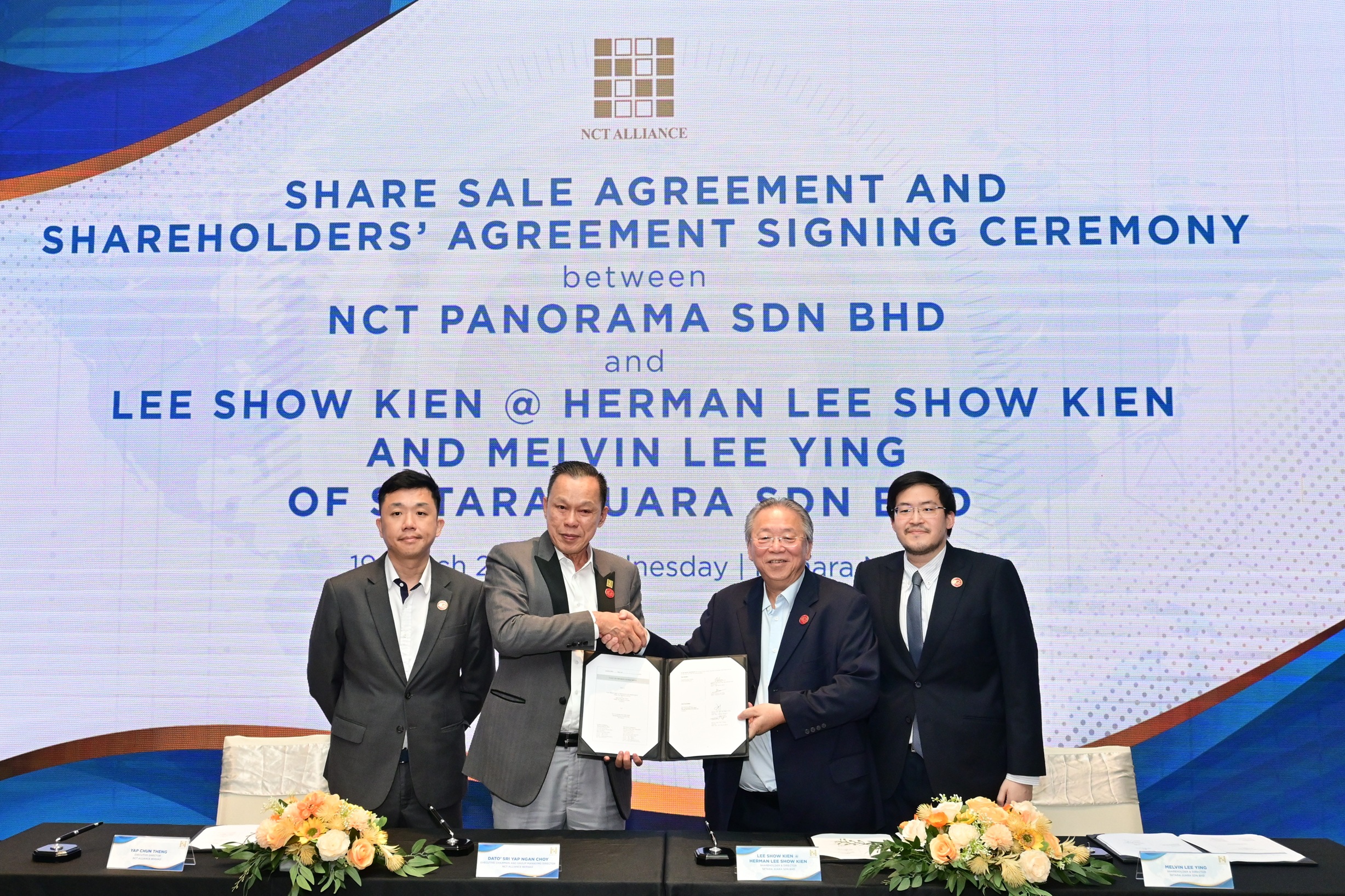
NCT Alliance Berhad (“NCT”) announces its wholly-owned subsidiary, NCT Panorama Sdn Bhd, has entered into a conditional sale of shares agreement (“SSA”) with Ir Herman Lee Show Kien and Mr Melvin Lee Ying to acquire a 51% stake in Setara Juara Sdn Bhd (“SJSB”) for a total purchase consideration of RM22.0 million. The purchase consideration will be satisfied via a combination of cash and contra properties.

In line with the acquisition, NCT Panorama, Ir Herman and Mr Melvin have also entered into a Shareholders’ Agreement (“SHA”) to regulate the relationship of the Parties in respect of SJSB.

Pivotal to the company’s long-term growth strategy, the acquisition will pave the way for NCT’s development of Ion Marina Bay, a property development project with an estimated gross development value (“GDV”) of RM3.4 billion. The landmark waterfront project located in Putatan, Sabah, is expected to further strengthen the company’s presence in one of Malaysia’s most promising real estate markets.

Dato’ Sri Yap Ngan Choy, NCT Alliance’s Executive Chairman and Group Managing Director, stated: “The agreement marks another key milestone in NCT’s expansion into Sabah, reinforcing our vision of building sustainable communities in high-growth regions. Ion Marina Bay will be a catalyst for transformation, creating a dynamic, integrated township that aligns with Sabah’s rapid urban development. As we grow, our focus remains on delivering developments that offer lasting value to homeowners, businesses and investors alike.”

Ion Marina Bay will be a mixed development, comprising residential, commercial and lifestyle components. Spanning approximately 250 acres, the development is strategically located two kilometres from Putatan Town Centre and 5 kilometres from Kota Kinabalu International Airport (KKIA), offering a modern and sustainable living experience tailored to Sabah’s evolving market needs.

With the Government recently having approved a RM442.3 million upgrade for KKIA to expand its capacity and enhance connectivity, the major infrastructure boost is expected to further drive real estate growth and attract more investors to the state.

NCT’s expansion into Sabah has been carefully planned to tap into the region’s growing real estate market, which has seen heightened interest due to Sabah’s economic growth and infrastructure investments.

SJSB existing directors and shareholders, Ir Herman Lee and Mr Melvin Lee are expected to continue playing key roles in the property’s development.

Ir Herman Lee added, “With NCT Alliance now on board as the major shareholder, we are excited to work in partnership to realise the vision for Ion Marina Bay. SJSB has been deeply involved in shaping this development, and with NCT’s expertise and resources, we are confident that this project will create a thriving, well-planned community that enhances Kota Kinabalu’s property landscape and bring lasting value to the state.”

Also present at the signing, Encik Ag. Ismail Abu Bakar, Director of Sharikat Pembangunan Azam Dan Galian Sdn. Bhd., the landowner of the project, stated “We are thrilled to be part of this landmark development, which will not only drive Sabah’s economic growth but also redefine its landscape. The vision behind this project will bring to life a dynamic and thriving community, creating lasting opportunities and setting standards for progress in the region.”

The acquisition of SJSB is expected to be completed by the third quarter of 2025. With a nine-year development timeline, Ion Marina Bay is poised to become one of Sabah’s most dynamic and sought-after urban developments.

LG Malaysia transforms HVAC industry through AI-driven innovation

LG Malaysia (LG) is leveraging its outstanding core technologies, AI and intimate knowledge of different industries to deliver HVAC solutions for a smarter, more efficient future.

The company’s latest breakthrough, the DUALCOOL™ AI air conditioner leverages on the company’s enhanced AI Core-Tech. Key innovative features include the AI kW Manager, which provides users with effortless control over energy consumption. Accessible via the ThinQ app, this tool offers real-time power usage data and allows users to set customised energy-usage limits. The groundbreaking Window Open Detection technology represents a significant leap in energy-saving capabilities, switching the air conditioner to energy-saving mode when it detects sudden temperature changes.

The DUALCOOL™ AI air conditioner intelligently adapts to each user’s environment by detecting ambient conditions and automatically adjusting temperature, airflow direction, and speed for consistent comfort. The innovative Sleep Timer+ analyses user preferences and sleep patterns, creating the ideal sleeping environment by optimising temperature and operating quietly during rest hours. Additionally, the DUAL Vane™ system and Soft Air function further optimize airflow control for maximized comfort.

LG Subscribe represents a revolutionary approach to making advanced technology accessible to everyone. More than just a subscription service, it removes financial barriers that typically limit access to premium air conditioning solutions, giving businesses and homeowners easy control over their indoor environment without the burden of high upfront costs.

“LG Subscribe is our strategic vision of making advanced technology available to everyone. We’re breaking down the barriers between cutting-edge innovation and accessibility, ensuring that intelligent, life-enhancing technologies are not a luxury, but a standard that every business and household can experience. This is how we’re redefining the future of smart living,” said Justin Choi, Managing Director of LG Malaysia.

The company’s comprehensive product range spans multiple segments, ensuring solutions for diverse market requirements. From residential offerings like ARTCOOL, Premium, Classic, and Lite categories to robust commercial solutions including Single Commercial Air Conditioning, VRF, and advanced Chiller systems, LG showcases unparalleled technological diversity. The range is complemented by 360° Air Purifier and Dehumidifier solutions, embodying the company’s holistic approach to creating comfortable indoor environments.


CelcomDigi-Ericsson’s strategic partnership to accelerate O&G sector

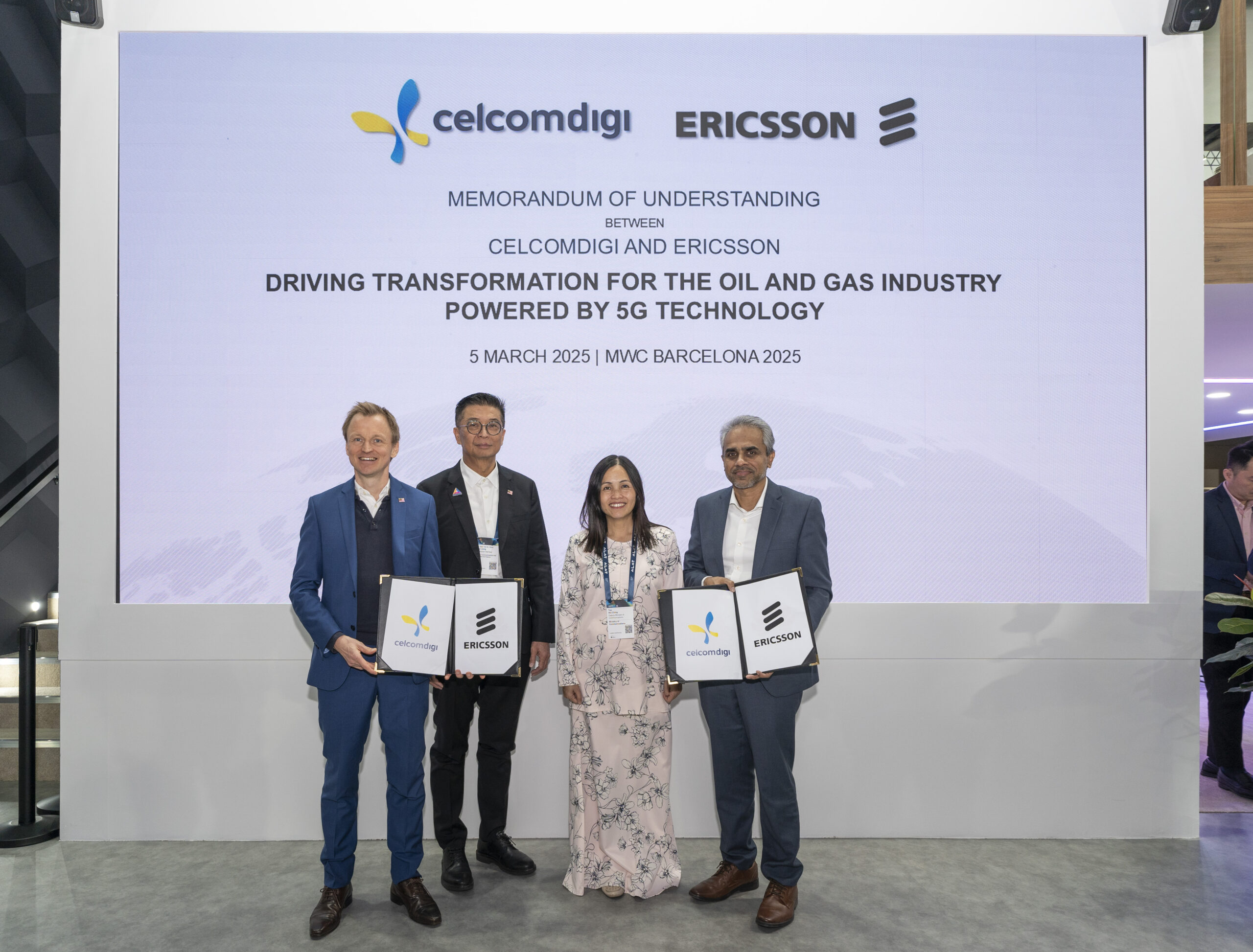
CelcomDigi Berhad (“CelcomDigi”) and Ericsson (Malaysia) Sdn Bhd (“Ericsson”) signed a Memorandum of Understanding (MoU) to boost Malaysia’s digital transformation by accelerating 5G adoption in Malaysia’s oil and gas (O&G) industry, advancing the nation’s key sector to the forefront of industrial digitalisation.

By combining CelcomDigi’s robust network infrastructure and deep local expertise with Ericsson’s global leadership in 5G technology, the partnership will drive the creation of 5G-powered solutions tailored to the unique demands of the O&G sector. Through CelcomDigi’s newly established 5G Standalone (SA) test lab, both companies will develop and deploy 5G use cases, focusing on:

  • Enhanced safety – Deploying 5G-enabled solutions to improve worker safety and hazard detection in high-risk environments
  • Advanced tracking – Utilising 5G technology for real-time asset and personnel tracking to optimise operational efficiency
  • Digitalisation and automation – Empowering O&G operations with real-time data analytics and automation for seamless decision-making
  • Mission-critical connectivity – Delivering reliable, ultra-fast 5G connectivity to support critical functions and industrial applications

This partnership marks a pivotal step in modernising Malaysia’s O&G sector to a smarter, safer, and more efficient industrial ecosystem powered by next-generation connectivity solutions.

The MoU was signed at the Mobile World Congress (MWC) in Barcelona, Spain by CelcomDigi’s Deputy CEO, Albern Murty and Head of Ericsson Malaysia, David Hagerbro, witnessed by the Deputy Minister of Communications, YB Teo Nie Ching.

Commenting on the partnership, CelcomDigi’s Deputy CEO, Albern Murty said, “As CelcomDigi evolves beyond connectivity into a telco-tech company, we recognise that the key to unlocking the full potential of 5G-AI lies in strong industry partnerships. Collaborations like this allow us to co-create meaningful solutions that go beyond technology, directly addressing industry challenges and transforming operations. We look forward to shaping a safer, more efficient, and future-ready O&G sector, as well as accelerating 5G adoption across industries as we continue to drive the nation’s development into a 5G-AI digital society.”

David Hagerbro, Head of Ericsson Malaysia, Sri Lanka, and Bangladesh, commented, “We stay committed to ensuring that Malaysia remains at the forefront of digital innovation. This collaboration with CelcomDigi is a strategic leap forward in the digital transformation of Malaysia. Our partnership in the O&G sector will drive real-time solutions in terms of enhanced efficiency, safety and digitalising operations that will redefine how industries operate in the country.”

As Malaysia accelerates its 5G adoption, this strategic collaboration underscores CelcomDigi and Ericsson’s shared vision of pioneering innovative solutions that elevate industries, empower businesses, and contribute to the nation’s digital economy aspirations.

BERNAS’ Gema Ramadhan programme reaches out to the urban poor

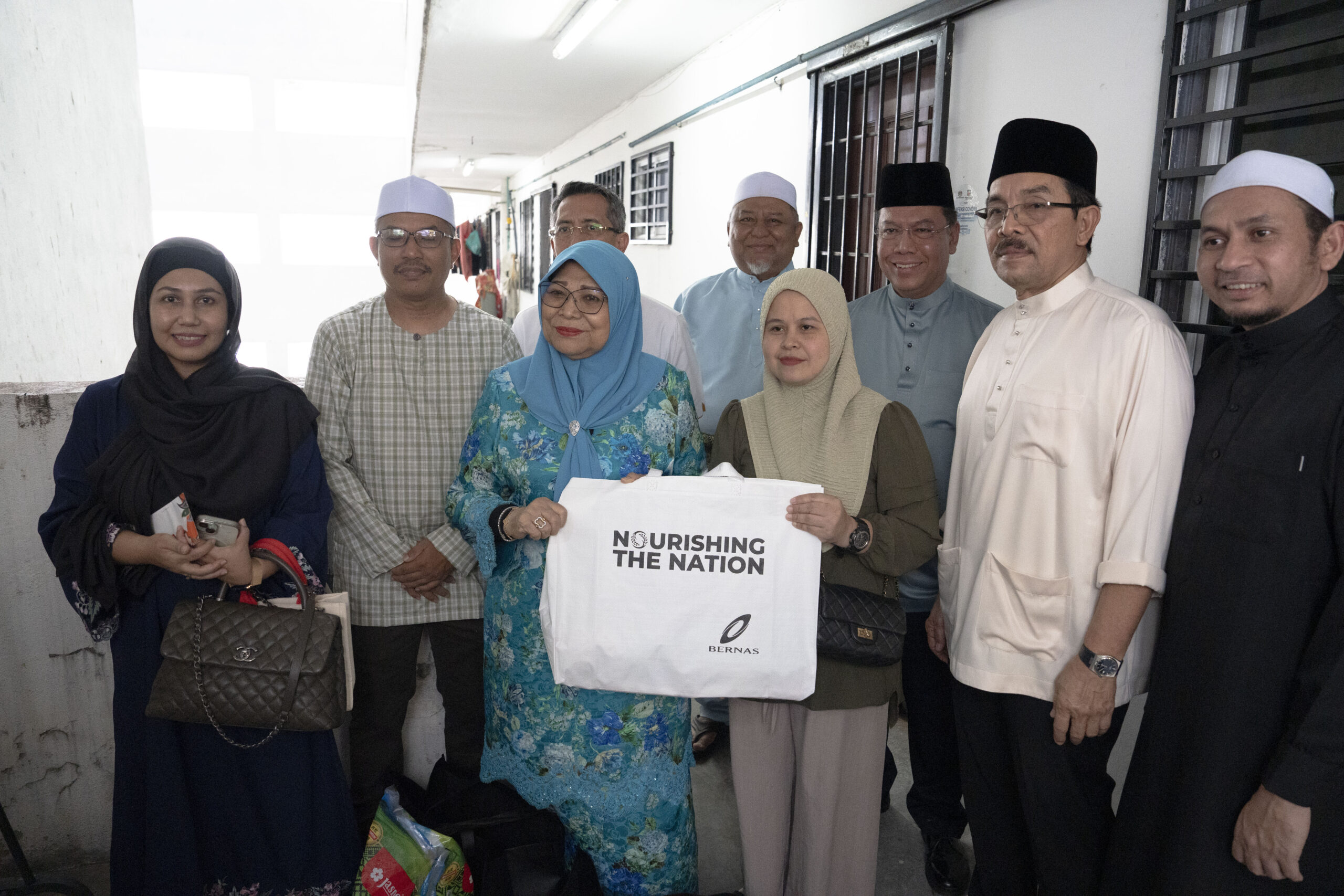
Padiberas Nasional Berhad’s (BERNAS) annual Gema Ramadan initiative this year focused on supporting the urban poor as the company contributed food boxes comprises of basic necessities including rice and sugar, as well as “bubur lambuk” to over 1,000 resident especially single mothers, orphans and asnaf families at the People’s Housing Project (“PPR”) Hiliran Ampang.

The ceremony was graced by Titiwangsa Members of the Parliament and Minister of Plantation and Commodities YB Datuk Seri Johari Abdul Ghani, Chairman of BERNAS Dato Sri Rohani Abdul Karim, Group Chief Executive Officer of BERNAS Zulkiflee Abdul Rahman, alongside the senior management team of BERNAS.

Guests to the event also visited selected homes before the iftar session with orphans, senior citizens and single mothers organised by BERNAS at Surau Al-Falah, PPR Hiliran Ampang.

“This strategic partnership with corporate entities like BERNAS reflects the strong commitment of private companies in empowering local communities without neglecting those in need, especially during Ramadan” said Datuk Seri Johari.

“Improving the community’s standard of living has always been a priority for BERNAS. We not only provide support to low-income families but also to the urban poor who fall under the B40 category,” said Dato Sri Rohani.

According to a 2024 UNICEF Malaysia report, 41% of urban households now live below the poverty line, with women, particularly single mothers, being the most affected in 16 PPR locations.

Recognising the unique challenges faced by single mothers, orphans, and senior citizens, we developed a support programme to facilitate preparations for Ramadan and Aidilfitri, ensuring that a more joyful and meaningful celebration for every member of the community,” added Dato Sri Rohani.

BERNAS’ commitment to community development is not limited to the Gema Ramadan Programme but also encompasses initiatives such as the Program Makanan Kesihatan (Healthy Food Programme) known as PROMAK, launched in January 2022.

PROMAK is a free lunch programme for primary school students throughout the academic calendar has benefited over 20,000 students in 97 schools across five states comprising Kedah, Perlis, Kelantan, Terengganu, and most recently, Pahang.

In addition, BERNAS recently allocated an additional RM30 million to support the government’s efforts to assist impoverished rice farmers. Previously, BERNAS had distributed RM60 million to impoverished rice farmers nationwide. This action aligns with BERNAS’ ongoing commitment to fulfilling its social responsibilities under the Concession Agreement with the Malaysian Government, which includes safeguarding the welfare of the farming community.

Majority of Malaysian businesses are intrigued by potential of AI in achieving sustainability goals

Over 76% of businesses across Asia, Europe and the Middle East are intrigued by the potential of digital technologies, including AI and cloud computing in driving sustainable development, according to the latest survey report titled “Tech-Driven Sustainability Trends and Index 2024”, commissioned by Alibaba Cloud, the digital technology and intelligence backbone of Alibaba Group. However, the substantial energy consumption associated with these technologies is still reflecting a key barrier to broader adoption, as 61% of respondents still express concerns over the matter.

The survey highlights Malaysia’s evolving stance on AI adoption and sustainability, revealing both enthusiasm and caution among businesses. Specifically

  • 76% of Malaysian businesses are actively adopting digital technologies to accelerate sustainability progress, with 77% intrigued by AI’s potential to drive sustainability innovation.
  • 62% of Malaysian businesses acknowledge the gap in understanding how digital technology can assist in achieving sustainability goals
  • 81% of businesses believe that the substantial energy consumption of digital technologies such as powering AI may outweigh its benefits
  • 75% cite security risks as a major barrier to adopting advanced digital solutions more broadly.

Regional Variations in AI Adoption and Sustainability Efforts

Despite this optimism, 59% of businesses acknowledge the gap in understanding how digital technology can assist in achieving sustainability goals with Asia leading at 63%, followed by Europe at 61% and the Middle East at 45%. Around two thirds 62% of executives believe their organisations are lagging in adopting cloud computing and AI to accelerate progress towards sustainability goals. This concern is particularly noted in Singapore 80%, the Philippines 77%, Japan 75% and Hong Kong SAR 75%, indicating a pressing need for organisations to accelerate their technological adoption to advance sustainability.

Overall, 82% of businesses agree that sustainable development in technology is paramount for their companies, with markets like Singapore 93%, the Philippines 91%, and Indonesia 89% leading the charge. Companies increasingly recognise the multifaceted benefits of adopting digital technologies for sustainability including cost savings, improved operational efficiencies, and enhanced compliance with Environmental, Social, and Governance (ESG) regulations.

AI and machine learning are viewed as the most crucial digital technologies for advancing corporate sustainability, with businesses in the Middle East 52% placing greater emphasis on their importance compared to Europe 41%, emerging Asian markets 40% and developed Asian markets 36%.

However, the survey reveals a notable concern: 61% of respondents fear that the high energy consumption associated with digital technologies may hinder widespread AI adoption. This concern is even higher in Singapore 85%, the Philippines 77% and Hong Kong SAR 75%. Furthermore, 71% of businesses believe that the substantial energy consumption of digital technologies such as powering AI may outweigh its benefits with the highest concerns from Singapore 86%, the Philippines 84% and Malaysia 81%.

The report also highlights the importance of selecting technology providers that prioritise sustainability. When selecting a “green” cloud provider, approximately half of the businesses prioritise those that use renewable energy 51%, maintain energy-efficient data centers 46%, and implement carbon footprint reduction initiatives 42%.

Malaysian Businesses Prioritise AI and Machine Learning for Sustainability but Face Adoption Challenges

The survey reveals 88% of Malaysian businesses agree it is important to the company that technology is developed sustainably. To add to the concerns highlighted earlier, 68% believe companies are lagging in cloud computing and AI adoption to meet these goals. This hesitation is driven by barriers such as knowledge gaps 38%, cost constraints 30%, and lack of technical capabilities 31%.

89% of business leaders acknowledge technology’s pivotal role in achieving global sustainability targets with Malaysian companies ranking AI/Machine Learning 46%, Collaboration and Communication tools 34%, and IoT 33% as the top three digital technologies critical to advancing corporate sustainability goals. When selecting technology providers, Malaysian businesses prioritise cost-effectiveness 52%, strong customer support 48%, and data privacy commitments 40% highlighting the key factors that influence their digital adoption strategies.

Conducted with 1,300 decision-makers across 13 markets, including Malaysia, “Tech-Driven Sustainability Trends and Index 2024” aims to provide valuable insights into the evolving landscape of corporate sustainability. The survey report underscores the essential role of technology in driving impactful change, while highlighting the need for businesses to adopt AI and cloud computing responsibly to address energy consumption concerns and bridge the gap in sustainability efforts.