Wednesday, 5 August 2026 Stay informed. No noise.

UOB partners Invest Johor to drive foreign direct investments into the Johor-Singapore SEZ

Singapore, 29 August 2024 – UOB today signed a Memorandum of Understanding (MOU) with Invest Johor, the state’s investment agency, to drive investment opportunities into the upcoming Johor-Singapore Special Economic Zone (SEZ).

UOB also signed a second MOU today with China’s Lingang Group, an industrial park operator with more than 18,000 tenants across China. Under the partnership, UOB will facilitate Lingang Group and its tenants to expand into Southeast Asia.

Partnering to grow the Johor-Singapore SEZ

Under the partnership with Invest Johor, UOB will collaborate with the state investment agency to jointly promote and facilitate investment opportunities into the Johor-Singapore SEZ. This will be done by targeting high value, high technology and high impact investments from priority sectors such as electrical and electronics, advanced manufacturing and engineering, digital economy, green economy, life science and med-tech, electric vehicles, aerospace and port and logistics.

Notably, a “green lane” will be jointly established, with UOB designated as a partner to assist with foreign direct investments in these prioritised sectors to accelerate their investments. UOB will also provide advisory and banking services to companies looking to invest in Johor as part of the MOU.

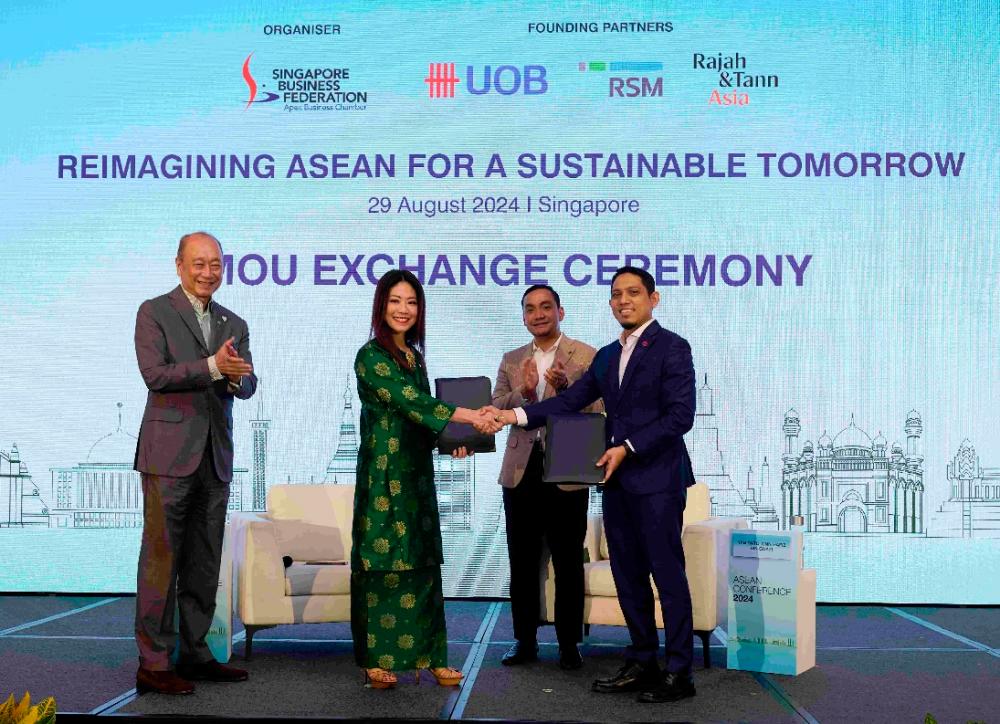
The MOU was signed by Invest Johor’s CEO, Mr Natazha Bin Hariss and UOB Malaysia’s CEO, Ms Ng Wei Wei, at the ASEAN Conference held in Singapore today. The ceremony was witnessed by Johor’s Menteri Besar, Yang Amat Berhormat Dato’ Onn Hafiz bin Ghazi, and UOB’s Deputy Chairman and Chief Executive Officer, Mr Wee Ee Cheong.

Dato’ Onn Hafiz said, “From our engagements with key stakeholders of the Johor-Singapore SEZ, expectations are very high. This will require us to step up our game, provide excellent service and ensure that we not only meet, but exceed these expectations. Today’s MOU between Invest Johor, the state’s lead investment agency and UOB, one of ASEAN’s leading financial institutions with over seven decades of experience in assisting investors in Malaysia, is one example of our seriousness and focus in improving the investor experience in Johor.”

Mr Wee Ee Cheong said, “UOB is pleased to work with like-minded partners to support businesses in navigating the diverse ASEAN region. Our strategic partnerships with regional government investment agencies and trade associations have successfully connected enterprises such as Lingang Group to cross-border investment opportunities, benefitting businesses across multiple sectors. We remained committed to serving as an effective gateway to the region for companies expanding into the region.”

UOB is the only bank to have signed MOUs with all the government investment agencies in the key ASEAN markets.

Ms Ng Wei Wei, Chief Executive Officer of UOB Malaysia said, “The MOU with Invest Johor reinforces UOB’s commitment to facilitate foreign direct investment into Malaysia and support the success of the Johor-Singapore SEZ. Apart from bringing in investments, we will also connect foreign investors to the local ecosystem value chains with the aim to benefit our local businesses, particularly the SMEs. This is to ensure that foreign investors can tap into local resources and the investments can bring multiplier effect to the economy.”

MOU with China’s Lingang Group

In addition, UOB facilitated a meeting with China’s Lingang Group, Johor’s Menteri Besar and a delegation from Invest Johor at the sidelines of the ASEAN Conference.

This followed the signing of the second MOU today between UOB and Lingang Group, an industrial park operator with more than 18,000 tenants across China. Under the partnership, UOB will facilitate Lingang Group and its tenants to expand into Southeast Asia.

The MOU with Lingang Group was signed by Ms Yang Jing, Chief Financial Officer, Lingang Group, and Mr Leong Yung Chee, Head of Group Corporate Banking at UOB. It was witnessed by Mr Weng Kaining, Chairman, Shanghai Lingang Holdings Corp, and Mr Frederick Chin, Head of Group Wholesale Banking and Markets, UOB.

The state-owned enterprise has more than four decades of experience developing industrial parks and focuses on investment promotion and operation of industrial parks, professional enterprise services and sci-tech industrial investment. Lingang Group currently operates the China (Shanghai) Pilot Free Trade Zone (FTZ), a tech hub established in 2019 and have played a key role in the opening of China’s economy to global investors.

Lingang Group’s cross-border expansion plans will leverage UOB’s extensive trade network as the preferred bank for all their banking needs. UOB, through UOB China, has successfully facilitated first-of-its-kind cross border transactions with Lingang Group, benefitting both onshore Chinese and UOB clients to route their capital and trading flows through the policies and concessions offered under the Pilot FTZ.

UOB’s Foreign Direct Investment Advisory Unit will also serve as a one-stop shop dedicated to helping Lingang Group through its close partnerships with regional government agencies, trade associations and professional service providers, providing customised solutions to fit Lingang Group’s expansion plans.

About UOB Malaysia

UOB Malaysia is rated among the top banks in Malaysia with a long-term AAA rating from Ratings Agency of Malaysia. It has over seven decades of presence in the country, and operates 55 branches nationwide, offering both conventional and Islamic banking services to its customers.

UOB Malaysia is a subsidiary of UOB, a leading bank in Asia with a global network of around 500 offices in 19 countries and territories in Asia Pacific, Europe, and North America. UOB has adopted a customer-centric approach to creating long-term value by staying relevant through its enterprising spirit and doing right by its customers. UOB is focused on building the future of ASEAN – for the people and businesses within and connecting with ASEAN.

The Bank connects businesses to opportunities in the region with its unparalleled regional footprint and leverages data and insights to innovate and create personalised banking experiences and solutions catering to each customer’s unique needs and evolving preferences. UOB is also committed to helping businesses forge a sustainable future, by fostering social inclusiveness, creating positive environmental impact and pursuing economic progress. UOB believes in being a responsible financial services provider and is steadfast in its support of art, social development of children and education, doing right by its communities and stakeholders.
Zurich Malaysia collaborates with GXBank to launch cyber protect digital insurance product

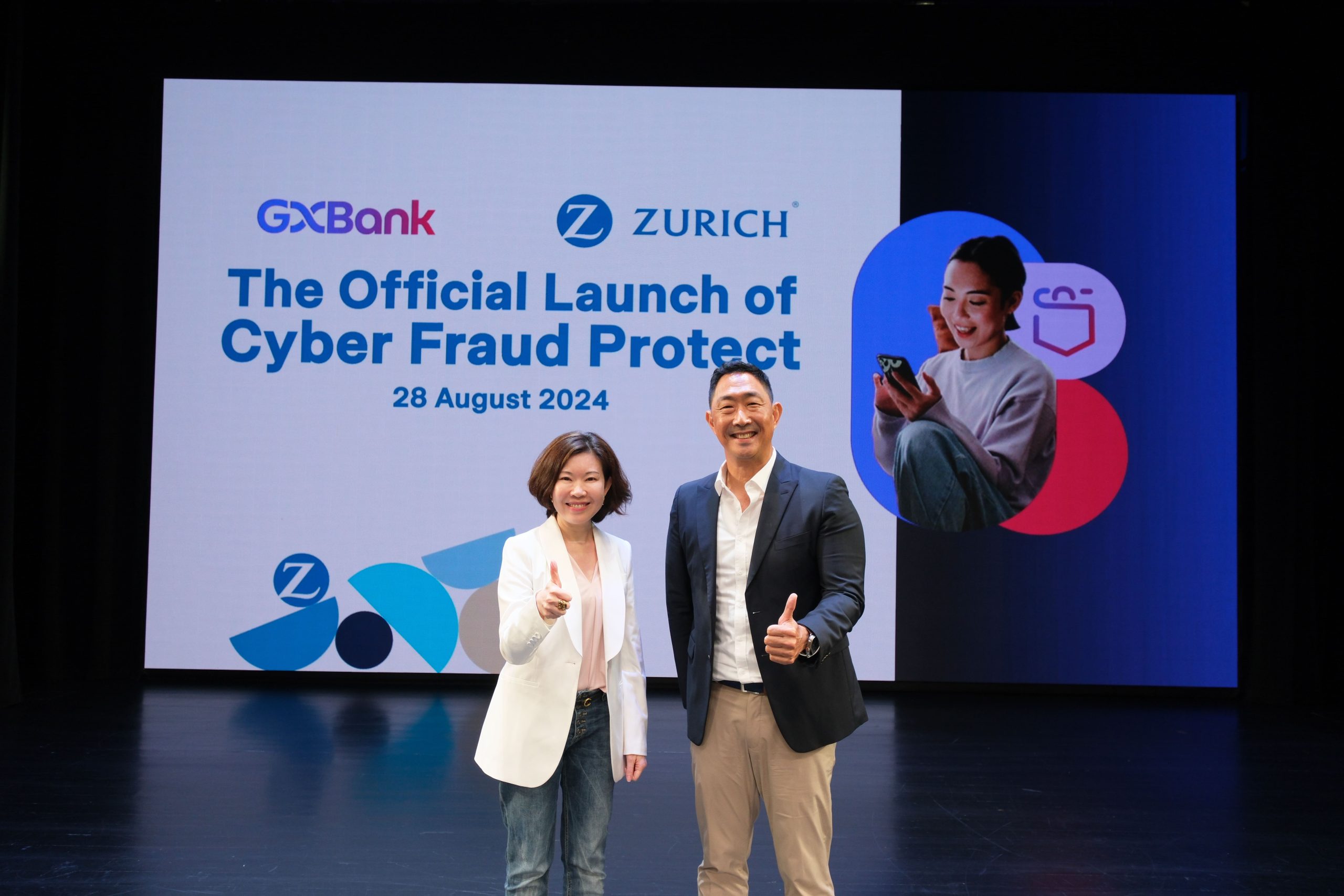
KUALA LUMPUR, 28 August 2024 – Building on their bancassurance partnership established in May 2024, Zurich General Insurance Malaysia Berhad (Zurich) and GXBank Berhad (GXBank) have announced the launch of Cyber Fraud Protect offered within the GXBank application and powered by Zurich Edge platform. This innovative digital insurance product safeguards Malaysians for financial loss arising from unauthorised electronic transfer resulting from cybercrime or electronic scam messages.

According to the Federal Commercial Crime Investigation Department, Malaysians lost a staggering RM1.6 billion to online scams over 19 months, from last year up to July 2024. As digitalisation continues to shape our consumption habits and financial activities, the risk of online scams has grown significantly, posing new challenges for consumers and society at large. Cyber Fraud Protect offers coverage for financial losses due to unauthorised electronic transfer from any local bank account, e- wallet, credit or debit cards, providing essential protection against these escalating cyber threats.

Junior Cho, Country CEO/Head of Zurich Malaysia said, “Since our partnership began in May, we‘ve collaborated closely with GXBank, leveraging Zurich’s risk management expertise and digital capability to launch Cyber Fraud Protect – an innovative online insurance solution for Malaysians. Cyber Fraud Protect embodies our brand promise, ‘Care For What Matters,’ by delivering essential security in an increasingly digital world. We’re confident it will offer Malaysians the robust protection they need in today’s fast-changing digital landscape. In designing and launching this product, our primary focus was ensuring a smooth, positive customer experience, and with the Zurich Edge platform we have been able to do just that, delivering a seamless and convenient in-app purchasing journey for GXBank customers.”

Pei-Si Lai, Chief Executive Officer, GXBank said, “Since our launch, we have been constantly
working to provide the best digital banking experience while ensuring the financial literacy,
accessibility and safety of Malaysians. Co-creating Cyber Fraud Protect with Zurich, this product is
unique and one-of-a-kind. It not only offers the highest coverage protection of up to RM20,000 against
losses due to unauthorised transactions from cybercrimes, but also the widest coverage for all local
bank accounts, debit or credit cards and e-wallets beyond GXBank’s ecosystem. Additionally, our
collaboration will also see us introduce other insurance products in the future. These are aligned with
our ongoing mission to build greater financial resilience within reach for Malaysians of all
backgrounds. “

As part of the official product launch, a panel of experts gathered for a discussion on addressing the
heightened concerns around cyber fraud and scams in Malaysia. Moderated by Nazrudin Rahman, a
well-known Malaysian TV host, writer, producer and actor, the panel included ASP Rahmat Fitri
Abdullah, Founder/Director of Rahmat Fitri Consultant Sdn Bhd; Ooi Jian Wei, Associate Dean and
Lecturer at the Department of Social Science, Tunku Abdul Rahman University of Management and
Technology (TAR UMT); Vincent Mok, Chief Risk Officer of GXBank; and Evelyn Ng, Deputy Chief
Claims Officer (Property & Casualty) of Zurich Malaysia.

Get Protected Now with Cyber Fraud Protect 
Customers interested in securing Cyber Fraud Protect can easily do so via the GXBank mobile app by
following these simple steps:

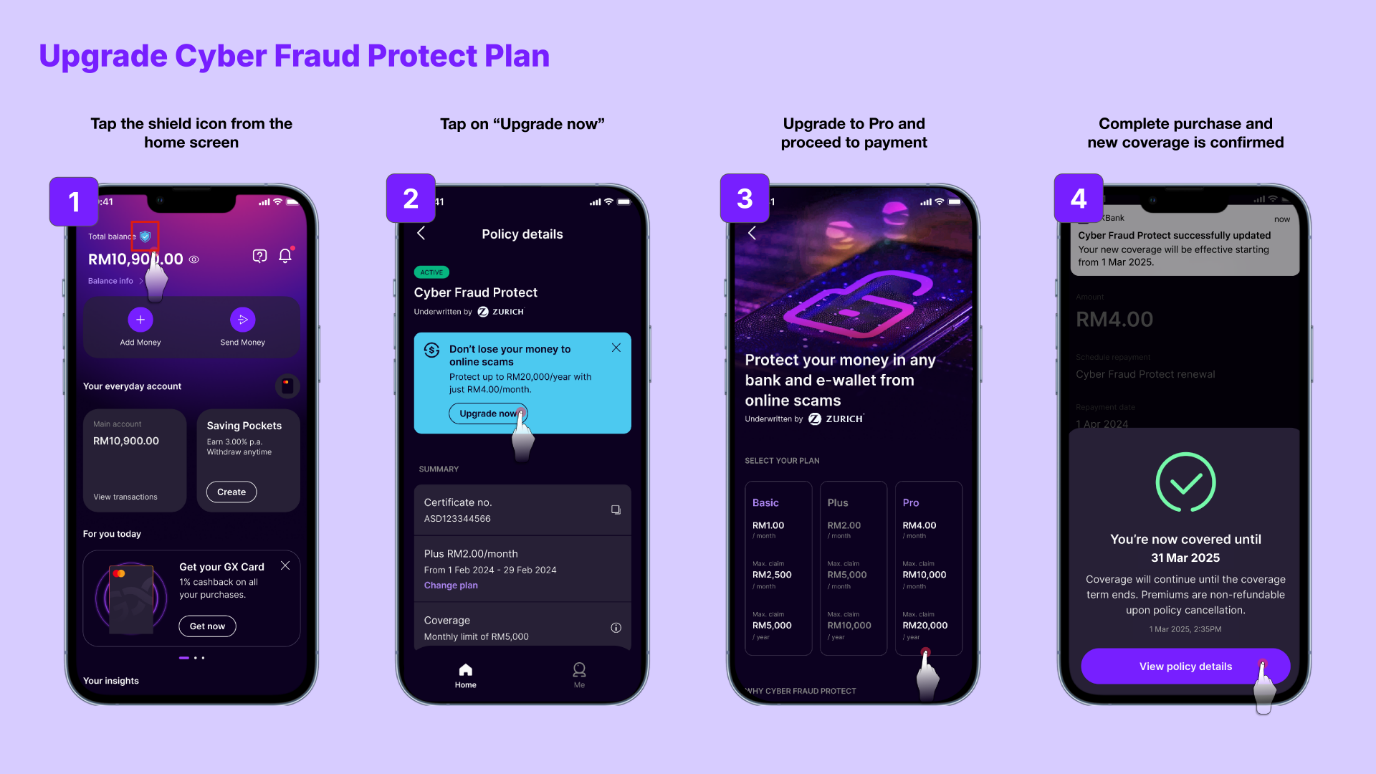
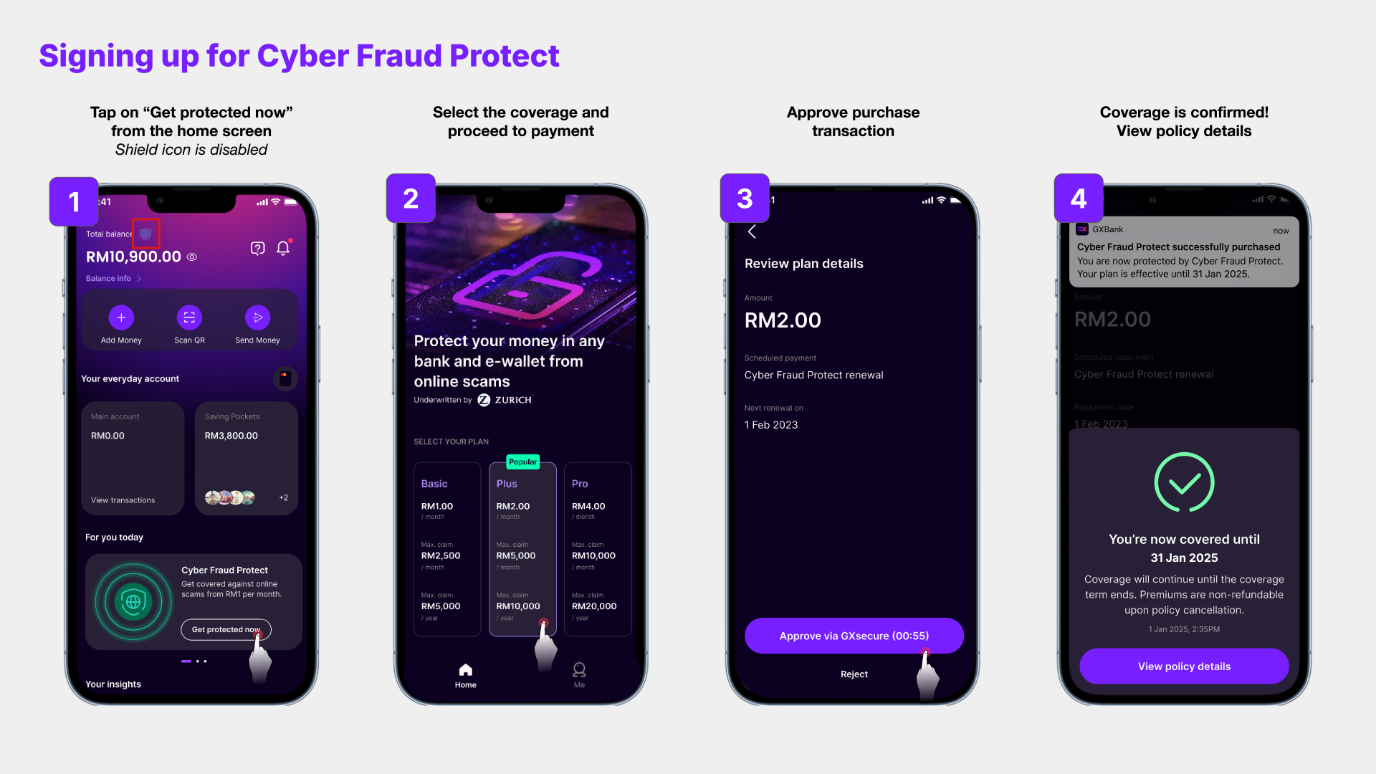
1. Select a Plan: Choose from three coverage options – Basic (RM1/month), Plus (RM2/month),
or Pro (RM4/month) – directly within the GXBank mobile app, and click “Get Protected Now”.

2. Key in Details and Confirm: Verify your email address to ensure receipt of all important
policy-related communications, and confirm details of the selected plan, including coverage
terms and premium breakdown.

3. Authorise and Activate: Approve the transaction through GXSecure, and the policy will be
activated instantly. Coverage details will be available in the app and a certificate of insurance
will be sent via email. The monthly premium will then be automatically deducted from the
customer’s GXBank account.

For further information on Cyber Fraud Protect, please visit the official website here
(https://gxbank.my/cyberfraudprotect) for more details.


Appendix:

GXBANK1Gxbank2

MDEC-accredited Valtatech integrates with Microsoft to drive Malaysia’s e-invoicing transformation

Kuala Lumpur, 22 August 2024 – Source-to-Pay [S2P] and Procure-to-Pay [P2P] specialist Valtatech has
made a strong entry into the Malaysian market, by integrating with Microsoft Dynamics 365 and the
Pax8 marketplace to drive Malaysia’s ongoing e-invoicing transformation. This follows its accreditation
by the Malaysian Digital Economy Corporation [MDEC] as a pilot e-invoicing service provider for MDEC
and Lembaga Hasil Dalam Negeri [LHDN].

With a decade of experience implementing end-to-end procurement solutions across Asia Pacific and
Europe, Valtatech is uniquely positioned to guide Malaysian businesses through not only the
complexities of the e-invoicing mandate but also to unlock the strategic value of digital transformation.

“We applaud the Malaysian Government’s forward-thinking approach to implementing e-invoicing on a
country-wide scale,” said Jussi Karjalainen, CEO of Valtatech. “We are not just another e-invoicing
provider; we curate end-to-end ecosystems to improve business procurement processes. Our extensive
experience in other geographies has demonstrated the effective and efficient implementation of e-
invoicing as a catalyst for digitizing the entire business procurement ecosystem to drive growth within a
country and beyond borders.

“Our decade of experience, combined with our deep understanding of the local market, makes us the
perfect partner for any Malaysian business to go beyond compliance and drive efficiencies to maximize
business opportunities. Our collaboration with Microsoft and Pax8 fuels our ambitions to create an end-
to-end ecosystem to offer companies critical solutions at every business processing touchpoint."

The integration with Microsoft will enable Valtatech to make its e-invoicing Gateway (SaaS) available on
Microsoft Azure as well as being integrated with Microsoft Dynamics 365. Valtatech will then work
closely with Pax8 to market the solution to the 2nd wave of e-invoice prospects, who are targeting to go
live in January 2025.

Valtatech’s mature, localized platform seamlessly integrates with existing systems, ensuring a smooth
and efficient transition for Malaysian businesses. The procurement service provider prioritizes data
security measures like encryption, secure data storage, regular audits, and proactive firewall
management, ensuring peace of mind for their clients.

Leading the Valtatech charge in Malaysia is Country Manager, Malick Aboobakar, a 30-year veteran in
digital economy.

”Having worked with many Malaysian businesses to drive the digitalisation of their businesses, I am
confident our team will be able to provide the unique combination of leveraging Valtatech’s global
experience, with strong local insights and understanding," said Malick.

“We have already onboarded several companies, and are in advanced discussions with other solutions
providers to add depth and breadth to our business processing solutions ecosystem. The country’s
positive economic growth and the recent influx of international investments, particularly in tech
industries, indicate the increasing need to digitise the Malaysian economy. The mandatory
implementation of e-invoicing is an opportunity for Malaysian companies to make the most of this
pivotal step. Valtatech aims to be their preferred partner in the business processing automation space,”
he added.

Valtatech is a financial process automation provider with 10 years of proven success across Asia Pacific
and Europe. Trusted by industry leaders like Cycle & Carriage and Konica Minolta, Valtatech offers a
comprehensive suite of end-to-end e-procurement solutions that include source-to-pay (S2P), Procure-
to-Pay (P2P), e-invoicing and compliance technology.

For more information on Valtatech please visit www.valtatech.com/MY

About Valta Technology Group
Valta Technology Group is a Source to Pay advisor, Managed Services provider, and e-invoicing and
compliance technology company specialising in implementing end-to-end solutions. With offices in
Melbourne Australia, Manila Philippines, Singapore, and Malaysia, Valtatech offers leading managed
technology solutions, and best practice advisory services assisting organisations across Asia Pacific to
automate their finance and procurement functions.

A must-visit this Merdeka – MR D.I.Y.’s first Merdeka Bazaar

KUALA LUMPUR, 23 August 2024 — Merdeka celebrations are just a few days away, and Malaysians have something exciting to look forward to, thanks to homegrown Malaysian retailer MR D.I.Y. Group [M] Berhad [MR D.I.Y.].

MR D.I.Y is inviting Malaysians to its first-ever Merdeka bazaar – ‘Besama Satu Bazaar’ – at the PIAZZA, Pavilion Bukit Jalil from 30 August to 1 September 2024. to celebrate the country’s 67th Merdeka Day.

The Bazaar includes more than 100 booths, featuring some of Malaysia’s most popular food and product stalls, as well as booths featuring MR D.I.Y’s own range of products from its stable of brands –  MR D.I.Y., MR. TOY, EMTOP, and MR. DOLLAR.  There will be nasi lemak, laksa, burgers, noodles, snacks, desserts, and refreshing drinks, as well as handmade accessories, stationery, cosmetics, and crafts.

The three-day event will also feature fun and thrilling games, creative workshops, the works of local arts and artists, as well as cultural and contemporary performances, with the highlight being having celebrities Alif Satar & The Locos, Jaclyn Victor, and Priscilla Abby perform the patriotic anthem ‘Bersama Satu Suara’ live for the first time.  This will take place on 31 August 2024 from 8:30 pm onwards.

Commenting on the initiative, MR D.I.Y. Group’s Head of Marketing Alex Goh said, “This is MR D.I.Y’s first-ever Merdeka bazaar, and we’re thrilled to invite everyone to join us. This three-day event is all about celebrating our pride, unity, and joy as Malaysians. By bringing together Malaysian businesses, entrepreneurs, cultural and contemporary performers, as well as artists, we are celebrating the depth and breadth of Malaysia’s diversity and rich cultural heritage.  We are a proudly homegrown Malaysian brand and one of the country’s largest retailers; this is one way we can celebrate being true Malaysians.”

“The bazaar will be a place where Malaysians from all walks of life can come together to eat, shop, play games, and enjoy Malaysian entertainment while supporting local businesses, entrepreneurs, and talents. We look forward to celebrating this event with our customers, and I invite all Malaysians to join us in this memorable and historic celebration that unites us as one nation,” said Alex.

To celebrate the occasion, MR D.I.Y is giving away complimentary tote bags to the first 1,000 visitors daily when they complete the Bazaar passport challenge, an engaging and innovative initiative to help visitors enjoy everything the bazaar has to offer. Additionally, visitors stand a chance to win lucky draw prizes worth up to RM12,000.

To find out more about MR D.I.Y’s ‘Besama Satu Bazaar’ happening from 30 August to 1 September, 2024, visit https://www.mrdiy.com/promotion/mrdiy-bersama-satu-bazaar-2024.

To know more about MR D.I,Y, visit mrdiy.commrdiy.com.my, and follow the brand on FacebookInstagram, and TikTok.

Unnamed 1                   Visit more than 100 booths showcasing Malaysia’s favourite food and products at the ‘Bersama Satu Bazaar’



Unnamed 2

                     Catch Alif Satar and The Locos, Jaclyn Victor, and Priscilla Abby on 31 August 2024, 8:30pm-9:30pm at MR D.I.Y.’s ‘Bersama Satu Bazaar’

About MR D.I.Y. Group (M) Berhad

MR D.I.Y. Group (M) Berhad is a home-grown enterprise with more than 1,300 stores nationwide across three brands (MR. D.I.Y., MR. DOLLAR & MR. TOY) and in Brunei.  The retailer is also a master franchisee of the EMTOP brand in Malaysia. It has been dedicated to making a positive difference in the lives of its valued customers by offering convenience at all of its stores nationwide and online at mrdiy.com.my.

All MR D.I.Y. stores are managed directly, and the company often works in collaboration with other mass merchandise retailers or owners of malls or shopfront properties. MR D.I.Y. stores offer a wide selection of — approximately 17,000 SKUs — across 5 major categories, namely hardware; household and furnishing; electrical; stationery and sports equipment products; and others (comprising amongst others toys, car accessories, jewellery, cosmetics, food and beverage items, and health and personal care).

The company strives to always put customers first by operating an innovative business that is flexible when it comes to providing a wide variety of products, good quality, and value-for-money, holding true to its company motto: “ALWAYS LOW PRICES”.


BMW Group Malaysia Introduces New EV Charging Facilities Across the Klang Valley, Negeri Sembilan and Pahang.

BMW Group Malaysia, in partnership with its authorised dealers and key charge point operators, unveils four new EV charging facilities across the Klang Valley, Negeri Sembilan and Pahang. The introduction of these new charging facilities across various key locations aims to provide all EV owners with greater peace of mind for interstate travel, while ensuring convenient and accessible charging options within key regions.

“By introducing more state-of-the-art charging facilities across the country, we are emphasising our commitment to an Electrified Future for Malaysia, which has also been well-represented by the rapid unveiling of more fully electrified models from both BMW and MINI within just the first half of 2024. As the Number One Premium Electric Vehicle Provider in Malaysia, we believe that these facilities do more than serve our customers; they form the backbone of a nation moving towards embracing comprehensive Electrified Mobility,” said Benjamin Nagel, Managing Director at BMW Group Malaysia.

Within the Klang Valley, BMW Group Malaysia introduces two new charging facilities. The first facility, located at The Curve in Mutiara Damansara, is established in partnership with Quill Automobiles and ChargeSini. The facility is equipped with 47 kW DC chargers, with charging rates priced at RM1.39/kWh. The second facility, established in partnership with Millennium Welt and ChargeSini, brings three 22 kW AC chargers to Imperial Lexis in Kuala Lumpur, with a charging rate starting from RM1.00/kWh.

In Negeri Sembilan, BMW Group Malaysia, in partnership with Millennium Welt, is introducing two BMW i Wallbox units at CMH Specialist Hospital in Seremban. Each Wallbox provides an AC output of 7.4 kW, providing complimentary charging for hospital staff. Lastly, in Pahang, Zenith Hotel Kuantan is now equipped with a 160 kW DC fast charger, priced at RM1.69/kWh, courtesy of the partnership with Millennium Welt Kuantan and EL Charge.

The new charging facilities are part of BMW Group Malaysia’s strategy to develop the comprehensive infrastructure needed for the charging of electric vehicles, together with like-minded local partners, dealers and key charging providers. Over 2,020 charging facilities have been made available by BMW Group Malaysia for EV owners here so far, through strategic partnerships with various EV charging providers in Malaysia. Over 100 BMW i and MINI charging facilities are also available at most authorised dealerships, as well as partnering venues across the country, with more to come as part of the strategic infrastructure expansion plan set for the year ahead.

For more information on the BMW Group Malaysia’s charging solutions, visit https://www.bmw.com.my/en/topics/bmw-owners/bmw-charging-solution.html.

The BMW Group
With its four brands BMW, MINI, Rolls-Royce and BMW Motorrad, the BMW Group is the world’s leading premium manufacturer of automobiles and motorcycles and also provides premium financial and mobility services. The BMW Group production network comprises over 30 production sites worldwide; the company has a global sales network in more than 140 countries. In 2023, the BMW Group sold over 2.55 million passenger vehicles and more than 209,000 motorcycles worldwide. The profit before tax in the financial year 2023 was € 17.1 billion on revenues amounting to € 155.5 billion. As of 31 December 2023, the BMW Group had a workforce of 154,950 employees. The success of the BMW Group has always been based on long-term thinking and responsible action. The company set the course for the future at an early stage and consistently makes sustainability and efficient resource management central to its strategic direction, from the supply chain through production to the end of the use phase of all products.

Website: www.bmwgroup.com
LinkedIn: http://www.linkedin.com/company/bmw-group/
YouTube: https://www.youtube.com/bmwgroup
Instagram: https://www.instagram.com/bmwgroup
Facebook: https://www.facebook.com/bmwgroup
X: https://www.x.com/bmwgroup


Smart Tax Planning for Financial Success

By Annie Wong


Starting 2 January 2022, even zero-income full-time students in Malaysia are required to file their tax returns with the Inland Revenue Board of Malaysia (IRBM). The question arises: How many of us are still unaware of these changes?


In the ever-evolving economic landscape, staying informed about recent changes that impact our financial lives is crucial. Within this dynamic field of taxation, subject to constant change, it is essential to equip ourselves with effective tax planning strategies.


Despite being Malaysian citizens, not everyone is aware of their tax obligations. For instance, according to Act 8331, Finance Act 2021, a new section 66A (1)(c) mandates that any citizen aged eighteen and above must have a Tax Identification Number (TIN).


As of 1 January 2022, even if Malaysians are 18 years old with no income, they are required to report ‘0’ in their BE form. While 7.8 million TINs were automatically generated for eligible citizens, many still believe that being a full-time student with no income exempts them from filing tax returns.


During the Tax Forum 2023, Abang Ehsan Abang Abu Bakar from the Tax Compliance Department of LHDN suggested that eligible citizens, especially new taxpayers, should complete their tax return filing before 31 May 2024. The IRBM has introduced a Special Voluntary Disclosure Programme 2.0 from 6 June 2023 to 3 May 2024, allowing new taxpayers to file tax returns for YA 2022 and earlier without penalties.


Consider a working adult earning less than RM30,000. Should they fill out a tax filing? Yes, they should. While it wasn’t necessary previously due to their chargeable income being non-taxable, the amendment, effective 1 January 2022 mandates all citizens aged 18 and older to report and submit their tax filings.


Why does a full-time student with no income need to report now? IRBM cannot distinguish between zero earnings and substantial income unless it is reported. According to an EY report in November 20222, Malaysia’s shadow economy accounted for 18% of GDP in 2019, approximately RM250 billion. The shadow economy comprises underreported business income, non-registered businesses and illicit activities. Deputy Finance Minister Ahmad Maslan mentioned in an interview on 17 October 2023, that TIN and e-invoicing are expected to shrink Malaysia’s shadow economy. Now we understand; it is part of the government’s strategy to tackle the shadow economy!


Strategic Tax-Saving Tips

To legally save on taxes, engaging in proper tax planning at the beginning of the year is essential. One key strategy involves maximising deductions through available tax relief, charitable contributions and tax-exempt investments. Here are some tips categorised into four groups:


General Tax Relief: According to the Budget 2024 proposal, several beneficial tax reliefs have been added. For instance, expenses incurred for dental and medical check-ups for yourself, your spouse, parents and children are claimable up to RM1,000. Participating in up-skilling courses and retaining the receipt from the organiser can result in a claim of up to RM2,500. Contributions to the Private Retirement Scheme (PRS) offer tax relief up to RM3,000 until YA 2025.


Additionally, optimising the use of tax-advantaged accounts, such as the Employees Provident Fund (EPF), is crucial. The voluntary contribution initiative of EPF, i-Saraan3, allows self-employed members and gig economy employees to contribute up to RM100,000 per annum, with a special incentive of 15% for the total contribution, up to a maximum of RM500 for the current year. Combining approved scheme contribution relief and voluntary contribution/life insurance relief can result in a maximum tax relief of RM7,000.


Employee Perquisites: Employees working for a business entity can negotiate a better remuneration package with allowances, benefits-in-kind and perquisites. For example, Joshua, a general manager with over 15 years of experience in a pharmaceutical company, proposed to his boss a daily meal allowance and a travel allowance of RM6,000 per annum, respectively. All these allowances are tax-exempted perquisites, and Joshua doesn’t need to pay a single cent in tax for these benefits. Additionally, Joshua requested a company car.


Let’s assume the company provides him with a car valued at RM180,0004; his additional taxable income is only RM8,800. After deducting all personal tax reliefs, if Joshua’s tax bracket is 25%, he only needs to pay RM2,200 (RM 8,800 x 25%) per year to enjoy a luxury car with a driver every day. A long-service award is given by the company, and the first RM2,000 is tax-exempted as well. So, if you are a long-service employee, why not consider requesting a substantial award from the company?


Benefits for Married Employees: Employees who are married with children can explore opportunities for additional benefits. Children’s allowance perquisites were raised from RM2,400 to RM3,000 during the Budget 2024 proposal. Parents with children under 6 years old can claim up to RM3,000 per household by sending them to a JKM-registered kindergarten. Saving RM8,000 into Skim Simpanan Pendidikan Nasional (SSPN) is eligible for each parent until YA 2024.


Business Owners (LLP or Sdn Bhd): Business owners, particularly those in the Small and Medium Enterprise category, can strategically repackage remuneration to maximise tax savings. Declaring dividends instead of drawing a high salary package or director fees can be a tax-efficient move, especially to keep the total annual chargeable income below RM 100,000 and benefit from lower tax brackets ranging from 15% to 24%.


These are some practical tips for optimising individual tax returns in 2024. Additionally, starting on 1 August 2024, the government will implement e-invoicing for companies with revenue exceeding RM100 million. This change is set to be a game-changer in the tax landscape. Moreover, it will become mandatory for all taxpayers, including SMEs, from 1 July 2025.


To learn more strategies for optimising tax returns, minimising liabilities and strategically timing financial transactions, proper tax planning is required. By understanding the taxation framework, one can take control of their financial destiny by making informed choices that align with their long-term goals. May this year be a great and prosperous one for most of us!


About the Writer


Annie Wong is a dedicated and accomplished trainer with over a decade of experience in training and SME business consulting. She holds a Bachelor of Science degree from Campbell University, graduating with Summa cum laude honours. Presently, Annie is globally recognised as a Certified Financial Planner (CFP CERT TM Professional) and a Certified Professional Trainer (CPT, IPMA, UK). She is licenced as a CMSRL Financial Planner by the Securities Commission Malaysia, and her expertise has positively impacted numerous individuals and businesses.


Sources

(1) Act 833, Financial Act 2021.

(2) Shadow Economy: www.freemalaysiatoday.com/category/highlight/2023/10/17/governments-grand-plan-to-tackle-shadow-economyClick here to enter text.

(3) i-saraan: www.kwsp.gov.my/en/member/contribution/i-saraan

(4) Benefits-in-kind: http://lampiran1.hasil.gov.my/pdf/pdfam/PR_11_2019.pdf

Valuation Creation in ESG Investing

ESG investing involves integrating environmental, social and governance factors into investment decisions, with the possibility of aligning financial returns with sustainability considerations.  These factors may cover a broad range of issues as well, and some may even overlap with one another.  As most businesses are intertwined with ESG concerns in one way or another, it is opportune to explore how ESG investing creates value and impacts value creation.


Let us take a closer look at some of the factors and its impacts:


Risk Management

ESG factors may help identify and mitigate risks that conventional financial analysis may overlook.  Factors such as climate change, labour practices, corporate ethics, and more, may have implications in the long run, and adds a different dimension to traditional analysis.  As an example, companies with strong environmental practices may be less likely to face environmental disasters, while those with robust governance structures may be less prone to mismanagement.


Enhanced Performance

ESG initiatives may lead to increased operational efficiencies.  For example, switching to energy-efficient technologies or even turning off electricity when not in use, can reduce cost.  Efficient resource management such as reduction in printing can lead to savings and improved productivity.  In addition, companies which place an emphasis on ESG considerations can harness market opportunities such as the growing demand for renewable energy, sustainable products and ethical business practices.


Reputation

Companies with strong ESG profiles may be perceived as being more responsible, and this facilitates in enhancing their reputation among clients, peers and other stakeholders.  Ethical and sustainable practices can also nurture greater customer loyalty, as consumers may prefer to engage with companies that align with their values.


Capital Attraction

With ESG investing gaining traction, companies with a stable ESG presence may attract more interest from investors seeking to align their portfolios with responsible investment practices.  This may lead to higher visibility and an increase in capital inflows.  Furthermore, it may be less challenging for companies to command a premium, as they are recognised for their potential for long-term value creation.


Innovation

As companies strive to incorporate ESG factors in their businesses and operations, they might be driven to innovate as well, given that they might need to develop new processes, products and services to address ESG challenges.  This may result in new and alternative revenue streams.  At the same time, sound ESG practices can differentiate a company from its competitors and thus, positioning itself to stand out as being more attractive and credible to clients, investors, suppliers, industry peers, etc.


Compliance

Companies that prioritise ESG factors might be better prepared and positioned to comply with regulations.  This will likely reduce the risk of legal issues and its associated costs.  In addition, consistent adherence to high standards of governance may lead to avoidance of fines, penalties and lawsuits, which can negatively impact their financial performance.


Stakeholder Engagement

Having robust ESG practices in place often allows for stronger relationships with key stakeholders, such as clients, industry players, regulators etc.  This can lead to improved cooperation, trust, visibility and support.  Frequent stakeholder engagement and consideration of their perspectives can lead to more optimal decision-making and more sustainable business practices.


Positive Impact

As companies delve into ESG investing, they are indirectly supporting companies that contribute positively to society, environment, sustainable development practices and those which address global challenges.  By extension, in promoting sustainable and ethical business practices, ESG investing can contribute to the stability and resilience of the wider economic system.


Challenges and Emphasis

Despite the numerous advantages of ESG investing, it does not come without challenges that need to be addressed.  One of the primary challenges in ESG investing is the lack of a standardised metrics and framework.  A lack of uniform standards makes it challenging to compare ESG performances across companies.


Another challenge comes in the form of obtaining reliable and comprehensive ESG data for informed decision-making, as it often relies on self-reported information from companies which would have likely generated its own data.  Investors also need to balance financial returns with ESG goals.  This is because some are of the opinion that ESG investing is concerned with social outcomes only, which could be disconnected from financial returns and as such, are willing to sacrifice profit to achieve the intended social outcomes.  In addition, navigating the evolving regulatory ESG landscape is complex and daunting.


The increasing emphasis placed on ESG investing reflects a growing importance that financial success and societal impact are connected.  It may or may not be a moral obligation yet, but the commitment towards sustainability and governance – no matter how small – can and will pave the way for resilient businesses to thrive.  By incorporating ESG factors into asset allocation and risk decisions, it is hoped that companies can enhance their competitive edge, achieve long-term financial returns and contribute to a more sustainable world.  Success is not defined merely by financial metrics alone, but by the positive impact that is created.  It is never too late to embark on the journey towards a sustainable future; this ought to be a purposeful one, as ESG investing is set to play a pivotal role in shaping the things to come. – (TSI)


About the Writer


Ng Phaik May is currently a Senior Relationship Manager at Opus Asset Management Sdn Bhd. She serves as a primary point of contact for clients, ensuring their needs and objectives are effectively met through a client-focused approach and tailored investment solutions.


The Company is a fund management company specialising on fixed income investments for more than 19 years, with its vision to help people in achieving their financial goals and life aspirations. The Company offers an online platform that ensures a smooth investing experience for investors interested in fixed income unit trust funds.

Evaluating Corporate Insurance in Today’s Market

By CH Goh

Every business, irrespective of size, must safeguard itself against potential risks to ensure long-term viability.

Amidst the rapid changes in the business landscape, entrepreneurs and business owners grapple with a multitude of challenges and uncertainties. In this dynamic environment, corporate insurance emerges as a crucial tool for mitigating risks and safeguarding businesses.

Corporate insurance has become indispensable for ensuring the safety and continuity of businesses amidst the ever-changing landscape. It serves as a critical shield against uncertainties and unforeseen events that could jeopardise a business’s survival and competitiveness. With the risks inherent in daily operations, mitigating these uncertainties becomes paramount for sustained growth and success.

The escalating demand for corporate insurance reflects the escalating risks and uncertainties pervasive in today’s business environment. By implementing tailored policies, businesses can effectively mitigate financial losses stemming from unexpected occurrences. Often referred to as commercial insurance, corporate insurance offers vital financial protection against potential catastrophes, thereby fortifying businesses against substantial losses.

Importance of Regular Assessment

Every business, irrespective of size, must safeguard itself against potential risks to ensure long-term viability. Merely purchasing insurance coverage may not suffice; instead, consistent and comprehensive evaluation of insurance policies is increasingly vital for the business’s welfare. Furthermore, this helps the business adjust to changes in the business environment.

Regular assessment of insurance coverage is essential for effective risk mitigation and ensuring the long-term resilience of businesses. In a rapidly changing business environment filled with uncertainties and risks, it is crucial for companies to remain vigilant and adaptable in order to safeguard their interests and ensure their long-term viability.

The changing nature of the business environment necessitates the continuous evaluation and adjustment of insurance strategies. Factors such as regulatory changes, technological advancements and emerging risks constantly reshape the risk landscape, making it imperative for businesses to regularly reassess their insurance coverage.

By conducting thorough assessments, businesses can identify potential gaps in coverage, anticipate evolving risks and align their insurance strategies with their overarching business objectives and industry trends.

One of the key reasons for ongoing assessment is the rapidly changing business landscape. Regulatory updates, technological innovations and shifts in consumer preferences can significantly impact the risks faced by businesses.

For example, the increasing reliance on digital technologies has led to new risks such as cyber threats and data breaches, which can have severe financial and reputational consequences. By regularly evaluating their insurance coverage, businesses can ensure that they are adequately protected against these emerging threats and adapt their strategies accordingly.

Moreover, ongoing assessment enables businesses to stay ahead of evolving risks. As industries evolve and new challenges emerge, businesses must be proactive in identifying and mitigating potential risks.

For instance, climate change-related events, such as extreme weather events and natural disasters, are becoming more frequent and severe, posing a growing threat to businesses across various sectors. By regularly reassessing their insurance coverage, businesses can identify emerging risks associated with climate change and take proactive measures to mitigate their impact.

In addition to addressing evolving risks, regular assessment also helps businesses navigate compliance requirements effectively. Regulatory frameworks are constantly evolving, with new laws and regulations being introduced to address emerging risks and protect consumer interests.

Failure to comply with these regulations can result in significant penalties and legal liabilities, potentially jeopardising the financial stability and reputation of businesses. By regularly evaluating their insurance coverage in light of evolving regulatory standards, businesses can ensure compliance and mitigate the risk of costly penalties.

Regular assessment of insurance coverage is paramount in today’s rapidly changing business environment. By staying vigilant, proactive, and adaptable, businesses can effectively mitigate risks, protect their interests, and ensure their long-term success and sustainability in an increasingly uncertain world.

Aligning Coverage with Business Objectives

As businesses navigate the dynamic market landscape, it is crucial to ensure that their insurance coverage aligns with their overarching strategic goals and priorities. This alignment is essential for maximising the value and effectiveness of insurance policies.

By carefully evaluating how insurance coverage supports the achievement of key business objectives, such as revenue growth, operational efficiency or risk mitigation, companies can make informed decisions about their insurance portfolio.

This process may involve reassessing coverage limits, adjusting deductibles or exploring alternative insurance products that better address emerging risks and complement the organisation’s long-term vision. Maintaining this strategic alignment allows businesses to leverage their insurance strategies as a strategic tool for enhancing resilience, driving innovation and securing a competitive edge in the marketplace.

Staying Ahead of the Curve with Comprehensive Corporate Insurance

As the business world continues to transform at a breakneck pace, the importance of maintaining a robust and adaptable corporate insurance strategy cannot be overstated. By regularly evaluating their coverage and aligning it with their strategic priorities, companies can position themselves to weather the storms of an unpredictable future. Through proactive risk assessment, targeted policy selection and diligent monitoring, organisations can fortify their operations, safeguard their assets and enhance their long-term resilience. In an era marked by escalating uncertainties, comprehensive corporate insurance serves as a vital safeguard, empowering businesses to navigate the evolving landscape with confidence and agility.


Before settling on a specific insurance coverage, it is crucial for businesses to conduct a thorough risk assessment, as the need for comprehensive risk management has never been more critical.

Effective insurance planning is a cornerstone of this risk management strategy, allowing organisations to protect their assets, operations and financial stability in the face of unforeseen challenges. Here are some key factors for businesses to consider when buying corporate insurance coverage:

Identify Potential Risks

  • Thoroughly examine your operations, assets, and industry to determine the specific risks you may face, such as natural disasters, cyberattacks, liability claims, equipment breakdowns, etc.
  • Assess the likelihood and potential impact of each risk to prioritize your coverage needs.

Evaluate Coverage Options

  • Research the various types of corporate insurance policies available, such as general liability, property, workers’ compensation, directors and officers (D&O), cyber, and business interruption.
  • Understand the coverage, exclusions and limits provided by each policy type.

Determine Appropriate Coverage Limits

  • Evaluate the full replacement value of your assets, potential liability costs, and anticipated business interruption expenses.
  • Set coverage limits high enough to fully protect your operations in a worst-case scenario.

Consider Specialised Policies

  • Evaluate the need for specialised insurance like cyber liability, professional indemnity or supply chain disruption coverage.
  • These can provide critical protection beyond a standard commercial policy.

Review Policy Terms and Exclusions

  • Carefully read and understand the fine print of any insurance policy, including coverage limitations, exclusions, and any conditions or requirements.
  • Ensure the policy aligns with your specific business needs and risk profile.

Consider the Insurance Provider

  • Research the financial stability, reputation and claims-handling track record of potential insurance providers.
  • Choose a reputable and reliable insurer to ensure prompt and fair settlement of claims.

Review and Update Regularly

  • Reevaluate your insurance needs annually as your business evolves.
  • Make adjustments to coverage as new risks emerge or your operations change.

Carefully evaluating these factors can help businesses select the right corporate insurance coverage to protect their assets, operations, and financial stability.


Key Types of Corporate Insurance

Businesses face a wide array of risks, from natural disasters and cyberattacks to liability issues and operational disruptions. To protect against these diverse threats, companies can consider the following key types of corporate insurance coverage:

Property Insurance: Covers physical assets like buildings, equipment and inventory against damages from perils like fires, storms and theft.

Liability Insurance: Protects the organisation from third-party claims of bodily injury, property damage or negligence. This includes general liability, product liability and professional liability.

Business Interruption Insurance: Provides financial compensation for lost income and increased expenses if operations are disrupted by a covered event like a natural disaster or equipment breakdown.

Cyber Liability Insurance: Covers the costs associated with data breaches, ransomware attacks and other cyber incidents, including legal fees, regulatory fines and customer notification.

Directors and Officers (D&O) Insurance: Protects executives and board members from personal liability related to their management decisions and actions on behalf of the company.

Workers’ Compensation Insurance: Covers medical expenses and lost wages for employees who are injured or become ill on the job.

By implementing a comprehensive corporate insurance portfolio tailored to their unique risk profile, businesses can safeguard their operations, finances and reputation in the face of an unpredictable business landscape.

Understanding Your Relationship with Money for Better Financial Health

By Kevin Neoh

Have you ever wondered if money were a person? What kind of relationship would you have with this ‘person’? Will this be a person who gives you a lot of stress each time you think about them or one with whom you enjoy having a quality and mutually beneficial relationship?

Why Your Relationship with Money Matters

Like many other things, such as our car, house or devices, money is also a tool that we use to help us accomplish specific goals or meet various needs. Other than being a tool we use to buy things, it is also a reflection of your values, beliefs and emotions. How you think and feel about money can affect your financial health, your happiness, and your wellbeing. That is why it is important to have a good relationship with money, one that is based on awareness, understanding and empowerment.

How Your Beliefs Shape Your Behaviour

“We begin learning about money indirectly from a young age, observing how adults handle or act around money, starting as young as three years old.”

Our relationship with money is influenced by our beliefs, which are formed through our past experiences, culture, family and personality. We begin learning about money indirectly from a young age, observing how adults handle or act around money, starting as young as three years old.

Our beliefs can be supportive or non-supportive, conscious or unconscious, rational or irrational. The truth is that they can either help us or hinder us from achieving our goals.

For example, if you grow up in a family where money is often a scarce resource, you might develop a focus on saving money and have difficulty spending, even though, as an adult, your situation allows you to live comfortably. Likewise, another person who had a similar childhood might grow up believing that there will always be insufficient money and one should spend while it’s there, or that because one is deprived of many things growing up, one should enjoy them whenever they can. Similar experiences may have produced an opposite belief and thus, different behaviours around money.

This is why our beliefs about money can shape our financial health. For instance, if a person grew up constantly believing that money is bad, that it causes pain, and that it leads to arguments in the family rooted in money issues, this person may feel uneasy having money and thus will find ways to spend it without consciously wanting to. As a result, this person will hardly have savings, may have debts and may be unable to plan their future with confidence.

As another example, a person who witnessed their loved ones lose most of their wealth due to a stock market crisis might grow up thinking that investing in the stock market is too risky, to the point that one might lose everything. Hence, this person might stay away from investing in the stock market without consciously realising why.

It is worth noting that there are no right or wrong beliefs; they are all part of us. Our beliefs are what help keep us comfortable and safe. However, as our circumstances, economy and way of life change, certain things that used to be true or worked in the past may no longer be the same. Therefore, it is sometimes worthwhile for us to examine our beliefs and discuss them with someone who can be impartial.

How to Examine and Change Your Beliefs

The first step in improving our relationship with money is becoming aware of our beliefs and understanding how they influence our behaviours. This awareness can be achieved by paying attention to our thoughts, feelings and actions when dealing with money.

You can also ask yourself questions, such as:
• What did I learn about money from my parents, friends or society?
• What are the benefits and drawbacks of my beliefs?
• How do they align with my values and goals? In what ways may they limit me?

The second step is to challenge and change your beliefs if they are limiting or harmful. This can be done by seeking evidence that contradicts your beliefs, finding alternative explanations or adopting new perspectives. Additionally, you can use affirmations, visualisation or meditation to reinforce positive beliefs.

Relationship with Money & Financial Health

When we have a better relationship with money, we can make more informed financial decisions, placing us in a position to thrive and flourish. This involves being able to cope with financial stress and work towards achieving our financial goals.

As we strive to improve our financial health, it’s essential to be mindful that what society or conventional thought considers financially healthy may not be an ideal benchmark.

Having a substantial amount of money in the bank or earning a high income does not necessarily equate to good financial health. For instance, a person with a high income, lacking an understanding of their money beliefs, and harbouring a non-supportive relationship with money may struggle to retain their income, ending up with significant debts.

Similarly, someone with a high net worth due to reluctance to spend may miss opportunities to leverage their wealth for an ideal and fulfilling life.

TL; DR

If you feel that this article is not something you expected, that’s because it isn’t. In fact, the message I am trying to convey to the reader here is that instead of focusing on growing our wealth, finding the next-best-investment or buying the latest financial product, our focus should shift from a product-oriented to a human-oriented approach. We should give considerable thought to nurturing good financial health.

Traditional financial advice or practices like budgeting, paying yourself first, investing regularly and spending within your means can help nurture our financial health. We may also benefit from seeking financial education and advice whenever needed. However, if we have not spent some time understanding the relationship we have with money and the beliefs that drive this relationship, all the hard work and efforts we put in might not matter much for our wellbeing in the long run.

Remember, money is not an end but a means to an end. Money is a tool to serve your needs, not the other way around. Therefore, this is why it makes sense for us to begin by asking, “What kind of relationship do we have here?”

ABOUT THE WRITER

Kevin is the Head of Financial Planning at VKA Wealth Planners. As a Certified Financial Planner (CFP) and Certified Financial Coach (CeFC), Kevin works with clients to transform their relationship with money, empowering them to take charge of their lives and live the best life they desire. Kevin can be reached at kevinneoh@vka.com.my.

Steady Returns, Lasting Impact

By Heng Jeng Chyan

Fixed income investments, commonly referred to as bonds, provide a stable and dependable avenue for investors seeking consistent returns and portfolio diversification. While equities often take centre stage in investment discussions, fixed income assets are essential components of many purpose-driven investment strategies.

Fixed income investments entail investors purchasing debt from governments or corporations, effectively becoming lenders to the issuer. In exchange, investors receive regular interest payments, termed as coupon payments. Conversely, sukuk adheres to Islamic principles and operates akin to bonds, disbursing periodic payments known as dividends.

This article explores the advantages of purposeful fixed income investing and its potential to yield positive and enduring financial impacts within an individual’s investment portfolio.

Aligning Financial Decisions with Life Goals

“Preserving capital is the cornerstone of investing with purpose, ensuring that invested funds retain their value and provide financial security over time, regardless of investors’ varying life goals and stages.”

Investing with purpose entails extending goals beyond mere wealth accumulation; rather, it involves aligning financial decisions with specific life goals or values.

Above all, preserving capital is the cornerstone of investing with purpose, ensuring that invested funds retain their value and provide financial security over time, regardless of investors’ varying life goals and stages.

For investors focusing on short-term financial goals such as purchasing a car or planning a vacation, preserving capital ensures that allocated funds remain intact and readily available, safeguarding against unforeseen expenses or emergencies during periods characterised by career-building and family-starting.

Likewise, investors with longer investment horizons and higher risk tolerance also require capital-preservation investments. For example, those aiming to finance their children’s education, buy a house or secure retirement need capital preservation to maintain financial stability and security throughout their golden years.

Ultimately, investors seek to ensure that their life savings aren’t depleted by market volatility or unexpected expenses. By safeguarding invested capital, individuals can create a safety net that shields against unforeseen circumstances, providing peace as they navigate their financial journey to achieve their goals and aspirations.

Democratising Fixed Income Access Through Unit Trusts

“Unit trust bond funds provide a convenient and accessible means to diversify portfolios with fixed income securities.”

Typically, the public is more acquainted with stocks, fixed deposits, equity unit trust funds and real estate investments compared to fixed income options. Consequently, fixed income investments often remain overshadowed by other investment avenues.

Traditionally, fixed income investments demand substantial minimum investment amounts, such as RM5 million for one standard lot of corporate bonds and RM10 million for one standard lot of government bonds. This restricts access primarily to institutional and ultra-high net worth investors.

However, alternative avenues exist for individual investors to enter the fixed income market. Unit trust bond funds, for instance, provide a convenient and accessible means to diversify portfolios with fixed income securities. By pooling funds from multiple investors, unit trusts enable individuals to invest in various fixed income assets at lower minimum thresholds (as low as RM100) with greater flexibility compared to direct bond purchases.

Furthermore, unit trust funds are overseen by professional fund managers who make investment decisions on behalf of investors, leveraging their expertise and research capabilities. These funds also implement risk management strategies, including investment guidelines, diversification requirements and ongoing portfolio monitoring to mitigate risks.

Investing in unit trusts is straightforward, with many financial institutions, fund management companies, and investment platforms offering user-friendly interfaces and online platforms. These platforms provide educational resources, investment guides, and customer support to assist novice investors in navigating the investment process.

By simply opening an investment account, individuals can commence investing in fixed income unit trust funds, benefiting from professional management and diversification these investment vehicles offer.

Providing Steady Returns

“Fixed income investments offer regular fixed and predictable payments, ensuring investors a steady income stream regardless of market fluctuations.”

The table below broadly outlines some of the distinctions between fixed income investments and other types, such as fixed deposits and equity securities:

Fixed Deposit Direct Fixed Income Investments Fixed Income Unit Trust Funds Equities
Returns Fixed interest rate Regular coupon payments/dividends Regular income distribution Capital appreciation/ share dividends
Capital preservation Yes Yes Yes No
Liquidity High * Low High High
Risk Low Low Low High

* Fixed deposits typically offer high liquidity, yet investors needing early withdrawal before the maturity date may forfeit some or all of the accrued interest income.

Fixed income investments offer regular fixed and predictable payments, ensuring investors a steady income stream regardless of market fluctuations. Unlike shares, which may offer dividends subject to market conditions and company performance, fixed income payments are reliable.

Individual fixed income securities require careful selection for building a diversified portfolio, while fixed income funds provide instant diversification by exposing investors to a broad range of bonds.

Furthermore, investors in fixed income funds enjoy higher liquidity, enabling them to manage investments according to their financial needs. Conversely, fixed deposits usually entail a minimum lock-in period with penalties or restrictions on early withdrawals, potentially limiting access to funds.

During periods of market volatility or economic uncertainty, fixed income securities tend to exhibit more stable price movements than equities, offering a buffer against market downturns and stability to the overall portfolio.

This stability is particularly advantageous for risk-averse investors or those aiming to balance their portfolios with conservative assets. Allocating a portion of the investment portfolio to fixed income securities can mitigate the impact of market downturns and protect capital during turbulent times.

The Lasting Impact of Fixed Income on Portfolio Returns

Investors aiming for enduring impact on their portfolio returns should recognise the significance of fixed income investments in their overall strategy. While equities may promise higher potential returns, fixed income securities offer stability and consistency crucial for long-term financial success.

The provision of a steady stream of income over time can help investors manage liquidity, meet financial needs and fulfil obligations, whether for retirement expenses, daily living costs or other life goals.

Furthermore, fixed income investments contribute to portfolio diversification, boasting low correlations to equities, thus reducing overall portfolio risk and enhancing risk-adjusted returns. Building a well-balanced portfolio resilient to market fluctuations is key to achieving long-term financial goals.

In conclusion, purposeful investing through fixed income involves recognising their unique benefits and integrating them into a comprehensive investment strategy. They are critical in constructing resilient portfolios and attaining long-term financial objectives.

By furnishing steady returns, stability and diversification, fixed income investments significantly impact portfolio returns, enabling investors to reach their financial goals over time.

Ultimately, the consistent income stream empowers investors with financial flexibility to identify and pursue growth opportunities. Whether expanding portfolios, funding new ventures or seizing market opportunities, the dependable cash flow allows for capitalising on growth prospects without compromising financial stability.

ABOUT THE WRITER

Heng Jeng Chyan is currently the Senior Client Investment Services Manager at Opus Asset Management Sdn Bhd. He is responsible for overseeing a team that provides investment solutions and support to clients.