Wednesday, 5 August 2026 Stay informed. No noise.

Silver Lining for Alternative Investments Despite Pandemic

Since the first peer-to-peer (P2P) financing platform was launched in 2016, the alternative investments industry has witnessed healthy growth under the watch of the Securities Commission Malaysia (SC). The COVID-19 pandemic has, suffice to say, thrown the industry off course.

“The Covid-19 pandemic has negatively impacted businesses across most industries, especially businesses that operate predominantly offline or rely on physical touch,” Funding Societies Malaysia co-founder and CEO Wong Kah Meng tells Smart Investor.

In this case, P2P financing platforms play an important role in balancing the needs of both SMEs and investors, and this remains true, especially during the current unprecedented economic situation.

On the outlook for the P2P financing sector, Wong foresees the sector will become more appealing to the investment community given the low-interest rate environment, coupled with the volatile capital markets globally.

“Over the medium and longer term, we are hopeful the pandemic could even serve as a catalyst to spur the next wave of digitalisation of businesses across the economy as well as the emergence of new digital business models, which will benefit the P2P financing industry given its digital focus,” he opines.

Wong Kah Meng

Wong Kah Meng

However, equity crowdfunding (ECF) platform Ata Plus co-founders Elain Lockman and Kyri Andreou say it would be naïve to assume it is business as usual for the economy.


Elain LockmanKyri Andreou 1

Elain Lockman (left) and Kyri Andreou (right)

“People’s behaviour, spending, and investment patterns have changed and the medium- and long-term impact on businesses have yet to be ascertained with any level of accuracy,” they say.

For players in the ECF and P2P financing space, they observe there has been a considerable increase in interest for raising funds by SMEs via these two methods.

“The improved terms for the Malaysian Co-Investment Fund (MyCIF) introduced at the onset of the pandemic can then be said to have succeeded to an extent, though in the end it still requires the participation of the wider investor market,” they explain.

Challenges to Meet Loan Obligations

As cash flow becomes tight and businesses see substantial declines in revenue during the coronavirus outbreak, it is inevitable many MSMEs find it a challenge to meet their loan obligations to P2P lenders.

“Throughout the MCO, Fundaztic has never stopped MSMEs from having a chance to apply for funding with us. From a credit standpoint, however, we did take a more prudent and careful approach to ensure that all approved applicants are viable and creditworthy businesses,” explains Calvin Foo, acting CEO of Peoplender Sdn Bhd (which operates P2P platform Fundaztic).

Bearing in mind that most businesses were not able to operate during the MCO and CMCO period, Fundaztic has also taken a proactive approach to offering restructuring and rescheduling (R&R) to their issuers as a solution to get them through these tough times.

“This approach has eased our issuers’ financial burden over this short-term period and therefore, we are not seeing any huge spikes in our default rate,” adds Foo.

Calvin Foo

Calvin Foo

The situation, he continues, did improve mid-June onwards, and the number of notes and investments have started to gradually increase since then. This indicates a majority of businesses are starting to become operational once more.

“As more businesses are adapting to the ‘new normal’, I foresee the P2P financing sector will continue to grow and assist more MSMEs in the country. In fact, I believe there will be more opportunities for the sector as businesses are starting to shift their businesses online.”

microLEAP founder and CEO Tunku Danny Nasaifuddin Mudzaffar concurs, adding that the ability to restructure their loans allow issuers to extend the tenor of their financing so that they can pay less than what they usually pay in a month.

“Doing so will also give P2P investors higher interest/profit at maturity. It’s a win-win situation for all parties rather than allowing the Investment Note to default.”

On Funding Societies Malaysia’s part, Wong shares that with the slower economic activity during MCO, they anticipated deferment and restructuring requests from their SMEs.

“Deferment and restructuring options can help SMEs alleviate their immediate repayment obligations of up to three months so that they were able to meet other financial commitments such as salary payments to their employees, thereby helping to save jobs. “In return, investors are able to earn additional interests during the deferment period as compensation,” Wong reveals.

Growth Opportunities Abound

Despite the predicament brought about by the pandemic, growth opportunities for the P2P industry are still available.

Wong says one of their active efforts during the MCO was identifying SMEs with growth opportunities, particularly those within the defensive and counter-cyclical industries.

These industries include healthcare, e-commerce, wholesale and retail of perishable goods, FMCG (fast-moving consumer goods), telecommunications and utilities, and transportation and logistics, among others, which they believe will remain strong or thrive during the current macroeconomic situation.

“As traditional financing avenues are tightening up their credit lines, this gives the opportunity for digital financing platforms such as P2P financing to reach out to more unserved and underserved SMEs in Malaysia that would benefit from the additional financing assistance,” he adds.

After all, over 98% of businesses in the country are MSMEs and as the whole industry has only served over 2,200 MSMEs as of June 2020, P2P financing is barely scratching the surface of the funding gap.

Mitigating Risks for Investors

The P2P financing industry is far from matured and although the COVID-19 pandemic may have slowed down the growth of the industry, this is believed to be just temporary.

There will be many businesses still being underserved by financial institutions, and these are the target segments P2P financing platforms are working hard on closing the financing gap for.
Tunku Danny 1

Tunku Danny

At the end of the day, says microLEAP’s Tunku Danny, MSMEs still need financing and P2P investors still have funds to deploy. However, the question is this: how do P2P investors know that their investment comes with the least risks possible?

“P2P investors need to look at which type of businesses will survive and which won’t. Businesses that have pivoted or have an online presence are doing well, while those that are only brick-and-mortar will find it hard to make money due to lower footfall.

“P2P financing operators, on the other hand, need to encourage diversification of investments on their platform while being more selective in terms of the issuers they host on their platforms.”

Interest in Early Technology Investments

The pandemic, according to Ata Plus’s Lockman and Andreou, has clearly shown technology played a crucial role in keeping our society functional during periods of lockdown and quarantines.

“These technologies coupled with the application of ‘new’ business concepts and/or models may prove to have a long-lasting impact beyond this pandemic. In terms of how we do business, how we trade, how we work, how we produce goods, how we buy goods, how we learn, how we seek medical services and how we entertain ourselves.

“Business concepts/models such as the sharing economy, co-creation, crowdsourcing, customer to customer (C2C), freemiums, gamification, Big Data, software as a service (SAAS), community-driven, democratisation and Open Source are now more readily accepted and relevant than ever before.

“It is not a surprise there is a renewed interest in technology investments due to the pandemic. Technology or tech-driven businesses that are agile, scalable and have high degree of automation or digitalisation capabilities with new business concepts/models will be the ones that will be on the watch list,” they say.

As an ECF platform, Lockman and Andreou believe that Ata Plus, like other platforms, want to give investors access to new investment opportunities that would previously only have been available to angel investors, venture capitalists, or private equity firms.

“We are here to connect investors who have the funds and businesses that need growth capital. Through ECF, sophisticated and retail investors can now access these investment opportunities with a much lower investment entry point into these exciting businesses. In Malaysia, the smallest investment that has been accepted by an issuer was RM10.

“While this is a medium-longer term investment asset class with potential high returns, investors need to be aware of the risks and limits of their total crowdfunding investments. The investors may lose all their money and most start-ups will fail. The trick is to always diversify your investment and not to put all your eggs in one basket,” they conclude.

By Bernie Yeo

Millennials Driving Stock Market Frenzy

The COVID-19 pandemic has had a devastating impact on global economies, sparking huge volatility in stock markets worldwide. However, the lockdowns imposed by many countries seemed to have sparked a strange phenomenon where millennials have piled into stock markets around the world including in Malaysia.

In the past few years, millennial investor participation has been recording steady growth, with participation by this cohort in the local stock market being consistently above 20%. In their 20s to mid-30s, millennials are born between the early 1980s and mid-1990s.

Statistics from Bursa Malaysia show retail investors in the local equity market have witnessed substantial growth in the last few months, coinciding with the imposition of the Movement Control Order (MCO).

The exchange operator revealed year-to-date May 2020 the total retail registered an increase of 30% in new accounts opened while trading activity among retailers registered an 82% increase in average daily value.

The retailers were also net buyers at RM5.1 bil, a whopping 607% increase compared to the same period last year.

Similarly, online brokerage Rakuten Trade has reported a surge in account openings during the MCO period with almost 50,000 new accounts being activated between 18 March and 30 June 2020.

“If one compares this to the more than 100,000 accounts activated since our start in May 2017, about half of the total accounts were opened in just four months,” acting CEO and chief marketing officer Kazumasa Mise tells Smart Investor.

“The surge in retail participation can be attributed to the availability of good-value stocks due to the state of the capital market at the time. Many shares were below their historical prices, so it was a good time for new investors to enter the market and weigh their options,” he adds.

Kazumasa Mise 1

Kazumasa Mise

Equity Investment Trending among Millennials

Investing in equities is fast becoming a trend among millennials, and the fact that approximately 80% of Rakuten Trade’s accounts are held by millennials is testament to this.

For context, Rakuten Trade contributed almost RM20 bil in total trading value on Bursa Malaysia since its inception in May 2017. As of 30 June 2020, their retail market share stood at almost 7% while the clients’ assets under trust stood at more than RM1.5 bil.

“From the onset, our fully-digital equity trading platform has appealed to those below the age of 40. This essentially means we are attracting a new segment of investors and thereby, enabling greater retail market participation, and this includes traders with no prior investment experience,” says Mise.

He adds from the company’s perspective, their millennial traders generally find it easy and convenient to use a ‘zero contact’ and ‘low fees’ trading platform.

As to what sectors or industries its millennial account holders are focusing their equity investments in, he says, “Our clients typically trade stocks that are in the news, trending or based on thematic investment such as healthcare-related or oil-related stocks while also generally favouring small- and mid-cap stocks.”

Maybank Investment Bank Lok Eng Hong 1

Lok Eng Hong

Maybank Investment Bank regional head of Retail Brokerage Lok Eng Hong says low interest rates globally is what’s pushing savers and investors into equity investment.

“With better access to information and technology, millennials are most prepared to participate in online share trading and investment.

“Investment gains and validation of good analysis attract young investors to develop money-managing skills and later, to begin their own investing journey.

“Millennials are also deeply passionate about global issues that are important to them, and these include Environmental, Social and Governance (ESG), green technology and clean technology. Ultimately, investing in companies that champion good causes makes millennials happy,” says Lok.

Investing in the Era of Technology

Millennials have come of age during a time of technological change, globalisation and economic disruption. Being more diverse, better educated and more investment- and technology-savvy than the generations before them, millennials are fast changing the face of investing and wealth management.

“Social media, private chat groups and easy access to research reports have provided trading insights and ideas to tech-savvy millennial investors during the MCO period,” says Lok.

However, being able to gain access to information quickly with the use of social media and various available platforms does not always positively impact one’s portfolio, Lok reveals.

“Millennials, usually the younger ones, can be influenced by various sources and influences, and we are not just talking about mainstream financial news or analysts’ recommendations – some may also be exposed to ‘expert’ commentaries and ideas, which may or may not be accurate.

“Text messages, views and comments without proper support can easily spread through networks of friends and contacts. Sometimes, great ideas are shared, but more often than not, some high-risk speculative trade ideas are being shared as well,” he continues.

As such, it is important for millennials to remain cautious and to rely on strong technical and fundamental aspects of a professional company and not being drawn into quick gains and rumours, especially during periods of market volatility.

Risk Mitigation is Essential 

All investments carry with them some degree of risk, and these risks can range from inflation and interest rate changes to political uncertainties and economic trends. Investing in equities can often be risky especially in times of market volatility such as that caused by the Covid-19 pandemic and resulting economic downturn.

As such, risk mitigation – the process of determining what risks exist in an investment and then handling those risks in the best-suited way – is essential for any investment strategy and can help investors reduce losses and achieve their investment goals.

“With investment of any kind, one must weigh the risks and benefits, and buying and selling shares are no different and must be done with caution,” Rakuten Trade’s Mise opines, adding when it comes to investing, time and effort are very much required.

“An investor must know his own risk tolerance, investment time horizon, and most importantly, his own financial goals. Holding investments for the long term, too, is advisable.”

Mise also goes on to emphasise the importance of financial literacy to make informed decisions when it comes to one’s investments.

“Plan ahead on the possible circumstances that would justify selling. Investors should also avoid getting caught up with emotions that lead to making hasty decisions when their stocks are not performing well,” he advises.

In terms of investment risks, Maybank Investment Bank’s Lok believes new investors should be aware of the risk of them losing all their investment funds, and potentially going into debt from over-trading and the wrong use of high leveraged derivative products.

“Trading on stocks that have no fundamental earnings, poor cash flow and poor business model is a dangerous start. Penny stocks and cheaply priced warrants, too, can also turn into potential big losses as their price drops can be very sharp too,” he cautions.

In addition, new investors should also be aware of the risk of stock price gap down and low trading volume, which will make some stop-loss strategy impossible to execute, says Lok.

As such, investors should consider only value stocks and business models that are sustainable and should always make a practice of verifying if the information received is accurate. “It’s also always good to diversify. Track the market, and keep some cash ready for new opportunities that might arise,” he concludes.

By Bernie Yeo

Business Confidence of Asian CEOs Shaken by Pandemic

A study by Big 4 global accountancy firm KPMG revealed how drastically priorities and concerns of Asian CEOs have changed in the wake of the Covid-19 pandemic.

The crisis has shaken CEO confidence, with fewer chief executives saying they are confident now than they were at the start of the year when reflecting on business and growth prospects over the next three years.

In the first study of its kind, KPMG conducted two surveys – one at the onset of the pandemic in January and a second in July/August to measure changes in CEOs’ priorities and concerns during the global pandemic.

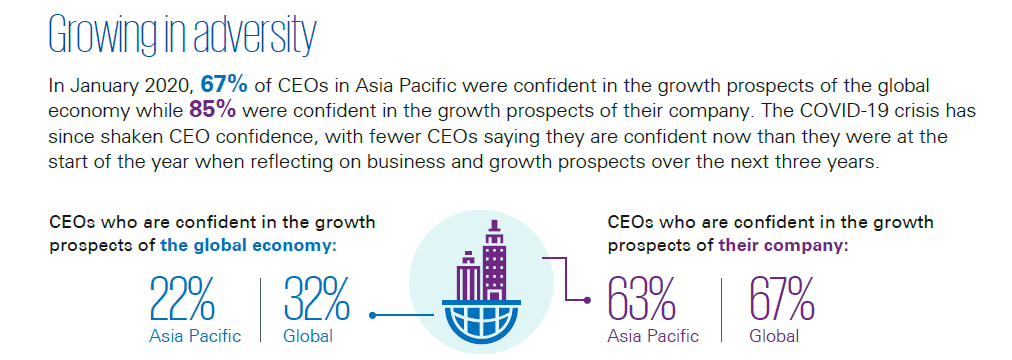
The 2020 KPMG Global CEO Outlook revealed only 22% of CEOs in Asia Pacific remain confident about the growth prospects of the global economy over the next three years, a significant drop from 67% in January 2020.

A clear result from the study reveals business leaders have “radically shifted” their perspectives as businesses and governments around the world continue assessing the long-term impact of Covid-19.

It found during this period of unprecedented uncertainty, CEOs are prioritising digital transformation, talent and ESG (Environmental, Social and Governance) factors at the top of their agendas.

On a more positive note, CEOs are much more assured in the resilience of their own business as 63% expressed confidence in their company’s growth for the same time period.

KPMG Growing In Adversity

Source: 2020 Global CEO Outlook, KPMG International

Critical Measures to Bolster Resilience

Datuk Johan Idris, managing partner of KPMG in Malaysia commented: “A majority of CEOs have undertaken critical measures to bolster their company’s medium-term resilience.

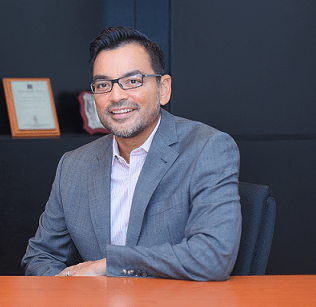
“This is particularly evident at the height of the crisis when business leaders worldwide took steps to maintain business-as-usual activities in answer to restricted movements. With the extension of the Recovery Movement Control Order (RMCO) until 31 December 2020, business leaders are forced to relook at their operational strategies,” says Johan (pic).

Datuk Johan Idris Managing Partner Of KPMG In MalaysiaKPMG CEO Survey Digital

And key to this is the ability to move away from short-term measures and prepare for mid and long-term growth.”

One way CEOs are collectively doing to secure long-term growth is channeling resources towards digital transformation initiatives.

Before the pandemic, 64% of CEOs felt overwhelmed by the lead times required to achieve significant progress on digital transformation.

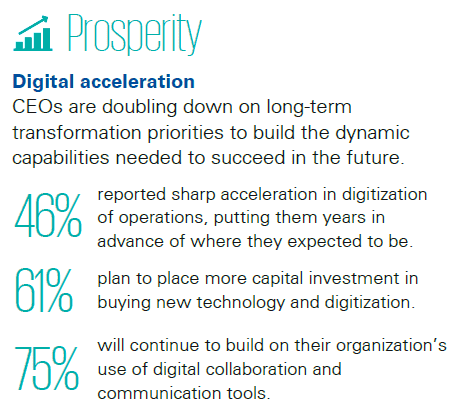
However, following worldwide lockdowns and the need for physical distancing, 46% of CEOs have reported that progress for their digitisation of operations has sharply accelerated, putting them years in advance of where they expected to be.

Almost two out of 3 (61%) plan to prioritise more capital investment in buying new technology and digitisation.

“Clearly, there has been a momentous change in mindset in that CEOs are now more confident and willing to invest in technology to make their companies more operationally resilient, agile and customer-focused to achieve growth during this tumultuous time,” says Johan, adding he expects digital acceleration to increase in speed and scope even after the pandemic subsides.

KPMG CEO Survey 1

New Risk Paradigm

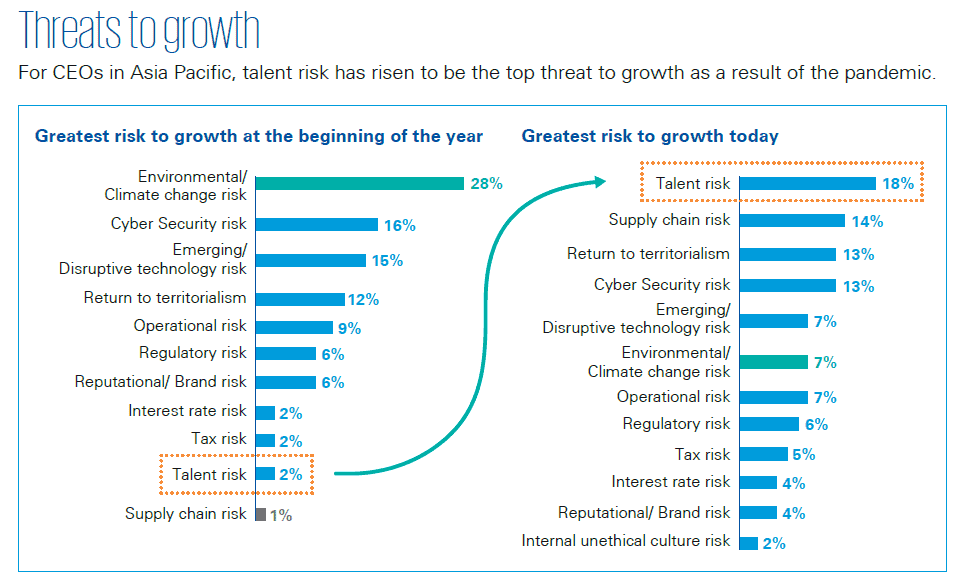
CEOs have also identified talent risk as the main threat, a category which encompasses recruitment/retention, overall well-being and health of staff.

This was the threat that CEOs were least concerned about at the beginning of the year. As a result of this pandemic, it has now risen to be the highest perceived threat to long-term growth.

This could reflect the challenges CEOs face with recruiting and retaining personnel while motivating the workforce despite disruption to the usual ways of working.

Most CEOs (72%) have said that remote working caused them to make significant changes to their policies to nurture culture, while 69% reported how remote working has widened their potential talent pool for future hires.

Regardless of the barrier caused by physical distancing measures, CEOs recognise that losing key employees, attracting specialised talent, keeping workforces productive and the health and wellbeing of their staff can have a critical impact on their future business performance.

Supply chain risk (just 1%) was at the bottom of the list for CEOs in January but catapulted to second place (14%) by July-August, the surveys revealed.

The rise in supply chain concerns could be attributed to the fact over two-thirds of organisations (72%) have had to rethink their global supply chain approach given the disruptive impact of the pandemic.

This could potentially lead to a redesign of global supply chains to become more agile in response to changing customer needs, and more robust to reduce risks and disruptions over the long term.

Renewed Sense of Purpose

Recent developments have driven 78% of CEOs in Asia Pacific to develop a stronger emotional connection to their organisation’s purpose, with 66% stating how they responded to the pandemic by shifting focus towards the ‘Social’ component of their ESG programme.

KPMG’s survey also found that 76% have had to re-evaluate their organisation’s purpose as a result of the Covid-19 crisis.

Johan concluded, “Recovery from the pandemic does not mean a return to normal, but instead an opportunity to define our post-pandemic reality.

“As the crisis continues to change what good corporate leadership looks like, the role of the CEO is more important than ever in steering the business towards growth in the new reality and beyond.”

Investment Options for Young Investors

Young investors (or any beginner investor) will often ask: “What should I invest in?”

If you are a millennial, the idea of investing your hard-earned money can come across as complex or perhaps intimidating. While it is important to secure your future, how do you go about doing it?

Unlike previous generations, millennials are comfortable with technology and the convenience emanating from their smart devices. They enjoy co-working and travelling, and value experience above others.

In other words, millennials are breaking away from the conventional mode of spending and saving, developing a pattern of higher risk-taking due to their need for instant gratification. But there is still hope!

Despite the common misconception, investing isn’t just for the financially established – you can start investing for as little as RM50 per month and begin your journey to building wealth. To brave the high seas of investing, it is important to remember the key is not just randomly betting on different investments but learning to save and making informed decisions for your future.

Smart Investor reaches out to several experts in the field for their perspective on the topic.

SURAYA ZAINUDIN, FOUNDER, RINGGIT OH RINGGIT

Based on my interactions with the Ringgit Oh Ringgit audience who are primarily within the millennial age group, many of them invest their money in a combination of unit trusts and mutual funds.

Amanah Saham Bumiputera (ASB) and Private Retirement Schemes (PRS) are popular, with many taking advantage of the PRS Youth Scheme a few years back, and collecting the RM500/RM1,000 bonus upon RM1,000 deposit.

Other popular investment options are stocks (especially dividend stocks), fintech platforms like Wahed Invest, Stashaway and MyTheo (robo-advisory platforms), gold (HelloGold), P2P lending (Funding Societies) and crypto assets (Luno).

In terms of the recommended proportion of their income to be put aside for savings and investments, I recommend anyone to save at least three to six months of living expenses as soon as possible, regardless of income level. You need the savings to protect yourself against any of life’s unexpected expense.

Suraya Zainudin 1

After you hit that amount, feel free to choose either to save as much income from salary, add more income (increase salary or do a side hustle), or both. Taking willpower out of the equation by automating investments is a great way to get rich slowly.

The stock market, generally speaking, intimidates any beginner, millennials included. However, it is great that there are personal finance content creators nowadays that share their stocks portfolios online using relatable language. It makes the whole process – from research to reallocation – easier to visualise and thus implement.

Getting help from a financial adviser, a robo-adviser or opting for a do-it-yourself (DIY) approach or investing in mutual funds or exchange-traded funds (ETFs) – these are great ways to get started. Personally, I’m an advocate for the DIY approach since it’s the most cost-efficient approach.

Investment information and advice is very easy to get for free online, via a quick Google search. I would personally save for the services of a financial adviser for estate planning instead.

STEPHEN YONG, CHIEF KNOWLEDGE OFFICER, WEALTH VANTAGE ADVISORY

The concept of ‘pay yourself first’, which is to set aside funds every time you receive an active income, is advocated by many financial advisers.

1 4

The whole idea behind paying yourself first is to consider as if you were an employee of Me Sdn Bhd, and ensure that you get paid every month. That being said, the moment you receive your pay, set aside an amount into another account that you will not touch.

Once you have accumulated three to six months’ worth of emergency funds, paying yourself first should be channelled towards investing. This is especially important for young adults to allow for early investing and compounding to build serious wealth. Here are a few practical steps to pay yourself first:

  • Decide how much you will pay yourself. It can be a percentage (20% of your pay, for example), or a fixed figure (RM1,000 monthly);
  • Set up an automatic transfer every month into a separate account designated for investing; and,
  • Set objectives for the money in your account to be allocated into various investments.

You can also automate some investments if there is a regular savings plan option to gain the benefits of dollar cost averaging.

For those who have just started out in their career, there are an increasing variety of investment vehicles available. Rather than start investing based on recommendations from friends and family (which is something young investors are prone to do), a smarter approach to selecting your investments is to have a customised personal investment plan following your desired asset allocation.

One of the most important determinants comes from deciding on asset allocation which determines ~90% of volatility and gives ~40% of returns (Determinants of Portfolio Performance by BHB published in the Financial Analysts Journal).

What is asset allocation?

Asset allocation is to set how much of one’s investments goes into various asset categories to get the best balance between returns and reduced overall portfolio volatility. Here are some smart investment options for each asset class:

For risk appetite, investor risk profiles are generally categorised into the following from the highest to lowest risk:

Examples of high-risk investments include shares, commodities, cryptocurrency and alternate investments. Examples of low-risk investments include bonds and money market funds.

In terms of how much risk millennials should be willing to take to build their investment portfolio, it is important to note that every millennial investor needs to decide for themselves how much risk is suitable.

As a millennial, time and compounding are on your side, so you may be able to take on more risk than someone who is retired or near-retirement. There are various investor risk profile assessments available which help you to know your investment risk appetite.

Overall, one can reduce risk by practicing diversification and having a personal investment plan. Diversification can be done by diversifying across the following:

On the question of whether millennials are generally apprehensive about investing in the stock market, I would say millennials today have access to a wealth of information and resources.

As such, everyone has their own preferences with some feeling comfortable investing directly in the stock market while some prefer using other investment vehicles. The key thing for millennials is to get trustworthy professional advice on how to invest.

Overall, we are seeing a blended approach working out well with a combination of working with a financial planner, robo adviser, and maybe handling some areas using a DIY approach.

MARSHALL WONG, FOUNDER, planNERD

The ‘pay yourself first’ concept is a good practice, and as a financial planner myself, even I have created an automated system to make sure that I am getting paid first. The keyword here is ‘automated’.

To do this, I have two bank accounts. The first is what I call the ‘Holding Account’, which is the main account which I use to receive my income. In this particular account, I set a recurring transfer of funds to another account, which I call the ‘Parking Account’, which is set up for the sole purpose of accumulating money for my next investment.

When it comes to smart investment options that a young person can consider, as cheesy as it may sound, I believe that investing in one’s own knowledge is always the first thing a young person should do. Without proper knowledge, the line between investing and gambling can blur.

Take cryptocurrency as an example. Most people that do not understand blockchain beyond it being ‘just a system behind Bitcoin’ may think that cryptocurrency is a gamble. But for those that truly understand the potential and the value that blockchain can bring to us in the future, cryptocurrency is seen as an investment.

Don’t get me wrong, I am not saying that everyone should jump into cryptocurrency. A young person should start reading articles on business and finance to be equipped with the necessary knowledge to understand the true value of where they put their money into.

Marshall Scaled 1

On the topic of mobile-friendly investment platforms, I have personally invested with StashAway, Wahed and MyTheo. These platforms are great for beginners as they are simple, seamless and do not require investors to do as much homework before they invest.

However, it is important to be reminded that we should diversify and not put all our eggs in the same basket.

Recently, we have seen a US$7.6 bil online brokerage firm, Robinhood experienced a massive outage due to technical problems. Nevertheless, I encourage young investors to use platforms like these but remember to consider other traditional investments.

Are millennials apprehensive towards investing in the stock market? I personally don’t think so.  Whether they ought to get help from a financial adviser, a robo adviser or opt for a DIY approach, I think millennials should start by doing their own research and try out the DIY approach.

That being said, if they do not have the time or confidence, or they have tried the DIY approach with unsatisfactory results, they should consult a fee-based financial planner. A fee-based financial planner will identify and quantify their life objectives and assist them in choosing the correct investment.

Investing in mutual funds, index funds or ETFs on a piece-meal basis without knowing the bigger picture is dangerous as each investment has different levels of volatility and time horizons.

Risk-wise, there is no hard and fast rule, but then again, it all depends on the investors’ investment objective. If the objective is a short-term one, you should not take too much risks. But if the objective is a long-term one, millennials should consider taking on more risk and pay less attention to the short-term fluctuations.

All in all, as a financial planner, I encourage young investors to have multiple investment portfolios to achieve different investment objectives. As such, investors can have both portfolios with high and low risk simultaneously.