Wednesday, 5 August 2026 Stay informed. No noise.

Digital Solutions For SMEs

With many companies being forced to pivot, digital solutions are in demand.

HomeBiz 01

The sudden pandemic has caused some small and medium-sized enterprises (SMEs) to lose their positions. Most of them are traditional, non-information enterprises, offline businesses, or lack effective digital management models and are isolated by the pandemic.

In the beginning, there was general confusion over high threshold, high costs and long cycle of digital transformation.

“After the pandemic, more and more companies have discovered that accelerating digital transformation can accurately control inventory, improve management efficiency and reduce business operating costs,’’ says Volservers Solutions managing director Tan Yik Jaan. While many SMEs have started to digitise (convert their data and documents into a digital format), they have yet to embrace digital transformation and change their business model; slow internet connection (many industrial estates do not have fibre optics infrastructure) is also a problem.

Digital transformation involves looking at holistic solutions like enterprise resource planning (ERP) and customer relationship management systems. Supply chain management (SCM) has moved to 6PL which is an artificial intelligence driven SCM, but many SMEs have not gone beyond 3PL that offers first stage supply chain integration.

“SMEs need to have a progressive mindset that embraces business transformation with digitalisation (converting business processes to use digital technologies) as a tool,’’ remarks Small and Medium Enterprises Association of Malaysia (SAMENTA) national secretary Yeoh Seng Hooi.

Apart from the lack of financial and skilled resources, SMEs also face challenges in protecting their digital platforms and data from cyber-attacks.

“A difficult part of the digital journey is to find the right partners at an affordable cost,” explains managed security service provider Vigilant Asia group CEO Victor Cheah.

Most SMEs already have two years’ experience of manoeuvring through their digital journey in the pandemic, and a common challenge is the execution and integration of processes.

“The hit to the tech supply chain has resulted in massive delays in many hardware reliant products and solutions, while continuous uncertainty is affecting cost especially on hardware reliant solutions,’’ says IT asset lifecycle management solutions company Rentalworks Malaysia managing director Alan Puah.

SMEs need to have a progressive mindset that embraces business transformation with digitalisation– Yeoh Seng Hooi,SAMENTA

Potential roadblocks
The biggest challenge faced by SMEs these days is integration across multiple systems. “The most difficult part for SMEs is the mixing and matching of various solutions that can solve their problems while allowing for future expansion,’’ says Wavelet Solutions CEO Vincent Lee.

To address this integration issue, Wavelet Solutions, an ERP solutions provider for SMEs, provides operational data lake solutions built on Amazon Web Services (AWS) platforms. (A data lake is a centralised repository for structured and unstructured data at any scale, while AWS is the world’s most comprehensive and broadly adopted cloud platform).

For digital transformation, the digital experts from Volservers work closely with brands across various industries to help SMEs grow their brand identity in the market.

Volservers is an experienced market research agency that provides panel and full-service research solutions, online survey programming, hosting and reporting services to the market research industry, and builds a pleasant customer experience for customers’ platforms.

User-centric expertise at Volservers looks deeply into user behavior, expectations and business goals when designing a seamless journey for customers’ products. “We provide interactive UI/UX designs, web and mobile applications for multiple platforms, namely, on Apple and Android, to help maximise customer reach,’’ shares Tan.

In terms of cybersecurity services, Volservers has the capabilities to identify vulnerabilities in clients’ environment and develop strategies to remediate and improve their security posture. Volservers’ services consist of solutions that protect customers’ IT infrastructure such as endpoint protection, web application firewall with anti-DDOS and much more. This includes an experienced security incident response team to ensure minimal recovery time and damage to customers’ business reputation.

In terms of managed IT services, Volservers has multiple platforms of solutions whether it is in cloud or hybrid infrastructure; its team offers support, product consultation and monitoring for multiple operating systems and databases.

Today, there are many cyber threats including zero day viruses and ransomwares which cannot be detected by traditional anti-virus and firewall solutions. Vigilant Asia is able to provide 24/7 monitoring which is bundled with advanced tools to provide protection, detection and remediation services. These tailor-made services include vulnerability assessments, security frameworks and training.

“It is affordable for SMEs to subscribe to our services which are tools provided based on a subscription model, on a per-user-per-month basis,’’ explains Cheah. Concerns over cashflow and work mobility has also prompted many SME to seek leasing programmes for endcomputing devices; short term rentals of preloved or previously used laptops and tablets are highly sought after.

To help customers navigate through the whole asset life cycle process, Rentalworks offers its mobility device leasing programmes with fixed monthly repayments plus cloud-based firewall, flexible tech support and data erasure for device end of life.

“Our specially-curated lease-to-use approach ensures that the process of deployment, maintenance and refresh are all managed by Rentalworks, making it easy for SMEs to focus on growing their businesses,’’ says Puah.

The SME digital journey is a longterm process; despite the economic reopening and return to physical locations, the road to digitalisation has started and will continue to score greater achievements.



2022 Jan Pg2223

The Importance Of Islamic Estate Administration

For Muslims, Islamic estate planning can be key for the smooth distribution of assets to heirs.

When a Muslim dies, the Islamic Law of Inheritance, namely Faraid, applies in respect of the distribution of the deceased’s estate. The main heirs entitled for his estate will be the father, mother, husband or wife, son and daughter. In other circumstances where there is no father or son, the siblings, paternal uncle or the child of paternal uncle, or Baitul Mal, will be entitled to the estate. The rights and portions of the heirs are protected and stated in al Quran, an Nisa’ verses 11 and 12. Those not under the above categories would not be entitled for the Faraid portion.

In term of legal ownership, the rights of Faraid heirs would not be automatically transferred. However, such rights and portions must be claimed and vested through the legal process, or the estate will remain frozen under the name of the deceased and would not be of any benefit to the heirs. For a person who dies without a wasiat, a representative of the deceased shall be appointed as an administrator of the estate with the agreement of all legal heirs. He shall apply for a court order, namely a letter of administration to empower him to administer the deceased’s assets and liabilities subsequently to distribute the assets to the rightful heirs after making payment of the liabilities.

Depending on the gross estate value, the letter of administration shall be applied at three agencies as follows:

i) Department of Director General Lands and Mines (JKPTG) if the value of the estate does not exceed RM2,000,000 consists of movable and immovable assets
ii) Amanah Raya Berhad for the movable assets worth not exceeding RM600,000
iii) The Civil High Court for the estate value worth exceeding RM2,000,000

In addition, the representative shall apply for a Faraid certification at the Syariah Court to ascertain who are the legal heirs and their share over the deceased’s estate. But for applications made at JKPTG, the Faraid certificate is not required.

“It is advisable for a Muslim to have proper Islamic estate planning for the purpose of expediting the administration and liquidation of the estate.”

Islamic estate planning instruments
In consideration of the above issues, it is advisable for a Muslim to have proper Islamic estate planning for the purpose of expediting the administration and liquidation of the estate, as well as planning for a fair and balance distribution based on the wishes and needs of the testator and his family. Wasiat and Hibah are the two main instruments to be considered when preparing the Islamic estate planning.

Wasiat
Wasiat is an essential part of estate planning. Having a wasiat provides some advantages to the testator such as appointing an individual or a trust corporation as an executor to administer his assets and liabilities for distribution to his loved ones upon his demise. With the appointment of the executor, the tedious and lengthy process of getting an agreement from all legal heirs for the appointment of administrator can be avoided.

Appointing a trusted and competent executor is crucial so the testator can rest assured that the administration and liquidation of the estate will be conducted smoothly in the proper manner and the rights of the beneficiary(s) are preserved. Unlike an individual, a trust corporation such as as-Salihin Trustee Berhad is a perpetual, competent, professional and governed under the Companies Act 2016, Trust Companies Act 1949 and Trustee Act 1949.

In term of distribution, the testator is permitted to bequeath one third of his assets to his intended beneficiaries who are not his Faraid heirs. Therefore, wasiat is a good instrument for distributing assets to an adopted child, non-Muslim family member, orphanage, or charitable organisation.

In addition, one third also can be allocated for sadaqah and waqaf for the purpose of getting rewards from Allah and his blessing in hereafter. The remaining two-thirds of the estate is to be distributed among the Faraid heirs. Faraid merely indicates the fraction of the heirs’ entitlement over the deceased’s estate as whole. This could result in the fragmentation of a property; for instance, if the ownership of a house is to be shared among many heirs such as father, mother, wife, son and daughter. Therefore, in his Wasiat, the testator may ascertain the manner of distribution.

In other words, he may give specific assets to specific heirs within his Faraid entitlement or he will provide the executor with wide discretion to sell the asset without the necessity of obtaining consent from the beneficiaries. From the proceeds of sale, distribution of the estate can be divided without much delay. In brief, the executor may use his discretion and absolute power to execute the testator’s wishes provided that the wishes do not contravene Syariah law.


Hibah
Hibah is a gift made by a donor to a beneficiary(s) during his lifetime and effective immediately upon the setting up of the hibah. The hibah asset is not considered part of the donor’s estate and is not subject to Faraid. Of equal importance, hibah is used for distributing the asset to intended beneficiaries and avoiding fragmentation of the property. It is the most suitable estate planning instrument for a couple without children or only a daughter, a reverted Muslim, or a couple with a minor or special child.

Business owners may consider hibah in a business succession plan to ensure the continuity of the business. Allowing the business to be run by all Faraid heirs and inexperienced heirs may lead to serious disruption or dispute within the management of the company. Thus, deciding on the right and capable candidate for taking over the business is a must as it can help to create a smooth transition and management of the company upon his demise.

In conclusion, by drawing up an Islamic estate plan during his lifetime, the testator may determine who will be given the mandate to administer his estate and the manner of distribution of his assets upon his demise for the benefit of his family’s well-being.

Article by : Amna Fazillah binti Ismail, Chief Business Officer of as-Salihin Trustee Berhad.
as-Salihin Trustee Berhad offers full-fledged Islamic Estate Planning products and services such as Wasiat writing, declaration of Hibah, jointly acquired asset agreement, takaful trust and living trust.

Gen X VS Millennials In The Workplace

There have been countless studies about the generational gap between Gen X and millennial workers, with the topic stirring up much debate to this day. Broadly speaking, Gen X are born between 1965 and 1980 and are currently 41 to 56 years of age. Millennials are born between 1981 and 1996, ranging between 25 to 40 years of age.

With the Movement Control Order (MCO) forcing many businesses to operate remotely, many millennials took to the situation like a duck to water thanks to their digital savviness and familiarity with
remote working tools. However, with offices reopening after the MCO was lifted, many now find themselves at a crossroads and are often reluctant to return to a centralised workspace.

“The reality of the matter is that employees were forced to adapt to the culture of working from home, and just as they got accustomed, it is now time to revert to the old ways of working with added restrictions – the SOPS,” says Rita Krishnan, the managing director and training consultant of Impian Helang.

To her, CEOs and management of any company will return to the office and face new challenges, some of which they have never dealt with in the past thanks to the unprecedented effects of the Covid-19 pandemic.

“In the past, it was performance and productivity that mattered most for organisational growth,” she recalls. “But today, compassion with high
emotional intelligence is crucial, being the way forward in managing the workforce, especially in retaining the talents.”

In Deloitte’s 2021 Millennial and Gen Z survey, it was found that only 38% of millennials felt comfortable voicing concerns to supervisors about work stress.

This suggests that many are unable to trust or anticipate a clash with higher ups about the rigours of work. A correlation can be drawn to 31% of millennials taking time off work due to pandemic-related stress and anxiety. According to the survey, almost half of them gave a different reason to their employers, likely due to a stigma around mental health at work.

It is no surprise that CEOs and senior management figures today must be more well-rounded figures – able to lead and dissect numerical patterns as well as business strategy, but being able to relate to their subordinates on a more personal level rather than simply boss and employee. However, the difference in age can often mean that there is a clash in culture and expectations.

The topic is widely documented and debated, with both sides often convinced that they are not compatible with the other. This often boils down to a mismatch in terms of ideology, with Gen X workers likely to espouse more traditional work values, while Gen Y or millennials subscribe to more flexible or unconventional working mantras.

“Generally, Gen X are hard workers while Gen Y are smart workers,” she postures. “Gen X do not jump jobs and are comfortable with where they are. This may seem like the safer option but can also be dangerous as career progression is not usually an option.”

What about the retirees?
For all the talk of Gen X v s millennials, the pandemic has also depleted the savings of many retirees. This has resulted in an influx of retirees in their fifties and sixties re-entering the job market, but who may be under the impression that time has left them behind. However, Krishnan believes retirees have much to offer in terms of their knowledge and experience, and suggests that there are many job opportunities for such individuals.

“Training and consultancy in sharing a wealth of knowledge, experience and skills that were useful then and useful now,” she shares.

The experience accumulated by such individuals suggests that within them is a treasure trove brimming with a wealth of knowledge; they simply need to leverage this into potential job opportunities.

“I believe in reinventing and recycling talents that upholds the reputation of recreating past performance. This is where retirees can attend the HRD Corp Certified Train-The- Trainer programme, for a new career altogether whilst recreating and reliving the successes of their past,” adds Krishnan.

Job hopping a competitive disadvantage?

Krishnan also suggests that the typical Gen Y employee prefers to job hop often in order to gain experience quicker as well as to be exposed to various industries. While she does not dismiss this career strategy, she highlights that it also has its pros and cons.

“Employers are reluctant to invest in and develop employees who show no promise of ‘stayability’,” Krishnan explains.

“The working style of Gen Y comes with the mindset of expectations – less work, more pay, with flexi hours.”

This shift in mindset is evidenced by concrete data. The Deloitte survey indicated that job loyalty is slipping among millennials, with 36% of respondents open to leaving their current employer within two years if the opportunity arose, a drop from 31% in last year’s survey. However, 34% of millennials say they would only consider leaving after five years, which suggests it is not prudent for senior managers to paint the entire generation with the same brush.

She believes that, although difficult, this difference in culture and expectations can be bridged with programmes that facilitate interaction between Gen X and millennials.

“It is important to allow employees to explore their skills and abilities with the intervention through team bonding programmes where Gen X and Gen Y can interact and learn from each other,” says Krishnan.

These types of considerations should be taken into account by HR departments, especially when it comes to upskilling the workforce, an area in which Krishnan is well-versed.

“The pandemic has altered traditional training styles, and the responsibility of the HR department would be to select relevant training programmes related to industry needs,” she says.

“At the same, employees’ morale and productivity levels can be elevated using positive reinforcement.”

She is also a keen advocate for companies to develop a psychological connection with their employees, resulting in a relationship that presents “a sense of belonging”. This demonstrates the company caring about their employees’ personal development and workforce growth. Such a result would inevitably translate into a win-win situation for both company and employees.

Malaysia: Investment For Expatriates In A Global Context

There are many factors that expatriates must take into account when considering what to invest in.

Whether you are risk-loving, or not, Malaysia has a lot to offer expatriates for work, pleasure or retirement. How much time you choose to spend in Malaysia may depend on your work schedule, family commitments and the availability of legal status as a foreigner.

All these things change and so does the risk of investing in Malaysia. When you are deciding whether or not to invest in Malaysia, as an expatriate or a local, one way to make better decisions is to look at the risk and return on investment opportunities in Malaysia in a global context.

Malaysia Country Risk

Country risk is the uncertainty associated with investing in a particular country and, more specifically, the degree to which that uncertainty could lead to losses for you as an investor. Uncertainty can come from many different factors ranging from political and economic, to health and technological influences.

A rule-of-thumb to use when assessing country risk is a global, or Asian, country risk ranking. For Malaysia the recent country risk rankings are varied and comparable to their Asian neighbours. Risk rankings are based on a variety of political, sovereign debt, perception of ethics indices and a combination of business specific factors, but how useful are they to the individual investor?

Once you have taken the decision to invest yourself, your time and your hardearned money into Malaysia as an expatriate, then you can run through the list of assets that you might like to invest in and do a global comparison for each one.

Your Time In Malaysia

Is time more precious than money? It may be, depending on whether you have a busy job or are retired. Deciding how much of your time each year to spend in Malaysia and how much to spend in the rest of the world is a good way to assess your investment risk in Malaysia as an expatriate.

With high growth rates in Asian countries and, until recently, ease of travel across Southeast Asia, Malaysia is the perfect hub from which to do due diligence on other Asian investment opportunities.

Your Investment Portfolio

Most investors, expatriate and local, diversify their investments amongst different asset classes. Malaysia offers the same, or similar, assets as most developed countries, which now includes cryptocurrency exchanges, but does that mean that Malaysia should be a large proportion of your investment portfolio? The answer to this depends on your personal investment journey.

Entry, and exit, from Malaysia may be more complicated than you may have anticipated as an expatriate. If you are a Malaysian and see your future lying overseas, in Australia, the UK or elsewhere, then Malaysia may be a smaller part of your global investment portfolio.

Short-, medium-, or long-term stays in any country does not necessarily equate to how much of your investment portfolio should be held there, but it could be an important factor. Analysing typical economic variables over time can inform your investment decision.

The RINGGIT

The first thing most visitors to a country look at is the exchange rate risk. If it is favourable, you may be pleased but it is not likely to cause you to extend your time in a country. Holidays, travel, work or living in a foreign country are usually motivated by more than one factor.

In the case of Malaysia, the valuation of the ringgit against other foreign currencies is attractive for a holiday but does it make it a good investment for the medium- or long-term? Probably not; the Malaysian Ringgit is relatively weak, compared to major global currencies, and also volatile.

Buying on dips may be good for speculation but long-term accumulation of currency in Malaysia, like many other countries, faces the risk of tightened global exchange and transfer controls.

Real Estate

Buying real estate in Malaysia is relatively easier for locals than for expatriates. Limits on purchase price for real estate for foreigners vary from state to state, and legal status as well. Compounding these risks, oversupply of property in Kuala Lumpur is palpable, but there are some real gems to pick up in good locations at affordable prices if you take expert, local real estate advice.

Real estate in Kuala Lumpur is no longer below global market prices but there are many, great out-of-town locations still available at a fraction of global prices.

Tax Rates

Personal income tax and corporate tax rates are still relatively low in Malaysia. As an expatriate you can benefit from tax rates that are comparable to other neighbouring Asian countries and still below average global tax rates. A non-resident tax rate of 30% applies across Malaysia and 15% in Iskandar, Malaysia.

This compares favourably to many countries in Europe where marginal rates of tax can be 40% or higher. Any good investment advisor will tell you that there is no point in making 100% if you have to pay 40% of it in tax. It also leaves you more to invest from your Malaysian income.

Interest Rates

Bank fixed deposit interest rates in Malaysia are still competitive, at more than 2% per annum, whereas globally interest rates can be as low as 0.1%. If you have built up a significant amount of savings, holding them in a riskless bank account in Malaysia could be a good investment in these turbulent times.

Then there are higher interest saving options such as the EPF for salaried expatriates where annual interest rates, although variable in recent years, was a relatively attractive 5.2% per annum in 2020, with easy access to withdraw funds.

Future Investments

Crypto exchanges are nascent worldwide and Malaysia also has four regulated digital asset exchanges, namely Luno, MX Global, SINEGY and Tokenize. There is currently no capital gains tax on cryptocurrency profits in Malaysia, making it an attractive location to buy, hold and sell Bitcoin, Ethereum and other cryptocurrencies compared to other countries.

If you are smart (and lucky), you may be able to realise large, speculative profits when you buy and sell cryptocurrency assets in Malaysia then invest for the longer term.

Exit Strategies

Exit from Malaysia may prove more difficult than you may expect, so do your homework and be prepared to face changing rules and regulations just like most other countries. A smart expatriate should think twice before he, or she, or they, make a long-term investment decision in Malaysia.

One key country risk assessment that should be done before making an investment decision in Malaysia is your ability to transfer currency for foreign payments, or other uses. Such a country risk assessment involves weighing and assessing a variety of factors and potential, unforeseen future changes. If you are planning to retire in Malaysia, and never leave, then the only real risk is your inheritance. Due to the Covid-19 pandemic, and other factors, even this long-term view may need to be reassessed.

A key question locals may ask you as an expatriate in Malaysia is ‘What are you doing here?’ It’s a good question, so why not ask yourself, as an expatriate investor, ‘What am I doing investing here?’ A good way to answer this is to put your Malaysia investments in a global context, then take it from there.

Dr Jonathan Di Rollo

Article by: Dr. Jonathan Di Rollo (PhD Econ)

First published : Smart Investor Issue 369

The Basics of Forex Trading

The foreign exchange market, also known as the forex market, refers to a set of markets that facilitate the exchange of international currencies. According to Britannica Encyclopedia’s overview, the forex market is one of the oldest, biggest, and most liquid markets in the world. Today, most markets operate as over-the-counter (OTC) dealer’s markets, where two participants exchange assets over telecommunications channels.

There are many reasons one might want to swap one currency for another: tourists, for instance, may buy local currencies while travelling, while international businesses may purchase foreign currencies to pay offshore employees. However, in the world of trading, investors exchange currencies with the goal of making a profit.

If you’re interested in learning more about the complex world of foreign exchange trading, here are a few basic facts.

How do traders profit from forex?

Exchange rates can rise or fall by the minute. Traders profit from such changes by buying currencies while they’re undervalued, then selling them when their prices rise against other currencies.

To illustrate: let’s say a trader predicts that the Great British Pound would become stronger than the US Dollar. Let’s also say that £1 was worth US$1.55. The trader then buys £1,000 for US$1,550. Later, his prediction comes true, and the GBP grows, with £1 becoming worth US$1.75. This time, when he sells his £1,000, he gets US$1,750, thus turning a profit of US$200.

What is leverage?

Traders can also increase their profits by making use of widely available leverage trading options. According to The Balance, leverage allows traders to invest a small amount of capital to use borrowed funds in large trades. Though the trader will still have to return the borrowed capital after the trade has been executed, they will receive the majority of the trade’s profits.

Let’s say that the trader from the previous example wants to stake 15,500 USD in a trade. However, he only has 1,500 USD. Through leverage trading, he can use his 1,500 USD to borrow 14,000 USD, allowing him to purchase 10,000 GBP at 15,500 USD. If the exchange rate again shifts from 1 GBP for 1.55 USD to 1 GBP for 1.75, the trader can sell his 10,000 GBP for 17,500 USD. Returning the 14,000 USD he borrowed leaves him with a profit of 2000 USD.

Of course, it goes both ways. If the trader’s prediction were incorrect, using borrowed funds would also amplify his losses. Thus, when trading on leverage, it’s important to only stake money you can risk losing.

Where can I trade forex?

To get started, traders must first create a trading account at a brokerage. These days, most transactions occur on forex trading platforms online, through websites, software, and mobile apps. According to an overview of trading platforms by FXCM, some of today’s most popular trading platforms include MetaTrader4, Ninja Trader, and FXCM’s Trading Station. These platforms are widely used because they offer resources that can help traders make smarter decisions. For example, some notable tools these platforms provide include access to advanced analytics, charting tools, and risk management applications.

A note for beginners

As with any financial endeavour, it’s best to enter forex trading with a plan in mind. As mentioned in our previous article The Importance of Financial Planning, a lack of understanding of financial risks and returns will make you vulnerable to errors of judgment, which can lead to bad trading decisions. Consequently, it’s important to take time to study the markets thoroughly before starting your trading journey. If you want some hands-on experience without putting your capital at risk, you can practice trading using virtual money on one of the many demo accounts available.

Thanks to resources like leverage and helpful tools on trading platforms, forex trading has become more accessible. Beginners who want to try their hand at foreign exchange trading should study the market, its movements, and different trading strategies in order to safely engage in trading.

This article was contributed by Alex Palmer.

Financial Planning: Things to Do After a Flood

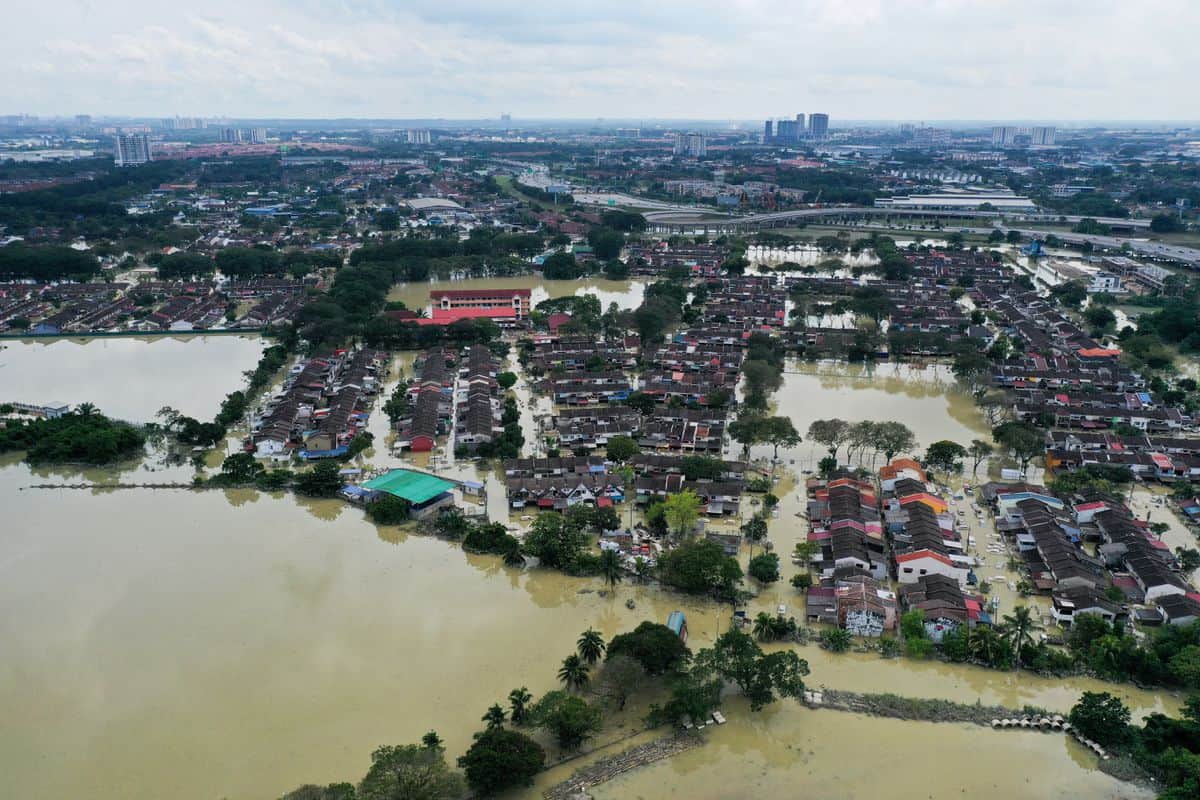
The 2021 year-end flood which affected many areas nationwide surpassed all previous year’s floods within Malaysia.  These has financial implications on the lives of our fellow Malaysians. For those affected, here are some ideas on how to pick up the pieces and build resilience moving forward.

1. After the flood – restarting your life

Consider the immediate aids you can leverage on to restart your life and get back on track. These can come in the form of financial, food, or accommodation aid, life essentials such as clothes and household items, or even transport arrangements for stranded individuals.

2. Get your mental health in check

Be sure to stabilise your frame of mind and check your stress level. There are a number of free services and apps such as:

  • Talian KASIH (8am – 5pm daily 15999, WhatsApp 019-261 5999)
  • Naluri (03-8408 1748, 24 hours, English, Malay and Mandarin)
  • Selangkah – Selangor Mental Sihat (SEHAT)
  • MySejahtera (Digital Health > Minda Sihat)

3. Gauge your financial situation

Once more urgent and pressing matters are taken care of, you can now take stock of your current financial situation. Ask yourself:

  • What are my losses?
  • What are my family incomes?
  • What are my monthly commitments?
  • What are my debts?
  • What is the position of my current investments and savings?
  • What is my protection coverage for my life and assets (takaful/insurance for personal and workplace)?

These questions will help you paint a picture of your financial situation and will quickly bring up areas of concern (if any) which you can focus on as you look to recover.

4. Salvaging assets from flood damage

The next step is to consider your current assets. Firstly, assess damage to items within your household. Check if you have household insurance and if yes, whether it covers special perils or not.

Assess damage to your vehicles, and be sure not to start them as the electronic system will short-circuit; get tow trucks to haul it to a workshop. Depending on the make of your car, the repair cost may range from RM4,000 to RM10,000.

Other things to consider:

  • If you are working from home, is your laptop and handphone provided by your company? Do you need to report up or make a police report?
  • Are your important documents destroyed?
  • Do you need to replace NRIC/birth and marriage/divorce certificates at the Registration Department, driving licence and road tax at the Road Transport Department (JPJ), and school certificates from the respective schools?

5. Stay safe and healthy

In such trying times, keeping healthy may be the last thing on your mind but it is very important that you do your best to follow Covid-19 standard operating procedures (SOP) by getting help from NGOs and volunteers for masks and hand sanitisers.

Be wary of water-borne diseases such as typhoid, cholera and dysentery and use water-purifying tablets if you are unsure if the water is safe for drinking or you do not have access to clean water. Follow the dilution instructions that comes with the tablets.

6. Rebuild your financial status 

The information in point (2) above is important to guide you on your next steps. You may seek help from:

  • Agensi Kauseling & Pengurusan Kredit
  • A licensed financial planner at SmartFinance.my where you can talk to an expert

Be on the lookout for scammers; they are heartless and only want your money. Only accept help from reliable sources.  When in doubt, err on the side of caution!

7. Preparing for a future flood

The financial challenges you face today is the basis of your emergency fund for the future. Therefore, it is crucial to start building one when you can. Transfer some of the risks to your protection coverage and tap into your network of friends or relatives that you and your family can stay with.

Flood-proof your home and/or prepare your evacuation SOP and equipment (torch lights, inflatable boats, dry food, bottled water, charged power banks, clothes, blankets and toiletries in waterproof bags, disposable wares and bags). Be constantly alert of your surroundings. Chances are, it may be difficult to sell your home and move to another so you may need to continue staying in your current place.

Review how you place your furniture and appliances. Some homes put them on platforms that can be jacked up to desired heights (granted, if water level too high, it can render platforms useless). Store critical items in waterproof boxes when the rainy season approaches. It may also be prudent to check if you can convert your rooftop to an emergency accommodation equipped with the evacuation items listed above?

My heart goes out to all flood victims.  We are fortunate there are volunteers and NGOs that we can contribute to, who will organise, mobilise and distribute contributions to as many victims as they can.  I hope the above is useful to those affected. May you have a respite from your situation and the strength to ride through this tough times.

This article is contributed by Linnet Lee, CEO of the Financial Planning Association of Malaysia (FPAM).