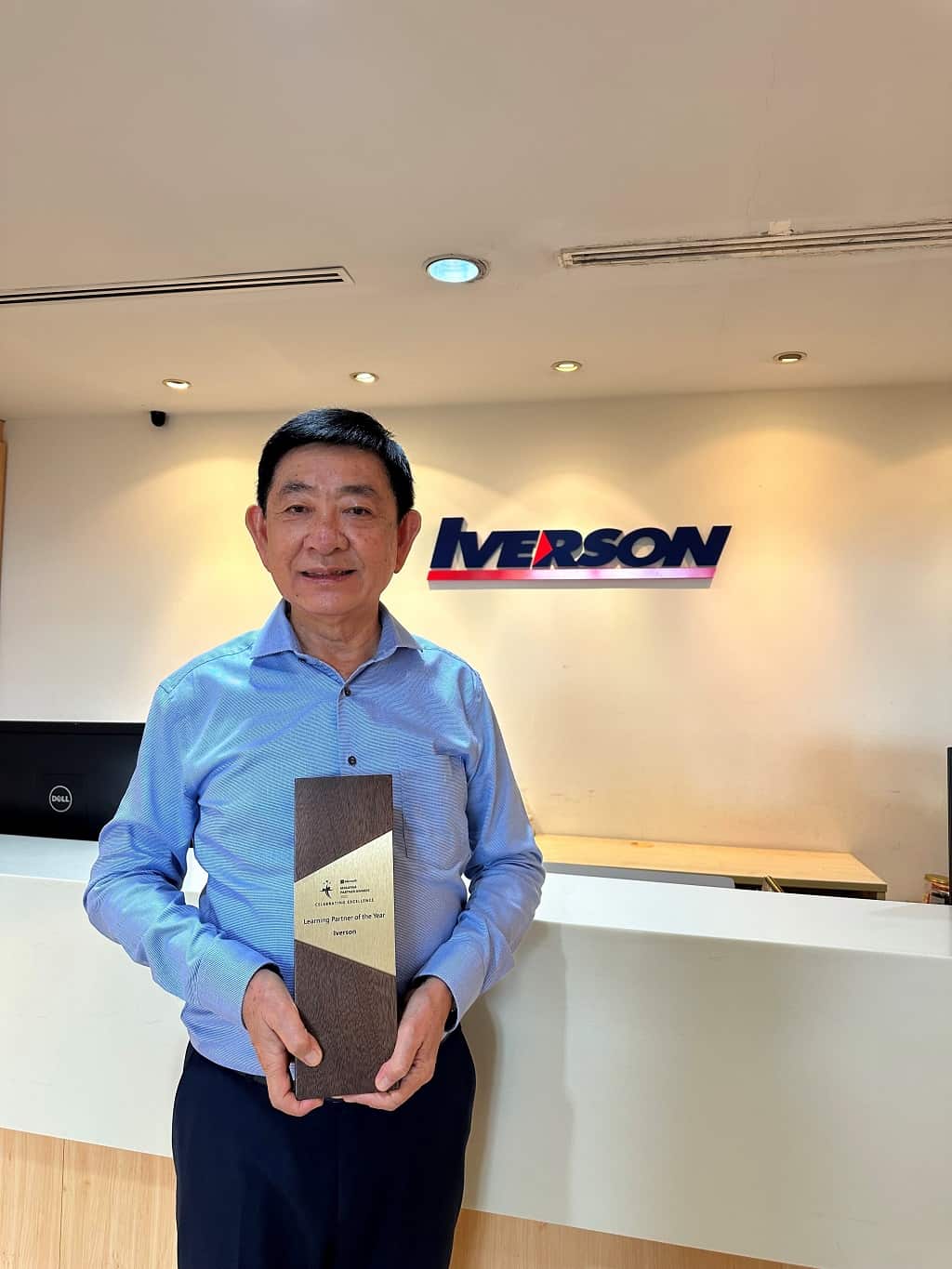
Iverson Associates Sdn Bhd has been awarded the 2022 Microsoft Malaysia Learning Partner of the Year for excelling beyond its peers in the delivery of high-quality customer experience and high-impact Microsoft training solutions in Malaysia.
Iverson, established in 1994, was also recognised for demonstrating an entrepreneurial spirit and sales excellence contributing towards Microsoft Malaysia’s business in the 2022 financial year.
“We are proud to be awarded this accolade which recognises our innovative and transformative approaches in overcoming adversity, and our ability to drive training and adoption of Microsoft Cloud technology,” said Dr Yap Chee Sing, Managing Director of Iverson Associates Sdn Bhd.
Iverson Associates takes pride in playing a leading role in the business ecosystem by transferring the latest technologies to government, business organisations, and individuals, helping them to upgrade their IT skills and gain competitive advantage in the digital era.
“Iverson will continue to champion continuous and accessible learning just as we have been doing for the past 29 years,” he adds.
“Building on our solid foundations and strong track records, we plan to continue expanding our product range and geographical reach to become a leading regional training provider,” Dr Yap said.
The firm is known for its collaboration with several government agencies to upskill the Malaysian workforce including the Human Resources Development (HRD) Corporation and the Malaysian Digital Economy Corporation. It offers a wide range of training courses like data science, artificial intelligence, machine learning, blockchain, cloud computing, project management and cybersecurity, amongst others.
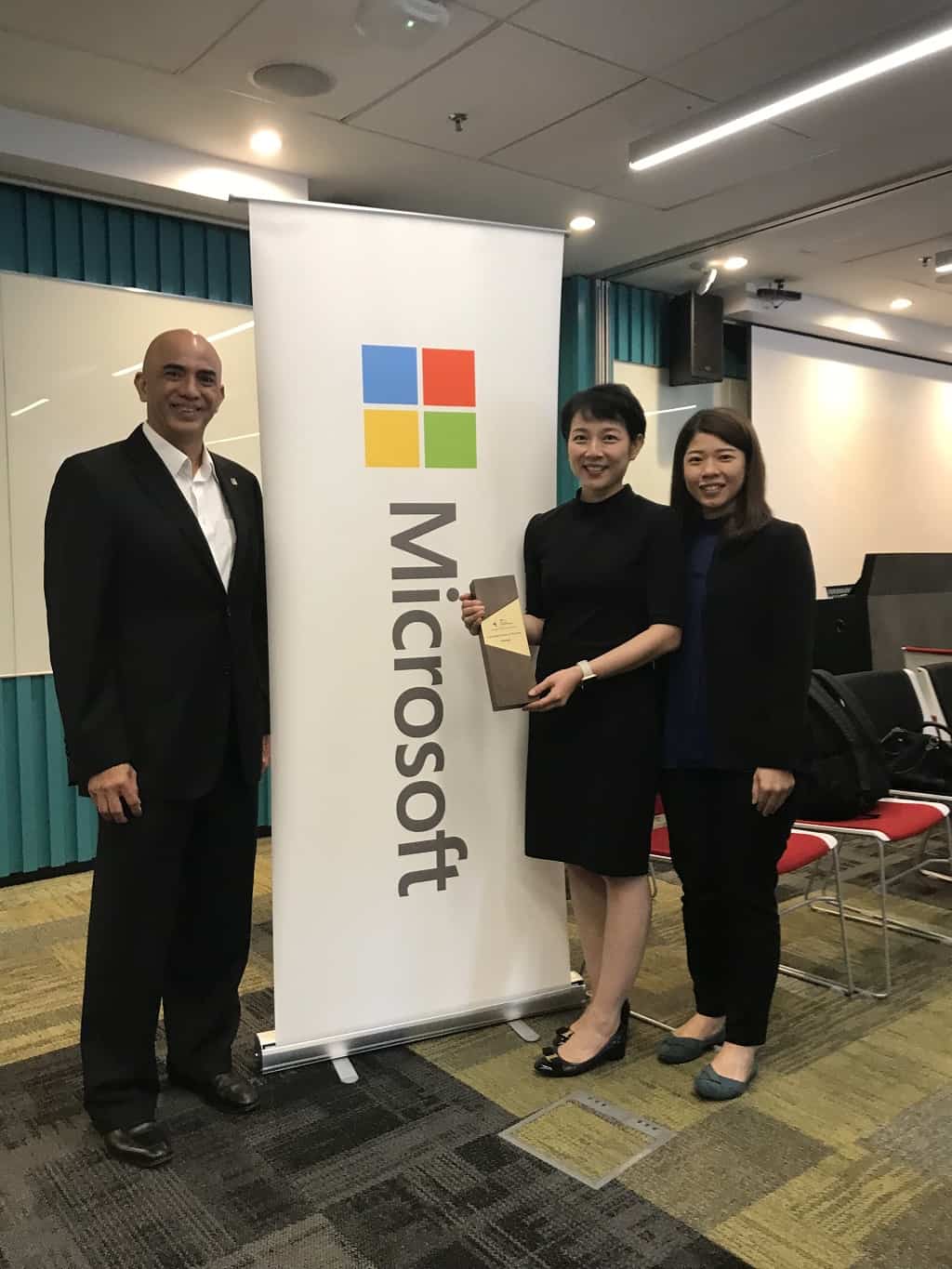
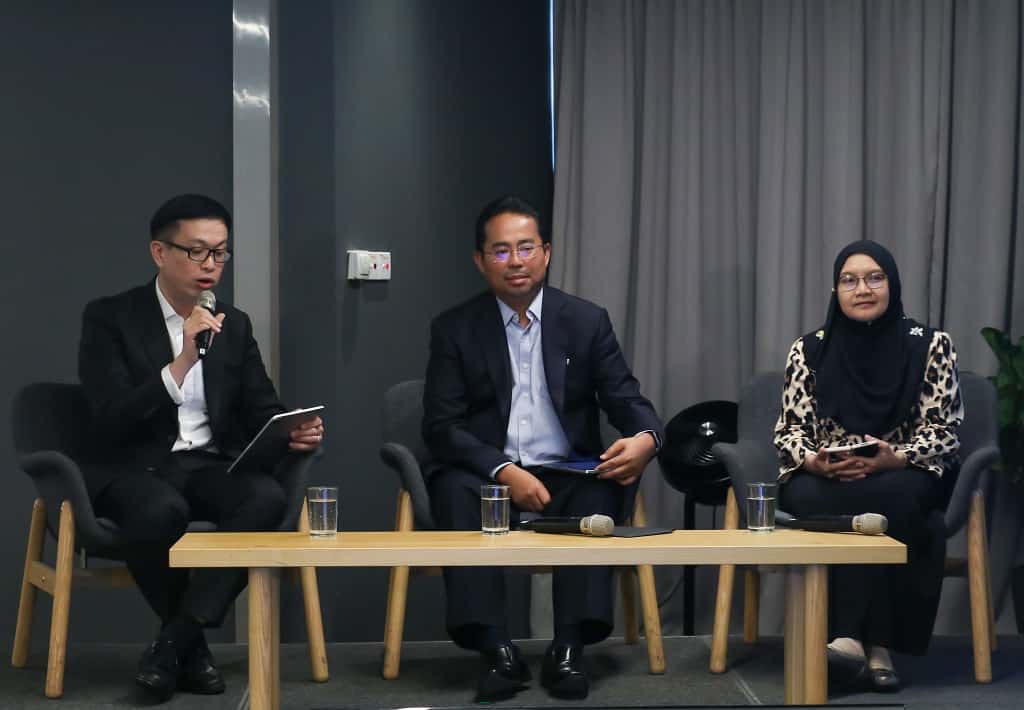
From left, Managing Director of Microsoft Malaysia, K Raman, Iverson General Manager, Cheryl Wong and Iverson Sales & Marketing Department Head, Ng Saw Hoon
“We believe our partners make more possible,” said Sara Lua, General Manager of Global Partner Solutions, Microsoft Malaysia. “The Microsoft Malaysia Partner Awards 2022 recognizes organizations that demonstrate digital transformation excellence and innovation based on Microsoft technology. As a learning partner, Iverson delivers digital skills and training to our customers and the partner ecosystem, which contributes to Microsoft’s pledge of skilling 1 million Malaysians by the end of 2023.”
“This current award is the latest won by Iverson. In recent years, we have bagged awards from other top IT vendors like AWS, IBM, Red Hat and Citrix, as well as from HRD Corporation. This win does not mean we will rest on our laurels; to the contrary, it will drive us to work harder to achieve greater heights,” Dr Yap adds.
More information on Iverson Associates and its offering can be found on https://www.iverson.com.my or contact 03-77262678 to find out more.
About Iverson Associates Sdn Bhd
Iverson Associates Sdn Bhd is the leader in professional IT training in Malaysia. Established in 1994, Iverson is the authorised training partner for the world’s leading IT vendors such as Microsoft, AWS, Red Hat, SAP, Salesforce, Citrix, Cloudera, EC-Council, Dell-EMC, Project Management Institute, etc. Iverson has more than 60 full-time staff in Malaysia and 3 training centres in Kuala Lumpur, Petaling Jaya and Penang. It also has a subsidiary in Bangkok, Thailand with 15 full-time staff. With 37 fully equipped, 500-seat capacity training rooms, a large pool of certified trainers, and well-designed courseware, Iverson has the capability and flexibility to provide training solutions to meet the requirements of the most demanding customers. For more information, visit www.iverson.com.my
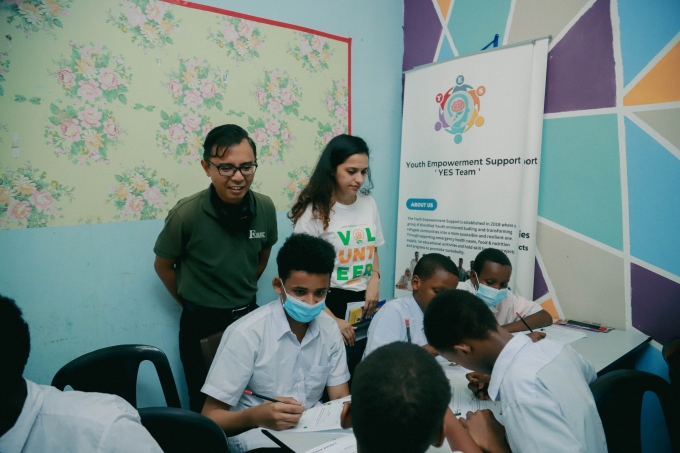
Malaysia-based talents paid a visit to Somali Refugee Community Center, managed by YES, to conduct an interactive two-hour workshop with the students on the fundamentals of digital citizenship; covering online privacy, security, and ethical behaviour. The Somali Refugee Community Center is a venue that supports refugee youths in addressing the many needs and challenges they face while living in Malaysia.
Malaysia-based Forest Interactive talents introducing themselves to the students at the Somali Refugee Community Center
The interactive workshop was conducted by a team of passionate volunteers who engaged the students aged between 8 to 12 with a variety of activities such as reading and understanding the Do’s and Dont’s of a responsible digital citizen, highlighting aspects of Personal Information, Pishing, Digital Footprint, Catfishing, Cyberbullying, Multi-Factor Authentication (MFA), and Reporting Abuse.
Besides, volunteers sharing facts of real-life scenarios on digital citizenship, the students were also handed worksheets to work on being Internet Alert, hypothetical scenarios faced online, Code Cracking, and Practicing Empathy as well as reflect upon what they had learned during the workshop. Through this learning session, the audience had the opportunity to learn on how to create strong passwords and to understand the importance of having one.
Nisa Saharuddin, Community Engagement Lead at Forest Interactive Foundation said “Forest Interactive Foundation firmly believes that access to education is a fundamental human right that should be available to all. To achieve this goal, we collaborate with organizations such as Youth Empowerment Support (YES) and work together to develop effective programs. To ensure positive outcomes, we carefully select volunteers from the industry who possess extensive knowledge and a solid background to deliver the best messages to the students. Given that young people nowadays are exposed to diverse influences, both good and bad, it is our duty to educate and nurture them with appropriate knowledge to prepare and safeguard them for the technology-driven world of the future.”
To ensure maximum participation, stationary sets were provided to the children during the workshop, and all extra supplies were donated to the center as part of the donation effort of this campaign.
Mohammad Abdi, founder of Youth Empowerment Support (YES) and CEO of Somali Refugee Community in Malaysia expressed, “We are delighted to express our heartfelt appreciation towards the passion, drive, and commitment demonstrated by the volunteers who lend a helping hand in educating and imparting knowledge the refugee children.”
“Through this collaboration, we strongly believe that these children will greatly benefit, as we recognize the crucial importance of equipping them with the necessary skills and knowledge to thrive in today’s rapidly evolving digital landscape.”
Are you an NGO looking for partners or do you know of communities that need contributions? Contact us at corporatepr@forest-interactive.com.
About Youth Empowerment Support (YES)
Youth empowerment support was established in March 2019 by a group of twelve (15) youths. 7 girls and 8 boys. The main reason that the YES team was established was because of seeing many youths committing suicides and inequality happening in the community. Their purpose is to support their fellow refugee youths to be able to address the many needs and challenges refugees face in Malaysia. Youth empowerment support is a mixed group of different ethnicities, age, backgrounds, life experiences, and more, but they all have a common goal that unites them all. and that is to give back to their refugee communities, notably to all refugee youths, and any family in need, emergency situations, health, raising awareness and designing programs for the youth.
About Forest Interactive
Founded in 2006, Forest Interactive develops scalable mobile platforms to connect mobile operators, content providers, and game publishers with their subscribers. With over 15 years of industry experience, Forest Interactive has expanded to include a diverse workforce of 20+ nationalities in 15 regional offices.
Delivering content subscription services, digital voucher and e-commerce platforms, and mobile apps for all ages, Forest Interactive operates in more than 30 countries, servicing 90+ mobile operators and 100+ content partners with the capacity to reach over one billion subscribers worldwide. To learn more, visit forest-interactive.com
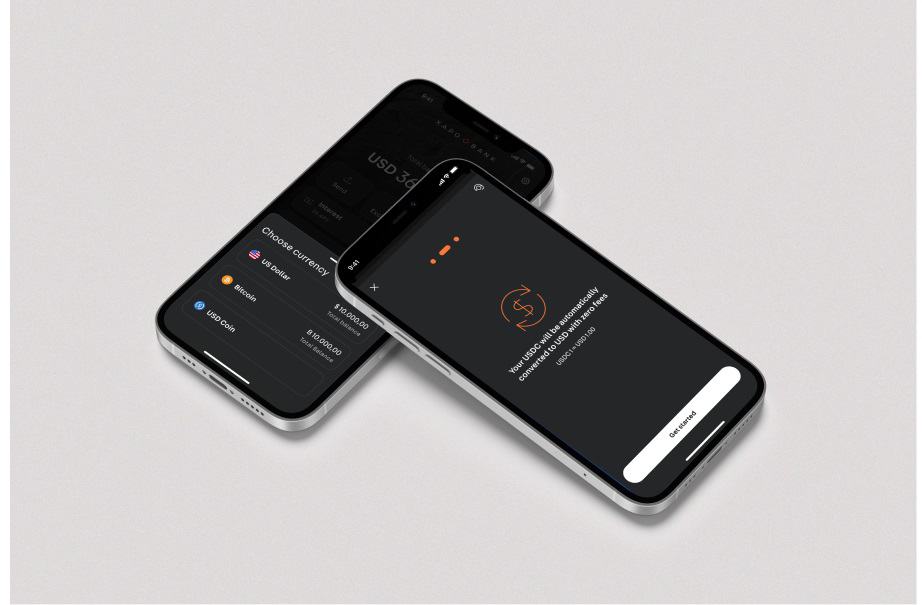
Xapo Bank, a leading Bitcoin custodian and licensed private bank, has collaborated with Circle, a global financial technology company helping money move at internet speed, to become the first licensed bank in the world to integrate USDC payment rails as an alternative to SWIFT. USDC is a digital dollar, also known as a stablecoin, that provides a faster and more efficient way to send and receive money around the globe, 24/7, including weekends, in under an hour.
By adding outrails to its existing USDC onramps, Xapo Bank enables members to bypass costly and time-consuming SWIFT payments and instead deposit and withdraw with no fees charged by Xapo Bank. The bank is offering a 1:1 conversion rate from USDC to USD. All USDC deposits at Xapo Bank are automatically converted to USD, meaning members can benefit from a 4.1% annual interest rate return on deposits.
A fully licensed and regulated bank, Xapo Bank is a member of the Gibraltar Deposit Guarantee Scheme (GDGS) and guarantees its members’ USD deposits up to *$100,000 USD equivalent. Ensuring member protection, Xapo Bank does not stake any crypto deposits or have any exposure to surrounding crypto markets as all deposits are automatically converted to USD held by the bank.
Unlike traditional banks, Xapo Bank does not lend and therefore does not rely on fractional reserve banking to make money as its core business model. Instead, Xapo Bank has all its customers’ funds in reserve and invests in short-term liquid assets to pass the interest earned to its customers.
Seamus Rocca, CEO of Xapo Bank, said: “Xapo Bank’s USDC payment rails mark a watershed moment in financial history, combining the speed and cost efficiency of the digital dollar with the security guarantees of a licensed private bank. Enabling auto-converted USDC deposits and withdrawals at Xapo Bank gives crypto members a safe haven for their savings. Running 24/7, including weekends, we eliminate the anxiety of keeping your money in exchanges and the hassle of expensive offramps into traditional banks.”
“Xapo Bank was built to protect members’ savings. Unlike many traditional banks, we do not offer customer loans; all of our customers’ money is held dollar for dollar on our balance sheet. It is invested in very short-dated, highly credit-rated money market instruments and short-term bonds. We pass that benefit to our members through a 4.1% interest rate, paid daily.”
“We charge our members an honest membership fee of $150 USD that helps us recover our overheads and means we don’t have to rely on paying almost no interest to our members or use hidden fees to make money. We give the benefit of more than 80% of the yield we generate back to our members.”
Xapo Bank is constantly striving to grow its payment rails options, offering members additional currency choices managed with the security of a fully-regulated bank. The USDC news comes after last week’s announcement that Xapo Bank had integrated with the Faster Payment System (FPS) to activate support for GBP settlement for account deposits and withdrawals. Earlier this month, the bank also announced an integration with Bitcoin’s Lightning Network, in collaboration with Lightspark.
*Xapo offers 4.1% interest on US dollar deposits, which are protected by the GDGS up to €100,000 EUR (i.e. circa $106,673 at current exchange rates).
Xapo Bank is a leading Bitcoin custodian and a fully licensed private bank. Founded in 2013, Xapo became one of the most trusted Bitcoin custodians in the industry, providing users with a secure platform to store and transact with their cryptocurrency. Evolving into Xapo Bank, it became the first crypto company in the world to obtain a banking license and has since expanded its offerings to include Savings accounts. It has future ambitions of offering Wealth Management and a full suite of private banking services like secured lending and asset protection among its future ambitions. With this expansion, Xapo is poised to become one of the leading private banks in the world, offering clients a level of security, privacy, and flexibility that is unmatched in the traditional banking industry.
About Circle
Circle is a global financial technology firm that enables businesses of all sizes to harness the power of digital currencies and public blockchains for payments, commerce and financial applications worldwide. Circle is powering always-on internet-native commerce, payments, and custody and is the issuer of USDC and EUROC. Circle’s open and programmable platform and APIs make it easy for organisations both large and small to run their internet-scale business, whether it is managing their internal treasury, making international payments, or automating supply chains. Learn more at https://circle.com
About Faster Payments
The Faster Payments Service (FPS) is a secure payments network that allows banks in the UK to send payments faster. It works by allowing banks on the network to electronically and securely transfer money between each other, with near-instant availability of funds. It is available 24 hours a day, 365 days a year. FPS’s benefits include faster processing time for payments, reduced costs and increased customer satisfaction.
About Lightning Network
The Lightning Network is a decentralised network on the Bitcoin blockchain that enables instant, low-cost payments across a network of participants. The Lightning protocol makes use of the security and liquidity of the Bitcoin network to create a secure network of participants who are able to transact bitcoin at high volume and high speed with low cost and instant settlement.
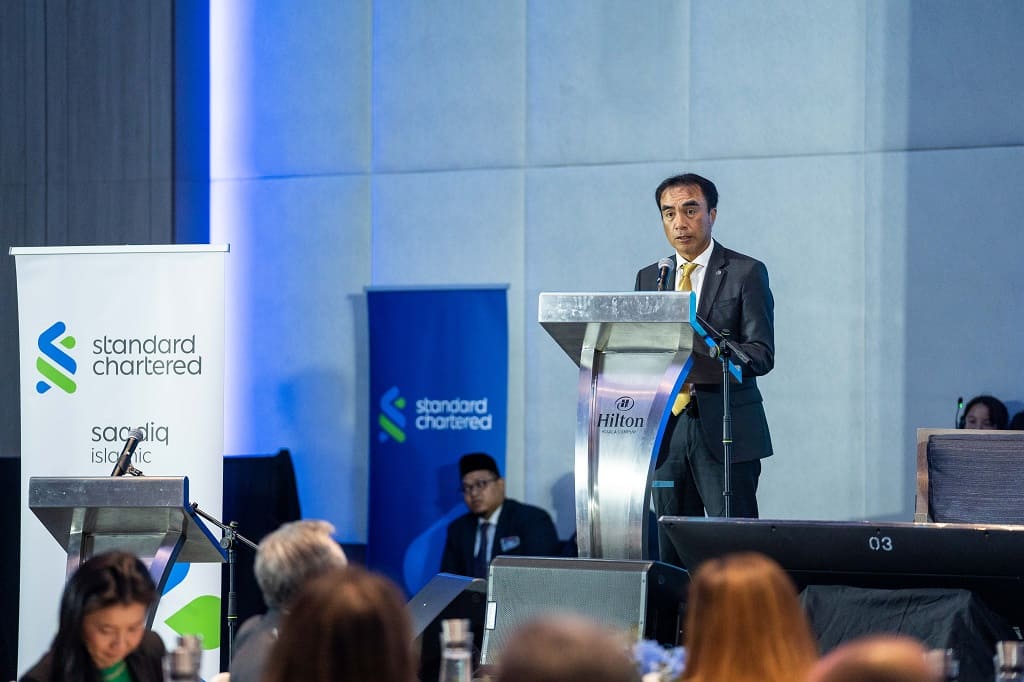
Standard Chartered Saadiq held its inaugural Islamic Financial Markets Forum recently, in conjunction with its 30th anniversary of Islamic banking.
Having hosted more than a hundred participants from the financial services industry, the forum aimed to create a platform for key industry practitioners and regulators to share ideas and views to bring about greater understanding on Islamic banking and finance. As a leading international Islamic bank, Standard Chartered Saadiq offers a comprehensive Shariah-compliant product suite and an unmatched Islamic network spanning Asia, Africa and the Middle East.
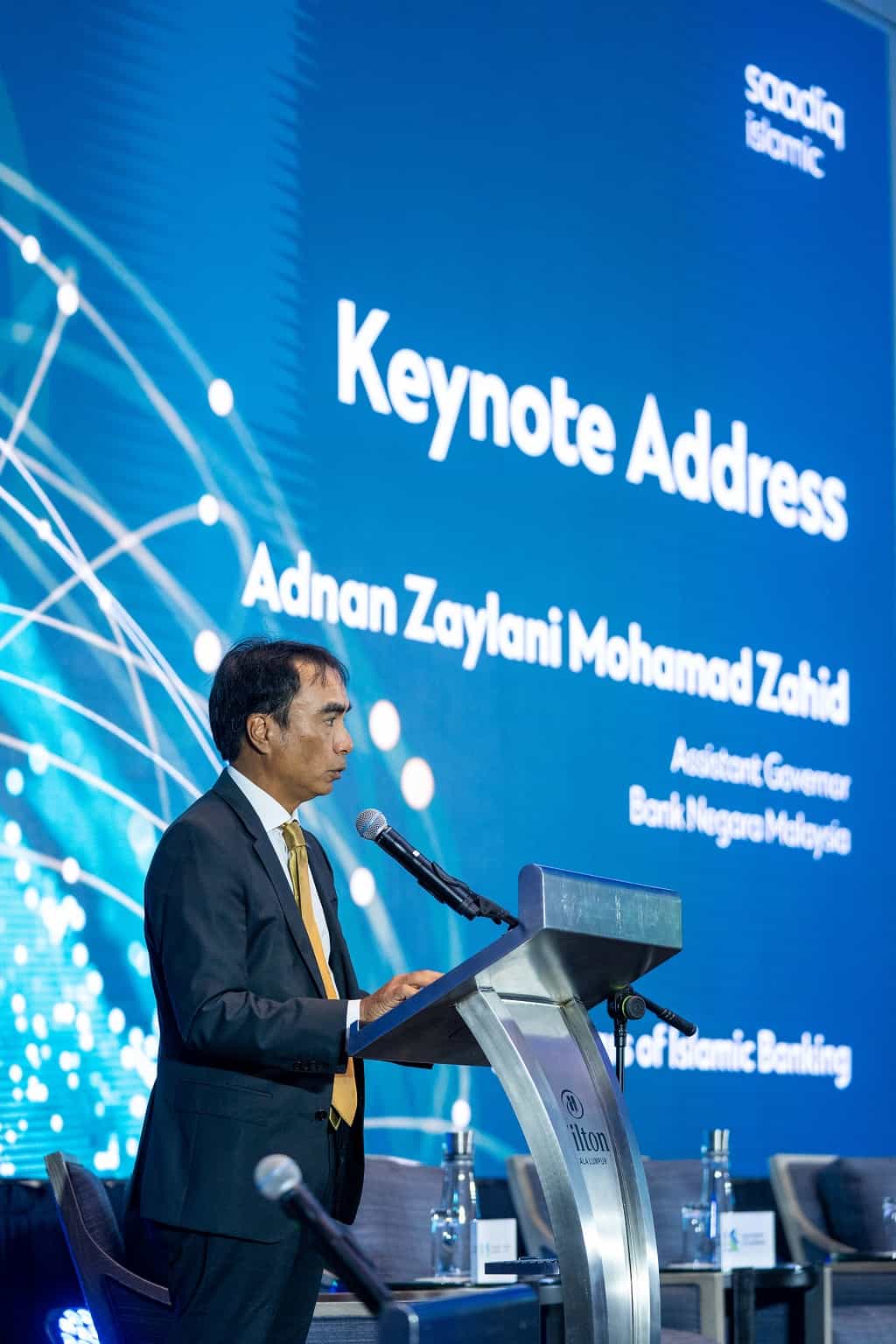
During his keynote address, Bank Negara Malaysia Assistant Governor Adnan Zaylani Mohamad Zahid (pictured) spoke on the importance of advancing the Islamic finance market through thought leadership and innovation, “Islamic finance remains a top priority in the Financial Sector Blueprint to strengthen Malaysia’s value proposition as an international gateway for Islamic finance.”
“The outlook for the Malaysian Islamic financial market in the next five to 10 years is generally positive, pointing towards continued growth and development as well as Malaysia remaining as a major global Islamic financial centre.”
“With the growing maturity of the Islamic financial sector in Malaysia, Bank Negara Malaysia also believes that the industry is now well positioned to drive the broader Malaysia as an Islamic Financial Centre (MIFC) agenda. The MIFC Leadership Council, a joint initiative of Bank Negara Malaysia and the Securities Commission Malaysia will provide thought leadership, and drive strategy formulation and implementation to enhance Malaysia’s position as an international gateway for Islamic finance. It is envisioned that the Council will also evolve into a fully industry-led structure that will be better able to respond to – and capitalise on – global opportunities in Islamic finance. We are confident that with stronger industry stewardship, we will be able to foster greater market dynamism and growth.”
However, he added, “The Islamic finance sector indeed still has some way to reach its full potential based on these values to fulfil contemporary economic and social needs.”
“Therefore, new initiatives are needed to empower and advance the Islamic finance system by emphasising on the principle of driving growth, wider participation, and equitable wealth distribution, and not only focused on company and conglomerate profits.”
The full text of Bank Negara Malaysia Assistant Governor Adnan Zaylani Mohamad Zahid’s keynote address during the Standard Chartered Islamic Financial Markets Forum 2023 can be found here.
Standard Chartered Malaysia
Standard Chartered Bank, a member of the Standard Chartered Group, was established in Malaysia in 1875. As Malaysia’s first bank, Standard Chartered leads the way through product innovation, consistent and strong growth performance and sustainability initiatives. The Bank provides a comprehensive range of financial solutions to corporates, institutions and individuals through its network of branches across Malaysia. The Bank has an Islamic banking subsidiary, Standard Chartered Saadiq; a global shared services centre, Standard Chartered Global Business Services; a sales arm, Price Solutions and an offshore facility in Labuan. Standard Chartered employs over 7,000 employees in all its Malaysian operations.
Standard Chartered
We are a leading international banking group, with a presence in 59 of the world’s most dynamic markets, and serve clients in a further 64. Our purpose is to drive commerce and prosperity through our unique diversity, and our heritage and values are expressed in our brand promise, here for good.
Standard Chartered PLC is listed on the London and Hong Kong Stock Exchanges.
The Securities Commission Malaysia (SC) is pleased to announce the release of its Annual Report 2022 (AR 2022), the Audit Oversight Board Annual Report 2022 (AOB Report 2022), and the inaugural Capital Market Stability Review 2022 (CMSR 2022).
The SC Chairman, Dato’ Seri Dr. Awang Adek Hussin, said the Malaysian capital market remained orderly and continued to finance the economy, with total funds raised hitting a record high of RM179.4 billion. This exceeded the 5-year pre-pandemic average of RM121.4 billion.
The 2022 performance, led by a record amount of corporate bond and sukuk issuances, was achieved despite increased global market volatility and headwinds. Globally, the capital market registered weaker performance in 2022 with the continued tightening of financial conditions in major markets, inflationary pressures, and the repercussions of the Ukraine war.
Dato’ Seri Dr. Awang Adek said the continued resiliency of the Malaysian capital market highlighted the value of exercising prudence and shared accountability while capitalising on growth prospects that arise. “This approach allows the market to better manage risks, preserves overall financial resilience and stability, and supports economic growth,” he said.
AR 2022 highlights the SC’s efforts in promoting market integrity, investor protection, and the development of the Malaysian capital market. This ensured the capital market’s role in financing sustainable development, while facilitating continued innovation to address emerging risks and challenges.
Among the key highlights outlined in AR 2022 are:
Equity crowdfunding (ECF) and peer-to-peer financing (P2P) platforms continue to facilitate the funding needs of micro, small and medium enterprises (MSMEs), with the total funds raised recording an increase of 26% from RM1.4 billion in 2021 to RM1.7 billion in 2022. Since their inception, ECF and P2P have helped 7,218 MSMEs raise over RM4.4 billion.
The Islamic capital market (ICM) comprising total sukuk outstanding and Shariah-compliant equity market capitalisation, saw a marginal increase by 0.6% compared to the previous year. The ICM has increased at a compound annual growth rate (CAGR) of 4.2%, driven by the increase in total sukuk outstanding (9.3% p.a) while Shariah-compliant equities remained relative flat (0.1% p.a.). Ongoing efforts to broaden and deepen the ICM were made, including the issuance of the Guidelines on Islamic Capital Market Products and Services to facilitate efficient access to the ICM ecosystem.
The capital market continues to prioritise good corporate governance and sustainability practices. As of 1 March 2023, 30% of the top 100 public listed companies (PLCs) are led by women, and all top 100 PLCs have at least one-woman director on the board.
To address scams and unlicensed activities, the SC had established an internal task force. The establishment of an internal task force is a proactive measure to ensure that such activities are identified and dealt with in a timely manner. In 2022, 185 websites were blocked and 304 new entries were added to the SC’s Investor Alert List, compared to 143 websites and 134 new entries in 2021.
In 2022, the SC took criminal and civil actions related to various serious breaches such as disclosure breaches, securities fraud and unlicensed activities which resulted amongst others, numerous criminal convictions and RM12.9 million in total fines.
Three Special Feature articles are published in AR 2022:
Towards Greater Investor Protection: Understanding Investors’ Vulnerabilities
Reinvigorating Capital Formation for Sustainable Economic Development
Behavioural Insights to Address Retirement Savings Inadequacy.
Audit Oversight Board Annual Report 2022
During the year, the AOB inspected 56 audit engagements carried out by 52 individual auditors from 21 Audit Firms. On an annual basis, the AOB inspects the Major Audit Firms which collectively audit PLCs that represent 73.5% of the total number of PLCs and 95.3% of the total market capitalisations of PLCs in Malaysia. In 2022, the AOB also conducted targeted inspections aimed at responding to emerging risks in a timely manner.
Highlights of the AOB Report 2022 include:
The AOB continues with its supervisory rigour by leveraging data analytics to identify key risks and specific areas of concern in the market. The number of audit firms inspected during the year increased by 50%.
To strengthen the oversight role of Audit Committees (ACs), the AOB engaged with 973 ACs from 773 PLCs through its ‘Conversation with Audit Committees’ session. The AOB strongly believes effective oversight by strong, knowledgeable, and independent ACs of PLCs can enhance audit quality.
In 2022, the AOB engaged with 84 senior partners of AOB-registered audit firms to understand the challenges faced by the profession and ensure that timely regulatory measures are put in place to improve audit quality.
To strengthen the audit profession’s capabilities, the AOB and the Malaysian Institute of Certified Public Accountants (MICPA) held workshops to assist audit firms with the implementation of the International Standards on Quality Management, which became effective on 15 December 2022. These workshops provided practical examples of how audit firms should design their quality management systems based on the nature and circumstances of the firm and the engagements they perform.
During the year, the AOB took six enforcement actions against auditors for breaching the relevant auditing and ethical standards. The actions included prohibitions and monetary penalties totaling RM383,500.
The AOB’s enforcement actions are subjected to Judicial Reviews by the auditors and the AOB has managed to successfully defend its actions in the Courts thus far. During the year, the Federal Court unanimously ruled in favour of the SC and the AOB in respect of a Judicial Review initiated by aggrieved auditors. The decision further reinforces the robustness of the AOB’s enforcement framework.
Capital Market Stability Review 2022
The CMSR, which outlines overall risk assessments on various components of the Malaysian capital market, revealed that, while the domestic market continued to be affected by the confluence of global and local factors, it was able to operate in a fair and orderly manner, with no systemic stability concerns observed.
Key observations from the report include:
Domestic equity market was impacted by global volatility which affected market sentiment amid healthy local retail and foreign investor participation.
Liquidity in equities continued to be supported by both local and foreign investors.
Corporate bond default rate remained low.
Fund managers had in place robust liquidity risk management processes to ensure sufficient liquidity to manage potential increase in redemption.
For PLCs, most sectors recorded higher earnings in 2022
In the digital asset space, average trading value has declined and domestic digital assets remain small compared to the equity market.
Moving Forward
Dato’ Seri Dr. Awang Adek said some of the areas of focus in 2023 include regulatory reforms, enhancing the fundraising ecosystem, advancement of the ESG agenda, facilitation of technology adoption and improving of corporate governance.
The SC will also prioritise sustainability and talent development to ensure the capital market continues to contribute to broader social and environmental goals.
“As we look towards the future, the SC remains committed to pursuing initiatives that will further strengthen Malaysia’s capital market, and enhance its role as a catalyst for economic growth and development,” he said.
The Securities Commission Malaysia (SC), a statutory body reporting to the Minister of Finance, was established under the Securities Commission Malaysia Act 1993. It is the sole regulatory agency for the regulation and development of capital markets. The SC has direct responsibility for supervising and monitoring the activities of market institutions, including the exchanges and clearing houses, and regulating all persons licensed under the Capital Markets and Services Act 2007. More information about the SC is available on its website at www.sc.com.my. Follow the SC on twitter at @SecComMy for more updates.
A mortgage is one of a person’s largest debts or loans. Therefore, it is unsurprising that several types of takaful can help settle the loan if something undesirable happens to the borrower.
For example, the borrower’s death or permanent disability prevents them from working or generating further income to settle the remaining loan balance. Thus, takaful or insurance is the best protection for protecting you and your loved ones. How can it protect you and your loved ones?
Before we start comparing MRTT vs MRTA, you should know that there are 4 types of protection for your mortgage:
a. MRTT: Mortgage Reducing Term Takaful
b. MRTA: Mortgage Reducing Term Assurance
c. MLTT: Mortgage Level Term Takaful Assurance
d. MLTA: Mortgage Level Term
In this article, we will explore more on MRTT vs MRTA. To simplify understanding, MRTT and MRTA are a package that seems the same. The only difference is that MRTA is a form of conventional insurance while MRTT is takaful or Islamic.
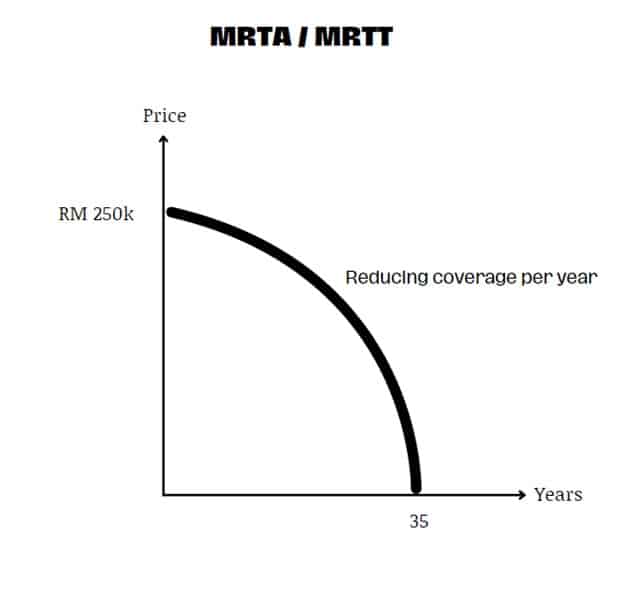
The key phrase for MRTT and MRTA is R – Reducing. If your housing loan amount decreases, the protection MRTT and MRTA provide will also decrease.
MRTT, or Mortgage Reducing Term Takaful, is insurance based on Islamic finance principles. MRTT is a takaful (Islamic insurance) product that provides coverage for mortgage payments in the event of death or TPD of the policyholder.
This type of insurance operates on the principle of shared risk, where policyholders collectively pool their resources to protect one another. In the event of a claim, the takaful fund covers the mortgage payments of the policyholder’s family.
MRTT VS MRTA: What Is MRTA?
Conversely, MRTA is a type of insurance that operates on the principle of individual risk. MRTA provides coverage for mortgage payments in the event of the death or TPD of the policyholder.
Unlike MRTT, MRTA is not based on the principles of Islamic finance and operates as a traditional insurance product. In the event of a claim, the insurance company pays the mortgage payments to the policyholder’s family.
Operates on shared risk principle, coverage from takaful fund
Operates on the principle risk, coverage from the insurance company fund
Cost of coverage
Cheap
More expensive
Amount of coverage
Low
High
One of the key differences between MRTT and MRTA is how they are structured. MRTT operates on the principles of shared risk, while MRTA operates on the principle of individual risk.
This means that the cost of coverage is determined differently in each case. In MRTT, the cost of coverage is determined based on the collective pool of resources provided by policyholders.
In MRTA, the cost of coverage is determined based on the individual risk of the policyholder.
Another key difference between MRTT and MRTA is the way claims are handled. In MRTT, claims are handled by the takaful operator and are paid from the takaful fund. In MRTA, claims are handled by the insurance company and are paid from the insurance company’s funds.
It all looks the same, but structurally, MRTT is shariah-compliant.
Pros And Cons Of MRTT
One of the main benefits of MRTT is that it operates on the principles of shared risk, which helps to reduce the cost of coverage. Because policyholders collectively pool their resources, the coverage cost is lower than MRTA.
Additionally, MRTT is a takaful product, which means that it is based on the principles of Islamic finance and is therefore considered a more ethical and socially responsible option than MRTA.
However, one of the potential drawbacks of MRTT is that it may not provide as much coverage as MRTA. MRTT operates on the principles of shared risk, which means that the cost of coverage is lower. However, this also means that the coverage is typically lower than MRTA.
Pros And Cons of MRTA
One of the main benefits of MRTA is that it provides more coverage than MRTT. Because MRTA operates on the principle of individual risk, the coverage provided is typically higher than MRTT. Additionally, MRTA is a traditional insurance product that provides higher financial protection than MRTT.
However, one of the potential drawbacks of MRTA is that it is generally more expensive than MRTT. Because MRTA operates on the principle of individual risk, the cost of coverage is determined based on the individual risk of the policyholder, which can result in higher costs compared to MRTT.
Additionally, MRTA is not based on the principles of Islamic finance and may not be considered a socially responsible option for some Muslim consumers.
In conclusion, MRTT and MRTA are two popular insurance products in Malaysia that provide financial coverage for mortgage payments in the event of death or TPD of the policyholder.
Both MRTT and MRTA have their pros and cons. Consumers must consider their needs and circumstances before choosing between these two options.
Hope that you now have a better understanding of MRTT vs MRTA. You should also consider the level of coverage they require, the cost, and the level of financial protection they need before deciding.
After a tough year for equity and bond investors in 2022, investment opportunities are starting to emerge with markets beyond the US looking more and more compelling. Asia is a diverse region with many different economies, of which each market is in its economic cycle. This means that selectivity in terms of markets and sectors is key.
In particular, we believe three main factors are steering the Asia Pacific (APAC) investment markets in 2023:
China’s reopening and potential growth;
Recessionary risks in developed markets; and
US dollar strength moderates.
Service-Driven Recovery To Support Growth As Mainland China Reopens
Early indications are that mobility and economic activity have started to rapidly normalise following the easing of Covid restrictions in mainland China. For instance, we have already seen a strong uptick in travel activities within and from mainland China. The return of holidaymakers is expected to bring about positive knock-on effects to various sectors around the region, with companies from the hotel, casino, airlines, as well as consumer discretionary retail industries set to benefit. The release of pent-up demand may also appear in the form of “revenge spending” and the impact may funnel to property companies that own shopping malls.
In contrast with much of the world, inflation is not a concern for mainland China. The headline rate was 1.8% year-on-year in December 2022, below the 3% target rate. Low inflationary pressure has given the People’s Bank of China the room to cut its policy rate and the loan prime rate over the past year.
Separately, since the fourth quarter of 2022, government authorities have started to lend support to the domestic real estate market with an aim to encourage healthy development within the sector. Besides rolling out measures to ensure a timely delivery of presold homes, different governmental bodies have introduced coordinated policies to expand financing channels for stressed private property developers to ease their financial pressure.
Since the economic outlook for mainland China has clearly improved, its service-driven recovery could drive GDP growth of 6.2% in 2023 and 4.5% in 2024. With China’s sheer size, stronger economic activity may mechanistically lift the overall GDP in Asia, and the overall growth globally (forecasted at 1.9%. for 2023).
Recessionary Risk In Developed Markets Could Mean Opportunities For Asia
Although our latest forecast has pointed to a less pessimistic outlook, uncertainties over growth and inflation in the US and other developed markets persist.
We continue to believe that the US is heading towards a recession in the second half of 2023 due to tighter monetary policy, even though the degree will not be as grim as previously thought. While we expect the US Federal Reserve (Fed) to continue its rate hiking cycle in 2023, the pace would be more moderate for rates to reach a trough of 3.25% by mid-2024.
After a prolonged period of strong execution, underlying US margins are now at record levels. As negative operating leverage kicks in, companies may feel pressure on their earnings, which may lead the Asia Pacific investment markets to outperform.
Elsewhere, in the UK, a recession is also still on the cards as higher inflation and interest rates, along with austere fiscal policy, dampen the outlook. We expect its economy to see an outright contraction of 0.8% in 2023. Potential risks include high energy costs, labour shortages and disruption to supply chains. Meanwhile, the eurozone economy is likely to be largely stagnant, although it is expected to avoid recession because the relief on household incomes and inflation should fall back more quickly within the year.
Yet, it is not all bad news. Historically, the best opportunities for equities have occurred in the midst of recessions. From a valuation perspective, Asian equities are currently outshining its peers in the West. Improved market sentiment, as well as China’s economic recovery are also likely going to lend support to the markets regionally. These factors combined have led us to hold a more positive view towards Asian investments.
Asian Currencies To Find More Stable Footing As USD Softens
Given the importance of the dollar for global investments, it is important to also look at where the currency is heading. The US dollar has reached its peak and divergence in global central bank policy is likely to put pressure on the currency to depreciate further.
Although there are signs that both headline and core inflation in the US is on a downward trend, its domestic labour market is still tight, which supports restrictive monetary policy for longer. If the Fed shifts to a less aggressive tightening pace and pivots to a pause, there could be some softening in the US dollar. In turn, Asian currencies will be able to find a more stable footing and therefore provide a more favourable environment for Asian bonds, especially those in the local currency space.
The Reserve Bank of Australia raised borrowing costs to a 10-year high in February 2023 and New Zealand’s central bank. On the other hand, the Bank of Korea may be one of the first central banks in APAC to halt its hiking cycle.
For APAC markets that are still in a phase of raising interest rates, it would favour investors to select sectors with a positive correlation to bond yields, such as banks and, in some cases, selected consumer names.
A Flexible Investment Approach Remains Key In Times Of Regime Shift
We are entering a new regime in policy and market behaviour after a 40-year cycle of deflation. With risks associated with the recession, geopolitics, inflationary pressure and the global energy crisis continuing to add to macroeconomic uncertainty, investors will need to change how they value assets, find investment opportunities, and manage risks.
To navigate through market uncertainty, we believe holding safe haven assets such as US Treasuries and cash can help cushion any potential volatility, whilst alternative assets like gold can act as a diversifier.
Nonetheless, taking a flexible approach that accounts for growth and income should help investors build a more resilient portfolio that can shield them from potential headwinds.
By Chloe Shea, Investment Director, Multi-Asset, Schroders
In March 2020, the world was shocked by the spread of the coronavirus or COVID-19 outbreak. Curfews and movement controls have been enforced; all business activities are temporarily suspended to stop the spread of the pandemic. The outbreak of COVID-19 not only impacted the entire world’s economy, which was not inadequately prepared for this pandemic but also affected the two most prominent economic powers, China and the United States.
The curfew and the closure of some industries from operating face-to-face activities, especially tourism, services, education, and business during the COVID-19 pandemic, have encouraged the development of the new norm, which is the transition from conventional to digital platforms. It is common to know that today, various activities can be carried out online and have become part of life among communities worldwide.
The use of online transactions as a means of payment is now widely accepted, and the number of businesses using them continues growing daily like a mushroom after rain. This results from the users spending more time at home than normal. This is one of the biggest threats to users and may have contributed to a rise in cybercrime cases. One of the most significant cybercrime issues is online scams or fraud.
Online Scams In Malaysia
According to a report from the Royal Malaysian Police (PDRM), between 2020 and May 2022, 68% of fraud cases involving RM5.2 billion were online scams. The Securities Commission Malaysia (SC) reported that there are still several high-profile cases of online scams, such as the iPay88 and AirAsia intrusions.
In addition, the country was also shocked by the leak of 22.5 million personal data of Malaysians through the myIDENTITI platform. These cyber scam activities became more prevalent as more payment services were offered online for users’ convenience. The more services offered online, the harder it will be for the authorities to monitor and monitor every transaction that is executed.
These online scams cases have hit record highs in the past two years since the COVID-19 pandemic hit the world. Coupled with the unstable economic situation, most companies suffered in sustaining their business during the Movement Control Order (MCO) period, which eventually forced them to shut down their business and lay off their employees or both.
The unemployment rate makes individuals more vulnerable, and they will tend to choose fraudulent online activities as an easy way to earn money to continue their daily lives.
How Online Scams Are Associated With The Economic Recession?
In a financial crisis, society will experience financial stress and look for opportunities to generate income, thus solving their financial problems. Among those most affected by the crisis are those with low incomes living in urban areas. Their life was sufficient enough. Plus, their monthly commitments, such as rent, car instalments, and others, will cause their lives to be squeezed.
The situation is worsening for couples with a child aged from two months to a year, as many expenses are required, draining a large portion of their income from purchasing diapers and baby milk. Child expenses also vary according to their age and level of growth. Expenses become increasingly demanding as the child grows older and vice versa.
Faced with all these kinds of commitments, parents do not have any savings for their children, let alone for themselves. Looking at these loopholes, scammers will take advantage of this situation by offering non-existent opportunities such as investment opportunities, job opportunities, or a government grant that promises lucrative results in a short period.
During the economic downturn, scammers create fake job-seeking websites and send soliciting emails promising high wages while working from home. But in reality, the work and opportunities offered do not exist but require a down payment in advance or sometimes an advance payment to “book or bid” for this job opportunity.
Due to monthly commitments and family responsibilities towards their spouses and children, the victims sometimes do not think long enough and lose their money to the scammer because they had to pay a down payment in advance to confirm they would get this job opportunity.
During this time, the spread of fraud, false and fake information will likely increase as scammers see this as a golden opportunity to take advantage of those struggling financially. Fraud schemes such as Ponzi, fake investment opportunities, and pyramid schemes will become more prevalent.
In these challenging circumstances, the affected group categories (urban poor) will act and become aggressive. Due to the rampant online scams, any attempt to distribute survey questionnaires via Whatsapp usually receives a low response rate.
Plus, any attempt to obtain information using Google Forms will be seen as something negative and a form of exploitation from the viewpoint of those already poor. (with the exception that their closest friends distribute the questionnaire survey form or they have been informed in advance of this)
In short, the world economy’s recession and online scams cases can be attributed in several ways. The economic downturn has exposed the public, especially those facing the financial crisis, get some exposure to various types of fraudulent schemes.
It is essential to remain vigilant and take security measures to protect yourself, your spouse, close family, and relatives from being exposed to online scams tactics, especially during this economic downturn.
*This article does not reflect the stance and policies of the institutions involved. It is the author’s opinion, research, and experience while engaged in fieldwork.
About the Author
Renugah Rengasamy. Head of Information Technology (IT) Division at the Social Institute of Malaysia
Rashid Ating. Researcher at the Institute of Advanced Studies (IAS), University of Malaya (UM), Kuala Lumpur, Malaysia
The Global ESG Monitor (GEM), a research initiative that examines ESG transparency in non-financial reporting of the largest companies in the world, revealed that Malaysian companies used internationally recognised frameworks, standards, and strategic tools in their Environmental, Social and Governance (ESG) reporting but lacked the appropriate content and level of detail needed for optimal transparency, thus ranking in the midfield amongst global and regional peers.
The GEM 2022 analysed the transparency of non-financial ESG data of 625 ESG reports from 350 companies listed on 10 of the world’s largest stock market indices on four (4) continents. The ranking is based on the degree of transparency in reporting on ESG strategy, materiality, and disclosure of indicators and not their overall performance on such metrics. The GEM Malaysia Regional Report 2022 marks the first time Malaysia was included in the benchmarking report, assessing the 30 companies listed on the FTSE Bursa Malaysia KLCI (FBMKLCI).
“Malaysia’s FBMKLCI inclusion in GEM 2022 reflects the country’s commitment to transparency and sustainable business practices. With an average score of 54 out of 100 points, the Malaysian index ranks joint fifth place alongside the Dow Jones among the ten indices surveyed. This positions the FBMKLCI ahead of the S&P 50 USA (53 points), ASX 50 (53 points), WIG 20 (51 points), and BET 20 (41 points). Above FBMKLCI rank S&P Asia (56 points), Hang Seng (57 points), EUROSTOXX (66 points) and DAX (68 points),” said Michael Diegelmann, Co-founder of the GEM.
“The FBMKLCI’s ranking showcases progress in sustainability, but also highlights the need for deeper, more detailed ESG reporting in Malaysia,” he added.
The Report’s findings were revealed today at a thought leadership event, ‘Sustainability Perspectives’, hosted by Perspective Strategies, the Malaysian Regional Partner of the Global ESG Monitor. The event featured insightful discussions led by speakers Michael Diegelmann and Ariane Hofstetter, both co-founders of the GEM, Dr. Nurmazilah Mahzan, Member of IFRS Foundation Integrated Reporting and Connectivity Council (IRCC), and Ir. Dr. Mohd Fadzil Bin Mohd Siam, Head of Corporate Strategy & Sustainability, Tenaga Nasional Berhad (TNB), which topped the leader board of Malaysia’s FBMKLCI companies with the highest transparency score. The discussion highlighted areas where the index is already performing well, identified opportunities for improvement, discussed ESG transparency issues in Malaysia, and showcased best practices in ESG reporting.
“We are delighted to bring together corporate leaders who are committed to sustainability and communications. The event was made possible by our sponsor, U Mobile Sdn Bhd (U Mobile) and partner, bzBee Consult. We believe this is just the first step as we strive towards highlighting the importance of ESG Transparency in sustainability reporting. The premise is that Sustainability and ESG do not work without transparency,” said Andy See, Managing Director of Perspective Strategies, the Global ESG Monitor’s Regional Partner.
The transparency scores of the top 10 FBMKLCI companies based on the Global ESG Monitor are:
Note: The criteria for measuring transparency in the Global ESG Monitor are based on six (6) interdependent dimensions, balance, comparability, accuracy, timeliness, reliability and relevance.
Other key findings of the Global ESG Monitor Malaysia Regional Report include:
The FBMKLCI demonstrates a commitment to international frameworks, with 90% of companies referencing the Sustainable Development Goals (SDGs), 87% following the Global Reporting Initiative (GRI), and 67% aligning with the Task Force on Climate-Related Financial Disclosures (TCFD).
The Malaysian Code on Corporate Governance (2021) specifies that there should be at least 30% “women directors” on the boards of Malaysian companies. FBMKLCI is already in a good position in this respect, as mixed boards have already been identified for 80% of the companies surveyed.
In the reports themselves, however, the companies are more cautious in this respect: only 77% report the total percentage of their employees by gender. The descriptions in the FBMKLCI are also rather restrained when it comes to the topic of age split (67%) or ethnicity (43%).
Significant transparency gaps exist in Environment, Social, and Governance (ESG) reporting, with scores of 55%, 39%, and 54% in each respective category.
The top performing companies namely Tenaga Nasional Berhad and Press Metal Aluminium Holdings Berhad tied for first place at 72 points.
A lack of detail in reporting has resulted in a poor overall ESG transparency score. For example, 90% of Malaysian companies report that a materiality analysis was completed but only 20% provide background information on the year of data collection and how the data was collected. In addition, 67% of companies list their stakeholders but only 37% provide information on how the stakeholders were determined.
Ariane Hofstetter, the GEM’s Co-Founder and Head of Research added, “While Malaysian companies excel in adhering to international frameworks, it’s crucial they provide more comprehensive information on environmental, social, and governance aspects to truly embrace sustainability.”
“We must realise that the transparency of our ESG reporting is critical to inform and engage stakeholders. After all, sustainability reporting has been mandatory for all Malaysian public-listed companies since 2016. Whilst there are still many hurdles for Malaysian companies to overcome when it comes to transparency, overall, this is good news for investors and other stakeholders as we are moving towards the right direction,” concluded Andy See, Managing Director of Perspective Strategies.
Click here to download the Inaugural Global ESG Monitor Malaysia Regional Report 2022 that was unveiled at Sustainability Perspectives earlier today.
About Perspective Strategies
Perspective Strategies is a strategic communications and issues management firm with services in public affairs, brand communications and stakeholder engagement. The firm’s expertise is built on years of experience of working in a comprehensive range of industries and businesses. Perspective’s team has strong credentials in corporate reputation, investor relations, brand and marketing communications, as well as communication capabilities building for clients. In line with the current shift towards Sustainability and ESG, the firm established the Strategy and Sustainability Practice to deepen its knowledge and expertise in this core area. Perspective Strategies is the exclusive Malaysia Regional Partner of the Global ESG Monitor (GEM).
About the Global ESG Monitor
The Global ESG Monitor (GEM) is a unique research initiative to examine transparency in non-financial reporting of the largest companies in the world. The GEM monitors, analyses and reports on the transparency of non-financial ESG reporting using the GEM ASSAY™, a proprietary research tool adapted annually in response to evolving conditions and developments.
The operationalisation of transparency underlying the GEM ASSAY™ is based on the relevant guidelines of Global Reporting Initiative (GRI), ISO Standard 26000, World Economic Forum (WEF) and Accountability.
The Global ESG Monitor is headquartered in Wiesbaden (Frankfurt), Germany with partner offices in Washington, DC; Melbourne, Australia; Kuala Lumpur, Malaysia; Hong Kong, China; Warsaw, Poland and Bucharest, Romania.
For more information on the Global ESG Monitor 2022 Transparency Report, visit www.globalesgmonitor.com
IPO (Initial Public Offering) has recently been the latest stock market trend. But what is an IPO? Before we look at the guide to apply for IPO in Malaysia, we must first understand what an IPO is.
IPO is the process of offering shares of a private corporation to the public by issuing new stocks for the first time.
In other words, it is when a privately owned company first sells its shares to the public. That is the reason why it is called an initial public offering.
Why Would A Private Company Go Public?
When companies decide to go for an IPO, the companies can raise equity capital to aid the company’s business growth.
Some other reasons are to pay off debts, raise their public profile, purchase new assets, and get funds for the company’s business operation.
As a smart investor, you would probably know how to differentiate between a good and bad IPO.
Always ask yourself, are you willing to invest your money into a company with growth potential or a lot of debt to settle?
For the past two years, most IPOs were listed at a premium price on the first day. Some of the IPOs even managed to hit more than 100%. Sounds interesting to you? If it interests you, I believe most investors also feel the same.
This created a trend in the local stock exchange where investors see IPO as a great opportunity. Do not worry if you never apply for any IPO out there. After reading this guide to apply for IPO in Malaysia, perhaps it will be the first time you apply for an IPO. Let’s get started.
This article will share two methods for applying for an IPO. First of all, do you have either Maybank2u or CIMB Clicks?
If not, you should register one now.
Guide To Apply For IPO In Malaysia Via Maybank2u
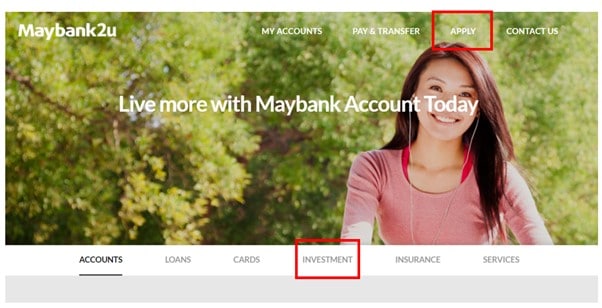
Log in to your Maybank2u account. Click on Apply and next click Investment.
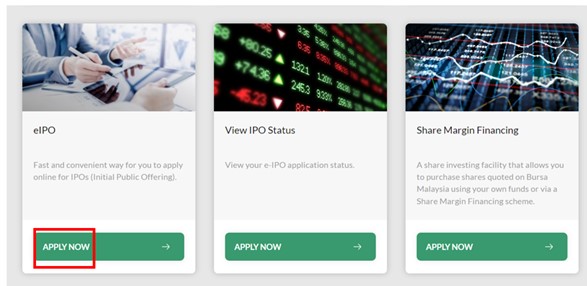
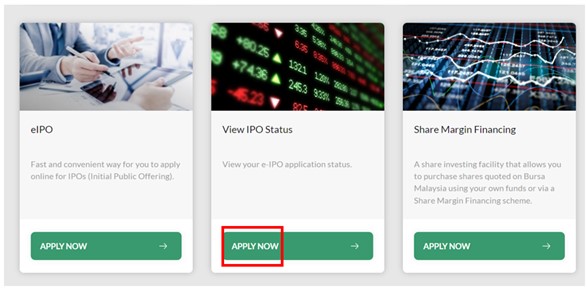
Scroll down until you see eIPO. Click Apply Now.
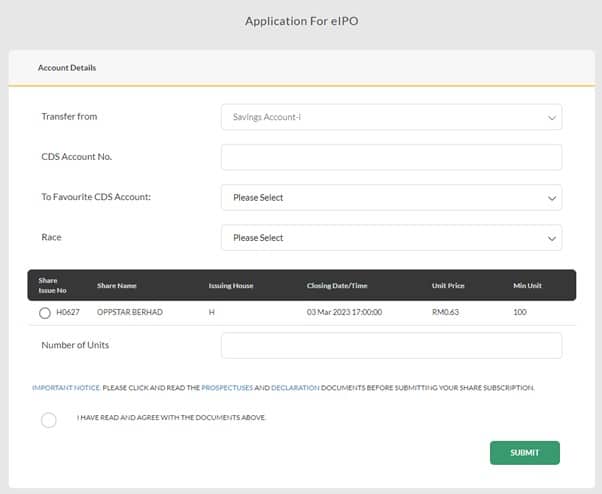
Select the IPO that you wish to apply for. Complete your application and click Submit. You will redirect to the payment gateway to perform payment for your application.
To view your e-IPO application status, go to View IPO Status.
Guide To Apply For IPO In Malaysia Via CIMB Clicks
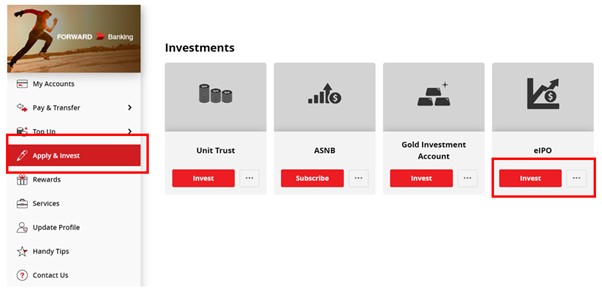
Log in to your CIMB Clicks. Click on Apply & Invest. Scroll down to eIPO and click Invest.
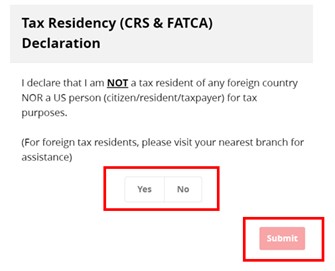
Declare that you are not a tax resident of any foreign country NOR a US person (citizen/resident/taxpayer) for tax purposes. Then, click Submit.
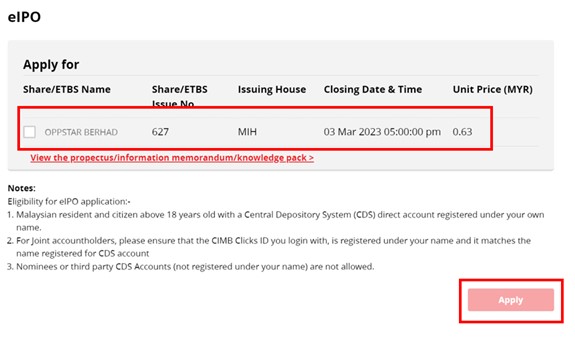
Select on the IPO that you wish to apply and click Apply.
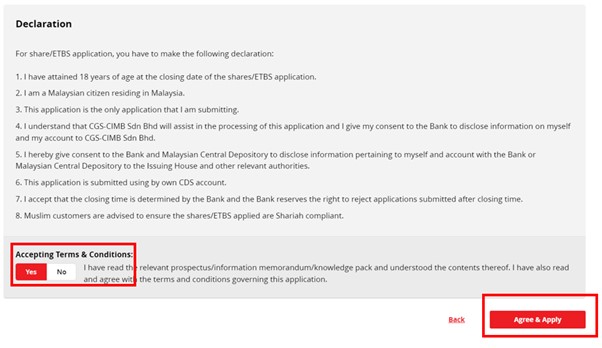
Click Yes if you accept the Terms & Conditions. Next, click Agree & Apply.
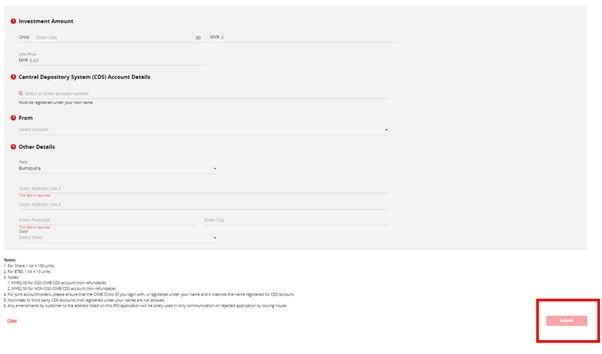
Complete the application and click Submit. You will be redirected to the payment gateway to perform payment for your application.
Apply Your IPO Now
So, now do you still think IPO is difficult? We have shared two methods above on the platforms that you can apply for an IPO which are Maybank2u and CIMB Clicks.
We hope you find the guide to apply for IPO in Malaysia useful. Wish you all the best in your IPO application!