Wednesday, 5 August 2026 Stay informed. No noise.

inDrive Expands Financing with General Catalyst to US$300 Million to Fuel Growth and Innovation

inDrive, a prominent global mobility and urban services platform headquartered in Mountain View, California, USA, has announced a significant expansion in its financing partnership with venture capital firm General Catalyst, securing an additional US$150 million to bring the total funding to US$300 million. This extension, which may be further prolonged for another year, provides inDrive with enhanced financial flexibility to bolster growth initiatives, invest in product enhancements, diversify service offerings and penetrate new markets.

This financing milestone follows a prosperous year for inDrive, marked by a remarkable 54% surge in net revenue throughout 2023. The company’s consistent growth trajectory and strategic utilisation of adaptable financing mechanisms underscore its commitment to sustainable scalability.

Dmitry Sedov, Chief Financial Officer at inDrive, emphasised the significance of this financial backing, stating, “Securing this financing from General Catalyst empowers us to continue our rapid growth and innovation while maintaining a strong financial position and financial flexibility. This financial structure is designed to support our ambitious plans without introducing additional risk to our operations.”

Pranav Singhvi, Managing Director of General Catalyst, echoed this sentiment, expressing enthusiasm for supporting inDrive’s expansion into new markets. He said, “As long-time partners of inDrive, we are excited to help them continue to scale their growth and set the company up for success as they enter new markets. We are enthusiastic about supporting a business with a robust mission that positively impacts communities globally.”

The inDrive app has been downloaded over 200 million times and was the second most downloaded mobility app in both 2022 and 2023. In addition to ride-hailing, inDrive provides an expanding list of urban services, including intercity transportation, freight delivery, task assistance, courier, and B2B delivery. Last year, inDrive successfully navigated regulatory requirements in Malaysia, obtaining the business mediation license (LPP) from the Land Public Transport Agency (APAD). The company announced that it had resolved all matters concerning the LPP, essential for the official operation of ride-hailing services in Malaysia.

Operating in 749 cities across 46 countries, inDrive supports local communities through its peer-to-peer pricing model and community empowerment programmes, which advance education, sports, arts and sciences, gender equality, and other vital initiatives.

With this fresh injection of funds, inDrive is primed for further expansion in 2024. The strategic financial support will facilitate the expansion of service offerings and the reinforcement of its global presence, all while upholding its core mission of challenging social injustice and promoting equitable access to mobility services.


Investment Strategies for a Rosy Portfolio

As the financial landscape of 2024 unfolds with global uncertainties, explore strategic investment insights for building a resilient portfolio in the face of market volatility and opportunities.

As we embark on the journey through 2024, investors are met with a landscape brimming with both opportunities and challenges. With a record number of elections globally, including the pivotal November US elections, and a backdrop of geopolitical tensions and lingering pandemic concerns, the year ahead promises to be one of volatility. However, amid this uncertainty, there are strategies investors can employ to build resilient portfolios and capitalise on market opportunities.

Strategic Asset Allocation
One of the cornerstones of building a resilient portfolio is strategic asset allocation. This involves distributing investments across different asset classes, such as equities, bonds, cash and cash equivalents, property and alternative investments, in a manner that aligns with one’s risk tolerance, investment goals and time horizon.

In 2024, amid the potential for geopolitical tensions and economic uncertainty, diversification across asset classes will become even more crucial. By spreading investments across various assets, investors can mitigate the impact of any single event or market downturn on their overall portfolio. For instance, while stocks may offer growth potential, fixed income can provide stability during times of market volatility, while alternative investments with a negative correlation to equities can help reduce overall portfolio risk and volatility.

Smart Diversification
Diversification within asset classes is equally important. Within the stock portion of a portfolio, for example, investors should consider diversifying across sectors, industries and geographic regions. This can help reduce the risk of concentrated exposure to any one sector or region-specific event.
Furthermore, alternative investments such as real estate, commodities and cryptocurrencies can offer additional diversification benefits. These assets often have low correlations with traditional stocks and bonds, providing a hedge against market downturns and inflationary pressures.

Ringgit Cost Averaging
In times of market volatility, emotions can run high, leading investors to make impulsive decisions that may not align with their long-term goals. Ringgit cost averaging (RCA) offers a disciplined approach to investing that can help mitigate the impact of market fluctuations.

With RCA, investors commit to investing a fixed amount of money at regular intervals, regardless of market conditions. This strategy allows investors to buy more when prices are low and fewer when prices are high, ultimately lowering the average cost over time.

Investing Beyond Borders
Investors are encouraged to venture beyond their home country for investment opportunities, recognising the risks associated with concentrating investments in a single region. Global diversification provides access to a broader range of opportunities, potentially capitalising on faster-growing economies and emerging industries.

This approach also serves as a risk management strategy, helping to mitigate the impact of currency fluctuations and geopolitical events that may affect a specific market.

In 2024, promising investment prospects can be found in countries such as the United States, Japan, Taiwan and South Korea. The United States stands out for its diverse economy, innovative companies, and robust financial market, making it a crucial element in many global investment portfolios.

Japan, despite facing economic challenges and an ageing population, remains a leader in technology and manufacturing, with opportunities in sectors like robotics, healthcare, and renewable energy. Taiwan and South Korea, home to world-leading technology firms, particularly in semiconductors, present appealing growth opportunities.

Diversifying across these geographies enables investors to tap into diverse industries, currencies, and economic cycles, enhancing portfolio resilience and potentially boosting returns.

Riding the Commodities Wave
In 2024, commodities are likely to shine, driven by a confluence of factors including supply chain disruptions, inflationary pressures and increased demand from emerging markets. The stage is set for a commodities supercycle, with metals, energies and agriculture expected to lead the charge.
Investors can capitalise on this trend by allocating a portion of their portfolios to commodities or commodity-related assets. These assets can serve as a hedge against inflation and provide diversification benefits during periods of market uncertainty.

Unlocking Crypto Potential
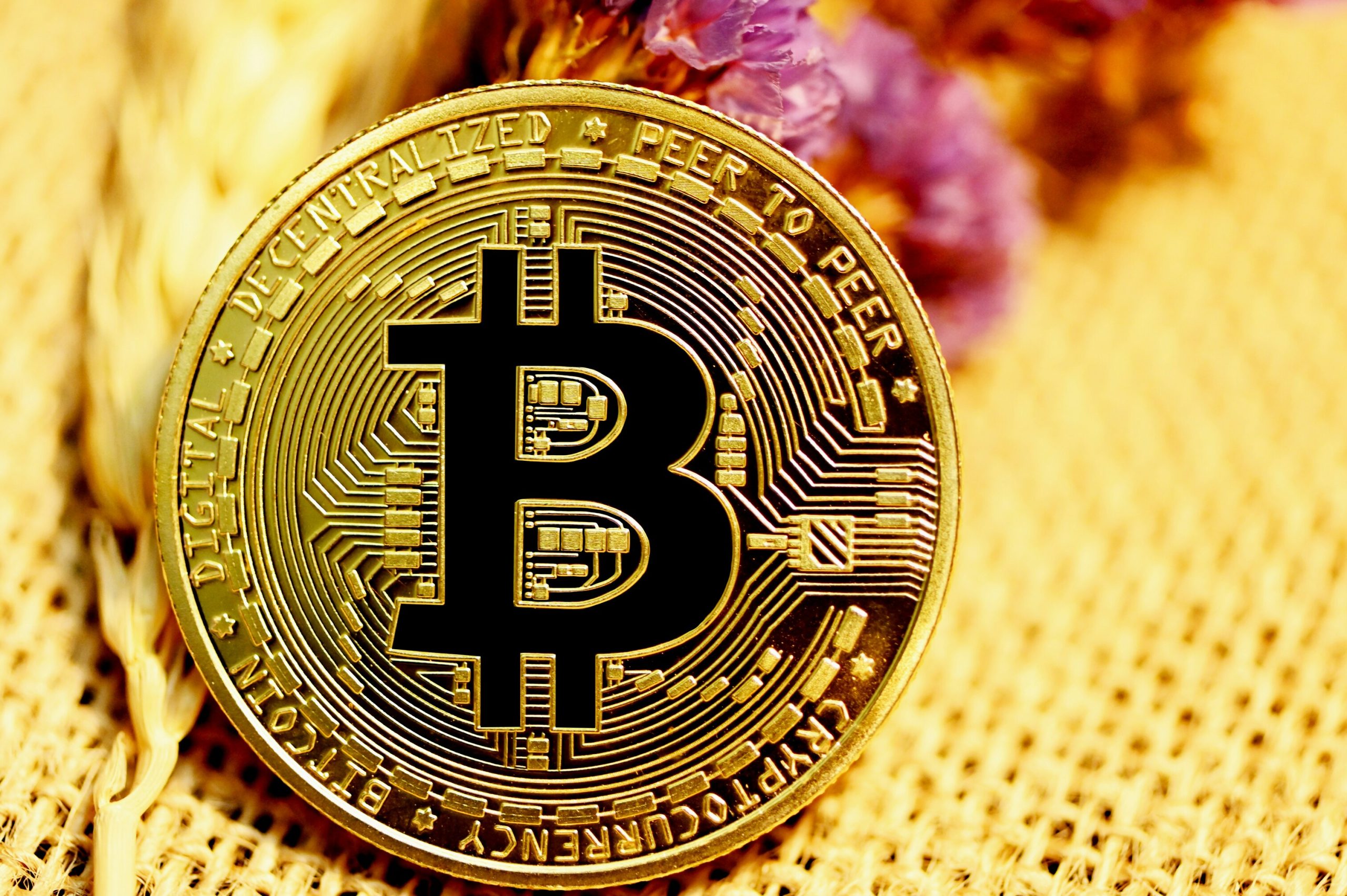
The crypto market continues to evolve rapidly, presenting both opportunities and risks for investors. The approval of spot bitcoin ETFs in January 2024 by the US Securities and Exchange Commission (SEC) marks a significant milestone for the industry, signalling growing acceptance and mainstream adoption.
Additionally, the Bitcoin halving event, which occurs approximately every four years and reduces the rate at which new bitcoins are created, has historically been associated with price appreciation. While cryptocurrencies remain volatile and speculative assets, they can offer diversification benefits for investors with a high-risk tolerance and a long-term investment horizon.

Another new development in Malaysia is staking approval by Malaysia’s Securities Commission (SC), allowing crypto using a proof-of-stake concept like Ethereum to be staked and being rewarded with additional crypto for helping to validate the blockchain.

Tapping into REITs
Real Estate Investment Trusts (REITs) have faced headwinds in recent years due to factors such as interest rate hikes and stagnating market prices. However, for investors with a long-term perspective, REITs can still play a valuable role in a diversified portfolio, offering steady dividends while looking forward to the next property market recovery cycle.

REITs offer exposure to income-generating real estate assets such as commercial properties, residential complexes and infrastructure projects, including logistic hubs and data centres. Despite short-term challenges, REITs can provide stable cash flows, inflation protection and potential capital appreciation over the long term.

Building a resilient investment portfolio requires careful planning, diversification and a disciplined approach to investing. By following these strategies and staying attuned to market trends, investors can navigate the opportunities and challenges of 2024 with confidence and build a foundation for long-term financial success.

ABOUT THE WRITER
Stephen Yong is an Executive Director at Wealth Vantage Advisory, driving strategic growth. He also actively promotes financial literacy to help Malaysians simplify and grow towards financial freedom.

Evaluating Bitcoin as a Store of Value in 2024

Examine Bitcoin’s evolution, factors influencing its role as ‘digital gold’, and the key narratives shaping its trajectory in 2024.

In 2023, Bitcoin displayed a remarkable rebound, surging more than 150% in value from US$16,000 to over US$42,000, significantly outperforming traditional investments like gold (+13%) and the S&P 500 (+25%). Its resurgence not only increased its crypto market dominance to over 50% of the total crypto market cap, but also marked a significant shift in investor sentiment.

Then again, given its volatile nature, many wonder if Bitcoin can truly serve as a reliable store of value over time.

In this analysis, we’ll dive deep into Bitcoin’s journey, from its evolution to the dynamics shaping it as an asset class, its performance history and what it might mean for you as an investor.

The Bitcoin Evolution

The origins of Bitcoin trace back to a nine-page document published by an anonymous person or entity known as Satoshi Nakamoto, which outlined the concept of a new digital currency that would operate independently of centralised authorities such as banks and governments. Key to its subsequent design is a limited supply of 21 million coins and immutability, with its unparalleled adoption rate distinguishing it from other cryptocurrencies and protecting against inflation and monetary debasement in the fiat world.

Over time, perceptions of Bitcoin as an asset class have evolved across the bull cycles in 2013, 2017 and 2021, with surges of 20-100x at each cycle followed by 75-90% drawdowns, turning it into a sought-after investment despite its early-stage volatility. As interest surged, so did scrutiny and challenges, but such fluctuations are natural for an innovation that’s only 15 years old.

Recently, the perspective on cryptocurrencies, particularly Bitcoin, has shifted significantly, with Blackrock CEO Larry Fink likening them to ‘digitalised gold’. In a July 2023 Fox Business interview, Fink described Bitcoin as ‘an international asset’, suggesting it could serve as an investment similar to gold, offering protection against the economic difficulties of any given country.

This marks a notable change from Fink’s 2017 stance, where he criticised Bitcoin’s association with money laundering, showcasing a significant shift in the financial community’s view towards Bitcoin and its legitimacy as an asset class.

Factors Influencing Bitcoin’s Maturation

Bitcoin’s impressive rally throughout 2023 can be attributed to three main factors. Initially, the cryptocurrency was undervalued following the collapse of FTX in late 2022. Then, events like the US debt ceiling standoff in January 2023 and failures among US regional banks in March 2023 highlighted Bitcoin’s appeal as a safe-haven asset.

Further momentum was gained in the second half of 2023 when financial giants such as BlackRock, Invesco, and Franklin Templeton submitted applications for spot Bitcoin ETFs, bolstering the narrative of Bitcoin as a ‘store of value’, which were granted regulatory approval on 10 January 2024, allowing investors easier access to the cryptocurrency. This move has not only lent credibility to cryptocurrencies but also positioned them as a viable emerging asset class.

While there might be a shift towards even riskier crypto assets in the coming year, it’s anticipated that institutional support for Bitcoin will remain strong, at least through the first half of 2024. Bitcoin has notably outperformed traditional assets in the latter half of 2023, and this trend is expected to carry on into 2024.

Looking Ahead: Where Will Bitcoin’s Price Go?
Beyond the usual fluctuations, Bitcoin’s price trajectory in 2024 is subject to several structural narratives. The first would be the potential for growing institutional adoption, especially after the landmark decision by the US Securities and Exchange Commission to approve 11 spot Bitcoin ETFs in the US.

In the wake of the SEC’s decision, though, Bitcoin was once again a victim of ‘sell-the-news’. BTC fell from a launch-day high of US$49,200 to a low of near US$38,500, though it has since moderately recovered back to its 2023 levels of US$42,500 in the weeks after the ETF launches. Standard Chartered Bank expects that these ETFs could result in up to US$100 billion of new inflows into the space. Naturally, their year-end price target for Bitcoin is also a lofty one at US$100,000.

The second would be the price action surrounding the Bitcoin halving event in mid-April 2024, which will reduce the reward for mining new Bitcoins from 6.25 BTC to 3.125 BTC. Halving has a structural impact in Bitcoin price by systematically reducing the number of Bitcoins that miners receive from mining new blocks, which leads to a halving of selling pressure in this segment of the Bitcoin ecosystem. Pre-halving also leads to short-term selling pressure as Bitcoin miners sell a bit more aggressively to buffer their coffers for more challenging times ahead.

Lastly, macroeconomic factors should also play a role. The risk of higher rates for longer is currently not well priced by the market, which expects the US Federal Reserve to cut rates by 125 basis points in 2024 (vs. the Fed’s own projection of 75 basis points). This should introduce a bit more volatility into prices in the short term, especially if geopolitical risks escalate. Given that it is also an election year in the US, one could reasonably expect that financial conditions will eventually shift to become looser. Asset price performance tends to be backloaded during election years, and Bitcoin could follow this trend.

All in all, further consolidation in Bitcoin’s price looks likely in the near term, with the potential for a new YTD low to be reached. The sell-the-news story in Bitcoin does have legs due to structural reasons, such as outflows from the Grayscale Bitcoin Trust ETF (GBTC) and pre-halving sell pressure from miners. As we cross through the halving and into the May-October presidential year seasonality, we would expect price action to take a more bullish turn, barring unforeseen events. If the previous three Bitcoin cycles are any indication, we will see an all-time high in Bitcoin in the coming one or two years.

Strategies for Incorporating Bitcoin into Investment Portfolios
For investors looking to navigate the Bitcoin market, unsurprisingly, traditional investment principles can be considered, namely:

1. Diversification
Bitcoin should form one part of a diversified portfolio, balanced with other asset classes, to manage risk more effectively.

According to Modern Portfolio Theory, which has been both theoretically and empirically supported over the past 15 years with Bitcoin, incorporating a high-risk, high-return, uncorrelated asset like Bitcoin can significantly enhance the risk-adjusted returns of portfolios, whether they are conservative or aggressive in nature.

The uncorrelated nature of Bitcoin has proven to (mind-blowingly) reduce volatility in conservative portfolios with somewhere between a 1-2% allocation and with the expected increase in expected return.

2. Risk Assessment
Given Bitcoin’s volatility, investors must carefully evaluate their risk tolerance and investment horizon. This evaluation will help determine the suitable allocation in their portfolio, which may range from low single-digit percentages for conservative investors to up to 10% or slightly more for those with a more aggressive investment strategy.

3. Regular Review and Rebalancing
The cryptocurrency market’s dynamic nature requires investors to conduct regular portfolio reviews and rebalancing, ideally on a quarterly basis. This practice ensures that the portfolio maintains the desired risk-return profile over time. Additionally, it enables investors to adhere to the investment mantra of ‘buy low, sell high’, which is equally applicable to cryptocurrencies.

ABOUT THE WRITER
Hann Liew is the founder and CEO of Halogen Capital.

Tax Exemptions Breathe Life into Unit Trusts

In an exclusive interview, Federation of Investment Managers Malaysia (FIMM) CEO, Kaleon Leong, shares insights on how the tax exemptions will benefit unit trust investors and strengthen Malaysia’s investment landscape.

The recent decision by the Ministry of Finance to grant exemptions from Capital Gains Tax (CGT) and Foreign-Sourced Income (FSI) Tax for the unit trust industry has been welcomed as a boost for Malaysia’s investment landscape. In this exclusive interview, Kaleon Leong, CEO of Federation of Investment Managers Malaysia (FIMM), provides insightful commentary on how these tax exemptions will benefit over 13 million-unit trust investors, especially those approaching retirement age.

He explains the pivotal role unit trusts have played in democratising investing since the 1990s, fostering inclusivity and accessibility across income segments. Leong also shares his perspective on how the exemptions will positively influence short- and long-term capital market trends, support economic recovery post-pandemic and enable savvy investors to optimise their retirement nest eggs. Overall, this decision cements unit trust as a reputable investment vehicle, providing Malaysian investors with an affordable path to grow their wealth tax-free.

Kaleon Leong 50

Kaleon Leong, CEO of Federation of Investment Managers Malaysia

SmartInvestor (SI): How do you foresee the recent decision to grant exemptions from Capital Gains Tax (CGT) and Foreign-Sourced Income (FSI) Tax impacting the overall investment landscape, particularly within the unit trust industry?

Kaleon Leong (KL): Firstly, on behalf of the unit trust industry, we are very grateful to the Ministry of Finance (MOF) for granting exemptions on Capital Gains Tax (CGT) and Foreign-Sourced Income (FSI) Tax. As full details on these exemptions are still pending (at the time of this interview), my comments here are fueled by optimism that the impending legislation will give the unit trust industry the necessary impetus to generate higher yields for its unitholders.

To put things into perspective, the unit trust industry has been a significant component and contributor to the Malaysian capital market since the 1990s, with a present industry Net Asset Value (NAV) of more than RM500 billion[1].

The unit trust industry have been directly contributing to the liquidity of the capital markets and adding diversity to the sources of funds with investments in equities, bonds, sukuks and fixed-income markets, which channels additional capital for investment into Malaysia’s various economic sectors.

The imposition of CGT and FSI Tax would have had a sizeable impact not only on the unit trust industry but also on the wider Malaysian capital market as it was foreseeable that a large portion of investors would have exited the unit trust industry given the impact on their returns from the application of CGT and FSI Tax in an already challenging global economic environment coupled with inflation. If the CGT and FSI tax prevailed, huge redemption pressures will force fund managers to liquidate unit trust funds’ assets in the shortest time possible, causing the capital market to be more volatile than usual.

Additionally, there would have been a lower take-up rate by fund managers for new bonds, sukuks, debentures and any other unlisted instruments. This will impact the financing needs of companies, (including government-linked companies (GLCs)).

At an individual investor level, where CGT and FSI taxes had been imposed on the unit trust industry, it would have adversely impacted more than 500 funds and 13 million unitholders, of which over 90% are individuals.

SI: Considering the decision is expected to have a positive impact on over 13 million-unit trust investors, especially pensioners and those approaching retirement age, how might the newly granted tax exemptions influence their investment behaviour and decision-making?

KL: The announcement is timely and helpful to this group of investors as they seek to replenish their retirement savings, especially after the pandemic. Hence, this should further increase investor confidence.

To provide some context on the size of this investor group, based on the FIMM 2022 Investment Management Survey, it was found that in 2021, a total of 47% (8.3 million) of Unit Trust investors are either in the pre-retirement phase, i.e., 46 to 55 years old (3.0 million), or are in the retired phase, i.e., 56 years old and above (5.3 million)[2].

SI: In your opinion, how have unit trust funds contributed to the capital market since the 90s, and what role have they played in fostering inclusivity and accessibility for investors across diverse income segments?

KL: The 90’s were a significant period of growth for the unit trust industry. The centralisation of industry regulation, with the establishment of the Securities Commission on 1 March 1993, coupled with the implementation of the Securities Commission (Unit Trust Scheme) Regulations in 1996, resulted in even greater awareness of the unit trust industry and contributed to its tremendous growth during the period[3].

Today, the unit trust industry has grown by leaps and bounds, from a NAV of RM28 billion in the 90s to exceeding RM500 billion[4]

A key role of the unit trust industry is fostering inclusivity and accessibility for investors across diverse income segments. Unit trusts enable people of all walks of life to invest in a variety of unit trust funds, with some having a low minimum entry investment amount and subsequent investments.

This relatively low barrier to entry opens the possibility for a diverse range of potential investors to participate in the capital market while simultaneously gaining from the additional benefits of having an investment professional manage their portfolio, accompanied by better diversification and risk management.

SI: How do you anticipate the capital market to react to this news, both in terms of short-term market dynamics and potential long-term trends?

KL: While the details of the exemptions granted are yet to be announced (at the time of this interview), we anticipate optimism about unit trust funds as a reputable and highly regulated investment product by the Securities Commission Malaysia (SC).

In short-term market dynamics, the resolution of these tax concerns and the accompanying operational challenges will allow fund management companies to focus on delivering their core responsibilities of generating returns for unitholders.

We envisage that in the longer-term trends, investors will continue to set aside their savings to invest in unit trust as an investment vehicle where they will not only reap the benefits of long-term investment returns but also a peace of mind.

SI: Given that the tax exemptions also apply to those investing through their Employees Provident Fund (EPF) savings, how might this influence the investment strategies of individuals who utilise their EPF funds for unit trust investments?

KL: The unit trust industry is very cognisant of investors who choose to contribute part of their EPF savings towards investing in unit trusts. The investors are entrusting the industry with a portion of their retirement nest egg, which underscores the need for careful attention on the part of the industry. As a result, the funds that are green-lit for investments via EPF savings must have a 3-year track record and undergo a rigorous selection and approval process.

As it stands, investors investing through their EPF savings may decide to further diversify their portfolio into other asset classes through unit trusts to maximise their returns and grow their retirement nest egg.

SI: Post-pandemic, individuals are diligently replenishing their depleted savings. How do you see the investment industry contributing to the broader economic recovery efforts?

KL: These may be challenging times, but this is where the unit trust industry can help Malaysians replenish their savings. Through unit trust funds, Malaysians have the opportunity to invest a part of their savings into a portfolio of pooled investments managed by investment professionals. Should they decide to invest directly themselves, they may not have the same access to investment opportunities and diversification that a unit trust offers. This also includes economies of scale from the pooled investments in a unit trust which reduces the cost of investing as a whole.

In 2021, the Securities Commission launched the Capital Market Masterplan 3, or CMP3. Within the CMP3, it was addressed that, in the post- pandemic era, there would be a period of recovery in economic growth. It was emphasised that two critical parts of Malaysia’s economic growth moving forward, which the capital market can enable, are the structural upgrade of the economy and the redefining of the retirement savings landscape[5].

Both parts can indeed be contributed by the unit trust industry as it plays a role in channelling investors savings to the sectors of the economy that need support. For the retirement landscape, the unit trust industry serves as a move towards channelling retirement savings towards potentially higher-yielding portfolios, resulting in greater savings for retirement.

SI: With the newly granted tax exemptions, what advice would you give to individual investors, especially those approaching retirement age, in terms of optimising their unit trust investments for tax-free returns?

KL: The tax exemptions were granted in recognition of the importance of the unit trust industry towards both the Malaysian capital market and providing an avenue for individual investors to save and invest their hard-earned money. As a matter of fact, it was the realisation that most investors in Unit Trust are individuals (over 90%), which proved critical in the MOF’s decision to grant the tax exemptions.

It is important to diversify your investments. Deposits help, but inflation erodes savings. Unit trusts are established with the goal of helping individual investors preserve their savings by providing a hedge against inflation.

For individuals approaching retirement age, it is important to take stock of their financial situation and consider more income-generating investments.

Sources

  1. Securities Commission Malaysia: Summary of Statistics – Unit Trust Funds for 2023.
  2. FIMM Investment Management Survey. Date: November 2022.
  3. FIMM Website: History of Unit Trust Schemes and Private Retirement Schemes in Malaysia (UTS History – FIMM).
  4. Securities Commission Malaysia: Summary of Statistics – Unit Trust Funds for 2023.
  5. Securities Commission Malaysia: Capital Market Masterplan 3. Date: 21 September 2021.



Uncovering Asset Gems: 2024 Morningstar Awards for Investing Excellence – Malaysia

In this exclusive interview, Morningstar’s newly appointed Managing Director for Southeast Asia, Shihan Abeyguna, discusses how the awards have underpinned investment excellence in Malaysia, Morningstar’s growth plans for Southeast Asia, and the company’s diverse range of products and services.

As investors navigate 2024’s mixed market conditions, insights from research powerhouse Morningstar are more valuable than ever. In a wide-ranging interview, newly appointed Managing Director Shihan Abeyguna provides an in-depth look at key trends shaping Malaysia’s asset management industry, Morningstar’s growth strategies for Southeast Asia and the company’s diverse product and service offerings designed to empower investors.

Discussing 2023’s Malaysian fund award winners, Abeyguna highlights exemplary funds that succeeded despite last year’s lacklustre domestic equities. He also examines broader asset management trends including sustainability, alternative, global diversification and personalisation.

Detailing plans to expand Morningstar’s data and research coverage, Abeyguna emphasises the company’s commitment to equipping investors and institutions to build holistic, customised portfolios aligned with financial objectives and personal values.

Shihan Abeyguna Managing Director Morningstar South East Asia

Shihan Abeyguna
Managing Director, Southeast Asia, Morningstar

SmartInvestor (SI): Tell us more about this year’s winners in Malaysia and how Morningstar assessed their investment approaches.

Shihan Abeyguna (SA): Our approach to recognising excellence in fund management is multifaceted, focusing not just on past achievements but also on future potential. This holistic methodology involves analysing risk-adjusted returns with a qualitative overlay to gauge a fund’s ability to serve investors’ best interests going forward.

Quantitatively, we assess both recent and medium-term performance for each fund. A winning fund must have ranked in the top half of its peer group in 2023 as well as posted strong results for investors over the past three years. Qualitatively, we conduct checks on the accessibility of each fund to local retail investors and lead management stability, among other factors.

The winners of this year’s awards in Malaysia demonstrated exceptional skill in navigating the market conditions of 2023. Malaysian equities faced a challenging 2023, but our domestic equity fund winners prevailed.

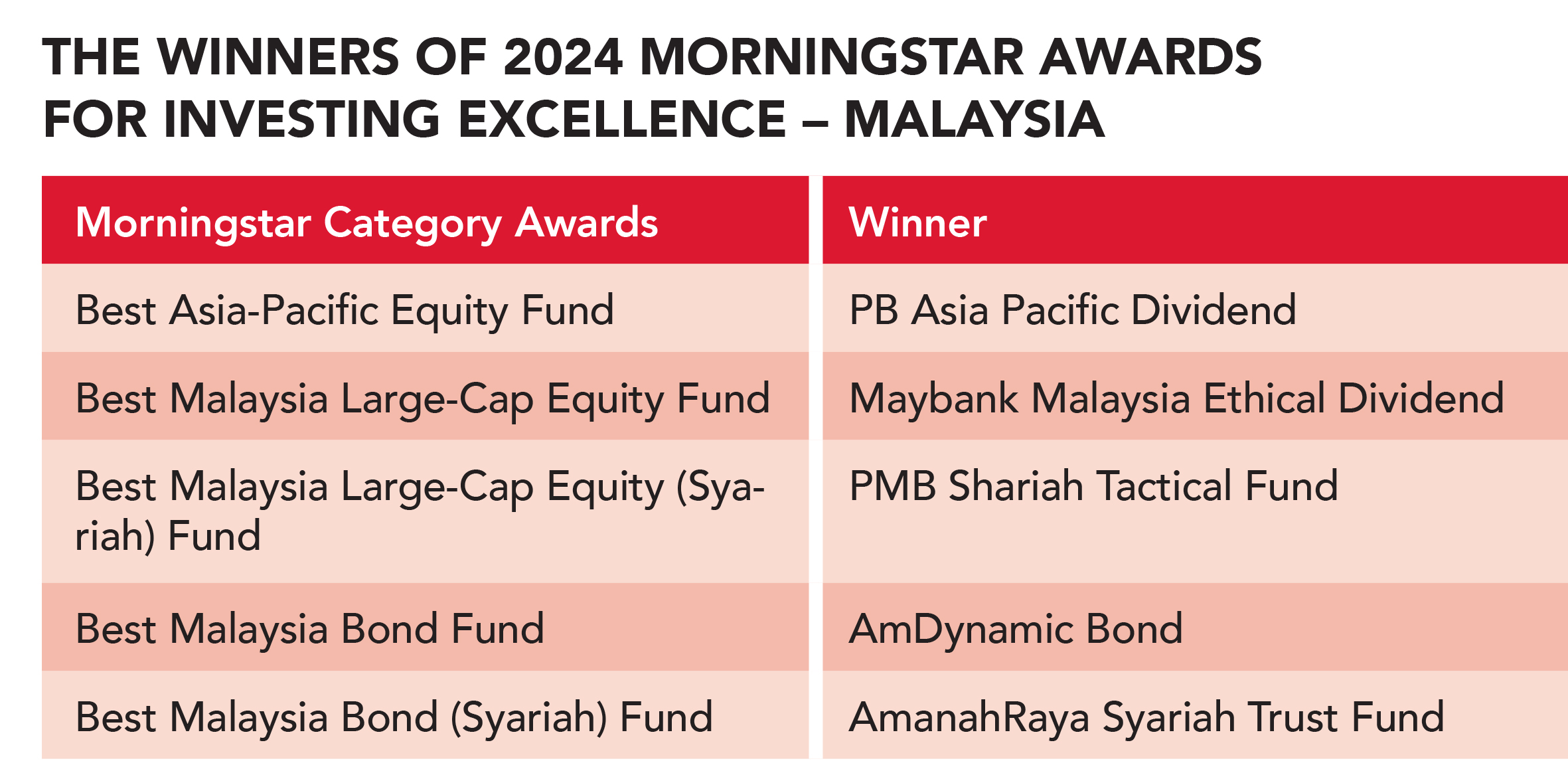
Malaysian large-cap equity category winner Maybank Malaysia Ethical Dividend and Malaysia large-cap equity (Shariah) category winner PMB Shariah Tactical, for example, benefitted from overweight positions in information technology, the best-performing sector domestically in 2023. Notably, the PMB fund returned a whopping 24% (in MYR terms) in 2023. Meanwhile, Asia Pacific equity category winner PB Asia Pacific Dividend was overweight in financials and energy, which benefitted from stylistic tailwinds as value sectors outperformed in the region.

The Malaysian bond market exhibited greater resilience in 2023, and our winning fixed income funds provided extra cushioning for investors amid equity market fluctuations. Malaysia bond category award winner AmDynamic Bond gained 8.3%, ranking in the fifth percentile of peers in 2023. AmanahRaya Unit Trust, meanwhile, gained 5.5% and won the Malaysia Bond (Shariah) category for the fourth consecutive year.

SI: Following the recognition of this year’s award winners, could you discuss the key trends currently shaping the asset management industry in Malaysia?

SA: Last year marked a remarkable rebound for the global financial markets, a turnaround from the gloom of 2022. Morningstar’s Global Market Index delivered over 20% in 2023, but this is just an aggregate picture. The regional performance for Asia was mixed. There were positive performances from markets like Japan, Korea, and India and underperformance in China, Hong Kong and Thailand. Malaysia’s market showed minimal movement in 2023.

Even though the overall markets did well last year, investors were sitting on the sidelines. This is supported by our fund flow data, where most fund flows in 2023 went into money markets and fixed income products. This risk off sentiment was no surprise considering the turbulent markets in 2022 and the higher yields.

In terms of trends, a few I would like to highlight are sustainability, alternatives, global diversification and personalisation. On sustainability, even though we have seen tempered flows into broad based ESG products, we have seen a steady increase in fund flows into climate solutions. Asia accounts for more than 50% of global greenhouse gas emissions, and I believe there will be continued emphasis on the ‘E’ part of ESG led by institutional investors. On alternatives, with the continued convergence of public and private markets, private equity and credit will serve as important diversifiers in investor portfolios.

Considering the muted performance of Malaysian markets, I believe investors will continue to demand globally diversified portfolios from asset managers. No trend discussion is complete without addressing the impact of technology and generative AI. The recent developments in technology will only accelerate investment solutions to be more personalised, not only to deliver financial outcomes but also to incorporate investor preferences and values.

SI: As the newly appointed Managing Director for Southeast Asia, what are your plans to grow Morningstar’s presence here?

SA: One of our primary strategies for this region is to meet the needs of the evolving investors’ portfolios, whether it is global access or varied investment vehicles. Morningstar has built its brand by providing insights on unit trusts, but over time we have expanded our data and research sets so that we can provide deeper insights on multiple asset types such as equities, ETFs, fixed income, structured products and alternatives.

We will continue to add or partner with third party data providers to expand our data sets so that investors can holistically analyse their portfolios. Our goal is to be an enabler with independent research and insights for institutions to personalise investor portfolios.

Even though we saw a reduction in global fund flows into ESG products in 2023, it is no less popular with investors who have taken the time to understand ESG. We believe in this secular trend because the need is clear. Large amounts of private capital are needed to mitigate and adapt to man-made externalities. Morningstar Sustainalytics is an elite brand in the ESG research space among academics and institutional investors. Our plan is to continue to innovate and provide leading ESG investor insights to capital allocators in the region.

There were multiple factors that led to the growth of private markets after the financial crisis. The growth may have slowed with increased yields, but private equity has held up well. We have also seen an increase in private credit, with traditional lenders looking to de-risk their balance sheets. Pitchbook, a Morningstar company and a leading provider of data and research on private markets, has recently set up Singapore as its Asia headquarters to serve the needs of the region.

SI: How does Morningstar assist investors in identifying and selecting the right fund managers while also guiding them on the significance of staying invested rather than trying to time the market perfectly?

SA: Our research demonstrates the pitfalls of attempting to time the market, primarily the risk of missing out on the market’s best days, which can significantly impact long-term returns. Instead, we advocate for a disciplined approach to investing, focusing on long-term objectives rather than short-term market fluctuations.

We have both quantitative and qualitative research to help investors identify fund managers who can beat their peers. For quantitative metrics, one of the primary indicators that we provide is the Star Ratings, which are based on risk-adjusted performance rankings for similar funds. We also have over 110 research analysts who qualitatively evaluate the funds based on factors such as fees, the fund’s investment process, the portfolio management team, risk management practices and the overall investment strategy.

Morningstar also provides educational resources and research articles to help investors understand the principles of successful long-term investing. Through articles, videos, webinars and podcasts, Morningstar educates investors about the benefits of staying invested over the long term and the pitfalls of attempting to time the market.

SI: Morningstar is known for its diverse products and services, including Mo, PitchBook and Sustainalytics. How can these support investors here, and what role do you envision them playing in the region’s evolving financial landscape?

SA: Our range of products and services is designed to cater to a wide spectrum of investors, addressing varying objectives, experience levels and interests in specific assets or sectors. For instance, Mo, Morningstar’s AI-powered digital research assistant, harnesses the Morningstar Intelligence Engine to make our equity research, managed investment research and editorial content readily accessible. This tool is particularly invaluable for investors looking to navigate the vast amounts of information available and make informed decisions quickly.

As the financial landscape in Southeast Asia evolves, tools like Mo, along with insights from the Morningstar suite like PitchBook and Sustainalytics, will play a pivotal role. They empower investors to build diversified portfolios across asset classes that not only align with their risk tolerance and investment goals but also allow them to personalise portfolios based on investor preferences or value.

Morningstar Awards Table 2

Methodology: The Morningstar fund category awards are based on Morningstar fund data as of 31 December 2023. The awards methodology emphasises the one-year period, but funds must also have delivered strong three-year returns after adjusting for risk within the award peer groups in order to obtain an award. In selecting winners, fund returns are adjusted for risk using the Morningstar Risk, a measure which imposes a higher penalty for downside variation in a fund’s return than it does for upside volatility.