Wednesday, 19 August 2026 Stay informed. No noise.

Going Beyond Training: Change-Driven Programs

One of the benefits of being in the learning and development field is the opportunity to have the pulse of the key challenges facing organizations.  As I speak to the very top, I have the privilege of getting the views right from the CEOs themselves. 

Often in a heart-to-heart talk to CEOs and after all the niceties and pretences, they are all willing to be open in their views with regards to training. Here are some of the common misgivings they have about training:

  • Most training at best is just knowledge enhancement and skill-building.
  • Many participants who are trained do not put into practice what they have learned.
  • Whatever they call them be it training or learning and development, many of these programs do not bring about the desired organizational change.
  • Most learning and development programs do not provide a structure and a process to bring about change
  • Many trainers do not understand the issues facing the clients and the industries they are in.

However, the good news is that training service providers who provide Change-Driven Programs (CDP) are more effective in bringing about positive and productive change in organizations. What is a CDP? 

It is a fully customized change-driven program for the company in the specific industry it operates. Unlike the limited role of a training program, a CDP includes an industry analysis, organization diagnosis, change action plan development, and the measurement and monitoring of the progress of change implementation after the session.  

Klscc Change Driven Approach

Our company, KL Strategic Change Consulting (KLSCC) Change-Driven Approach in training comprise 4 components. 

Organization Diagnosis

Prior to the conduct of the training, the consultant or subject matter expert will meet up with the company to understand the challenges it faces.  He or she will request an organization diagnostic survey to a representative group of the company to ascertain the root causes of the issues and the barriers to change.    

The survey is conducted in an anonymous manner to allow frank input with regard to the real issues facing the organization and its specific needs.    While the conduct of the organization diagnosis may take time, it is certainly worth the effort, as this will enable the CDP to be conducted in a more effective manner.  

Industry Analysis

An analysis is also done on the industry the client operates in. This involves studying the trends, challenges, and growth potential of the industry.  Likewise, an analysis is also conducted on the client’s competitors.

This includes understanding the degree of intensifying competition in the markets, the regulations, technology, and globalization’s impact on the client’s company.  There is an agreement with the client to choose which competitor it wants to benchmark against. 

This is very useful is it provides a clear focus on the changes the company needs to drive towards and the standard it needs to raise to be at par with.  

Change Action Plans

The problem with most training programs is that everything ends at the conclusion of the training. The missing link is action plans to address the issues and challenges facing the organization. 

In a CDP, during the session, the consultant will facilitate a discussion, and assessment and come to a joint agreement with the participants on the specific action plans.  Often in a session say of 25 participants, they will be divided into 5 groups.  Each group will come up with an action plan to address specific issues.

For example, one group may address communication issues, another may address staff morale issues and yet another may address the processes in the organization. Each group will discuss and come up with solutions to address these issues and convert them into action plans with specific activities, deadlines, and assigned responsibilities to individuals or teams.

Measure and Monitor Progress

The management guru, Peter Drucker said it well, “You cannot manage what you do not measure”.  To go beyond training, a CDP does not just stop at the end of the session. 

The consultant ensures that all the action plans are forwarded to the head of human resources and the former will also monitor and follow up with the respective teams regarding the progress of these action plans. It has been proven that people are more committed to putting to practice what they have learned if they know that someone shows an interest and is measuring and monitoring the progress of what they are doing.   

Hence it is no surprise that in many of our CDPs conducted, our clients have given testimonies sharing their experiences of positive and productive change in their workplace.  Our work has been recognized by The Brand Laureate International with an award for our company, KL Strategic Change Consulting Group as the consulting and training company that provided the greatest impact on positive and profitable change for organizations in Malaysia.

The Brand Laureate Jane CM Bee

Receiving the award on behalf of KL Strategic Change Consulting Group. The Company that made the most positive and profitable impact for corporations.

For learning and development to be effective, it must go beyond training. It must address the actual business needs of the organization in the specific industry in which it operates.

It must identify the real issues and the root causes that are preventing the organization and its people from changing. It must engage the participants in coming up with joint solutions and action plans to resolve these issues and bring about change. 

Their action plans must have expected outcomes with specific measures of success with persistent follow-up actions until these goals are achieved.    

About the Author

Jane Bee

Ms. Jane CM Bee is the Executive Director of KL Strategic Change Consulting Group. She has extensive experience in marketing consulting and training services to clients in Brunei, Indonesia, Thailand, Singapore, and Hong Kong. She is currently managing a CDP called, “Implementing Successful Change in Organizations”. For feedback on this article email her at janebee@klscc.com or contact her at 012-2685212.

The Oil Market And Your Investment

Strategic petroleum reserves exist in the care of governments around the world. The largest and unheard of by most retail investors is the U.S. Strategic Petroleum Reserve. Today, we will look closer at the oil market and your investment.

The U.S. Strategic Petroleum Reserve (SPR) is one of the world’s largest crude oil stockpiles. Conceived as a defensive weapon against geopolitical crises in the ’70s, the SPR’s purpose and function have evolved. It is a massive stockpile of crude oil based mostly in four major locations around the Gulf Coast.

The SPR is a “tremendously unique asset” and argues that U.S. Congress-mandated sales are ill-conceived. The SPR is a defensive weapon against geopolitical crises, and its purpose and function have evolved. Energy investors need to know about today’s volatile oil market and how it affects the SPR.

The Oil Market And Your Investment: Why Is US SPR Important?

United States Capitol Building

The SPR is important because it provides a strategic and economic advantage for the United States. It is a defensive weapon against geopolitical crises, and its purpose and function have evolved. The SPR’s importance lies in its ability to cushion against sudden oil supply disruptions and price spikes. It also provides a strategic advantage by allowing the U.S. to respond to global oil market disruptions with greater flexibility and speed.

The SPR has been used to mitigate the impact of oil supply disruptions caused by geopolitical crises. For example, it was used during the Gulf War in 1991 and Hurricane Katrina in 2005. During the Gulf War, the U.S. released oil from the SPR to offset the loss of oil supplies from Iraq and Kuwait. During Hurricane Katrina, the SPR was used to help refiners in the Gulf Coast region affected by the hurricane to maintain operations.

The Oil Market And Your Investment: How Does US SPR Work?

The SPR works by storing crude oil in underground salt caverns in four major Gulf Coast locations. The SPR has a current capacity of 713.5 million barrels of crude oil. The Department of Energy (DOE) manages the SPR and is responsible for maintaining the stockpile. The DOE also has the authority to release oil from the SPR in response to supply disruptions or other emergencies threatening the U.S. economy or national security.

The Oil Market And Your Investment: Difference Between SPR and OPEC+

The U.S. Strategic Petroleum Reserve (SPR) is a massive stockpile of crude oil based mostly in four major locations around the Gulf Coast. It was conceived as a defensive weapon against geopolitical crises in the ’70s, and its purpose and function have evolved.

On the other hand, OPEC+ is a group of oil-producing countries that includes members of the Organization of the Petroleum Exporting Countries (OPEC) and non-OPEC countries. The group was formed in 2016 to coordinate oil production and stabilize prices.

The SPR is a stockpile of crude oil owned by the U.S. government and used to help stabilize oil prices during times of crisis. OPEC+ is a group of countries working to coordinate oil production and stabilize prices.

Read: Lessons From Silicon Valley Bank (SVB) and Lehman Brothers: How Islamic Financial Principles Offer More Robust Risk Management In Investments

The Oil Market And Your Investment: Weakening US Dollar May Further Impact Price Of Oil & Inflation

The weakening of the US dollar can lead to an increase in commodity prices, especially crude oil prices. This can lead to inflation as higher oil prices can lead to higher transportation costs and higher prices for goods and services. The Federal Reserve aims to keep inflation under control by adjusting interest rates. The Federal Reserve may increase interest rates to slow economic growth and reduce inflation if inflation rises too much. However, if inflation remains low, the Federal Reserve may keep interest rates low to encourage economic growth.

So, a weakening US dollar can lead to higher commodity prices and inflation. The Federal Reserve aims to keep inflation under control by adjusting interest rates.

Carley Garner, Senior Commodity Strategist discussed on Bloomberg Television recently, has put US$80 oil price is pivotal. A close above US$81 likely leads prices into the high US$90.00s. Such as positive seasonality and speculators having plenty of buying power. In such an environment, the fundamental stories everyone has been talking about will matter.

Crude Oil Wti Futures

The Oil Market And Your Investment: Rising Inflation And Your Investment

Inflation can affect investment returns. Inflation also impacts the returns that an investor earns on the investments he or she makes. Therefore, the concept of inflation-adjusted or real returns is important for all investors to comprehend.

Put simply, real return = nominal return less inflation.

Inflation lowers your returns and has led some investors to favor high-return investments and investments with inherent value, like real estate. It also has some investors keeping as little money as possible in the bank because money constantly loses value.

Read: SPY vs SPUS: A 2023 Comparison of S&P 500 ETFs

The Oil Market And Your Investment: What Should You Do?

Asset allocation is an investment strategy that balances risk and reward by dividing an investment portfolio among asset categories such as stocks, bonds, and cash. The goal of asset allocation is to minimize risk while maximizing returns. It is important because it helps investors diversify their investments and reduce the impact of market volatility on their portfolios. By investing in a mix of assets that have different levels of risk and return, investors can achieve a more stable return over time.

Asset allocation can be done differently depending on an investor’s goals, risk tolerance, and investment horizon. Some investors prefer a more aggressive approach with a higher percentage of stocks in their portfolio, while others prefer a more conservative approach with a higher percentage of bonds and cash.

It is important to note that asset allocation does not guarantee a profit or protect against loss. However, it can help investors achieve their long-term financial goals by reducing risk and increasing returns over time.

Rather than putting everything into the oil market and your investment, perhaps it is time to look at other commodities as an alternative. One such alternative is investing in gold, where Carley Garner further adds the price of gold could potentially break out the US$2,100 level with the best target towards US$2,600 by or before 2024. She projected that such a move is possible with two main factors, the weaker dollar and political uncertainty.

Xauusd Gold Price

Well, there you have an update about the oil market and your investment.

Read: Investing With Recession Fears Looming, Are We Nearing Market Bottom?

About the Author

Mukhriz Mangsor

Mukhriz Mangsor is currently the Head Global Market Strategist at Quantdynamic Research Company. His expertise includes financial education, financial institutions, and property trading with clients, including Brunei, Canada, Malaysia, Singapore, and the United States firms.

Oyen Pet Insurance: Not Just Another Insurtech

If you were to ask a random person on the street if they own a pet and a personal insurance policy, there is a decent chance of the answer being yes. However, if you were to ask if they have pet insurance, the chance of an affirmative response is very likely to be low.

Although many Malaysians still do not have any form of insurance, the average family is still likely to be covered with a medical or life insurance policy. But when it comes to insurance for pets such as cats and dogs, that is a whole other matter.

Kevin Hoong Michelle Chin Oyen
Oyen co-founders (l-r): Kevin Hoong, Michelle Chin

This is where Oyen  comes into the market, with the company aiming to carve up a niche for themselves in the insurance sector. While the pandemic may have wreaked havoc on the economy, if it was not for this black swan event, the insurtech firm may never even have come to life.

Michelle Chin, the co-founder of Oyen, recalls seeing almost everyone in her social circle introducing a pet into their lives as a result of the pandemic.

“One of our friends adopted a second cat, and the cat was found to be suffering from liver disease and she spent a lot of money on treatments,” recalls Chin.

This resulted in the other co-founder of Oyen, Kevin Hoong, wondering why there was a lack of pet insurance as a product. With a family background in insurance spanning 40 years, he was certainly well-placed to gauge the feasibility of spearheading the growth of a niche vertical.

“We found out that there was one insurance company offering it in Malaysia – MSIG,” she remembers.

“We then indicated our interest to launch a unique product offering with a niche focus on pet health, and the rest was history!”

As for their friend’s cat, Chin shares that she has made a full recovery and is now insured with Oyen!

How it works

Claiming to be the “best pet insurance in Malaysia”, Oyen certainly works to live up to that tagline. It pays up to RM8,000 towards the cost of pet veterinary bills, which includes consultation, diagnosis, and treatment at the clinic and hospital.

The more premium coverage plans also covers third-party injury; that is when your pet causes damage to the property of others or even other pets! This will include any legal fees, compensation and related medical costs up to RM30,000 for cats and RM50,000 for dogs.

In addition, even the funeral expenses for your pet are covered under the premium coverage, which includes the burial plot and columbarium.

Oyen is also transparent about what its pet insurance plan does not cover, listing all of these restrictions on its landing page; this includes aids and prosthetics, congenital conditions and surgical implants to name just three.

Like many other insurtechs, it also strives to use simple language to convey the extent of coverage that your pet will receive. Such simplicity is at the heart of Oyen, which like all insurtechs, ultimately aims to simplify the process of purchasing insurance coverage, even for a segment like pets.

Market challenges

Running an insurtech company is never a walk in the park, let alone in such a niche like pet insurance, and with it comes a specific set of challenges.

According to Chin, the biggest obstacle that Oyen faces is the lack of insurance knowledge in Malaysia. This often results in the company having to deal with and educate customers that cannot make head or tail of the insurance or claims processes.

“We were surprised that 80% – 90% of those who enquire with us, have very limited knowledge of how insurance works,” she shares.

“For example, we have had a lot of people who ask if they can claim for a vet bill that happened yesterday. Or they may be at the vet right now and they would like us to reimburse the cost!”

She adds that customers also often ask about covering preventive and routine treatments, the responsibility of which lies with pet owners themselves.

“Once people understand how the industry works, it is rather straightforward for them to consider getting their pets insured,” says Chin.

Although the concept of pet insurance is still fairly new and relatively unknown to the wider public, it is not a new product in Malaysia, having been in the market since 2010. Chin says this is proof that insurance companies have already established that the market is big enough for them to introduce such a product.

“We determined that there is a fast-growing demand segment through a few avenues,” she explains, adding that the pet care market in Asia-Pacific is growing, and is projected to continue growing at a compound annual growth rate (CAGR) of about 10% until 2028.

“Pet humanisation has been rampant – people no longer treat their pets as pets, but as a family member, and even children.”

This means that the way that people care for their pets is more extensive than ever before, with many now receiving home-cooked diets or even food prescribed specifically by pet nutritionists. Such pets also receive better healthcare treatments in general which could include pet hydrotherapy, physiotherapy and acupuncture to name a few. Some even go to the extent of conducting DNA tests on their pets to ensure proper lineage!

“As the cost of pet healthcare increases, due to higher demand for better services and more advanced equipment, the need for pet insurance will increase as well,” predicts Chin.

As for their future expansion plans, Oyen aims to provide “a holistic ecosystem in pet healthcare”. This means that any growth will be within the confines of the pet healthcare system first and foremost, instead of branching out to other insurance verticals.

“If there are opportunities that arise from our pet healthcare focus, we will be happy to explore them.”

When asked about what the long-term game is for Oyen, Chin is very clear as to what her ultimate goal is.

“Becoming the pet healthcare super app in Asia Pacific!” she says unequivocally.

Industry thoughts

As part of the insurtech industry, Chin is certainly building something special in Oyen. However, she believes that there are still some industry blind spots that often get overlooked.

“There is too much focus on the sexy parts of technology and digitalisation, and not enough on building empathy and simplicity into the user experience,” she notes.

Her deft observation is that the space is awash with technological innovation, so that is not a weak point that needs to be addressed. However, many insurtechs end up chasing new breakthroughs and often ignore the human element that is required to quickly grow a loyal customer base. Rather than cutting-edge features, ease of use should be prioritised.

“We need to identify how these technologies or innovations help improve the experience for customers both from a registration and quote journey, as well as claims,” she adds.

With its customer-first approach, it will be of no surprise to anyone if Oyen continues on its current growth trajectory!

By Caleb Khew

A version of this story was published in Smart Investor March/April 2022; issue 372.

If you liked this article, do check out these other reads on Smart Investor:

Budgeting Is So Yesterday: Here’s 3 Intelligent Approaches to Financial Management for Youths

The usual monthly paycheck, a nice little work bonus, festive allowance from uncles and aunties — we all know the adrenaline rush of having some extra cash on hand.

But let’s be real: more often than not, that money’s out of the bank just as quickly as it came in! While it could have gone to buying that shiny thing we’ve been eyeing for months, the reality is that many of us young adults know we can’t always blow it all on a luxurious lifestyle. We’re more likely to put it towards a loan we’ve been servicing, or a big (but essential) purchase that’s been put off for months, or even just clearing the monthly mountain of bills.

In fact, that’s the case for an alarming 73 per cent of Malaysians aged 18 to 40: we’re all repaying some form of debt.

We can promise ourselves that we’ll just “save more next time”. We can set aside stricter budgets for emergencies and rainy days. But with financial commitments piling up on top of ballooning costs, what else can we do on top of that?

It’s not entirely about sacrificing that daily dose of coffee or the occasional self-care treat. It’s about knowing where the money should go.

1. Turning credit cards and BNPL into friends, not foes

We’ve all heard the horror stories: getting carried away by the convenience of living on credit, enjoying the financial freedom of delaying payment for expensive items that can be purchased immediately. Credit cards and ‘buy now, pay later’ (BNPL) platforms have long had a bad rep as massive debt traps, with some more careful Malaysians even avoiding the latter completely.

In truth, though, they can actually be quite good for our financial health — as long as we approach them with a slightly different mindset.

Rather than seeing them as a means to postpone payment (which could awaken the payment procrastinator in us), we as young Malaysians should instead fully leverage our youth and consider them as ways to start building a positive credit score! This is more likely to motivate us to pay our bills on time and reduces the chances of snowballing interest rates. Better yet: it also improves our financial standing for the loans that will really count in the future, like a housing or wedding loan.

Mastering which purchases to use credit cards or BNPL for can also make us small profits. For instance, by using credit only for certain types of weekly or monthly purchases, we’re more likely to be able to pay each month’s bill in full — which many credit card companies now reward with extra cashback or reward points. Rack them up, and we may just be able to afford a fancy item off their redemption catalogue for free!

2.  Start investing early, small, and diverse

Investment can come off as an income stream for older folks who already have some spare money set aside. Less than 35 per cent of young Malaysians consider it a priority, an even smaller proportion than those who are prioritising their own businesses.

Truth is, though, investing is an important way of growing wealth — which is all the more important now in the face of rising costs. Effective investing is less about the amount of money put into it, but rather about knowing what to invest in to suit your current age group and knowledge of the market. Even the smallest investment can make a huge difference over time.

Often, young and inexperienced investors can be made to feel like they are “missing out” on more lucrative opportunities or that they are “misplacing” their investments. But I consider investing a lot like swimming: it’s always better to start small than jumping into the deep end from the get-go.

Low-risk investments like fixed deposits, unit trusts, or Amanah Saham Bumiputera are recommended to start off with, especially since banking staff or trust agents will always be on hand to answer questions or profile any investment needs. Moreover, passive investment apps or platforms can also be a low-effort, digitised way to grow your wealth on the side.

Dabbling in small-scale investments is a learning experience that can boost confidence to eventually diversify to higher-knowledge or more volatile ones, like the stock and capital markets. (And as always, remember that reward is proportional to risk, so tread cautiously!)

3. Getting an expert opinion — that understands you

With so many financial solutions and platforms out there, we’re not only spoilt for choice — we probably wouldn’t even know where to begin! It’s already natural instinct for us to turn to Google or social media to find information, so why not use that to connect with financial advisors that can cut through the noise as well?

Financial consultancy has come a long way from the middle-aged man with a suit and briefcase. These days, they come in the form of a US$104 billion market: social media finfluencers (financial influencers) and modern advisory firms like Intelligent Consultancy.

The financial consultant market is becoming increasingly younger, with advisors that are more relatable to the everyday Malaysian youth. They’re easier to connect with and understand: they do away with the fancy jargon, replacing that with easily digestible advice through social media content and personalised consultancy sessions.

Debt management, personal loans, credit checking, even small business financing — advisors can help young Malaysians manage their financial health and work out payment strategies that work best with the lifestyles we hope to lead. Moreover, consultants and finfluencers may also have their own areas of expertise that can be a valuable source of financial upskilling and knowledge for us: investment security, stock market analysis, and even up-and-coming financing alternatives like Bitcoin or cryptocurrency.

Even the best athletes have coaches, and for good reason! Financial advisors are uniquely positioned to help us devise strategies that not only meet our needs, but take us to the top: to future lifestyle aspirations, financial ambitions, and the big purchases we want to make — all without giving up that daily coffee.

About the Author

Keith Khor Kah Yong Founder Of Intelligent Consultancy 1024

Keith Khor Kah Yong, Founder of Intelligent Consultancy

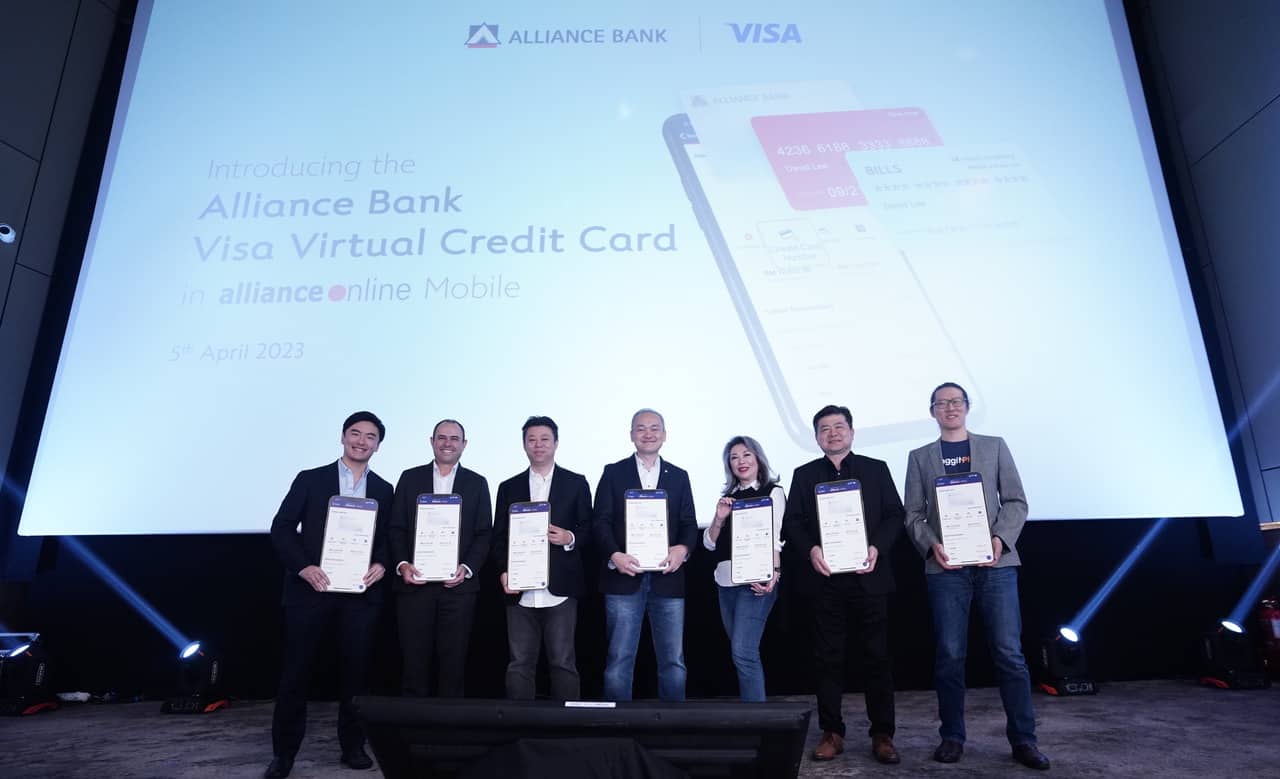
Alliance Bank Introduces Innovative Dynamic Card Number In Visa Virtual Credit Card

Alliance Bank Malaysia Berhad (“Alliance Bank” or the “Bank”) continues to step up efforts to strengthen security of digital transactions with the introduction of Dynamic Card Number in its Alliance Bank Visa Virtual Credit Card. In partnership with Visa Malaysia (“Visa”), CTOS Digital Berhad (“CTOS”), Jirnexu (“RinggitPlus”), YTL Communications (“YES”) and Touch ‘N’ Go Digital (“TNG Digital”), this new payment solution will not only make online transactions more secure, but it will also greatly enhance the overall experience for credit cardholders.

The enhanced feature generates a randomised 16-digit credit card number for every transaction which includes e-commerce transactions, streaming and subscription services to cater to customers’ various lifestyle needs. As part of Alliance Bank’s Acceler8 strategy, the Bank will continue to drive digital transformation to provide faster, better, and more personalised solutions for customers.

The single-use Dynamic Card Number offers a more secure and safer way of making daily purchases and minimises the customers’ exposure to fraudulent risks, identity thefts and other  financial scams. Additionally, it also brings about a positive impact to the environment as it reduces production of plastic credit cards and helps to lower credit card footprint on online channels.

Customers also have the flexibility to determine a dedicated Dynamic Card Number as well as the number of times it can be used for a particular subscription service. This enables customers to track and manage their digital transactions on-the-go more conveniently and securely via their mobile phones.

“In line with Alliance Bank’s customer-first mindset, we constantly innovate and enhance our  suite of digital solutions to meet our customers’ expanding banking needs, and also deliver a seamless digital payment experience. The new feature on the Alliance Bank Visa Virtual Credit Card provides our customers with greater peace of mind by way of a more secure payment option, addressing concerns of credit card data breach at third party sites when they transact online,” said Ms Gan Pai Li, Group Chief Consumer Banking Officer of Alliance Bank.

Alliance Bank Introduces Innovative Dynamic Card Number In Visa Virtual Credit Card1

Sharing the same sentiment, Mr Ng Kong Boon, Visa Country Manager for Malaysia, said, “With more Malaysians relying on digital commerce, we believe it is important that they feel empowered and secure when making digital payments. Hence, we have partnered with Alliance Bank on this dynamic card number solution for the virtual credit card. We hope to give customers more confidence as they shop and pay for their purchases online.”

“The virtual credit card will enable users a smooth experience when fulfilling their payments, reload and purchasing needs. Furthermore, the main edge of the virtual credit card is its dynamic card numbers which is in tandem with TNG Digital’s main aim for being a safe and secure eWallet in line with Bank Negara Malaysia’s standards,” said Mr Alan Ni, Chief Executive Officer of TNG Digital.

With Malaysia recording 154 data breaches per 100 people in 2022 according to Surfshark, the introduction of the Dynamic Card Number aims to meet the market needs of more personalised and safe mode of payment for goods and services, especially among young professionals.

The fully online application process is fast and simple, with digital submission of supporting documents such as EPF statements or salary slips. Successful applicants will be notified through a push notification.

For more information on Alliance Bank Visa Virtual Credit Card or the Bank’s products and services, please visit https://www.alliancebank.com.my/cards/personal/credit-cards/virtual-platinum-credit-card.aspx

About Alliance Bank Malaysia Berhad

Alliance Bank Malaysia Berhad and its subsidiary, Alliance Islamic Bank Berhad, offers banking and financial solutions through its consumer, SME, corporate, commercial and Islamic banking, and stockbroking business. The Bank provides easy access to its broad base of customers throughout the country via multi-pronged delivery channels that include retail branches, Privilege Banking Centres, Business Centres, Investment Bank branches, and mobile and Internet banking.

How A Buy-Sell Agreement Can Help Business Partners In The Future

The following story is based on an actual series of events, with some names and circumstances fictionalised. Any similarity to any person’s name, character, or history is coincidental and unintentional. Business partners normally do well when the relationship and business are good, but what happens when either one passes away? This is how a buy-sell agreement can help all parties involved.

Teh and Fong have had a successful joint venture called Advanced Computing Machines Sdn Bhd (ACM), distributing computers and accessories throughout Malaysia. Each had an equal share of 50% in ACM.

Teh and Fong had been classmates since primary school and had a closer relationship with each other than with their siblings. They started the business in 1980 when the market was still new. Desktop computers were clunky, and laptops were unheard of.

The entry of the ACM joint venture was based on their shared conviction that the market for desktop computers would be big as such machines became popular among corporations.

As the manufacturing cost of computers came down, the market soon developed into a very competitive one. Fortunately, ACM, one of the early players, had a significant market share and could survive on razor-thin margins because of economies of scale and good teamwork between Teh and Fong.

Teh excelled in marketing, and Fong was a strong operations man. The two blended well and grew market share successfully. Profit grew to exceed RM10 million on an RM900 million turnover.

Teh brought in his son as his assistant, and Fong’s son joined shortly after as the company accountant. Their thoughts then were for their sons to be joint successors to the business.

Over time, however, it became clear to Teh and Fong that the two sons did not get along. They often complained about each other to their father. The animosity between them grew, basically stemming from a lack of trust. Fong’s son, being a typical accountant, was always eager to check on business development expenses, while Teh’s son resented his constant querying.

One day, Teh expressed his concern to Fong over a golf session. They both acknowledged that it would be a disaster for the business if both sons were to inherit what they owned. They decided to seek advice from me, whom they both knew as a financial planner for over a decade.

After a few pleasantries, they met me over lunch and brought up the subject of their concern.

Read: Money Caused Breakup Among Four Close Friends, That’s Why it Is Important To Plan For The Succession Of A Business

Buy-Sell Agreement As An Alternative

Business Men Sitting Lawyers S Desk People Signing Important Documents

Teh started by asking: “Jo, as you know, we have equal shares in ACM that you helped bring to IPO, and we are concerned that if one of us dies, the share in the business will go to our family and disrupt the business.”

Fong added: “The big worry is that our sons don’t get along. Sooner or later, there will be a fight, and the business will go downhill. Is there anything we can do besides leaving our assets in a will?”

I said: “Yes. There are two routes you can choose from. One is to sell the shares wholly or by a majority to a party interested in further developing the business. The second is to sign a buy-sell agreement between you so that when you die or become mentally incapacitated, your representative can sell to the other at a pre-agreed price or price-fixing formula.”

“But what if our successor refuses to honour the buy-sell agreement?” Teh asked.

I replied: “This is where it would be useful to do this buy-sell agreement with an independent trust company to act as your attorney. The trust company can then enforce the provisions you have agreed to and ensure the sale proceeds go to the beneficiaries.”

“What if my family does not have enough cash to buy?” asked Fong.

“Two ways. The first way is you can agree beforehand on payment in instalments. Or second way, as commonly done, both of you can buy insurance for a sufficient value to cover the shares to be purchased when the time comes.” I said. “For the process and the tax implications, consult an experienced trust company,” I added.

Shortly after, the buy-sell agreement and two insurance policies were put in place with the help of the trust company.

Read: He Had Everything But Children’s Harmony In The Family Business

Buy-Sell Agreement Put Into Action

Caucasian Businessman Holding Documents Office

In 2020, Teh died from Covid-19 infection, and the trust company claimed the insurance proceeds, which were paid to the beneficiaries, and his shares were transferred to Fong.

This was a happy ending for everyone involved, avoiding conflict and hardship for the next of kin. This is a good example of how a buy-sell agreement manages to help.

Read: The Amazing Reconciliation Of Father And Son, And This Reflected Inside The Will

About Rockwills International Group

Wisma Rockwills

Rockwills International Group, now in its 28th year, pioneered professional will writing in 1995 and has since evolved into the leading estate planning specialist in the country. It is today the largest provider of solutions and support services in trusts, succession, management and distribution of wealth. It has shareholders’ funds exceeding RM50 million. It has done over 280,000 wills and 15,000 trusts and holds more than RM25 billion in assets under trust.

Create Your Stock Watchlist With These Simple Steps

Have you ever gone grocery shopping without a checklist? Most of the time, you have a hard time deciding which items to buy first, which results in buying things that are not your priority. It will be a waste when you purchase something, but you don’t need it then.

It is similar to investing; you must know how to create your stock watchlist. Otherwise, you will be wasting time and money buying stocks that are not good.

What Is A Watchlist?

According to Investopedia, a watchlist is a set of securities an investor monitors for potential trading or investing opportunities.

A watchlist will help you personalize your list with stocks you are interested in.

How To Create Your Stock Watchlist?

Investor Analyze Stock Chart With Laptop Businessman Forecast Analysis Graph

How to create a stock watchlist is not the main issue. But how to create your stock watchlist that is efficient is more important. You need to create your stock watchlist and make sure that it is an effective one.

An effective watchlist will save you time when selecting which stocks to buy and helps investors select stocks easier. Below are a few ideas on how you can create your stock watchlist.

Read: Using The CANSLIM Formula To Choose Good Stocks

Watchlist By Sectors

Different exchanges may have different numbers of sectors. A country with a bigger economy usually has more industries and thus has more sectors. It can be seen in big countries such as the United States, China, and the United Kingdom.

In Bursa Malaysia, there are 13 sectors available. An easy way to build a watchlist is by sectors. When there is any sentiment play or theme play, investors can easily open their watchlist and select stocks based on the watchlist created.

For example, an oil & gas sector watchlist may consist of companies that run businesses downstream, midstream, and upstream. A watchlist will make your life easier whenever a catalyst is related to sectors.

Besides that, some investors may be interested in a particular sector. The technology sector is the sector that has been attracting a lot of investors. This is due to the growth potential in that sector. If you are one of them, you may consider building a watchlist with technology counters.

Watchlist By Strategies

Some investors might have a watchlist based on their trading or investment strategies. In this type of watchlist, your criteria for stocks might include the following:

  • Breakout 52-week high
  • Breakout All-Time high
  • In uptrend phase
  • Forming a pattern

Read: 3 Steps To Kickstart Your Stock Market Investment Journey

Watchlist Based On Investment Objective

Investment Stock Market Entrepreneur Business

Traders with multiple investment objectives can create a few watchlists based on the period they will hold the stocks.

1. Short-term watchlist

List of stocks that you are monitoring closely every day.

2. Mid-term watchlist

List of stocks you monitor and wait for the right timing to enter. Once bought, these stocks will be kept in the portfolio for a few weeks or months.

3. Long-term watchlist

List of stocks you plan to buy and keep for a long time, for example, more than a year. This watchlist can be a list of stocks with strong fundamentals, consistently giving out dividends and blue-chip stocks.

Read: Investing VS Trading, Which One Is Suitable For Me?

How To Create Your Stock Watchlist In The CGS-CIMB iTrade Platform

If you have an account with CGS-CIMB and are unsure how to create a watchlist, below are the steps to follow.

  1. Click on Watchlist. Next, click Create Watchlist.
Create Your Stock Watchlist1
  1. Enter your watchlist name in the box provided. You can set the watchlist according to sectors or businesses.
Create Your Stock Watchlist2
  1. Click on View Watchlist to view the watchlists that you have created.
Create Your Stock Watchlist3
  1. Type the stock that you wish to put in your watchlist.
Create Your Stock Watchlist4
  1. Right-click on the stock name and click on Add to Watchlist.
Create Your Stock Watchlist5
  1. Click on the downward arrow and select your watchlist. The stock can be viewed in the watchlist that you select, making it easier for you to search in the future.
Create Your Stock Watchlist6
  1. You can always rename your watchlist and delete your watchlist.
Create Your Stock Watchlist7 1

In conclusion, it is a smart action if you have more than one watchlist. If you already have a trading account, create your stock watchlists to save time. If you are busy with work, that is not an excuse, as you can build your watchlist even after working hours when you are chilling and have some free time.

Read: Guide To Apply For IPO In Malaysia (Via Maybank2u And CIMB Clicks)

ICMR Finds Multiple Vulnerability Drivers Among Malaysians

The Institute for Capital Market Research Malaysia (ICMR) today launched its latest research report titled “New Age Vulnerabilities: Understanding Investor Vulnerability within the Malaysian Context”. Based on its findings, the report highlights that Malaysians experience overlapping vulnerability drivers that impair their ability to make sound financial decisions. As a result, they are more likely to fall victim to scams, be inadequately prepared for retirement, and face everyday difficulties while investing. 

ICMR’s research was motivated by the need to develop a comprehensive and empirically informed understanding of how Malaysians experience vulnerability in their investment journeys. Many investors today are at risk of suffering fraud, financial exploitation, or the effects of unsuitable investments due to the changing nature of financial services, financial decision-making, and access to information. Indeed, 84% of surveyed respondents said they had received advice on financial products that turned out to be a scam and 36% had lost monies to a scam.

ICMR groups the key drivers of investor vulnerability into three broad categories based on their characteristics: situational (changing circumstances), investor behaviour and accessibility to financial products and services, as well as issues related to the industry. These categories were informed by a benchmarking exercise that compared definitions used by local and global regulators. A nationwide quantitative survey was then implemented alongside qualitative focus group discussions to better understand the investing experiences of Malaysians.

The study found a wide majority of respondents being exposed to behavioural and access drivers (93%), followed by situational drivers (54%) and industry-related drivers (51%). Within the first category, 64% felt either financially unstable or living paycheck-to-paycheck, hence experiencing mental stress. As for situational drivers, 61% felt negatively impacted by difficult events like job loss, income shock, or the deaths of close relatives. Meanwhile, 70% experienced difficulties in engaging with financial service providers, including unsuitable pricing or terms.  

Nonetheless, the findings also indicate that different types of vulnerability are frequently overlapping and closely interconnected – meaning that financial distress is not always attributable to a particular cause. The experiences within each vulnerability category are as diverse as the experiences of vulnerability across the group as a whole. Moreover, financial or investment scams have cut across all groups of the surveyed population, with those susceptible driven greatly by greed and herding behaviour from the influence of family or friends.

The third Capital Market Masterplan (CMP3) launched by the Securities Commission Malaysia (SC) in 2021 mentions the “identification and assessment of vulnerable investors” as a top priority over the next five years for “enhancing focus on protecting investors against vulnerabilities”. As such, ICMR’s research seeks to assist the SC’s enhancement of investor frameworks and protection efforts for reducing the harm experienced by vulnerable investors, as well as provide context for firms to deal with vulnerable clients and provide appropriate levels of care.

In this regard, ICMR recommends a dual and systematic approach to address investor vulnerability in the Malaysian context. Firstly, there is a need to build financial resilience across the population by addressing intersectional vulnerabilities, which include both structural and behavioural barriers. This must then be complemented with a targeted approach to deal with vulnerable investors, including enhanced suitability assessments and regulatory oversight as well as educational and training programmes.

“Our research has shown that vulnerability drivers can impact Malaysian households and individuals at many different life stages, situations, health levels, even different investment experiences. The combination of behavioural and structural issues goes beyond the ambit of any single regulator or agency, which is why there is a need for a whole-of-nation approach across jurisdictions. In line with this, behavioural insights including the trigger points identified by ICMR should be incorporated into every stage of a policy cycle for more effective implementation”, said Datin Azleen Osman Rani, Director of ICMR.

ICMR’s survey was distributed from April to June 2022 to 2,019 respondents across East and West Malaysia, aged between 18 – 70 years old. Hard recruitment quotas were used to ensure a representative sample of age, racial, and monthly household income distribution akin to the Malaysian Department of Statistics’ Census. To provide additional context to the quantitative survey responses, qualitative interviews were conducted from July to September 2022 with five targeted focus groups between the ages of 25 – 66 years old.

For more information about ICMR’s research findings, methodology, and recommendations, please download the full report at https://www.icmr.my/new-age-vulnerabilities-understanding-investor-vulnerability-within-the-malaysian-context/.

ICMR Research Series: Understanding Millennial And Gen Z Investors In Malaysia

Young people matter. With older generations increasingly reaching retirement age, millennials and Gen Z are becoming increasingly important to the economy. They are now the largest generational cohorts, with the power to influence consumer and market trends over the next decade. But these younger generations face challenges, including digitalization and a fast-changing job market.

Given the sheer size and potential of millennials and Gen Z, the Institute for Capital Market Research Malaysia (ICMR) recently conducted a nationwide study to understand better their issues, challenges, and behaviours regarding personal finance and investing. This article looks closely at ICMR’s research data and what it tells us about the next generation of Malaysian investors.

Not All Young Investors Are Alike

As with any generation, young investors are not a monolithic group – their individual needs and preferences differ due to various factors, from life stage to upbringing to income. ICMR’s survey, distributed to 1,500 respondents, found that millennials and Gen Z Malaysians can be categorized into three groups, each with unique characteristics.

22% of respondents formed Group A, comprised of those not investing in investment products. Meanwhile, Group B, making up 33% of respondents, only invests in Amanah Saham Nasional Berhad (ASNB) funds and/or unit trusts. The remaining 45% making up Group C, invests in various other investment products not limited to just ASNB and unit trusts.

ICMR Article 1 Figure 1
Figure 1: Three different categories of respondents (Source: ICMR)

Although millennials and Gen Z investors generally share attitudinal and cultural similarities that separate them from older generations – there are also distinct demographic and behavioural differences between the three groups of young investors identified by ICMR. These differences can be understood in demographics and income, financial literacy and risk tolerance, and income allocation.

Demographics And Income

Regarding demographics, there are more females in Group A and B, whereas 60% of Group C are males. A higher proportion from the East Coast does not invest (Group A), while Group C has a higher proportion from the Central region. Moreover, although Malays comprise only 58% of total respondents, they form the majority of those who do not invest (63%).

More notably, there are differences in household income levels between all three groups. While 69% of Group A earn less than RM5,000 in monthly household income, 56% of Group B earn between RM3,000 – RM7,000. Meanwhile, respondents who fall under Group C were found to have significantly higher incomes, with 31% having household incomes above RM10,000.

ICMR Article 1 Figure 2
Figure 2: Demographic and Income Differences Between Groups (Source: ICMR)

Nonetheless, in-depth responses of individuals via qualitative interviews with ICMR suggest that the level of disposable income matters more than earned income. Some interviewees felt they could start investing while making RM3,000 a month, while others only felt comfortable after earning RM7,000 a month. But all interviewees agreed that they are more likely to invest if their disposable income increases.

I recently changed jobs and got a pay rise, and it’s been much easier for me to invest now. Before this, even though I was getting decent pay for my age, I found it hard because I enjoy my lifestyle like going out for meals with friends, and that’s not something I’m willing to give up

Roshan, 28, consultant

Financial Literacy And Risk Tolerance

ICMR’s research suggests a link between financial knowledge, financial confidence, and risk tolerance with the likelihood of investing and the kind of products invested in. For instance, someone who does not know much about financial matters and has little financial confidence is also unwilling to take risks – hence not investing and falling into Group A.

This could also explain behavioural differences between Group B, which invests only in ASNB funds or unit trust products, and Group C, which invests in other capital market products. The first unit trust company in Malaysia was set up in 1959. This might be why retail investors are most comfortable with unit trust products, considering their long history in Malaysia.

ICMR Article 1 Figure 3
Figure 3: Financial Literacy and Risk Tolerance Levels Between Groups (Source: ICMR)

Additionally, many investors who only invest in ASNB funds or unit trust products (Group B) tend to be less risk tolerant and financially confident. In contrast, those who invest in other capital market products like shares or cryptocurrency, which are perceived to be riskier, tend to have higher risk tolerance levels and feel more financially confident.

I have an ASNB account, although allocations can be hard for a Chinese. I consider the money in ASNB and my unit trust savings because they’re safer. I have some foreign shares and some cryptocurrency, which I consider investing. I make sure I keep 60 – 70% of my money in the safer options and make sure they’re on regulated platforms, and then I’m happy to take more risks with the other investments

Han Cheong, 32, civil servant

Income Allocation

Behavioural shifts across the groups are also reflected in ICMR’s survey results on income allocation. A higher percentage of Group C stated that they set aside amounts for investing only (27%) or separate amounts for savings and investing (30%). On the other hand, a higher percentage in Group B stated that they set aside money for savings only (52%).

This indicates a shift in mental accounting from Group B to Group C, with those who invest in other capital market products being more likely to distinguish between saving and investing. Mental accounting refers to the tendency to mentally sort out funds into separate accounts, affecting how a person thinks about their spending.

ICMR Article 1 Figure 4
Figure 4: Income Allocation Between Groups (Source: ICMR)

Complementing the survey data above, findings from ICMR’s qualitative interviews also suggest that many young Malaysians perceive safer investment products as “savings.” In contrast, riskier products are perceived as “investing.” This tendency concerns their own personal risk assessments and methods of mentally dividing their money.

I opened an ASB account and took out an RM50,000 ASB loan because my mother said I should. I pay the loan monthly, but I honestly have no idea how it works. I didn’t know until now that I could also put money regularly into my account if I wanted to”

Haris, 25, journalist

Catching Up With Young Investors

ICMR’s research findings on young investors highlight that many factors are linked to one’s investment behaviour, including income, financial knowledge or confidence, and risk tolerance. Policymakers and industry players should avoid a “one-size-fits-all” approach when dealing with millennial or Gen Z investors and instead adopt more nuanced or tiered policies and products.

As for young investors who are still unsure or not confident about investing, leveraging behavioral insights to incorporate the right tools, self-awareness, and techniques to navigate their personal finances can help. Understanding their biases and using heuristics (mental shortcuts) to simplify the investment decision-making process will encourage safer and more strategic investing habits for the long term.

This article is part of a content series by the Institute for Capital Market Research (ICMR). Follow ICMR’s Facebook page to stay updated about behavioral tips and insights for better investing habits. To learn more about ICMR’s research on millennials and Gen Z, visit www.icmr.my or download the full report here.

About the Authors

ICMR Datin Aida
Datin Aida Jaslina Jalaludin, Head of Research, ICMR
ICMR Nadhirah Ibrahim
Nadhirah Ibrahim, Research Analyst, ICMR

Iverson Associates Bags Microsoft Award

Iverson Associates Sdn Bhd has been awarded the 2022 Microsoft Malaysia Learning Partner of the Year for excelling beyond its peers in the delivery of high-quality customer experience and high-impact Microsoft training solutions in Malaysia.

Iverson, established in 1994, was also recognised for demonstrating an entrepreneurial spirit and sales excellence contributing towards Microsoft Malaysia’s business in the 2022 financial year.

“We are proud to be awarded this accolade which recognises our innovative and transformative approaches in overcoming adversity, and our ability to drive training and adoption of Microsoft Cloud technology,” said Dr Yap Chee Sing, Managing Director of Iverson Associates Sdn Bhd.

Iverson Associates takes pride in playing a leading role in the business ecosystem by transferring the latest technologies to government, business organisations, and individuals, helping them to upgrade their IT skills and gain competitive advantage in the digital era.

“Iverson will continue to champion continuous and accessible learning just as we have been doing for the past 29 years,” he adds.

“Building on our solid foundations and strong track records, we plan to continue expanding our product range and geographical reach to become a leading regional training provider,” Dr Yap said.

The firm is known for its collaboration with several government agencies to upskill the Malaysian workforce including the Human Resources Development (HRD) Corporation and the Malaysian Digital Economy Corporation. It offers a wide range of training courses like data science, artificial intelligence, machine learning, blockchain, cloud computing, project management and cybersecurity, amongst others.

From Left Managing Director Of Microsoft Malaysia K Raman Iverson General Manager Cheryl Wong And Iverson Sales Marketing Department Head Ng Saw Hoon
From left, Managing Director of Microsoft Malaysia, K Raman, Iverson General Manager, Cheryl Wong and Iverson Sales & Marketing Department Head, Ng Saw Hoon

“We believe our partners make more possible,” said Sara Lua, General Manager of Global Partner Solutions, Microsoft Malaysia. “The Microsoft Malaysia Partner Awards 2022 recognizes organizations that demonstrate digital transformation excellence and innovation based on Microsoft technology. As a learning partner, Iverson delivers digital skills and training to our customers and the partner ecosystem, which contributes to Microsoft’s pledge of skilling 1 million Malaysians by the end of 2023.”

“This current award is the latest won by Iverson. In recent years, we have bagged awards from other top IT vendors like AWS, IBM, Red Hat and Citrix, as well as from HRD Corporation. This win does not mean we will rest on our laurels; to the contrary, it will drive us to work harder to achieve greater heights,” Dr Yap adds.

More information on Iverson Associates and its offering can be found on https://www.iverson.com.my or contact 03-77262678 to find out more.

About Iverson Associates Sdn Bhd

Iverson Associates Sdn Bhd is the leader in professional IT training in Malaysia. Established in 1994, Iverson is the authorised training partner for the world’s leading IT vendors such as Microsoft, AWS, Red Hat, SAP, Salesforce, Citrix, Cloudera, EC-Council, Dell-EMC, Project Management Institute, etc. Iverson has more than 60 full-time staff in Malaysia and 3 training centres in Kuala Lumpur, Petaling Jaya and Penang. It also has a subsidiary in Bangkok, Thailand with 15 full-time staff. With 37 fully equipped, 500-seat capacity training rooms, a large pool of certified trainers, and well-designed courseware, Iverson has the capability and flexibility to provide training solutions to meet the requirements of the most demanding customers. For more information, visit www.iverson.com.my