KUALA LUMPUR, MALAYSIA – Media OutReach Newswire – 26 June 2026 – In less than five years since it first opened its doors, Klinik Tuah has reached a significant milestone: welcoming its 10,000th knee pain patient on 5 June 2026. The milestone reflects a growing need among Malaysians for knee pain treatment that is accessible, effective, and patient-friendly.
This achievement comes at a time when more Malaysians, particularly older adults are struggling to access early treatment for knee pain. Common barriers include high costs, long waiting times, and concerns about whether the treatment will actually work.
For the clinic’s founder, this milestone carries a meaning far beyond the numbers. It is the fulfilment of a promise.
Dr. Hareez recalled watching a mother live with knee pain for years, as simple daily activities like walking, climbing stairs, and even praying gradually became harder over time. Accompanying a parent to treatment from a young age, only to see the same result each time: a bottle of painkillers and no lasting relief. The pain never went away, regardless of how many bottles were finished. Hearing the cries of pain every night was something that stayed close to heart.
That experience became the foundation of a personal commitment which is to help others going through the same struggle.
That same principle has guided Klinik Tuah since its very first day of operations.
Five Years of Changing How Knee Pain Is Treated
Klinik Tuah started with a single clinic in Cheras in September 2021. Today, Klinik Tuah has grown to six branches across Peninsular Malaysia, with plans to open new branches in Gombak and Penang in the near future.
But according to Dr. Hareez Noorman, one of Klinik Tuah’s co-founders, the growth has always been driven by a bigger vision.
“Whenever knee pain was brought up, the first thing that came to mind for most people was the fear of surgery. But after visiting several countries such as Korea, Japan, Türkiye, and others to study the latest advances in knee treatment, Klinik Tuah was determined to bring these non-surgical technologies back to Malaysia at a price that people could actually afford.”
“Klinik Tuah has invested in the latest medical technology, advanced equipment, and ongoing training for its doctors to make sure that more people can benefit from knee treatment at Klinik Tuah.”
Over five years of operations, Klinik Tuah has seen patients from all walks of life, including senior citizens, working adults, and those who simply want to stay active without being held back by knee pain. The majority of knee pain patients are aged 50 and above, making up around 72% of all cases treated at the clinic.
Growing Awareness of Non-Surgical Treatment
Klinik Tuah has also observed a growing shift in the way Malaysians think about knee treatment. More people are now actively looking for modern, less invasive options that allow them to get back on their feet without relying on long-term painkillers.
This shift is partly driven by better access to health information online, as well as greater exposure to modern knee treatment technologies that are becoming more widely available.
“For a long time, many patients believed that knee pain was just a normal part of getting older. Some lived with it for years, either because they were afraid of surgery, or because they thought they had no other choice besides painkillers or a knee replacement,” said Dr. Hareez Noorman.
Klinik Tuah’s approach focuses on personalised care, supported by the latest diagnostic tools and a range of non-surgical treatment options. These include hyaluronic acid gel injections, Platelet Rich Plasma (PRP) therapy, regenerative cell treatment, Genicular Nerve Block, sclerotherapy, Radio Frequency Ablation (RFA), and other advanced procedures.
Today, Klinik Tuah is recognised as one of Malaysia’s dedicated knee care clinics, known for its patient-centred approach, up-to-date medical technology, and clear communication that helps patients understand their condition and treatment options.
The Journey Continues: 35,000 Patients by 2030
With 10,000 knee pain patients now treated, Klinik Tuah has set its sights on a bigger goal, to help 35,000 patients by the year 2030.
This target is in line with the clinic’s long-term vision of building a future where more Malaysians can move freely, carry out their daily routines comfortably, and live without the burden of chronic knee pain.
To reach this goal, Klinik Tuah plans to expand its network of branches gradually, while continuing to make modern knee treatment more accessible, easier to understand, and tailored to individual needs.
According to the clinic, there are still many Malaysians living with untreated knee pain, whether due to limited access, fear of treatment, or simply not knowing what options are available to them today.
“The goal is clear. Klinik Tuah wants more patients to have the chance to properly understand their condition and to access the right treatment. When pain is managed well, everything else in life gets better,” said Dr. Hareez Noorman.
Dr. Hareez Noorman added that Klinik Tuah’s mission goes beyond treating symptoms — it is about helping patients return to a more active and meaningful life, in line with the clinic’s long-term commitment to reducing the burden of pain in the community.
With advances in modern treatment and increasing public awareness, Klinik Tuah believes the 35,000-patient target by 2030 is a realistic and meaningful step toward a future where effective knee care is within reach for every Malaysian. Hashtag: #kliniktuah #business #healthcare
The issuer is solely responsible for the content of this announcement.
KLINIK TUAH
Klinik Tuah is a Malaysian medical clinic specialising in knee pain treatment and modern circumcision. Founded in September 2021, the clinic has grown to six branches across Peninsular Malaysia, serving patients from a range of age groups and backgrounds. To date, Klinik Tuah has treated more than 10,000 knee pain patients, with further branch openings planned in the near future.
At MWC IoT Summit 2026, Kigen made the case that the EU Cyber Resilience Act is not a compliance burden — it is a once-in-a-generation opportunity. For manufacturers who move now, the competitive advantage is structural.
SHANGHAI, CHINA – Media OutReach Newswire – 26 June 2026 – 5.5 trillion dollars. That is the annual cost of cybercrime to the global economy — a figure larger than the GDP of every nation except the United States and China. Behind it lies a single, solvable problem: billions of connected devices shipped without robust security baked in.
At MWC IoT Summit 2026 in Shanghai, Jean-Louis Carrara, SVP Global Sales at Kigen, delivered a keynote that reframed this challenge as an inflection point. The message was clear: the era of voluntary security is over, and the manufacturers who recognise this first will define the competitive landscape for the decade ahead.
The Regulation That Changes Everything
The EU Cyber Resilience Act (CRA) is the most significant cybersecurity legislation ever enacted. It covers more than 90% of all IoT products containing digital elements — sensors, gateways, industrial equipment, consumer devices. If it connects, it is covered.
Manufacturers must now provide security updates across a five-year product lifecycle, report confirmed security incidents within 72 hours, and demonstrate security by design from the earliest stages of product development. Non-compliance carries penalties of up to €15 million, or 2.5% of global annual turnover.
Documentation requirements and vulnerability management obligations are already in force from September 2026. For any product in development today — any product planned for market entry in 2027 — compliance is not a future consideration. It is a present one.
“Security is no longer a cost to be minimised. It is an investment in market access, competitive standing, and long-term resilience.”
Speaking at MWCShanghai, Mr Jean-Louis Carrara, SVP of Kigen presented the challenge for industry leadership in electronics exports and pragmatic, cost-effective interventions immediately available.
Market Access as Competitive Advantage
Independent analysis puts the average cost of CRA compliance at approximately €100,000 per product line. Against a potential penalty exposure of €15 million, the arithmetic is straightforward. But Carrara pressed further: as the compliance threshold rises, EU market access becomes selectively available — a structural advantage for those who are ready.
This is the reframe that matters. Security is not a constraint on speed to market. It is the enabler of access to the world’s most demanding — and most rewarding — markets.
Proof at Scale — and Under Pressure
Kigen’s eSIM technology operates across more than 250 terrestrial and satellite networks worldwide. Hundreds of millions of devices. Decades of real-world hardening. But scale, Carrara argued, is not the same as trust.
Trust is demonstrated when the stakes are highest. When significant vulnerabilities were identified in eSIM frameworks used across the industry, Kigen responded within 72 hours — developing and sharing a patch openly, without paywalls, in full coordination with the GSMA and in alignment with ENISA disclosure guidelines.
“We did not wait for regulation to demand it,” Carrara said. “We acted because it was right — and because the industry’s security is only as strong as its weakest point. Our actions supported the coordinated response to develop countermeasures and mitigate the risks and we continue to collaborate on furthering these by contributing back through GSMA and other standards bodies. With certified eSIMs now carrying capabilities to patch, the tools are available for the mandates OEMs must meet on cybersecurity – readily, with our expertise.”
The Platform Already Built
Kigen’s platform delivers autonomous over-the-air security updates — deployable across an entire installed fleet without physical intervention. Native IoT profile management enables secure provisioning at manufacturing scale. Proven interoperability across the global operator ecosystem ensures devices function wherever customers need them.
Kigen also chairs the GSMA eSIM Working Group, actively advancing standards that raise the security floor for the entire industry — not to hold competitive advantage, but to make the ecosystem stronger for everyone.
The Convergence Moment
AI is transforming manufacturing. Advanced connectivity is extending that transformation to every point on the globe. And regulatory-grade security is the condition that makes all of it trustworthy. These forces are converging — and the window for first-mover advantage is open.
The imperative to build every capability in-house belongs to a previous era. The manufacturers who will define this decade are those who identify where deep, specialised expertise already exists — and accelerate their path to market by partnering with it.
“This is a once-in-a-generation opportunity to establish security correctly — at the foundation, with lasting effect.”
The regulatory framework is clear. The technical capability is proven. Trust, at scale, is a durable advantage.
The issuer is solely responsible for the content of this announcement.
Kigen (UK) Limited
Kigen is the forerunner in secure eSIM and RSP solutions, enabling manufacturers to adopt and scale cellular IoT with ease. Our award-winning solutions are certified to GSMA eSA (eUICC Security Assurance) and SAS (Security Accreditation Scheme) standards—the highest levels of security assurance in the industry. Our technology delivers freedom to choose from 200+ terrestrial and satellite networks, compliant to EU and China cybersecurity and data regulations for export products, with proven interoperability on leading chipsets and modules.
Backed by Arm, SoftBank Vision Fund 2, SBI Group and Salica Investments, Kigen is trusted by leading global brands in consumer electronics, energy, automotive, logistics, and industrial automation.
Learn more at https://kigen.com/ or follow @kigen for #FutureofSIM matters on LinkedIn.
ตอกย้ำตำแหน่งผู้พัฒนาอสังหาริมทรัพย์ที่ได้รับรางวัลมากที่สุดในไทยและเอเชียสามปีซ้อน พร้อมกวาดรางวัลจากเวที International Property Awards รวม 80 รางวัล และสร้างอีกหนึ่งความสำเร็จครั้งสำคัญบนเวที Real Estate Asia Awards
ภูเก็ต, ประเทศไทย – Media OutReach Newswire – 26 มิถุนายน 2569 – Banyan Group ผู้บุกเบิกการพัฒนาโครงการรีสอร์ตแบบครบวงจรอย่างลากูน่า ภูเก็ต คว้า 16 รางวัลสูงสุดเป็นประวัติการณ์ จากเวที International Property Awards Asia-Pacific 2026-27 ซึ่งถือเป็นหนึ่งในรางวัลอันทรงเกียรติและได้รับการยอมรับมากที่สุดในอุตสาหกรรมอสังหาริมทรัพย์ระดับโลก
ความสำเร็จดังกล่าวส่งให้ Banyan Group Residences ขึ้นแท่นผู้พัฒนาอสังหาริมทรัพย์ที่ได้รับรางวัลมากที่สุดในประเทศไทยและเอเชียเป็นปีที่สามติดต่อกัน รวมถึงได้รับรางวัลจาก International Property Awards มากถึง 80 รางวัล และกลุ่มบริษัทยังได้รับรางวัล Best Marketing and Brand Initiative of the Year จากโครงการ Laguna Lakelands ในการประกาศรางวัล Real Estate Asia Awards ครั้งแรกอีกด้วย
K P Ho ผู้ก่อตั้งและประธานกรรมการบริหารของ Banyan Group กล่าวว่า “รางวัล International Property Awards เป็นเครื่องหมายรับรองความเป็นเลิศที่ได้รับการยอมรับในระดับโลก การได้รับรางวัลในหลากหลายสาขา รวมถึงการคว้ารางวัลจาก Real Estate Asia Awards เป็นครั้งแรก ไม่เพียงสะท้อนถึงความมุ่งมั่นของเราในการสร้างสรรค์นวัตกรรมและการออกแบบที่โดดเด่น แต่ยังรวมถึงการมอบประสบการณ์อันยอดเยี่ยมให้แก่ลูกค้าอีกด้วย”
รายชื่อรางวัลทั้งหมดจาก International Property Awards 2026-27
รางวัล International Property Awards ทั้ง 16 รางวัลที่ Banyan Group ได้รับ ครอบคลุมโครงการที่อยู่อาศัยระดับแนวหน้าของประเทศไทย ทั้งในโครงการลากูน่า ภูเก็ต และอื่น ๆ โดยมีโครงการที่ได้รับการเสนอชื่อเข้าชิงรางวัลระดับ Best in Asia Pacific ดังนี้
Banyan Tree Beach Residences Oceanus –โครงการที่อยู่อาศัยภายใต้แบรนด์ยอดเยี่ยมในประเทศไทย
Residences at Garrya Phuket – โครงการอสังหารริมทรัพย์ทีทำการตลาดที่ดีที่สุดในไทย
HEFEI, CHINA – Media OutReach Newswire – 26 June 2026 – On June 23, the realist drama Zhong Mo Yuan premiered in the prime-time slot on mainstream television in China. Centered on Xuan paper-making techniques, an element of UNESCO’s Intangible Cultural Heritage, the series uses this centuries-old craft as a narrative thread, presenting its continuity and renewal in contemporary life through a visual storytelling approach.
The Four Treasures of the Study—brush, ink, paper, and inkstone—are an essential part of China’s traditional writing culture. Among them, Xuan paper serves as a key material medium, long used in calligraphy and Chinese painting. Unlike the static presentation typical of traditional craft-themed works, this drama transforms Xuan paper from a “craft object” into a “narrative vehicle,” allowing complex processes such as papermaking, sheet lifting, drying, and cutting to naturally unfold within character-driven stories and everyday settings. In doing so, audiences are able to perceive the tangible warmth and contemporary expression of an intangible cultural heritage practice as the plot progresses.
From a Single Sheet of Paper, a Broader Way of Eastern Living Comes Into View
Xuan paper is not merely a material; it represents a centuries-old Eastern way of writing and cultural expression. Starting from this point, the series extends its perspective into a broader cultural context: the relationship between people and craftsmanship, the dialogue between tradition and modernity, and the evolving pathways through which manual skills persist within today’s industrial landscape.
In its narrative approach, the work brings together interactions between a younger generation and master artisans, making “inheritance” no longer an abstract concept, but a series of real choices and actions. In this way, intangible cultural heritage enters contemporary discourse in a more immersive and relatable form.
Bringing Intangible Cultural Heritage to the World Is Not Only About the Work Itself
In recent years, Chinese intangible cultural heritage represented by Xuan paper has been increasingly entering the global field of vision through multiple channels.
On one hand, through state-level media and international communication platforms, content related to intangible cultural heritage continues to be integrated into multilingual dissemination systems, building broader baseline awareness. On the other hand, with the development of streaming media and digital platforms, more and more film and television works rooted in traditional Chinese culture are reaching overseas audiences in lighter, more visually driven formats.
From Visual Narrative to Lived Experience: Intangible Cultural Heritage Is Forming New Communication Pathways
The significance of Zhong Mo Yuan lies not only in telling a story about Xuan paper, but also in its alignment with current trends in intangible cultural heritage communication: culture is no longer simply displayed—it is experienced, understood, and re-created.
Alongside the dissemination and circulation of related visual content, Jing County in Anhui Province, a key origin of Xuan paper culture, has gradually entered the view of international cultural and artistic audiences. Relying on its well-preserved natural ecological environment, traditional handmade papermaking system, and continuously living cultural transmission, the region has been steadily improving a hybrid spatial structure that integrates heritage exhibition, craft experience, and cultural participation. This allows traditional craftsmanship to sustain its vitality through contemporary expression. When visual narratives connect with real-world sites and cultural spaces, intangible cultural heritage is no longer confined to museum-style presentation, but increasingly becomes a cultural resource that can enter everyday life and international exchange contexts.
Conclusion: A World Expressed Through a Single Sheet of Paper
Starting from a single sheet of Xuan paper, traditional Chinese craftsmanship is being seen, understood, and gradually integrated into a broader global cultural communication system in a more contemporary form.
Within this context, Zhong Mo Yuan offers a more expressive visual approach to intangible cultural heritage, allowing the world to perceive the finer layers and textures of Chinese culture through the story of a single sheet of paper.
Hashtag: #Anhui
The issuer is solely responsible for the content of this announcement.
HONG KONG SAR – Media OutReach Newswire – 25 June 2026 – Recently, SCNet.AI (www.scnet.ai) headquartered in Hong Kong has officially launched as a global AI&HPC computing service platform. With an e-commerce-style operational model, the platform redefines how AI for Science (AI4S) computing resources are accessed, enabling researchers worldwide to access AI, supercomputing applications and diverse compute resources as seamlessly as online shopping.
Putting Scientific Research Agents Within Reach — SCNet.AI Accelerates AI4S Innovation Powered by AI & HPC
Simplifying Innovation: From Bioinformatics to Industrial Simulation
SCNet.AI is positioned to bridge supply and demand for computing resources and unify an ecosystem of research software, delivering user-friendly research computing and scientific large model innovation environments for global research institutes, enterprises and independent developers.
SCNet.AI covers three core research scenarios:
Life Science & Bioinformatics: Tailored for biopharma firms and universities;
Industrial Manufacturing: CFD fluid simulation and FEA finite element analysis for automotive and semiconductor sectors;
Physical & Chemical Research: Molecular dynamics simulation for researchers in materials and new energy sectors.
Built around the integrated development philosophy of “data, computing power, models and applications”,SCNet.AI addresses pain points of open-source large models including difficult deployment, high usage costs and complicated adaptation, and provides end-to-end technical support from environment deployment to task tuning, substantially lowering the operational barrier for researchers to access AI4S computing resources.
SCNet.AI’s standout innovation lies in its proprietary AI4S application marketplace model. Much like mainstream e-commerce platforms that connect physical goods buyers and sellers, SCNet.AI matches computing power, datasets, research models and industry applications with researchers.
This model delivers three distinct competitive advantages:
Instant on-demand access. All software is delivered via SaaS, while research AI agents are deployed under MaaS. Users can run tools online after subscription without local downloading, installation or maintenance.
Elastic scaling. Computing resources can be precisely allocated on demand for workloads ranging from simulation calculations to large model training.
Unified innovation ecosystem. Beyond being a computing power trading hub, SCNet.AI serves as a global collaborative platform for scientific research and innovation.
Currently, hundreds of premium applications, datasets and model products have already been listed on the platform. Users can select research applications on demand just like browsing an e-commerce site, eliminating the need to build in-house computing clusters or hire dedicated operation and maintenance staff. Simple registration unlocks full access, drastically cutting the overall hidden AI4S cost.
To lower entry barriers for researchers worldwide, SCNet.AI offers a complimentary resource kit for all newly registered users, including 10M Tokens, 100 GPU Hours (AI Inference) and 100 CPU Core Hours (HPC). These resources can support dozens of inference runs for mainstream foundation models, lightweight model fine-tuning, or complete end-to-end CFD and molecular dynamics simulation experiments.
This promotion is valid from June 23 to July 23, 2026 and open exclusively to first-time registrants. Each new account entity is entitled to claim the resource kit only once. All redeemed resources expire 90 days after collection. Quantities are limited and will be distributed on a first-come, first-served basis until exhausted.
For full information, please visit our official website at www.scnet.ai.
Hashtag: #SCNet.AI
The issuer is solely responsible for the content of this announcement.
HONG KONG SAR – Media OutReach Newswire – 25 June 2026 – With top teams from around the world gearing up for the hotly contested Hong Kong International Dragon Boat Races this weekend (June 27-28), participants and spectators can expect a bumper programme of action, fun and entertainment along the Victoria Harbour waterfront in Tsim Sha Tsui – one of the city’s most vibrant districts known for its iconic skyline views and tourist attractions.
There is much to celebrate. This year marks the 50th anniversary of the Hong Kong International Dragon Boat Races as well as 35th anniversary of both the co-organiser, Hong Kong China Dragon Boat Association, and the sanctioning body, International Dragon Boat Federation (IDBF). The IDBF added to the occasion by announcing earlier this year the relocation of its headquarters back to Hong Kong.
Riding on the wave of excitement, the organiser, Hong Kong Tourism Board (HKTB), extended the annual Hong Kong International Dragon Boat Festival period to 13 days (June 19 – July 1), beginning on the historic Tuen Ng Festival (Dragon Boat Festival) and concluding on July 1, which is the 29th anniversary of the Establishment of the Hong Kong Special Administrative Region (HKSAR).
As the headline international flagship event of “Hong Kong Summer Fun”, Dr Peter Lam, Chairman of the HKTB, said the Festival not only ran over a longer period, but also featured a stronger race line-up and more vibrant entertainment programmes than in previous years, offering an experience found only in Hong Kong for locals and visitors, while showcasing Hong Kong’s position as the Events Capital of Asia.
More than 220 teams from 16 countries and regions will compete for top honours in the world‑renowned setting of Victoria Harbour. This year’s event also introduces the special 50th Anniversary Fishermen Invitational Cup and the 50th Anniversary Championship, paying tribute to the traditional spirit of dragon boat racing.
Visitors will be able to enjoy a series of thematic activities along the Avenue of Stars, including a 22-metre traditional wooden dragon boat, a dragon boat-themed installation in collaboration with the new film Minions & Monsters, live music performances and a line-up of intangible cultural heritage performances, including martial art Wing Chun, Chinese juggling diabolo, traditional musical instruments ruan and guzheng.
Visitors can enjoy a series of thematic activities at the “Sun Life Hong Kong International Dragon Boat Festival” which runs until July 1.
Highlighting Hong Kong’s reputation as the birthplace of modern international dragon boat racing, as well as its strengths as a global hub city, the IDBF has taken a significant step in its long‑term global strategy with the formal incorporation of International Dragon Boat Federation Limited in Hong Kong on 29 April 2026.
“Incorporation in Hong Kong is not a conclusion, but a beginning. It anchors our Federation in the city where our international story started and strengthens our ability to serve our members and the global dragon boat family,” said Claudio Schermi, President of the IDBF.
As part of this new chapter, the IDBF has applied for funding under “the Pilot Scheme to Strengthen the Presence of Hong Kong in Asian and International Sports Associations”, which was recently introduced by the HKSAR Government’s Culture, Sports and Tourism Bureau. The Pilot Scheme is an initiative designed to support Asian and international sports associations establishing their headquarters or regional headquarters in the city.
The Dragon Boat Festival has a long and colourful history dating back more than two thousand years. Held each year on the fifth day of the fifth lunar month, the day commemorates the patriotic poet Qu Yuan.
According to legend, Qu committed suicide for his beliefs by throwing himself into the Luo River. The villagers nearby raced out on their dragon boats, banging gongs and drums to scare away fish and other underwater creatures to stop them from eating Qu’s body. The tradition continues to this day, with dragon boat competitions taking place at locations across Hong Kong, each reflecting the unique characteristics of its neighbourhood.
Traditional dragon boat treats feature prominently during the festival, notably zongzi. These glutinous rice dumplings, traditionally wrapped in bamboo leaves and steamed or boiled, are widely available during the festive period.
The Fund is beginning to generate tangible international outcomes, including awards, nominations and co-productions across music, film, games and the arts, while expanding opportunities for overseas performances, international events and cross-border collaborations.
To date, projects supported by the Fund have been implemented across 23 countries and regions, generating new forms of international collaboration within the creative industries.
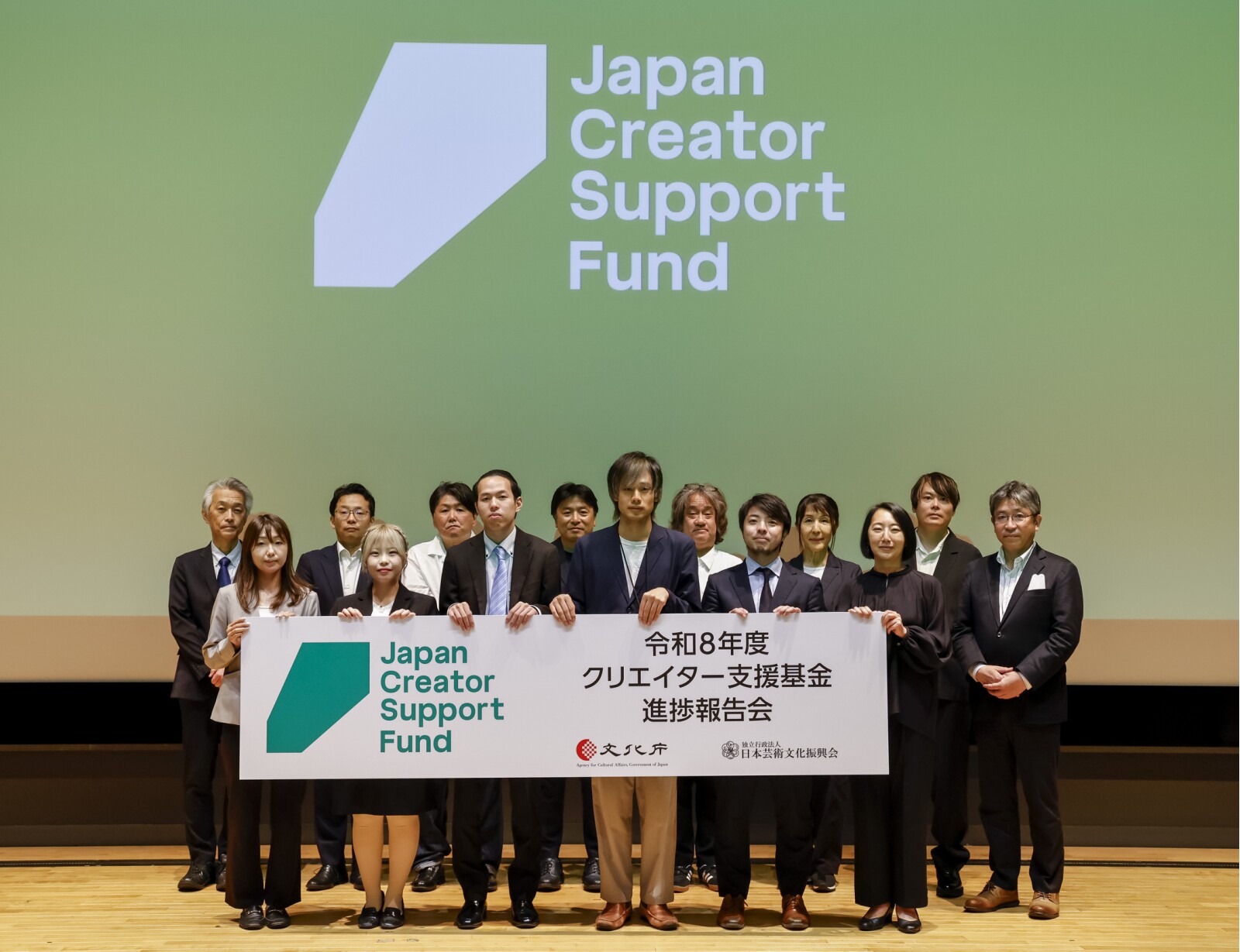
TOKYO, JAPAN – Media OutReach Newswire – 25 June 2026 – Held on Friday, June 5, 2026, the “Japan Creator Support Fund Progress Report Meeting” served as a platform for organizations selected under the “Support Programs for Creator Development & Cultural Facilities Function Enhancement” and the “Creator Support Program (Program Development and Implementation)” to present the outcomes of their projects from FY2025. The event, took place at the Ministry of Education, Culture, Sports, Science and Technology (MEXT), Tokyo, highlighted growing international engagement through overseas performances, participation in major international events, and cross-border collaborations, with supported projects generating tangible results including awards, nominations, co-productions, and institutional partnerships across music, film, games, visual arts, and the performing arts.
Now entering its third year, the Japan Creator Support Fund is a government-backed, multi-year national initiative supported by the Agency for Cultural Affairs that aims to nurture emerging creators and artists while strengthening cultural institutions that serve as hubs for creative activity and public engagement. The Fund, delivered through the Japan Arts Council, also promotes international exchange and overseas expansion opportunities, helping Japanese creators and cultural organisations build global networks and reach new audiences.
The progress report meeting opened with remarks from Mr. Shigeki Kobayashi, Vice Minister of Education, Culture, Sports, Science and Technology. Noting the government’s commitment to strengthening Japan’s creative industries, Vice Minister Kobayashi emphasised that “creators and artists themselves are the source of compelling content,” reaffirming the importance of sustained investment in creative talent and international exchange. At the report meeting, representatives from the Japan Arts Council provided an overview and progress update on the Japan Creator Support Fund, reporting that supported projects have generated international activity across 23 countries and regions, spanning Asia, Europe, North America and beyond. Achievements reported for FY2025 included selections at the Berlin International Film Festival, Cannes Directors’ Fortnight and Annecy International Animation Film Festival, performances at London’s Royal Opera House, international touring projects, and new collaborations between Japanese and overseas cultural organisations. Further information on program results, case studies and upcoming international activities can be found in the Notes to Editors below.
At the report meeting, four organizations each introduced its project, reporting on progress to date as well as key challenges, future plans and areas for further development.
Japan Performing Arts Solidarity Network introduced SOIL Fellowship Program (Stage for Originality, Innovation, and Leadership), an initiative designed to cultivate producers and strengthen the international positioning of Japanese performing arts. In FY2025, program participants took part in pitching events in London and Edinburgh, presenting their work to performing arts professionals from around the world. The project aims to enhance the global presence of Japanese theatre, facilitate the international circulation of works, and foster the accumulation and sharing of professional expertise.
Tokyo Metropolitan Theatre presented TMT Gear – The Creator Support Project, which seeks to strengthen Japan’s international presence in contemporary performing arts through the development of globally active creators and the enhancement of theatre staff expertise. FY2025 activities included on-the-job training during overseas performances, international networking with performing arts professionals, work-in-progress presentations in the fields of performing arts and music, and 8K recording and technical training initiatives undertaken by the theatre’s video media team.
KINEMA CIRTUS reported on the Global Anime Challenge (GAC), a program designed to provide learning opportunities for emerging talent and foster the next generation of leaders in Japan’s animation industry. In FY2025, participants attended domestic workshops and undertook internships at overseas animation studios, gaining practical knowledge across key areas of the industry, including international collaboration, production and business development. The project also identified future priorities, including strengthening support from participating studios and expanding opportunities for internationally focused animation production.
Jikei Gakuen School Corporation – Tokyo Communication Arts College introduced Immersive Media Lab++, an immersive content creator development program delivered in collaboration with XR company STYLY. During FY2025, the project focused on establishing the foundations of its curriculum and conducting overseas research visits to inform program development. Participants also reported on experiences gained through hackathons and study visits to the United States. Beginning in FY2026, the program plans to introduce year-round courses for students alongside overseas training opportunities and expanded international partnerships.
For further information, please visit the official Japan Creator Support Fund website, which provides updated information on selected organizations, upcoming exhibitions and performances, event information, creator interview videos, and creator profiles. https://creator.ntj.jac.go.jp
APPENDIX: KEY FY2025 RESULTS, INTERNATIONAL ACHIEVEMENTS AND UPCOMING FY2026 ACTIVITIES
Support Program Achievements
Creator & Artist Development Support Program Activities carried out under the supported projects have included participation in overseas events, performances in Europe, research conducted abroad, and other initiatives. These initiatives have produced results such as awards, nominations, and co-productions across various fields, including music, film, and games. Through the strengthening of domestic and international networks and professional guidance, a solid foundation is being steadily built for full-scale overseas expansion.
Key FY2025 Results:
Number of creators supported: 544
Number of advisors involved: 301
Domestic performances/exhibitions: 163
Overseas performances/exhibitions: 165
Total attendance across domestic and international events: 873,761
Countries and regions involved (23 total): Ireland, United States, Italy, India, United Kingdom, Australia, Canada, Singapore, Switzerland, South Korea, China, Germany, France, Vietnam, Malta, Taiwan, Hong Kong, Indonesia, Thailand, Malaysia, Spain, Argentina, and Portugal
Support Program for Cultural Facilities Function Enhancement Through initiatives funded by the Japan Creator Support Fund, international collaboration has advanced through various hubs including museums, theaters, concert halls, and other institutions. Talent development has also been strengthened through the invitation of overseas curators, co-commissions, mentoring by leading figures in Japan and abroad, and critical writing by development candidates. Progress is also being made in forming foundations for international expansion and network-building, including the establishment of new organizations, overseas performances, professional development, and exchange.
Key FY2025 Results:
Number of creators supported: 133
Number of advisors involved: 88
Overseas performances/exhibitions: 5
Domestic performances/exhibitions: 92
Total attendance across domestic and international events: 1,900,597
Countries and regions involved (8 total): South Korea, China, Germany, France, Taiwan, Indonesia, Slovakia, and Mexico
Creator Support Program (Program Development & Implementation) Individual projects are undertaking specific measures to develop and implement training programs. In particular, selected educational organizations are making progress in their preparations to establish new departments and courses. As part of these measures, many overseas study visits have been conducted in order to understand needs for Japanese content around the world and survey the state of education for developing global talent. Destinations included approximately 15 countries worldwide, including countries in Africa.
The selection of training candidates is moving forward, and some projects have already launched practical programs. In addition to seminars and workshops held in Japan, overseas dispatches have also taken place. Initiatives included participation in the Berlin International Film Festival in Germany by Tokyo Docs, Atmovie Inc., and Tokyo University of the Arts; an observation visit to MIT Reality Hack in the United States by Jikei Gakuen; and training at higher education institutions, such as the dispatch by VIPO to the Griffith Film School in Australia.
Building on Recent International Successes: Looking Ahead to FY2026
Various organizations are expected to launch full-scale overseas exhibitions, performances and collaborative initiatives in FY2026, further expanding the global reach of Japanese creators and cultural institutions. These upcoming activities build on a growing number of international achievements already generated through projects supported by the Japan Creator Support Fund.
Upcoming FY2026 Activities
As part of ROHM Theatre Kyoto‘s “Repertory Premiere: ‘Hopes'” program, Kichijitsu Saikai, a work created by one of the program’s supported artists, is scheduled to be presented at the Beitou Art Festival in Taiwan from 7–9 August 2026.
In September 2026, WITH LiMBO, created by participants of Aichi Prefectural Art Theater’s “Constellation ~ Connecting Worlds with Aichi Prefectural Art Theater Dance Project ~” is scheduled to be performed in Slovakia.
In the visual arts sector, Syuto Kanazawa is presenting the exhibition Ethnography of the Body and Material — Slowness and Depth in an Accelerated Society as part of “Kogei Artists Promotion Project”in Venice, Italy, from 9 May to 22 November 2026.
Recent International Successes
Under the New National Theatre, Tokyo‘s “Project for Training World-class Dancers Through International Performances”, Giselle was staged at London’s Royal Opera House from 24–27 July 2025. The performances attracted significant attention and played to near-capacity audiences throughout the run. Building on this success, the National Ballet of Japan was named Outstanding Company at the UK’s National Dance Awards 2025 by the Critics’ Circle Dance Section, becoming the first Japanese ballet company to receive the prestigious honour. The award recognised the company’s achievements in the UK, including its Royal Opera House performances under the artistic direction of Miyako Yoshida.
As part of Shochiku‘s “Creator Development Aimed at Expanding Kabuki Overseas”, joint lectures and performances with Korean pansori artists were held in South Korea, laying the groundwork for the European tour of How an Onnagata Is Made. In April 2026, the production undertook its first European tour in eight years, presenting six performances across Paris, Rome and Cologne.
Under “Film Frontier”, a feature animation creator support program administered by UNIJAPAN, Hanarokushō ga Akeru Hi ni was selected for the Competition section of the 76th Berlin International Film Festival, competing for the Golden Bear. Directed by Japanese painter Yoshitoshi Shinomiya, the film marks his feature directorial debut and received support through the program for its international development. The selection represents a significant milestone for Japanese animation, following Spirited Away and Suzume, which were previously selected for the festival’s Competition section.
Also supported through “Film Frontier”, Housenka was selected for the Feature Film Competition at the Annecy International Animation Film Festival 2025. The original animated feature was created by director Baku Kinoshita and writer Kazuya Konomoto, the creative team behind the acclaimed television series Odd Taxi. The program supported the film’s international development and overseas promotion.
Under “New Way, New World: Program for Connecting Japanese Animators to the World”, administered by Computer Graphic Arts Society (CG-ARTS), Eri, directed by first-cohort selected artist Honami Yano, was selected for Directors’ Fortnight at the 79th Cannes Film Festival.
As part of Mori Art Museum‘s “Global Art Professional Development Project”, the exhibition The Architecture of Sou Fujimoto: Primordial Future Forest attracted 236,705 visitors, achieving 160% of its attendance target, and received positive reviews across more than 50 media outlets. Following its successful presentation in Tokyo, the exhibition is scheduled to tour Asia in 2026.
Under Aichi Prefectural Art Theater‘s “Constellation: Aichi Prefectural Art Theater Dance Project Connecting the World”, Giselle: A Summary, featuring program participant Hana Sakai, was invited to the Lessingtage theatre festival in Hamburg, Germany, in February 2026 and to the SPRING Performing Arts Festival in Utrecht, the Netherlands, in May 2026. The performances received positive critical attention, with local reviewers highlighting Sakai’s exceptional technical skill and artistry. Hashtag: #JapanCreatorSupportFund
The issuer is solely responsible for the content of this announcement.
About the Japan Creator Support Fund
The Japan Creator Support Fund was established in FY2024 within the Japan Arts Council through funding from the Agency for Cultural Affairs. The fund aims to provide flexible, multi-year support for the development of outstanding Japanese creators and artists.
Since FY2024, the fund has operated the “Support Programs for Creator Development & Cultural Facilities Function Enhancement,” promoting creator development and strengthening cultural facilities that serve as hubs for creative activities and public engagement. From FY2025, the “Creator Support Program (Program Development & Implementation)” has additionally supported initiatives that strengthen educational institutions through industry-academia-government collaboration and foster practical professional development for creative industries and international expansion.

 https://kliniktuah.com/
 https://www.linkedin.com/company/klinik-tuah
 https://x.com/kliniktuah
 https://www.facebook.com/kliniktuah
 https://www.instagram.com/kliniktuah
 https://www.youtube.com/@kliniktuah
 https://www.tiktok.com/@kliniktuah

 https://www.linkedin.com/company/kigen
 https://x.com/Kigen_Ltd
 https://kigen.com/

 https://www.kigen.com
 https://www.linkedin.com/company/kigen
 https://x.com/Kigen_Ltd








 https://www.brandhk.gov.hk/
 https://www.linkedin.com/company/brand-hong-kong/
 https://x.com/Brand_HK/
 https://www.facebook.com/brandhk.isd
 https://www.instagram.com/brandhongkong
 https://x.com/JCSF_official
 https://www.instagram.com/jcsf_official/&&data=05|02
 https://creator.ntj.jac.go.jp/en

 https://www.hkicpa.org.hk/
 https://www.linkedin.com/company/hong-kong-institute-of-certified-professional-accountants/posts/?feedView=all
 https://www.facebook.com/hkicpa.official/
 https://www.instagram.com/hkicpa.official/