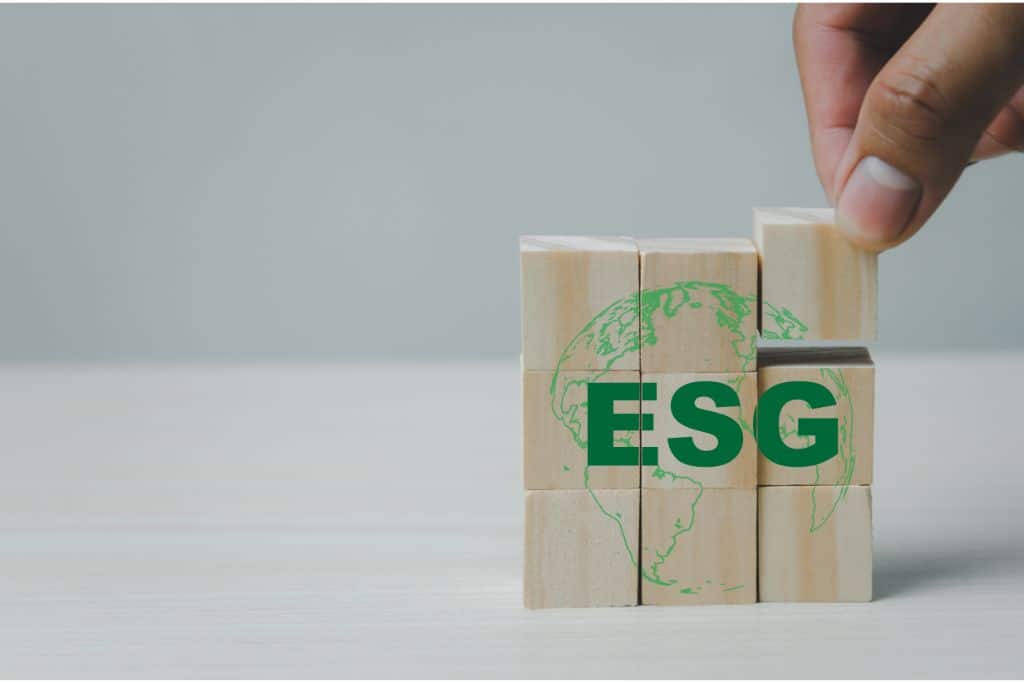
According to the Global Investment Review 2020 report, at the start of 2020, ESG investing or ESG-themed investing had reached USD35.3 trillion in the five major markets, a 15% increase in the past two years (2018-2020) and a 55% increase in the past four years (2016-2020). It’s up from 33.4% in 2018 to 35.9% of all professionally managed assets across all regions.
This trend is continuing to grow in most regions, with Canada experiencing a tremendous increase in absolute terms over the past two years (48% growth), followed by the United States (42% growth), Japan (34% growth), and Australasia (25% growth) from 2018 to 2020.
So, what is ESG investing? Let’s look at the facts.
ESG is an acronym that stands for Environmental, Social, and Governance Investing. In addition to evaluating an investment’s financial metrics, the ESG investing approach involves a need to weigh up the corporation’s or fund’s policies related to:
Environmental matters (climate change and pollution, for example)
Social issues (such as diversity and ethics)
Governance (style of leadership and transparency)
Why Are People Attracted to ESG Investing?
Traditionally, most long-term investors felt they had to choose between their values and making money. To fulfil this intention, they will hold a massive and diversified portfolio that likely ended up with companies that paid well but did not do much good for the planet or society in their business practices.
However, the Schroders Global Investment Study 2020 reported that almost half (47%) of people around the globe are attracted to sustainable investments because of their broad environmental impact. Another 42% believe sustainable funds are appealing because they are likely to provide higher returns.
The data shows that investors no longer have to choose between two options because ESG-based sustainable investing is good for both goals, making it a very good choice.
Local ESG Investing Growth Trends
Where do Malaysians stand when it comes to adopting ESG investing?
The Securities Commission Malaysia (SC) developed a 10-year strategy blueprint (2010-2020) involving ESG investing. Since 2014, SC has introduced several initiatives, including developing the Sustainable and Responsible Investment (SRI) Sukuk Framework.
In December 2014, Bursa Malaysia launched the FTSE4Good Bursa Malaysia (F4GBM) Index for the Malaysian market to provide more visibility and profiling of ESG-compliant companies that meet various ESG inclusion criteria and are eligible to be included.
The standard is consistent with the global ESG model that FTSE developed, with strong references to the Global Reporting Initiative and Carbon Disclosure Project. As of 30 September 2019, there are 71 constituents of the Index, with a market capitalization of RM510.4 billion. As of June 2022, the total number of constituents is 87.
On the other hand, the FTSE4Good Bursa Malaysia Shariah (F4GBMS) Index was launched in July 2021 with 54 constituents to cater to investor demand for ESG and Shariah-compliant index solutions. The purpose is to track constituents in the F4GBM Index that are Shariah-compliant. For the most recent review period, June 2022, nine new companies were added to the F4GBMS Index. This brought the total number of companies in the index to 65.
Both indices are reviewed semi-annually in June and December against international benchmarks.
From the perspective of industry players, the challenges arising in developing ESG investments locally are due to a limited investment universe and a lack of quality ESG reporting standards. These limitations are reflected in the types of ESG-themed funds available in Malaysia.
With the limited local investment universe, the fund houses need to construct a portfolio that consists of global securities for diversification purposes. The aim is to deliver the most value to their investors with higher potential returns and manage downside risks.
In addition to not having good reporting standards, fund houses need to spend more money to make sure the information they report is correct. Some might rely on information from ESG rating agencies, while others use third-party screening tools.
Fear of missing out (FOMO) in investing is the desire to stay continually connected with what others are doing. Often, one succumbs to “recency bias” and makes a rushed decision based on recent investment performance.
How do you combat this and align your investment portfolio with your values? Let’s look at how financial planners can help in this situation.
Discover client’s ESG values
Usually, financial planners will seek to learn about their client’s unique set of financial goals and risk tolerance first. But ESG values can be very personal, and they can differ from one person to the next. One client may prioritise environmental issues, while another values diversity.
Financial planners must first understand how clients might want to see them executed in the investments they pursue. Then, personalize their portfolio to mirror the client’s values.
Deploy a negative screening approach
Once financial planners are on the same page with their clients, they can start putting clients’ values into practice. They will identify companies that don’t align with clients’ values and remove them from clients’ portfolios.
A straightforward approach is to identify the right ESG funds for their clients. A fund will reduce the need to analyze individual stocks and spread out risk by holding a large basket of equities.
Review and reporting
Greenwashing is one of the risks associated with ESG investing. It is a strategy to market a company as sustainable or green when it isn’t.
To manage the risk, financial planners will use the right ESG data and tools to monitor and report ongoing changes to the ESG scores of the companies or funds. By working hand in hand with a professional Licensed Financial Planner, you will have clarity on the placement of ESG in your investment portfolio.
Have you incorporated ESG investing?
About the Author
Zulkhairi Zulkifli (CFP) is a Licensed Financial Planner With Expanded Scope. His expertise is in holistic financial planning and advising on equities, debentures, or warrants listed on Bursa Securities. Zulkhairi truly believes that a simple and personalized investment plan is vital to growing your financial assets. He can be contacted at zulkhairi@wealthvantage.com.my
With the world continuing to emerge from Covid-19 lockdowns, cracks in economies, societies, and environmental ambitions are becoming clearer. Looking ahead to the sustainability outlook for 2023 and beyond, the debt legacy from that crisis limits governments’ capacity to continue supporting societies through difficult times.
We’re likely to see more interventions, and businesses will be expected to play a greater role in tackling critical issues, from climate challenges and biodiversity threats to the cost-of-living crises. In short, the future looks like it will play out very differently from the past.
In that context, a fund manager’s active management and ability to adapt investment strategies to the challenges and opportunities ahead will be more important to investment performance than ever.
Sustainability Outlook For 2023: Five Trends To Watch
1. Climate Change And Political Will
First, climate change is an inevitable question. All investors are exposed to the impact, not just of global warming and environmental damage, but of political and economic action to tackle their causes. Investors must make sure any exposures to these risks are contemplated and managed alongside opportunities in solutions to the climate challenge.
At Schroders, we committed to transitioning toward net zero over the coming decades, including setting a Science-Based Target, validated by the Science-Based Targets initiative earlier in 2022. But setting a target is the easy part. How we, and other businesses, decarbonise is critically important to the value we will create for our clients. Our Climate Transition Action Plan outlines our roadmap.
Political momentum slowed in 2022, but importantly the private sector continues to push ahead, helping close some of the gap between the ambitions global leaders have laid out and corporate readiness for transition. In November, the COP27 climate summit in Egypt did little to cement global commitments to action.
That said, agreement on a “loss and damage” fund to help developing nations should ease one key challenge to delivering the changes needed to reach the goals laid out in Paris in 2015. Attention will turn to COP28 in the UAE later in 2023.
Our focus has been on using our voice and influence to engage the most exposed companies and pushing them to lay out transition plans. In the year ahead, we will be intensifying those efforts.
2. Natural Capital
In that context, the role of natural capital and wider biodiversity threats are central. Climate threats are symptomatic of the structural and growing tensions between escalating demand from a larger, wealthier and hungrier global population and the world’s finite resources to support that population.
Today we use resources equivalent to those provided by 1.7 Earths every year, pushing us further into natural capital deficit and intensifying the threats degrading global ecosystems create. By some estimates, roughly $10 trillion of natural capital value is lost every year, underlining the hidden liabilities building in the global economy.
The reality is stark: nature risk is fast becoming an integral factor to investment risk and returns. That’s why we released our first company-wide Plan for Nature in late 2022, drawing together our action to date and setting a future direction for the action we are taking to tackle the causes and implications of nature loss.
3. Cost Of Living And Other Social Stresses
At a human level, a cost-of-living crisis has taken a grip in many countries, and while the most acute pressures may abate in 2023, poverty is a threat we will be monitoring. Few governments have the fiscal capacity to absorb shortfalls in household budgets, and social stresses could intensify.
Companies are coming under pressure to protect vulnerable workers – whether through wage increases and benefits for their employees or their responsibility to workers in supply chains.
We could see greater pressure on the political systems. This could undermine investors’ faith that political leadership will clearly define priorities, pushing responsibility back to companies and investors like ourselves. While climate change and nature have dominated headlines, particularly in the run-up to COP27 and COP15, we expect a bigger focus on social issues, including human capital management, human rights and diversity and inclusion in the new year. These are core themes for active ownership for us at Schroders.
4. Active Ownership And Impact
As the forces shaping value in financial markets multiply, stock-picking will be only a partial solution. Our ability to engage with the companies and assets in which we have invested will be a critical lever and a necessary one to create value for our clients.
Few companies are prepared for the world we are heading toward, and encouraging or pushing them to adapt will be important to protect their value. We published our Engagement Blueprint early in 2022, laying out our expectations of the companies we invest in and plan to build on that foundation in the future.
As our focus on impact investing continues to grow, active ownership will also be an important component of those strategies. Our survey of more than 700 institutional investors in 2022 found that around half (48%) are focusing on the impact of their investments, up from about a third (34%) in 2020. We expect that trend to continue.
5. Regulation
These trends are playing out against a backdrop of an industry under more intense scrutiny and scepticism than ever. Regulation is spreading from the EU to other parts of the world, and demands for transparency and clarity in product promises are rightly likely to increase.
Greenwashing headlines have underlined the importance of transparency; the antidote is honesty, transparency and consistency. For example, ahead of COP15, we’ve signed Business for Nature’s Make it Mandatory campaign, calling on mandatory disclosure for all large businesses and financial institutions of nature-related impacts and dependencies from 2030.
We are determined to help our clients navigate our investment products and understand what they can expect from different strategies.
Conclusion
For those of us focused on sustainability in the investment industry, the last few years have felt incredibly busy. Keeping up with the scale and pace of regulatory change has been challenging enough. Developing the analysis and the models and adapting our engagement with portfolio companies to reflect our deepening understanding of the implications of structural social and environmental trends in the expanding volume of ESG data all add to those demands.
None of this will change in 2023, and there you go with the sustainability outlook for 2023.
Andy Howard is the global head of Sustainable Investment at Schroders.
Taking out loans is a normal part of life. Some take out loans to buy a house, or a car, to sustain their lifestyle and many other things. But is there a better way to manage debts, so we can save monthly repayment and sleep better at night?
Meet Isabela (not her real name), a working mother at a multinational bank in Malaysia. Managing 20 employees as a senior manager while raising seven children was frequently like working two jobs. She was so busy she did not have time to manage her finances.
As a result, Isabela suffered from a negative cash flow of RM5,000 every month, even though she earned a T20 income* as a senior manager in a bank. She constantly asked these same questions over and over: “Why is it that I pay my credit card bill every month on time, but my outstanding debt seems to be getting bigger and bigger?”
So how is it possible that if one pays their credit card on time, they are still in debt?
This is what we found out when we sat down with Isabela. The main contributor to her RM5,000 per month deficit is the ‘Loan Repayment’ row (in the diagram below).
Can you imagine paying RM11,000 per month on your loan repayments? Is there a way to save monthly repayment?
How To Save Monthly Repayment Up To RM9,000 Per Month?
Before and after: a monthly cash flow summary from a deficit of RM5,000 to saving RM2,000 in two months
As I dug deeper, I found four credit cards with multiple instalment plans (refer to Chart 1). “Okay, it’s not too bad,” I thought. I have seen worse, something like 10 to 20 cards.
Chart 1
For Isabela, some of the cards were tied to recurring payment plans. Nothing out of the ordinary but they all had one thing in common: all the cards had outstanding balances.
I started to organise them to understand how much she was paying monthly for each card. Here’s a snapshot, where we found the root cause.
I realised she was paying a fixed amount for some of the cards. I knew she was in trouble because her income couldn’t support the card repayments. She was paying on ‘gut feel’, meaning she would pay an average of RM3,000 per card for three of the four cards.
For example, as shown in Chart 1, she only pays RM3,000 for her CIMB Credit Card. However, the monthly instalments come up to RM2,130, and she was spending RM3,071 in June, totalling to RM5,201. Meaning the payment was short of RM2,201, so she owed her credit card outstanding payments before she started that month.
This is a bad habit and one of the major blind spots for most credit card users as they don’t clear their monthly balance. Here’s what I have to advise:
First, although you pay your cards on time every time, you still need to pay the amount spent in full for that month or else the outstanding will grow out of proportion. You cannot just pay on time without paying in full for what you need to pay.
Secondly, when you miss paying in full for one month (that means having an outstanding balance for the following month), it would be very hard to keep track of your expenses. It becomes impossible to reconcile what you spend the subsequent months unless you sit down and take a snapshot of your expenses over three months of credit card spending.
When you don’t know what you have been spending, you won’t know how much you have to pay. And this will go on like running on a treadmill that won’t stop and will keep going faster until you fall.
Thirdly, most people who constantly pay off any outstanding monthly credit card expenses will not have this problem.
So how can we save monthly repayment and solve this issue?
Once we identify the problem, we can develop solutions and strategies. In Isabela’s case, here’s what we needed to do to save monthly repayment:
1) Restructure her debt and consolidate it into one unifying loan. 2) Manage her expenses through ICE JAR, the world’s simplest money management system, to prevent her from falling into the same situation in the future.
Although she has a housing loan that we can use to consolidate her credit card debts, there wasn’t much capital appreciation as these properties were purchased recently.
So, we had to use another ‘container’ to consolidate her loan. The most effective ‘container’ is similar to a housing loan that uses a ‘reducing balance interest’ calculation instead of a ‘fixed line interest’ calculation loan (also known as a personal loan) that most people use.
Within a month, my team and I managed to help Isabela find her ‘container’ and save monthly repayment by reducing her loan repayment from RM11,648 to just RM2,594 monthly.
Many of our fellow Malaysians are unaware of a significant difference in interest calculation.
The ‘fixed line interest’ calculation (typically used for traditional car loans and personal loans) is very different from the ‘reducing balance interest’ calculation (typically used for housing loans). Let me illustrate by using this example of taking an RM100,000 loan with a 5% interest rate over ten years.
From the diagram illustrating Isabela’s Debt Consolidation Strategy (DCS), you can clearly see why I chose to use the ‘reducing balance interest’ option. Given the same loan amount, interest rate and same 10-year duration, and a monthly instalment of RM1,250, you can see that the ‘reducing balance interest’ calculation gives 50% interest savings compared to the ‘fixed line interest’ calculation.
This is how you can save monthly repayment and sleep better at night.
This is the reason we need to invest in our financial education. As they say: “Education lifts us past poverty,” and that especially includes financial education, and save monthly repayment is something that almost everyone needs to know how to do it.
*T20 income is classified by the Household Income & Basic Amenities Survey Report 2019 by the Department of Statistics Malaysia (DOSM). The income classifications for T20 have been revised to reflect inflation, the rising cost of living, and household size, among a host of other factors, into two parts:
T20 Part 1 – RM 10,961 to 15,039 and
T20 Part 2 – RM 15,040 and above
About the Author
Ng Ka Hoe is a Licensed Financial Planner and a Financial Adviser Representative (FAR) with Bank Negara Malaysia and“Capital Market Service Representative License (CMSRL) Financial Planner with Securities Commission Malaysia. He is also the Founder of J Advisory, a Personal Finance Academy that helps struggling Malaysians elevate their financial well-being with proven tools, systems and strategies. For more real-world case studies, you can head over to https://jadvisory.asia/.
Environmental, social, and governance (ESG) are gaining momentum and becoming the talk of the town worldwide, including in Malaysia. We are committed to becoming a nation with net-zero greenhouse gas emissions by 2050, and it needs a concerted effort by the government and the private sector.
Smart Investor spoke to an industry expert, Ben Lim, to learn more about how technology and ESG are making the world a better place. Ben is Epicor Malaysia’s Senior Country Manager with ten years of ERP (Enterprise Resource Planning) experience.
Epicor Software Corporation equips hard-working businesses with enterprise solutions that keep the world turning. For almost 50 years, Epicor’s customers in the automotive, building supply, distribution, manufacturing, and retail industries have trusted Epicor to help them do business better.
Ben Lim, Senior Country Manager, Epicor Malaysia
How Technology And ESG Making The World A Better Place
Smart Investor: What does ESG mean to you, and why is it important to your business?
Ben Lim: ESG for Epicor is about understanding how we can help our customers better understand their environmental waste data, such as reduced energy consumption and carbon emissions, and support our customers’ social interdependencies, such as data hygiene and data security. Epicor helps companies improve hiring and onboarding best practices and logistics to achieve their business goals.
Progress on ESG initiatives is taking place at many levels, with businesses increasingly looking to strengthen their brand reputations through environmentally sound organisational practices. Cloud computing is uniquely positioned to help businesses save energy, reduce waste, and adopt sustainable business practices that support a healthier environment. Epicor’s customers in Malaysia can do just that.
Epicor has researched the opinions of technology decision-makers on their opinions and benefits of cloud computing with regard to their organisation’s sustainability objectives. Overall, the research results point to a positive trend when it comes to prioritizing sustainability within the corporate agenda.
An overwhelming 93% of IT decision-makers surveyed named sustainability as their focus area, with 41% saying it is a key focus area.
SI: How do technology and ESG impact your industry?
BL: A recent quote from Gartner summarizes the importance of sustainability and the impact it has on our industry, stating: “By 2025, 40% of all manufacturing company IT departments will own the responsibility of data modelling for sustainability and net-zero carbon targets”.
Malaysia has also committed to achieving carbon neutrality by the year 2050. This highlights the urgency for IT departments to start taking ownership and looking both internally and externally at how they can help to achieve this goal.
Clear evidence of this necessity is the increase in customer type and the need to understand more about how to achieve better consumption rates. Customer migrations are another important impact, including the reasons behind it.
SI: What are the key factors for a successful technology and ESG deployment?
BL: Cloud computing can have a direct and positive effect on sustainable operations, particularly when it comes to running IT daily operations, offices or facilities. This includes digitizing paper-based communications with cloud-based electronic document signature solutions to simplify the process, reduce reliance on paper and minimize environmental impact.
Complex manufacturing systems and data flows are monitored and controlled for improved efficiency in operations. This ultimately results in the maximization of resources and the reduction of resource wastage which reduces adverse effects on the environment. All of this is right in the wheelhouse of Epicor, being an ERP software as a service (Saas).
Another key factor for successful deployment is a clear understanding of the industry, its processes for which areas that need improvement can be identified and the right solutions (not just immediate/quick fixes but also fit for the future. (i.e. workforce gaps, automation on the factory floor, production processes, and measurement/consumption of energy deployment needs to be about industry expertise and then having the right solutions now that are also fit for the future).
About half of the IT leaders surveyed (47%) believe they can reduce paper wastage through digitization efforts, and 42% believe that cloud computing will significantly reduce IT hardware wastage within their organisations.
SI: What are the key trends you see gaining traction for technology and ESG? What are the areas of growth amongst the pillars to look at in 2023?
ESG, Environmental, Social and Governance printed in blue with two rubber stamps over white background. Corporate responsibility concept.
BL: The Covid pandemic has momentously shifted working patterns for good, with the growing number of employees working remotely from home, either permanently or part-time, as part of a hybrid model. Cloud computing acts as an enabler for the distributed workforce and ‘work from anywhere’ practices. However, the environmental impact of remote work is not as easy to measure.
The worsening global climate crisis and conflict in Ukraine are propelling complex risks, and organisations need to be aware of how these risks affect their businesses and help management plan strategically and tactically. Climate and geopolitical issues should be a permanent part of a company’s enterprise risk management.
The traditional shareholder-centric capitalism of the past half century is giving way to a broader set of shareholder considerations, expectations, and interests where employees, customers, regulators, suppliers and others are playing more important roles.
SI: How do technology and ESG trends shape Epicor as an organisation and its services?
In Malaysia, we are witnessing manufacturing companies become more observant of how their data is being collected and a trend where data is being managed via a formal energy intelligence system, connecting executives to the day-to-day tactical operations to achieve the strategic business goals that include ESG. One of the key solutions that Epicor heavily invests in is the Epicor Manufacturing Execution Systems (MES) which collects data from shop floor resources such as machines and operators.
On the factory floor, the complex manufacturing systems and data flows are monitored and controlled for improved efficiency in manufacturing operations. This ultimately results in the maximization of resources and the reduction of resource wastage which reduces adverse effects on the environment.
SI: How has Epicor Software helped improve many organisations with their software?
Epicor solutions fit very well for organisations that Make, Move & Sell. The Manufacturing, Distribution and Services industries are the three key industries that Epicor focuses on in Malaysia, and we have helped these organisations harvest exponential growth and improve their bottom line.
We are proud to have worked with Solarvest Holdings Berhad, one of Malaysia’s market leaders in the growth of the solar photovoltaic energy industry. The implementation of the Epicor ERP, Kinetic, has aided Solarvest in boosting their productivity and their capability to take on more projects than they were previously.
According to their CEO Davis Chong, Solarvest may have only been able to commit to 30 projects in a year but with the support of Epicor Kinetic, the company is now able to take on as many as 100 projects a year.
SI: How can Epicor help or contribute to Malaysia’s SME digital transformation?
BL: At Epicor, we’ve built our reputation on knowing exactly what our customers need. According to the OECD (Organisation for Economic Co-operation and Development), research has indicated that 70% of SMEs have intensified their use of digital technologies due to COVID-19. SMEs are one of our key markets, and implementing ERP as part of their digital transformation is a key success factor for our SME customers’ growth.
We work hand-in-hand with our customers to better understand their businesses and industries to deliver market-leading industry productivity solutions and practices via Enterprise Resource Planning (ERP) Software to solve our customers’ real business problems and provide seamless customer experiences.
Epicor in Malaysia has successfully assisted SME organisations in the following industries: metal/steel services, industrial machinery, electronics, medical devices, automotive, F&B, engineering, and chemical.
Now you know how technology and ESG make the world better.
Have you ever set goals for yourself but failed to meet them? It may be to start exercising, investing, spending more time with your family members or loved ones, or whatever goals you may have.
You set goals at the start of the year but did not follow through in the following weeks or months. You only realize your goals as year-end approaches.
A study by Martin Oscarsson published online in 2020 on large-scale experience with New Year’s Resolutions found that 55% of the respondents successfully sustained their resolutions at a 1-year follow-up.
Therefore, it is possible to follow through on your goals by following these five tips to help you set and attain your financial goals.
Do you have a clear and specific goal for how much you want to achieve in financial goals?
It can be measured by savings amount, net cash flow or how much net worth or how much investment portfolio, how many like properties or how much reduction of debt or how much sum insured you would like to have at a certain time frame.
Clarity is power; having that clear focus on what you want helps give you that clear direction.
When you use your GPS, whether you are using Waze or Google Maps, the first step is to key in your destination. In your financial planning, you need to know what clear financial goals you want to achieve.
After you know what you want, the next thing is to know why you want those financial goals.
“ Reasons come first. Answers come second.”
– Jim Rohn
Why do you need to achieve that goal? For what purpose? Is it for yourself or for others?
Having that compelling reason will pull you toward the goals that you set. You may face certain challenges/obstacles, but your stronger reasons will pull you back to the right track.
For example, by achieving that financial freedom, what would this allow you to do? Is it to live a comfortable lifestyle for yourself and your family? Is it to travel worldwide and create memories with your loved ones? Is it to start a charitable organisation?
Consistency is key to ensuring that you are getting closer to your goals. Don’t undervalue the small steps you take every day.
For example, by saving RM3 per day for 365 days, you will save around RM1,100 over one year. What if you put it in an investment vehicle that grows at a certain percentage?
For example, someone saving RM500 per month over 35 years with the assumption of an 8% compounded annual return will have over RM1.1 million at the end of that period.
Do you have someone accountable to you who helps you track and guide you in achieving your financial journey, be it your financial planner or someone competent enough to advise you on your personal finances?
It is like having a mentor or a coach who can advise you on the rights and wrongs.
It is always good to measure periodically; it may be quarterly, half-yearly, or yearly, depending on the duration of those financial goals that you set. Knowing the actual results will allow you to make necessary adjustments to try out different methods to save or reduce unnecessary expenses that contribute to your overall financial goals.
Once you have your financial goals, the most important step is to take action either to create that investment account opening or schedule that appointment with your financial planner or what would the next things you can do.
5 Tips To Help You Set And Achieve Your Financial Goals
Every new year comes with optimism and new year resolutions. I hope that these tips will be able to help you set and achieve your financial goals.
About the Author
Goh Chee Yong is a Licensed Financial Planner under Capital Markets Services Representative License (CMSRL) and Bank Negara approved Financial Advisor Representative (FAR). Prior to becoming a financial advisor, he spent eight years working in Big 4 audit firms and multinational corporations. He is also invited to speak on financial literature at universities and public events. He can be contacted at cygoh@imaxfinancial.com.my
“I feel joy in successfully building up a business in a very competitive market space, where we’ve seen players come and go,” said Dato’ Teng Chee Wai in a resplendent maroon tie.
For over 20 years, Dato’ Teng has headed Affin Hwang Asset Management as the Managing Director where he steered the company through different economic and market cycles. Under his leadership, the company has since grown leaps and bounds becoming the fastest growing asset manager in Malaysia.
But Dato’ Teng says the company’s journey is far from over as it positions itself for its next growth phase through a new brand identity – AHAM Asset Management (AHAM Capital). Smart Investor sat down with Dato’ Teng to find out more about the company’s new journey including future growth plans as well as life lessons on leadership and wealth.
A New Chapter
With the completion of the company’s acquisition by CVC Capital Partners (CVC) on the 29 July 2022, the company sought to rebrand itself to augment its brand positioning as a trusted wealth partner as well as carve its own distinct identity as an independently managed asset and wealth management firm.
The rebrand included a name change and a new corporate logo that is reflective of the company’s new growth ambitions, while also affirming its commitment to clients in building trust.
“Our new brand identity AHAM Capital marks the start of a new and exciting journey for us and our clients. As a name that is already widely used and familiar amongst clients and business partners, the simplified brand name builds upon the positive brand equity of the company’s asset management capabilities as well as its people that has distinguished it over the years,” Dato’ Teng said.
In January 2001, Affin Hwang Asset Management Berhad started operations with just RM20 million in clients’ assets. Today, its total assets under administration (AUA) have grown to over RM75 billion as at 31 October 2022 – a true feat unto itself.
According to Dato’ Teng, this would not have been achievable without three important stakeholders who have been instrumental to the success of the company: its clients, employees and shareholders. With the trust of its clients, AHAM Capital has grown exponentially by nurturing and deepening relationships with its clients especially handholding them through volatile market cycles.
“One thing that always sets us apart is how we are also invested alongside our clients. The total staff investments into AHAM Capital’s own funds surpassed RM150 million this year demonstrating our own belief and confidence in our solutions,” remarked Dato’ Teng.
As for the employees who keep things running at AHAM Capital, they are the backbone of the company and integral contributors to the business. This is important as good talent is hard to come by and retain according to him.
Finally, it is also important to have shareholders that understand the business and are very supportive. Dato’ Teng and his team have been able to run the business in an independent manner and manage to keep the company’s culture intact.
Realising Synergies
With CVC Capital Partners (CVC) coming onboard, AHAM Capital is looking to take their business to greater heights by embarking on three strategic growth pillars: wealth management, innovation and regionalisation. Collectively these three strategic thrusts would help transform AHAM Capital into becoming a leading independent wealth and asset management company in Southeast Asia.
This begins with looking to investing in greater human capital and distribution networks to offer more investment solutions to the public.
“CVC Capital Partners brings a breadth of synergy that AHAM Capital can tap upon. These include CVC’s wide connections in the marketplace that can help produce a ‘network effect’ to grow our business particularly in terms of alternatives and private market offerings. On top of that, CVC Capital Partners brings with them the discipline and expertise which allows for information sharing for us to learn from them directly.”
“Learning from their financial metrics as well as how they manage a lot of their portfolio companies will enable us to understand how to manage the business and risks involved as we go to regional markets,” said Dato’ Teng.
Levelling Up With Innovation
Innovation and entrepreneurship are also very much key ingredients in the success of AHAM Capital and embedded in its corporate DNA. The company’s innovation journey started back in 2018 with the set-up of the Innovation Lab Department.
“Whether it is for transactions, internal processes, making things more efficient, or offering solutions via different platforms and wallets – digitalisation is the way forward.”
“Though it may be expensive, the pandemic really showed us that digitalisation was the right move to make,” explained Dato’ Teng.
AHAM Capital also recently made waves in the digital space through its partnership with Versa to launch a digital cash management solution.
“Our partnership with Versa which simplifies access to money market funds (MMFs) has been a stepping stone in our innovation journey. By doing away with the cumbersome registration and lock-in period that comes with fixed deposits (FDs), our collaboration with Versa has allowed more Malaysians to start saving from as low as RM1 in a MMF which is traditionally only used by corporates and high-net worth individuals.”
“We are also looking at other alternative investments like cryptocurrency. The younger generation has experience in it and believes in its potential. Although I have yet to start investing in Bitcoin personally, we need to find solutions to address this growing demand to appeal to a new generation of investors,” claimed Dato’ Teng.
Anything to do with ESG (environmental, social and governance) has become a trending hot topic these days, and its adoption rate is faster than ever. With more than nine out of ten publicly-listed companies adopting ESG as part of their goals and business plans, its popularity is more than just a buzzword in the industry. Some of the ESG benefits are higher returns on investment, better financial performance, and reduced business risks.
Smart Investor spoke to Datuk Wira Ismitz Matthew De Alwis, executive director & Chief Executive Officer at Kenanga Investors Berhad; Dr Sumitra Nair, head & senior vice president of Strategy & Policy at Malaysia Digital Economy Corporation (MDEC), and Azzahraa Annuar, director of Governance, Risk & Compliance at edotco Group to get a deeper understanding about ESG and ESG benefits.
This includes exploring the impact of an ESG focus to their business and industry, what makes for a successful ESG deployment, the challenges they have faced, and the trends to look out for. While we all know what ESG stands for, what it means, and what are the ESG benefits could be entirely different for each industry.
We got the ball rolling by asking, “Why is it important to your business, and how does ESG impact your industry?”
Datuk Wira Ismitz Matthew De Alwis, executive director & Chief Executive Officer at Kenanga Investors Berhad
To which Datuk Wira Ismitz Matthew De Alwis answered “The impact of ESG on the financial markets has been significant. Investors and businesses alike are beginning to acknowledge that an ESG-driven perspective promises stronger and more resilient economies and businesses. As a result, this awareness has changed the way individuals and institutions invest. For example, many are now focusing on mitigating their portfolio exposures to carbon risk.”
“As a partner to the sustainability agenda, we are dedicated to the goal of developing Malaysia’s impact investing landscape. Currently, we believe that the local environment faces issues in capacity building to address sustainability issues such as lack of competencies, skills, and technical awareness on ways to adopt a sustainability-driven top-down model at each level of the organisation. Recognising this, Kenanga Investors, as an established financial institution, must actively seek out and collaborate with regulators and other corporate entities finding its footing within the local green economy,” De Alwis added.
To ensure sustainable performance for Kenanga Investors’ stakeholders, they are confident that the integration of carbon exposures, ESG ratings, financial quality metrics and active engagements, amongst other factors, in a diversified and risk-controlled portfolio has historically resulted in better risk-adjusted returns for investors than just plainly investing in a broad market index.
Dr Sumitra Nair, head & senior vice president of Strategy & Policy at Malaysia Digital Economy Corporation (MDEC)
Adding to that, Dr Sumitra Nair is of the opinion that “ESG is about carrying out business in a way that is respectful to people and the planet, and about generating profits ethically. This is important to ensure that businesses can carry out their operations in a sustainable manner. For example, operations of a business could be impacted by climate-related risks, or governance related risks, hence impacting business continuity.”
A sustainable business model also improves productivity by uplifting employee motivation and loyalty, and boosting talent attraction and retention. There is also increasingly strong evidence of a connection between good corporate practices and financial performance – an ethics premium.
According to Ethisphere’s Ethics Index, the world’s most ethical companies outperform a comparable index of companies by 24.6% from January 2017 to January 2022.
The Global e-Sustainability Initiative (GeSI)’s ‘Digital with a Purpose: Delivering a SMARTer 2030’ report estimates that digital tech can directly influence 103 out of 169 UN Sustainable Development Goals (UN SDG) targets. The same report has identified key technologies that have the highest potential influence on the world, and more specifically on the UN SDGs.
These include high speed internet, cloud computing, internet-of-things, machine learning, AI, digital reality and blockchain. Such technologies can help to reduce environmental impacts, as well as narrow socio-economic disparities, which strengthen transparency and governance.
For example, from an environmental perspective, the effective use of digital technologies is projected to reduce global Green House Gas emissions by 15% by 2030, which translates to one third of the global 50% target reduction. This is mainly using digital tech solutions in the energy, manufacturing, agriculture and land use, buildings, services, transportation, and traffic management.
“Therefore, the digital tech ecosystem plays a very significant role in the agenda of ESG in Malaysia. It is also very much aligned to the recently launched national strategic initiative, Malaysia Digital (MD), which seeks to increase the overall ecosystem value sustainably,” shared Dr Sumitra Nair.
Azzahraa Annuar, director of Governance, Risk & Compliance at edotco Group
Meanwhile Azzahraa Annuar has said: “It is not about what ESG means to me, but it is about what ESG means to us. At edotco, ESG is central to how we do our business from planning to execution. To be a sustainable business, we believe that a strong governance is key to ensure our business is run in the most equitable manner.”
To edotco, their belief is that internet connectivity should be viewed as part of a human right in today’s world. As such, they are passionate when it comes to taking care of the communities around their towers and even more passionate when it comes to their greatest asset, that is their people.
They will continue to invest in innovation as innovation is the key to net zero emissions. Each component of ESG with the E, the S and the G are equally important and must be addressed together as one, and not separately.
What Are The Key Factors For Successful ESG Deployment?
It’s all fine and well to talk about ESG benefits, hopes and dreams and plans, but how do we ensure a successful implementation of these policies and intentions?
De Alwis shared: “We believe that there are a few critical factors required for a successful ESG implementation. To begin, a supportive and knowledgeable board is critical in steering the company’s ESG agenda as well as building the appropriate corporate culture, which leads to effective ESG implementation. Furthermore, the ESG goals must not only be specified, but also time-bound and practical during the implementation process. Policies, plans, and oversight mechanisms must address these issues both qualitatively and quantitatively.”
Kenanga Investors believe that the continuous delivery of consistent top performance stems from the premise of an effective stewardship and active ownership approach throughout the investment value chain. In search of long-term value accretive investments, they aim to influence investee companies as shareholders through the promotion of responsible and sustainable practices.
Nair has four key factors for successful deployment of ESG in Malaysia:
1. Leadership commitment is key
ESG must be driven from the top, ideally from the Board, top management and across the organisation.
2. ESG culture and mindset
ESG should be seen as a way of doing business, rather than a separate function or set of responsibilities.
3. Taking a longer-term perspective of business performance
The over-emphasis on short-term gains may impact a company’s ability to manage its ESG risks which may manifest in the longer term. For example, the focus on cutting costs in the short-term may result in non-eco-friendly or non-ethical purchasing decisions.
4. Measuring and managing ESG impact
As the saying goes, “what gets measured, gets done”. Similarly, defining and tracking ESG performance metrics is key to managing ESG impacts.
For Annuar, it is all about the culture. “At edotco, we believe in the mind, the heart, and the hands. This means, we inculcate the culture of a sustainable world for the future, for the next generation in the minds of our people. We hire passionate individuals who fit within edotco’s culture and core values to ensure our people have the heart of edotco. And finally, when we build our towers, our products, we continue to innovate for best possible output.”
These intentions are not without its challenges. According to De Alwis, the lack of knowledge and comprehension of ESG among our retail investors in Malaysia was one of the hurdles that they faced in implementing their ESG objectives and ESG benefits. Businesses also lacked transparency and reliability when it came to ESG data and disclosure.
Furthermore, when it comes to ESG practises, there is a lack of consistent standards, measurements, and focus as some may focus on climate change, whilst others may focus and emphasise on human rights issues.
With MDEC’s ESG focus this year starting with a highlight on climate change (which has been globally acknowledged as one of the most critical issues of our time), MDEC has also recently launched the Malaysia Digital Climate Action Pledge (MDCAP), which aims to galvanise digital tech companies to commit to specific actions addressing climate change, and to support the decarbonisation of SMEs.
“At the same time, MDEC with our partners such as the UN Global Compact Malaysia and Brunei (UNGCMYB) will provide guidance and know-how to the digital economy ecosystem via a Digital Economy Climate Playbook, and training programmes,” shared Nair.
These initial efforts are tailored to address some of the key success factors MDEC has identified in their journey to encourage digital companies in Malaysia to adopt ESG practices and reap the ESG benefits.
These include:
1. Raising the level of awareness and understanding about ESG amongst digital businesses;
2. Access to resources to address ESG risks and compliance – for example funding, talent, etc;
3. Encouraging digital tech companies to create shared value through opportunities arising from ESG trends – for example, via digital innovations/solutions that help governments, businesses, or society to achieve ESG-related targets and the many ESG benefits.
For edotco, Annuar discloses their two key challenges: “Firstly, macroeconomic challenges mean cost pressure continues to be central. We need to ensure we deliver a strong return for our shareholders amidst such a challenging environment. Our supply chain is struggling, the communities around our towers are struggling. This impacts our operations tremendously. Nevertheless, our engineers continue to innovate, and we manage to come up with LCS i.e., a low-cost structure in a country like Bangladesh.”
“Secondly, whilst we are certain with our Scope 1 and Scope 2, we are still struggling with Scope 3. This will be an area of focus for edotco in 2023 to ensure our carbon emission calculations are based on international standards and continue to be validated independently. We will also be reviewing our supply chain as part of this initiative,” she added.
We have to look forward. So, saving the best for last, we ask our experts: “What are the key trends you see gaining traction for ESG? What are the areas of growth amongst the pillars to look at in 2023?”
De Alwis responded with, “During the COVID-19 pandemic, there was a significant increase in ESG awareness. During this period, many firms suffered financially, whilst others with ESG policies were more protected from the pandemic’s consequences and were able to outperform their peers and competitors.”
As ESG awareness continues to grow, trends within the ESG economy increases in tandem as well, most notably is impact investing. Finally, we will be able to reap the ESG benefits.
ESG Benefits
“This was apparent in the deployment of financial firepower to investments and causes that could provide quantifiable ESG benefits, allowing investors to see and measure the beneficial effects of their investment,” he added.
There is currently a significant trend in assuring the interconnectedness of human and developmental needs. Assuring that these needs are fulfilled in a way that ESG benefits society while being environmentally and ecologically sustainable is a delicate balance. The blue economy and nature-based infrastructure are two examples of this.
For Dr. Nair, climate change is an immensely important topic – one that has been gaining traction for the past ten years.
“It is evident from the World Economic Forum’s Global Risk Report that climate action failure and extreme weather conditions dictate global risk factors,” she said.
MDEC took a proactive approach to launch the MDCAP initiative to advocate climate action amongst the digital economy ecosystems. Besides, social factors such as forced labour and the livelihood crises of the B40 group have also gained a strong pull for ESG in Malaysia.
In 2023, we can expect other areas of the environmental pillar to grow, such as the carbon market, carbon tax and carbon offsetting, which involves carbon capture, storage, and sequestration activities. Regarding the social pillar, the topic of diversity and inclusion in the workplace is growing in prominence, be it gender, age, ethnicity, or other forms of diversity.
Finally, Annuar points out that ESG is not a one size fits all around the globe. It varies for different economies and markets.
“It depends on which side of the world you are in. In developed markets, the focus is more on the governance aspect. In developing markets, the focus is more on the environmental aspects, while in the underdeveloped markets, the focus is more on the social aspects.”
For edotco, they have done independent reviews to see what are the areas that they need to focus on including materiality assessment. They will continue to focus on strengthening every pillar because they believe that all three are equally important.
The following story is based on an actual series of events with some names and circumstances fictionalised and any similarity to the name, character or history of any person is entirely coincidental and unintentional. We will be taking a closer look at why the executor of will is not as easy as it seems to be.
Elson and Jason were good friends for many years. They have met each other since primary school and even graduated from the same university. Growing up together, Elson would fend off those who bully Jason at school. They would also go to their makeshift secret base and play the whole afternoon after school.
Jason was the only child in his family, and because of that he sees Elson as the big brother that he never had.
As time goes by, these two boys have become men. They have both secured good jobs and beautiful and kind wives who bore them healthy children. It was a family that any man would be proud of with much love and warmth.
What seemed to be an ideal life for Jason soon came to a tragic end. What seemed like a normal cough, turned out to be lung cancer. Elson’s heart was shattered, he felt as if he was betrayed by a person that he trusted the most.
“How dare he leave me behind?” was the first thought that came into Elson’s mind when he learnt of Jason’s departure. There were so many dreams that they had yet to achieve together.
Elson made a promise to Jason that he will take care of Jason’s family and everything else. “Rest in peace my brother, I got you. See you on the other side.”
Jason’s wife, Yvonne found Jason’s Will. It was a simple Will that named her as the beneficiary of every asset that Jason owned. Elson was named as the Executor in the Will. She wasn’t sure what an Executor meant, but since Elson’s name was mentioned, she guessed he may have known a thing or two about it.
That starts with being the appointed executor of will to sort out what was left behind by Jason. Even with no knowledge or experience in administering the Estate, Elson thought, what could go wrong?
A few months later, with the assistance of a lawyer, Elson obtained the Grant of Probate from the High Court. It was quite a straightforward though tedious procedure. All he had to do was to look out for the lawyer’s details of Jason’s assets.
With the Probate in hand, Elson thought all he had to do now was to transfer the assets according to Jason’s instructions in his Will, which is quite clear cut to Elson. Jason’s Will basically says to give all his assets to his wife.
Yvonne asked, “What about my husband’s debts? I know he has a few credit cards that needs to be settled.” Elson had an idea, if he could transfer all the liquid assets quick enough, then there would be nothing left for the bank to chase after.
After all, Jason is long gone now. Who would sue a dead person? Yvonne was sceptical at first, but with enough assurance from Elson, she accepted everything that Elson was transferring to her. Elson had bypassed all Jason’s creditors in administering the estate.
A few months have passed since, notice of due payment received by Yvonne has now become a letter of demand with a letterhead from a law firm that was appointed by the banks. To make matters worse, Yvonne also received a letter from the Inland Revenue Board Of Malaysia that is addressed to Jason to declare his income.
As much as Elson tried to ignore the demands from Jason’s creditors, he soon learned that he was obliged by the law to pay up the creditors first, especially the tax due, which was one of the first priorities.
All attention is now on Elson, with letters that legal action will be taken against him personally if he did not satisfy Jason’s creditor.
“How does that even make sense? I’m just here to help, now I have to pay the price?!” Elson shouted at the lawyer whom he engaged for advice on what to do with the demands. It is either Elson calls back the assets that he has transferred to Yvonne, otherwise he will have to compensate the Estate’s creditors from his own pocket.
Elson is now desperate. Yvonne had used most of the liquid assets that were being transferred to her. “I have warned you, it was you who assured me that everything is fine. I have used the money. I can’t give it back.” said Yvonne.
While Yvonne was trying hard to scavenge whatever was left, Elson has been trying to see what he can sell off on his own to pay.
It Is Tough Being The Executor Of Will
It was a very bad time for both Elson and Jason’s family that they must face. Being an executor of will sounded very easy, many did not expect there to be so many legal pitfalls until it was too late.
It always starts with good intention to help, but often ends up in a relationship breakdown between the executor of will and the beneficiaries. Elson felt guilty that he had made the matter worse than it should be.
Yvonne had to pull back from some commitments especially the children’s education expenses. Yvonne had to face the embarrassment, but for Elson, he is at risk of legal liabilities. If he is not careful, he could be facing criminal charges as his lawyer said to him this could be defrauding creditors if their claims are not recovered because of his negligence.
A long legal nightmare is the likely outcome, that’s why it is not that easy being an executor of will.
Rockwills International Group, now in its 27th year, pioneered professional will writing in 1995 and has since evolved into the leading estate planning specialist in the country. It is today the largest provider of solutions and support services in the areas of trusts, succession, management and distribution of wealth. It has shareholders’ funds exceeding RM50 million. It has done over 280,000 wills and 15,000 trusts and hold more than RM25 billion in assets under trust.
Without a doubt, a lot of people consider money to be crucial in their life. But the question on everyone’s mind is that, can money buy happiness?
Many of us work hard to earn money so we can buy the things that will make us happy and comfortable. While others might look to money for personal fulfilment, which may involve impressing others by flaunting an expensive handbag or dress.
Nevertheless, due to its importance, we can find many people fight over it, hate, or adore each other because of it.
Some claim that you can buy happiness with money because they believe it will give them power, while others might disagree. Can money buy happiness?
From a personal standpoint, I do not agree that we could buy eternal happiness with money.
But then, to buy the things we need on a daily basis, money is a basic requirement in our life. Although having a lot of money may be utilised to buy upscale and pricey items, the satisfaction would only be temporary. Additionally, you cannot buy the feelings of love and devotion with money.
Everyone wants money, but it could not possibly purchase everything. This is true, especially when it comes to intangibles things such as general knowledge or a loved one who has passed away and the experiences you shared with them.
In a famous book written by Robin Sharma, entitled “The monk who sold his Ferrari”, the main character named Julian Mantle was a lawyer who find himself burned out and feeling dissatisfied despite his amazing achievements. He was a successful lawyer, rich, and highly sought by clients for law advice and cases.
Suddenly, no one was able to contact him after the incident where he passes out in a courtroom due to a heart attack. He just disappeared and was nowhere to be found.
After three years he came back to meet his friend, John. John was astonished to see Julian glow in joy, looking wiser and healthy. Julian shared with John the lessons he had learn while meditating with the Himalayas Sages-and surprisingly all his happiness now has nothing to do with money.
Remarkably, we can find many people who felt the same burnout experience and a have different definition to happiness as Julian.
In a similar case, Tiger Woods’s ex-wife, Elin Nordegren net worth’s skyrocketed to more than USD200 million after their infamous divorce. While she admitted that money did make things easier for her as she took her children away to somewhere secluded for quite some time from reporters and journalists, she did insist that money could not buy her happiness or put her family back together.
In fact, she claimed her marriage to Woods was one of the happiest days of her life.
Can Money Buy Happiness For Kids?
In India, a man shared over the net that he had broken up with the love of his life and was heartbroken. His friend’s advice him to smoke weed (cannabis) to forget his pain. They agreed to go buy it together.
Arriving at the place they went to; they saw three children playing nearby. The heartbroken man offered to buy them ice-cream and all three of them could not stop smiling while eating. The man said it made his day and he never took the weed.
He then asked for the kids’ permission to take photo of their smiling faces for memories. He would frequently look at the beautiful picture and smile. In his opinion, he claimed money can and does buy happiness!
On the other hand, my beloved father, once told me, if your too rich you can become crazy if you do not know what do with the money. Thus, I guess by having money with a purpose would then mean something, and the type of purpose mentioned here should be more akin to empowering yourself and others.
It should also be inspirational, memorable, helpful, useful, or important.
Despite how great it is, money cannot alter how you feel about yourself. Most individuals make this mistake. They want to be strong, fashionable, or respected. Most importantly, they want to be admired.
However, there is nothing that money can do to alter how you feel about yourself. Money won’t make you proud of who you are if you do not feel so yourself and it will definitely fail you if you have insecurities in believing yourself.
As to answering the question whether can money buy happiness, majority would agree that it does not. But to some it certainly can relieve you some pain, comfort, safety or help when you are in need, thus, that is happiness.
To me, happiness is something internal and intangible. Therefore, to obtain it obviously is not going to be from something external and tangible.
Azah Atikah Binti Anwar Batcha has Accounting, Finance, Auditing, and Islamic Finance background. She has worked with two of the Big four firms prior to pursuing her postgraduate studies at University of Technology Malaysia (UTM), Kuala Lumpur. She can be contacted at aaabwrite@gmail.com
As we navigate these turbulent times of uncertainty, we are constantly under pressure to make investment decisions and to look for investment strategies or styles that can enhance returns for our long-term investment.
As we are advised to brace for the impact of increasing market volatility, inflation risks and interest rates while investing, we are dissuaded from investing based on rumours when making investment decisions.
We are always cautioned to conduct more analyses with facts after verifying from trusted sources such as Bursa Malaysia, Bank Negara Malaysia and Securities Industry Development Corporation (SIDC) before investing.
In the past, we may pin the blame on rumour mongers and the lack of information for our inability to invest well. But with more information available now, are we more prolific in making informed decisions that produce better investment outcomes?
While some of us are instilled with knowledge for investing, some still perceive investing as a daunting task. Inevitably, many of us are still prone to making suboptimal decisions despite religiously adhering to tips from the pundits.
While Is It Hard To Make The Right Investment Decisions?
This is because making the right investment decisions also becomes trickier with an ever-increasing assortment of financial products to suit our investment palates.
We are also reminded by the investment community to keep our emotions in check when investing. This is because emotions can lead to perverse and suboptimal decisions in investing.
We feel lousy and we may blame it on luck to make us feel better while some of us become mentally depressed when things turn out badly. Some of us cringe at making investment decisions and shy away from financial products after encountering some painful experiences in the past.
Thus, can we ignore our emotions when investing? If not, do we need robo-advisory services or digital asset managers proclaiming on investing without emotions to help us in making the right investment decisions?
On the other hand, according to research, not exhibiting the appropriate emotions could impair our ability in making investment decisions.
So, why are we so hard on ourselves? After all, we are emotional creatures. We can’t possibly ignore our emotions when investing. I suppose if we could understand our emotions and what drives our emotions in the process of decision-making, we could be less subjected to unhealthy thoughts.
As decision-making is a complex process, we tend to use mental shortcuts termed as ‘heuristics’ by psychologists to solve problems instead.
According to psychologists, we simply make judgements and decisions by consulting our emotions. We ask ourselves: “Do we like it? Do we hate it? How strongly do we feel about it?”
We form opinions quickly, make judgements and take risks as expressions of our feelings on the basis of mental images without realising why we are doing so.
Researchers suggest that our brains exhibit tardiness in adjusting our impression once our mind has been framed. Festinger posits the ‘theory of cognitive dissonance’ and encapsulates that we will try to look for information that reaffirms our initial opinions so that the opinions we form earlier do not contradict the information we receive later. This somewhat explains ‘confirmation bias’ and ‘first impression bias’.
This could also explain why we may fall prey to financial scams. Scammers who have a positive image and are good at manipulating our emotions with words that mesmerize us are more likely to gain our trust.
To avoid becoming an easy target by malicious people, we may need to think like scammers and beat them at their own game. Of course, we are not advocating that we act like scammers but playing defence all the time in their game can be tiring.
We need to play like a striker as the situation warrants it or find ways to change the playing field when dealing with scammers. In short, as we could not possibly suppress or ignore our feelings and emotions, we have to try to manage our emotions.
Numerous books and articles offer tips that we could adopt to improve and practise our emotional intelligence, so we can make better investment decisions.
Our decisions can be also easily affected by our moods. The effect of mood on decisions is well documented in journal articles. When we are in a bad mood, we tend to be more pessimistic about the future.
We are more likely to invest in risky assets such as equity, and conduct less critical analyses when we are in a good mood, which predisposes us to underreact to negative information about our investments. Besides this, there are many interesting journals and articles on weather effects on stock returns in the West.
For instance, Hirshleifer and Shumway in their journal article titled: “Good Day Sunshine: Stock Returns and the Weather” have unearthed that our financial decisions may be affected by sunshine. Sampling 48 developed and emerging countries, Yuan, Zheng and Zhu in their studies titled “Are Investors Moon Struck? – Lunar Phases and Stock Returns”, advanced the notion that the performance of stock exchanges is significantly higher during the new moon.
Thus, unless we are emotionally intelligent, we may not be able to make wise decisions even if we use digital asset managers for investing. But again, do you think we will be happier if we don’t use heuristics but instead utilise and filter reams of information before arriving at a conclusion?
Researchers contend that conducting too many analyses may also lead to ‘analysis or information paralysis’, a situation where we are unable to make investment decisions or reach a conclusion due to information overload.
Dr. Audrey Lim Li Chin is a lecturer and a researcher at Multimedia University (MMU) Melaka. She teaches International Finance and Derivatives. She is particularly interested in retirement planning, mental health, Fintech especially in Blockchain and data analytics. She is also a Certified Financial Planner, (CFP) and is currently pursuing Chartered Financial Analyst (CFA) certification.
Get every print issue delivered to your door — fill in your details below to subscribe or renew.
Terms & Conditions and Notice
Terms & Conditions:
No refund policy: all sales are final, please review your order before confirming. We do not offer refunds or exchanges for any products sold through Inovatif Media Asia (IMA), the publisher of The SmartInvestor magazine.
Price subjected to change at Management's discretion.
IMA is not responsible for delays or delivery failures.
Print subscription for overseas readers are subjected to additional delivery charges.
Additional charges apply for courier services.
NOTICE:
IMA has not appointed any sales representatives; all purchases must be made directly by emailing my-circulation@inovatif.com.my. We are not responsible for any transactions made through unauthorised channels.
Please also check with us on the retail price of our magazines if you have not received our renewal/subscription form, before making any payments.