Tuesday, 18 August 2026 Stay informed. No noise.

Tax Exemptions Breathe Life into Unit Trusts

In an exclusive interview, Federation of Investment Managers Malaysia (FIMM) CEO, Kaleon Leong, shares insights on how the tax exemptions will benefit unit trust investors and strengthen Malaysia’s investment landscape.

The recent decision by the Ministry of Finance to grant exemptions from Capital Gains Tax (CGT) and Foreign-Sourced Income (FSI) Tax for the unit trust industry has been welcomed as a boost for Malaysia’s investment landscape. In this exclusive interview, Kaleon Leong, CEO of Federation of Investment Managers Malaysia (FIMM), provides insightful commentary on how these tax exemptions will benefit over 13 million-unit trust investors, especially those approaching retirement age.

He explains the pivotal role unit trusts have played in democratising investing since the 1990s, fostering inclusivity and accessibility across income segments. Leong also shares his perspective on how the exemptions will positively influence short- and long-term capital market trends, support economic recovery post-pandemic and enable savvy investors to optimise their retirement nest eggs. Overall, this decision cements unit trust as a reputable investment vehicle, providing Malaysian investors with an affordable path to grow their wealth tax-free.

Kaleon Leong 50

Kaleon Leong, CEO of Federation of Investment Managers Malaysia

SmartInvestor (SI): How do you foresee the recent decision to grant exemptions from Capital Gains Tax (CGT) and Foreign-Sourced Income (FSI) Tax impacting the overall investment landscape, particularly within the unit trust industry?

Kaleon Leong (KL): Firstly, on behalf of the unit trust industry, we are very grateful to the Ministry of Finance (MOF) for granting exemptions on Capital Gains Tax (CGT) and Foreign-Sourced Income (FSI) Tax. As full details on these exemptions are still pending (at the time of this interview), my comments here are fueled by optimism that the impending legislation will give the unit trust industry the necessary impetus to generate higher yields for its unitholders.

To put things into perspective, the unit trust industry has been a significant component and contributor to the Malaysian capital market since the 1990s, with a present industry Net Asset Value (NAV) of more than RM500 billion[1].

The unit trust industry have been directly contributing to the liquidity of the capital markets and adding diversity to the sources of funds with investments in equities, bonds, sukuks and fixed-income markets, which channels additional capital for investment into Malaysia’s various economic sectors.

The imposition of CGT and FSI Tax would have had a sizeable impact not only on the unit trust industry but also on the wider Malaysian capital market as it was foreseeable that a large portion of investors would have exited the unit trust industry given the impact on their returns from the application of CGT and FSI Tax in an already challenging global economic environment coupled with inflation. If the CGT and FSI tax prevailed, huge redemption pressures will force fund managers to liquidate unit trust funds’ assets in the shortest time possible, causing the capital market to be more volatile than usual.

Additionally, there would have been a lower take-up rate by fund managers for new bonds, sukuks, debentures and any other unlisted instruments. This will impact the financing needs of companies, (including government-linked companies (GLCs)).

At an individual investor level, where CGT and FSI taxes had been imposed on the unit trust industry, it would have adversely impacted more than 500 funds and 13 million unitholders, of which over 90% are individuals.

SI: Considering the decision is expected to have a positive impact on over 13 million-unit trust investors, especially pensioners and those approaching retirement age, how might the newly granted tax exemptions influence their investment behaviour and decision-making?

KL: The announcement is timely and helpful to this group of investors as they seek to replenish their retirement savings, especially after the pandemic. Hence, this should further increase investor confidence.

To provide some context on the size of this investor group, based on the FIMM 2022 Investment Management Survey, it was found that in 2021, a total of 47% (8.3 million) of Unit Trust investors are either in the pre-retirement phase, i.e., 46 to 55 years old (3.0 million), or are in the retired phase, i.e., 56 years old and above (5.3 million)[2].

SI: In your opinion, how have unit trust funds contributed to the capital market since the 90s, and what role have they played in fostering inclusivity and accessibility for investors across diverse income segments?

KL: The 90’s were a significant period of growth for the unit trust industry. The centralisation of industry regulation, with the establishment of the Securities Commission on 1 March 1993, coupled with the implementation of the Securities Commission (Unit Trust Scheme) Regulations in 1996, resulted in even greater awareness of the unit trust industry and contributed to its tremendous growth during the period[3].

Today, the unit trust industry has grown by leaps and bounds, from a NAV of RM28 billion in the 90s to exceeding RM500 billion[4]

A key role of the unit trust industry is fostering inclusivity and accessibility for investors across diverse income segments. Unit trusts enable people of all walks of life to invest in a variety of unit trust funds, with some having a low minimum entry investment amount and subsequent investments.

This relatively low barrier to entry opens the possibility for a diverse range of potential investors to participate in the capital market while simultaneously gaining from the additional benefits of having an investment professional manage their portfolio, accompanied by better diversification and risk management.

SI: How do you anticipate the capital market to react to this news, both in terms of short-term market dynamics and potential long-term trends?

KL: While the details of the exemptions granted are yet to be announced (at the time of this interview), we anticipate optimism about unit trust funds as a reputable and highly regulated investment product by the Securities Commission Malaysia (SC).

In short-term market dynamics, the resolution of these tax concerns and the accompanying operational challenges will allow fund management companies to focus on delivering their core responsibilities of generating returns for unitholders.

We envisage that in the longer-term trends, investors will continue to set aside their savings to invest in unit trust as an investment vehicle where they will not only reap the benefits of long-term investment returns but also a peace of mind.

SI: Given that the tax exemptions also apply to those investing through their Employees Provident Fund (EPF) savings, how might this influence the investment strategies of individuals who utilise their EPF funds for unit trust investments?

KL: The unit trust industry is very cognisant of investors who choose to contribute part of their EPF savings towards investing in unit trusts. The investors are entrusting the industry with a portion of their retirement nest egg, which underscores the need for careful attention on the part of the industry. As a result, the funds that are green-lit for investments via EPF savings must have a 3-year track record and undergo a rigorous selection and approval process.

As it stands, investors investing through their EPF savings may decide to further diversify their portfolio into other asset classes through unit trusts to maximise their returns and grow their retirement nest egg.

SI: Post-pandemic, individuals are diligently replenishing their depleted savings. How do you see the investment industry contributing to the broader economic recovery efforts?

KL: These may be challenging times, but this is where the unit trust industry can help Malaysians replenish their savings. Through unit trust funds, Malaysians have the opportunity to invest a part of their savings into a portfolio of pooled investments managed by investment professionals. Should they decide to invest directly themselves, they may not have the same access to investment opportunities and diversification that a unit trust offers. This also includes economies of scale from the pooled investments in a unit trust which reduces the cost of investing as a whole.

In 2021, the Securities Commission launched the Capital Market Masterplan 3, or CMP3. Within the CMP3, it was addressed that, in the post- pandemic era, there would be a period of recovery in economic growth. It was emphasised that two critical parts of Malaysia’s economic growth moving forward, which the capital market can enable, are the structural upgrade of the economy and the redefining of the retirement savings landscape[5].

Both parts can indeed be contributed by the unit trust industry as it plays a role in channelling investors savings to the sectors of the economy that need support. For the retirement landscape, the unit trust industry serves as a move towards channelling retirement savings towards potentially higher-yielding portfolios, resulting in greater savings for retirement.

SI: With the newly granted tax exemptions, what advice would you give to individual investors, especially those approaching retirement age, in terms of optimising their unit trust investments for tax-free returns?

KL: The tax exemptions were granted in recognition of the importance of the unit trust industry towards both the Malaysian capital market and providing an avenue for individual investors to save and invest their hard-earned money. As a matter of fact, it was the realisation that most investors in Unit Trust are individuals (over 90%), which proved critical in the MOF’s decision to grant the tax exemptions.

It is important to diversify your investments. Deposits help, but inflation erodes savings. Unit trusts are established with the goal of helping individual investors preserve their savings by providing a hedge against inflation.

For individuals approaching retirement age, it is important to take stock of their financial situation and consider more income-generating investments.

Sources

  1. Securities Commission Malaysia: Summary of Statistics – Unit Trust Funds for 2023.
  2. FIMM Investment Management Survey. Date: November 2022.
  3. FIMM Website: History of Unit Trust Schemes and Private Retirement Schemes in Malaysia (UTS History – FIMM).
  4. Securities Commission Malaysia: Summary of Statistics – Unit Trust Funds for 2023.
  5. Securities Commission Malaysia: Capital Market Masterplan 3. Date: 21 September 2021.



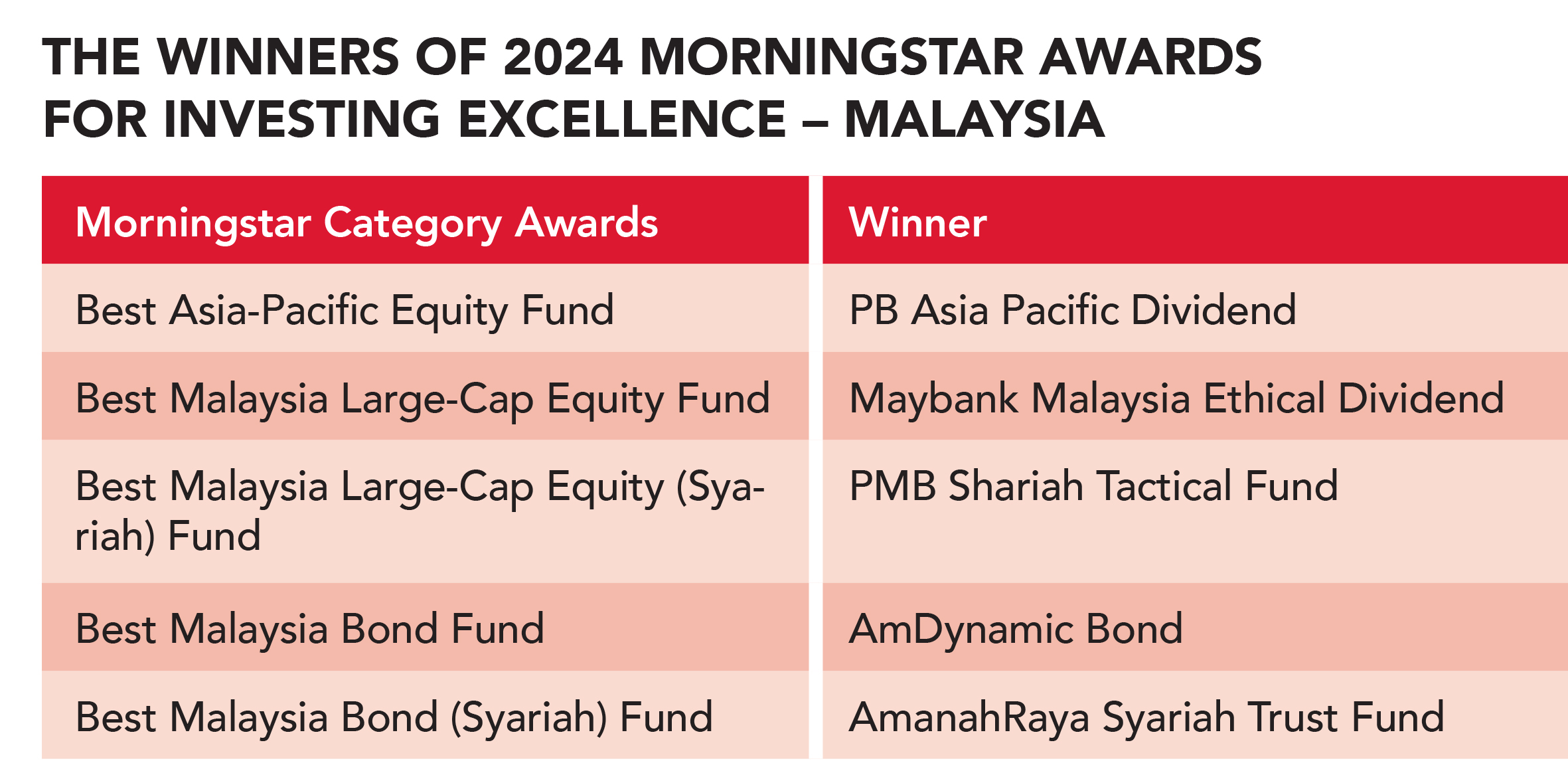
Uncovering Asset Gems: 2024 Morningstar Awards for Investing Excellence – Malaysia

In this exclusive interview, Morningstar’s newly appointed Managing Director for Southeast Asia, Shihan Abeyguna, discusses how the awards have underpinned investment excellence in Malaysia, Morningstar’s growth plans for Southeast Asia, and the company’s diverse range of products and services.

As investors navigate 2024’s mixed market conditions, insights from research powerhouse Morningstar are more valuable than ever. In a wide-ranging interview, newly appointed Managing Director Shihan Abeyguna provides an in-depth look at key trends shaping Malaysia’s asset management industry, Morningstar’s growth strategies for Southeast Asia and the company’s diverse product and service offerings designed to empower investors.

Discussing 2023’s Malaysian fund award winners, Abeyguna highlights exemplary funds that succeeded despite last year’s lacklustre domestic equities. He also examines broader asset management trends including sustainability, alternative, global diversification and personalisation.

Detailing plans to expand Morningstar’s data and research coverage, Abeyguna emphasises the company’s commitment to equipping investors and institutions to build holistic, customised portfolios aligned with financial objectives and personal values.

Shihan Abeyguna Managing Director Morningstar South East Asia

Shihan Abeyguna
Managing Director, Southeast Asia, Morningstar

SmartInvestor (SI): Tell us more about this year’s winners in Malaysia and how Morningstar assessed their investment approaches.

Shihan Abeyguna (SA): Our approach to recognising excellence in fund management is multifaceted, focusing not just on past achievements but also on future potential. This holistic methodology involves analysing risk-adjusted returns with a qualitative overlay to gauge a fund’s ability to serve investors’ best interests going forward.

Quantitatively, we assess both recent and medium-term performance for each fund. A winning fund must have ranked in the top half of its peer group in 2023 as well as posted strong results for investors over the past three years. Qualitatively, we conduct checks on the accessibility of each fund to local retail investors and lead management stability, among other factors.

The winners of this year’s awards in Malaysia demonstrated exceptional skill in navigating the market conditions of 2023. Malaysian equities faced a challenging 2023, but our domestic equity fund winners prevailed.

Malaysian large-cap equity category winner Maybank Malaysia Ethical Dividend and Malaysia large-cap equity (Shariah) category winner PMB Shariah Tactical, for example, benefitted from overweight positions in information technology, the best-performing sector domestically in 2023. Notably, the PMB fund returned a whopping 24% (in MYR terms) in 2023. Meanwhile, Asia Pacific equity category winner PB Asia Pacific Dividend was overweight in financials and energy, which benefitted from stylistic tailwinds as value sectors outperformed in the region.

The Malaysian bond market exhibited greater resilience in 2023, and our winning fixed income funds provided extra cushioning for investors amid equity market fluctuations. Malaysia bond category award winner AmDynamic Bond gained 8.3%, ranking in the fifth percentile of peers in 2023. AmanahRaya Unit Trust, meanwhile, gained 5.5% and won the Malaysia Bond (Shariah) category for the fourth consecutive year.

SI: Following the recognition of this year’s award winners, could you discuss the key trends currently shaping the asset management industry in Malaysia?

SA: Last year marked a remarkable rebound for the global financial markets, a turnaround from the gloom of 2022. Morningstar’s Global Market Index delivered over 20% in 2023, but this is just an aggregate picture. The regional performance for Asia was mixed. There were positive performances from markets like Japan, Korea, and India and underperformance in China, Hong Kong and Thailand. Malaysia’s market showed minimal movement in 2023.

Even though the overall markets did well last year, investors were sitting on the sidelines. This is supported by our fund flow data, where most fund flows in 2023 went into money markets and fixed income products. This risk off sentiment was no surprise considering the turbulent markets in 2022 and the higher yields.

In terms of trends, a few I would like to highlight are sustainability, alternatives, global diversification and personalisation. On sustainability, even though we have seen tempered flows into broad based ESG products, we have seen a steady increase in fund flows into climate solutions. Asia accounts for more than 50% of global greenhouse gas emissions, and I believe there will be continued emphasis on the ‘E’ part of ESG led by institutional investors. On alternatives, with the continued convergence of public and private markets, private equity and credit will serve as important diversifiers in investor portfolios.

Considering the muted performance of Malaysian markets, I believe investors will continue to demand globally diversified portfolios from asset managers. No trend discussion is complete without addressing the impact of technology and generative AI. The recent developments in technology will only accelerate investment solutions to be more personalised, not only to deliver financial outcomes but also to incorporate investor preferences and values.

SI: As the newly appointed Managing Director for Southeast Asia, what are your plans to grow Morningstar’s presence here?

SA: One of our primary strategies for this region is to meet the needs of the evolving investors’ portfolios, whether it is global access or varied investment vehicles. Morningstar has built its brand by providing insights on unit trusts, but over time we have expanded our data and research sets so that we can provide deeper insights on multiple asset types such as equities, ETFs, fixed income, structured products and alternatives.

We will continue to add or partner with third party data providers to expand our data sets so that investors can holistically analyse their portfolios. Our goal is to be an enabler with independent research and insights for institutions to personalise investor portfolios.

Even though we saw a reduction in global fund flows into ESG products in 2023, it is no less popular with investors who have taken the time to understand ESG. We believe in this secular trend because the need is clear. Large amounts of private capital are needed to mitigate and adapt to man-made externalities. Morningstar Sustainalytics is an elite brand in the ESG research space among academics and institutional investors. Our plan is to continue to innovate and provide leading ESG investor insights to capital allocators in the region.

There were multiple factors that led to the growth of private markets after the financial crisis. The growth may have slowed with increased yields, but private equity has held up well. We have also seen an increase in private credit, with traditional lenders looking to de-risk their balance sheets. Pitchbook, a Morningstar company and a leading provider of data and research on private markets, has recently set up Singapore as its Asia headquarters to serve the needs of the region.

SI: How does Morningstar assist investors in identifying and selecting the right fund managers while also guiding them on the significance of staying invested rather than trying to time the market perfectly?

SA: Our research demonstrates the pitfalls of attempting to time the market, primarily the risk of missing out on the market’s best days, which can significantly impact long-term returns. Instead, we advocate for a disciplined approach to investing, focusing on long-term objectives rather than short-term market fluctuations.

We have both quantitative and qualitative research to help investors identify fund managers who can beat their peers. For quantitative metrics, one of the primary indicators that we provide is the Star Ratings, which are based on risk-adjusted performance rankings for similar funds. We also have over 110 research analysts who qualitatively evaluate the funds based on factors such as fees, the fund’s investment process, the portfolio management team, risk management practices and the overall investment strategy.

Morningstar also provides educational resources and research articles to help investors understand the principles of successful long-term investing. Through articles, videos, webinars and podcasts, Morningstar educates investors about the benefits of staying invested over the long term and the pitfalls of attempting to time the market.

SI: Morningstar is known for its diverse products and services, including Mo, PitchBook and Sustainalytics. How can these support investors here, and what role do you envision them playing in the region’s evolving financial landscape?

SA: Our range of products and services is designed to cater to a wide spectrum of investors, addressing varying objectives, experience levels and interests in specific assets or sectors. For instance, Mo, Morningstar’s AI-powered digital research assistant, harnesses the Morningstar Intelligence Engine to make our equity research, managed investment research and editorial content readily accessible. This tool is particularly invaluable for investors looking to navigate the vast amounts of information available and make informed decisions quickly.

As the financial landscape in Southeast Asia evolves, tools like Mo, along with insights from the Morningstar suite like PitchBook and Sustainalytics, will play a pivotal role. They empower investors to build diversified portfolios across asset classes that not only align with their risk tolerance and investment goals but also allow them to personalise portfolios based on investor preferences or value.

Morningstar Awards Table 2

Methodology: The Morningstar fund category awards are based on Morningstar fund data as of 31 December 2023. The awards methodology emphasises the one-year period, but funds must also have delivered strong three-year returns after adjusting for risk within the award peer groups in order to obtain an award. In selecting winners, fund returns are adjusted for risk using the Morningstar Risk, a measure which imposes a higher penalty for downside variation in a fund’s return than it does for upside volatility.

From Skyscrapers to Serenity: Malaysia’s Housing Harmony

In the bustling orchestra of Malaysian life, a fascinating melody is playing out – the shift from urban crescendos to suburban lullabies. Statistics, like nimble percussionists, highlight the rhythm of this change. As of 2021, over 77% of Malaysians resided in urban areas, their lives humming with the energy of Kuala Lumpur, Penang, and Johor Bahru. But the pandemic, a disruptive cymbal crash, disrupted the score. PropertyGuru’s 2023 study, like a knowing bassline, revealed a counterpoint – a 57% surge in searches for properties beyond the concrete canyons, driven by families yearning for leafy backyards and children chasing butterflies. This wasn’t just a solo act; Knight Frank Malaysia’s research chimed in, showing a 12% year-on-year increase in landed property demand, particularly in Klang Valley’s verdant pockets like Shah Alam, Cyberjaya, and Petaling Jaya.

The suburbs, once relegated to the background chorus, emerged as the lead vocalist. Houses with sprawling gardens, like soaring violins, offered symphonies of rustling leaves and barbecues under starlit skies. A 2023 Department of Statistics Malaysia report echoed this melody, revealing that 54% of Malaysians now prioritize spacious living, a stark contrast to the 38% who craved central locations just a decade ago. Green certifications and sustainable living options, akin to harmonious woodwinds, painted these suburban havens with environmental consciousness.

For those already ensconced in the suburbs, facing the daily traffic’s discordant chorus, technology became the conductor, orchestrating a change of tempo. Flexible work schedules, like gentle oboes, replaced the rigid 9-to-5, and local co-working spaces, buzzing with the energy of collaboration, offered escape from the daily commute. Carpools, a grassroots ensemble, filled the air with cheerful chatter and reduced the carbon footprint. And for those seeking community, the suburbs resonated with a vibrant choir. Farmers’ markets, bursting with the colours of vegetables and the chatter of neighbours, became social hubs, while book clubs and shared walks transformed into harmonious quartets.

Klang Valley, a microcosm of this evolving symphony, offered several captivating movements. Seri Kembangan, a verdant serenade of parks and family-friendly neighbourhoods, sheltered over 130,000 residents, 72% of whom owned their homes, according to a 2022 census. Cyberjaya, a haven for tech-savvy souls, hummed with the energy of 110,000 inhabitants, 65% of whom were young professionals drawn to its modern infrastructure and co-working spaces. Damansara Utama, a blend of urban chic and suburban charm, provided a harmonious counterpoint with its 180,000 residents, 80% of whom enjoyed the convenience of upscale amenities amidst leafy serenity.

Ultimately, the urban[1]suburban tango in Malaysia isn’t a competition, but a duet between personal aspirations and statistical trends. Whether you crave the city’s electrifying tempo or the suburbs’ gentle ballad, remember, your Malaysian dream can be painted in concrete castles or whispered amidst rustling leaves. Embrace the evolving melody, find your personal harmony, and dance to the beat of your own joyful heart.

These statistics, like cymbals punctuating the story, add rhythm and depth, painting a more vivid picture of Malaysia’s evolving living landscape. As the story unfolds, remember, the numbers aren’t just cold facts, but whispers reflecting the hopes, dreams, and priorities of Malaysians as they navigate the symphony of urban and suburban life.


Urban vs. Suburban Living in Malaysia: A Sidekick of Facts

Urban Buzz:

Density Delight: With 77% of Malaysians calling cities home, urban life is all about proximity. Bustling streets, vibrant nightlife, and diverse communities are just steps away.

Career Crescendo: Cities are magnets for jobs, offering higher salaries and a wider range of industries. Aspiring professionals and career climbers often find their rhythm in the urban jungle.

Cultural Conundrum: From art galleries and museums to street food stalls and ethnic enclaves, cities are melting pots of culture, stimulating the senses and offering endless exploration.

Concrete Crunch: Housing costs, traffic congestion, and pollution can dampen the urban dream. Finding green spaces can be a challenge, and the constant hustle can be overwhelming.

Suburban Serenade:

Space Symphony: Spacious houses with backyards, private gardens, and a slower pace of life offer families and nature lovers a harmonious melody.

Community Chorus: Strong bonds often develop in suburbs, where neighbours become friends and shared activities like farmers’ markets and book clubs foster a sense of belonging.

Financial Forte: Housing costs tend to be lower in the suburbs, offering more bang for your buck. Additionally, lower crime rates and a slower pace can lead to cost savings on things like childcare and entertainment.

Commute Cacophony: Getting to work from the suburbs can involve traffic jams and public transportation woes, disrupting the suburban lullaby. Access to amenities and entertainment might be limited compared to bustling city centres.

ESG Reporting

In the ever-evolving landscape of corporate practices, the emergence of ESG reporting has become a beacon of sustainability, transparency, and accountability. However, navigating the intricate terrain of ESG comes with its fair share of challenges. From the potential for misrepresentation to the spectre of fraud, the journey toward ESG excellence is a complex one.

In the heart of the Asia-Pacific region, Bursa Malaysia has taken the lead in championing ESG initiatives. The FTSE4Good Bursa Malaysia (F4GBM) Index, a collaborative effort with FTSE Russell, stands as a testament to Malaysia’s commitment to sustainable practices. It serves not just as an index but as a catalyst, guiding investor decisions, enhancing visibility for high-performing companies, and advocating for transparency. The objective is clear – to pave the way for a transition toward a sustainable economy.

Yet, as these initiatives unfold, a question lingers: Are governments, industries, society, and individuals truly ready for ESG? While sceptics may dismiss ESG as a passing trend, there is a growing consensus that it represents a fundamental shift in how businesses approach sustainability and responsibility.

The journey is not without its hurdles. Inconsistent and complicated standards pose a challenge, making it difficult to compare the performance of different companies. The remedy lies in engaging subject matter experts and empowering in-house talent to champion the cause. Training and internalization of ESG principles are crucial, for they will be the evangelists shaping the organization’s journey.

IStock 1398666284

Enter the peril of “greenwashing,” where organizations exaggerate or misrepresent their ESG initiatives for a positive public image. The antidote? Transparent data, a shield against the vulnerabilities of deceptive claims. In the realm of ESG, accurate and complete data reigns supreme. Manipulation, cherry-picking, or selective reporting is a risky game that leads to dire consequences. Amidst these challenges, the call is for a balance between short-term gains and long-term sustainability goals. Organizations must fortify themselves against environmental, social, and governance risks to avoid sustained financial underperformance. The complexity of ESG factors adds another layer of difficulty. The interrelated issues demand effective identification, measurement, and reporting.

Stakeholder engagement emerges as a linchpin. Limited communication with investors, employees, and communities hampers the effectiveness of ESG reporting. The call is for a combination of top-down and bottom-up approaches, with leadership understanding and appreciating the purpose of ESG. Yet, amid challenges, there is an opportunity to demystify ESG concepts. Engagement with ESG principles becomes a long-haul game, emphasizing sustained commitment and strategic planning. The key is simplification, making complex concepts accessible to a broad audience.

Use plain language, devoid of technical jargon, to ensure a common understanding. Tell compelling stories that bring abstract concepts to life. Visual representation through infographics and charts simplifies complexity. Focus on key metrics, avoiding information overload. Relate ESG to everyday life, connecting it to core values and using analogies for clarity.

Concrete examples become the embodiment of ESG practices within the organization. Interactive learning opportunities, educational campaigns, and stakeholder engagement become integral. The narrative becomes dynamic, with stakeholders actively participating in the dialogue about ESG.

As organizations move forward, the path becomes clearer. Evaluation of operational aspects, determination of specific data, and formulation of clear targets become essential steps. Customized ESG strategies, stakeholder consultations, and robust data systems ensure the journey is not just navigable but purposeful.

Technology becomes an ally, with machine learning and artificial intelligence streamlining processes. ESG principles infuse into the very fabric of business strategy and organizational structure. Understanding ESG regulations and clear reporting become non[1]negotiables, presenting transparent reports that resonate with stakeholders.

The call is not just for individual organizations but for collective action. Malaysia’s journey toward ESG excellence necessitates the development of local ESG standards. Collaboration with local stakeholders, supported by global subject matter experts, becomes imperative. A standard that is locally relevant and globally recognized becomes the lodestar for governments, multi-sectors, corporations, and enterprises.

Transparent ESG reporting becomes more than a corporate obligation; it becomes a powerful tool for showcasing commitment to sustainability, building trust, and driving positive change. The change begins here, now. Embrace transparent ESG reporting, not just as a corporate responsibility but as a beacon guiding the way toward a sustainable future.


ESG ENGAGEMENT MAKING IT DIGESTIBLE

Engaging with ESG principles requires sustained commitment and strategic planning. Simplifying complex concepts is key:

  • Use Plain Language: Avoid technical terms and use accessible language for a broad audience. In-house training ensures a common understanding of ESG.
  • Tell Compelling Stories: Real-life examples make abstract concepts tangible, fostering a personal connection with ESG principles.
  • Visual Representation: Infographics, charts, and diagrams simplify complex data, enhancing understanding for stakeholders.
  • Focus on Key Metrics: Highlighting relevant ESG metrics prevents information overload, focusing on the most impactful indicators.
  • Relate to Everyday Life: Draw parallels between ESG principles and everyday experiences, making them relatable.
  • Connect to Core Values: Emphasize how ESG aligns with core values, showcasing an organization’s commitment to positive impact.
  • Use Analogies: Employ analogies to explain complex ESG concepts, making them easier to grasp.
  • Provide Practical Examples: Concrete examples of ESG practices within the organization demonstrate commitment.
  • 9Interactive Learning: Engage stakeholders through workshops or webinars for dynamic discussions and idea exchange.
  • Educational Campaigns: Launch campaigns using various channels to raise awareness about ESG, making it fun and engaging.

MOVING FORWARD

Implementing these strategies demystifies ESG concepts, making them approachable for a broad range of stakeholders:

  • Evaluate Operational Aspects: Identify material environmental, social, and governance elements for your organization.
  • Determine Specific Data: Focus on material topics and ensure data veracity.
  • Formulate Clear Targets: Align ESG targets with values, objectives, and reporting standards.
  • Construct Customised Strategy: Develop a roadmap and relatable communication for stakeholders.
  • Stakeholder Consultations: Involve stakeholders in strategy development.
  • Establish Robust Data Systems: Implement agile data collection and management systems.
  • Utilise Technology: Leverage machine learning and AI for streamlined processes.
  • Infuse ESG into Business Strategy: Embed ESG principles into the organizational structure. 10 Clear Rep.
  • Understand ESG Regulations: Ensure compliance with applicable regulations.
  • Clear Reporting: Present transparent reports to stakeholders, emphasizing organizational achievements and goals.


Rizal Kamaruzzaman is Executive Director of Tindakan Strategi Sdn Bhd a homegrown organisation and a strategic bespoke consulting firm focusing on international business development, ESG, policies, business intelligence analytics, people development and organisation reengineering. He is also the Chief Business Officer at LC Wakaful Digital Sdn Bhd the creator of GoBarakah a ground-breaking Social Assistance Platform designed to transform the way social assistance is distributed. At the international stage he is the Executive Secretary to the World Zakat and Waqf Forum (2023 – 2026), a 43 nation member caucus focussing on zakat and waqf development and diplomacy.

Unmasking the GREENWASH

The climate sirens blare, demanding attention from corporations and their environmental practices. While eco-conscious consumers and investors chant the mantra of “sustainability,” a cunning adversary lurks behind the shiny facade: greenwashing. This deceptive art form uses misleading claims and superficial gestures to paint a picture of environmental friendliness, masking the dark reality of unsustainable practices.

In Southeast Asia, greenwash brushstrokes are as prevalent as monsoon rains. From misleading labels touting “biodegradable” plastics that crumble instead of decomposing, to vague whispers of “carbon neutrality” devoid of concrete reduction strategies, businesses manipulate consumer perception with a magician’s sleight of hand. A 2020 Malaysian study by the Centre for Governance and Political Affairs (CGPA) revealed a shocking truth: over 40% of surveyed companies indulged in greenwashing. They cherry-picked positive environmental data while ignoring the negative, threw around ambiguous terms like “eco-friendly” without evidence, and focused on marketing campaigns instead of actual sustainability initiatives.

The consequences of this greenwashing charade are far-reaching. Misled consumers, armed with false information, make purchasing decisions that hinder progress towards a truly sustainable future. Meanwhile, genuinely environmentally conscious businesses are unfairly disadvantaged by their greenwashed competitors, creating a market rife with unfair competition.

But amidst this deceptive darkness, beacons of hope illuminate the path towards authentic sustainability. Businesses across Southeast Asia are taking genuine steps towards environmental and social responsibility, embracing the principles of Environmental, Social, and Governance (ESG) practices. In Indonesia, PT Unilever Indonesia’s “Pengepulan Minyak Jelantah” program collects and recycles used cooking oil, preventing harmful waste from polluting the environment. Singapore’s DBS Bank has integrated sustainability into its core, with initiatives like green financing solutions and partnerships with renewable energy projects.

However, genuine sustainability cannot be confined to mere compliance with ESG frameworks. It demands a deep commitment to responsible business practices, unwavering transparency, and meaningful stakeholder engagement. Businesses must ditch token gestures and focus on systemic change, weaving sustainability into the very fabric of their value chains.

Malaysia shines a bright light on authentic sustainability practices with companies like Sime Darby Plantation and Eco-Friend leading the charge. Sime Darby Plantation, a major agribusiness player, has carved a path towards a deforestation-free future with its unwavering commitment since 2014. They’ve gone beyond mere promises, earning accreditation from the Roundtable on Sustainable Palm Oil (RSPO) and setting ambitious goals like achieving net-zero emissions by 2050. Their dedication extends beyond policies, impacting local communities through partnerships with indigenous groups for conservation efforts and empowering farmers through sustainable agricultural practices. This commitment has earned them well-deserved recognition, including the prestigious Forest Heroes Award in 2022.

Hand Presenting Earth Sustainable Environment Remix

Meanwhile, Eco-Friend, a social enterprise, paints a vibrant picture of sustainability with its upcycling initiative. Transforming discarded plastic bottles into stunning, handcrafted home décor and accessories, they not only divert waste from landfills but also empower marginalized communities. Eco-Friend’s dedication has breathed new life into over 500,000 plastic bottles, providing fair wages and valuable skill development to over 100 women from underprivileged backgrounds. Their story is a testament to the transformative power of sustainability, where environmental responsibility beautifully intertwines with social empowerment.

These Malaysian champions showcase that genuine sustainability is not just an abstract concept but a tangible force capable of shaping a brighter future. Their successes demonstrate that environmental responsibility and economic prosperity can coexist, attracting investment, enhancing brand reputation, and ultimately driving long-term success for both businesses and communities. Their stories ignite a spark of hope, urging others to join the movement and illuminate the path towards a more sustainable Malaysia, and by extension, a more sustainable world.

Yet, the greenwash bite extends far beyond misleading consumers. It directly impacts local communities, particularly in Southeast Asia, where vulnerable populations bear the brunt of unsustainable practices. False promises of “clean” energy, like mining “clean coal” or building supposedly “eco-friendly” hydropower dams, can displace indigenous communities, destroy ecosystems, and pollute vital water sources. Greenwashed waste management, with misleading claims about “biodegradable” products or inadequate recycling initiatives, leads to increased waste accumulation in villages and towns, posing health risks and environmental hazards. Even under the guise of “sustainability,” harmful practices like land grabs and unfair labour conditions in agricultural supply chains can exploit local communities, trapping them in poverty cycles.

Recognizing the detrimental effects of greenwashing, Southeast Asian countries are taking steps, albeit uneven, to strengthen regulations and enforcement. In Malaysia, a beacon of progress shines with the Securities Commission Malaysia (SC) introducing comprehensive sustainability reporting requirements for publicly listed companies in 2022. These mandatory regulations, effective for financial years starting from June 2023, demand transparency in environmental and social performance, marking a significant step towards holding businesses accountable for their sustainability claims.

Indonesia also showed promise with its Ministry of Environment and Forestry establishing the “Ecolabel” system in 2011. This green labelling system certifies products based on their environmental performance, empowering consumers with informed choices. However, the system’s effectiveness faces challenges due to limited awareness and enforcement capacity, highlighting the need for further development and support.

Meanwhile, Singapore’s Environmental Protection Agency remains active in raising awareness about greenwashing through various campaigns and initiatives, contributing to a more informed consumer base. Though pinpointing a specific campaign requires further details, the agency’s ongoing efforts undoubtedly play a crucial role in combating greenwashing’s deceptive reach.

However, challenges remain. Regulatory frameworks across the region are uneven and riddled with loopholes and inconsistencies that greenwashing perpetrators can exploit. Additionally, a lack of resources and enforcement capacity hinders effective implementation.

Addressing greenwashing requires a multi-pronged approach, a collective symphony played by consumers, businesses, governments, and NGOs. Consumers must become informed, equipping themselves with knowledge about greenwashing tactics and reliable verification platforms like the Rainforest Alliance and Forest Stewardship Council (FSC). They must demand transparency, asking businesses for concrete data and evidence to support their sustainability claims. Supporting genuine efforts and empowering their voices through social media and community engagement are crucial actions consumers can take.

Businesses, on the other hand, must embrace genuine sustainability. Token gestures have no place in this orchestra; integrating sustainability into core operations and decision[1]making is the key melody. Prioritizing transparency by publishing accurate and accessible environmental and social data, undergoing independent audits when necessary, and collaborating with stakeholders to develop and implement effective sustainability solutions are vital chords in this symphony.

Finally, leading by example and inspiring others to follow suit can create a harmonious shift towards a more sustainable business landscape. Governments must strengthen regulations, crafting and enforcing comprehensive regulations that address greenwashing tactics across different industries. Holding perpetrators accountable with penalties and sanctions for misleading claims and non-compliance with sustainability standards is like tuning the instruments for better performance. Fostering regional cooperation, sharing best practices, and harmonizing regulations across Southeast Asia create a united chorus against greenwashing. Finally, investing in enforcement, allocating resources and training enforcement personnel to effectively monitor and implement regulations, ensures the entire symphony operates in rhythm.

NGOs, the conductors of this transformative ensemble, must educate and raise awareness through workshops, campaigns, and educational programs, empowering consumers to recognize and combat greenwashing. Advocating for stronger regulations by collaborating with policymakers and government agencies ensures the score aligns with ethical principles.

Supporting and partnering with businesses to develop and implement authentic sustainability initiatives showcase successful models of collaboration, setting the perfect tempo for change. Finally, monitoring and reporting greenwashing practices through research, investigations, and public campaigns shine a spotlight on the disharmonious notes, ensuring accountability and continuous improvement.

By working together, consumers, businesses, governments, and NGOs can create a powerful force for change. It’s time to move beyond the greenwashed facade and embrace genuine sustainability, building a future where environmental responsibility is not just a marketing ploy but a core principle driving our economies and societies towards a brighter, healthier planet.

Remember, the fight against greenwashing is an ongoing performance, and your voice is a critical instrument in shaping a greener, more responsible future for Southeast Asia and beyond. Let’s orchestrate a future where genuine sustainability takes center stage, and the curtain falls on greenwashing once and for all. Remember, the fight for authentic sustainability is an ongoing performance, and your voice is a vital instrument in shaping a brighter future.


Steering The Malaysia’s ESG Landscape

As we step into 2024, let’s explore the evolving world of investing, where the buzz around ESG (Environmental, Social, and Governance) principles is gaining momentum. Malaysia is at the forefront, setting ambitious goals for carbon neutrality by 2050. Join us on a journey to discover practical tips for everyday investors to align their portfolios with responsible spending.

MALAYSIA’S ESG PROGRESS

Malaysia’s commitment to ESG is evident through its ambitious plans. The nation’s focus on renewable energy, sustainable cities, and a green economy showcases dedication to environmental stewardship. Keep a keen eye on these trends as they can significantly influence your portfolio’s performance.

GREEN ENERGY AND SUSTAINABLE CITIES

Major companies in Malaysia are actively adopting green energy, with local giants opting for electricity from renewable sources. Initiatives like the Green Electricity Tariff and the Net Energy Metering Nova program demonstrate a robust commitment to sustainable practices. To support these efforts, Malaysia incentivizes electric vehicles, targets 31% renewable energy in its capacity mix by 2025, and aims for carbon neutrality by 2050. Investors should consider the potential growth of companies aligning with these green initiatives.

SUSTAINABLE FINANCING

Malaysia stands out globally in sustainable financing, issuing the world’s first sovereign US-denominated sustainability sukuk. With a focus on eligible social and environmentally friendly projects, the government plans to issue up to RM10 billion of sustainable sukuk in Budget 2022. This move creates unique investment opportunities for those looking to support socially responsible projects. The PwC report on “ESG Deals Creation and Impact Investing in Malaysia” emphasizes how companies listed in FTSE4Good Bursa Malaysia (F4GBM) Index, demonstrating strong ESG business practices, have been able to deliver higher valuation multiples and investment returns.

CORPORATE ESG PERFORMANCE

Public-listed companies in Malaysia are outperforming in ESG metrics compared to their ASEAN counterparts. Ranking second on the MSCI All Country Index ESG Leaders Index, Malaysia’s companies demonstrate a commitment to sustainable practices. The FTSE4Good Bursa Index and the FTSE4Good Bursa Malaysia Shariah Index provide valuable insights into companies leading in ESG and Shariah-compliant solutions. Investors can leverage these indices to make informed decisions aligned with their values.

SECURITIES COMMISSION INITIATIVES

The Securities Commission (SC) Malaysia is taking significant steps to foster sustainable practices. The introduction of the Leading for Impact Programme and the Principles-Based SRI Taxonomy public consultation paper in 2021 are clear indications of Malaysia’s commitment to advancing ESG principles. The SC’s focus on sustainability risk management, disclosures, and the development of the sustainability index showcases Malaysia’s advanced stage in policy and regulatory actions related to ESG.

BUDGET 2024: SHAPING THE FUTURE OF ESG

Budget 2024 is a game-changer for the ESG space in Malaysia. Sustainability is now integrated into economic policies, reflecting the government’s commitment to making Malaysia an investment destination while achieving carbon neutrality by 2050. The budget allocates RM2 billion for the National Energy Transition Roadmap (NETR) and a RM200 million startup fund for the New Industrial Master Plan (NIMP) 2030, reinforcing Malaysia’s dedication to a low-carbon economy. A RM900 million loan fund for SMEs to enhance business productivity through automation and digitalization demonstrates a focus on long-term sustainability through resource optimization and waste reduction. Guarantee funds of up to RM20 billion for SME entrepreneurs, especially in the green economy, technology, and halal fields, further boost investor confidence. Putrajaya’s transformation into Malaysia’s low-carbon city, utilizing solar panels and electric vehicles, sets a benchmark for sustainability, influencing ESG from an investment category to a mainstream strategy.

5506078

EXPERT INSIGHTS ON BUDGET 2024

Experts highlight Budget 2024’s emphasis on promoting domestic direct investments and attracting venture capital for high-innovation start-ups and green growth. The allocation of funds towards Malaysia’s National Energy Transition Facility (NETF) and encouraging financial institutions to provide up to RM200 billion in financing fosters a favourable environment for foreign climate investors. The focus on green investments is expected to stimulate both local and foreign investments in the renewable energy sector, propelling Malaysia towards a low[1]carbon economy. This aligns with global trends where investments in low-carbon energy technology reached a record level of USD1.1 trillion in 2022.

ENSURING LONG-TERM SUSTAINABILITY

Budget 2024 takes mid-term steps to encourage sustainable economic instruments through tax exemptions and deductions up to 2027. This includes tax deductions for companies participating in the voluntary carbon market and increased funding for Ecological Fiscal Transfer for Biodiversity Conservation (EPT). The emphasis on impact investing, supported by tax exemptions for social enterprises, aligns with Malaysia’s goal of becoming a prominent regional SRI hub. These measures aim to drive long-term ESG programs and initiatives.

BALANCING IMMEDIATE NEEDS AND FUTURE SUSTAINABILITY

While Budget 2024 focuses on promoting investments into conservation and the transition to a low-carbon economy, there are concerns about capacity enhancement needs and legal infrastructural gaps. Awareness needs to be raised among SMEs about the importance of sound ESG management. The budget lays the groundwork for economic instruments to facilitate Malaysia’s transition towards a low-carbon economy, but there is room for a broader focus on ESG factors to ensure long-term success.

BLOOMBERG FIRESIDE CHAT – MALAYSIA’S ESG ACCELERATION

In a recent Bloomberg fireside chat, Muhamad Umar Swift, Bursa Malaysia’s CEO, discussed how COVID-19 has spurred ESG adoption in Asia. Umar shared insights into Malaysia’s sustainability journey, highlighting Bursa Malaysia’s ESG initiation in 2010 with a vision to be ASEAN’s leading sustainable marketplace. ESG evolution in ASEAN focuses on education and Bursa Malaysia’s role in setting ESG transparency standards. Attracting global assets is a priority, aligning with local sustainability mandates and exploring avenues for sustainable investment. Regulatory influences, inspired by the E.U.’s Taxonomy, play a crucial role in attracting capital. Looking forward, public awareness is key to fostering a positive cycle. Bursa Malaysia actively encourages sustainable investment, aspiring to embed ESG values into the broader culture and society.

GLOBAL COMPARISON

Compared to ESG-focused budgets in neighbouring countries, Malaysia’s Budget 2024 takes commendable steps. However, lessons from Australia and Singapore highlight the importance of waste management, community education programs, and industry regulation for cohesive ESG practices.

PRACTICAL TIPS FOR EVERYDAY INVESTORS

Now, let’s translate these developments into practical tips for everyday investors: 1. Diversify with ESG Funds: Consider allocating a portion of your portfolio to ESG-focused funds. These funds invest in companies meeting high ESG standards. 2. Stay Informed: Regularly check ESG ratings of companies in your portfolio. Websites like FTSE Russell ESG ratings can be valuable resources for this information. 3. Explore Sustainable Sukuk: Keep an eye on opportunities in sustainable sukuk. These investments not only provide financial returns but also contribute to socially and environmentally responsible projects. 4. Engage in Sustainable Initiatives: Support companies actively involved in green initiatives. As consumers, your choices can influence corporate behaviour. 5. Long-Term Vision: Remember, ESG investing is a journey, not a destination. Companies embracing sustainable practices today may offer long-term value.

LOOKING AHEAD

As Malaysia advances in its ESG journey, there are exciting prospects for responsible investors. The upcoming trends in energy transition, food security, circular economy, and mobility transformation offer avenues for sustainable investments. Keep an eye on these developments to stay ahead in the evolving landscape of responsible investing. In conclusion, ESG is not just a financial trend; it’s a collective effort to create a better future. As you navigate the world of investments, consider the impact your choices can have on the environment, society, and corporate governance. Together, let’s shape a future where responsible spending is not just a choice but a way of life. Happy investing!

(Sources: Bloomberg, The Star, PwC)

This story is a contribution from Sajesh Kumar Paramasivam – Senior Partner at TorchBearer Consulting, a wealth management company that specializes in family wealth building through expert guidance.

Invest Johor’s Vision Unveiled

Invest Johor sets its sights on a future where the state stands as a prominent global player, extending its economic reach beyond traditional sectors to embrace new frontiers that will shape the global economic landscape in the coming decade. The focus of these efforts spans a diverse array of industries, ranging from technology and innovation hubs to renewable energy, biotechnology, logistics, tourism, and smart city development. The strategic intent is clear – Johor aims to create an economic landscape that not only attracts global investments but also nurtures sustainable and inclusive growth within the state.

In the realm of technology and innovation, Johor is positioning itself to become a hub that attracts investments in research and development, technology parks, and startup incubators. The global push towards sustainability is not lost on Johor, as it actively seeks investments in renewable energy, emphasizing solar, wind, and other green technologies as significant drivers of economic growth. With advancements From Tech Marvels to Sustainable Hubs, the Blueprint for Johor’s Global Economic Triumph. By Gunaprasath Bupalan in biotechnology and an ageing global population, investments in healthcare and biotech industries, including research facilities and pharmaceutical manufacturing, are gaining prominence.

The rise of e-commerce has reshaped supply chain dynamics, and Johor, with its well-developed logistics networks, is poised to attract investments in efficient logistics and distribution centres. Additionally, the state’s strategic location and natural attractions make it an attractive destination for tourism and hospitality investments, including hotels, resorts, and infrastructure development to support the burgeoning tourism industry.

Johor The Southern Gateway Of Malaysia

Education and training facilities are not overlooked in Johor’s economic vision. Recognizing the long-term benefits of a skilled workforce, the state is actively investing in universities, vocational training centres, and programs that align with emerging industries. The concept of smart cities, integrating technology to enhance the quality of life for residents, is also part of Johor’s forward-thinking approach, focusing on sustainability, connectivity, and efficient resource management.

As technology continues to reshape the financial industry globally, Johor is not lagging. Investments in financial services and fintech are seen as drivers of economic growth, encompassing the establishment of fintech hubs, support for startups, and the adoption of digital financial solutions. Sustainable agriculture practices and agribusiness investments are also part of Johor’s strategy for economic diversification, involving precision farming, agro-processing, and the development of agricultural technology.

However, the success of these visionary investments depends on various factors, including government policies, infrastructure development, regulatory frameworks, and the ability to attract and retain talent. Johor recognizes the need to create an environment that fosters innovation, collaboration, and sustainable practices to ensure the realization of its economic aspirations.

Beyond the strategic economic initiatives, Invest Johor is keenly focused on leveraging the state’s rich heritage. From a historical gateway to a modern economic powerhouse, Johor’s journey reflects resilience and adaptation. Invest Johor places a strong emphasis on strategic infrastructure development, enhancing transportation networks, logistics hubs, and technology parks to attract businesses involved in cutting-edge industries.

Facilitating collaboration between industries and creating specialized clusters is another strategy to enhance competitiveness. The idea is to build ecosystems where companies, research institutions, and startups can collaborate and benefit from each other’s expertise. To attract investments in disruptive technologies, Invest Johor, in collaboration with MIDA, offers targeted incentives for companies involved in sectors such as biotechnology, information technology, and advanced manufacturing. These incentives may include tax breaks, grants, and other financial incentives to encourage businesses to establish and expand their operations in Johor.

“The concept of Invest Johor is rooted in creating a dynamic economic landscape that not only attracts investors but also nurtures sustainable and inclusive growth in the state.”

Talent development and retention play a crucial role in sustaining Johor’s economic momentum. Invest Johor collaborates with Unit Modal Insan Negeri Johor to focus on developing and retaining a skilled workforce. This involves collaborating with educational institutions to ensure that the local workforce is equipped with the necessary skills for emerging industries. The establishment of training programs and partnerships with universities and vocational schools is part of this long-term vision.

Johor Invest Series

Digital transformation is recognized as a key driver for staying at the forefront of economic development. Invest Johor supports businesses in adopting digital transformation strategies, including e-commerce, Industry 4.0 technologies, and smart city initiatives. This commitment to embracing digital technologies aligns with the global trend towards Industry 4.0 and the increasing reliance on digital solutions across various sectors.

Sustainable development is a core principle guiding Invest Johor’s initiatives. The organization actively promotes sustainable practices in industries such as renewable energy, eco-tourism, and green infrastructure development. This commitment aligns with the region’s dedication to responsible and future-oriented economic growth. The emphasis on sustainability reflects a global shift towards environmentally conscious practices and resonates with investors who prioritize Environmental, Social, and Governance (ESG) factors in their decision-making.

Invest Johor’s efforts extend beyond economic growth to actively engaging with the younger generation and entrepreneurs. The emphasis on attracting young talent and fostering a thriving millennial ecosystem is seen as a critical component of Johor’s economic strategy. Concrete examples of successful initiatives and stories showcase how the state leverages the dynamism of the youth to fuel economic growth and innovation.

The responsible investor of today prioritizes ESG factors, and Invest Johor recognizes this shift. The organization takes measures to ensure that development in Johor is sustainable and environmentally responsible. This includes prioritizing green infrastructure development, supporting renewable energy initiatives, and ensuring compliance with environmental regulations. The role of investors in contributing to a green and equitable future is highlighted, encouraging them to be part of the sustainability journey in Johor.

Johor’s embrace of disruptive technologies like AI and biotech positions it as an attractive destination for global tech giants and innovative startups. The article highlights some of the most exciting tech-driven projects or initiatives that are drawing attention from the global tech community. It also provides insights into how investors can contribute to building Johor’s tech ecosystem and harness its potential for future growth.

The human element is not overlooked in this economic narrative. Real-life success stories of local entrepreneurs and foreign investors who found their dreams and profits in Johor are shared. These stories serve to resonate with readers, offering tangible examples of the opportunities and support provided by Invest Johor. The inclusion of investors’ testimonial videos adds a personal touch to the narrative, bringing the success stories to life.

Invest Johor’s commitment to “Building a Better Johor Together” emphasizes active engagement with local communities. The organization recognizes the importance of inclusive and equitable growth, and this involves understanding the unique needs, challenges, and aspirations of the local community. The article provides insights into how investors can actively engage with local communities, building partnerships, measuring, and reporting impact, seeking input and feedback, and committing to long-term collaboration.

To differentiate itself from other regional investment hubs like Singapore or Vietnam, Invest Johor leverages specific strengths, advantages, and strategic initiatives. The strategic location and connectivity of Johor, particularly its proximity to Singapore, provide a significant advantage. The focus on enhancing transportation and logistics infrastructure enhances connectivity and facilitates the movement of goods and people. Cost-competitiveness is highlighted as a key proposition, with lower operational costs compared to Singapore being an attractive factor for investors.

“Johor’s economic strength lies in its strategic location, cost-competitiveness, and a diversified approach to industries. We envision a future where Johor stands out as a hub for innovation, sustainability, and vibrant economic activity, contributing significantly to Malaysia’s overall growth.”

Invest Johor further distinguishes itself through the development of special economic zones and industrial parks with tailored incentives for specific industries. The organization promotes a diversified approach, highlighting specific industries or sectors where Johor has a competitive advantage or is experiencing rapid growth. The focus on innovation and technology, with the promotion of research and development centres, technology parks, and partnerships with tech-focused organizations, positions Johor as a forward-thinking investment destination.

Sustainable development and a commitment to ESG factors are emphasized as differentiators for Johor. The integration of sustainable practices, including green infrastructure, renewable energy initiatives, and compliance with environmental regulations, aligns with the global trend towards responsible business practices. The ease of doing business and a supportive regulatory environment, along with a skilled workforce and education initiatives, are additional factors that contribute to Johor’s appeal as an investment destination.

Looking ahead, Invest Johor envisions bold and audacious possibilities for Johor’s economic landscape in the next 5-10 years. While predicting the future is inherently challenging, envisioning transformative trends involves considering visionary scenarios. These include the emergence of Johor as a global innovation hub, a sustainable smart city with green infrastructure, a biotech and healthcare hub, a pioneer in renewable energy, a digital transformation epicentre, a global logistics and trade hub, a cultural and creative economy hub, and an integrated sustainable tourism destination.

To prepare for disruptions and unexpected developments, Invest Johor outlines strategic measures to ensure adaptability and resilience. These include scenario planning, diversification of industries, maintaining an agile policy framework, investment in education and skills, international collaboration, digital infrastructure resilience, community engagement, environmental stewardship, crisis preparedness and response, and regular stakeholder consultation.

Invest Johor’s vision for the future is comprehensive, spanning a diverse range of industries and focusing on sustainability, innovation, and inclusivity. The organization’s strategic initiatives and collaborative approach position Johor as a dynamic and forward-thinking investment destination. As the state navigates the complexities of a changing global landscape, Invest Johor remains committed to building a better future for Johor and contributing significantly to Malaysia’s overall economic growth.

Securing Your Legacy

Wealth, often earned through generations of hard work and dedication, can be a double-edged sword when it comes to succession planning. The proverbial saying, “Wealth doesn’t pass through three generations,” underscores the challenges faced by families in preserving their financial legacy. In this article, we delve into the potential pitfalls and time bombs associated with wealth succession and explore viable solutions, with a spotlight on the Labuan Private Foundation – a powerful tool that has been successfully employed by business magnates since the 1980s.

WEALTH DOESN’T PASS THROUGH THREE GENERATIONS

The conventional wisdom that wealth typically follows a three-generation cycle adds a layer of complexity to succession planning. The first generation labours to build wealth, the second generation manages and holds it, and the third generation often faces challenges in preserving and growing the inherited fortune. Labuan Private Foundations provides a strategic means to break free from this cycle by establishing a robust structure that safeguards wealth for the long term.

“By placing assets within the secure confines of a foundation, you create a financial firewall that safeguards the family’s wealth from external threats, ensuring the legacy endures.”

FRAGMENTATION OF BUSINESS OWNERSHIP

One common hurdle in wealth succession is the fragmentation of share ownership, particularly in businesses structured as Sendirian Berhad (Sdn Bhd). Passing down a family business can lead to conflicts among heirs, potentially jeopardizing the very foundation of the enterprise. Labuan Private Foundation offers a powerful solution by concentrating business ownership within a perpetual structure. This not only ensures continuity in ownership but also establishes a clear framework for decision-making, mitigating the risk of internal disputes.

PROTECTION AGAINST CREDITORS AND BANKRUPTCY

The looming threats of business creditors and bankruptcy claims pose significant risks to the sustained prosperity of a family’s wealth. Labuan Private Foundations may act as a shield, providing a protective layer against potential bankruptcy risks faced by descendants. By placing assets within the secure confines of a foundation, you create a financial firewall that safeguards the family’s wealth from external threats, ensuring the legacy endures.

CONFLICTS OVER WEALTH DISTRIBUTION

Wealth distribution can become a battleground, especially when children-in-law become stakeholders. Labuan Private Foundation can be instrumental in resolving such conflicts by offering a structured mechanism for wealth holding and distribution of residual income. With clearly defined rules and regulations, the foundation ensures that only those capable and responsible are entrusted with the management and growth of the family’s wealth, fostering a sense of fairness among heirs.

TAX EFFICIENCY IN AN EVER-CHANGING LANDSCAPE

Governments worldwide continually refine tax laws, introducing new challenges for business owners seeking to preserve their wealth. Labuan Private Foundation presents a proactive solution by optimizing tax liabilities. This strategic tool allows families to stay ahead of potential tax law changes, ensuring that the financial legacy remains intact and continues to grow. As governments explore avenues to claim a share of wealth through capital gains tax and other mechanisms, the Labuan Foundation becomes a vital ally in preserving your hard-earned assets.

Market Share Challenge Competitor Excellent Growing2

THE IKEA FOUNDER’S BLUEPRINT

The success of the IKEA founder’s wealth-holding structure, established in the 1980s, serves as a useful example for business owners navigating the intricate landscape of succession planning. This family wealth planning strategy, rooted in the structure of a private family foundation, enables the IKEA legacy to endure and thrive across generations. By adopting a similar approach, you, too, can fortify your wealth kingdom and transform it into a legacy for your descendants.

THE LABUAN PRIVATE FOUNDATION ADVANTAGE

Labuan, a reputable offshore jurisdiction, provides a conducive environment for the establishment of private family foundations. These foundations offer a unique blend of flexibility, security, and tax efficiency, making them an ideal choice for proactive business owners focused on securing their financial legacy. Key advantages of Labuan Private Foundations include:

Perpetual Existence: Labuan Private Foundations enjoy perpetual existence, ensuring that the wealth-holding structure remains intact across generations. This longevity is a crucial element in breaking the three-generation wealth cycle.

Concentration of Control: By concentrating control within the foundation, business owners can ensure that only competent and trustworthy individuals manage the family’s business interests. This concentration minimizes the risk of mismanagement and internal conflicts.

Creditor Protection: Labuan Private Foundation provides a robust shield against business creditors and potential bankruptcy risks faced by heirs. The separation of assets within the foundation acts as a protective barrier, preserving the family’s wealth.

Transparent Succession Planning: Clear and transparent rules within the foundation’s structure facilitate smooth succession planning. This minimizes the likelihood of conflicts among heirs and promotes a sense of fairness in wealth distribution.

Tax Efficiency: Labuan’s favourable tax environment, coupled with the other benefits afforded to private foundations, ensures that families can proactively manage and optimize their tax liabilities. This is especially crucial in the face of evolving tax laws.

In the intricate realm of wealth succession, Labuan Private Foundation can be a powerful tool for business owners aiming to transform accumulated wealth into a legacy. By adopting a proactive approach and establishing a robust wealth-holding structure, akin to the successful blueprint employed by the IKEA founder, families can navigate the challenges associated with wealth transfer and ensure the preservation and growth of their financial legacy for generations to come. The Labuan Foundation, with its unique advantages, stands as a testament to the efficacy of strategic planning and foresight in securing the prosperity of your ‘wealth kingdom’.

Lee Khee Chuan holds a B.A. from the National University of Singapore and is a Chartered Financial Consultant (ChFC), Chartered Life Underwriter (CLU), CFP professional, and Fellow of Life Management Institute (FLMI) USA. He is also a licensed financial adviser representative with more than 25 years of experience in estate planning. He shares a lot of valuable insights at: www.estateplanningmalaysia.com

Personal Finance In The Cyber Age

In an era dominated by technology, the integration of digital solutions in personal finance has revolutionized the way we manage our money. While this digital transformation brings convenience and efficiency, it also raises significant concerns about the security of our financial data and investments. As we navigate the cyber age, it is essential to adopt proactive measures to protect our wealth from constantly evolving digital threats.

THE GROWING CONCERNS OF CYBERSECURITY IN PERSONAL FINANCE

Recent years, accelerated by the pandemic, have witnessed a surge in cyber threats targeting personal finance, ranging from identity theft to financial fraud. As we become increasingly reliant on mobile devices for financial transactions, cultivating essential habits for better mobile security is paramount. Regularly updating your mobile operating system, using strong and unique passwords, enabling biometric authentication, securing your internet connection, and being cautious of phishing attempts are crucial in fortifying your digital defences. Financial institutions, recognizing the gravity of the situation, have implemented advanced security measures to safeguard customer accounts. One notable measure is the increased adoption of Two-Factor Authentication (2FA), adding an extra layer of protection by requiring users to provide two forms of identification before accessing their accounts. This significantly reduces the risk of unauthorized access even if passwords are compromised.

DIGITALLY SECURING YOUR FINANCES: A COMPREHENSIVE APPROACH

In the digital age, relying solely on the security measures provided by financial institutions is not enough. Individuals must take personally proactive steps to digitally secure their finances. If you are in public accessing anything private, a secure Wi-Fi connection is critical in preventing unauthorized access. Regularly monitoring bank statements for unusual activities is another vital practice. Additionally, using reputable antivirus software helps create an additional layer of defence against malware and phishing attempts.

Understanding the security protocols of your financial institution and platforms is also crucial. Investigate the encryption methods used, the strength of their authentication processes, and the transparency of their security practices. By doing so, you ensure the safety of your funds within the digital realm.

LEARNING FROM PAST EXPERIENCES: SAFEGUARDING YOUR FINANCIAL HEALTH

The financial landscape is constantly evolving, and learning from past experiences is essential to safeguarding your financial health. A case in point will be even banks can collapse, such as what happened with Silicon Valley Bank in 2023 from a bank run. One needs to regularly reassess your financial strategies, diversify your investments, and stay informed about market trends. All these are crucial aspects of maintaining a resilient financial stance.

Diversification, spreading investments across different asset classes and geographic regions, is a key strategy to mitigate risk. While it does not eliminate the possibility of losses, diversification helps protect against the catastrophic impact of a single point of failure. Regularly reviewing and rebalancing your investment portfolio is crucial for adapting to changing market conditions and maintaining a resilient financial stance.

A GUIDE TO PROTECTING YOURSELF FROM FINANCIAL FRAUD

As financial transactions increasingly shift to digital platforms, the risk of falling victim to financial fraud grows. Practical tips to protect oneself from scams include being cautious of unsolicited communications. Verify the legitimacy of emails, messages, and websites, and never click on suspicious links. Setting up transaction alerts on your accounts can help you detect and respond to any unauthorized activity promptly.

Additionally, make it a practice to regularly review your credit report. This not only helps you monitor your financial health but also enables you to identify any unusual activities or signs of identity theft promptly. Monitoring your credit report can be the early warning system needed to prevent long-term financial damage.

Another increasingly important tip is to avoid the installation of unknown .apk files. Cybercriminals often use malicious applications to infiltrate mobile devices, gaining access to sensitive financial information. Stick to official app stores, and only download apps from trusted sources to minimize the risk of installing harmful software.

BASICS OF SPOTTING A SCAM: STRENGTHENING YOUR FINANCIAL DEFENCE

Understanding the basics of spotting scams is a fundamental skill in the digital age. Common signs of scams include unsolicited requests for personal information, promises of quick and high returns, and pressure tactics. Be sceptical of investments that promise overly high or guaranteed returns and always conduct thorough research before committing your funds. Moreover, educating yourself about the latest scams and fraud trends is essential. Cybercriminals continuously evolve their tactics, so staying informed about emerging threats enhances your ability to identify and avoid potential risks. Cybercriminals are becoming increasingly sophisticated, including disguising themselves as legitimate organizations and falsifying documents proving their credentials.

NAVIGATING THE CYBER AGE WITH CONFIDENCE

In the rapidly evolving landscape of personal finance, embracing the digital age comes with both opportunities and risks. While technology enhances the convenience of managing our finances and lowers costs, it also exposes us to heightened cybersecurity challenges. To navigate this landscape with confidence, individuals must adopt a proactive approach to securing their financial data and investments. By cultivating good digital habits, understanding the security measures of financial institutions, learning from past experiences, and staying informed about the latest scam trends, we can safeguard our digital wealth and enjoy the benefits of the digital age without compromising our financial security.

This article is a contribution from Stephen Yong Chuan Seong. Stephen is the Executive Director at Wealth Vantage Advisory Sdn. Bhd. (WVA). His role and responsibilities include driving the firm’s strategic growth, especially in business partnerships & collaborations, financial products & solutions, and branding & marketing. Stephen also works actively to promote financial literacy among Malaysians. He is the Founder of MyPF. my which is an award-winning top-five personal finance platform in Malaysia.

The Rise of The Ibu Boss

SmartInvestor got wind of a sisterhood unlike any other that was blooming in the heart of Kuala Lumpur. Kak Syahira, Kak Raghdah, and Kak Huda, three Malay mothers, weren’t just building families; they were building legacies. Being a group of financial planners at Redvest Wealth & Asset Management, their quiet revolution wasn’t waged on battlefields, but in the digital landscape, where they were forging a path towards financial security, faith, and family through the lens of Islamic finance. Immediately, we set out to have a chat with these remarkable women.

Their story, one of resilience, ambition, and a deep understanding of the challenges faced by modern Malay families had garnered the attention of a renowned financial magazine. Today, they sat bathed in the warm glow of the studio lights, preparing for an interview that would unveil their journey to the world. Cameras swirled, mics crackled, and a palpable excitement filled the air.

“So, ladies,” the interviewer began, “why do you think your story has resonated so deeply with the community?”

Kak Syahira, the most experienced financial planner among the three, whose laughter could fill a room even as her eyes held the quiet wisdom of a thousand prayers, spoke first. “Perhaps,” she said, her voice warm and gentle, “it’s because we understand. We understand the juggle between family and ambition, the pressure to succeed while upholding our faith and traditions. We’re not just financial planners; we’re mothers, daughters, and sisters, who have navigated these same waters.” She further mentioned that she has helped many young mothers to avoid common financial mistakes such as, impulse buying, and high financing commitments.

Kak Dhah, the strategist of the trio, with a serene smile and a mind as sharp as a scimitar, nodded in agreement. “Yes,” she added, her voice carrying the weight of experience, “we built our success not despite our families, but because of them. They are the driving force, the reason we strive to secure a brighter future, not just for ourselves, but for generations to come. We come from humble beginnings, as unit trust and insurance agents, to now as full-fledged financial planners, in order to provide clients with more holistic views on their financial matters.”

Picture1

Kak Huda, the youngest, vibrated with an infectious energy, her eyes sparkling with excitement. “And,” she chimed in, her voice brimming with optimism, “we do it all while embracing our faith. Islamic finance isn’t just about numbers; it’s about aligning our goals with our values, building prosperity through ethical means, and ensuring our legacies reflect not just wealth, but faith and community.”

Their words hung in the air, heavy with truth and a shared vision. They weren’t just mothers seeking financial independence; they were Ibu Boss, weaving a tapestry of hope and security for their families and communities, thread by pixelated thread, in the vibrant world of the internet.

And as the cameras rolled, their story unfolded a testament to the power of faith, family, and financial wisdom in the hands of three remarkable Malay mothers who were changing the landscape of Islamic finance, one pixelated post at a time.

Picture3

The interview flowed like a gentle river, each question revealing another facet of their lives and their mission. They spoke of their journeys, the challenges they faced as mothers trying to break into the traditionally male-dominated world of finance, and the strength they found in each other and their unwavering faith.

Kak Syahira shared the heartwarming story of how her online presence blossomed from a desire to empower Malay women to become financially independent and achieve early retirement. Her relatable tips, peppered with personal anecdotes and a dash of humour, resonated with thousands, proving that motherhood and financial planning could co-exist, even thrive, under the same roof.

Kak Dhah’s eyes glistened as she talked about “Kak Dhah, Benteng Keluarga,” her digital fortress of risk management and family protection. Her clients weren’t just numbers on a spreadsheet; they were families entrusted with her guidance. She taught them not just about insurance plans and emergency funds, but also about the importance of community support and ethical financial practices rooted in Islamic principles.

Kak Huda’s infectious laughter filled the room as she described the impact of her platform with the hashtag #UrusHartaWarisTerbela, dedicated to demystifying the complexities of Islamic estate planning. Through engaging infographics and personal stories, she helped Malaysian families to understand the importance of building a legacy beyond wealth, a legacy of faith, values, and love passed down through generations.

But it wasn’t all smooth sailing. They spoke of the initial resistance they faced, the whispers of doubt from those who questioned their unconventional path. Some called them dreamers, others rebels. But these Ibu Boss remained unfazed. They countered negativity with success, proving that motherhood and ambition could be a power couple, not competing forces. Other than that, their challenges in finding balance between family and career as working mothers have strengthened their resolve by coming together and help one another.

Colleagues Giving Fist Bump

“It’s about finding balance,” Kak Syahira emphasized, her voice firm yet laced with compassion. “Yes, we are mothers, but we are also individuals with dreams and aspirations. And by supporting each other, by sharing our knowledge and experiences, we can create a space where both motherhood and financial goals can flourish.”

Kak Dhah nodded in agreement, her eyes conveying a quiet confidence. “We are not asking for permission,” she declared. “We are paving our path, a path where faith and finance intersect, where family remains at the heart of everything we do.”

And Kak Huda, her eyes sparkling with the fire of hope, summed it up perfectly. “We are the Ibu Boss,” she said, her voice ringing with pride. “We are mothers, daughters, sisters, and leaders. We are weaving a brighter future, one pixelated thread at a time, and we won’t stop until every voice in our community is heard, every family empowered, and every legacy secured.”

If their interview was live in front of a studio audience, it would have ended with a standing ovation, not just from the studio audience, but from the thousands of Malay families who followed their journey online. The story of the Ibu Boss was just beginning, but its impact was already undeniable. They were changing the landscape of Islamic finance, proving that in the tapestry of life, faith, family, and financial wisdom could create a masterpiece, a legacy not just for themselves, but for generations to come.