
Wednesday, 5 August 2026 Stay informed. No noise.

5 Rules For Malaysians To Improve Their Financial Wellbeing

In the face of looming predictions of a recession in 2023, financial experts have raised concerns about the state of financial preparedness among Malaysians. Nurhisham Hussein, the chief strategy officer of the Employees Provident Fund (EPF), has shed light on the alarming statistics that reveal a lack of financial readiness for retirement.

With merely 3% of Malaysians considered financially prepared for retirement, disregarding healthcare expenses, 71% of EPF members have savings below 50,000 ringgit, and a surprising 28% have less than 1,000 ringgit. Furthermore, research conducted by Ringgit Plus found that 57% of individuals under the age of 35 in Malaysia cannot sustain themselves financially for more than three months based solely on their savings.

Additionally, 24% of this demographic cannot rely on their savings for more than one month, while 45% either spend exactly or exceed their earnings.

The conjunction of a dire economic situation and poor financial decision-making underscores the pressing need for Malaysians to control their finances. This article explores the significance of financial literacy and offers practical steps to empower individuals to improve their financial health and habits.

In an era of increased digital adoption and a regulatory climate fostering the growth of digital banks, access to financial literacy resources has improved tremendously, providing an opportune environment for Malaysians to gain the necessary knowledge and skills for financial well-being. By taking charge of their finances and implementing sound financial practices, individuals can pave their way to a secure financial future.

1. Expense And Income Tracking

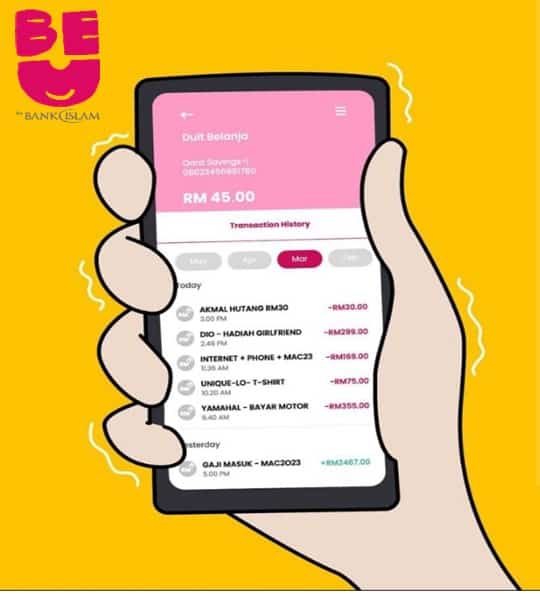
To gain a clear understanding of where your money is going, you can utilize various tools and methods. One effective solution is to use budgeting apps or financial management software that automatically categorizes your income and expenses.

This simplifies the process of tracking your cash flow and provides visual representations, such as charts or graphs, to help you analyze your spending habits. By consolidating your cash inflows and expenditures onto a single platform, such as a budgeting app, you can easily monitor and review your financial transactions in one place.
5 Rules For Malaysians To Improve Their Financial Wellbeing

For example, apps, like Be U app, will allow you to track your expenses, providing updates and insights into your finances. Be U offer features such as expense categorization, a personal finance graph and a dashboard to help you stay on top of your finances.

By having a comprehensive overview of your income and expenses, you can identify areas where you can make adjustments, set savings goals, and ultimately improve your financial progress.

2. Differentiate Between Needs And Wants

Practising mindful spending requires conscious decision-making regarding distinguishing between essential needs and discretionary wants. Consider implementing a “pause and evaluate” approach to address discretionary wants.

Before making a non-essential purchase, give yourself a set period, such as 24 hours or a week, to assess whether it aligns with your long-term financial goals and values. This solution allows you to evaluate whether the item is a necessity or a want driven by emotions or spur of the moment.

By implementing this practice, you can avoid impulsive purchases and redirect your funds towards more meaningful goals, such as saving for a down payment on a home or investing for your future.

3. Start Saving Early

Recognizing the value of compounding returns emphasizes the importance of initiating saving habits as early as possible. One solution is to set up automatic transfers from your checking account to a designated savings account.

By automating your savings, a predetermined portion of your income is regularly deposited into your savings account without requiring constant manual effort. This solution ensures consistency and discipline in your saving habits.

For example, many of our customers enjoy using our NEST feature in our Be U app to save money. As the NEST feature allows users to set up automatic transfers to occur on a periodical basis, ensuring that saving becomes a priority before allocating funds towards discretionary spending.

Furthermore, users are allowed to set financial goals and track their financial progress. By utilizing this feature, users are able to track and achieve their financial goals more seamlessly.

4. Build An Emergency Fund

Establishing an emergency fund is crucial for financial stability and preparedness. One solution is to automate your savings by setting up regular transfers from your checking account to a separate savings account designated for emergencies. This ensures that a portion of your income goes directly into your emergency fund without requiring constant manual intervention.

For instance, you can set up a monthly or biweekly transfer that aligns with your financial capabilities and goals. By automating your savings, you remove the temptation to spend the allocated funds and ensure that you consistently contribute to your emergency fund. Over time, your emergency fund will grow, providing a financial safety net for unexpected expenses such as medical emergencies, car repairs, or job loss.

5. Take Care Of Your Belongings And Health

Opting for repairing instead of replacing items whenever possible is a practical solution to reduce unnecessary expenses. For example, if your electronic devices, appliances, or clothing require repairs, consider researching local repair services or DIY solutions before considering a replacement. Often, repairing items can be more cost-effective than buying new ones, especially for items that are still functional with minor issues.

Additionally, prioritizing preventive healthcare measures can lead to significant long-term savings. Regular exercise, maintaining a balanced diet, and practicing good hygiene are all examples of preventive measures that can help prevent costly health conditions. By investing time and effort in your physical and mental well-being, you reduce the likelihood of incurring high medical expenses related to chronic diseases or illnesses.

While these practical tips cannot solve all financial challenges, they serve as a starting point for developing positive financial habits and setting individuals on the path to financial well-being. It is crucial to make a plan with specific target amounts and deadlines, reducing the likelihood of overspending and ensuring progress towards financial goals.

With the increased availability of financial literacy resources and the rising adoption of digital tools, Malaysians have greater opportunities than ever before to enhance their financial knowledge and improve their financial health. By taking charge of their personal finances, individuals can gain a better understanding of financial concepts, assess their current financial situation, and make informed decisions to improve their overall financial well-being.

About CDX, Bank Islam

CDX has been established since 2020 and Centre of Digital Experience was developed under the purview of Bank Islam to explore experimental new businesses and technologies. Our vision is “Financial literacy for everyone”. Our Core Mission is to inculcate financial literacy, financial inclusion, financial independence to our customers and devising a sustainable charity model. CDX is building a challenger bank and mobile banking app known as Be U to serve the underserved and youth by providing next-level banking for modern consumers consisting of an app, a debit card and a financing facility proudly backed by Bank Islam, the leader in Islamic Banking since 1983. For any enquiries, do contact our customer service by email at beu.communitysupport@bankislam.com.my

Dry Eyes Demystified

Dry eye syndrome, also known as dry eye disease or keratoconjunctivitis sicca, is a common eye condition that affects millions of people worldwide. This condition occurs when the eyes do not produce enough tears, or when the tears evaporate too quickly, causing the eyes to become dry, itchy and irritated. This condition results in blurring of vision, discomfort, light sensitivity and other symptoms due to disturbances to the eye’s tear film.

According to a local study entitled ‘Prevalence and Risk Factors of Dry Eye Disease’, the prevalence of dry eye syndrome is estimated as 7 per cent to 34 per cent worldwide, occurring at a higher frequency in the elderly above 50 years of age and twice as high in women than in men. In Malaysia, dry eye syndrome was only considered a disease on its own in 2007.

Symptoms & Causes

Dr Norazlina Binti Bachik Cataract Refractive Anterior Segment Surgeon At KPJ Centre For Sight
Dr Norazlina Binti Bachik, Clinical Director of KPJ Centre for Sight

“The symptoms of dry eye syndrome include burning sensation akin to stinging, sandy sensation when closing and opening the eyes, soreness, watery eyes, light sensitivity, heavy eyelids, deteriorating vision and red bloodshot eyes. The syndrome severely reduces the patient’s ability to read, drive and use screens for a prolonged period of time, significantly affecting the quality of life, particularly in middle-aged and elderly patients,” says Dr Norazlina Binti Bachik, Clinical Director of KPJ Centre for Sight.

There are many causes of dry eye syndrome, divided between internal and external causes, with dry and humid climate like ours being one of the external causes.

“Some of the internal causes of the disease include hormonal imbalance or changes, namely declining or lack of oestrogen in pre-menopausal or post-menopausal women, inflammatory systemic disorders like rheumatoid arthritis and Sjogren’s Syndrome, allergic eye disease, and consumption of drugs like anti-histamines and certain anti-hypertensives,” explains Dr Norazlina.

“Meanwhile, the external factors include chronic contact lens wear, long hours on gadgets like computers or handphones and environmental factors like heat and wind. Drier climate specifically aggravates the condition and patients must take better care of themselves especially in our country,” she adds.

Diagnosing Dry Eye Syndrome

In addition to women in general and the elderly, Dr Norazlina also highlights that people who are in tropical countries especially those who receive year-round sun, those working outdoors like construction workers and those on long hours of intense desk-bound computer work in air-conditioned rooms are more prone to dry eye syndrome.

After assessing whether a potential patient with symptoms similar to dry eye syndrome fall into at risk groups as mentioned above, further tests are conducted for diagnosis. The examination entails assessing the eye surface particularly looking for signs of dryness on the cornea. This can be achieved through using dyes like fluorescein or Lissamine green or Red Bengal stains. Meanwhile, tear meniscus (a thin layer of tears that collects along the lower edge of your eyelid when your eye is open, keeping your eyes moist) can give us an idea of how much tears are present in one’s eye.

Treating Dry Eye Syndrome

Unfortunately for dry eye syndrome, there is no single treatment involved, but rather it must be a multi-angle approach.

“Usually, we begin treatment for local eye conditions such as blepharitis by using lid scrubs or warm compresses on the eyelids to improve the flow of meibum.* A judicious use of lubricants either in the form of drops or gel or even ointment also takes place, depending on the severity of the dryness. Mitomycin C eyedrops can also be helpful in inflammatory cases,” says Dr Norazlina.

(*Note: Blepharitis is a common inflammation of the eyelids, and meibum is an oily substance that helps keep tears from evaporating too quickly.)

Apart from medication, some lifestyle changes also need to be undertaken such as avoiding long constant hours on gadget use by taking frequent breaks, wearing sunglasses or any other eye protective gear when doing outdoor activities to prevent direct effect on the eyes from wind or sunlight, ensuring adequate daily water intake and even taking supplements like fish oil.

What advice would Dr Norazlina give to individuals living in drier climates who are concerned about developing dry eye syndrome or experiencing discomfort and vision problems related to their eye health?

“To start with, wearing protective eye gears like sunglasses with ultraviolet light blocking properties when going outdoors is very important. Lubricating eyedrops use will also help to alleviate the symptoms through the day. Once the root cause of the dryness has been identified, compliance to the treatment instituted by the eye doctor must be adhered to ensure the effectiveness of the treatment regime.

Don’t forget to stay healthy by drinking enough fluids and taking balanced healthy diet, with supplements taken as needed.”

ICMR Research Series: Malaysian Investors Are Vulnerable Due To Poor Investment And Saving Behaviours

Today’s investing landscape features a confluence of challenges. The current economic environment of high inflation and higher cost of living has led to heightened uncertainty in financial markets. Meanwhile, an ageing population is adding pressure on retirement savings. As a result of these global trends, Malaysians are experiencing new vulnerabilities in the course of their investment journeys.

The Institute for Capital Market Research Malaysia (ICMR) embarked on a nationwide study to better understand these new age vulnerabilities. We found the underlying reasons for investor vulnerability are multifaceted and can be broadly grouped into three categories based on their characteristics. In this article, we will explore the first and most common category: financial behaviour and accessibility.

More Decisions, More Fatigue

Our survey findings reveal that most Malaysian investors experience vulnerability due to their financial behaviours and accessibility to financial products and services. 93% of surveyed respondents have three or more behavioural and access drivers that could make them feel vulnerable, which includes their perception of their own financial status, savings behaviour, and financial literacy. 

In terms of perceived financial status, most Malaysians reported they are either financially unstable or are living paycheck-to-paycheck, which influences their level of financial stress and wellbeing. 74% of those who are financially unstable and 54% who are living paycheck-to-paycheck claimed to always feel stressed and worried when thinking about their financial futures.

ICMR Series 2 Article 1 Figure 1
Figure 1: Perceived Financial Status (Data Source: ICMR)

Past behavioural studies have shown that the more decisions that one is forced to make, the more fatigue one develops, which consequently leads to a deteriorating quality of decision-making – a concept known as decision fatigue. Moreover, people who frequently experience financial stress tend to experience decision fatigue more intensely compared to others. 

Indeed, 61% of those who are financially unstable and 42% of those living paycheck-to-paycheck admitted that they get mentally drained when thinking about financial planning and would prefer to follow their family and friends’ decisions. As highlighted in our previous article, this makes them more susceptible to being involved in scams, misled, and creating investment bubbles.

Not Saving Enough For Difficult Times

Beyond financial status, ICMR also set out to understand Malaysians’ savings behaviour, given the importance of having enough savings to ensure financial resilience to any unexpected life shocks. Based on guidance by the Employees Provident Fund (EPF), it is recommended that Malaysians have at least  20% monthly savings and 6 months’ worth of emergency savings.

One common assumption is that Malaysians are not generally aware of these savings benchmarks, but ICMR’s findings suggest otherwise. While 43% of respondents know they should save 20% of their monthly income, only 23% actually follow through. Similarly with emergency funds, 34% know they need 6 months’ worth or more, but only 22% claim to have that amount of buffer for emergencies.

ICMR Series 2 Article 1 Figure 2
Figure 2: Monthly Savings and Emergency Savings Behaviour

Another assumption is that those with higher incomes can save the most, while financial stress is commonly associated with those in the lower income group. Our study again challenges these assumptions, as our findings indicate that 68% of respondents in the high-income group are saving less than 20% of their monthly income and 76% have less than 6 months’ worth of emergency savings.

Since Malaysians are already struggling to save regularly and are not able to financially sustain themselves during difficult times, it is hard to expect them to show better saving habits for a longer-term goal such as retirement. This then leads to another factor that defines investor vulnerability in Malaysia – retirement savings or a lack thereof.

Lack Of Retirement Readiness

Based on the assumption that one will retire at the age of 55 and life expectancy in Malaysia is 75, one’s savings need to last for at least 20 years. However, when we asked our respondents how long they expected their current and EPF savings to last after retiring, 75% felt that their total retirement savings would last them less than the required 20 years post-retirement.

This is mainly due to the lack of retirement savings, especially among retirees and gig workers. 62% of surveyed gig workers claimed to have less than RM50,000 worth of retirement savings, and what is more worrying is that 70% of surveyed retirees have less than RM250,000 worth of retirement savings – less than what the EPF estimates is adequate to cover basic needs for 20 years after retirement.

ICMR Series 2 Article 1 Figure 3
Figure 3: Retirement Savings by Age Group

While those who are 40 years old and below tend to meet the basic retirement savings threshold as determined by EPF, as soon as they reach 41 years old, more than half of the EPF contributors are not able to meet the target basic savings for each age group. This is probably because they start withdrawing from their EPF accounts for home loans, children’s education, or even health expenses.

To supplement the findings from our survey, ICMR also conducted qualitative interviews with retirees in the Klang Valley. The interviewees shared that they did not know what to do with the big sum of savings that became accessible to them after retiring. As a result, they tended to invest on a trial-and-error basis and followed advice from friends and family – with many plagued by failing investments.

Overconfident About Financial Literacy

Although Malaysians are generally not saving enough and unprepared for retirement, ICMR’s findings also show that they are overconfident with regards to their financial knowledge. Only 39% of respondents scored 80% – 100% in a simple financial literacy test prepared by ICMR – but 67% of respondents claim to be highly confident of their financial capabilities.

ICMR Series 2 Article 1 Figure 4
Figure 4: Financial Literacy Scores & Financial Confidence (Data Source: ICMR)

Topics such as compounding interest, inflation, risk and return, cost of borrowing and diversification, are considered as the most basic to test respondents’ understanding of some of the key financial concepts. However, it is concerning to see that 59% of respondents who scored lower than 80% (less than 4 questions correct) feel highly confident about their financial capabilities.

The overconfidence effect is observed when people’s subjective confidence in their own ability is greater than their objective (actual) performance. Overconfidence has been attributed to a range of issues. More generally, among investors, overconfidence has been associated with excessive risk-taking and is most likely to lead them to make wrong financial decisions.

Overconfidence also relates to one’s optimism bias during investment or broader financial decision making. Optimism bias refers to the tendencies for people to overestimate the probability of positive events and underestimate the probability of negative events happening to them in the future. This kind of thinking is dangerous and often leads investors to make reckless financial decisions.

Investor Vulnerability Is Multifaceted

Making good financial decisions is not an easy task for most people. It involves overcoming biases and considering the satisfaction of short-term gains against the things that are beneficial for us in the long-term. The challenges of making good financial decisions get even more difficult when factors such as financial stress hinders one from making optimal decisions with a sound mind.

Nonetheless, ICMR’s study highlights that different ‘types’ of vulnerability are frequently overlapping and closely interconnected – meaning that financial difficulties are not always easily attributable to a single particular ‘cause’. Stay tuned for our next article as we explore how situational circumstances and industry-related issues can also lead to new vulnerabilities for Malaysian investors.

This article is part of a content series by the Institute for Capital Market Research (ICMR). Follow ICMR’s Facebook page to stay updated on behavioural tips and insights for better investing habits. To learn more about ICMR’s research on new age vulnerabilities, visit www.icmr.my or download the full report.

About the Authors

ICMR Datin Aida
Datin Aida Jaslina Jalaludin, Head of Research, ICMR
ICMR Nadhirah Ibrahim
Nadhirah Ibrahim, Research Analyst, ICMR