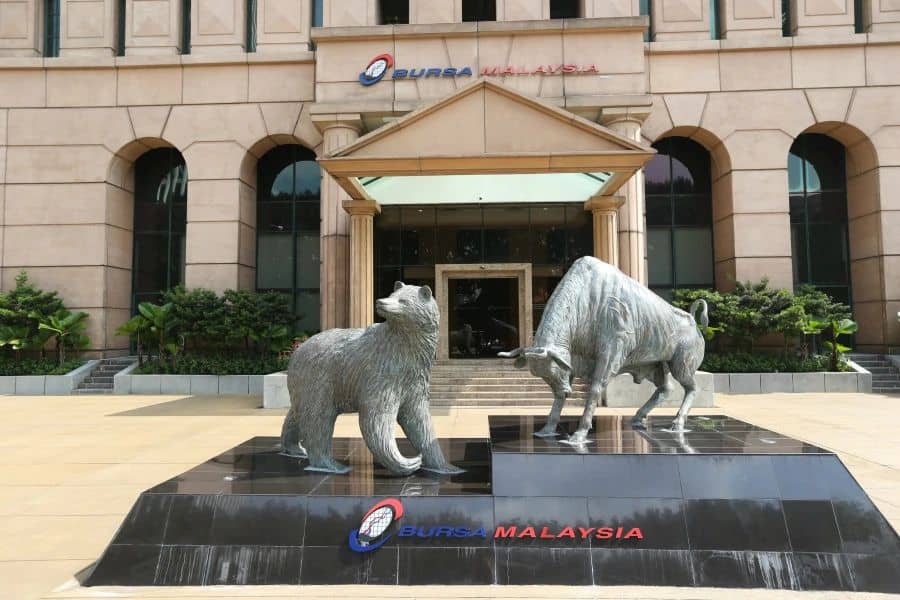
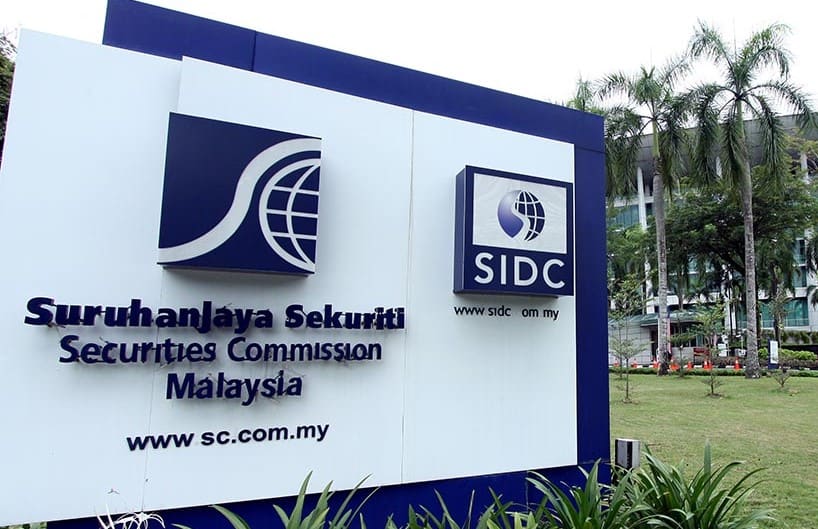
The Securities Commission Malaysia (SC) and Bursa Malaysia Berhad (Bursa Malaysia) today welcome the announcements by the Honourable Prime Minister and Minister of Finance, Dato’ Seri Anwar bin Ibrahim, aimed at driving Malaysia’s economic growth and capital market competitiveness.
The short-term and medium-term measures address three key pillars essential to the growth and development of the capital market in Malaysia:
Pillar 1: Creating market vibrancy with greater participation opportunities for the rakyat;
Pillar 2: Attracting larger pool of investors to support financing for small, medium enterprises and new economy companies; and
Pillar 3: Enhancing Malaysia’s competitiveness to strengthen market confidence.
Measures announced:
1. A reduction of the stamp duty rate for the trading of listed shares on Bursa Malaysia from 0.15% to 0.10%, while the stamp duty cap is maintained at RM1,000 for each contract. This change, which take effect in July, will directly lower the cost of transactions, especially for retail investors, who are particularly sensitive to costs.
2. To widen the pool of investors, the Ministry of Finance and Securities Commission Malaysia will look at policies to achieve the following:- a. to facilitate and attract the setting up of family offices in Malaysia; b. to promote corporate venturing to drive greater domestic direct investment through more facilitative tax and incentive policies; and c. to widen the definition of sophisticated investors to include angel investors.
3. The capital market regulators also commit to explore ways to reduce market friction and shorten time-to-market for initial public offerings.
Quotes by SC Chairman Dato’ Seri Dr. Awang Adek Hussin:
“The SC’s commitment to maintain the capital market’s resilience and competitiveness is of the utmost priority. The capital market initiatives announced will boost greater trading participation and access to financing in the market, encouraging the growth of innovative companies and fostering greater diversity and inclusivity in the industry. We aim to empower issuers and investors by creating a business-friendly environment through relevant support and incentives. The SC is optimistic that these efforts will create a more vibrant capital market to drive economic growth in the country.”
Quote by Bursa Malaysia Chief Executive Officer, Datuk Muhamad Umar Swift:
“We are confident that the proposed measures, along with the existing development initiatives, will stimulate market activity and create a more dynamic and liquid market environment. A liquid and strong performing capital market has tremendous benefits to numerous stakeholders, and the economy as a whole. More importantly, the measures will widen affordable investment choices for the rakyat, and deepen investor interest in our market, leading to Bursa Malaysia being a destination of choice for fundraising.”
The multi-pronged measures by the Government and market regulators reflect the intent to create a conducive environment for a thriving capital market, recognising the pivotal role played by a well-functioning capital market in fostering robust economic growth.
The capital market regulators reinforced their commitment to ensure that the capital market is competitive and vibrant, while supporting the economic needs of Malaysia.
The SC and Bursa Malaysia will continue to work closely with the Ministry of Finance (MOF), industry partners and other relevant bodies to explore further holistic measures towards ensuring an inclusive and sustainable capital market.
About Securities Commission Malaysia
The Securities Commission Malaysia (SC), a statutory body reporting to the Minister of Finance, was established under the Securities Commission Act 1993. It is the sole regulatory agency for the regulation and development of capital markets. The SC has direct responsibility for supervising and monitoring the activities of market institutions, including the exchanges and clearing houses, and regulating all persons licensed under the Capital Markets and Services Act 2007. More information about the SC is available on its website at www.sc.com.my. Follow the SC on twitter at @SecComMy for more updates.
About Bursa Malaysia
Bursa Malaysia is an approved Exchange holding company under Section 15 of the Capital Markets and Services Act 2007. A public company limited by shares under the Companies Act 2016, Bursa Malaysia operates a fully-integrated exchange, offering equities, derivatives, offshore, bonds as well as Islamic products, and provides a diverse range of investment choices globally.
The following story is based on an actual series of events, with some names and circumstances fictionalised. Any similarity to any person’s name, character, or history is coincidental and unintentional. It is about a property tussle, then being left homeless after her sister’s death.
Chung was unable to get a loan from any financial institution to purchase a house. The easiest way out was to purchase the house under a name of his sister who would be eligible to obtain a loan. Nancy did not mind this arrangement as Chung gave the undertaking to pay the monthly loan payments.
The arrangement worked well until Nancy passed away suddenly. She had no Will and since the house was under her name, it was considered her asset. Under the Distribution Act, Nancy’s husband, Jay, and children are entitled to her properties, which include the house that Chung bought and is living in.
Jay, who is not on cordial terms with Chung, would not want to hear anything from his brother-in-law that he had been servicing the housing loan and the house rightfully belonged to him. Chung’s pleas that Jay returns his house fell on deaf ears.
Chung was left with two choices; either goes to court and fight for an equitable interest which may take a long time and the outcome, uncertain; or to stop making instalment payments which will result in the bank claiming from Nancy’s estate for the loan amount.
Either way, Chung is at the losing end with a certainty of incurring losses.
The above scenario of purchasing an asset under another name is quite common, especially among business partners, close friends or relatives for various reasons. Most of them do not realise or appreciate the seriousness of the problem that would occur upon the death of the person whose name is used to register for the asset if no proper estate planning is done – and an ugly property tussle will ensue.
In the event the entrusted person dies or goes into a coma or becomes of unsound mind, his/her representative may not be as cooperative, especially when something of value is involved – that’s when the property tussle will rear its ugly head.
What Chung could have done was to get Nancy to sign a Declaration of Trust. Under this Declaration of Trust, Nancy will hold the house for Chung as a main trustee and an appointed licensed trust company shall be the substitute trustee in the event of her death.
All Nancy needs to do is sign a trust deed which is irrevocable power of attorney with the trust company. Upon Nancy’s death, the trust corporation will take over as substitute trustee and follow the terms and conditions of the trust deed to transfer the house to Chung. From this arrangement, Chung has established a legal right to the house, and the problem with Jay could have been circumvented.
The main benefit of a Declaration Trust is that though the house is under Nancy’s name, the rightful heir to the house would be Chung. Moreover, there is no need to transfer the house to another trustee, and thus there are no transfer fees payable.
The fees are only payable upon the demise of Nancy. The transfer of the house of Chung’s name is hassle free since there is no need to wait for letters of representation over Nancy’s estate.
Furthermore, with a trust company, Chung and Nancy will have peace of mind and their rights and obligations are well preserved without any third party interference since a trust company is duty bound to follow the trust provision and therefore more reliable than an individual.
Moreover, the trust company has continuity compared to a natural person liable to die, fall ill, meet with an accident and be incapacitated, become of unsound mind or go bankrupt. When an individual trustee passes away, his assets are frozen until the necessary legal estate administration processes are completed, which means the asset is frozen too.
And that’s how you can prevent a property tussle with the right tool, a Declaration of Trust.
Rockwills International Group, now in its 28th year, pioneered professional will writing in 1995 and has since evolved into the leading estate planning specialist in the country. It is today the largest provider of solutions and support services in the areas of trusts, succession, management, and distribution of wealth. It has done over 300,000 wills and 16,000 trusts and holds more than RM25 billion in assets under trust.
In our previous article, we explored how poor investment and savings behaviours could lead to higher vulnerability among Malaysian investors – leaving them at risk of suffering fraud, financial exploitation, or the effects of unsuitable investments. Nonetheless, we also highlighted that vulnerability is a multifaceted phenomenon with frequently overlapping and closely interconnected drivers.
Beyond financial behaviour and accessibility, the Institute for Capital Market Research Malaysia (ICMR) also identified situational and industry-related drivers of investor vulnerability. Based on findings from our nationwide survey, this article will delve deeper into both these categories to further understand how Malaysians experience vulnerability during their investment journeys.
Navigating Unexpected Life Changes
Situational drivers refer to experiences of specific life events or temporary difficulties such as bereavement, job loss, income shock, death within close relatives, or changes in expenses and savings behaviours. Understanding these drivers is especially significant considering how our lives have been impacted by greater uncertainty since the COVID-19 pandemic.
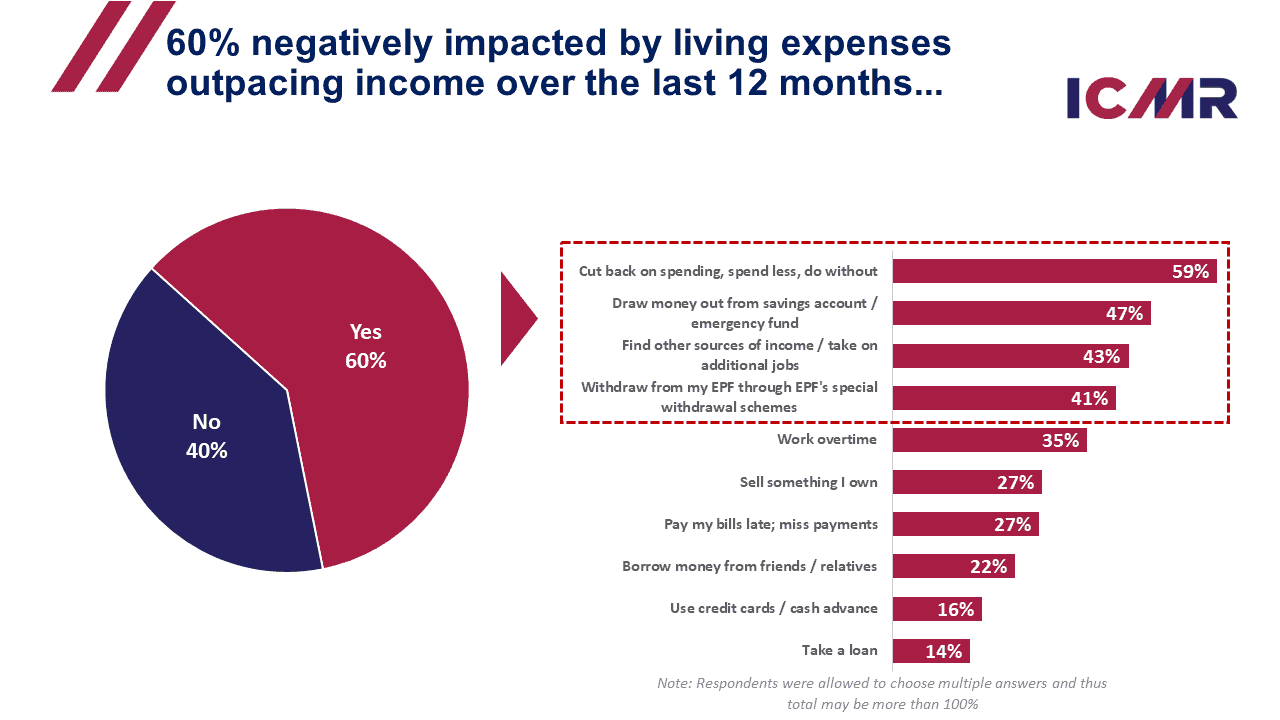
Throughout the pandemic, many Malaysians lost their jobs, income, or faced income cuts. The impact of this lasted even after lockdown measures were lifted and has been exacerbated by the rising cost of living. ICMR’s survey conducted in early 2022 found that 60% of Malaysians felt that their expenses had outpaced their monthly income in the last 12 months, hence affecting how they made ends meet.
Figure 1: How Changes in Living Expenses Affected Financial Behaviour (Data Source: ICMR)
Despite Malaysia’s economy opening up in the post-pandemic phase, many Malaysians are still struggling to sustain themselves financially. This was evident even before the real knock-on effects of inflation had been felt, which rose from 2.3% in January 2022 to 3.8% in December 2022 on the back of higher food and transportation prices.
To curb inflationary pressures, the Central Bank of Malaysia (BNM) increased the Overnight Policy Rate (OPR) by 100 basis points to 2.75% as of the end of 2022. Now, sandwiched between higher borrowing costs and higher inflation of food and oil prices, households will have even less discretionary income – which could increase their level of vulnerability.
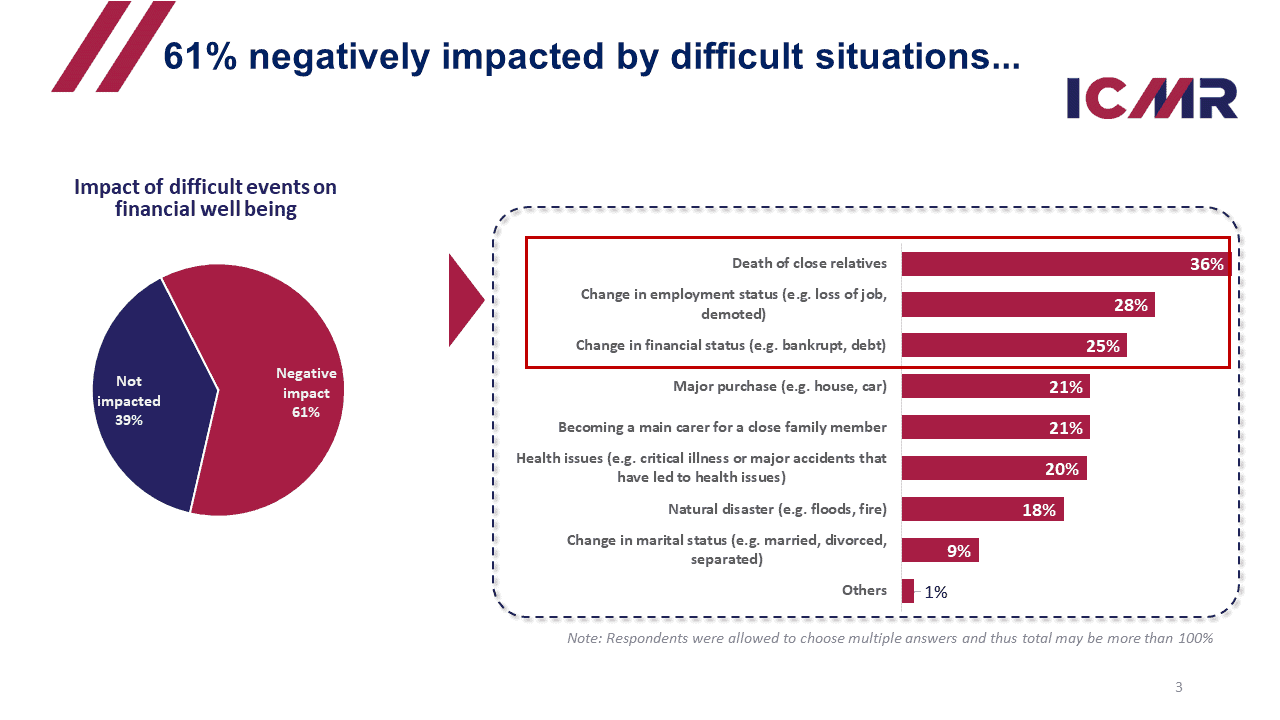
It gets more concerning when the issues of expenses and inflation are coupled with complex life events, which appears to be the case for 61% of respondents to ICMR’s survey. Within this group, most respondents experienced ‘death of close relatives’ or ‘changes in employment and financial status’, potentially most of these losses being due to COVID-19.
Figure 2: Impact of Difficult Events on Financial Well-Being and Type of Negative Impacts Experienced (Data Source: ICMR)
Despite the widespread belief that vulnerable individuals comprise the older generation, our study emphasises that notwithstanding age, changing life situations caused by the pandemic or changes in employment can cause individuals to feel more financially vulnerable. This, coupled with the current state of the economy, further contributes to poor financial decision-making.
Challenges Dealing With Financial Service Providers
The final category of vulnerability driver we identified is ‘industry-related drivers’. The variables measured in this category include experiences surrounding the actions of market or individual financial providers; firms that do not act with appropriate levels of care; products that are inappropriate for a particular client; and inadequate/complex or misleading documentation/information.
ICMR found that 47% of surveyed respondents rely on financial consultants, agents, or brokers as sources of financial information. However, we also found that investors only referred to financial consultants who happened to be their friend or who were introduced by their family or friends. This correlates with our findings of 44% preferring to listen to friends and family for financial information.
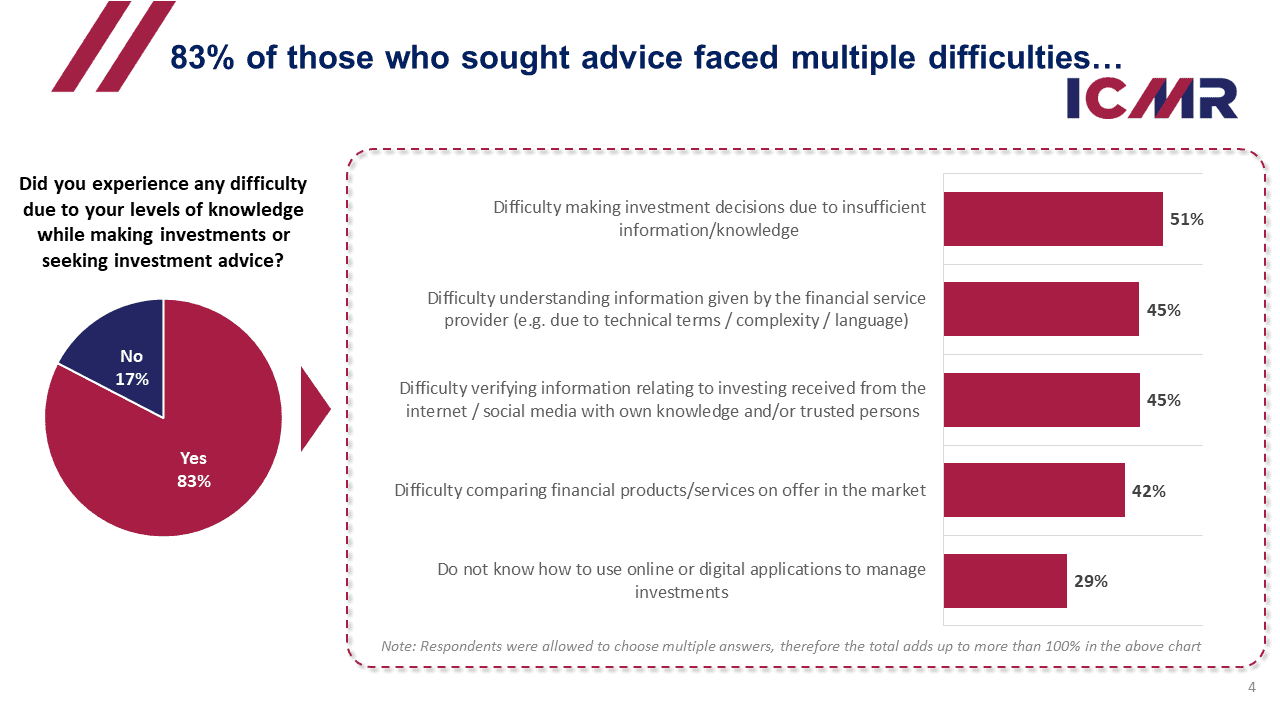
Moreover, 83% of those who do seek professional financial advice claim to experience some difficulties, especially due to insufficient information or knowledge. At the same time, 70% of those who engaged with financial service providers faced some misconduct, including unsuitable prices or terms, being pressured into making an investment, high fees, technical issues, and language barriers.
This was further confirmed in our qualitative interviews, where interviewees felt that all the documents and information given were too complicated and difficult to understand. Elderly folk and youths were among the most affected. This, coupled with low financial knowledge, will make understanding important disclosure documents even more difficult for these groups.
Many investors feel that financial services and products have been streamlined and designed based on the idea of a perfectly rational investor. Because of that, financial consultants and agents struggle to meet the needs of investors who do not fit into the idea of a perfectly rational investor, which has the potential to lead to negative experiences and consumer detriment.
“The documents and disclosure are too complex and hard to understand. Only those with financial background could understand. I feel that the sales agent does not know the details of the product so the agent will just work to promote”
– Emma, 34, real estate consultant
Vulnerable Investors More Susceptible To Financial Scams
Although not all vulnerable individuals face the same challenges, most tend to feel overwhelmed and unable to cope during certain vulnerable moments. When faced with these feelings, individuals find it difficult to prioritise, which leads to sub-optimal decision-making. This results in them making decisions that further worsens their situations, particularly when dealing with financial services firms.
Findings from the three vulnerability drivers we’ve explored highlight that individuals may experience overlapping vulnerable characteristics, leaving more investors susceptible to the allure of making fast money. Stay tuned for our next article, as we will look closely at the factors that cause investors to fall prey to investment or financial scams.
This article is part of a content series by the Institute for Capital Market Research (ICMR). Follow ICMR’s Facebook page to stay updated on behavioural tips and insights for better investing habits. To learn more about ICMR’s research on new age vulnerabilities, visit www.icmr.my or download the full report.
About the Authors
Datin Aida Jaslina Jalaludin, Head of Research, ICMRNadhirah Ibrahim, Research Analyst, ICMR
Economic factors, such as inflation, rising rates and supply chain disruptions have been top of many investors’ minds in 2022. You may ask, in such a volatile economic environment, if it is worth it for investors to think about sustainability and ESG at all.
I would say yes, in fact it is crucial for investors to think about how these economic factors will affect longer-term structural trends, such as the low carbon transition.
Changing Energy Economics
With rising energy prices, political momentum for decarbonisation has slowed. But importantly the private sector continues to push ahead, helping close some of the gaps between the ambitions of global leaders and corporate readiness for transition.
Changing energy economics also affects how companies will look to decarbonise, with higher energy prices incentivising improvements in energy efficiency. Technologies like heat pumps are becoming more viable compared to alternatives. The adoption of technologies will not just affect the companies developing or producing them, but across the value chain.
Rising Demand For Sustainable Food And Water
The global population is expected to increase 40% from now to 10bn in 2050, while getting richer as living standards grow. This will drive the demand for food, while the physical effects of climate change, such as rising temperatures and changes to weather patterns, puts pressure on supply.
Huge amounts of investment will be needed for the world to have sustainable food and water. With these needs come opportunities, for companies who can come up with the technologies and innovations to meet it. Recent food price inflation has accelerated these structural trends, driving a focus on food security.
The Importance Of Human Capital Management
It is not all about the environment. The cost of living crisis has intensified social stresses. Few governments have the fiscal capacity to absorb shortfalls in household budgets. Companies are coming under pressure to ensure vulnerable workers are protected – whether through increasing wages and benefits for their own employees or their responsibility to workers in supply chains.
Companies that are better at managing human capital may be well-placed to navigate the challenges posed by the complicated macro environment. I hope I have showed you that ESG factors are not things to think about in isolation – they are core to informing our view of the world and how to invest.
By Mervyn Tang, Head of Sustainability Strategy, APAC, Schroders
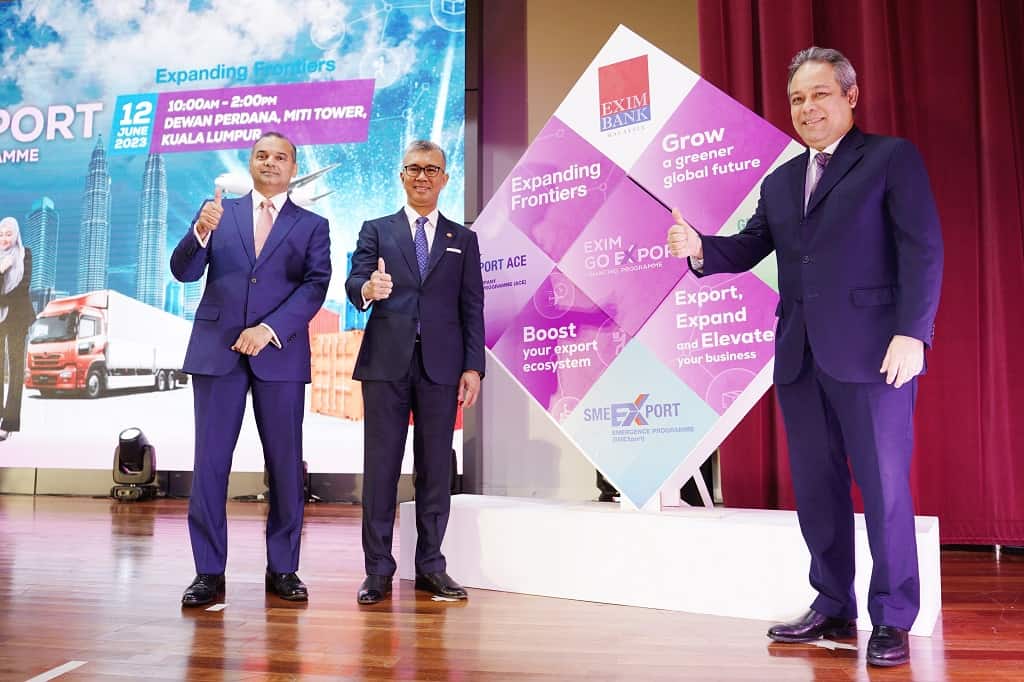
Export-Import Bank of Malaysia Berhad (“EXIM Bank”) today unveiled its EXIM Go-Export Financing programme (GEFP 2023) that provides financing to small and medium enterprises (SMEs) and corporate clients, enabling them to invest and grow in the areas of export development, green technology and supply chain ecosystem. GEFP comprises three (3) programmes known as EXIM Go-SMExport, Go-Export ACE, and Go-Export GreenTech.
Seen as a catalyst for businesses, these financing programmes will enable SMEs and corporate clients to grow their business, obtain funds for cashflow requirements, or expand in strategic green-tech and/or other tech sectors.
During the launch, the Minister of Investment, Trade and Industry (MITI) Malaysia, Tengku Datuk Seri Utama Zafrul Aziz said: “The fast-changing global landscape requires SMEs to be agile and responsive to key themes such as ESG and IR4.0. As SMEs form the backbone of our economy, they deserve all possible support to make them future-ready. EXIM’s financing for export development, green technology and supply chain ecosystem are welcome solutions to SMEs’ most common challenges. When our SMEs are better-equipped to take on challenges related to funding, tech adoption and ESG, they will not only secure their growth path, but also become more resilient for global supply and value chains.
EXIM Bank’s President and Chief Executive Officer, Arshad Ismail said: “Our aim is to support SMEs and corporate clients build a successful export business. The EXIM Go Export programme is a tailor-made banking solution that prioritises the needs of our customers and ensures our offerings align with their specific exporting business requirements. In supporting business communities develop the skills and confidence they need to succeed; we are helping them grow – and that fulfils our mandate.”
EXIM Go-SMExport is created to support and strengthen SMEs’ production capacity and capabilities to enter the global market, while Go-Export Anchor Company Ecosystem (ACE) is a supply chain solution to facilitate anchor companies in building and maintaining a resilient ecosystem and improve business continuity of their suppliers and vendors. Vendors get quick access to funds and anchor companies enjoy greater flexibility in credit terms. EXIM Go-SMExport and Go-Export ACE is open to all sectors, particularly electrical and electronics, digital economy, pharmaceutical, aerospace and chemicals, in line with Malaysia’s National Investment Aspirations and New Investment Policy.
EXIM Go-Export Green Technology (GreenTech), on the other hand, is a comprehensive, sustainability-driven financing programme designed to help exporters grow by investing in strategic sectors such as automation, digital tech, green tech and biotech.
EXIM Bank also offers a takaful protection scheme to help Bumiputra exporters expand their markets and protect them from the risk of unpaid credit. Through collaboration with TERAJU, the contribution for this takaful policy will be subsidised for eligible Bumiputra companies. This is yet another initiative by EXIM to encourage the global expansion of Bumiputra companies.
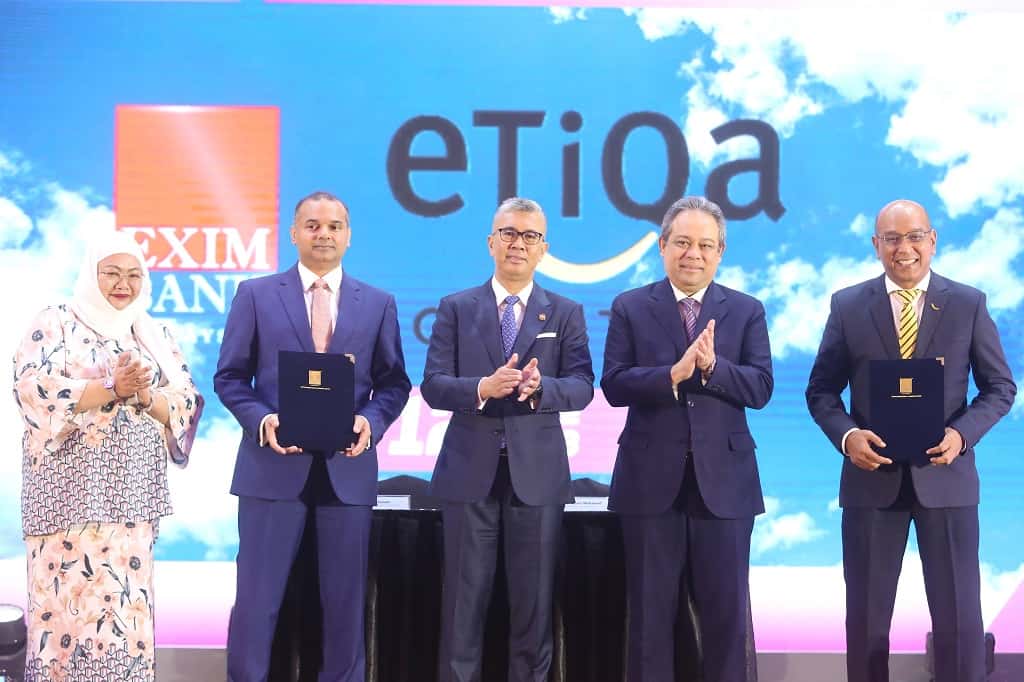
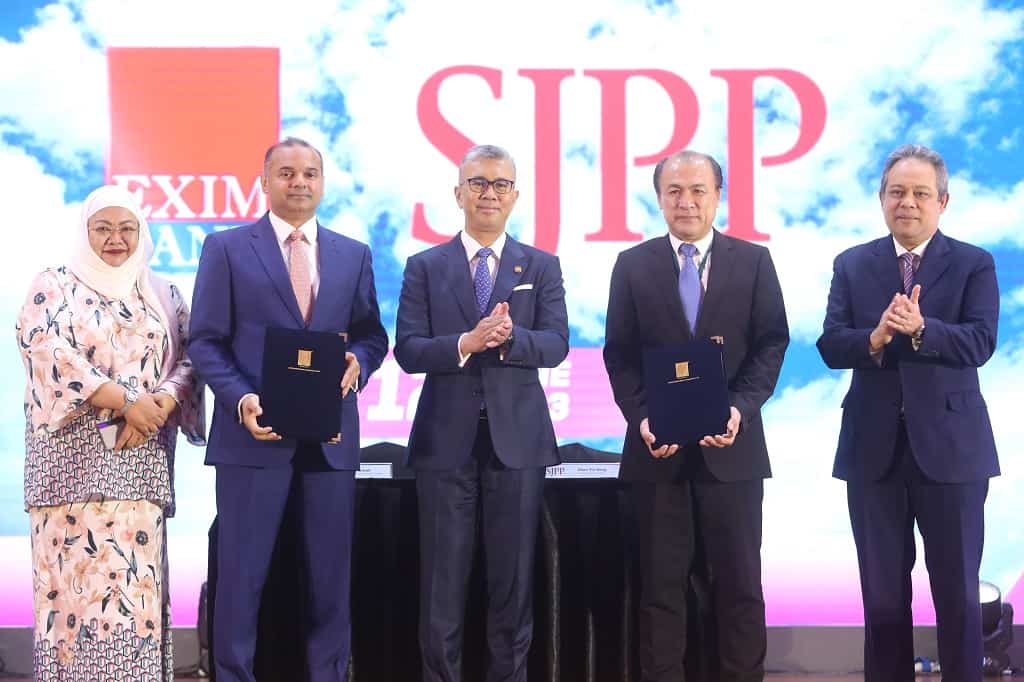
At the programme launch, EXIM Bank also formalised its collaboration with Etiqa General Takaful Berhad and Syarikat Jaminan Pembiayaan Perniagaan Berhad (SJPP) through the signing of two Memorandums of Understanding (MoU).
The first MoU with Etiqa General Takaful Berhad is to strengthen the cross-selling of general takaful products and financing facilities to promote domestic and export-oriented production.
The MoU with SJPP, on the other hand, is to strengthen their existing collaboration in implementing financing facilities, guarantee schemes on domestic and export-oriented propositions, including programmes related to financing, guarantees or advisory.
EXIM Bank was represented by its President and Chief Executive Officer, Arshad Ismail, witnessed by Tengku Datuk Seri Utama Zafrul Aziz and EXIM Bank’s Chairman Dato’ Azman Mahmud. Etiqa General Takaful Berhad was represented by its Chief Executive Officer, Shahrul Azuan Mohamed, who was witnessed by its Head of Enterprise Corporate, Asmah Daud; while for SJPP, the signatory was its Principal Officer, Chen Yin Heng, with its Senior General Manager, Azlan Mohd Agel, as witness.
Amongst the other entities present at the event were MIDA, MATRADE, SIRIM, MARii, HDC, TERAJU, Malaysian Exporter Academy and Dewan MyGerak Eksport Malaysia.
About EXIM Bank of Malaysia Berhad
The Export-Import Bank of Malaysia Berhad (EXIM Bank) was incorporated on 29 August 1995 and is wholly-owned by the Government of Malaysia. The Bank has assisted a diverse range of Malaysian business in various sectors in their global ventures. EXIM Bank takes pride in meeting its mandated role of stimulating and enhancing the competitiveness of Malaysian industries for exports and investments globally via the provisioning of internationally and domestically competitive banking and insurance products and advisory services. The Bank also offers Shariah-compliant financing and Takaful instruments. For more information, visit www.exim.com.my.
Bursa Malaysia Berhad (“Bursa Malaysia” or the “Exchange”) has expanded its criteria for Approved Securities by reducing the daily market capitalisation requirement from RM500 million to RM200 million, effective today.
The revision is part of Bursa Malaysia’s ongoing commitment to fostering a dynamic and vibrant market, by offering market participants a broader selection of Approved Securities aimed at meeting investors’ evolving needs. Approved Securities are securities that have met the criteria prescribed by the Exchange and may be utilised for purposes of Securities Borrowing and Lending, and short selling.
The expansion of Approved Securities will provide greater ability for investors to manage their portfolios and boost vibrancy in Securities Borrowing and Lending activities, an important component of a well-functioning capital market.
“By broadening access and choice for investors, we are solidifying our commitment to improving market efficiency,” said Datuk Muhamad Umar Swift, Chief Executive Officer of Bursa Malaysia. “As a maturing market, it is vital that we offer a marketplace with robust facilities to cater to the differing needs of investors, while remaining focused on ensuring a vibrant, fair and orderly market.”
When updating the list of Approved Securities, careful selection is made based on both quantitative and qualitative criteria to ensure there is sufficient liquidity, and the integrity of the market is maintained. The List of Approved Securities is available on the Bursa Malaysia website. The list is reviewed approximately every 6 months.
Bursa Malaysia remains committed to working closely with all stakeholders to ensure the Malaysian capital market remains competitive, attractive, and well-regulated.
About Bursa Malaysia
Bursa Malaysia is an exchange holding company incorporated in 1976 and listed in 2005, and has grown to be one of the largest bourses in ASEAN today. Bursa Malaysia operates and regulates a fully-integrated exchange offering a comprehensive range of exchange-related facilities, and is committed to Creating Opportunities, Growing Value. Learn more at www.bursamalaysia.com.
The Malaysia Co-Investment Fund (MyCIF), set up by the Ministry of Finance, has continued to support of micro, small and medium enterprises (MSMEs) in its efforts to promote greater capital market access and inclusivity among the under-served segments.
In its Annual Report 2022 released today, MyCIF noted that the total funds raised by equity crowd funding (ECF) and peer-to-peer (P2P) platforms rose by RM300 million to RM1.7 billion in 2022 from 2021.
It said the 26% year-on-year growth in the overall ECF and P2P markets reflected the growing investor and business interest in alternative financing options. Of the total, MyCIF invested RM282 million compared to RM193 million in 2021, reflecting strong growth in the overall ECF and P2P lending spaces.
MyCIF’s public-private co-investment model via alternative financing platforms is the first-of-its-kind in Southeast Asia. It was set up by the MoF as part of Budget 2019.
MyCIF also reached a higher proportion of under-served segments in 2022. During the year, it implemented a special 1:2 co-investment ratio for agricultural businesses.
As a result, almost four times more agricultural issuers fund-raised on ECF and P2P platforms. Similarly, 28% of MyCIF funds were channelled to non-Klang Valley campaigns, up from 21% in 2021.
“MyCIF has proven to play a key role in supporting the growth of the ECF and P2P lending spaces,” SC Chairman Dato’ Seri Dr. Awang Adek Hussin said. “Approximately 10 times more firms have raised funds via ECF and P2P platforms since the inception of MyCIF.”
By 2022, a total of RM638 million* have been co-invested in almost 35,000 ECF and P2P financing campaigns, benefitting some 3,635 Malaysian MSMEs. Since its inception, MyCIF has generated a positive net return on capital of RM16.5 million. Until the end of 2022, it has received a total allocation of RM230 million, with an additional RM40 million allocated in Budget 2023.
Moving forward in 2023, MyCIF will encourage more innovation in areas that have been identified as strategic to the Malaysian economy.
It will do this by continuing its existing initiatives for agricultural businesses, as well as, extending the similar special 1:2 co-investment ratio to the environmental, social, and governance (ESG) sector.
This is also in line with the national sustainable development agenda, which aims to support the agriculture sector’s transition into a dynamic and progressive sector, and innovation in ESG and sustainability sectors.
MyCIF’s Annual Report also outlined its commitment to good governance while also promoting transparency in the deployment of public funds and the identities of those who have benefitted from them.
*Amount is larger than given allocation of RM230 million due to continuous re-investment of P2P notes, FD interest and ECF dividend
About the Securities Commission Malaysia
The Securities Commission Malaysia (SC), a statutory body reporting to the Minister of Finance, was established under the Securities Commission Act 1993. It is the sole regulatory agency for the regulation and development of capital markets. The SC has direct responsibility for supervising and monitoring the activities of market institutions, including the exchanges and clearing houses, and regulating all persons licensed under the Capital Markets and Services Act 2007. More information about the SC is available on its website at www.sc.com.my. Follow the SC on twitter at @SecComMy for more updates.
We will look at the modus operandi used by Lidt Cooperation Advertising Sdn Bhd or Lidl Cooperation Advertising Sdn Bhd. Both names are fake names used to trap victims. The modus operandi used by this company is like what the author has detailed in the first and second series published on the inovatif.com.my/ website.
In the first series, the author details how this fraud syndicate offers job opportunities to subscribe to channels on YouTube or as a Shopee product promotion assistant, while in the second series, the author details the type of fraud that occurs on Telegram first by hacking accounts and stealing someone’s identity, second, NORDFX Trader’s Investment scheme that promises returns that are too perfect to believe.
These two series were written based on the author’s experience, who disguised himself as an individual looking for job opportunities and accidentally found this scam and decided to investigate further.
This paper is a continuation of the previous two series. What makes this sharing a little different is that it is the experience of a victim who experienced this event himself. The victim also agreed to share his experience on the condition that his identity be kept confidential. The victim gave permission and consent to publish his experience as one of the steps to raise awareness among the community about the existence of fraud syndicates like this.
Here is what she shared:
1. The employer (Lidt Cooperation Advertising Sdn Bhd or Lidl Cooperation Advertising Sdn Bhd) contacted me via WhatsApp, saying they got my personal information on JobStreet (Picture 1, left). I am trying to get a job opportunity because, with my current income, I cannot make any savings at all.
2. I did not find any information related to their organization using the Google search engine, such as company profile and phone number. Searches on JobStreet, LinkedIn, and Indeed also show similar results.
3. They will bait the victim to do a simple task by asking the victim to “LIKE” several videos on YouTube; usually, the victim will be asked to “LIKE” three different videos and will get RM15 as payment for their work. The victim will receive this RM15 within a few hours (Picture 2, right).
Picture 1: Left (Phone number used to invite and contact the victim), right (conversation with the individual who invited the victim)
4. There is no contract (black and white) for this job. Not to mention the terms and conditions imposed by the employer on the employee (this is a sign that we can probably pay attention, there is something wrong here).
5. No interview process occurs via phone call or online (Zoom, Google Meet, Microsoft Team, and others). Claiming this job is only a full-time or part-time job (also a sign that we may notice something wrong here).
6. Victims will be given a Telegram link to contact their customer service officer, Steven (Picture 3, left).
7. Victims will be put into a group on Telegram, to begin with. Steven will give the victim a task categorized as “PROJECT”. Each task will be paid. Victims will be deceived and blinded by receiving payment money from their bank just by giving a “like” to the video only.
8. The victim will be given an assignment. And the link for the assignment is as follows: (https://m.lidlcooperation.com/home). But, for this task, the victim will be asked to pay a sum of money as a deposit. In this case, customer relations officer Steven will determine the deposit amount. The victim just follows what Steven instructs; this task has three transactions. The victim was not told how much of the deposit needed to be withdrawn until the victim reached RM600 as a deposit.
Picture 3: Left (Victim introduced to customer relations officer – Steven), right (Victim invited to join Telegram group)
9. The victim will continue to be tied to the task because this system has been designed to trap the victim, and they will not be able to escape. This task starts from task 1, and the victim is asked to give “like” to several videos on YouTube. This will continue until the 18th task, which relates to giving “like” to the video. At this stage, after the victim is included in the group on Telegram, several fake accounts that resemble normal individuals are created to give the impression that other people are involved in this work and are not alone.
The engagement from these fake accounts is very active as if creating healthy competition among participating members. Until at some point, the victims will feel left behind if they do not participate in their activities because they look very convincing. However, this account is operated by a bot that resembles/mimics the way of normal human conversation.
After that, their customer relations officer will ask for another deposit of RM150. And asking for a second deposit of RM2k (this is also a sign that we can watch out for because there is unlikely to be any job opportunity that asks us to give a deposit of money in advance to get paid for our work).
10. I do not have a sum of money of that value. And the RM600 money that I had taken out in advance to pay the deposit could not be taken out either. If I fail to pay the deposit of RM2k, they will not care about the deposit I have already paid since the beginning. It will be considered burnt just like that.
11. When I give a message/chat to all the individuals in the group, the response to their message is like coming out of the “bot”. Even using Malay language is not capable, even using pictures as if they are local people. They will give a reply, “I don’t even know you”. The conversation in the chat room is from the “bot” itself to create a normal atmosphere in the chat group, and there is nothing odd about it. Until then, their employees warned me that if you don’t want to commit to a task, stop bothering others. This means their fraud has been exposed, and I have discovered they are scammers (Picture 4, right).
12. They have kicked/removed me from the Telegram group. After I tried to contact all the individuals in the group.
13. I tried to call back the WhatsApp number that offered me a job before. I need help because they have blocked my phone number.
In conclusion, hope those out there are always vigilant. Undoubtedly, with the rising cost of living, monthly commitments, and other things that are out of bounds, we need more than real work to make any savings for emergency days. This is added when we work in a big city like Kuala Lumpur, where the cost of living here is higher than in other cities throughout Malaysia.
However, looking for sustenance and side income, we must always be vigilant and careful and take advice from this experience. I was blinded by easy money; easy enough work made me lose judgment and become a victim. When faced with a job offer that is too perfect to happen in the real world, refer to your closest friends, and don’t make decisions recklessly without thinking about the consequences of the actions we take.
I also feel sorry for the pictures of individuals used as a fraud tool that is placed as profile pictures of bots. A little advice from me, don’t share our personal photos excessively; two or three photos may be enough because there is a possibility that irresponsible parties will use personal photos as a fraud tool without our knowledge.
Rashid Ating. Researcher at the Department of Economics, Faculty of Business and Economics, and Institute of Advanced Studies (IAS), Universiti Malaya (UM), Kuala Lumpur.
In Malaysia, 2.97-kilo tonne of paper waste is sent to landfills daily. This could fill Petronas Twin Towers, the Malaysian landmark skyscrapers, in 45 days! This has resulted in more greenhouse gas emissions (GHG), pollution and scarcity of land to accommodate an ever-increasing demand for space for landfill construction.
There’s a new force in town that is founded by a group of enthusiastic packaging material experts, that aims to tackle global warming and environmental pollution by reintroducing residual paper liner from the label packaging industry back into the value chain as recovered cellulose pulp.
This will prevent the valuable paper liner residues from ending up in landfills and focuses on recovering the cellulose pulp as raw material, which meets the need of local paper manufacturers. Materials In Works (MIW) has gained acknowledgement from the United Nations in achieving the Sustainable Development Goals, such as SDG 9 (Industry, Innovation and Infrastructure), SDG 12 (Responsible Production and Consumption), and SDG 13 (Climate Action).
Smart Investor got in touch with John Ooi, Technical Director & Co-Founder of Materials In Works (M) Sdn Bhd to learn more about them and their mission.
John Ooi, Technical Director & Co-Founder of Materials In Works (MIW)
Smart Investor: Could you provide an overview of Material In Works (MIW) and its mission in the ESG industry?
John Ooi: MIW executes several upcycling projects in the ASEAN region. With their innovative solution for paper liner wastes which aims to tackle major challenges of our time associated with landfills and greenhouse gases, the Malaysia-based start-up has gained acknowledgement from the United Nations in achieving the Sustainable Development Goals, such as SDG 9 (Industry, Innovation and Infrastructure), SDG 12 (Responsible Production and Consumption), and SDG 13 (Climate Action).
On top of that, MIW has followed the call from Ecothon, which is searching for entrepreneurs or startups that adopt SDG 12 aspects in their sustainable business model, reducing environmental impact and substitution of essential product ingredients hindering recycling into account. As a result, the start-up with a tech-based solution for paper liner wastes has been crowned as the Champion in Ecothon Malaysia 2021.
SI: What specific environmental, social, and governance challenges does your startup address?
JO: MIW addresses one of the 3 main pillars of ESG, Environmental.
MIW have an IP-backed treatment process that recovers cellulose back into raw material for paper manufacturers, it helps in diverting the valuable waste from ending up in landfill sites. This is mutually beneficial for the environment and the paper industry, as price and availability of raw material are key concerns for players.
By recovering 60% of paper liner wastes in Malaysia, MIW can save 54,600 Trees from being cut down, which is equivalent to offsetting 10,920t of CO2 emissions per year. As such, with the proprietary upcycling solution, MIW can reduce CO2 emissions by 79%, in comparison to conventional landfill disposal methods.
SI: How does your business model integrate sustainability and social responsibility?
JO: MIW adopts a sustainable business model whereby MIW’s core principle of Sustainable Consumption and Production (SCP) is to tackle climate change for the betterment of the 3Ps (People, Planet and Profit). The adoption involves decoupling economic growth from environmental degradations, increasing resource efficiency, and promoting sustainable lifestyles; do more and better with less – “Less is More”. In summary, with the involvement of SCP startups like MIW in the value chain, we catalyze business transformation, in which new products with lower environmental footprints are created for bigger profit, and the benefit would go to the consumers, as they can enjoy making sustainable choices during their purchase for an environmentally friendly product.
SI: Can you elaborate on the positive impact your startup aims to create in the ESG space?
JO: Here you go:
SI: What sets your startup apart from other players in the ESG industry?
JO: The label packaging industry is a mass market producing substantial paper liner waste. In Europe, it attracts many local recyclers / upcyclers to tackle the waste and generate profit from it. Among the recyclers / upcyclers the identical ones are: Reculiner, Cycle4green, Les Recyclades and they are only focused on Europe region. To date, there are no competitors present in the ASEAN region, and the wastes are handled mostly by conventional landfill disposers.
In ASEAN region, MIW position ourselves distinctively with proprietary upcycling technology and processes that produce high quality recovered cellulose pulp as a raw material for paper products manufacturers. The initiative is effectively diverting the valuable paper liner waste from ending up in landfills.
SI: How do you measure and track the ESG performance of your startup?
JO: At the start, the ESG data will be self-measured by MIW. This includes benchmarking with relevant industries, referring to ISO standards, etc. At a later stage, MIW will track and measure ESG performance with confidence via utilizing an independent 3rd party firm by effectively transforming ESG commitments and data into transparent reports for the stakeholders.
SI: What milestones have you achieved so far in terms of sustainability and social impact?
JO: In the year 2021, MIW won as the champion in Ecothon Malaysia SDG 12 Program organized by the Ministry of Entrepreneur Development and Cooperative, Korea Ministry of SME and Startup, ASEM SMEs Eco-Innovation Center (ASEIC), Hanns Seidel Foundation, Centre for Entrepreneur Development and Research (CEDAR).
Few more remarkable achievements made in year 2022:
Top 10 in Youth Co: Lab Malaysia Cohort Program, co-created by the United Nations Development Programme (UNDP) and the Citi Foundation
Top 5 in Environmental NGO Accelerator Programme, organized by Biji-biji Initiative and supported by Yayasan Hasanah
Top 5 in MYStartup Pre-accelerator Programme Cohort 1, a national project initiated by the Ministry of Science, Technology and Innovation (MOSTI) and developed by Cradle Fund
Best Regional Impact Startup in International ISC3 Innovation Challenge for an innovative solution to solving an issue that is particularly relevant to ASEAN region
SI: How much funds are you seeking to raise through this fundraising exercise in collaboration with Beyond4 Fund 1?
JO: RM2 million. The governance structure implemented by BEYOND4 ensures the funds are spent responsibly to give the most value to the investor. BEYOND4 Fund1 aims to invest in the top startups that have traversed this path and proven themselves. This ensures a deal pipeline of the best and brightest startups that have withstood the trials and tribulations over the previous 18 months from accelerator to seed funding to VC investment, thus increasing the probability of a better return on investments.
SI: What are your plans for utilising the funds raised through fundraising for business expansion?
JO: We are planning to raise RM 2,000,000 whereby 30% will be used for setting up our pilot plant at Johor Bahru, Johor while 18% on OPEX and factory rental, 7% for team hiring and employee welfare, 10% each on IP filling, License and Permit also for marketing expenditures. While the remaining 25% will be used as administration, which includes shared services and platform fees.
SI: How do you ensure transparency and accountability in your operations?
JO: MIW is aiming to secure the ISO standards for transparency and accountability purposes (ISO 9001, ISO 14001, etc.).
SI: Can you provide examples of partnerships or collaborations that have helped drive your startup’s growth?
JO: MIW is working with renown public research institutions and universities professionals in several projects that will bring greater value to the company’s growth
Universiti Sains Malaysia (USM)
– Piloting Upcycling Solution to Tackle on Label Packaging Waste, potentially to capture yearly volume of 3,600 tons of paper liner waste available in Malaysia which translates to MYR 5.0 Million worth of revenue
Universiti Teknologi Malaysia (UTM)
– Recovering Clean PET from Thermal Transfer Ribbon Packaging Waste which had received full payment of MYR 67 K from a Japanese MNC client to start a pre-pilot project (potential to grow into MYR 0.5 Million worth of revenue in a year)
– Recovering Calcium Carbonate (Calcite) from Paper Sludge Waste, a promotion on cradle-to-cradle service for paper products manufacturer
SI: How do you engage with stakeholders, including local communities and investors, in your ESG initiatives?
JO: Through MIW initiative, we ensure that all stakeholders in the ecosystem receive quality waste management service and solution products, most importantly helping them to achieve sustainability goals. The key activities are:
Collect waste
Pick up and handle the waste
Upcycling process
Create new materials as raw material
The benefits are:
Label packaging stakeholders who are contributing substantial paper liner wastes to Malaysia’s landfill sites which resulted in more GHG emissions, pollution and scarcity of land to accommodate an ever-increasing demand for space for landfill construction.
Local communities who is living near to the landfill site
The betterment of the environment for our future generation
SI: What challenges do you anticipate in scaling your business while maintaining a strong ESG focus?
JO: The ESG is the core of our business, we do not find any challenges executing the focus once we trained our people well. We strongly believe implementing ESG principles can provide impactful growth, better retention, loyalty, and performance to our company.
SI: How do you see the future of the ESG industry and the role your startup will play in it?
JO: By participating in ESG principles, we believe it gave our organization credibility and a competitive advantage. Consumers are shaping the future of what brands have to offer, and they want a product with a positive impact. The journey to reduce waste that is going to landfills is one that requires cooperation from all parties, even manufacturing industries. Lately, more companies are inclined to incorporate the circular economy model into their business. MIW is one of the companies that can help. Through our upcycling process, MIW is helping in the reduction of waste that is headed to the landfills as well as being able to become a supplier of green raw materials. This raw material will then be used to create A4 copier paper, tissue paper, food packaging, and more.
SI: Can you share any success stories or case studies that demonstrate the effectiveness of your ESG solutions?
JO: Label packaging stakeholders (manufacturers and brand owners) demand for a solution that can repurpose their waste and state they want the organization to be 95% landfill free by 2025. MIW plays an important role in the value chain by demonstrating the capability to upcycle the paper liner wastes into valuable resources such as raw material – Recovered Cellulose Pulp which then can be used to make premium products such as tissue papers, A4 copier paper, cereal box and more.
SI: How do you approach risk management and address potential negative impacts associated with your operations?
JO: MIW has been able to differentiate itself by having our high-quality products processed by IP-backed upcycling technology. We are earning by charging waste collection fees to the label packaging stakeholders at RM 308/ton and via selling recovered cellulose pulp as a raw material at RM 1672/ton. The high-value lignin-free recovered cellulose pulp is expected to fit for making premium products such as speciality papers, tissues and food packaging. The company initiative is supported by universities and research institutions to examine and benchmark the recovered cellulose pulp against virgin pulp with scientifically proven data. The aspiration is to grow with our partners to bring forward green upcycling programs to their clients based on our industrial know-how in the region. Our proven model ensures that all stakeholders in the ecosystem receive quality waste management services and solution products, most importantly helping them to achieve sustainability goals. The key activities are:
Collect waste
Pick up and handle the waste
Upcycling process
Create new materials as raw material
With funds raised from ECF, 30% will be invested into setting up paper liner waste upcycling plant, MIW is scaling the proprietary technology developed in the lab into pre-industrial scale which will attract the early adopters on board by Q3 2023.
The goal for the ECF round is to prove the technology is scalable and reproducible to upcycle paper liner waste into recovered cellulose pulp. Then, it can be sold as a raw material to make into paper products. The pilot plant is meant to upcycle 125 to 280 tons paper liner waste in a month and achieve financially self-sustaining afterwards.
SI: What strategies do you have in place to attract and retain talent that aligns with your ESG values?
JO: The key members on board have a long term, close relationship with the founder of the company, Mr. Ooi. There will be a financial and non-financial incentive. Financial (monetary) incentives are payments or rewards that are given in exchange for achieving certain goals or targets inclusive of Incentive Stock Option. Non-financial incentives are non-monetary rewards, such as awards, privileges, or recognition.
SI: How do you incorporate diversity, equity, and inclusion into your startup’s practices and decision-making?
JO: MIW will uphold the principles of diversity, equity, and inclusion during our hiring processes. After the ECF round, the company will expand the team by hiring a label packaging industry sales veteran for daily account handling and stakeholder engagement. On the USM side, the company has Dr Leh, who is not only working as a technical advisor but also knows the key personnel (some of them are Dr. students) in the paper industry and the machine supplier herself.
SI: What are your long-term sustainability goals and how do you plan to achieve them?
JO: The company is upcycling the hard-to-recycle item, paper liner waste which currently 100% landfill into recovered cellulose pulp. In return, it brought positive impact towards the environment.
(Output based):
Amount of recovered cellulose recovered and upcycled for commercial use in the last 12 months (e.g. 600 tons)
Number of trees saved from being cutting down (One ton of paper liner is made by 13 trees)
Amount of t of CO2-emission offset produced (One tree is absorbing average 200kg of carbon over its lifetime)
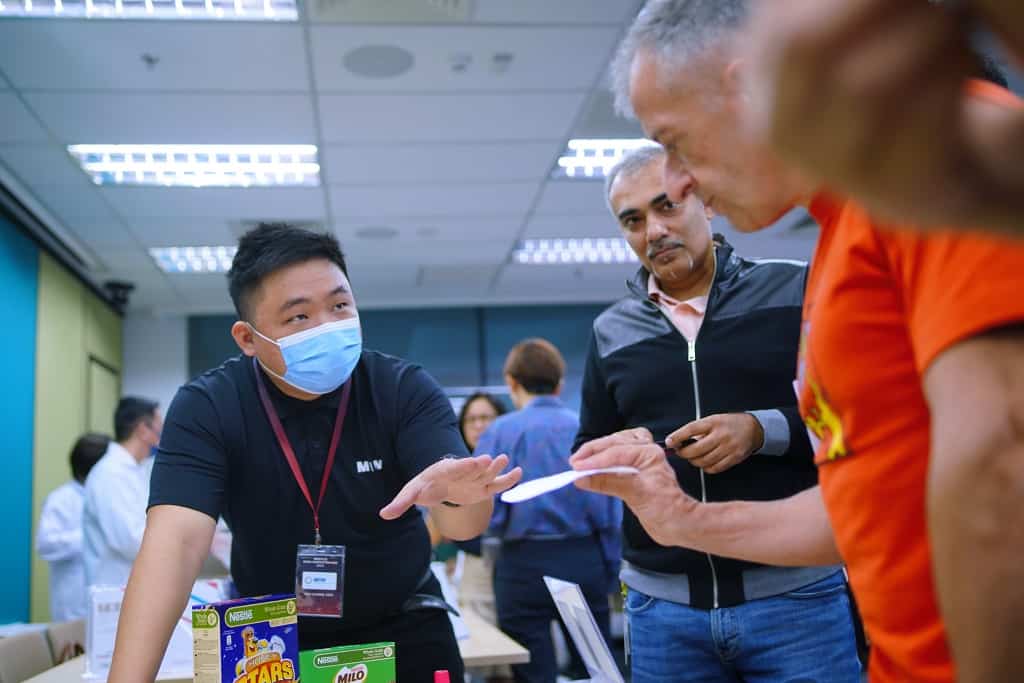
The company’s long-term goals are to remain financially sustainable in the beachhead market, followed by an expansion plan to the rest of ASEAN market which is broader than Malaysia, such as Indonesia and Thailand. The label packaging industry sales veteran will engage actively with the brand owners (such as Nestle and DHL) and label packaging stakeholders who already have footprint in the mentioned countries in ASEAN.
SI: How do you plan to leverage emerging technologies or innovation to further enhance your ESG offerings?
JO: The startup is working on fundraising to scale up its technology to a pilot scale, with a focus on label packaging stakeholders. They are also looking for collaboration opportunities with other paper product manufacturers such as tissues, food packaging, and speciality papers. MIW also works on further improving the paper liner treatment itself, e.g., by reclaiming the silicone used for the anti-adhesive coating on the paper liners. MIW operates mainly in the ASEAN region, with Malaysia as the beachhead market. MIW initiative is supported by industry experts, machinery suppliers and renowned Malaysian public universities. With their innovative solution for residual paper liner reducing the landfill and Green House Gases problems, MIW contributes to SDG 9 (Industry, Innovation and Infrastructure), SDG 12 (Responsible Production and Consumption), and SDG 13 (Climate Action).
SI: Lastly, what message would you like to convey to potential investors who are considering supporting your startup’s expansion?
JO: ‘Make A Positive Impact While Backing A Sustainable Mission’
MIW solution ♻️ repurposes paper liner waste into Recovered Cellulose Pulp, creating a valuable resource for paper product manufacturers while diverting waste from landfills.
Investing in MIW means supporting a sustainable business that benefits not only the label packaging stakeholders but also the local communities and the environment for future generations.
SIBS, one of the world’s leading in modular construction technology, is proud to announce that it has successfully secured a multi-billion-ringgit contract to deliver 2174 apartments to Neom, one of the largest urbanization projects located in northwest Saudi Arabia. The project will be delivered in the form of turn-key buildings from a finalized bottom slab upwards. The entire project will be delivered and commissioned by Q3 2024. This significant achievement marks a breakthrough for the company’s continued growth and success in the industry.
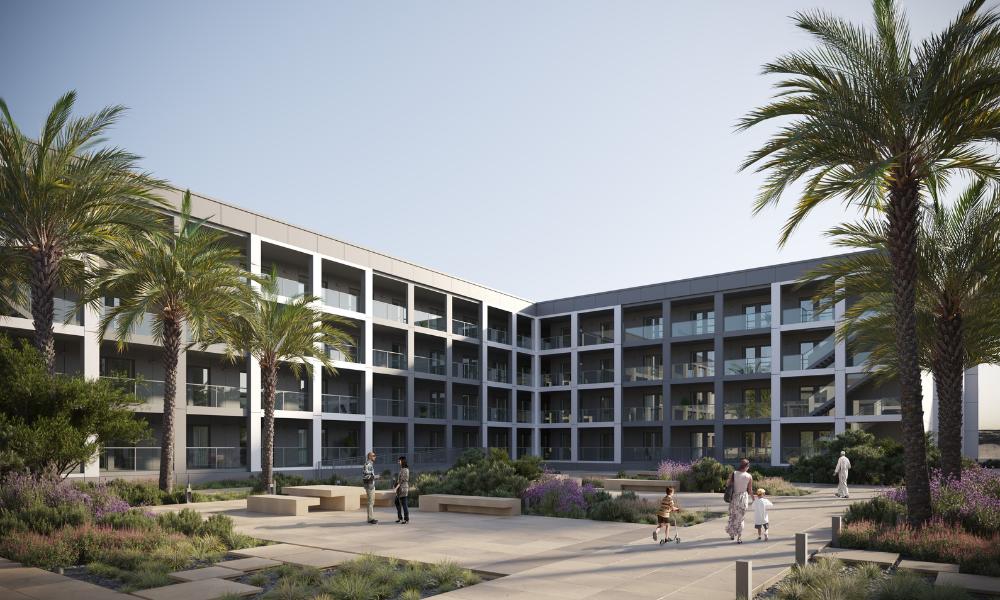
The project, known as NEOM will be a ground-breaking development in the heart of NEOM city intended for those working on the planning, engineering, and construction of the project. With 2174 apartments distributed among 35 buildings, the development offers luxurious living spaces and an array of amenities tailored to meet the needs of modern urban dwellers.
The buildings consist of one- and two-bedroom apartments fully fitted with quality designed built in furniture’s, exclusive bathrooms, and balconies for each apartment. Sustainability has always been at the very sole of our design philosophy and together with our efficient building systems, we are able to achieve a high level of energy efficiency. Our flexible yet robust building design makes relocation of these buildings to other regions of Neom a breeze as this mega project progresses.
Erik Thomaeus, CEO of SIBS Group
“We are thrilled to have secured this monumental project. This development represents a major milestone for our company and reflects our commitment to creating exceptional living experiences for tenants. The fact that SIBS has been selected as a supplier to NEOM is a clear confirmation that we have the competence and delivery strength that few in the world can match. We look forward to contributing to the development of NEOM as an international hub for, among other things, innovation, business, and sustainable development. We are excited to contribute to the growth and development of NEOM while providing a vibrant and sustainable community.” says Erik Thomaeus, CEO of SIBS Group.
When SIBS started in 2016, the team had only one mission in mind and that was to revolutionize how homes are built. Its substantial scalable capacity and ability to adapt to different requirements from all regions of the world is further validated with the securing of the NEOM project.
Last year, the finest modular construction company invested in its new plant in mainland Penang, Malaysia. It has ever since boosted its productivity four folds, making SIBS one of the largest producers of apartment modules in the world. The state-of-the-art factory which spans across a 550,000 sq ft footprint on a 28-acre site is also almost entirely operated through solar energy to reduce its carbon footprint. The new plant is designed to meet the world’s growing needs for a more intelligent, efficient, and effective construction method.
CEO of SIBS Malaysia, SP Ong, said “Securing this project enables our company to strengthen its position as an industry leader in modular construction. We have a product that is unique and in high demand and I am confident that with a team of professionals whom we have assembled we will continue to improve to strengthen our position in this industry as the leader in construction tech. Everything in our factory is custom designed and built, from its production system to the machines used for production – something that no other competitor has. Not forgetting that we are one of the first to be able to complete 90% of an apartment building off-site leaving only 10% on-site work. We are also proud to be a company that prioritizes on using local suppliers and local professional talents. To further increase efficiency, we have also strategically placed our main suppliers within close proximities of our plant to avoid disruptions to our production. Doing so reduces our dependence on distant sources which are susceptible to disruptions and volatility. This mitigates risks and enhances our ability to respond quickly to demands and changing circumstances.
When we prioritize our borders, we directly boost our domestic economy. The ripple effects of this decision are profound, touching every corner of our society. Aside from delivering the best products, we have a serious commitment to contribute to local economic growth, job creations, and community development as an organization.” He concluded.
The success of SIBS in securing this multi-billion-ringgit apartment building project can be attributed to its experienced team of professionals who bring the substance of expertise and a passion for innovation to every project they undertake. Their dedication and commitment to excellence have earned the reputation for reliability in delivering high-quality products and ultimately positioning the company as the preferred choice in the construction technology industry.
SIBS is grateful for the support and trust of its partners, investors, suppliers, and the local
community. The company remains committed to delivering this ambitious project on time, within budget, and to the highest quality standards.
NEOM is an accelerator of human progress and a vision of what a New Future might look like. It is a region in northwest Saudi Arabia on the Red Sea being built from the ground up as a living laboratory – a place where entrepreneurship will chart the course for this New Future. It will be a destination and a home for people who dream big and want to be part of building a new model for exceptional livability, creating thriving businesses and reinventing environmental conservation.
NEOM will include hyperconnected, cognitive cities, ports and enterprise zones, research centers, sports and entertainment venues and tourist destinations. As a hub for innovation, entrepreneurs, business leaders and companies will come to research, incubate and commercialize new technologies and enterprises in groundbreaking ways. Residents of NEOM will embody an international ethos and embrace a culture of exploration, risk-taking and diversity.
SIBS Group was founded in 2016 and is today one of the world’s leading modular home manufacturers. With a scalable capacity of around 6,000 homes per year, we deliver sustainable, high-quality homes adapted to local conditions. SIBS has the entire integrated value chain for industrial construction within the group – from design and configuration in its building system, industrial production in its own factories and on-site assembly/finalization. With the help of digitalization and technology, we set a new standard in the construction industry.