Wednesday, 5 August 2026 Stay informed. No noise.

Unfulfilled Wishes, Learn How To Protect Yourself

The following story is based on an actual series of events with some names and circumstances fictionalised and any similarity to the name, character or history of any person is entirely coincidental and unintentional. Hope we are able to learn a thing or two about unfulfilled wishes, and how to protect ourselves.

She must find it, and fast! It’s a race against time for Jane as for the umpteenth time she is rummaging through her best friend, Esther’s apartment for the latter’s 20-year-old Will.

It was surreal like playing out a heart-pounding scene from a movie – a now or never or the protagonist would lose out to greedy adversaries.
The adversaries in this instance are the estranged siblings of Esther who are starting court proceedings to claim her estate after she died intestate (without a Will).

“They can’t. They can’t…” Jane mumbled as she frantically searched for that elusive Will. “It’s not what Esther would want…”

Tears rolled down her cheek as she slumped among the mountain of documents, feeling helpless. This was the last ditch effort in keeping alive Esther’s wish for continued acts of compassion for the unfortunate and underprivileged even after her death.

Read: The Importance Of Estate Planning, Avoid Last Rites Drama

Business Corporate Protection Safety Security Concept

Prior to this and in desperation, she had even gone to banks where she knew Esther had dealings with to enquire whether Esther had safe deposit box accounts. In hope against hope, she had prayed that by explaining the special circumstances, she would get help to check whether Esther’s Will was there. All she got were sympathetic ears and the same standard response that without a Grant of Representation from the courts, the banks could not allow the opening of the safe deposit boxes.

“I have failed you Esther,” she sobbed. For the longest time that Jane had known Esther, she stood tall for her big heart and generosity, something that was nurtured from young by her late parents. They had inculcated in her that being able to give unconditionally to help the less fortunate without any expectation of anything in return is one of the highest blessings.

She learned from the example of her parents unlike her siblings. She saw how both her parents continued to give to charitable causes after death through how the instructions they set in their Wills. She emulated them when she later prepared her own Will and apportioned her assets, including those that she inherited from her parents, to certain selected charities.

But it was a recent benevolent wish to do much more for charities with her accumulated wealth that triggered a series of events that eventually led to the non-fulfilment of her lifelong passion and her wealth landing in wrong hands.

Read: Decluttering Tips For Safekeeping Of Wills

Closeup Lawyer Executive Signing Contract

She had wanted to re-write her Will that was drafted and finalised 20 years back to include more charitable organisations she had come into contact with through her volunteer work. She also wanted to seek advice on how she could give to charities over extended period of time after her death, just like the recent publicised case of a woman who, year after year after her death, still donated to orphanages through clever estate planning.

However, as she started the process of consultation with a professional estate planner, she was dealt a cruel blow. A diagnosis of Stage 4 cancer. It shocked her. That sudden knowledge took a toll on her. Her health deteriorated and just too soon as the cancer spread, she passed on.

Being a benefactor to many charities in her life, many representatives of charitable organisations turned up at her funeral to pay their last respects and shared eulogies of Esther’s philanthropy and selfless service.

Her long-estranged siblings did not hide their ill will for her being the sole inheritor of their parents’ estate and their renewed intention to claim back what they felt was rightfully theirs.

Her brother rudely proclaimed after the eulogy by the last speaker that charitable organisations can dream on in thinking they can get any money from Esther’s estate as it belonged to the siblings. They sneered at Jane who told them that Esther had intended to leave all her material wealth to charitable organisations.

Jane could not stomach that and defiantly told the siblings that under the circumstances, Esther’s Will 20 years ago was still valid.

With that, Jane had thrown down the gauntlet. She had to find the Will before the siblings secure a Grant of Representation for Esther’s estate to be distributed in accordance with the law for intestacy.

In the end, without the actual Will to show, Jane lost in her bid for get Esther’s unfulfilled wishes to materialise.

It is not uncommon for many to consider it task accomplished having written a Will. Without safe keeping for easy retrieval upon death, all efforts in putting down one’s wishes in the Will comes to nothing.

It isn’t over until the important Last Will and Testament is in safe custody! Unfulfilled wishes like that of Esther’s just can’t be undone.

Read: Hard Facts About The Executor Of A Will In Malaysia

About Rockwills International Group

Wisma Rockwills

Rockwills International Group, now in its 27th year, pioneered professional will writing in 1995 and has since evolved into the leading estate planning specialist in the country. It is today the largest provider of solutions and support services in the areas of trusts, succession, management and distribution of wealth. It has shareholders’ funds exceeding RM50 million. It has done over 280,000 wills and 15,000 trusts and hold more than RM25 billion in assets under trust.
The Islamic Sustainability Approach In ESG

Credited with revolutionising the American transportation industry in the 20th century, Henry Ford once remarked that: “A business must be run at a profit, else it will die. But when anyone attempts to run a business solely for profit and thinks not at all about a service to the community, then also the business must die, for it no longer has a reason for existence”.

Nearly a hundred years since, these words of wisdom remain true. Perhaps, even more so now than ever, with Islamic sustainability taking center stage. Indeed, we have witnessed time and again, episodes of excessiveness, and the sole and unchecked pursuit of profits that have led to global financial crises.

ESG is a spirit beyond profit, and is therefore a fitting reminder of the role of ESG in helping build a more resilient and sustainable future.

Islamic Principles And The UN SDGs

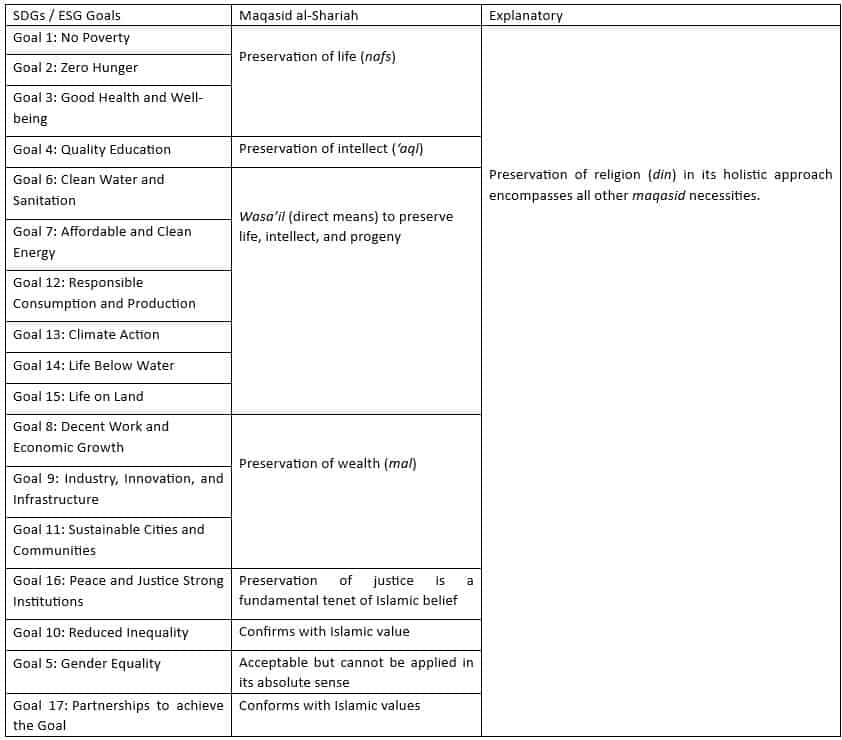
The Islamic transaction (muamalat) principle aspires to build a shared sustainable future for employees, consumers, shareholders, and the community, in accordance with the requirements of Shariah, observing the guidance from the United Nations Agenda 2030 for Sustainable Development. The Sustainable Development Goals (SDGs) aim to bring the world’s countries together in order to eradicate all forms of poverty, reduce inequalities, promote human rights, combat climate change and promote good governance within organisations.

Overall, the correlation of the 17 SDGs and maqasid-al-Shariah (objectives of Shariah) aim to push the globe towards a more sustainable and resilient path, as well as building a better community and for society’s economic, social, and environmental consequences.

Sdg Esg Goals

Maqasid-Al-Shariah

The call for maqasid-al-Shariah not only complies with Shariah requirements but also achieves the intended outcomes of Shariah. These focuses on the enhancement of well-being of people through the preservation of wealth (mal), faith (din), lives (nafs), lineage (nasl) and intellect (‘aql).

The word ‘maqasid’ means objectives, aspirations or aims, while Shariah is ‘the Divine law as revealed unto the Prophet Muhammad (Peace be upon him)’. Therefore, the term ‘maqasid-al-Shariah’ means the objectives and goals underlying the Law of Islam.

Islamic finance is developed to emphasise the attainment of positive value creation and prevention of negative impact. In a broader sense, maqasid-al-Shariah covers the accomplishment of well-being and the avoidance of harm: “Do good, do no evil – Amal Ma’ruf Nahi Munkar.”

Islamic Sustainability In ESG

Sustainable Living Environmentalist Hand Holding Green Earth
Image by rawpixel.com on Freepik

An Islamic sustainability economic definition is that the current economic needs must be within the scope of not causing harm to future generations. In Islam, the rights of a person and the organisation are clearly defined by religion.

It is further strengthened by the application of the code of ethics in business dealing based on Islamic values. For that, ethical investments and social responsibilities of individuals also apply to business, which is the catalyst in promoting economic sustainability.

Islam does not prevent any form of trade and business, as the religion recognises that work and business are part of the worship of God. An individual or a company is entitled to a return from capital commitments and efforts in the context of an economic venture. The only concern is the context of the application of ESG elements to the profit-making process, as long as it is subject to the scope of ESG compliance.

In a business context, any business that claims to comply with the Shariah jurisdiction must be clear about their role in society in providing goods and services that serve public interest in addition to profit. The permissible range of choices of Islamic investment is wide, as long as it involves investment in companies and businesses that undertake the deployment of funding on Shariah-compliant businesses and operations.

“Developing a comprehensive and robust ESG response is becoming increasingly crucial to enhance business resilience and viewed as an important catalyst for long-term value creation,” said Tan Sri Abdul Wahid Omar, Chairman of Bursa Malaysia.

Businesses that aim to be relevant in the long-run sees the investment of adhering with ESG requirements paying off, regardless of conglomerate
corporations or SMEs. Conglomerates will benefit from positive reputation building and branding apart from complying with regulatory requirements, while SMEs will be benefiting through access to better financing capacity from financial institutions who adopt ESG through respective Value-Based Intermediation (VBI) initiatives. Non-monetary aspects include wider market access to business opportunities.

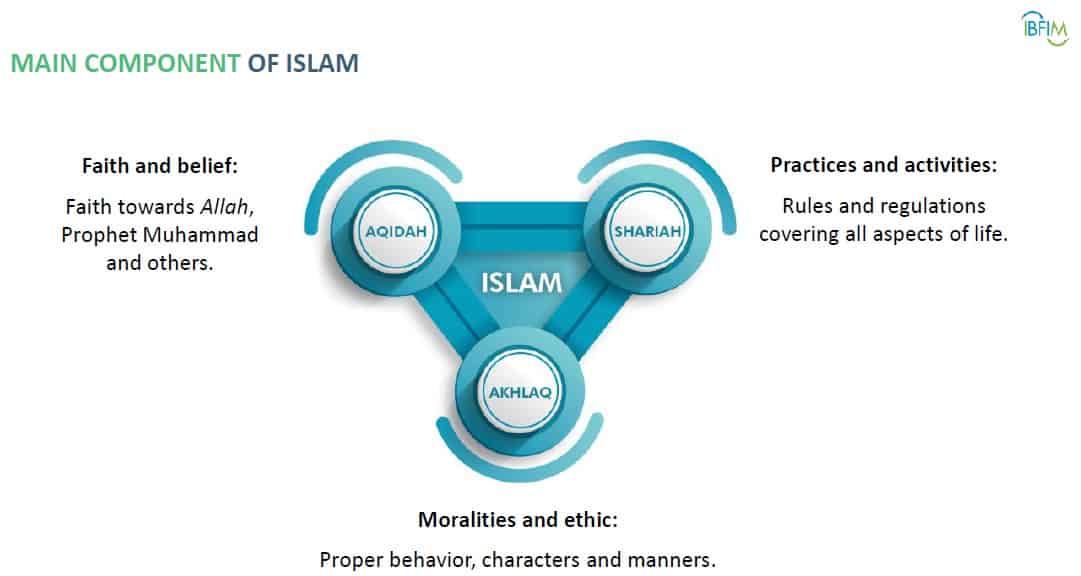
Main Component Of Islam
Main component of Islam

Source: Certified Professional Shariah Auditor (CPSA) reference book

Islamic Sustainability: The Way Forward

ESG and Islamic sustainability is going to be a megatrend and the E(nvironmental), S(ocial), and G(overnance) concepts are key market and business drivers today and in the future. The holistic adoption of Islamic principles in Shariah-compliant businesses is in line with the spirit of ESG without affecting the whole business practice.

Fulfilling the ESG agenda will ensure the prosperity of businesses by focusing on profit, people and the planet; while ESG criteria will be used to guide businesses based on corporate policies and to encourage businesses to act responsibly within the ESG framework. Businesses have no other choice but to gear up their readiness to embrace the ESG agenda within their respective organisations.

With Islamic principles induced, it will smoothen the whole agenda of Islamic sustainability.

About the Author

Mohamad Faisal2

Haji Mohamad Faisal is a Managing Partner of Faisal Malik & Co (CA), a member of Islamic Finance Committee (IFC) of Malaysian Institute of Accountants (MIA), a Director of Islamic Shariah Audit Malaysia (ISAM). He is also a Certified Professional Syariah Audit Malaysia (CPSA). He can be contacted at admin@faisalmalikco.com.

Scam Awareness: Be Informed To Protect Yourself

Malaysians still have a low level of scam awareness, particularly when it comes to knowledge of investment and capital market products. This can be seen from the significant rise in online scams over the last two years – almost 72,000 scams and RM5.2 billion in losses was reported from 2020 to May 2022, according to the the Royal Malaysia Police’s (Polis Diraja Malaysia; PDRM) commercial crimes investigation department (CCID).

The pandemic, rise of social media and rapid technological developments have all led to more retail participation in the capital market. The popularity of the Internet and social media has also provided fertile ground for fraud and scam activities by entities that are illegal or do not comply with the laws. There is also a low level of digital financial literacy in the country.

A survey commission by Bank Negara Malaysia in 2021 revealed that one in three individuals stated they would be willing to share their bank account passwords or PINs with close friends. This increases the risk of online fraud and being used knowingly or unknowingly as ‘mule accounts’ to perpetrate fraud.

Almost two-thirds of individuals surveyed do not pay attention to the security features of a website before they perform online transactions. As a result, individuals are far more likely to be deceived into providing their banking credentials through a fake website that enables scammers to use their information to commit fraud.

Thus financial education is critical to the safe and effective use of digital financial services. Of the 72,000 scams reported over the last two years, 68% (or 48,850) were related to online scams, while loan and investment scams accounted for almost 12,000 of the overall scam cases.

Read: RM5.2 Billion Lost To Scams In Malaysia Over Two Years

In the first nine months this year, the Securities Commission of Malaysia (SC) received 1,800 complaints and enquiries related to investment scams and unlicensed activities. Last year, 275 names were added to the SC’s Investor Alert List, 143 websites were blocked and 35 social media pages were geo-restricted.

So far, this year, 194 new names were added to the Alert List, with 143 websites and 26 Facebook pages blocked. The significant increase in scams and retail investor losses reported highlights the continued investor vulnerability and very low scam awareness.

As long as our scam awareness is low, scammers will always find a way to trick us.

Dato  Seri Dr. Awang Adek Hussin Executive Chairman Securities Commission Malaysia
Dato’ Seri Dr. Awang Adek Hussin, Executive Chairman, Securities Commission Malaysia

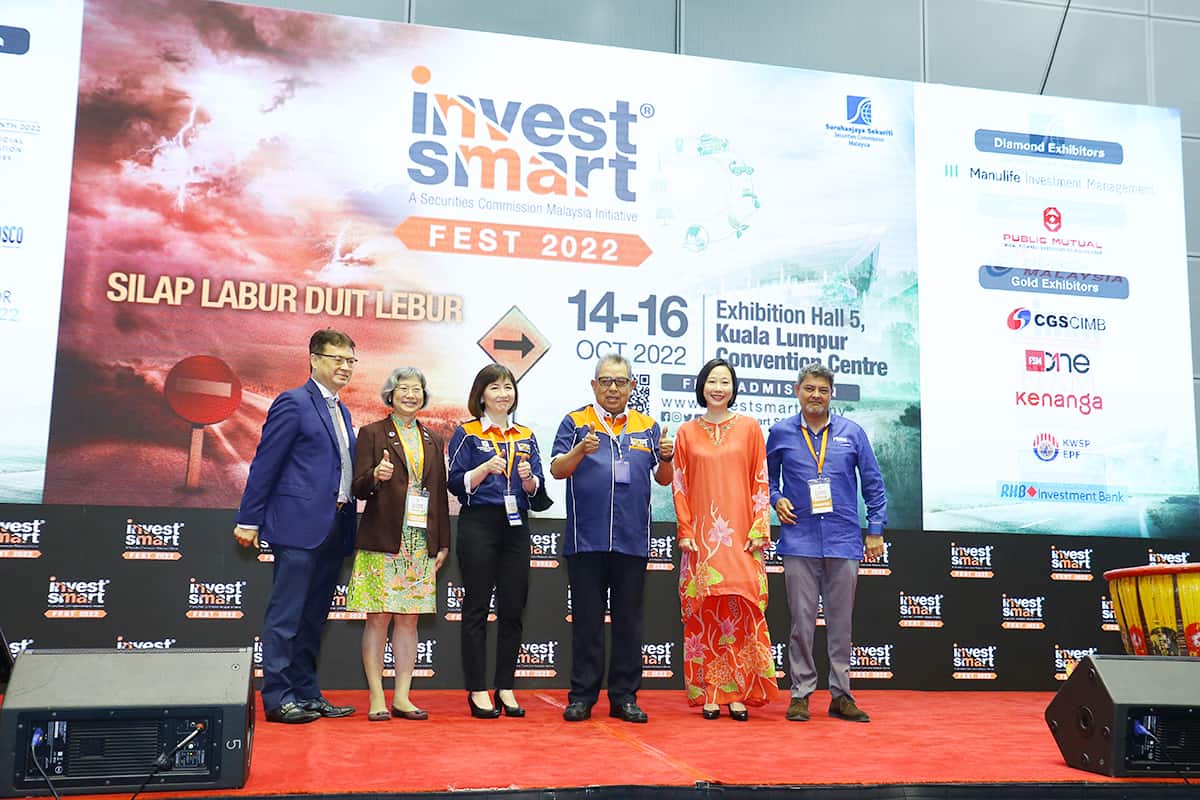
“Most scams are spread through messaging apps and platforms like WhatsApp and Facebook. And we have recently noticed that they have started using Telegram as well. Many of these scams also claimed to be ‘syariah-compliant’ informed SC’s Chairman Dato’ Seri Dr. Awang during the SC’s flagship investor education fair InvestSmart® Fest (ISF 2022) held recently in conjunction with Financial Literacy Month 2022 and World Investor
Week 2022.

“Therefore, the best course of action investors can take to avoid falling prey to investment scams and unlicensed activities is to equip themselves with better financial knowledge,” he said in advising investors to safeguard themselves from the porous nature of the Internet.

Surveys undertaken by the SC also found that Malaysian investors have unrealistic expectations about investment returns due to the misconception about risk and returns. Low financial literacy and low scam awareness makes investors vulnerable to unlicensed activities and scams.

Scam Awareness: Unlicensed Activities And Scams

Scammers are finding increasingly sophisticated ways to target investors, who range from the vulnerable at one end to those who invest primarily by the desire – or hope – to gain lots of money irrespective of the risks involved. Some would call this the ‘gambling instinct’.

Under Malaysian law, any company or individual who wants to provide capital market products and services to Malaysian investors, such as unit trusts, stocks, digital investments, bonds, must be licensed or registered with the SC. This also applies to those who are or claim to be licensed overseas. As such, investors are putting themselves at risk when dealing with unlicensed or unregistered parties as the SC’s regulatory reach over these illegal entities is limited.

“This is important because entities licensed or registered with the SC, must fulfil stringent regulatory requirements that are designed to protect investors. Investors who choose to trade on unlicensed platforms risk not being protected in the event of any dispute arising,” said the SC Chairman.

In short, the SC cannot protect you if you choose to invest with unlicensed people. The SC Chairman also disclosed that there has been an increased use of celebrities or influencers on social media to endorse or promote investment advice and investment offerings.

The public should also be wary of self-proclaimed investment gurus who offer questionable advice or use social media to spread false or misleading information, he said.

Read: Beware of Investment Scams and Financial Gurus

Investor Empowerment

ISF2022 Photo 1

While pushing for greater adoption of digital innovation in the capital market to better serve the needs of investors, safeguarding investors’ trust and confidence is also important. Indeed, these digital services have widened access to the capital market for underserved investors at a lower cost. The availability of these platforms has made it possible to invest little amounts of money or spare change, some from as low as RM5.
As the Malay proverb goes: “Sikit sikit, lama lama jadi bukit”.

However, investors need to exercise vigilance against potential risk. “An informed investor is a protected investor. We need to cultivate a culture of enthusiastic, yet informed investor participation. One where the public is educated on the numerous investment options available, as well as their rights and responsibilities as investors.

Armed with the right knowledge, investors are better positioned to safeguard their interests, and they can also become the SC’s ‘eyes and ears’ in detecting potential fraud or misconduct,” said Dato’ Seri Dr. Awang Adek Hussin, Executive Chairman, Securities Commission Malaysia.

When it comes to investing, always remember this

  • Never deposit your money into someone else’s bank account; and
  • Deal only with licensed persons.

Armed with the right tools and knowledge, investors will be able to capitalise on opportunities offered by our capital market. But first, let’s begin by raising the scam awareness campaign.

Read: Combating The Rise Of Digital Fraud In Malaysia

Telco Infrastructure And ESG, Things That You Should Know

When we talk about Environmental, Social, and Governance (ESG), it has an impact on just about any industry. Have you ever wondered how does a telecommunications company implement ESG in their organisation?

Smart Investor talks to Azzahraa Annuar, FCA, Director of Governance Risk & Compliance, edotco Group. She is also one of the speakers at the prestigious ESG Evolve 2022 conference that Kexxel Group is organizing in KL on 6-8 December. We will talk more about the conference at the end. For now, let’s find out more about how edotco is pioneering ESG in terms of telco infrastructure in Malaysia.

edotco Group is the first and leading regional integrated telecommunications infrastructure services company in Asia. They specialise in end-to-end solutions in the tower services sector including co-locations, build-to-suit, energy, transmission and operations and maintenance (O&M).

Azzahraa Annuar FCA Director Of Governance Risk Compliance Edotco Group
Azzahraa Annuar, FCA, Director of Governance Risk & Compliance, edotco Group

Smart Investor: What does ESG mean to you? Why is important to your business and how does it impact your industry?

Azzahraa Annuar: It is not about what ESG means to me, but it is about what ESG means to us.

At edotco, ESG is central to how we do our business from planning to execution. To be a sustainable business, we believe that a strong governance is key to ensure our business is run in the most equitable manner.

We also believe that internet connectivity should be viewed as part of human right in today’s world. As such, we are passionate when it comes to taking care of the communities around our towers and even more passionate when it comes to our greatest asset, that is our people. We continue to innovate as investing in innovation is they key to net zero emissions.

Each component of ESG i.e. the E, the S and the G are equally important and must be addressed together as 1, and not separately.

SI: What are the key factors for successful ESG deployment?

AA: Culture culture culture.

At edotco, we believe in the mind, the heart and the hands. This means, we inculcate the culture of a sustainable world for the future, for the next generation in the minds of our people.

We hire passionate individuals who fit within edotco’s culture and core values to ensure our people have the heart of edotco.

And finally, when we build our towers, our products, we continue to innovate for best possible output.

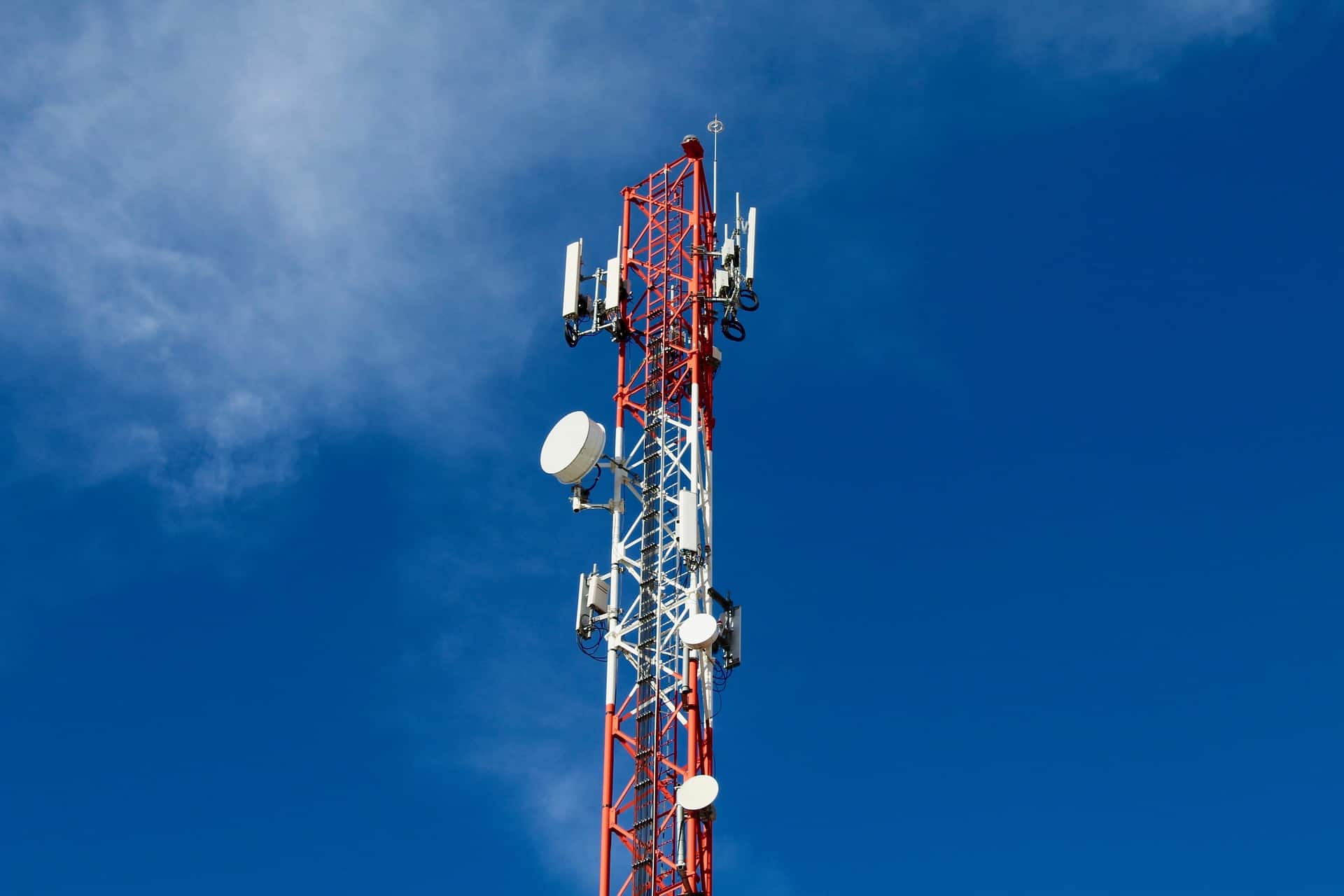
Network G014bc3bf1 1920
Image by torstensimon from Pixabay

SI: What are the challenges that you faced?

AA: In summary, we have two key challenges:

Firstly, macroeconomic challenges mean cost pressure continue to be central. We need to ensure we deliver a strong return for our shareholders amidst such challenging environment. Our supply chain is struggling, the communities around our towers are struggling. This impacts our operation tremendously.

Nevertheless, our engineers continue to innovate, and we manage to come up with LCS i.e., low cost structure in country like Bangladesh.

Secondly, whilst we are certain with our Scope 1 and Scope 2, we are still struggling with Scope 3. This will be an area of focus for edotco in 2023 to ensure our carbon emission calculations is based on international standard and continue to be validated independently. We will also be reviewing our supply chain as part of this initiative.

SI: What are the key trends you see gaining traction for ESG?  What are the areas of growth amongst the pillars to look at in 2023?

Azzahraa Annuar: It depends on the side of the world you are in.

  • In developed market, focus is more on governance
  • In developing market, focus is more on environment
  • And in underdeveloped market, focus is more on social

For edotco, we have done independent review to see what the areas are we need to focus on including materiality assessment. We will continue to focus on strengthening every pillar because we believe that all 3 are equally important.

“Our mind, our heart and our hands shape the sustainable world which we all dreamed of for our next generation”.

Azzahraa Annuar, FCA, Director of Governance Risk & Compliance, edotco Group

ESG EVOLVE 2022: Driving Catalytic Change For Business Sustainability

ESG Evolve 2022 Poster

edotco Group will share more insights at the ESG Evolve 2022 Driving Catalytic Change for Business Sustainability organized by Kexxel Group which will be held on 6-8 December in EQ Kuala Lumpur. Come and join us, see you there!

8 In 10 Malaysians Are Alarmed & Concerned About Climate Change In Malaysia

Right now, world leaders, climate scientists, and policymakers from across the globe are in Sharm El Sheikh, Egypt, for the Conference of Parties (COP 27). This is the largest climate change conference in the world, and it coincides with a Monash University Malaysia survey led by Dr Azliyana Azhari from the Monash Climate Change Communication Research Hub (MCCCRH) that has shown that 8 in 10 Malaysians are either alarmed or concerned about climate change.

This survey is the first of its kind in Malaysia and saw over 1000 respondents. According to Dr Azhari the “survey aims to gauge Malaysia’s public perception and understanding on climate change and climate change impacts, alongside understanding the Malaysian audience’s behavioural responses towards climate change issues.”

Dr. Azliyana Azhari
Dr Azliyana Azhari, Monash Climate Change Communication Research Hub (MCCCRH)

Here’s what the takeaway messages are about what the Malaysian public knows about climate change and climate action. According to the survey, 97% of Malaysians are aware of climate change and understand it is happening. 82% know that human activities cause climate change. 32% believe climate change is presently causing harm to our daily lives, and 35% believe that climate change will cause harm to the Malaysian population within the next decade.

The survey also noted individual actions and the willingness to change.

  • 65% bring their own shopping bags when buying groceries.
  • 63% have switched to environmentally friendly products.
  • 79% turn off electrical appliances and lights when not in use to reduce home energy.
  • The most common waste management behaviours are recycling (67%) and not openly burning trash (68%).

The behaviours with the most significant proportion of people open to change are taking part in an environmental/climate change campaign (63% would like to or are planning to do this), installing household solar hot water or panels (79% would like to or are planning to do this), and composting kitchen waste (51% would like to or are planning to do this).

With the growing occurrence of extreme weather events resulting from climate change, such as storms, floods, and droughts, at least 60% of Malaysians say that they have been affected directly or indirectly by these events, which leads to affecting their daily lives, health and economic well-being. It is not surprising that Malaysians are getting concerned and alarmed. These findings are stark and timely as the Malaysian delegation meets world leaders at COP 27 to work towards the reduction of Malaysia’s carbon emissions.

About Monash University Malaysia

Established in 1998, Monash University Malaysia is the third-largest campus of Australia’s largest University and the first foreign university campus in Malaysia. Monash University is a premier research-intensive Australian University ranked 44th in the world by the prestigious Times Higher education World University Rankings 2023. A self-accrediting university, the campus offers a distinctly international and culturally rich environment with approximately 9,400 students from 78 different countries.

Monash Climate Change Communication Research Node

The Monash Climate Change Communication Research Hub (MCCCRH) Malaysia Node was established in 2021. It is led by the School of Arts and Social Sciences (SASS) at Monash University Malaysia in collaboration with the Monash Climate Change Communication Research Hub (MCCCRH). It is dedicated to researching climate communications in Southeast Asia. The node brings together expertise in SASS with collaborators in the School of Science in Malaysia campus and the existing team in MCCCRH.

Where To Invest In 2023: Amidst The Recession And General Election

With many uncertainties coming our way such as the recession and general election, there are a lot of jittery investors out there. Throw in volatility, rising inflation, hikes in interest rates, and we have ourselves a storm in the coming year.

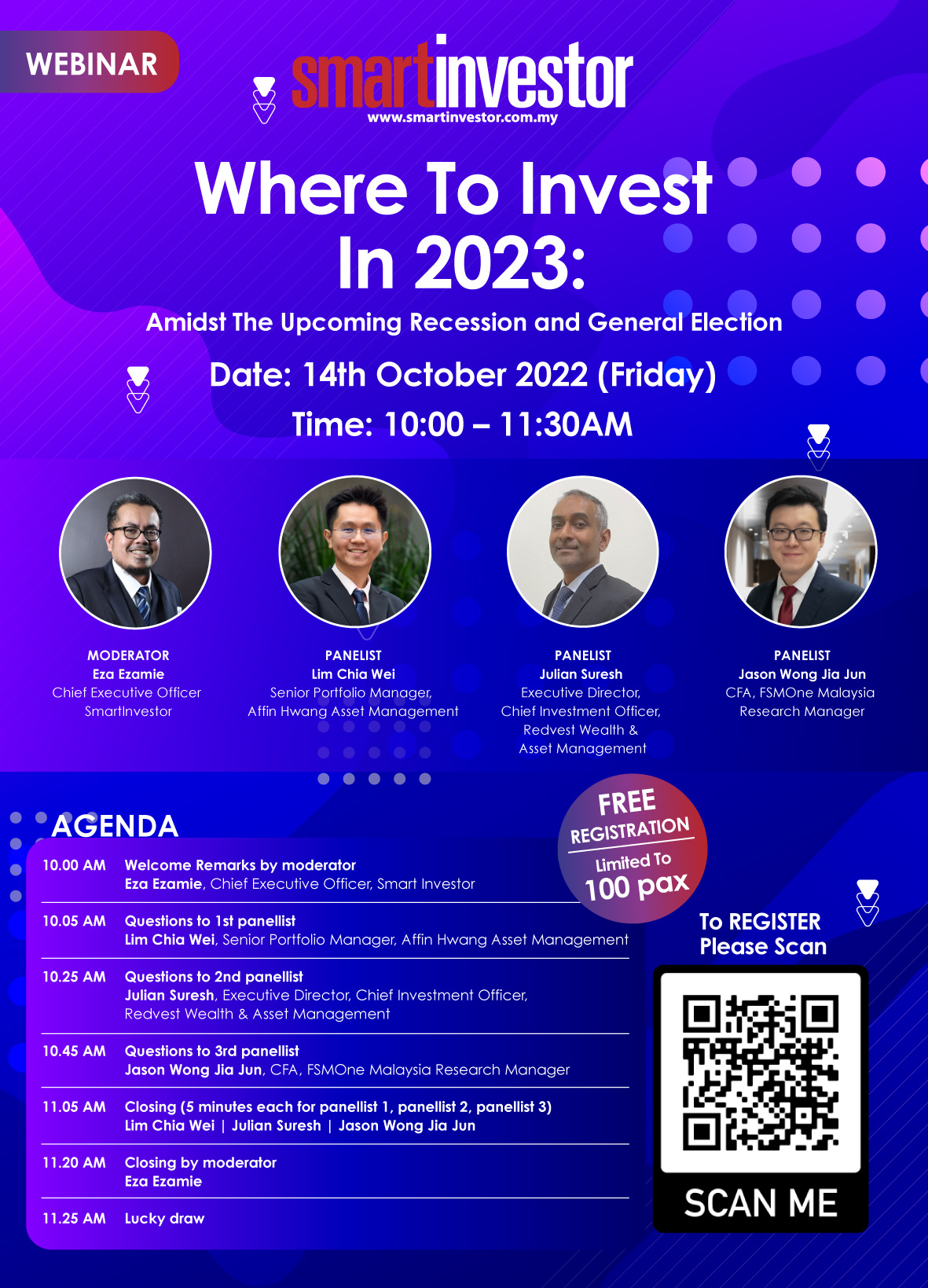
With that, Smart Investor organised and moderated the webinar ‘Where To Invest In 2023’ attracting hundreds of participants where they attended a fruitful session and discussion between three industry experts sharing their thoughts and views.

Webinar 14.10.2022

The panel was made up of three industry experts: Lim Chia Wei, a senior portfolio manager at Affin Hwang Asset Management; Julian Suresh, the executive director and chief investment officer at Redvest Wealth & Asset Management; and Jason Wong Jia Jun, CFA and research manager at FSMOne Malaysia.

Where To Invest In 2023

We started off with the question: “The dreaded R-word is popping up again and haunting investors. Do you think we are headed for a recession and how do you think Asia will weather through the crisis this time? Could we see a repeat of 1997 or something milder?”

Lim Chia Wei Senior Portfolio Manager Affin Hwang Asset Management
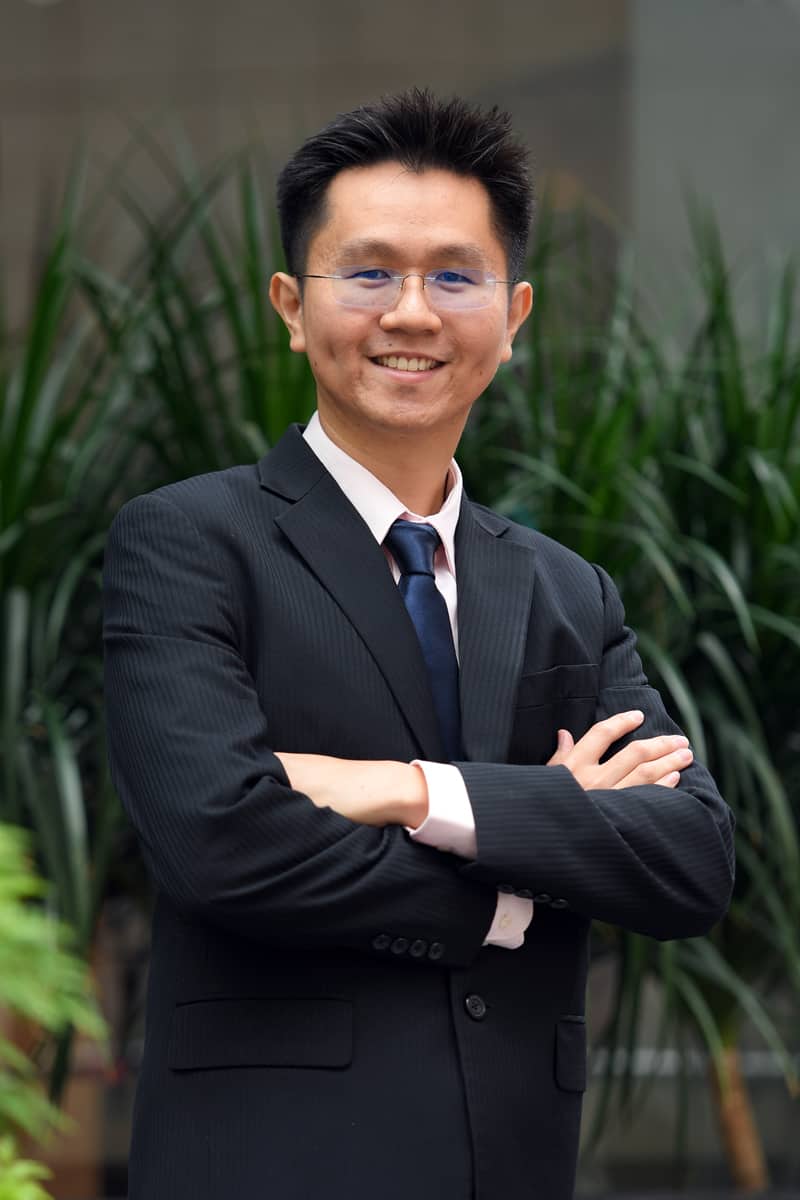
Lim Chia Wei, Senior Portfolio Manager, Affin Hwang Asset Management

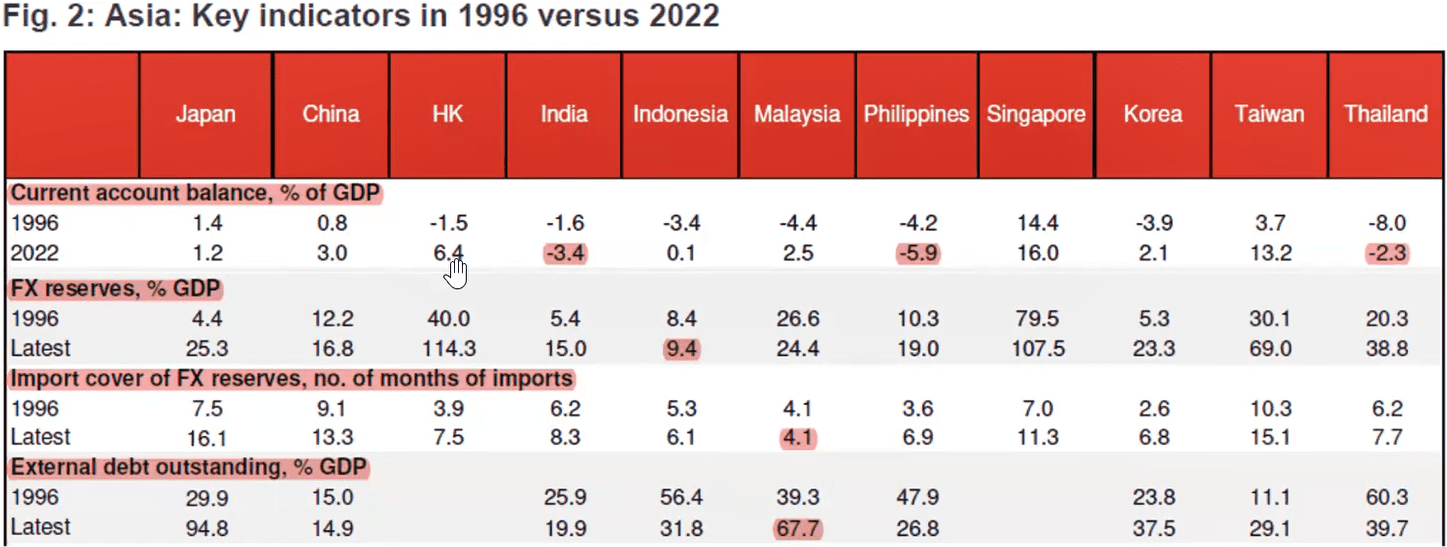
Chia Wei states that we might go into recession in the next six to twelve months down the road, but it would not be as bad as previous recessions. He also shares that most Asian countries are in a much better position in 2022 as compared to 1996, with better current account balances, as a result of a better performing Gross Domestic Product (GDP) in countries such as Singapore, Taiwan, Hong Kong, Malaysia, Korea, and Indonesia. The number of Forex reserves is also highlighted with Hong Kong, Singapore and Thailand showing the way.

Key Indicators In 1996 Vs 2022

Next, we ask the question: “What other key events are you keeping an eye for in 2023? Are there any black swans on the horizon?”

Chia Wei responded: “The stock market has declined a lot and is nearing the bottom, with the bear market already in the US and Asia. The stock market will always bottom out and rebound before the end of a recession.”

To spot the end of a recession, he advises us to look out for the potential easing of inflation and bond yields to go down from a very high level. We should also watch out for a weaker US Dollar (USD), that will see Asian stock markets recovering.

He also cautions us to be aware of the potential escalation of the Russia-Ukraine conflict or the potential of an embargo on oil exports which could cause a spike in oil prices. This will in turn cause the bond yield to rise and with the strengthening of USD, this will have a negative effect on most investment assets.

With such a backdrop of impending uncertainties, one must be asking what can we do next? How do you position your portfolios? Specifically, we ask: “What are some of your sector preferences and which ones do you think would be vulnerable in this environment?”

“We are currently underweight on certain sectors such as banking, semiconductors, and commodities; these industries tend to suffer more during a recession. We are overweight on defensive sectors, such as consumer and health care,” answered Chia Wei.

When the recession bottoms out in 2023, he suggests revisiting and taking a closer look at the aforementioned industries (banking, semiconductors, commodities). But he also warns that we might hit the bottom only in 2024, if things don’t do too well.

Chia Wei also shares a recent positive indicator being the Consumer Price Index (CPI) measuring the change in the price of goods and services from the perspective of the consumer. It is key to measure changes in purchasing trends and inflation. Even though the CPI is bullish, inflation is expected to remain high in the United States (US).

Malaysia is also expected to further hike up interest rates, but on a more gradual basis. This would give the Malaysian economy more time to digest, especially with higher monthly instalments such as housing loans that will increase gradually. But the slower hike in interest rates as compared to the US with its aggressive hikes, will make the USD stronger against the Malaysian Ringgit.

Read: Investment Risk Management With 6 Simple Ways

Which brings us to the question about the USD. “What is going on with the strong USD? What causes it to go up?”, we ask our next panellist Julian
Suresh to explain further.

Julian Suresh Executive Director Chief Investment Officer Redvest
Julian Suresh, Executive Director and Chief Investment Officer, Redvest Wealth & Asset Management

According to Suresh, there are a lot of factors causing the USD to rise against most major currencies around the world. Some of the factors include
the Russia-Ukraine conflict, high CPI numbers in the US leading to high inflation, and global growth concerns or the looming recession.

Factors Affecting Currency Movements

The USD is moving within expectation, and with the Federal Reserve expected to hike up interest rates, we shall see the USD continue to strengthen. And if each rise in interest rates is higher than expected, that would see the USD strengthen even further.

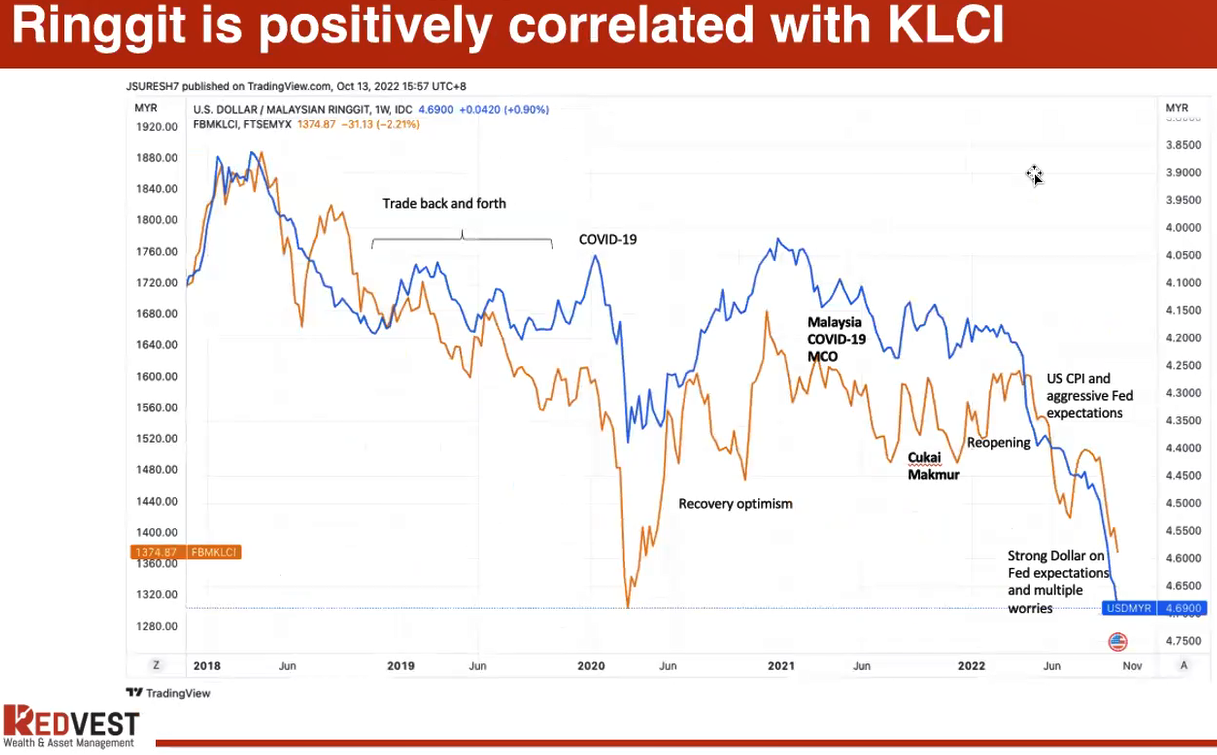
With the Ringgit also being positively correlated with KLCI, the bear market hitting our local stock market has also contributed to the poor Ringgit
performance.

Ringgit Is Positively Correlated With Klci

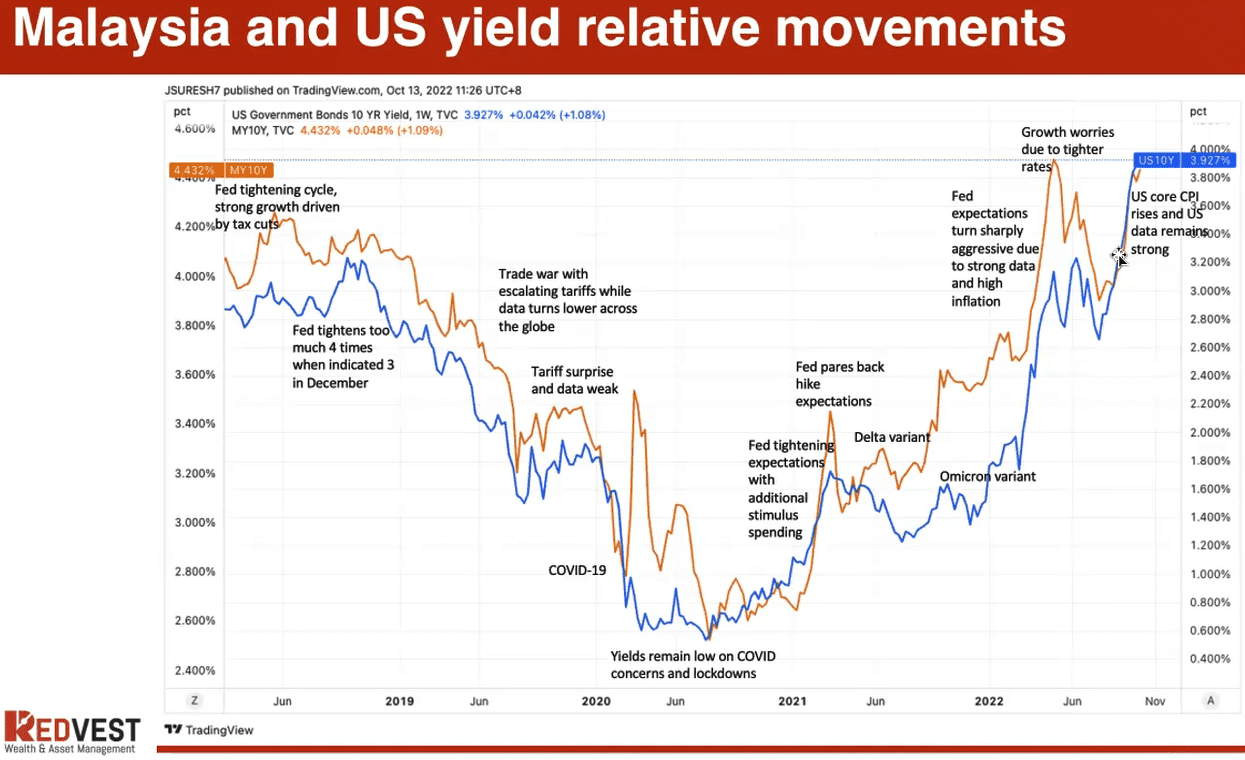
But all is not gloom though, as the bond market is a good alternative to invest. With Malaysia and US bond yields moving closely together, it seems that it will only get higher in the near future. Perhaps everyone is seeking shelter from the current bear market that is hitting the world’s stock market.

Malaysia And Us Yield Relative Movements 1

But if interest rate hikes are getting more aggressive, it will cause the bond yields to fall. At this point we can look to our local stock market, which has a lot of upsides and liquidity.

Answering a question posed by one of the participants on where to invest in 2023 following the movement of the USD, Suresh answered, “We should first look at the expected US data, whether it will rise or fall. If the USD falls, then the stock market is a good choice to invest.”

But if you take a closer look at the stock market, the S&P 500 might have dropped a lot, but it is still chalking up decent gains over the past few years. As compared to our FBM KLCI which has been underperforming badly.

Even though the USD might be strengthening, our Ringgit has been performing stronger against other major currencies such as the Japanese Yen, Pound Sterling, and Euro.

Ringgit At Historically Strong Level Against Major Currencies 1

“The Malaysian market should bounce back by next year, and we are actually doing pretty well,” Suresh optimistically replies when asked about his outlook on 2023.

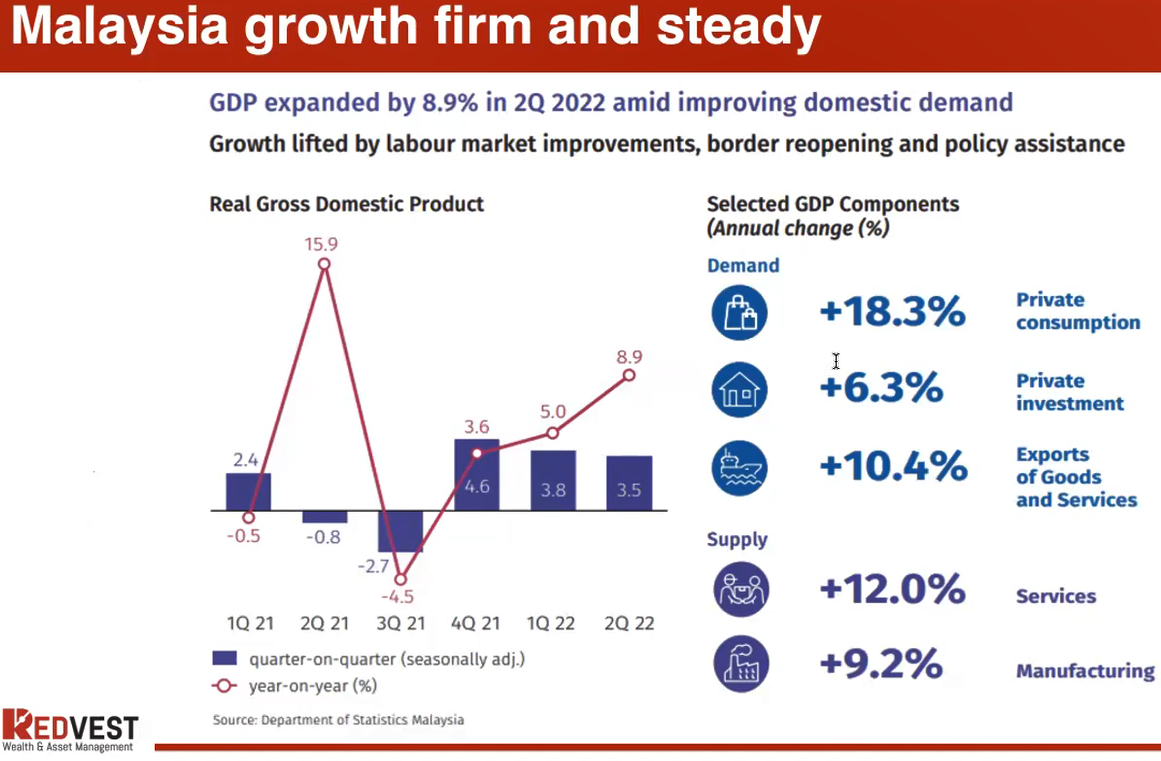
Our GDP is growing and there’s also an increase in supply and demand in selected sectors.

“It is not about what the new government will be doing, but it is what state the new government will be facing,” said Suresh.

Malaysia Growth Firm And Steady

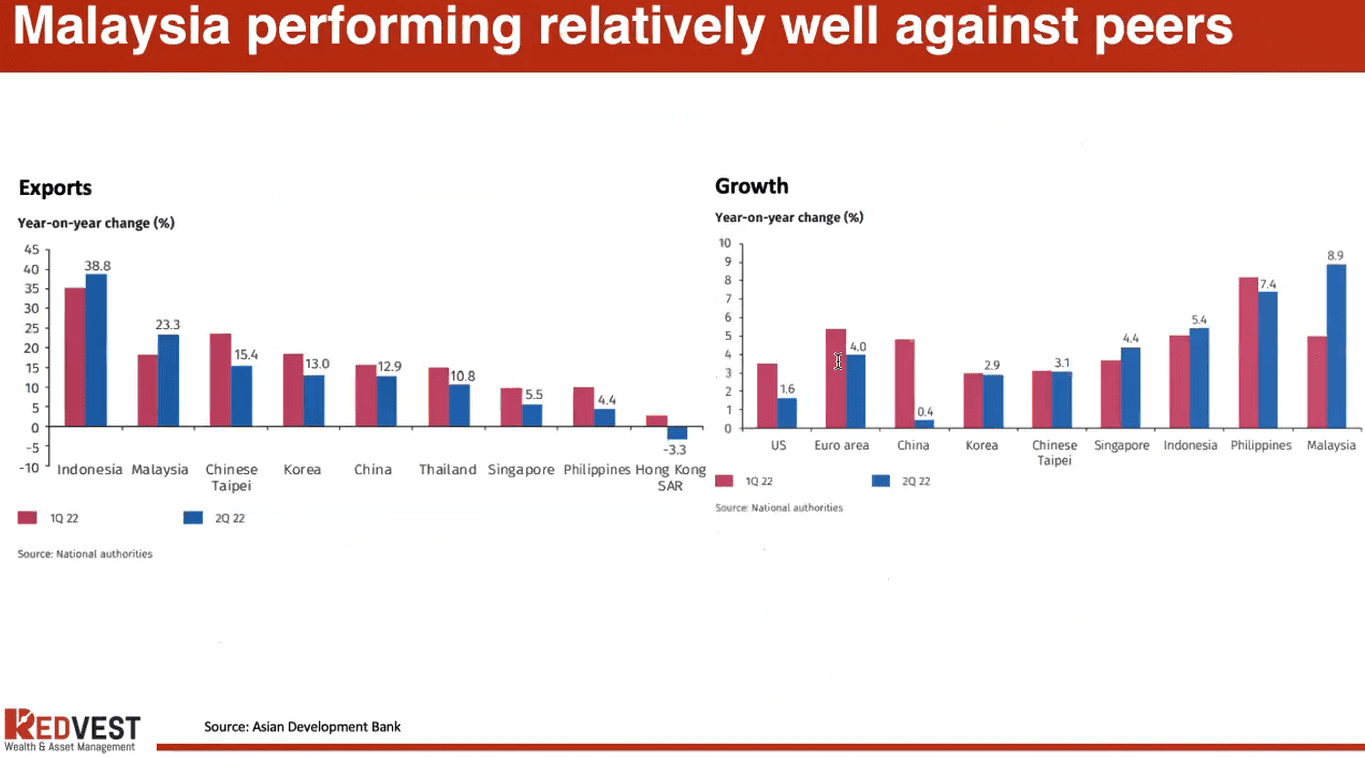
He advised us to be mindful of our risk profile and to diversify our portfolios since there would be a lot of potential once the market recovers. In terms of exports, Malaysia came in second best behind Indonesia, but we managed to beat other countries such as Taiwan, Korea, China, Thailand and even Singapore.

In terms of growth, Malaysia is leading the pack, beating the likes of Singapore, US, Europe and even China.

Malaysia Performing Relatively Well Against Peers

Read: Are Alternative Investments Right For Me?

We then welcomed our third and final panellist, Jason Wong Jia Jun, CFA and research manager at FSMOne Malaysia to share his thoughts on whether Malaysia is still a good market to invest in.

Jason Wong Jia Jun CFA FSMOne Malaysia Research Manager
Jason Wong Jia Jun, CFA, Research Manager, FSMOne Malaysia

“From a portfolio perspective, Malaysia is a good market to invest in, due to its low correlation with the global market. Malaysian equities have a lower correlation coefficient with the global equities at 0.54 and the Asia ex-Japan market at 0.38,” he also optimistically answers, relying on good data.

Having Malaysian equities in your portfolio will help reduce volatility and boost risk-adjusted returns.

Even though FBM KLCI is trading sideways, certain sectors have shown good performances such as the financial and energy sector. Local fund managers have also been able to give good returns, as they tend to be able to pick the right stocks – especially in the Small & Medium Cap companies.

Jason also shares his thoughts about Malaysia’s market outlook for next year: “The Malaysian market has been disappointing this year, but we are still doing relatively good against other markets. Next year will be better as the Malaysian economy has been growing at a healthy pace, and next
year our economy will be even better as forecasted by the International Monetary Fund (IMF).”

Fundamentally our companies are expected to be doing better with the solid backdrop of our improving economy next year. Earnings are expected to recover next year with double digit growth as compared to this year.

The financial sector will benefit directly from an increase in Overnight Policy Rate (OPR), and the OPR is expected to rise further. The financial sector will enjoy more than 15% growth in 2023 due to the widening net interest margin and improved investment income, as well as higher bond yields.

Our Malaysian stock market is currently trading at a very attractive level, with the FBM KLCI targeted to hit 1,600 points by end of 2023.

“Yes, there are some turbulences caused by both external and internal factors, but the sentiment will turn favourably once some of the catalysts are in place. This includes a reduction in inflation, the eventual resolve of the Russia-Ukraine conflict, and the reopening of China’s international
borders”.

With the good news ahead, the question on everyone’s minds is: “Should we keep on investing despite the gloomy prospect of recession next year? If yes, where to invest in 2023?”

Jason responded with a resounding, “Yes! We must be greedy when others are fearful.”

Now is a good time to be back in the market, after it has suffered such a big drop. There are a lot of buying opportunities for long-term investors. Apart from Malaysia, the Asia ex-Japan market is also another good opportunity to invest in. The tourism sector is starting to pick up, and we can now see many tourists traveling in and out of Asian countries.

Next up is China, where they are doing the exact opposite of what others are doing. They are currently cutting down on interest rates and coming out with stimulus. The recovery of China will have a positive impact for the Asian region, especially Malaysia as we have a strong link with China. The disappointment in earnings for Asia will be less severe, as the downward impact has been priced-in most major Asian equities. Plus, the valuation is much more attractive due to the massive retracement that had taken place.

Now You Know Where To Invest In 2023?

The panellists also highlighted that the market is nearing its bottom, and next year we should see the market recover. The dreaded recession might not be as bad as we expect it to be, so just hang in there for as little as a few more months or for longer which is at best, another year or two.

You might also want to hold onto your cash, stay liquid and wait it out, as ‘cash is king’. But ultimately, it all depends on your risk profile and the strategy that you use.

Read: Is It Relevant To Be Investing In Uncertain Times?

How To Avoid Being a Victim Of A ‘Rug Pull’ Exit Scam?

We have seen it before. The business looks legit and takes on paid orders from customers. Then the business suddenly folds and absconds with all the money. Thus, the name ‘fly-by-night’. It is one of the oldest and simplest ways to operate a scam. But people still fall for it.

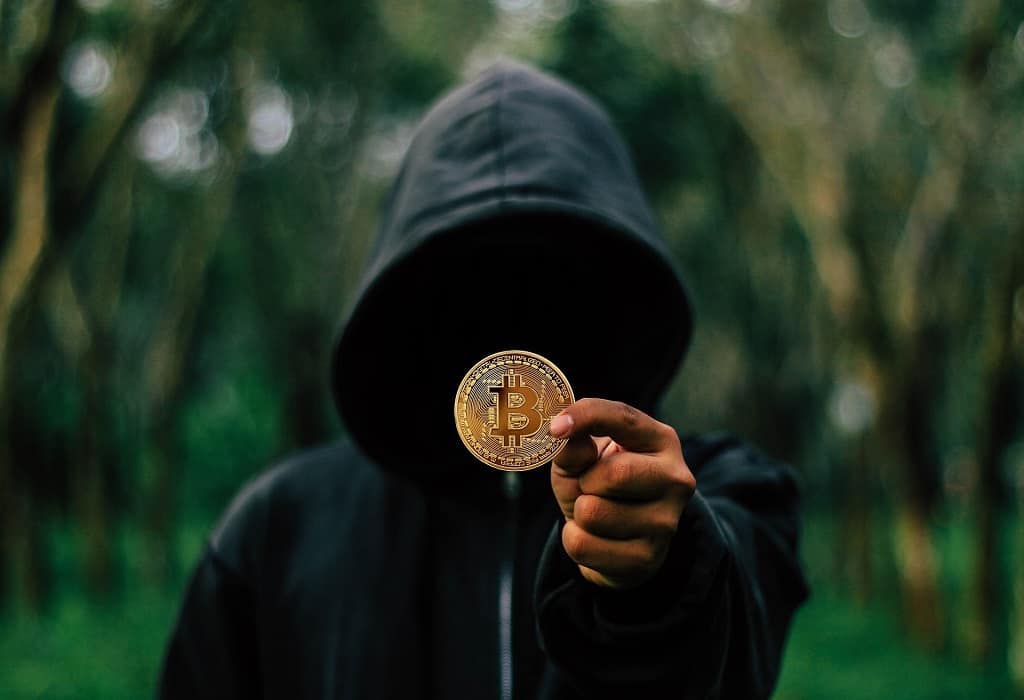
In the murky world of cryptocurrencies, this takes on a whole new meaning with rug pull.

“If I Die, I Won’t Completely Die”

Man Holds Different Crypto Coins His Hands White

Gerald Cotten built a platform that was once the top destination for crypto investors in Canada and the first to be licenced as a money service business by the country’s anti-money laundering authority. At one point, it was processing 90% of crypto trading volumes there.

Everyone loved Gerald. He looked like the guy you’d hangout for drinks in a bar, with giggly boyish charms and a knack for big boys’ toys.

Barely one month after his wedding in a Scottish castle, he allegedly faked his death while traveling to Jaipur, India. He was only 30 years old.

It was two weeks before Christmas 2018. He and he alone had access to a billion ringgit’s worth of crypto belonging to over 76,000 investors!

The cause and circumstance of his death were mysterious to say the least. It launched a media and doxxing frenzy. He was seemingly healthy and died from what local doctors claimed to be Crohn’s disease – which is generally not fatal. It begged the question why he chose to travel without medical precaution.

His name was misspelt on the death cert, no autopsy was done, and the funeral was ‘closed casket’. His will was signed a few days before his death, naming his newlywed wife as the executor and sole beneficiary.

According to some internet sleuths, Jaipur is known to be a mill for fake death certs. Plastic surgeries are also on hand to give the undead a new face. Back home, investigators dug into Gerald’s books and found a massive Ponzi scheme, while investors sought to dig up his corpse to verify it was him. It became clear that he was in grave financial trouble (pun intended) during his final months with the motive to run.

This exit scam or rug pull is immortalised in crypto folklore and the fraud bible, and perfectly summed up by the quote from surrealist master Salvador Dali: “Si muero, no muero por todo” or “If I die, I won’t completely die.”

Read: Crypto Investment: A Very High Risk Game, Are You Sure You’re Up To It?

“It’s Not A Bug, It’s A Feature”

Young Business Woman Scream Cover Eyes With Bitcoin Isolated Black Wall

As we go deeper into the DeFi (decentralised finance) part of the cryptoverse, exit scams have become the weapon of choice. They contributed 37% of all crypto scam revenue in 2021, surging from 1% in 2020!

They are much faster: the average active period for each scam was 70 days in 2021, down from 192 in 2020. And they have a catchy new name: “rug pull”, like when the rug is quickly pulled from underneath and makes you fall.

The tactics used to rug pull investors are creative. In Compounder, the smart contract used for the investment was injected with a few lines of malicious code to drain out the funds. Investors could do nothing but watch and be left holding the bag.

In SushiSwap, the founder cashed out all his tokens at a high after successfully sucking billions in liquidity from a rival platform with a cloned blockchain protocol – this is called a ‘vampire attack’ as liquidity is the lifeblood.

Read: Stay Away From Crypto Investment?

Rug Pull Happening All Around The World

Bitcoin Business As Part Economy

In Squid Game (no relation to the Netflix show), the token created so much hype off a popular meme but flash-crashed when the founders pull out – from peak of US$2861 to a fraction of a cent, in 10 minutes! The token was intentionally designed with exit barriers which made it harder to sell and fueled market panic as everyone is reeling from the rug pull.

In more recent news, the fugitive owner of Thodex, the top exchange in Türkiye was arrested after a grand ~RM10 billion rug pull. He shut down the exchange by faking cyber-attacks, locked up the funds of 391,000 investors, and fled overseas with a USB drive. He faces up to 40,000 years in jail.

In the conventional world, what you see is what you get. But crypto is invisible. Which is all the more reason for you to know what you’re getting into. The vast majority of investors do not read the technical code before they buy crypto, not because they don’t want to but they don’t know how to.

Even with safeguards like security audits, timelocks, burnt keys, and what-nots, it is not failsafe. Many high-profile scams were audited by reputable firms! Worse, most of these scammy founders are anonymous – pushed proudly as a selling point rather than warning sign since the whole industry is founded by a phantom named Satoshi Nakomoto!

Only detailed forensics can tell you what went wrong. The real truth is found in the digital fingerprints. Even then, you won’t be completely safe from rug pull.

Read: Crypto And Digital Asset, Learn Before You Earn

“Appreciate The Joy Of Missing Out”

Close Up Portrait Happy Businessman

For those of you who tend to have FOMO (fear of missing out), you missed nothing. Instead, please enjoy the JOMO of not losing money as seen above. Crypto is not for everyone. There are other less risky products out there to aim your FOMO. It is better to invest in what you know or to stay within your “circle of competence”, as Warren Buffet would say.

Crypto is a great invention, but is in continuous iteration, and you can afford to wait it out until the products improve and mature over time. Do remember to make your due diligence or you could become a victim of rug pull.

Read: How Does The Greater Fool Theory Apply To Crypto Investing?

About the Author

Edmund Yong

Edmund Yong is the managing partner of Celebrus Advisory and appointed by MDEC as part of its Talent Expert Network (formerly known as Digital Expert Panel) for blockchain technology. Members of the public with similar experiences and who are looking for investigative and forensic services in digital assets from authorised representatives, or to support their litigation efforts, can contact the CEO of Imperium Universe at jason@imperiumuniverse.xyz.

Don’t Let Others Copy Your Amazing Business Idea! Protect Your Intellectual Property With MyIPO Now

Malaysia is made up of many innovative businesses looking to contribute to the nation with their forward-thinking technology or ideas. If you own a business like this, you’ll need to register your intellectual property if you haven’t already.

Intellectual property (IP) refers to intangible creations of the human intellect – like logos, inventions, publications, designs, slogans, and more. It is a form of property, and they’re integral to your business.

Why Is IP Important?

As a business owner, protecting your business assets like designs and technology is essential to the core services of the business. When you have a great business idea going on, someone may want to duplicate it and profit without your consent. So how can you prevent this?

By registering your intellectual property, of course. Without IP protection, trying to chase up guilty party can be time-consuming, and maybe even fruitless. Registered owners have the exclusive right to use their IP in business. They may also take legal action for infringement, which is when another company or individual uses their IP for their own profit. As a business owner, it is your responsibility to ensure that no one else is mis-using your assets.

IP protection also serves companies with a competitive advantage in the market. For small-to-medium businesses, it is even more important to register your IP so competitors can’t duplicate your success to take away your market share. 

Types Of IP

Intellectual Property Corporation Malaysia (MyIPO) is the official government agency that oversees intellectual property regulation in the country. The organization recognizes 6 types of IP. Businesses may register their intellectual property with MyIPO.

1. Patent – A patent is an exclusive right granted for an invention, which is a product or a process that offers a new technical solution to a problem. 

2. Trademark – A trademark is any sign that may be represented graphically, capable of distinguishing goods or services of one business from another. Make sure your product qualifies to be within these 45 classes before applying for a trademark.

3. Industrial Design – An industrial design is the ornamental or aesthetic aspect of an entity that appeals to the eye.

4. Geographical Indication – A geographical indication is a sign used on products that have a specific geographical origin and possess qualities or a reputation due to that origin. Sarawak Pepper is an example of a Geographical Indication IP of a pepper-based product produced in Sarawak. 

5. Copyright – Copyright is a protection given to authors, copyright owners and performers of their copyrighted work like literary works or broadcasts.

6. Layout-Design Of An Integrated Circuit (IC Design) – A layout design of an integrated circuit encompasses the particular logic and circuit design techniques required to design integrated circuits.

IP Protection Is Not An Option, It Is A Must

Protect Your Intellectual Property With MyIPO3

Although it is not mandatory, the ideas of business owners who did not register for IP protection are at risk of being plagiarised or worse – registered as someone else’s IP. Someone else may get the rights to use your ideas without permission.

Interested business owners may register for IP protection online or in person at MyIPO customer service counters. Plus, protecting your business assets can actually be quite affordable. For example, trademark registration only requires entrepreneurs to spend RM950 once for 10 years. This means that the trademark will be protected by law for 10 years. After that, business owners may renew their trademarks.

During the registration process, MyIPO will conduct examinations to ensure that the IP is new and not yet owned by any party. They will also take steps to make sure that it complies with the IP acts. The rightful owner of the IP will receive a certificate of proof. If anyone tries to copy your business ideas, you may choose to take legal action.

Protect Your Business Ideas & Assets Today

Protect Your Intellectual Property With MyIPO2

You’ve spent so much time, effort, and money trying to build your business from scratch. Why not invest just a bit of effort into getting your IP registered?

There are many advantages to having IP protection like officially calling an idea or a product your own. Plus, it helps your business stand out from its competitors. Whether you’re a small, medium, or large organization, IP protection can help your company claim its identity.

Don’t take IP protection for granted, register now with MyIPO at myipo.gov.my.

Emerging Market Equities, Why Now?

Global economies have faced a number of challenges in recent months, leading to depressed stock market returns. The ongoing Russia-Ukraine war continues to have ripple effects on the global economy. And although most countries have gone back to business as usual following the peak of the COVID-19 pandemic, the virus is probably not going to fully disappear.

In addition, China’s “Zero-COVID” policy has been weighing on economic activity there. Other well-known market challenges include rising inflation and interest rates, as well as the surging US dollar.

Despite these headwinds, emerging economies continue to prove their resilience. We believe it is now a compelling time to consider emerging markets equities, even as many investors are less focused on the asset class.

Conventional And Consistent Policies

Policies in emerging markets have generally been more conventional and consistent than those of developed markets, which we believe will ultimately lead to more robust economies relative to their own history and relative to developed markets. In contrast to developed markets in the post-global financial crisis period, emerging economies did not experiment with negative interest rates.

They have generally had upward-sloping, traditional yield curves over the past decade. During the recent pandemic, policymakers in emerging markets generally did not pursue very aggressive fiscal support plans, which means they did not blow up their sovereign balance sheets. Contrast this with developed markets like the United Kingdom, for example, which pursued aggressive fiscal expansions.

As inflation began to accelerate post-pandemic, emerging economies were also preemptive in tightening interest rates. Thus, while the United Kingdom, the eurozone and the United States are still trying to catch up with rising inflation, many emerging economies have largely completed their tightening cycles. 

Brazil, for example, started tightening in March 2021, and has made 12 consecutive rate hikes. Inflation has been decelerating there in recent months, leading the central bank to pause its hiking cycle in September. The US Federal Reserve, meanwhile, did not start raising rates until March of 2022.

In addition, emerging economies are typically less leveraged at the sovereign, corporate and household levels. For example, in Mexico, the household debt-to-gross domestic product (GDP) ratio is only 16%, compared with the United Kingdom’s ratio of around 90%. 1

At the stock level, emerging markets offer investors opportunities in high-quality and high-growth companies. They are home to some of the most innovative, technology-oriented companies in the world—companies that are building the digital architecture around us. These include hardware and software suppliers as well as semiconductor manufacturers.

Some are even responsible for the transition to decarbonization. Many emerging market companies are global leaders in the production of electric vehicles and electric batteries, and in renewable energy such as in solar manufacturing.

Attractive Valuations

Emerging market equity valuations are trading at near historic discounts versus the developed world. In our analysis, the relative profitability between these two asset classes does not warrant the current 45% discount on a price-to-book basis. 2

Also, relative to its own 15- to 20-year history, emerging markets as an asset class is one of the few that looks cheap to us. The MSCI Emerging Markets (EM) Index, a benchmark representing the asset class, is now trading at close to 10 times forward earnings, compared to around 18 times for the US S&P 500 Index (S&P 500). 3

Increased Dividends And Buybacks

Emerging market companies have recently been increasing their dividends. They have been using their cash flows to distribute dividends to shareholders rather than deploying capital given uncertain growth outlooks. Company managements have also been seeing value in their equities, resulting in increased buyback activity.

In our opinion, these increases are temporary. In this volatile environment, these dividends and buybacks are appreciated, but we would prefer companies invest in their own businesses for secular growth opportunities.

While we believe the persistence of high dividend levels is unlikely to remain at the current 4% level, there has been a sea change in how emerging market companies think about capital optimization and balance sheet management.  4    

Over the past 20 years, approximately 2.5% of annualized total returns of 9% have come from dividends. 5 Thus, there has been dividend support to the asset class, which many investors may not realize.

Increasing Optimism  

Over the long term, we are increasingly optimistic about emerging market economies. Despite the current environment of slowing growth, rising inflation and geopolitical issues globally, we have confidence in both the emerging markets asset class and our strategies.

We continue to seek high-quality business with solid balance sheets, competitive advantages and attractive valuations.

Sources

1. Sources: CEIC, “Mexico Household Debt: % of GDP,” June 2022. CEIC, “United Kingdom Household Debt: % of GDP,” June 2022.

2. Source: Factset. Price-to-book ratio is a financial ratio used to compare a company’s current market value to its book value.

3. Sources: MSCI, Nasdaq. The MSCI EM Index is a free float-adjusted, market capitalization-weighted index designed to measure the equity market performance of global emerging markets. The S&P 500 is a market capitalization-weighted index of 500 stocks designed to measure total U.S. equity market performance. Indexes are unmanaged and one cannot directly invest in them. They do not include fees, expenses or sales charges. Past performance is not an indicator of future results. See www.franklintempletondatasources.com for additional data provider information.

4. Source: Factset.

5. Source: Factset, FTEME.

About the Author

Andrew Ness Franklin Templeton

Andrew Ness, Portfolio Manager, Franklin Templeton Emerging Markets Equity  

Retirement Is No Joke, Here’s Why We Need Private Retirement Scheme

When we are young, saving for retirement might not seem urgent. It feels like something that we can focus on later, especially since there are other more pressing and immediate financial commitments. However, we want to emphasise the hard truth: Retirement Is No Joke! That’s why we have the Private Retirement Scheme to help us all out.

Why Should You Save For Retirement?

We Malaysians are expected to live until we reach 75 years old. However, we retire at 60 years old. That means, we can expect to live at least 15 more years without receiving regular salaries.

Some of us may be fortunate enough to receive monthly pensions or be able to rely on our EPF savings. Nonetheless, research has shown that merely having pensions or EPF savings may not be enough.

Some of us may have children who are working and earning salaries. Although they can provide for us, do we really want to burden them, especially if they have children of their own to care for?

Growing Your Retirement Savings 

We don’t just want to save our money. We want it to grow. The way to do that is by investing our savings. A viable option is to invest in Unit Trust Schemes (UTS) or Private Retirement Schemes (PRS).

Investing in UTS and PRS is one of the simplest forms of investing. It doesn’t require large amounts of money, time, or expertise.

All you need to do is approach a UTS/PRS Consultant or Distributor. They will assist you to invest your savings into a UTS/PRS fund that is suitable for you. That fund’s investment will then be managed by a licensed professional fund manager.

Read: Getting To Know Unit Trust Schemes

Saving For Retirement 

A Long-Term Activity 

Remember that life is a marathon, not a sprint. If your retirement is still some time away, it will give you a lot more time to prepare for it. This means that your retirement fund can grow substantially simply by you putting aside some money consistently and invest them over a long period of time.

To maximise your savings, the key is to start early. Just like in a marathon, every now and then, you should keep track of your progress and ‘refresh’ yourself. As your salary increases, revisit your periodic contributions, and adjust accordingly.

After retirement, most of us will not have a fixed salary anymore. However, expenses remain. As such, your target savings should be one which can sustain your desired future lifestyle.

How much should you save?

You can refer to a retirement calculator. All you have to do is key in the requested details. Then, the retirement calculator will calculate for you the amount of savings you will need as well as the projected savings you will have based on your current savings amount.

From there, you can calculate the shortfall and determine how much you should be saving on a regular basis.

Consistency Is Key

Remember to pay yourself first! Most of the time, once people receive their salary, they will save whatever remains after paying their bills, taxes, loans, groceries, and other expenses. However, this practice can lead to inconsistent savings. It is best that you allocate a fixed amount for your retirement savings first, before spending on your other commitments.

Likewise, do NOT take ‘savings holidays’ or defer your savings contributions. You must be consistent!

It would be ideal if you can consider signing up for a regular savings plan when investing in a UTS/PRS. This plan will, on a regular basis, automatically deduct money from your bank account and channel them towards investing in UTS/PRS. Hence, you can ensure that you will be consistent in your savings.

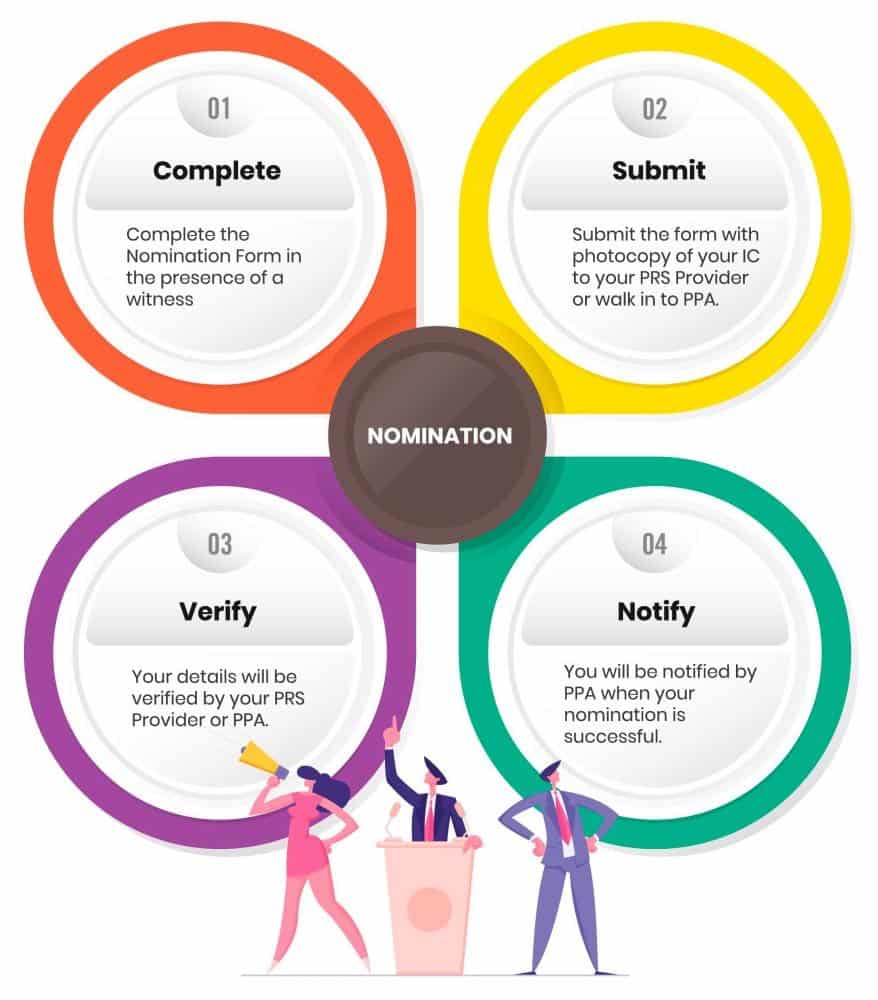
Name A Nominee For Your Private Retirement Scheme

Essentially, a nominee is the person who will inherit your savings/investments in the event something happens to you. Hence, it is essential that you elect a nominee.

Fimm Nomination

Even if you don’t name a nominee, your next-of-kin can still receive your monies from the Private Retirement Scheme. However, the process is a lot more difficult and expensive because he/she will need to prove his/her entitlement. By naming a nominee, the process is a lot easier and more cost effective.

If you have not yet named a nominee, you can contact your authorised UTS/PRS Consultant and he/she will help you with the process of smoothening out the process of taking out the money from your Private Retirement Scheme.

Read: Who Are Unit Trust Consultants?

The Final Word

Retirement is no joke! We want to enjoy our retirement comfortably and without any financial worries. As such, we must start saving for retirement early and doing so in a safe and disciplined way. Now you know why the Private Retirement Scheme is necessary to supplement your retirement funds.

FIMM Logo 01 Blue Transparent BG

This article is in collaboration with The Federation of Investment Managers Malaysia (FIMM), a self-regulatory organization (SRO) that regulates the marketing and distribution of Unit Trust Schemes (UTS) and Private Retirement Schemes (PRS).

Visit www.fimm.com.my for more information on PRS, Unit Trusts, and UTS & PRS Consultants.