Wednesday, 5 August 2026 Stay informed. No noise.

Bursa Malaysia and Boardroom partner to scale CSI adoption

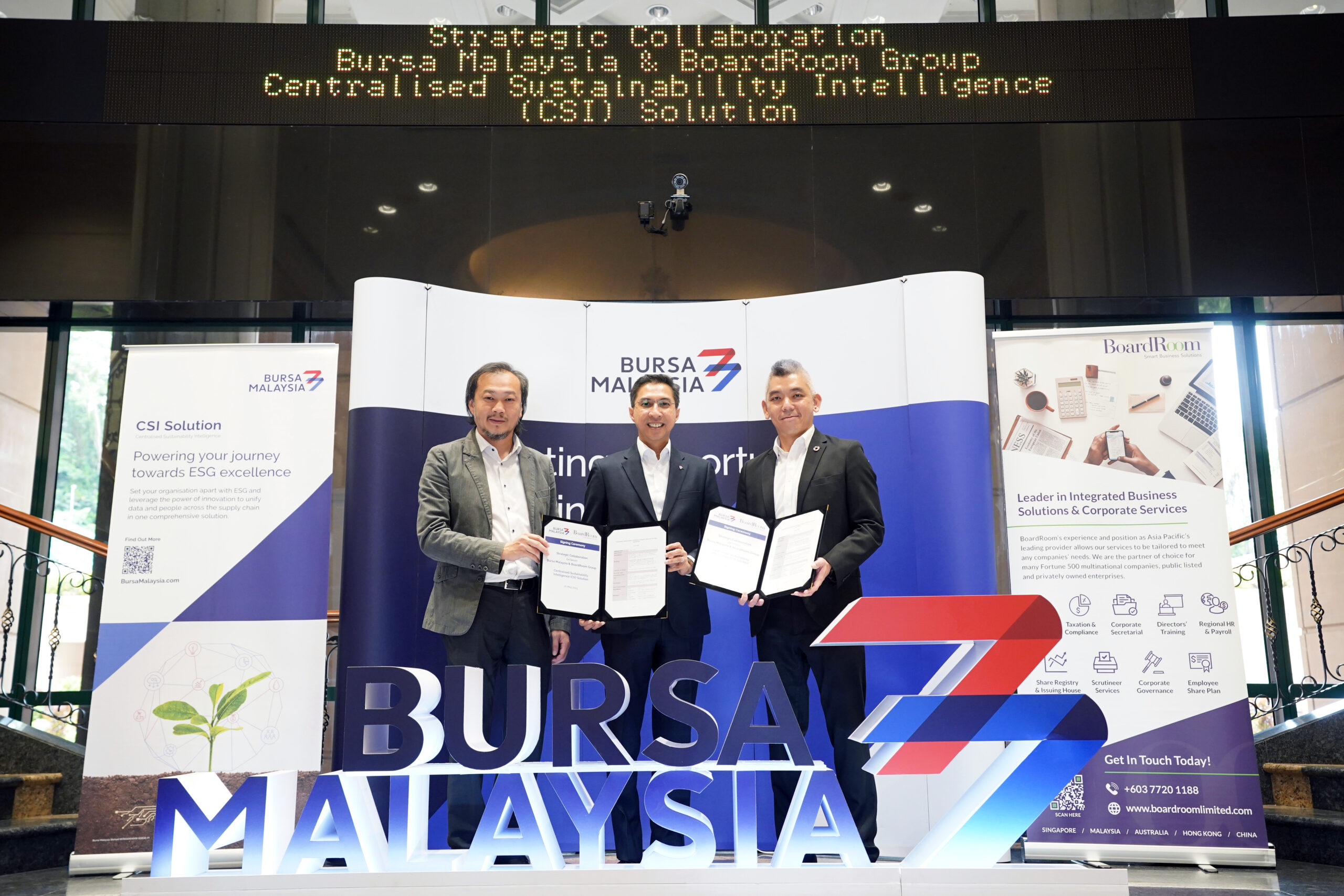
Bursa Malaysia Berhad (Bursa Malaysia or the Exchange) announces its collaboration withthe BoardRoom Group (BoardRoom), a leading provider of corporate and advisory services in the Asia-Pacific region. The collaboration seeks to encourage wider adoption of the Centralised Sustainability Intelligence (CSI) Solution among Malaysian public listed companies (PLCs), with the goal of enhancing the quality of sustainability disclosures across the corporate sector.

The CSI Solution was developed by Bursa Malaysia in support of Malaysia’s transition to a low-carbon economy. It enables companies — listed and non-listed — streamline sustainability reporting. Following its designation in March 2025 as the Exchange’s official sustainability reporting channel, the CSI Solution’s disclosure module now supports the International Sustainability Standards Board (ISSB) IFRS S1 General Requirements for Disclosure of Sustainability-related Financial Information and IFRS S2 Climate-related Disclosures under the National Sustainability Reporting Framework (NSRF).

Commenting on the collaboration, Dato’ Fad’l Mohamed, Chief Executive Officer of Bursa Malaysia, said “Bursa Malaysia is committed to supporting Malaysian companies in their decarbonisation journey and lowering their climate impact. This commitment is reflected in our decision to make CSI reporting tools, aligned with IFRS S1 and S2, accessible at no charge to all public listed companies.”

“Our collaboration with BoardRoom will extend the CSI Solution’s reach. Leveraging Boardroom’s established presence and sustainability advisory expertise in the corporate advisory space, we hope to support more companies in navigating evolving disclosure requirements and enhancing the quality of their sustainability reporting with greater confidence.”

Angeline Aw, Group Chief Executive Officer of BoardRoom Group, said, “We are proud to partner with Bursa Malaysia, to scale the CSI Solution across the corporate sector. This collaboration builds on our strong and long-standing relationship with the Exchange, underpinned by our shared commitment to strengthening corporate governance and regulatory readiness. With our deep experience in serving public listed companies and expertise in Sustainability Reporting and Advisory, BoardRoom is well-positioned to support clients in adopting the CSI Solution and producing impactful sustainability reports.”

Since its launch in June 2024, around 180 PLCs have onboarded onto the CSI Platform. All companies, not just PLCs but also mid-tier companies (MTCs) and small-medium enterprises (SMEs) are encouraged to adopt the CSI Solution to strengthen their sustainability journey. By leveraging its comprehensive suite of services, including an emissions calculator, a supplier management module, and a range of complementary value-added services delivered through a network of ecosystem partners, businesses can enhance their environmental performance and drive long-term value.

For more information regarding the CSI Solution and its value-added services, please visit Bursa Malaysia CSI Solution or contact csi@bursamalaysia.com.

Zurich launches travel takaful on ShopeePay

ShopeePay announces its partnership with Zurich General Takaful to launch their first travel takaful plan, Zurich Travel Takaful.

Meeting a growing demand for Shariah-compliant protections, Zurich Travel Takaful keeps users protected as they embark on their travels, starting from as low as RM3 per day for domestic travel and RM15.99 per day for international travel.

Catering to short-term and frequent travellers, this is ShopeePay’s first travel protection plan to offer both single and annual trip travel protection plans, keeping users protected for travel all year round.

Additional Benefits and Zurich Travel Assist

The takaful offering provides coverage of up to RM300,000 in medical and personal accident benefits throughout user’s travel while providing additional protections and benefits including compensation for:
● Travel Cancellation
● Travel Delay
● Travel Curtailment
● Baggage Delay
● Double Indemnity
● Personal Effects and Travel Documents

As part of Zurich’s Travel Takaful plan, users will also have access to Zurich’s 24-Hour Travel Assistance hotline to provide support throughout their travels.

In celebration of the launch of Zurich Travel Takaful on ShopeePay, users can kick off their travel plans with a variety of complimentary discounts, including:
● 5% discount on Travel Takaful when travelling in groups of 2-5 pax
● 10% discount on Travel Takaful when travelling in groups of 6-10 pax
● 15% discount on upgrades to VIP Plans for both single trip and annual plans

How to subscribe to Zurich Travel Takaful

Available on the ShopeePay app and also the Shopee app, subscribing to your Zurich Travel Takaful plan can be completed in under just 3 minutes:

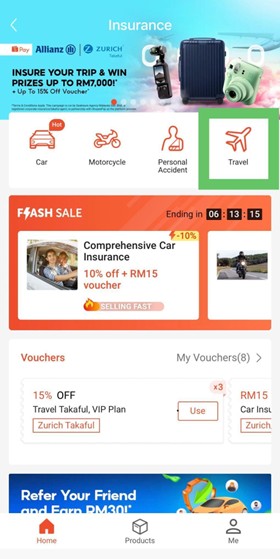
Step 1: Access your ShopeePay App and click on the “Insurance” tab at the bottom left of your home page

Picture1 1

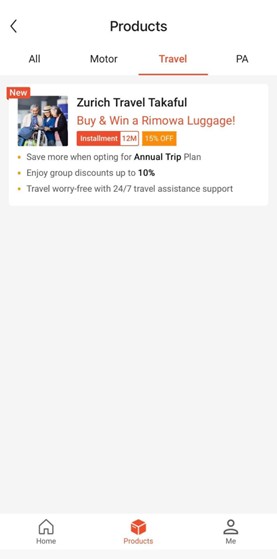
Step 2: Click on Travel and select your plan.

Picture2

Step 3: Confirm your details and proceed to check out.

Picture3

Breakdown your payments with SPayLater

Subscribing for a big group, or planning to pace out your protection plan payments? Split your Takaful contributions with SPayLater, the Shariah-compliant credit solution that lets you pay next month, or in instalments ranging from three to 12 months.

SPayLater is available for all Insurance and Takaful products provided on the ShopeePay and Shopee app.

Zurich releases report addressing climate risks

Zurich Insurance Group (Zurich) releases the “Climate Risks: Strategies for Building Resilience in a More Volatile World,” report emphasising the urgent need for coordinated action against the rising threats posed by extreme weather and natural catastrophes. The report outlines the increasing costs of these events, highlights the role of insurance, and offers recommendations for policymakers to build resilient societies and economies.

Extreme weather events such as hurricanes, floods and wildfires caused about USD2 trillion in economic losses over the past decade according to the International Chamber of Commerce. The frequency and intensity of these events are increasing, potentially exacerbated by long-term climate shifts like temperature variations, rising sea levels and changes in precipitation patterns.

“The insurance industry is uniquely positioned to help strengthen resilience to physical climate risks,” said Alison Martin, CEO EMEA and Bank Distribution. “However, addressing the escalating costs of extreme weather and natural catastrophes requires collective and immediate action. Our paper provides a roadmap for how governments, insurers and communities can collaborate to meet the growing challenges posed by extreme weather and natural catastrophes.”

Insurance is crucial in protecting households, businesses and governments, helping them recover financially from the effects of natural catastrophes. However, insurance coverage is not keeping up with growing losses, leading to more underinsured or uninsured households and businesses.

Zurich advocates for a new approach that focuses on risk reduction and extending insurance coverage to protect communities and businesses. The insurance industry can provide risk management insights and capabilities to strengthen resilience to physical climate risks. By de-risking capital flows, the industry can also help unlock the necessary finance to build the infrastructure required to deliver that resilience, enhancing the protection provided by insurance.

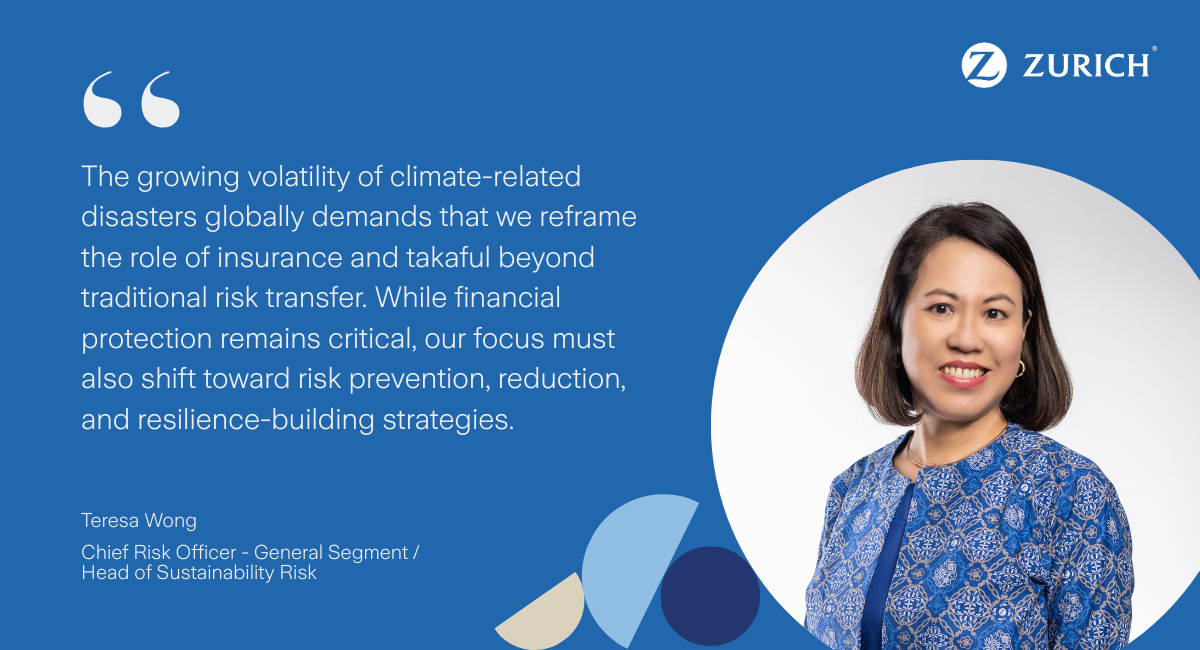
Teresa Wong, Chief Risk Officer – General Segment / Head of Sustainability Risk at Zurich Malaysia, emphasises “The growing volatility of climate-related disasters globally demands that we reframe the role of insurance and takaful beyond traditional risk transfer. While financial protection remains critical, our focus must also shift towards risk prevention, reduction, and resilience-building strategies. This is particularly relevant in Malaysia, where our Climate Resilience Survey highlights that more than half of respondents feel unprepared, with many citing financial constraints as a key barrier to readiness. As insurers, we must harness our risk expertise to support customers and communities not just in recovery, but in building long-term adaptive capacity. Now more than ever, strengthening climate resilience is fundamental to ensuring protection remains accessible and sustainable in the face of escalating risks.”

However, the insurance industry cannot tackle this challenge alone. A coordinated effort between the private and public sectors is needed. This paper makes three recommendations for policymakers:

  1. Invest in risk prevention and reduction: Governments should make formal commitments to strengthen climate resilience through robust strategies and the implementation of building codes and urban planning regulations. Measures include building climate resilience into national planning, establishing national centres of competence, and making more effective use of technology, data analytics and scientific research.
  2. Enhance insurance accessibility and affordability through supportive policy frameworks: Governments can raise awareness of extreme weather risks and offer incentives for households and businesses to obtain adequate insurance. This can be achieved by establishing a regulatory environment that sustains market capacity, attracts new entrants, and fosters competition and innovation to broaden coverage options for consumers.
  3. Develop public-private risk-sharing solutions to raise finance climate resilience: Innovative solutions such as blended finance and (re)insurance pools can help share resources and distribute risks, improving affordability and preventing the development of “insurance deserts.” Public-private partnerships (PPPs) can enhance insurance accessibility and affordability, especially in higher-risk areas.

Zurich remains committed to working with stakeholders worldwide to build a more resilient future, ensuring that communities and economies can thrive despite the growing challenges posed by climate risks.

For more information on Zurich Malaysia’s insurance and takaful plans, please visit zurich.com.my.


Asia Vision Capital’s new Shariah fund connects investors to Johor’s investment opportunity

Asia Vision Capital Sdn. Bhd. (AVC), a licensed Venture Capital Company registered and regulated by the Securities Commission Malaysia (SC), has launched QJBCCI PLT, a Shariah-compliant Real Estate Fund offering accredited investors structured access to Quayside JBCC. It is an iconic mixed-use development located within the Johor-Singapore Special Economic Zone (JS-SEZ), one of Southeast Asia’s most dynamic cross-border corridors.

QJBCCI PLT complements AVC’s conventional real estate fund, QJBCCA PLT, which was launched in January 2025. Both funds operate under a regulated framework where the funds are lodged with SC, with TMF Group as the trustee and Tawafuq Consultancy serving as the Shariah adviser for the Islamic tranche.
These funds provide accredited investors with the opportunity to participate in the development of Quayside JBCC through Redeemable Convertible Preference Shares, standing benefits from quarterly dividend distributions and redemption options after a five-year lock-in period. Backed by institutional-grade governance and oversight, the fund is designed for investors seeking exposure to real estate income streams across hospitality, serviced residences, parking, retail, rooftop restaurants and the development’s prominent LED advertising display.

“JS-SEZ and Rapid Transit System represent one of the region’s most exciting growth opportunities, powered by cross-border connectivity and rising demand for integrated urban destinations. Through our funds, we are pleased to offer accredited investors a structured and professionally managed pathway to participate in this option. This initiative reflects our commitment to unlocking long-term value through disciplined investment, Shariah governance and institutional-grade oversight,” said Ian Khor, Chief Investment Officer of Asia Vision Capital Sdn. Bhd.

AVC targets to raise up to RM 300 million as the initial commitment goal for this development project. To enhance investor experience, AVC plans to launch a dedicated mobile platform by late 2025, offering fund performance updates of its portfolios through web and mobile-optimised dashboards.

As part of its long-term strategy, AVC is also exploring the potential conversion of this mixed-used hospitality development into a publicly listed Real Estate Investment Trust (REIT) by 2032, broadening liquidity options and expanding investor access through public markets.

Alibaba Cloud’s new whitepaper shows how AI can power sustainable business transformation

A new whitepaper released by Alibaba Cloud, Driving Sustainability with AI: A Guide to Partnering with Technology Service Providers, offers a forward-looking blueprint for how organisations can harness digital infrastructure — particularly AI and cloud computing — to accelerate their sustainable journey.

Based on insights from the Tech-Driven Sustainability Trends and Index 2024, which surveyed 1,300 business leaders across Asia, Europe, and the Middle East, the report combines industry data, actionable recommendations, and real-world case studies to explore how emerging technologies can close the gap between aspiration and execution.

The State of Sustainability: Progress, Gaps and Opportunity

The whitepaper highlights the growing urgency for businesses to act on sustainability, with 80% of surveyed organisations setting green targets. Yet only one-third of these have committed to science-based net-zero goals. Many companies still struggle to move from commitment to impact, citing gaps in technical understanding, measurement tools and concerns about the energy footprint of digital technologies.

Despite these barriers, a strong majority — 76% — see AI and cloud computing as essential tools to achieve sustainability outcomes. At the same time, 82% say it is critical that these technologies themselves are developed sustainably.

From Insight to Impact: Green AI in Action

Alibaba Cloud is helping organisations bridge this gap through platforms like Energy Expert, which uses AI to measure emissions and energy consumption in real time. The platform has already served over 3,000 organisations globally.

One standout case is its collaboration with Covestro, a polymer material company. Working together, the two helped Chinese beverage brand Nongfu Spring trace the full lifecycle emissions of its recycled water barrels — later repurposed into gel pens – offering supply chain transparency from production to reuse.

The whitepaper also showcases Alibaba Cloud’s commitment to low-carbon AI innovation. Its open-source Qwen series models are designed for efficiency and accessibility. Japanese AI start-up Lightblue, for example, used Qwen to build a localized high-performance Japanese-language model with lower development costs and energy use.

Five Strategies to Drive Recommendations for Sustainable Digital Transformation

The whitepaper identifies five strategic actions that businesses can take to align digital transformation with sustainability outcomes. First, organizations are encouraged to link their adoption of AI and cloud technologies with specific sustainability KPIs—for example, using predictive tools to optimise operations or monitor emissions across supply chains. Second, companies should partner with transparent, green technology providers that publish energy usage and emissions data, operate on renewable energy, and invest in energy-efficient infrastructure. Third, the paper highlights the importance of embedding security into sustainability strategies, noting that cybersecurity concerns remain a key barrier to wider adoption of digital sustainability tools.

Fourth, it recommends embracing open and trustworthy AI, such as open-source models that reduce costs, improve energy efficiency, and allow for localized applications. Finally, the paper calls for stronger public-private collaboration, with 82% of surveyed executives supporting more active government involvement to accelerate the adoption of sustainable technologies through policy, incentives, and education.

A Roadmap for Business Leaders

More than a guide, the whitepaper is a call to action. It emphasizes that sustainability is no longer a nice-to-have but rather a competitive differentiator and a catalyst for growth.

For companies navigating climate and digital transformation simultaneously, the message is clear: success depends on choosing the right partners, tools, and strategies to deliver measurable progress. With the right foundation, AI and cloud can power a greener, smarter, and more resilient future.

Scoot adds flight capacity to support travel demand

Scoot, the low-cost subsidiary of Singapore Airlines (SIA), announces increased flight frequencies and passenger capacity to support the strong demand for air travel in the upcoming months:

  • From 6 June 2025, flights to Iloilo City will increase from two to four times weekly
  • From 24 June 2025, flights to Cebu will increase from seven to 10 times weekly and services to Koh Samui from 21 times to 25 times weekly
  • From 2 August 2025, services to Taipei and Seoul (via Taipei) will increase from five times weekly to daily services
  • From 4 August 2025, frequencies to Perth will increase to 14 times weekly, up from 12 times weekly
  • From 30 August 2025, services to Davao will increase to 12 times weekly, up from nine weekly services
  • From 5 October 2025, frequencies to Sydney will increase to 14 times weekly, up from 10 times weekly

Flight schedules are subject to government and regulatory approvals or changes. Scoot remains committed to enhancing its network and connectivity. The airline will continue to remain nimble, regularly review its routes and align its capacity with the demand for air travel and evolving travellers’ needs.

Limited-time promotional fares to selected destinations are currently on offer on Scoot’s website and mobile application. Follow on social media and/or subscribe to Scoot’s newsletter to receive notifications on the latest promotions.

AFFIN launches “AFFIN 50 Years, 50 Prizes” Golden Jubilee campaign

AFFIN Group (“AFFIN” or “the Group”) celebrates its 50th anniversary with the launch of the “AFFIN 50 Years, 50 Prizes” Golden Jubilee Campaign, a year-long celebration rewarding customers with exclusive prizes, strengthening financial literacy and empowering Malaysians on their financial journey. Running from 1 March 2025 to 31 January 2026, this milestone campaign features 50 exclusive prizes, including a Grand Prize of RM1,000,000.

The “AFFIN 50 Years, 50 Prizes” Golden Jubilee Campaign invites customers to participate by performing eligible transactions, such as maintaining a minimum Month-End Balance (MEB) of RM5,000 in their AFFIN Current or Savings accounts. With every eligible transaction, customers earn entries for a chance to win.

Datuk Wan Razly Abdullah, President & Group Chief Executive Officer of AFFIN Group, said, “For 50 years, AFFIN has underscored its commitment to strengthening financial resilience, fostering economic growth, and delivering value to our customers wherever they are. The “AFFIN 50 Years, 50 Prizes” Golden Jubilee Campaign reflects our dedication to creating opportunities, driving progress, and empowering people with financial solutions that meet their evolving needs. As we look ahead, we remain focused on building a future-ready financial ecosystem that serves a wider community, aligned with the strategic pillars of our AFFIN Axelerate 2028 (AX28) Plan, which are Unrivalled Customer Service, Digital Leadership, and Responsible Banking With Impact.”

Beyond this flagship campaign, AFFIN is introducing a suite of initiatives tailored to meet the diverse financial needs of its customers, including Jalan-Jalan Raya AFFIN with Naelofar, the Porsche Cashback Campaign, the 1-for-1 Business Class offer with AFFIN Credit Card, and many more to be launched throughout the year. These initiatives are spearheaded by AFFIN’s key business divisions such as Deposit Business, Cards, Personal Financing, Mortgage, Auto Finance, Corporate Banking, Enterprise Banking and Wealth Management, in collaboration with Affin Hwang Investment Bank Berhad.

Learn more about how customers can benefit from the “AFFIN 50 Years, 50 Prizes” Golden Jubilee Campaign and start earning rewards today by visiting www.AffinAlways.com or following @Affinmy on social media.

Psychological traps in trading: Octa Broker’s perspective on avoiding costly mistakes

Even the most seasoned Contract for Difference (CFD) traders can fall into psychological traps—from chasing the hype to holding poor trades out of stubborn hope. Emotional biases can cloud judgment and lead even experienced traders to costly blunders. However, psychological resilience reduces the risk of a loss. Octa Broker, as part of its commitment to traders’ education, explores how emotion-driven decisions can quietly sabotage performance and offers practical guidance for staying focused and disciplined.

Psychological traps in CFD trading
Psychological traps consist of cognitive bias and emotional responses that negatively affect trading decisions. Cognitive bias compels traders from their strategy, potentially undermining their results. Notably, such traps are not exclusive to novices. Experienced traders are not immune to them either, especially when the market is volatile.

Emotions are powerful forces in trading. They can override rational analysis, prompting impulsive behaviour and unwise actions. Empirical findings in trading psychology indicate that investors frequently succumb to fear and greed, two emotions that can cloud their decision-making, potentially resulting in suboptimal profits or, more severely, significant losses.

Understanding six common psychological traps in CFD trading

  1. Fear of missing out (FOMO) drives traders to enter positions based on the anxiety of missing potential profits, often influenced by market hype or social media trends. This behaviour can lead to buying at peak prices without proper analysis. FOMO-driven traders may trade excessively, believing that more trades will increase their chances of hitting a winning opportunity.
  2. Revenge trading. After incurring losses, some traders attempt to recover quickly by making impulsive trades without adequate analysis. This often exacerbates losses and deviates from disciplined trading plans.
  3. Overtrading. A situation when traders try to always be active in the market and take positions without clear signals or strategies. This impatience can result in increased transaction costs and exposure to unnecessary risks.
  4. Gambler’s fallacy involves believing that a series of losses or gains will be naturally followed by the opposite outcome. Driven by the anticipation of an imminent reversal, traders may prematurely try to ‘pick a top’ during a bullish trend or ‘find a bottom’ in a bearish trend, often without sufficient evidence.
  5. Hope vs. strategy means holding onto losing positions, believing that the market will turn in their favour, despite evidence to the contrary. This can lead to significant losses as traders ignore stop-loss rules and objective analysis.
  6. Herd mentality implies mimicking the crowd by following others’ trades without analysis. Herd behaviour may form bubbles or exacerbate market downturns, leading traders to buy or sell too early.

Spotting the signs—when you’re not thinking straight
Be mindful of the sudden impulses to deviate from your trading plan, especially after winning or losing a lot. A shifted risk tolerance, such as opening positions that are unusually large, can be a sign of emotional trading. Other behavioural red flags include:

  • ignoring predetermined stop-loss levels
  • doubling down on losing positions
  •  frequently changing strategies without thorough evaluation.

Recognising these signs is the first step in regaining control and preventing emotion-driven decisions. Here are other tips to stay in control when trading:

  • Plan before trading. Develop a comprehensive trading plan that outlines entry and exit points, risk tolerance, position sizes, and adhere to it
  • Journal your trades to record your progress and monitor your emotional state. This helps identify patterns in behaviour and improve self-control.
  • Use stop-loss and take-profit orders to automate discipline, ensuring that decisions are executed as planned, even in volatile markets. Given the high-risk nature of CFDs, such controls are vital
  • Learn from mistakes. Regularly review your trading history to understand what worked and what didn’t. Reflecting on past errors fosters growth and helps in refining strategies
  • Step away when needed. Taking breaks from trading, especially after a series of losses or even wins, can provide perspective and prevent burnout. As Kar Yong Ang, a financial analyst at Octa Broker, advises: ‘Your worst trades often come when you feel most confident—or most afraid. Mastering trading psychology is what separates short-term reaction from long-term resilience.’

While technical ability and market knowledge form the foundation of trading, psychological discipline determines long-term success. Even a valid strategy can be undermined by emotional biases. By recognising common psychological traps and implementing measures to negate them, traders can improve their decisions and perform more consistently. Constant self-monitoring, deliberate discipline, and emotional mastery are key factors in navigating the complex psychological landscape of trading.

___

Disclaimer: This content is for general informational purposes only and does not constitute investment advice, a recommendation, or an offer to engage in any investment activity. It does not take into account your investment objectives, financial situation, or individual needs. Any action you take based on this content is at your sole discretion and risk. Octa and its affiliates accept no liability for any losses or consequences resulting from reliance on this material.
Trading involves risks and may not be suitable for all investors. Use your expertise wisely and evaluate all associated risks before making an investment decision. Past performance is not a reliable indicator of future results.
Availability of products and services may vary by jurisdiction. Please ensure compliance with your local laws before accessing them.

UMW Toyota Motor to support Ministry of Transport’s green mobility drive

UMW Toyota Motor Sdn Bhd (UMWT) is taking a major step in driving Malaysia’s clean mobility transition through a strategic collaboration with the Ministry of Transport (MOT). UMWT has extended a fleet of electrified vehicles to the Ministry, bridging cutting-edge product innovation with public policy development.

The fleet includes five advanced electrified vehicles comprising:
• Three Hybrid Electric Vehicles (HEVs), namely the Toyota Alphard, Camry and Corolla Cross, and
• Two Battery Electric Vehicles (BEVs), the Toyota bZ4X and Lexus RZ.

This initiative enables MOT to evaluate the real-world practicality, performance and benefits of electrified mobility technologies in daily operations, offering critical insights to inform future planning and policymaking.

“Malaysia’s journey to net-zero emissions by 2050 requires collaboration and action from all sectors,” said Datuk Ravindran K., President of UMW Toyota Motor. “Our support is beyond formality — it enables policymakers to experience the effectiveness of electrified vehicles first-hand. Toyota’s Multipathway approach is inclusive, practical, and tailored to Malaysia’s needs. This ensures that no one is left behind as we move toward a cleaner and more sustainable future.”

This partnership reflects UMW Toyota’s belief that achieving carbon neutrality requires engagement at every level, from individual consumers to national institutions. By aligning with the National Energy Policy 2022–2040 and the National Energy Transition Roadmap (NETR), the initiative highlights how private-sector innovation can help translate national ambitions into practical, real-world outcomes.

Bridging Innovation and Public Policy

UMWT’s experience in hybrid technology reflects its commitment to delivering practical, scalable solutions that meet real-world needs. Through the deployment of its electrified vehicle line-up, UMWT is giving MOT officials the opportunity to experience infrastructure readiness, user interaction and operational dynamics across different electrification platforms. These first-hand learnings will support more informed and evidence-based policymaking as Malaysia moves toward a cleaner, more resilient mobility ecosystem. While full electrification remains a long-term goal, hybrid vehicles continue to offer a swift, accessible pathway to reduce emissions without placing excessive pressure on current infrastructure or consumer behaviour.

“Hybrid technology continues to be a critical enabler in Toyota’s electrification strategy, especially for markets like Malaysia,” said Mohd Shamsor Mohd Zain, Executive Director of UMW Toyota Motor. “It offers immediate reductions in emissions without the need for sweeping infrastructure changes. This makes it ideal for building mass-market confidence while paving the way toward full electrification.”

A Shared Commitment to Sustainable Progress

The collaboration also supports the Low Carbon Mobility Blueprint 2021–2030, which targets 15% xEV adoption by 2030 and 38% by 2040. Through access to a range of electrified drivetrains, the Ministry of Transport can experience these technologies first-hand, offering valuable insights that can inform future planning and infrastructure readiness.

This effort is part of Toyota’s Multipath way journey, which includes Hybrid and Battery Electric Vehicles (BEVs), as well as Plug-in Hybrids (PHEVs), Fuel Cell Electric Vehicles (FCEVs), and emerging technologies such as hydrogen and synthetic fuels. The company’s approach is grounded in a full well-to-wheel lifecycle view of emissions, ensuring that sustainability progress is meaningful, measurable and grounded in science.

Rooted in UMWT’s “Move Your World” vision, the collaboration reflects a broader commitment to people-first innovation that delivers practical, inclusive and environmentally responsible progress. This vision is aligned with Toyota’s global mission to ‘Produce Happiness for All’ by creating mobility solutions that go beyond vehicles to improve lives, empower communities, and protect the planet. Through this initiative, UMWT is not only moving people – it is moving policy, mindset, and the nation forward toward a low-carbon, high-impact future.

UMWT’s ongoing engagement with government, industry and the public is part of a larger movement to build a cleaner, more connected mobility ecosystem for Malaysia. From product deployment to policy dialogue and public education, UMWT continues to play a catalytic role in advancing the nation’s shift toward a sustainable transport future.

Alliance Bank expands access to cancer screening

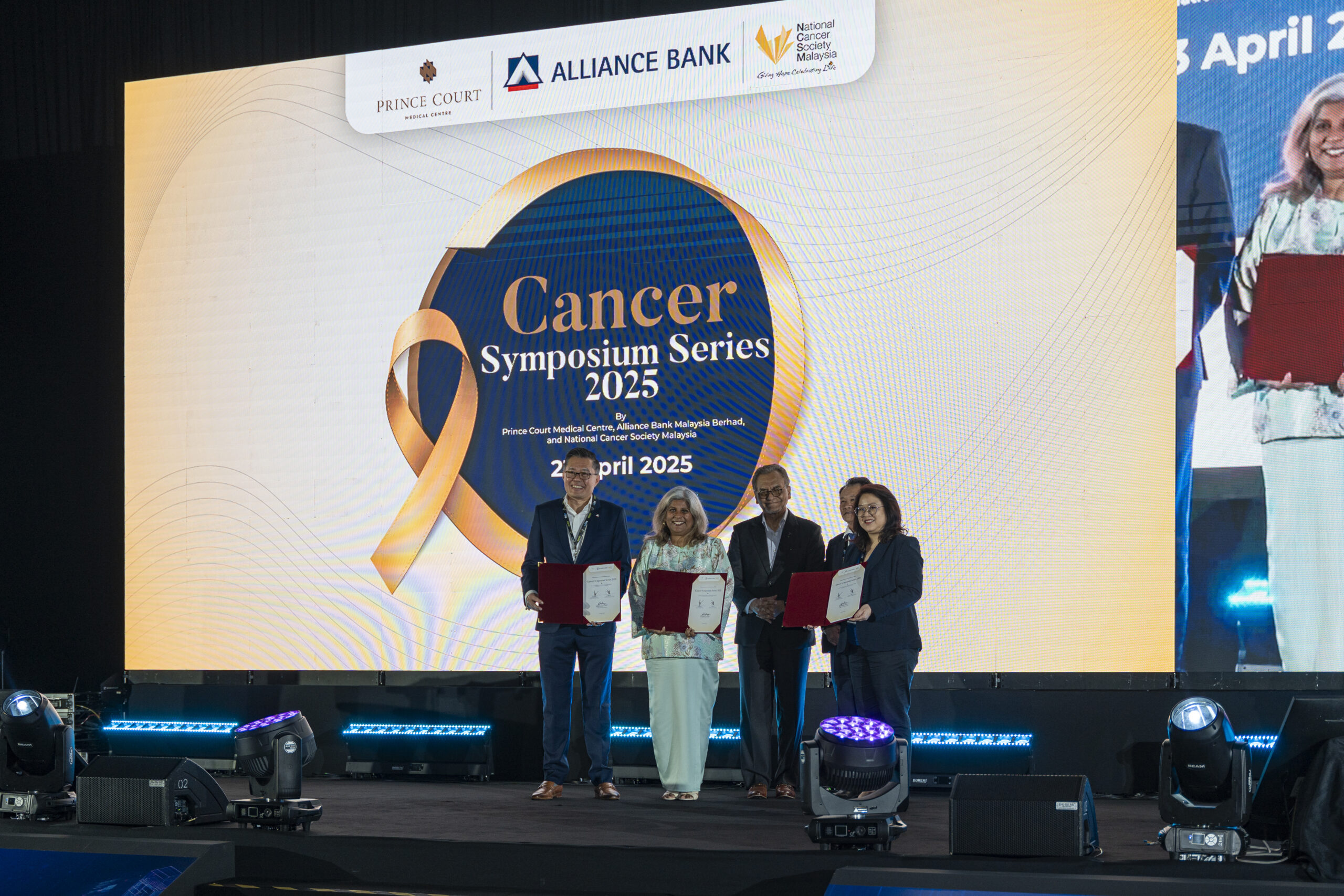
Alliance Bank Malaysia Berhad (Alliance Bank or the Bank), Prince Court Medical Centre (Prince Court) and the National Cancer Society Malaysia (NCSM) have joined forces in a landmark partnership to improve access to cancer screening and encourage early detection among Malaysians. The collaboration was formalised through the signing of a Memorandum of Understanding (MOU) at the SEA Healthcare and Pharma Conference 2025.

The signing was witnessed by Yang Berhormat Datuk Seri Haji Dr. Dzulkefly bin Ahmad, Minister of
Health, underscoring the collective commitment to improving public health initiatives in Malaysia.
Cancer remains a major health concern in Malaysia, with early detection playing a critical role in
improving patient outcomes. This partnership supports the Ministry of Health’s National Strategic Plan
for Cancer Control Programme 2021 – 2025, which aims to reduce cancer risk factors, strengthen
early detection through screening, and improve access to timely diagnosis and treatment. This
tripartite collaboration brings the three organisations together to support national efforts in advancing
cancer awareness and screening accessibility, ultimately improving survival rates and the overall wellbeing
of Malaysians.

“Improving access to cancer care is not just a medical priority, it is a moral imperative. These
symposiums mark an important step in bringing together minds, expertise, and commitment from
across sectors to ensure that no one is left behind in the fight against cancer. Collaboration is our
most powerful tool — and together, we can build a future where quality cancer care is within reach for
all,” said Yang Berhormat Datuk Seri Dr Dzulkefly Ahmad.

Ms. Gan Pai Li, Group Chief Consumer Banking Officer of Alliance Bank, said, “At Alliance Bank, we
recognise that health and financial security are closely linked. When individuals are financially secure,
they are able to better invest in their health, and good health allows them to focus on achieving their
financial goals. In tandem with the MOH’s initiative to elevate awareness of early cancer detection,
our partnership with Prince Court and NCSM reflects our commitment to empowering our customers
and employees to take charge of their health, while also easing some of the financial constraints
associated with health screenings. As The Bank For Life, we strive to make a meaningful impact on
our customers by being a trusted partner at every stage of their lives.”

Dr. Shuba Srinivasan, Chief Executive Officer of Prince Court, said, “At Prince Court, we see health
screening not as a service, but as a responsibility. Early detection changes outcomes, but more
importantly, it changes lives. This partnership reflects what’s possible when healthcare, community,
and corporate responsibility come together with a shared purpose. With Alliance Bank and NCSM, we
are removing barriers and creating pathways so more Malaysians have the opportunity to act early,
understand their risks, and take control of their health. We are proud to play a role in advancing this
effort and to stand alongside partners who share our commitment to better health for all.”
“Through this series of cancer symposiums, we aim to empower our communities with knowledge,
connect professionals across disciplines, and drive forward our mission of early detection, better treatment, and compassionate care. Together with our partners, we are building a future where no
one faces cancer alone,” said NCSM Managing Director, Kol. Bersekutu Assoc. Professor Dr
Murallitharan Munisamy.

As part of the campaign, NCSM will organise cancer awareness symposiums at Prince Court,
featuring leading surgeons, oncologists, and cancer care experts. Each session will focus on a
different aspect of cancer education, from understanding risk factors to the latest advancements in
treatment. Attendees will gain practical insights into prevention, early detection, and care, while
having the rare opportunity to engage directly with specialists. Open to all Alliance Bank customers
and business partners, these symposiums aim to equip individuals with the knowledge to make
informed decisions about their health and encourage proactive steps towards cancer prevention.

From 2 May to 31 December 2025, all Alliance Bank cardholders will enjoy a 10% discount on all
health screening packages and selected aesthetics, along with a 25% discount on maternity
packages at Prince Court Medical Centre. This exclusive offer is designed to encourage individuals to
prioritise their health and undergo regular health screenings as a preventive measure, as well as
ensure that a trusted medical centre is selected, ensuring safety and professional care.
For more information on the Bank’s products and services, please visit
https://www.alliancebank.com.my.