Sunday, 16 August 2026 Stay informed. No noise.

TikTok strengthens Malaysia’s scam prevention efforts with multilingual #ThinkTwice knowledge hub

TikTok Malaysia has expanded its #ThinkTwice digital literacy initiative this year with simplified access to additional resources on scam prevention through its multilingual in-app knowledge hub, search banners, short videos, creator content, and upcoming series of industry dialogues.

The in-app knowledge hub is now available in more languages, including English, Bahasa Melayu, Mandarin, and Tamil. This initiative aims to spread awareness across millions of users nationwide through a multi-pronged approach in collaboration with the Royal Malaysian Police (PDRM), Malaysian Communications and Multimedia Commission (MCMC), Securities Commission Malaysia (SC), and other key government agencies.

Firdaus Fadzil, Head of Public Policy, TikTok Malaysia, said: “Online safety is a shared responsibility. It requires collaborative and continuous efforts across all segments of society. This is especially true in the case of scams as the modus operandi of cybercriminals are constantly changing. Education is key and we are delighted to empower Malaysians with the knowledge and tools to combat scams together through #ThinkTwice.”

TikTok’s digital literacy initiative encourages Malaysians to Pause, Prevent, and Protect. Pausing represents taking a moment to reflect and refrain from activities that violate TikTok’s Community Guidelines and local laws. Prevention means proactively deploying TikTok’s safety features and tools from local authorities to identify red flags. Protection rallies the community to keep each other safe by reporting potentially violative activities.

Dato’ Rusdi Mohd Isa, Director of the Commercial Crime Investigation Department (CCID) of the Royal Malaysian Police (PDRM), remarked: “Most of the scams can, in fact, be prevented. Among the most prevalent in Malaysia are investment scams, phishing, phone scams, job scams, love scams, and loan scams. There are readily accessible tools to assist the public in detecting such threats, including PDRM’s Semak Mule portal. Strengthening the nation’s scam prevention ecosystem requires the concerted involvement of both the public and private sectors. In this regard, TikTok’s support in enhancing public awareness is most timely and greatly appreciated.”

Malaysian Communications and Multimedia Commission (MCMC), underscored that: “Awareness and education remain our strongest defence against scams. While advanced tools and strong policies play a critical role, it is the public’s ability to detect and reject fraudulent tactics that ultimately determine our collective resilience. We are pleased to collaborate with TikTok to build a more informed and vigilant community. Through this partnership, we aim to amplify the reach of Sebenarnya.my, MCMC’s official verification portal, and AIFA, our AI-powered fact-checking assistant that helps users verify information instantly and confidently.”

Malaysians can easily access the knowledge hub by searching #ThinkTwice or relevant keywords on the TikTok app. It features four main pillars of information, mainly scam prevention tips using publicly available tools from key government agencies, TikTok’s Community Guidelines, TikTok’s safety features, and helplines to local authorities.
New report warns boards of top risks in Southeast Asia in 2026

As companies budgets and business plans for 2026, the latest global Risk in Focus 2026 Report by the Institute of Internal Auditors Inc. warns that boards must urgently strengthen governance to keep pace with fast-evolving risks.

The report has outlined changes in top risks over the years in many regions, showing how cybersecurity, business resilience, disruptive technologies such as AI, and geopolitical volatility are converging into complex increasingly interconnected, challenging and intensifying.

In the Risk in Focus 2026 Report’s regional deep-dives, Asia Pacific is highlighted as a fast-growing but risk-intensive region requiring urgent governance responses. Specially to Southeast Asia, the Report highlights that Cybersecurity (67%) tops the list as the number one threat, with AI, digital disruption, and data privacy expanding the attack surface. Business resilience (62%) comes second, reflecting the impact of tariff wars, supply chain shocks, and climate-related disruptions. The top two audit priorities for Southeast Asia (above 60%) mirror these threats.

For Southeast Asia, these trends not only heighten exposure but also present an opportunity: organisations that invest in the right resources, skills, and internal audit capabilities today will be better positioned to build resilience, sustain growth, and protect stakeholder trust in the years ahead.
However, while 52% of Southeast Asia survey respondents included digital disruption as a Top 5 risk – with AI reshaping competition and productivity, just 32% included it as a Top 5 audit priority. Many companies admit they lack the skills and frameworks to respond.

This year, the annual global report surveyed over 4,000 senior internal audit leaders worldwide, including 159 respondents from Southeast Asia who represent organisations with significant operations in the region. The 2026 edition introduces a forward-looking outlook — not just a snapshot of current risks but a projection of what boards cannot afford to ignore in the next three years. It also integrates AI, green finance, and geopolitical fragmentation as cross-cutting themes, which were less pronounced in earlier reports.

Malaysian Companies Under Pressure In 2026
Some of these risks are already manifesting and weighing on organisations in Malaysia. In 2024, police reports point to cybercrime losses exceeding RM1 billion, and yet, only 2% say they are prepared. That’s a governance gap with real financial consequences. Meanwhile ESG compliance pressures are also mounting with IFRS S1/S2 alignment this year and Scope 3 reporting by 2027.

Boards, therefore, cannot afford to deprioritise these threats, and gaps between identified risks and internal audit coverage, particularly in areas such as cybersecurity, digital disruption and human capital which must be addressed with the appropriate control measures.
In these, internal auditors can support leadership in anticipating risks, testing resilience and building confidence with stakeholders. What were once operational — have now become
business survival issues, and internal auditors are empowered to guide boards through this era of polycrises.

With organisations improving their resilience against “cascading failures”, The Institute of Internal Auditors Malaysia offers more than 90 training programs each year to elevate governance practices and foster a culture of transparency and accountability for businesses. IIAM recently launched the Statement of Risk Management and Internal Control (SORMIC) Guide 2025 with Bursa Malaysia which provides public-listed companies with a clear framework to strengthen disclosures, bolster investor confidence, and embed risk governance into their operations.

Demand for internal audit upskilling is also rising sharply: with growing enrolment in IIAM’s 80 programmes.” Continuous professional development and staying abreast of emerging trends are key to enabling internal auditors to excel in their roles. The Institute is central to equipping professionals with the knowledge, skills, and ethical standards necessary to comply with Global Internal Audit Standards effectively.

Advancing cyber resilience through data-driven intelligence

Zurich Insurance Group (Zurich), together with the Cyber Threat Alliance and CyberGreen Institute, has published a new report “Enhancing cyber security: Key metrics for policymakers” urging the adoption of standardised national cyber security metrics. The report notes the global cyber risk protection gap of USD0.9 trillion, with insured losses covering only 1% of economic losses from cyber incidents.

The measures proposed in Zurich’s 2024 whitepaper, “Closing the Cyber Risk Protection Gap”, rely on robust quantitative data to enhance standards and best practices. While organisations like ENISA and CISA provide corporate-level frameworks, national metrics for policy decision-making are largely absent. Zurich’s new report introduces six key metrics and an institutional framework for governments to help clarify national cyber risk, strengthen resilience, and enable informed policy decisions:

  1. Percentage of organisations with cyber insurance or audit certification: Measures preparedness and understanding of cyber security.
  2. Proportion of exploited vulnerabilities older than one year: Indicates ecosystem defense and remediation speed.
  3. Number of significant cyber incidents: Reflects national detection and analysis capabilities.=
  4. Average time to containment of cyber incidents: Demonstrates ability to halt the spread of threats.
  5. Mean time to restore operations: Assesses speed of recovery after incidents.
  6. Percentage of unfilled cyber security positions: Gauges workforce capacity to manage risks.

Establishing National Cyber Statistics Bureaus – dedicated institutions for collecting these metrics – would ensure consistent incident reporting, track threats and resilience, publish key analyses, and assess security regulation effectiveness. These bureaus could also support a supra-national body to aggregate findings, enabling deeper global comparisons and insights into evolving threats.

To move from currently fragmented, reactive approaches to a unified, data-driven strategy, Zurich calls on policymakers to:

  • Collaborate on data collection: Move from reactive incident reporting to proactive, cross-sector data sharing
  • Establish dedicated entities: Create or empower national and global institutions to collect, analyse, and report cyber statistics across industries and borders
  • Harmonise standards and frameworks: Align definitions, benchmarks, and reporting protocols.

LexisNexis launches Lexis+ AI with Protégé Malaysia

LexisNexis® Legal & Professional launches Lexis+ AI with Protégé Malaysia, a state-of-the-art, personalised AI assistant designed to transform legal work in Malaysia. The platform is built to streamline routine tasks while empowering legal professionals in unlocking new economic opportunities.

Developed with insights from pioneering customers, this groundbreaking solution harnesses the power of both AI agents and generative AI, all grounded in proprietary LexisNexis Malaysia content, including the prestigious Malayan Law Journal, to deliver next-level productivity and outcomes. Additionally, it is developed to the highest standards of security, compliance and privacy, ensuring that with dedicated human oversight, Protégé autonomously reviews, refines, and continually improves its deliverables based on user-defined goals.

“With the launch of Lexis+ AI with Protégé Malaysia, we are excited to offer a solution that is perfectly aligned with the unique legal landscape of Malaysia, ensuring every practitioner has access to a personalised and intelligent assistant that drives better outcomes,” said Gaythri Raman, Managing Director, LexisNexis Southeast Asia and India.

Leveraging proprietary agentic and generative AI technology, Lexis+ AI with Protégé offers a suite of
cutting-edge features, including:

  • Document Analysis and Summarisation: Upload and analyse documents with speed and
    accuracy. Lexis+ AI can summarise large, complex documents and generate concise overviews.
  • Intelligent Drafting: Draft personalised legal documents – ranging from transactional contracts
    to litigation motions, briefs, and court filings – with the ability to self-review and flag areas for
    improvement.
  • Graphical Timeline: Generate visual timelines from uploaded documents, highlighting key
    events and milestones.
  • Dynamic Workflow Suggestion: Receive actionable prompts and automated suggestions based
    on the type of document and workflow requirements. The assistant can dynamically generate
    follow-up queries to further tailor outputs.
  • Secure Document Management: Protégé Vault allows users to securely store, upload, and
    manage thousands of legal documents while performing a variety of AI-driven tasks such as
    identifying key information, extracting clauses, summarising and drafting.

The Malaysia launch builds on the successes in the United States, United Kingdom, Hong Kong, and
Australia, where LexisNexis has deployed similar innovations in legal AI. Integrating extractive AI (for
deep insights and data retrieval), generative AI (for content creation), and now, agentic AI (for
autonomous task completion), Lexis+ AI with Protégé is set to transform legal workflows by:

  • Reducing Repetitive Work: Allowing legal professionals to spend less time on mundane tasks
    and more on high-value services.
  • Improving Outcomes: Enhancing the accuracy and precision of legal documents through
    advanced self-review features.
  • Personalising User Experience: Grounding AI outputs in locally relevant legal content and
    tailoring the experience based on the specific needs of the Malaysian market.

Malaysia tops emerging ASEAN banking benchmark on climate action

Malaysia’s banks have emerged as the strongest climate performers amongst the 14 ASEAN Banks assessed, according to Bridging the Gap: Have ASEAN Banks Caught Up on Climate Action?, a new report launched by Asia Research & Engagement (ARE).

The study finds that ASEAN banks in Malaysia, Indonesia, Thailand, and the Philippines are making measurable progress, with 11 of 14 setting long-term net-zero goals for financed emissions—up from three in 2022—but they still trail banks in Japan, Singapore, and South Korea, where decarbonisation targets are broader, deeper, and aligned with national net-zero goals for 2050.

Within emerging ASEAN, Malaysia stands out. The assessment of CIMB, Maybank, and Hong Leong Bank (HLB) underscores the country’s leadership:

  • CIMB has one of the region’s most advanced decarbonisation frameworks, with sectoral targets across coal, cement, palm oil, oil & gas, and real estate.
  • Maybank has embedded climate KPIs into executive pay, phased out coal financing across lending and underwriting, and disclosed detailed financed emissions.
  • HLB has pioneered client transition risk categorisation, engaging directly with high-emitting sectors.

Based on public disclosure, sustainable finance now represents a growing proportion of lending of the Malaysian banks, although the definitions vary so the numbers are not fully comparable.

  • Maybank: USD 39.3bn (24.4% of loans)
  • IMB: USD 33.8bn (33.4%)
  • HLB: USD 5.3bn (11.6%)

Yet challenges remain. Heavy financing exposure to palm oil and limited policies on upstream oil & gas leave gaps.

“Malaysia’s banks have raised the bar for emerging ASEAN, but credibility will rest on closing loopholes in palm oil and for gas finance,” said Ben McCarron, Founder and Managing Director of ARE.

Across the region, banks in Thailand, Indonesia, and the Philippines are rapidly improving governance and disclosure, while counterparts in Japan, Singapore, and South Korea continue to set the global benchmark with broader sectoral policies and 2050-aligned net-zero goals.

Opportunities Ahead for Malaysia
Malaysia’s leadership in ASEAN positions its banks to capture new opportunities:

  • Shape regional policy standards by extending strong frameworks beyond coal into gas-fired power and high-carbon sectors.
  • Set a governance benchmark by formalising climate-linked KPIs in remuneration and nomination processes.
  • Pioneer advanced risk practices by expanding financed-emissions disclosures and scaling client-level transition planning.

Accelerate sustainable finance growth by channelling capital into industrial decarbonisation and grid-enabling investments, turning current ambition into system-level impact.

Commenting further on the findings, McCarron, said, “Malaysia’s banks are setting the pace in emerging ASEAN with stronger policies, governance, and disclosures. The challenge now is to expand this leadership into broader sector coverage and 2050-aligned targets so the region can meet the demands of a low-carbon economy.”

NCT Group expands industrial development with NGX

NCT Group of Companies (NCT Group), in collaboration with Northern Gateway (NGX) has launched the NCT InnoSphere, the first certified project of its kind to be built in the Delapan Special Border Economic Zone (SBEZ) in Bukit Kayu Hitam, Kedah. The project leverages NCT Group’s expertise in bridging technology advancement with environmental sustainability to create an industrial park set to attract global investors and next-generation industries.

NCT InnoSphere, spanning across 137 acres of free zone land, is being developed in partnership with NGX, a wholly owned subsidiary of Minister of Finance Inc. (MOF Inc.) and master developer of SBEZ. The development comes on the heels of the NCT Smart Industrial Park (NSIP) in Selangor, launched by NCT Group in 2023, Malaysia’s first certified MIP, which achieved 80% sales in Phase 1 and is set for vacant possession in Q4 2025. NSIP has been recognised for its green-oriented design and innovation, including a Five‑Diamond rating under the Low Carbon Cities 2030 Challenge for its exemplary low-carbon design, the StarProperty Excellence in Business Estate Award for best industrial park development, and the Asia Pacific CEO Sustainability Awards 2025 for sustainability leadership in industrial development.

Dato’ Sri Yap Ngan Choy, Founder and Group Managing Director of NCT Group, said, “We are honoured to work alongside the Kedah State Government and NGX on this transformative, world-class initiative. NCT InnoSphere will not only unlock long-term economic value creation for the northern region, it will support national efforts to diversify logistics channels and facilitate seamless trade access among regional markets.”

Under the Joint Development Agreement, NCT Group is responsible for the full delivery of the project, including planning, construction, and ecosystem development. NGX, as landowner and facilitator, will oversee the primary infrastructure works, utility provisions, and regulatory coordination to ensure smooth project execution.

Its strategic location adjacent to the Malaysia-Thailand border and in close proximity to Penang Port, positions NCT InnoSphere as a vital land access trade gateway for the Northern Corridor, while also serving as a hub for key industries including logistics, automotive supply chains, food manufacturing, digital and smart technologies, advanced manufacturing, and agriculture and bio-industries.

Dato’ Sri Yap added, “Our second MIP is a strategic leap forward in our commitment to help shape Malaysia’s industrial future with a high-impact ecosystem. NCT InnoSphere is designed to harness the strengths of cross-border trade, logistics efficiency, and smart infrastructure, creating a significant platform for advanced industries such as semiconductors, electrical and electronics, and smart logistics to flourish. As with NSIP, our goal is to foster a resilient environment on a foundation of digital readiness and innovation.”

Razwin Sulairee Hasnan Termizi, Group Chief Executive Officer of NGX further added: “NCT InnoSphere is built at the Zero Mile Zone, the very first point of Malaysia’s supply chain. Each year, nearly 1.3 million trucks cross at Bukit Kayu Hitam–Sadao, carrying close to RM70 billion in annual border trade, making InnoSphere the first touchpoint for consolidation, light assembly, or full-scale manufacturing. This creates what we call the First Load Advantage, where investors capture value in the first mile, as every truck and shipment that flows south begins its journey here. As part of Delapan, InnoSphere also sits at the convergence of more than 60 Free Trade Agreements (FTAs), giving investors seamless access to regional and global markets. Penang becomes a natural stop along a one-flow corridor that ultimately leads to Singapore. Backed by the Bukit Kayu Hitam Inland Port (BKH ICD) and strengthened by Thailand’s role as Malaysia’s natural value chain partner, InnoSphere is an industrial park that will define the cost of supply chains to be competitive, directly tied to the cross-border flows that already drive this region’s economy.”

NCT InnoSphere is planned as an eight-phase development, with each phase equipped with a mix of industrial, commercial, and support components to efficiently facilitate operational, trade and manufacturing activities. The development will feature over 230 units, including semi-detached, detached, cluster, terrace, and built-to-suit configurations, designed to accommodate diverse business needs across sectors, with an estimated Gross Development Value (GDV) of RM1.10 billion.

With a Silver Provisional GreenRE Certification in hand, NCT InnoSphere is the first MIP in Northern Malaysia with this distinction. Aligned with NCT Group’s longstanding sustainability drive, the project will incorporate features that promote environmental responsibility and greener operational efficiency in forward-thinking industrial layouts.

NCT InnoSphere will be a catalyst for industrial advancement in the Northern Corridor. Through its Free Zone designation and collaboration with agencies like MIDA and NCER Malaysia, NCT InnoSphere will provide investors duty exemptions, streamlined customs processes and access to cross-border incentives. Additionally, a dedicated one-stop centre within the park will offer integrated investor services, including licensing support and coordination with relevant government agencies.

Zurich Malaysia introduces Z-Driver EV Protect

Zurich Malaysia has introduced Z-Driver EV Protect, a comprehensive insurance and takaful benefits designed exclusively for electric vehicle (EV) owners. This new offering enhances car insurance and takaful protection to cover EV batteries, home wall chargers, portable charging accessories, and more. With an affordable add-on premium/contribution of just RM120*, Z-Driver EV Protect delivers targeted coverage tailored to the unique needs of EV owners.

“EV owners face a unique set of risks that go beyond traditional motor insurance and takaful. Z-Driver EV Protect is designed to address these concerns, offering practical coverage that reflects how EVs are used today. It’s part of our commitment to making protection more relevant, accessible, and aligned with our customers’ evolving lifestyles,” said Foo Chuen Hou, Chief Distribution Officer, General Segment of Zurich Malaysia.

Key benefits* of Z-Driver EV Protect include:
• Home wall charger coverage up to RM15,000
• Personal liability while charging up to RM50,000
• Portable charging cable coverage up to RM2,000
• Compassionate allowance for incidents at public charging stations up to RM20,000
• Optional enhanced special perils protection, including battery damage due to water ingress from insured events

These benefits complement existing Z-Driver features, such as unlimited towing in the event of battery depletion, giving EV drivers greater confidence, peace of mind, and protection for every journey.

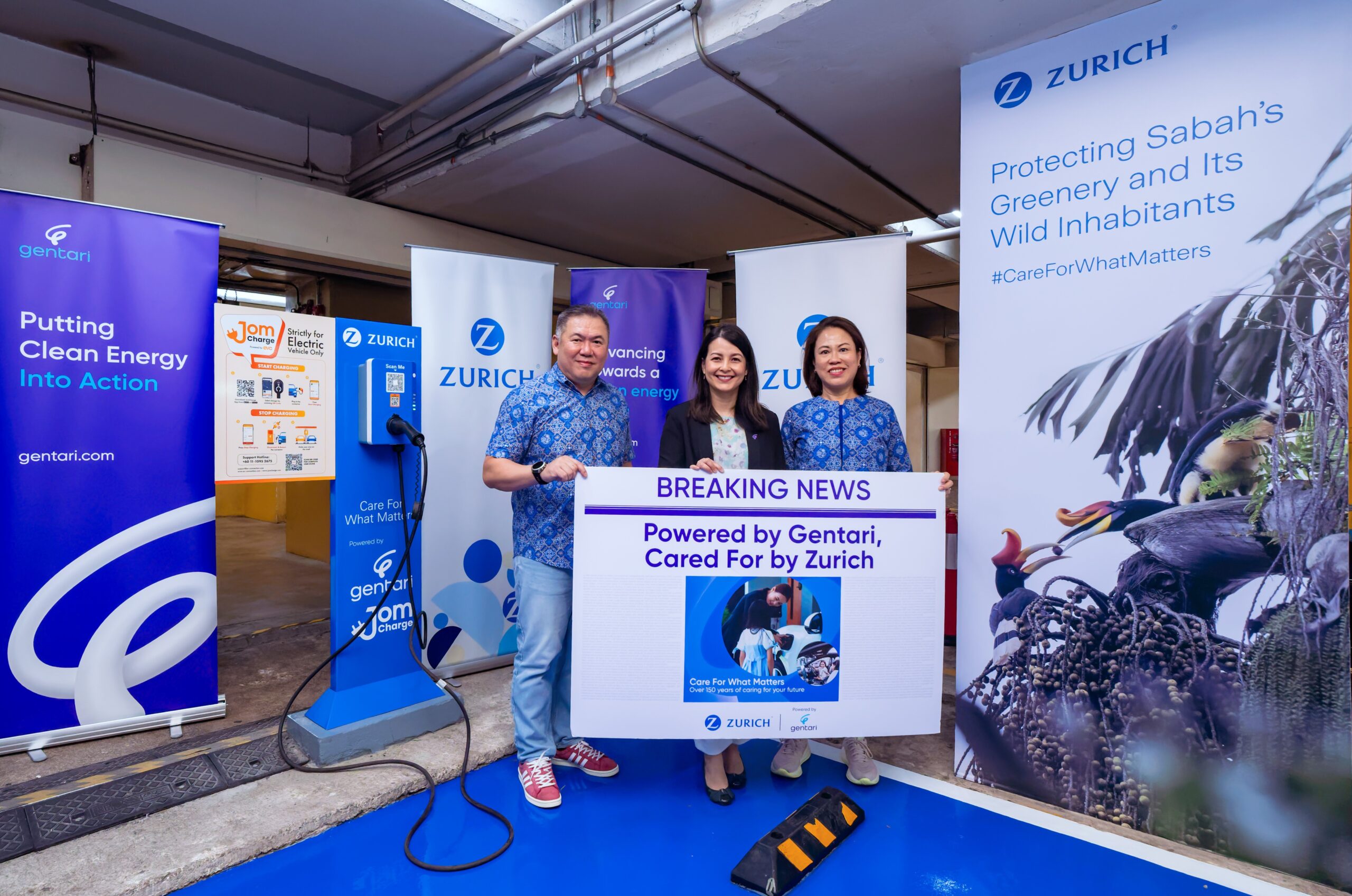
Furthering this commitment to sustainable mobility, Zurich Malaysia has collaborated with Gentari Green Mobility Sdn Bhd, a subsidiary of Gentari Sdn Bhd (Gentari), to support greater awareness and visibility of EV charging infrastructure nationwide. Through this collaboration, Zurich Malaysia has extended its brand presence to 13 EV charging stations at high-footfall destinations, including Suria KLCC, Kuala Lumpur Convention Centre, KLIA2 Gateway, The Gardens Mall, Paradigm Mall Johor Bahru, Gamuda Gardens, Putrajaya Sentral, and more.

“Reliable charging infrastructure plays a pivotal role in enabling more Malaysians to embrace electric mobility. Our collaboration with Gentari is not just about increasing the number of chargers, it’s about helping to build a more connected and confident EV ecosystem. Sustainability must be practical, customer-focused, and accessible,” said Teresa Wong, Chief Risk Officer – General Segment and Head of Sustainability Risk of Zurich Malaysia.

Aliah Nasreen Abdullah, Chief Customer Officer of Gentari Green Mobility, echoed this sentiment, saying, “Gentari is committed to creating a robust green mobility ecosystem in Malaysia, and our collaboration with Zurich Malaysia is another step in that direction. Together, we’re expanding the availability of EV chargers and enhancing the entire ownership experience, making it easier, safer, and more accessible for drivers to transition to clean mobility.”

The collaboration with Gentari, a leading clean energy solutions provider, supports Zurich Malaysia’s goal of building a more sustainable future by addressing one of the main barriers to EV adoption, convenient and reliable charging infrastructure.

Kenanga Futures launches “Futures Awaken”

Kenanga Futures Sdn Bhd (“Kenanga Futures”) has announced the launch of its latest nationwide campaign, “Futures Awaken”. Running until 30 November 2025, the campaign is dedicated to shaping a new generation of traders by enhancing their financial strategies and redefining Futures as a vital hedging and risk management tool amidst ongoing global economic uncertainties.

Futures Awaken highlights Malaysia’s growing prominence in the global derivatives space by showcasing the vibrant and dynamic product landscape of Bursa Malaysia Derivatives (BMD) as a gateway to new opportunities. Reflecting Kenanga Futures’ commitment to Building a Smart Derivatives Trading Community, the campaign offers a curated digital learning journey featuring interactive e-modules and seminars – all designed to foster financial literacy and empower Malaysia’s New-Gen, which makes up 25% of the population, to take charge of their financial future in the ever-evolving derivatives landscape.

“At Kenanga Futures, we are building tomorrow, today. By staying true to our values, we strive to inspire and empower the next generation of traders through innovation and enhanced education to thrive in this dynamic derivatives industry. The Futures Awaken campaign is a timely initiative that celebrates the spirit of Malaysia Day by equipping Malaysians with a strong foundation in futures trading and advancing them to the next level. As the Gen-Alpha of today embraces disruptive technology and adopts AI-machine learning in trading strategy, the derivatives landscape is being redefined – unlocking new opportunities in this new era of trading,” said Azila Abdul Aziz, Chief Executive Officer/ Executive Director & Head of Listed Derivatives of Kenanga Futures.

Throughout the campaign period, account opening fees are reduced to a nominal RM10, lowering the barrier of entry for newcomers to capitalise on the current market landscape. Additionally, new clients who successfully register and open a futures trading account with Kenanga Futures during the campaign period, and trade a minimum of 10 BMD contracts, will be eligible to receive a RM100 e-shopping voucher, while the top 20 traders must fulfil the minimum requirement of trading more than 500 BMD contracts during the campaign period in order to qualify for the RM300 e-shopping voucher.

Looking ahead, Kenanga Futures plans to expand the campaign with advanced learning modules, collaborative initiatives, and partnerships with industry experts – reinforcing its commitment to Building a Smart Derivatives Trading Community.

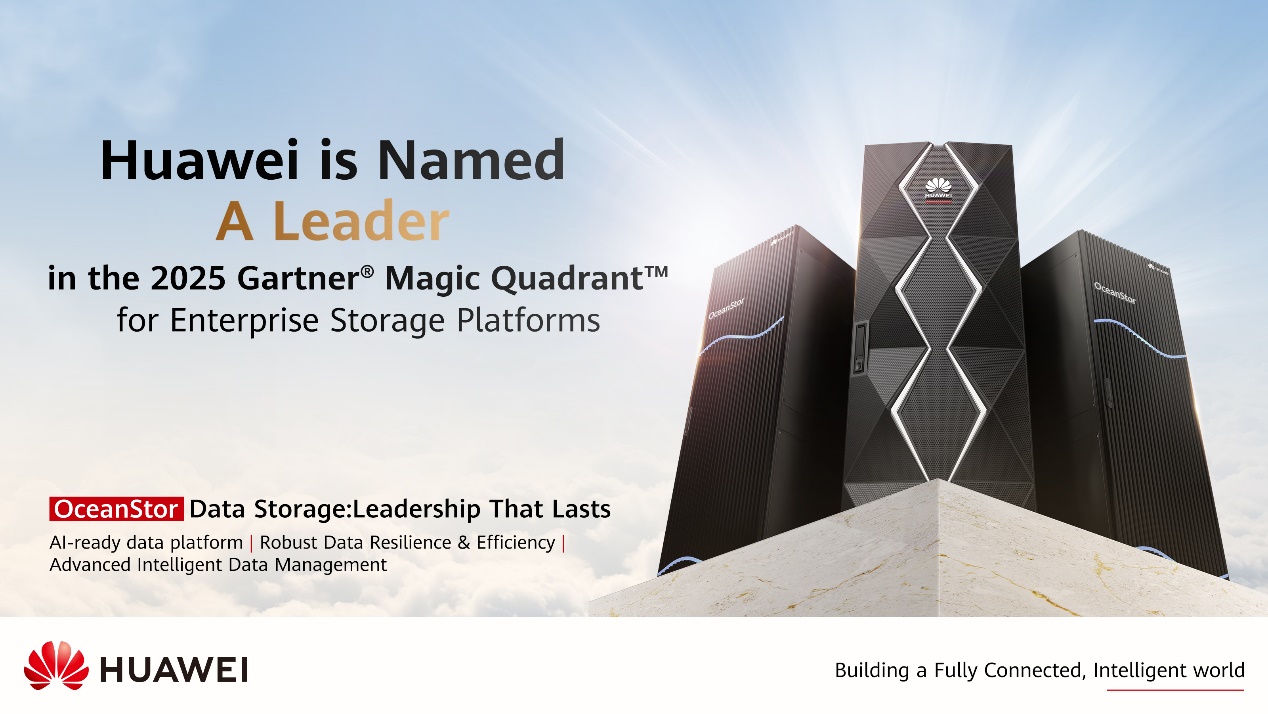
Huawei named a leader in the Gartner® Magic Quadrant™ for Enterprise Storage Platforms

The internationally renowned analyst firm Gartner® has released the Magic Quadrant for Enterprise Storage Platforms 2025, with Huawei being placed in the Leaders Quadrant, the only non–North American vendor to do so.

Huawei Data Storage continues to advance technological innovation, leveraging an AI-ready data platform, robust data resilience and efficiency, and advanced intelligent data management to comprehensively meet the diverse needs of enterprises in hybrid-cloud, AI, and critical business use cases.

Huawei’s Data Storage solutions are used in more than 150 countries and regions worldwide, serving clients in industries such as finance, telecommunications, manufacturing, healthcare, government, and public utilities across Latin America, Europe, the Middle East, Africa, and the Asia-Pacific region.

AI adoption and rising threats fuel cybersecurity burnout in Malaysia

Sophos, a global leader in advanced security solutions, today unveiled the 5th edition of its report: The Future of Cybersecurity in Asia Pacific and Japan (APJ), produced in collaboration with Tech Research Asia (now part of Omdia). The findings reveal that cybersecurity burnout remains high in Malaysia, with 90% of organisations surveyed experiencing issues – primarily driven by increased threat activity, lack of resources, and unclear cybersecurity strategies.

The 2025 report also highlights how AI is having a two-pronged effect on cybersecurity with AI-powered security tools helping to alleviate some of the issues associated with fatigue, while shadow AI use by employees is complicating cybersecurity efforts.

“The triad of increased threats, unclear strategies, and limited resources is making cybersecurity unsustainable for many teams,” said Aaron Bugal, field chief information security officer, APJ, Sophos. “This year’s findings reinforce what we’ve observed in the field: cybersecurity stress and burnout are more than just operational concerns – they’re cultural, strategic, and deeply human challenges. AI tools, when deployed thoughtfully, can provide relief by scaling operational capability and enabling faster incident response. But the surge of shadow AI – unauthorised, unregulated AI tools being used by employees – poses new risks that many organisations are not prepared for.

“We’re witnessing a new era where security awareness must extend beyond phishing emails to include how people use and share sensitive data through AI tools. Governance and clear boundaries around AI usage are essential.”

Cybersecurity burnout is a business issue
The report reveals that cybersecurity stress is not just a tech issue – it is a business one. Burnout affects productivity, incident response, employee retention, and contributes to breaches. The top three most common cybersecurity frustrations amongst Malaysian respondents were:
• Keeping up with the pace of cybersecurity threats
• Executives assuming cybersecurity is easy, and concerns are over exaggerated
• Inability to create a strong cybersecurity culture across the organisation

AI: Friend or Foe?
AI’s promise is undeniable: 91% of Malaysian organisations surveyed are already using business AI tools such as ChatGPT, co-pilots, and agentic AI, and 78% have a formal AI strategy in place. Among those using AI in cybersecurity, the biggest benefit reported is more accurate triaging and escalation of incidents, helping reduce stress and improve response speed.

However, 36% admit to shadow AI usage – employees using unauthorised tools – while another 13% are unsure whether shadow AI is in their organisation. The lack of visibility into what tools are being used, what data they access, and which employees are using them is creating new risks.
These findings underline the need for robust AI governance frameworks that not only define policy but also enforce oversight, especially as AI continues to be woven into core business operations.

Other key insights from the report
• Burnout intensifies its impact: Organisations lost an average of 5.6 hours per employee per week due to stress and fatigue – up from 4.1 hours per week in 2024.
• Budgets remain robust: 93% of organisations plan to increase their cybersecurity budgets in the next year; with 27% planning an increase of 10% or more.

About the Report
Commissioned by Sophos and conducted by Tech Research Asia, the 2025 study surveyed 926 cybersecurity and IT professionals across Australia, India, Japan, Malaysia, the Philippines, and Singapore. Now in its fifth edition, the report continues to explore the business dimensions of cybersecurity rather than purely technical assessments.