Thursday, 6 August 2026 Stay informed. No noise.

Singaporeans don’t cancel brands – they silently leave them, Ogilvy’s inaugural 2026 APAC Believability Index reveals

  • 92% of Singapore consumers silently disengage when brand believability is lost
  • Only 5.9%% would post about a negative brand experience on social media
  • Singapore emerges as a high-trust but low-tolerance market where institutional credibility and operational proof matter most

SINGAPORE – Media OutReach Newswire – 8 July 2026 – Ogilvy released its first 2026 APAC Believability Index: The Power of Proof, a comprehensive study examining how consumers across Asia-Pacific (APAC) determine what and who they believe in an increasingly complex information environment shaped by AI-generated content, misinformation, fragmented media and declining confidence in corporate claims.
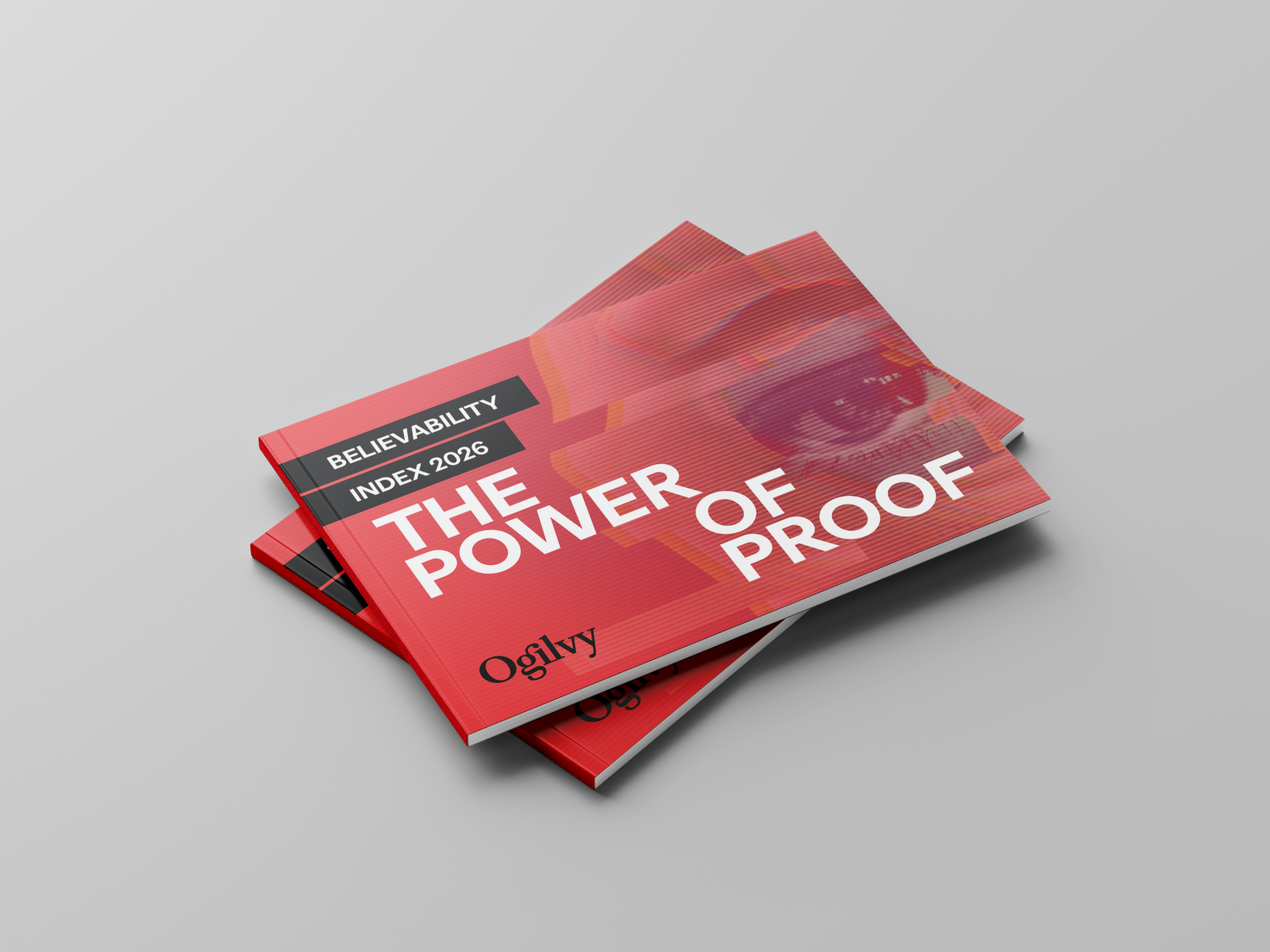
Ogilvy APAC - Believability Index 2026 visual

The regional and Singapore insights were revealed at an event at the Ogilvy Singapore office attended by more than 60 invited guests including global, regional and local brands, not-for-profit organisations, and government agencies.

Conducted in partnership with YouGov, the research surveyed 7,176 respondents across the markets of Australia, Indonesia, Singapore, Malaysia, the Philippines, Hong Kong SAR, and Mainland China, including 1,050 respondents in Singapore.

The report reveals that organisations are dangerously overlooking a reputational blind spot that directly impacts revenue. A staggering 93% of APAC consumers quietly disengage when believability in a brand or organisation is lost, with almost half (48%) stopping their purchases entirely.

In Singapore, the findings reveal a distinct local paradox: Singapore is a high-trust market, but not a high tolerance one. While Singapore consumers place significantly greater belief in Government, institutional and credentialed sources compared with much of the region, they are also deeply pragmatic and unforgiving when brands fail to deliver on their core promises.

The report finds that 92% of Singapore consumers silently disengage when brand believability is lost, while only 5.9% would post about a negative brand experience on social media. This suggests that the most pressing reputation risk for brands in Singapore may not be public outrage, but quiet withdrawal – with customers switching providers, stopping purchases, avoiding brand content, deleting apps or simply never returning.

In response to these findings, Ogilvy has launched its Believability Diagnostic Tool, powered by an enterprise-grade AI agent, built and housed in WPP Open. The Believability Agent is designed to help C-Suite leaders identify the “Say-Do Gap” between what brands promise and what customers experience – enabling organisations to detect potential silent disengagement before it affects business performance.
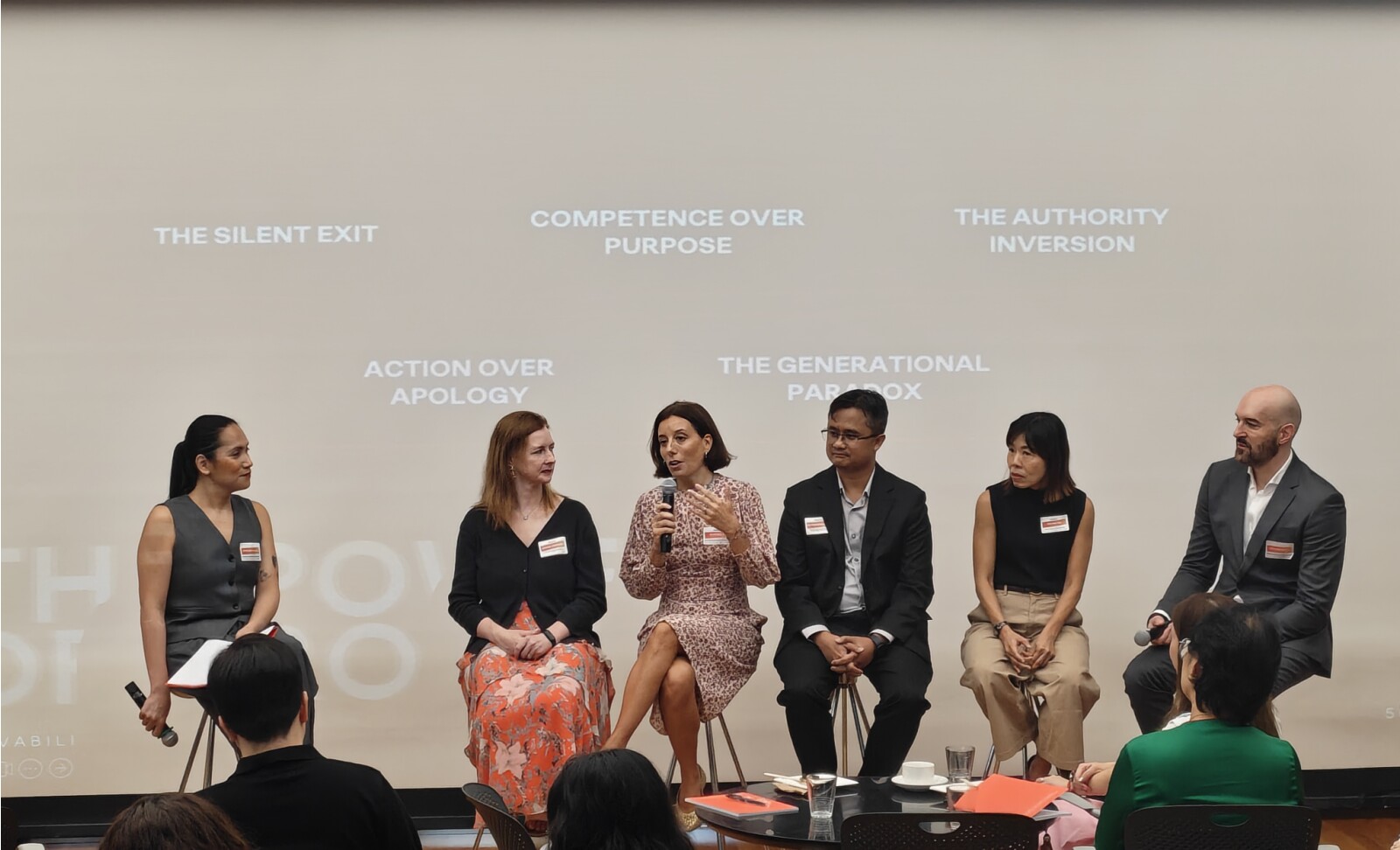
Ogilvy's inaugural 2026 APAC Believability Index reveals

Richard Brett, President of PR& Influence, Ogilvy Asia Pacific, said: “Believability has evolved from a PR challenge into a commercial imperative. In a world of AI slop and synthetic content, misinformation and growing skepticism, the brands that succeed will be those that can prove what they say. Singapore is a particularly important market because believability here is deeply anchored in institutional credibility and operational delivery. Consumers may not always complain publicly when belief is lost, but they will act – and often, they will act silently.”

Akashah Q, Managing Director for PR & Influence, Social, Ogilvy Singapore and Malaysia, added: “The Singapore data shows that silence should not be mistaken for satisfaction. A stable sentiment dashboard or low complaint volume may hide a much bigger commercial risk. Singaporeans are careful when assessing proof – they value official sources, factual correctness and operational competence. For brands, the implication is clear: Believability is built not only by what you say, but by whether your actions, service and evidence consistently back it up. If not, they will politely but brutally break up with you. The reputational crisis of the future may not begin with a hashtag. It may begin with silence.”

Key Singapore Findings from the Ogilvy APAC 2026 Believability Index:

1. Singaporeans do not always cancel brands. They silently leave them.
The most dangerous reputation risk in Singapore may be the one brands cannot see. When Singapore consumers lose belief in a brand, 92% take silent actions (vs 93% across APAC). More than half (54.4%) stop purchasing the brand’s products or services entirely, while 33.5% switch to a more believable competitor. A further 37.3% become wary and suspicious of similar brands, products or services and 19.7% simply avoid the brand’s content without telling anyone.

In contrast, only 5.9% would post a negative brand experience on social media (vs 10% in APAC), and only 9.5% would leave a negative review or public comment.

Implications: The findings indicate that brands relying primarily on public complaints, social listening or visible sentiment may be missing the larger commercial reality: Customers have already left, without leaving a public trace.

2. Competence over purpose
Purpose, values and ESG commitments still matter, but in Singapore, they cannot compensate for operational failure,

The study found that 42.1% of Singapore consumers abandoned a brand in the past year because its product or service did not deliver on what was promised. This significantly outweighs the 23.2% who walked away over poor business ethics and the 14.4% who left due to exaggerated environmental or sustainability claims.

Implications: The findings suggest that Singapore consumers are not asking brands to choose between purpose and performance. They are asking brands to prove purpose through performance.

Operational integrity and factual correctness emerged as among the strongest drivers of believability in Singapore, reinforcing the importance of delivering consistently on the basics before brands can credibly make broader claims.

3. Institutional credibility is Singapore’s believability baseline
Across APAC, people rely on different sources of authority. In some markets, belief is built from the ground up through peers, lived experience and word of mouth. In Singapore, the believability architecture looks a little different – it stands out as one of the region’s clearest institutional-trust markets.

61% of Singaporeans find government sources, politicians and officials highly believable
– more than double the rest of the region overall (Australia, Indonesia, Philippines, Malaysia) at 26%. In addition, 82.4% say credibility, including official, credentialed or backed-up sources, is the leading factor in believing new information. Social media platforms sit much lower as a source of believability, at 12.7%.

This contrasts with more relational trust markets such as Australia and the Philippines, where people with lived experience and peer recommendations play a more dominant role.

Implications: For organisations, this means that communication strategies which work in one APAC market may not automatically build belief in Singapore. In high-stakes sectors such as finance, health, technology, food safety, sustainability and public infrastructure, brands need stronger institutional anchors: Official statements, named spokespeople, transparent data, third-party validation, academic or technical expertise and clear operational proof.

4. Action over apology
Singapore consumers do not reject apologies, but they do reject them without evidence of action.

The study found that 56.2% of Singaporeans say that brands must actively correct a mistake or fix a problem before they will believe the brand again. This outranks public acknowledgement or apology, cited by 46.8% of respondents.

Encouragingly, lost belief is not necessarily permanent. 78.7% of Singapore consumers believe lost believability can be regained, while only 15.1% believe that once belief is lost, it is gone forever.

Implications: The implication for brands is that the crisis response must be action-first. Consumers want to know what has been fixed, who is accountable, what will change, how recurrence can be prevented and how progress will be proven.

5. Different generations leave and return on different terms
The study also found that believability is lost and rebuilt differently across age groups in Singapore.

Millennials appear to be among the most commercially sensitive audiences, with 68% stopping engagement with a brand due to lack of belief in the past 12 months – the highest of any generation. For this group, belief is often won or lost through customer experience, service recovery and responsiveness.

Baby Boomers show stronger reliance on institutional sources, with 69% finding Government or institutional sources highly believable. However, once trust is broken, they are more likely to make a clean break, with 60% stopping purchases when doubts rise.

Gen Zs are more willing to give brands another chance, with only 8% saying trust is permanently lost once broken. However, they also demand more proof of change, with 64% expecting brands to actively correct mistakes and 44% wanting brands to communicate in more transparent and evidence-based ways.

Implications: The findings point to a new generational reality: Younger consumers may forgive faster, but they also audit harder.
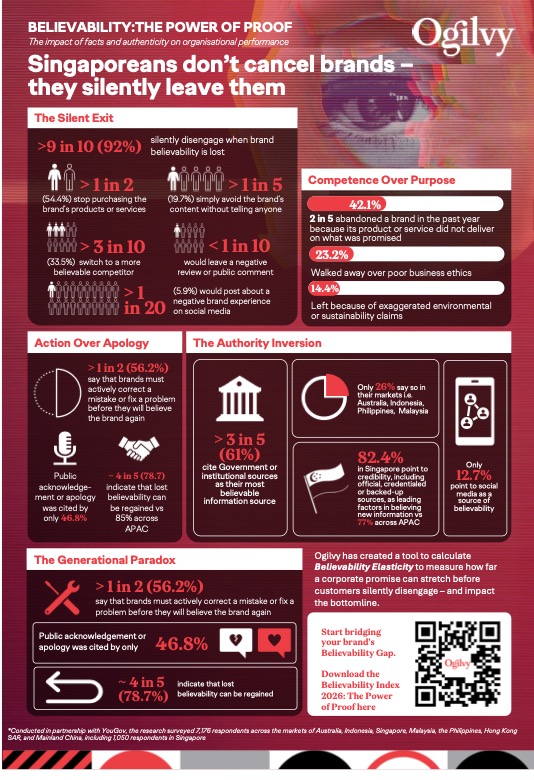
Ogilvy SG - Believability Index Infographic

To help leaders navigate this shift and operationalise the findings, Ogilvy’s Believability Diagnostic Tool uses a multi-agent architecture that pairs Ogilvy’s proprietary seven-year Believability dataset with behavioural science cognitive engine to analyse a brand’s “Say-Do Gap” to measure the actual distance between its marketing promises and actual customer experience.

By triangulating corporate messaging against verified customer and employee sentiment, the tool calculates a brand’s Believability Elasticity to see how far a corporate promise can stretch before customers silently disengage – and impact the bottomline.

For Singapore where 92% of consumers say they silently disengage when believability is lost, this elasticity is especially important. Once the threshold is exceeded, the consequence may not be outrage. It may be attrition.

@Ogilvy Singapore on LinkedIn@Ogilvy Singapore on Instagram

The full Ogilvy APAC 2026 Believability Index: The Power of Proof is downloadable here.

Hashtag: #BelievabilityIndex2026 #ThePowerofProof #Ogilvy

The issuer is solely responsible for the content of this announcement.

About Ogilvy PR

Ogilvy PR and Influence is a global creative communications agency that partners with organisations to drive value and growth. We build brands, protect reputations, and earn attention and influence through creative storytelling informed by data, and fuelled by technology. Our specialist practice areas offer media relations, social and digital communications, external and internal stakeholder communications, issues and crisis management, and stakeholder engagement. We are the region’s largest and most specialised public relations and public affairs consultancy.

About Ogilvy
Ogilvy has been creating impact for brands through iconic, culture-changing, value-driving ideas since the company was founded by David Ogilvy in 1948. It builds on that rich legacy through Borderless Creativity – innovating at the intersections of its advertising, public relations, relationship design, consulting, and health capabilities with experts collaborating seamlessly across more than 120 offices spanning 90 countries. Ogilvy currently as the #1 global agency network for creative excellence and effectiveness by WARC, signifying its ability to deliver creative solutions that drive unreasonable impact for clients and communities. Ogilvy is a WPP company (NYSE: WPP). For more information, visit , and follow us on , , , and

About YouGov

All figures, unless otherwise stated, are from YouGov Plc. Total sample size was 7,176 adults in Australia, Indonesia, Singapore (1,050 adults), Malaysia, the Philippines, Hong Kong SAR, and Mainland China. Fieldwork was undertaken between 22nd April – 4th May 2026. The survey was carried out online. The figures have been weighted and are representative of all respective market adults (aged 18+).

28857

Argent Plastic Surgery Relocates to Larger Clinic in Mount Alvernia

On its third anniversary, Argent Plastic Surgery has moved into a larger, purpose-built clinic dedicated to the comfort of its patients, with particular care for its youngest.

SINGAPORE – Media OutReach Newswire – 8 July 2026 – Argent Plastic Surgery has relocated to a new, purpose-built clinic at Mount Alvernia Hospital, Medical Centre A, 820 Thomson Road #03-07. The move marks the practice’s third anniversary and brings paediatric and adult plastic and reconstructive surgery together within a single, considered space.

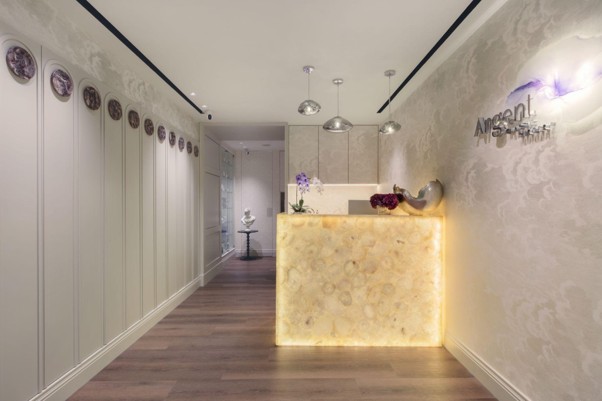
Argent Plastic Surgery Clinic Front Desk

A Larger Space, and More Room to Care

The new clinic broadens the range of care available and has been designed with careful attention to how patients feel while they are there. At its heart is a comfortable, welcoming waiting space designed for both children and their parents. A dedicated children’s play corner gives younger patients somewhere to feel at ease before their procedure and provides the children of adult patients with a place of their own while a parent is being seen. Adults have a separate waiting area, arranged for privacy and quiet, so that a personal decision can be weighed calmly and in comfort.

The relocation also introduces an in-clinic day-procedure room, enabling suitable minor procedures to be carried out on site. Consultation, procedure and recovery can therefore take place within a single location, enhancing both privacy and convenience.

This is how Argent Plastic Surgery intends to care for its patients from here, in a space shaped around their comfort rather than adapted to it.

Argent Plastic Surgery Clinic Space

Hashtag: #ArgentPlasticSurgery #reconstructivesurgery #paediatricplasticsurgery


TikTok:

The issuer is solely responsible for the content of this announcement.

About Argent Plastic Surgery

Argent Plastic Surgery is a Singapore-based plastic and reconstructive surgery practice led by Dr Lee Hanjing, a female fellowship-trained plastic surgeon. The clinic cares for both adults and children, offering cosmetic surgery of the face and body, and reconstructive surgery following cancer, trauma and congenital conditions, alongside wound care, scar management and minor procedures such as the removal of lumps, bumps and abscesses. Dr Lee Hanjing has also spent more than ten years performing corrective surgery for children with cleft lip and palate, ear deformities and other conditions in developing countries including Myanmar, Cambodia, Indonesia and Vietnam, an experience that shapes the practice’s commitment to a safe, private and welcoming environment for patients of all ages.

28857

Hong Kong SMEs Face “Triple Squeeze” from Rising Costs, Weak Demand and Interest Rates Fluctuations, Dah Sing Bank Survey

Consumption Outflow Continues to Weigh on Revenues As Local Business Environment Enters Adjustment Phase

HONG KONG SAR – Media OutReach Newswire – 8 July 2026 – Dah Sing Bank, Limited (“Dah Sing Bank”) today announced the results of its 2026 SME Survey (“the Survey”), which revealed that Hong Kong SMEs are facing a “triple squeeze” of rising costs, weakening demand and interest rates fluctuations. At the same time, outbound consumption continues to affect business revenues, reflecting local business environment enters adjustment phase.

SME Survey Results 2026

Dah Sing Bank remains committed to staying close to the needs of SMEs and understanding the challenges and opportunities they face in a rapidly changing business landscape. To gain deeper insights into the latest operating conditions of local SMEs, the Bank commissioned a survey[1] in May 2026 through a major local media outlet, interviewing over 340 Hong Kong SMEs to understand how they are responding to changing consumption patterns and advancing environmental, social and governance (ESG) initiatives under the current economic environment.

Operating Pressures Intensify Under “Triple Squeeze”

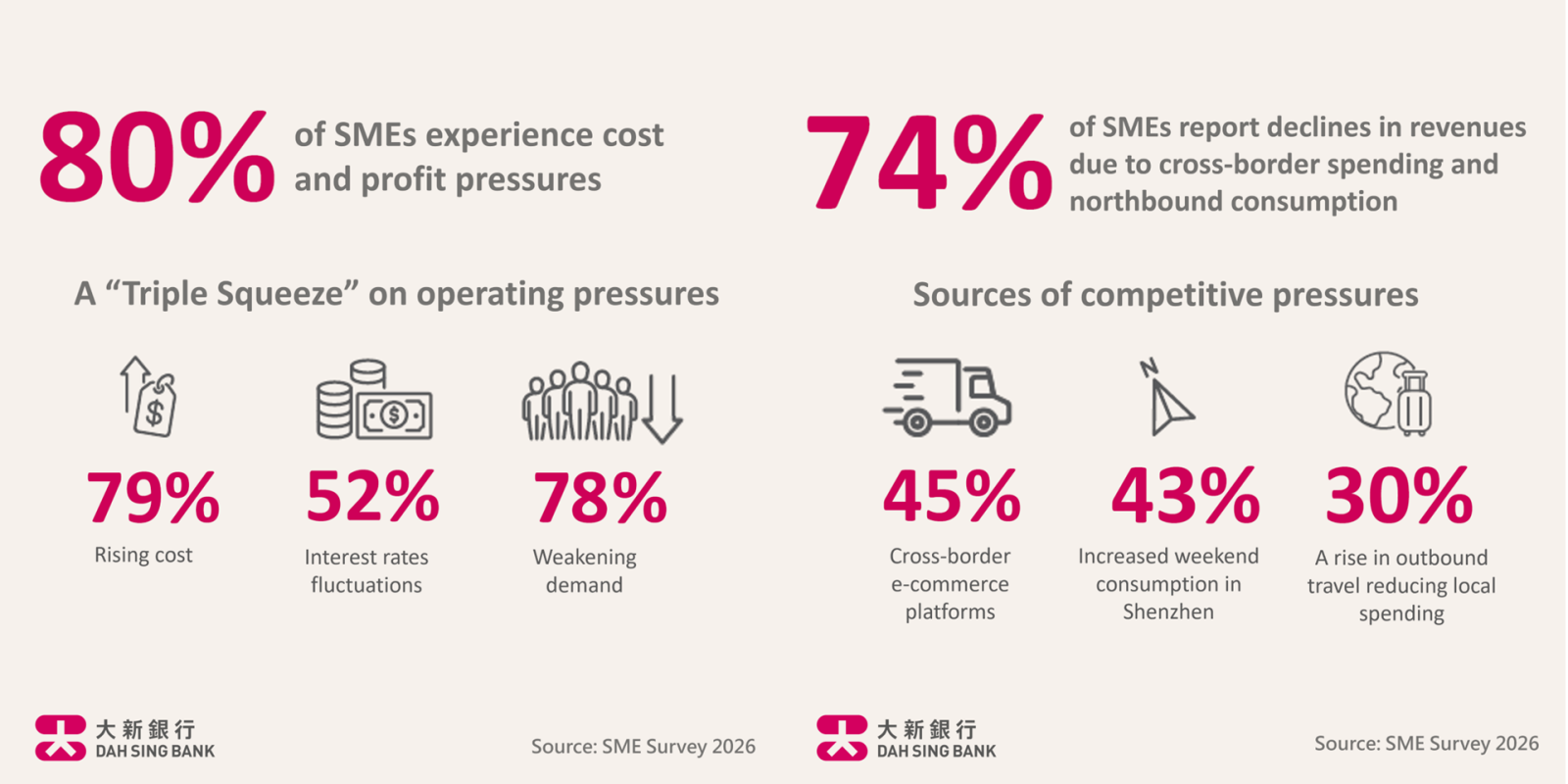
The Survey shows that 80% of respondents indicated that their operating costs and profit margins have been affected this year by geopolitical developments, energy price fluctuations or global supply chain instability. Rising costs (79%), weakening market demand (78%) and fluctuations in interest rates (52%) were identified as the most significant external risks.

With cross-border spending and northbound consumption becoming increasingly prevalent, approximately 74% of SMEs reported that their revenues have been negatively impacted, with nearly one in five experiencing declines of more than 20%. Key competitive pressures stem from cross-border e-commerce platforms offering lower-priced daily necessities (45%), increased weekend consumption in Shenzhen (43%), and a rise in outbound travel reducing local spending (30%).

SMEs Step Up Measures to Adapt

In response to the rising costs, SMEs are actively adopting various strategies to stabilise operations, including renegotiating supplier terms (26%), adjusting pricing (24%), and optimising inventory management (20%). At the same time, in light of outbound consumption trends, businesses are strengthening customer retention strategies. While price promotions remain the most common approach (34%), SMEs are also increasingly introducing experiential elements (29%) and strengthening digital marketing efforts (25%) to improve competitiveness.

Against a backdrop of ongoing uncertainty, SMEs are placing greater emphasis on business stability. A stable customer base (30%) and predictable cash flow (22%) are seen as key factors in sustaining operations, alongside lowering operating cost (22%). This reflects growing attention on financial resilience and liquidity management.

Constraints Persist Amid Rising Support Needs

Despite these efforts, SMEs continue to face resource and information constraints in navigating challenges and pursuing transformation. More than half of the respondents have never applied for or are unfamiliar with government support schemes. In addition, while some SMEs are interested in advancing ESG initiatives, 37% consider them burdensome due to costs, and 32% are unsure where to begin, indicating a cautious pace of adoption overall.

Dah Sing Bank Supports SMEs Resilience

In a rapidly changing business environment, Dah Sing Bank believes that enhancing cash flow efficiency and operational flexibility is key for SMEs to address business pressures. The Bank is committed to supporting SMEs through diversified and flexible lending and financing solutions tailored to their business needs. These include a wide range of import/export trade finance services and payment options, as well as the Merchant Receivables Loan – a service designed to provide merchants with quicker access to capital. Such initiatives enable SMEs to strengthen cash flow management and improve the predictability and efficiency of their daily operations.

Furthermore, Dah Sing Bank offers comprehensive hedging tools to help enterprises manage foreign exchange and interest rate risks. This support enables businesses to mitigate financial exposure arising from global economic volatility, enhance resilience, and expand their businesses in both local and global markets steadily. In addition, the newly launched Dah Sing Business Multi-Currency Mastercard Debit Card helps SMEs reduce transaction costs and manage expenses more effectively, providing a one-stop and seamless experience for local and overseas transactions.

Dah Sing Bank Deputy Chief Executive, Senior Executive Director and Head of Group Personal Banking, Ms Phoebe Wong, said: “The Survey shows that Hong Kong SMEs are facing multiple challenges, including rising costs, shifting demand and evolving consumption patterns. At the same time, it is encouraging to see businesses actively adopting measures such as optimising cost structures and enhancing customer experience. In an environment of heightened uncertainty, stable cash flow and operational agility has become even more important. Dah Sing Bank has long been a trusted partner to SMEs, and we remain committed to combining financial services with practical support to help enterprises improve capital efficiency and resilience. Our goal is to empower SMEs to maintain stability in a constantly changing market and lay a solid foundation for sustainable long-term growth.”


[1] The Survey was conducted through online questionnaires from 19 to 26 May 2026, interviewing 342 Hong Kong SMEs.

To borrow or not to borrow? Borrow only if you can repay!
The service(s) / product(s) mentioned in this document are not targeted at customers in the European Union.
Risk Disclosure Statement Foreign Exchange Transactions: Foreign exchange involves risk. Currency investments are subject to exchange rate fluctuations, which may result in gains or losses. Customers converting foreign currencies into HKD or other currencies may incur losses due to exchange rate movements. Investors should read and understand all offering documents, including risk disclosures and warnings, before making any investment decisions.
Currency Risk (RMB): Conversion of RMB into HKD or other currencies is subject to exchange rate fluctuations. Customers may experience gains or losses due to RMB exchange rate movements. RMB is currently subject to exchange controls imposed by the PRC government, and its exchange rate may be affected by policy changes.
Unless otherwise specified, this promotional material does not constitute an offer, solicitation, or recommendation to engage in any foreign exchange transaction, nor does it predict future exchange rate movements. This material has not been reviewed by the Securities and Futures Commission or any other regulatory authority in Hong Kong.

Hashtag: #DahSingBank

The issuer is solely responsible for the content of this announcement.

About Dah Sing Bank

Dah Sing Bank, Limited (the “Bank”) is a wholly-owned subsidiary of Dah Sing Banking Group, Limited (HKG:2356). Founded in Hong Kong over 75 years ago, the Bank has been providing quality banking products and services to its customers with a vision to be “The Local Bank with a Personal Touch”. Over the years, the Bank has been rigorous in delivering on its brand tagline to grow with its customers in Hong Kong, the Greater Bay Area and beyond – “Together We Progress and Prosper”. Building on our experience and solid foundation in the industry, our scope of professional services now spans retail banking, private banking, business and commercial banking. Meanwhile, the Bank is also making significant investments in its digital banking capabilities to stay abreast with smart banking developments in Hong Kong and to support financial inclusion at large.

In addition to its Hong Kong banking operations, the Bank has wholly-owned subsidiaries including Dah Sing Bank (China) Limited, Banco Comercial de Macau, S.A., and OK Finance Limited. It is also a strategic shareholder of Bank of Chongqing with a shareholding of about 13.5%. Dah Sing Bank and its subsidiaries now have 63 operating locations in Hong Kong, Macau and Chinese Mainland.

28857

大新銀行調查:中小企面對成本上升、需求轉弱及利率變動「三重夾擊」

消費外流持續影響營業表現 本地營商環境進入調整期

香港 – Media OutReach Newswire – 2026年7月8日 – 大新銀行有限公司(「大新銀行」)今日公布中小企問卷調查2026(「調查」)結果,發現本港中小企正面對成本上升、需求轉弱及利率變動的「三重夾擊」,同時消費外流亦持續影響營業表現,反映整體營商環境正進入調整期。

中小企問卷調查2026

大新銀行致力緊貼中小企業界發展,了解其在多變的營商環境下所面對的挑戰與機遇。為更全面掌握本地中小企的最新經營狀況,大新銀行委託一家本地主要媒體於2026年5月進行調查[1],訪問了超過340家本港中小企,了解中小企在當前經濟環境下如何應對消費模式轉變,以及推動環境、社會和管治(ESG)相關措施的情況。

經營壓力加劇 三重夾擊持續顯現

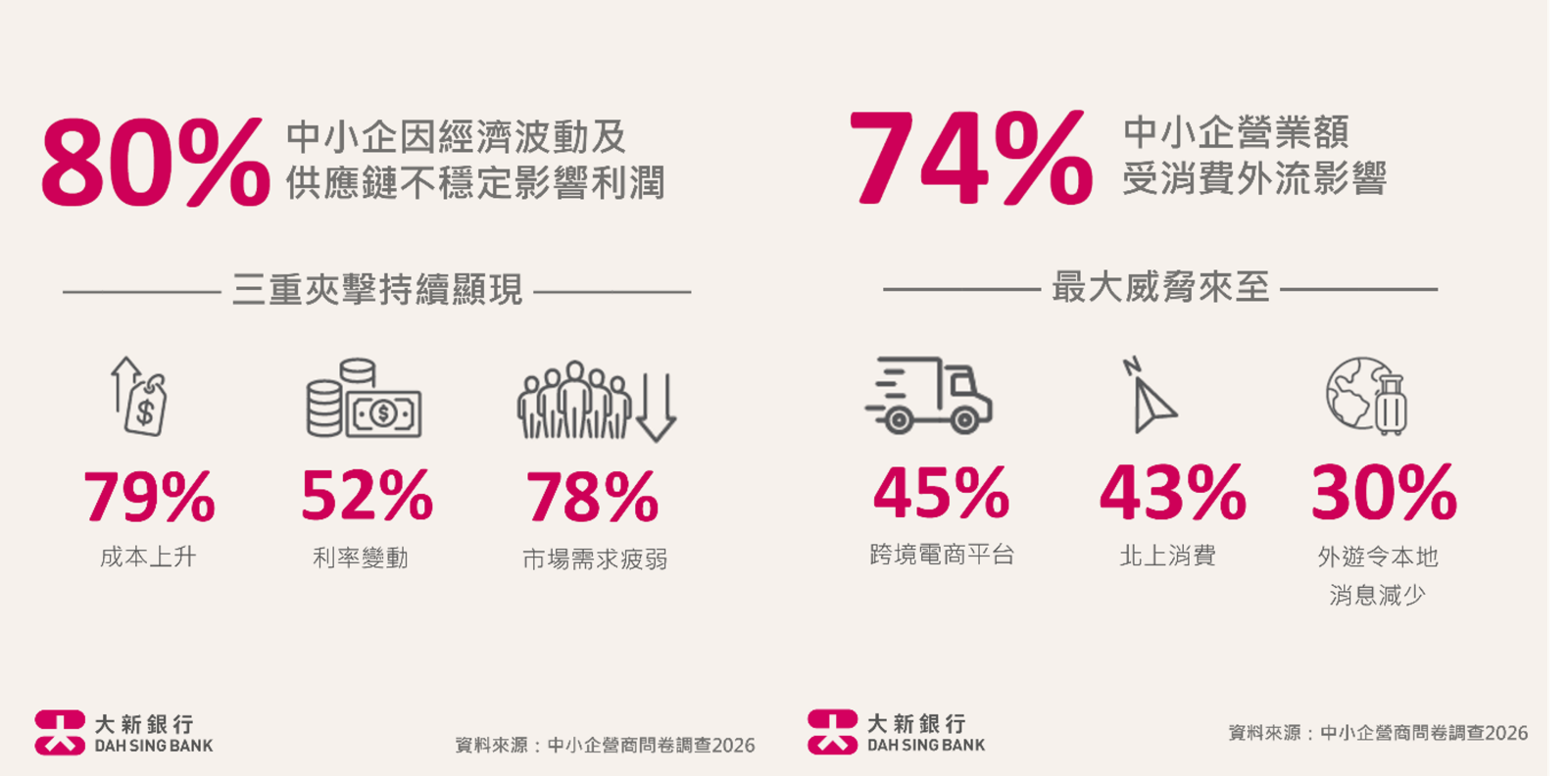
調查顯示,八成受訪中小企本年度的營運成本及利潤正因地緣政治、能源價格波動及全球供應鏈不穩定而有所影響。而成本上升(79%)、市場需求疲弱(78%)及利率變動(52%)均被視為最大的外在風險。

隨着北上消費及跨境購物日趨普遍,約七成四中小企表示營業額受到不同程度影響,當中近兩成更錄得超過兩成跌幅。跨境電商平台及北上消費已成為本地中小企面對的主要競爭來源,包括跨境電商平台競爭低價生活用品(45%)、市民週末北上深圳進行餐飲及娛樂消費(43%),以及居民增加海外旅遊、減少本地消遣(30%)。

中小企積極應對 加快調整步伐

面對成本上升,不少中小企正積極採取不同策略應對,包括與供應商重新議價(26%)、調整售價(24%)及優化庫存管理(20%)。同時,在消費外流壓力下,企業亦加強客戶留存策略,除透過減價促銷(34%)外,亦逐步引入體驗式元素(29%)及加強數碼營銷(25%),以提升競爭力。

在經濟環境持續不明朗的情況下,中小企愈加重視營運穩定性,當中穩定客群(30%)及可預測現金流(22%)被視為維持業務平穩的重要因素,與減低營運成本(22%)同樣重要,反映企業對資金周轉及現金流管理的關注持續提升。

資源限制持續 支援需求上升

然而,在應對及轉型過程中,不少中小企仍面對資源及資訊上的限制。調查顯示,超過一半企業從未申請或不清楚如何申請政府提供的支援計劃;同時,儘管部分企業有意推動ESG相關措施,惟受制於成本及缺乏清晰方向,分別有37%認為負擔過重及32%表示不知從何入手,整體推進步伐仍然較為審慎。

大新銀行支持中小企提升營運韌性

面對充滿變化的營商環境,大新銀行認為中小企在應對經營挑戰時,關鍵在於提升資金周轉能力及營運靈活性。本行致力透過多元化及具彈性的貸款及融資選項,例如支援進出口貿易的融資及付款方案、讓中小企商戶應付生意周轉的「商戶收賬『快應錢』」等服務,以配合企業不同發展階段的資金需要,及提升日常營運及資金調配方面的可預測性與效率。

此外,大新銀行亦為企業提供外匯及利率對沖工具,幫助客戶降低因環球經濟不穩所引致的財務風險,讓企業提升整體應變能力,穩步拓展本地及國際市場。而今年新推出的大新營商多貨幣Mastercard扣賬卡,能減低交易成本及有效管理現金流,讓中小企一卡支付本地及海外交易。

大新銀行副行政總裁、高級執行董事兼集團個人銀行主管王美珍小姐表示:「是次調查反映本港中小企正面對成本上升、需求下降及消費模式改變等多重挑戰,但同時亦可見企業正積極採取不同措施應對,包括改善成本結構及提升客戶體驗。在充滿不確定性的環境下,中小企對現金流穩定性及營運靈活性的需求更為殷切。大新銀行一直與中小企同行,我們會持續結合銀行服務及實務支援,協助企業提升資金運用效率及應變能力,讓中小企在不斷變化的市場環境中保持穩定,並為長遠發展奠定基礎。」


[1] 調查於2026年5月19至29日透過網上問卷訪問343家香港中小企。

借定唔借?還得到先好借!
本文提及的服務/產品並不是以歐盟的人士為目標。

風險披露聲明
外匯買賣:外匯買賣涉及風險。外幣投資受匯率波動而產生獲利及虧損風險。客戶如將外幣兌換為港幣或其他外幣時,可能受外幣匯率變動而蒙受虧損。投資者作出任何投資決定前,敬請細閱及明白該等投資的所有發售文件,包括但不限於其所列載的風險披露聲明及風險警告。
貨幣風險(人民幣):人民幣兌換為港幣或其他外幣受匯率波動影響。客戶於兌換人民幣至港幣或其他外幣時,將可能因人民幣匯率的變動而出現利潤或虧損。人民幣目前受中國政府外滙管制,其匯率或較容易因政府政策改變而被影響。
除非情況另有所指,否則本宣傳品並不構成對任何人士提出進行任何外匯交易的招攬、邀請或建議,亦不構成對未來任何外匯價格變動的任何預測。本宣傳品未經證券及期貨事務監察委員會或香港任何監管機構審閱。

Hashtag: #大新銀行

The issuer is solely responsible for the content of this announcement.

有關大新銀行

大新銀行有限公司(「大新銀行」)為香港上市公司大新銀行集團有限公司(HKG:2356)旗下全資附屬銀行。大新銀行植根香港逾75 年,一直憑著「以人為本」的精神為客戶提供優質銀行產品及服務,並不斷推動「同步 更進步」的品牌理念,與香港、大灣區至更廣泛地區的客戶共同成長。憑藉多年的銀行業務經驗及穩固基礎,大新銀行業務範疇覆蓋零售銀行、私人銀行以至商業及企業銀行等專業服務。近年大新銀行更積極投資於銀行產品及服務數碼化,與香港智慧銀行發展和推動金融普及的趨勢同步前進。

除上述香港銀行業務外,大新銀行亦全資擁有大新銀行(中國)有限公司、澳門商業銀行股份有限公司和安基財務有限公司(OK Finance),並為重慶銀行策略性股東,持股量約 13.5%。大新銀行及其附屬公司於香港、澳門及中國內地共有63個業務網點。

28857

Genetic Study Reveals Multiple Introductions and Human-Mediated Spread of Invasive Blackchin Tilapia in Thailand

BANGKOK, THAILAND – Media OutReach Newswire – 8 July 2026 – Researchers from Aquatic Resources Research Institute (ARRI), Faculty of Science, Chulalongkorn University have recently uncovered new genetic evidence explaining how the invasive blackchin tilapia (Sarotherodon melanotheron), a species native to West Africa, became established throughout Thailand.

Based on genetic analysis of 466 fish samples collected nationwide, the study identified high genetic diversity, including 19 distinct haplotypes, revealing that the species originated from multiple introduction events rather than a single release. The findings also show that subsequent human-mediated translocations within Thailand played a major role in the species’ rapid spread.

The study represents one of the most comprehensive genetic assessments of blackchin tilapia in Thailand to date. Researchers confirmed that the invasive populations belong to Sarotherodon melanotheron melanotheron subspecies and identified 13 private haplotypes unique to specific populations. Several of these occurred at relatively high frequencies in Samut Songkhram, Prachuap Khiri Khan and Surat Thani, indicating multiple introduction sources and limited mixing among some regional populations.

Using haplotype distribution patterns, network analysis and phylogenetic comparisons, the researchers traced the origins of Thailand’s blackchin tilapia to multiple geographic sources, including Ghana and Côte d’Ivoire, as well as potentially other unsampled native populations in West Africa.

The study also found that blackchin tilapia populations in different parts of Thailand are genetically distinct, particularly in Samut Songkhram, which is believed to be the earliest site of the invasion. At the same time, researchers discovered that fish sharing the most common genetic signature were found in provinces across eastern and southern Thailand, including Chachoengsao, Rayong, Chanthaburi, Chumphon, Nakhon Si Thammarat and Songkhla, suggesting they were transported by human activities rather than spreading naturally through connected waterways.

The researchers said “The findings provide valuable scientific evidence for strengthening surveillance and management of the invasive species. By identifying introduction pathways and patterns of dispersal, the study offers important guidance for preventing further spread, improving biosecurity measures and mitigating ecological impacts on Thailand’s freshwater ecosystems.”

Link to the research paper https://www.sciencedirect.com/science/article/pii/S2352513426002152

Hashtag: #ChulalongkornUniversity

The issuer is solely responsible for the content of this announcement.

28857

StarCharge Releases Industry White Papers: From Infrastructure to Network Systems, Microgrids Moving from Customization to Scaling Up Development

CHANG ZHOU, CHINA – Media OutReach Newswire – 7 July 2026 – The global new energy vehicle market has seen rapid growth in recent years. With continued strong expectations for new energy vehicle exports, the global electric vehicle (EV) charging market is entering a new stage of rapid expansion. Recently, StarCharge, the global leading brand of EV Charging equipment and smart energy systems, held a major industry seminar in Hong Kong and released two new white papers at the event, exploring two major transformative trends in the industry that are worth paying attention to.

7c9329ee95c1e5aa7c6fcc27fedf37a2.jpg

Charging stations are becoming a key connection of smart energy systems

According to the ‘Technical White Paper’ by StarCharge, for years, EV charging infrastructure has mainly been seen as support for vehicle sales expansion: building more chargers, expanding coverage, and speeding up charging.

However, this role is starting to change.

As electrification scales up, charging networks are becoming a part of the energy system itself. They are no longer just places for vehicles to top up; they are evolving into smart energy nodes connecting vehicles, the grid, distributed energy, storage, and digital management.

This shift from charging infrastructure to charging network systems shows that the industry is moving from basic access to integrated value: from charging services to energy services, from standalone stations to PV-storage-charging systems, from equipment deployment to scenario-based infrastructure.

StarCharge believes that the future charging network ecosystem will go through four major turning points.

Four Key Points Reshaping the Ecosystem

1. Charging Networks Are Becoming Energy Infrastructure

Charging infrastructure is going beyond its original role as just a support for EVs. As EV adoption grows, charging networks are becoming strategic energy infrastructure: they connect mobility demand with the grid, distributed energy, storage, digital platforms, and future energy services.

2. Defining the Scenarios for the Network

The future charging network won’t be shaped by hardware alone. Policies determine whether infrastructure should be built, technology determines the speed of construction, but real-world scenarios determine what the charging network actually needs to look like.

Urban commuting, highway trips, ride-hailing, logistics fleets, county and rural coverage, holiday peak demand, heavy trucks, mining areas, ports, airports, and autonomous driving all create different charging needs. Therefore, a mature charging network can’t be ‘one-size-fits-all’; it has to be designed around different vehicle types, operating hours, power requirements, reliability needs, and grid conditions.

3. Digital platforms turn charging networks into operable assets

A large charging network only truly has value when it can be scaled, optimized, and managed. This is exactly the core role of cloud platforms. They turn millions of charging points, users, stations, transactions, and energy flows into a measurable, controllable, and continuously optimized operating system.

StarCharge’s platform capabilities cover site selection, pricing, marketing, station operations, smart maintenance, charging safety, station robots, AI-based smart charging, fleet management, energy optimization, and ESG reporting. In other words, digital platforms are the key to transforming charging infrastructure from a heavy-asset network into smart, operable, and scalable assets.

4. Charging stations are becoming grid-friendly energy resources

The next-generation charging infrastructure won’t be defined by any single technology. It will be built on a complete tech stack, combining high-power charging, liquid cooling, integrated PV-storage-charging, DC bus architecture, V2G, automated charging, and AI-driven operations. In other words, future charging stations shouldn’t just be passive electricity consumers that add stress to the grid. Through energy storage, renewable energy integration, V2G, smart scheduling, and AI-based energy optimization, charging stations can become grid-friendly energy resources.

This means that aside from charging vehicles, a charging station can absorb renewable energy, buffer peak loads, respond to demand-side signals, support peak shaving and valley filling, regulate frequency, and provide carbon-neutral ESG data for fleet operators. Its business model will also go beyond charging fees, creating new value through energy services, data services, carbon-related benefits, and grid interaction capabilities.

Microgrids Have Emerged at the Right Time

At the same time, with the continuous development of distributed energy and photovoltaic energy, microgrids have emerged at the right time. They are not just a product, but a local energy system built around real-world scenarios.

In the latest “White Paper” on scenario-based microgrid technology, StarCharge points out that microgrids are moving from customized engineering projects toward scalable, replicable energy systems.

ccbf02df9240f8cc4939b451e3f48568.jpg

A microgrid is a scenario-based local energy system

According to StarCharge, a microgrid is not a single device, nor is it just an energy storage product. It’s a local energy system designed around the needs of a specific scenario, coordinating local generation, loads, storage, control, and operational strategies within a defined electrical boundary.

Moreover, depending on the scenario—such as data centers, individual charging stations, zero-carbon industrial parks, or green mines—the energy challenges are completely different. The right microgrid is defined by the scenario it serves.

The white paper also highlights four high-value paths: electricity-computing synergy, independent power supply, zero-carbon parks, and green mines. In areas with weak grids or limited grid access, microgrids ensure the operation of critical loads. In emerging load scenarios like data centers and industrial parks, microgrids support renewable energy integration, energy resilience, and cost optimization. In high-tech-demand scenarios like mines, microgrids become the foundation for ensuring production continuity, energy transition, and ESG competitiveness.

The three-stage evolution of microgrids

As power sources and loads become increasingly DC, microgrid architectures are evolving from AC-dominated systems to AC-DC hybrid systems, and eventually toward microgrids with a higher proportion of DC.

Microgrid 1.0 — dominated by AC architecture. It integrates renewable energy into the existing AC grid framework, but its control heavily relies on grid-following management and support from the external grid.

Microgrid 2.0 — the AC-DC hybrid stage. AC and DC buses coexist, allowing PV, storage, and DC loads to connect more directly. Bidirectional power hubs, solid-state transformers (SST), and energy routers become important bridges between AC and DC systems. This stage balances strong AC compatibility with higher DC efficiency and is expected to remain mainstream in the next 10-15 years.

Microgrid 3.0—it’s the era of DC microgrids. As solar PV, wind power, battery storage, data centers, LED lighting, and EV charging increasingly move toward DC, DC microgrids can reduce repeated AC-DC conversion losses, simplify control, and support millisecond-level responses.

This evolution is closely linked to the mission of microgrids: breaking through energy access bottlenecks, enabling sustainable development, connecting technology, industry, policy, market, and community needs, and unlocking the integrated value of local energy systems.

In the future, StarCharge will steadily expand into the growing global markets for new EVs and renewable energy, building on its smart energy systems that have been widely validated in the Chinese market.

Hashtag: #StarCharge

The issuer is solely responsible for the content of this announcement.

28857

China Hong Kong Motorsports Centre Launches HK Youth Karting Championship 2026

Creating a More Accessible Racing Pathway for Young Hong Kong Drivers to Progress Towards the Asian and International Motorsport Stage

Event to be Held at Guangzhou Conghua International Circuit on 15 (Sat) – 16 (Sun) August 2026

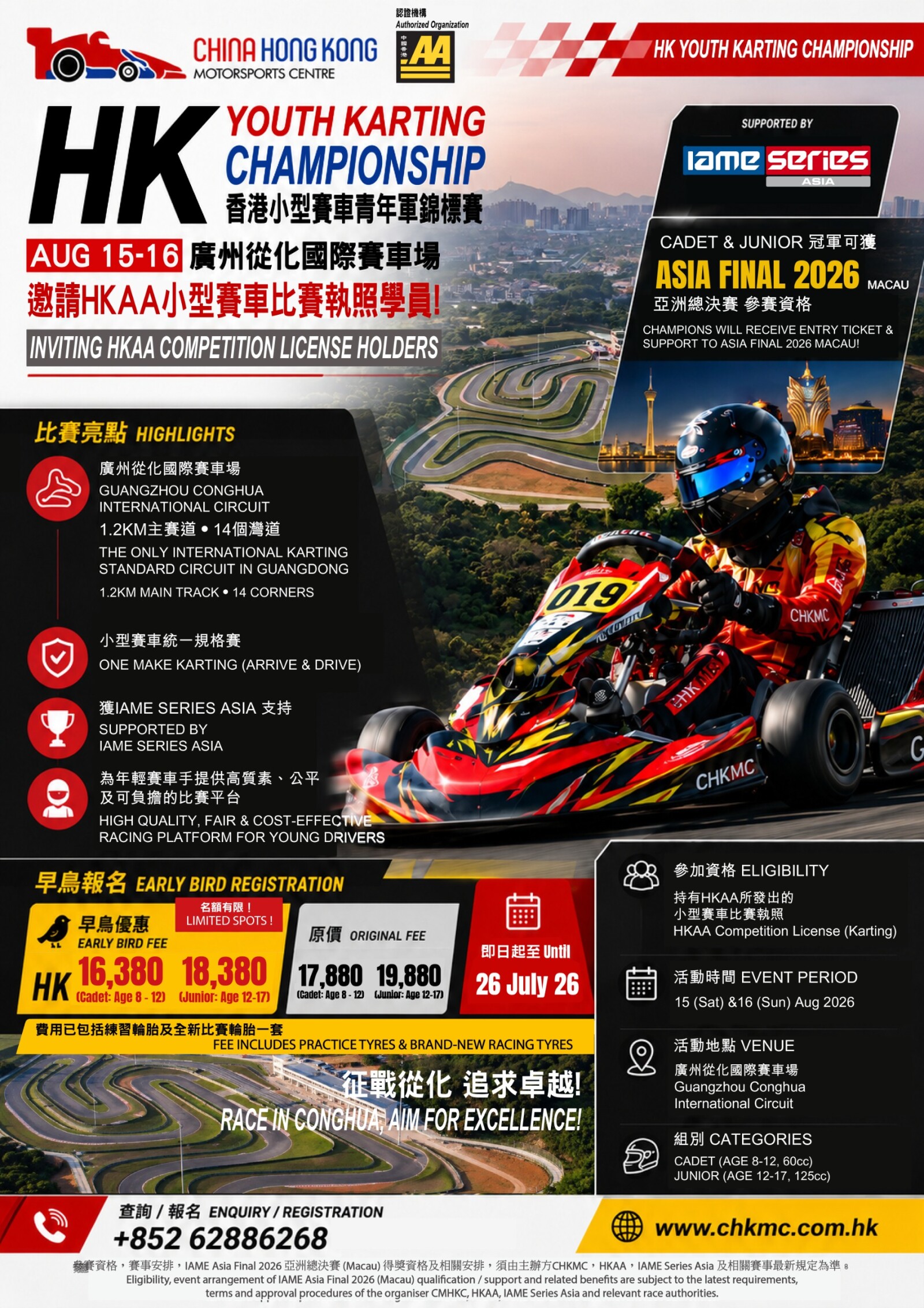
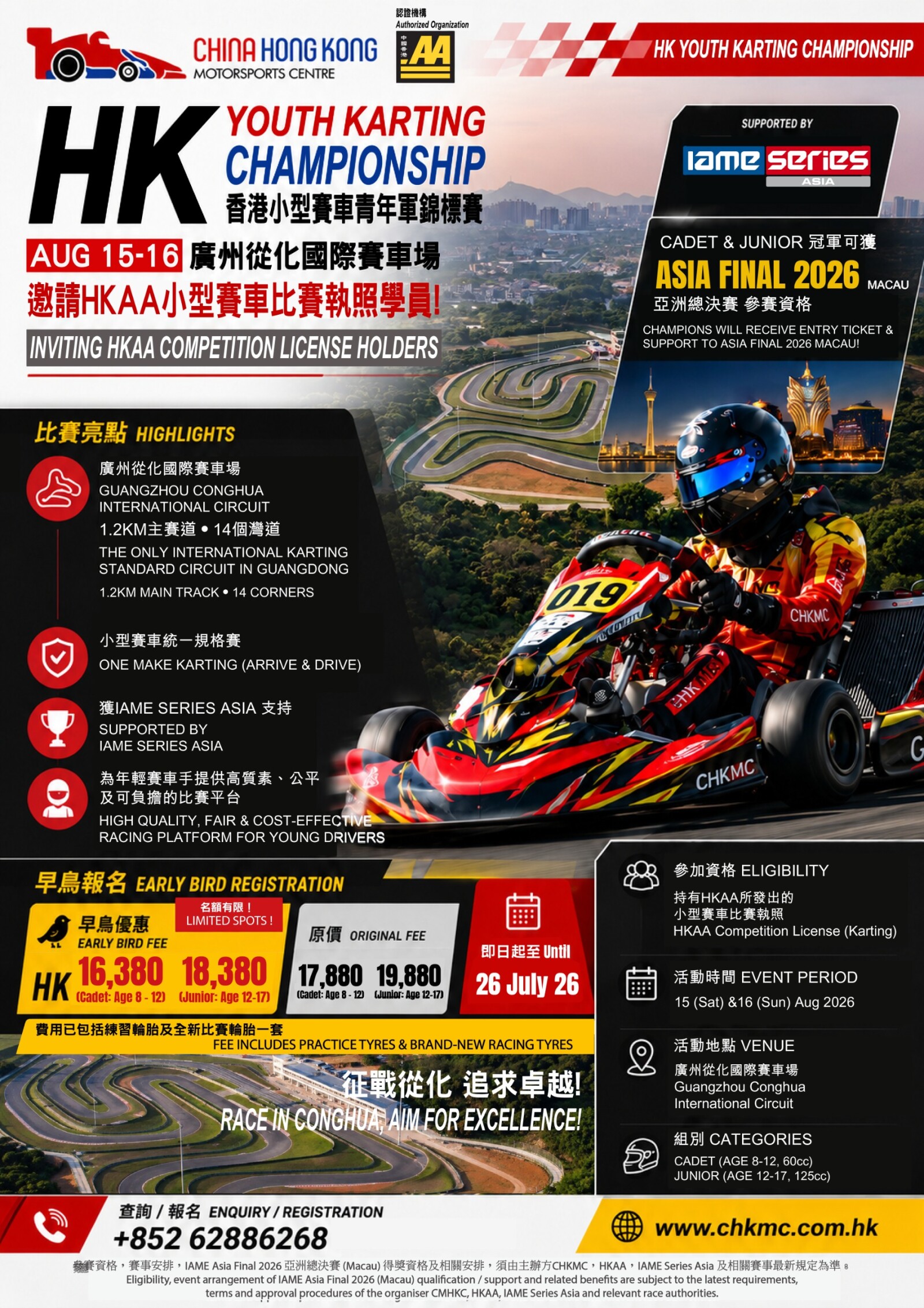
HONG KONG SAR – Media OutReach Newswire – 7 July 2026 – China Hong Kong Motorsports Centre (“CHKMC”) is pleased to announce the launch of HK Youth Karting Championship 2026, a new karting championship scheduled to take place on 15 (Sat) – 16 (Sun) August 2026 at Guangzhou Conghua International Circuit.

China Hong Kong Motorsports Centre Launches HK Youth Karting Championship 2026

The championship is designed for Cadet (age 8-12, 60cc) and Junior (age 12-17, 125cc) Racer holding Competition License (Karting) issued by HKAA. Through this initiative, CHKMC aims to provide young drivers with a structured, professional and more accessible racing platform, allowing them to gain valuable race experience and build a stronger foundation for future participation in Asian and international-level competitions.

HK Youth Karting Championship 2026 represents an important step in CHKMC’s long-term vision to support the development of youth motorsport in Hong Kong and the Greater Bay Area. Led by Head Coach Chester Lam, he has previously trained three young drivers who went on to become overall champions in Asian racing series, together with CHKMC’s owners and management team, the centre is committed to creating a more sustainable pathway for young drivers who aspire to progress in motorsport.

CHKMC recognises that the cost of actual racing training, equipment, track practice and race participation can often be a significant barrier for young talents and their families. Through the HK Youth Karting Championship, CHKMC hopes to make competitive karting more achievable by offering a high-quality race experience at a fair and more affordable entry cost, while maintaining professional standards in training, preparation and competition.

The championship will be held at Guangzhou Conghua International Circuit, which features a 1.2km main track with 14 corners. The venue provides a challenging and professional environment for young drivers to develop essential racing skills, including race craft, cornering techniques, overtaking judgement, track awareness, decision-making and mental resilience under real race conditions.

HK Youth Karting Championship 2026 is supported by IAME Series Asia, further strengthening the event’s professional credibility and regional development pathway. The champion of each Cadet and Junior category may receive an entry ticket / support for IAME Asia Final 2026 in Macau, offering young Hong Kong drivers a valuable opportunity to progress from local training and championship racing towards the wider Asian motorsport stage.

A representative of China Hong Kong Motorsports Centre said:

“HK Youth Karting Championship 2026 is more than just a race event. It is part of our commitment to building a clear and realistic development pathway for young drivers in Hong Kong. Under the guidance of our Head Coach Chester Lam, and with the support of our owners and management team, CHKMC hopes to provide young talents with professional training, real race experience and a more accessible route towards higher-level motorsport competition. We believe Hong Kong has many young drivers with great potential, and our mission is to help them take the next step towards Asia and beyond.”

Early Bird Registration Now Open

Early bird registration for HK Youth Karting Championship 2026 is now open. Places are limited and available on a first-come, first-served basis.

Early Bird Fee*: HK$16,380 Cadet (age 8-12, 60cc) / HK$18,380 Junior (age 12-17, 125cc)
Original Fee*: HK$17,880 Cadet (age 8-12, 60cc) / HK$19,880 Junior (age 12-17, 125cc)
Early Bird Deadline: 26 July 2026
Event Period: 15-16 August 2026
Venue: Guangzhou Conghua International Circuit
Eligibility: HKAA Competition License (Karting) Holders

Event Highlights

Professional Race Experience
The championship will be hosted at Guangzhou Conghua International Circuit, featuring a 1.2km main track with 14 corners.

Supported by IAME Series Asia
HK Youth Karting Championship 2026 is supported by IAME Series Asia, providing a stronger connection to regional motorsport development.

IAME Asia Final 2026 Macau Opportunity
The champion of each Cadet and Junior category may receive an entry ticket / support for IAME Asia Final 2026 in Macau.

Designed for Young Drivers
The championship is designed for HKAA competition permit holders in the Cadet and Junior categories who are ready to gain real racing experience.

More Accessible Racing Platform
CHKMC aims to offer a fair, more affordable and sustainable competition platform for young drivers and their families.

Pathway Towards Asia and Beyond
The event supports young Hong Kong drivers in building the experience, confidence and race discipline required for higher-level competition.Hashtag: #ChinaHongKongMotorsportsCentre

The issuer is solely responsible for the content of this announcement.

About China Hong Kong Motorsports Centre

China Hong Kong Motorsports Centre is committed to promoting karting and motorsport development in Hong Kong and the Greater Bay Area. The centre provides a structured pathway for children, teenagers and motorsport enthusiasts, covering basic training, simulator training, real track practice and race development.

Through professional coaching, systematic training programmes and competitive race platforms, CHKMC aims to nurture the next generation of young racing talent and support the long-term development of youth motorsport in Hong Kong.

Remarks: Eligibility, event arrangements, IAME Asia Final 2026 Macau entry ticket / support and related benefits are subject to the latest requirements, terms and approval procedures of the organizer CHKMC, HKAA, IAME Series Asia and relevant race authorities.

*The charges do not include transportation and accommodation arrangements.

28857

中國香港小型賽車中心CHKMC推出 HK Youth Karting Championship 香港小型賽車青年軍錦標賽2026

8月中廣州從化國際賽車場開戰 為香港年輕車手打造較可負擔的專業賽車發展平台

香港 – Media OutReach Newswire – 2026年7月7日 – 中國香港小型賽車中心(China Hong Kong Motorsports Centre,簡稱 CHKMC)欣然宣布,將於 2026年81516 舉辦 HK Youth Karting Championship 香港小型賽車青年軍錦標賽 2026,賽事將於 廣州從化國際賽車場 舉行,誠邀持有 HKAA 小型賽車比賽執照的 Cadet (8-12歲, 60cc) 及 Junior (12-17歲, 125cc) 年輕車手參與。

中國香港小型賽車中心CHKMC推出 HK Youth Karting Championship 香港小型賽車青年軍錦標賽2026

是次香港小型賽車青年軍錦標賽2026 不只是一場競速比賽,更是 CHKMC 為香港年輕車手建立的進階賽車發展平台。透過專業訓練、真實賽道比賽及亞洲級別賽事銜接,CHKMC 希望讓更多具潛質的年輕車手,能夠以較容易負擔的成本累積實戰經驗,逐步由香港及大灣區走向亞洲及國際賽車舞台。

CHKMC 主教練 Chester Lam 及中心管理團隊一直致力推動香港青少年小型賽車發展,他們過往曾培養出三位年青車手成為亞洲系列賽總冠軍。同時,他們深明,賽車運動往往因訓練、器材、場地及比賽成本高昂,令不少有天份的年輕車手難以持續參與。因此,CHKMC 希望透過香港小型賽車青年軍錦標賽2026,為學員提供一個更有系統、更具競爭力,同時成本較可控的比賽平台,讓年輕車手可以在專業、安全及具挑戰性的環境下成長。

香港小型賽車青年軍錦標賽2026 將於廣州從化國際賽車場舉行。該場地設有符合小型賽車比賽需要的專業賽道配置,主賽道全長約 1.2公里,設有 14個彎道,能夠讓 Cadet 及 Junior 車手在真實賽事節奏中提升賽道判斷、入彎技巧、超車意識、心理質素及比賽策略。

是次賽事獲 IAME Series Asia支持,進一步強化香港小型賽車青年軍錦標賽2026 的專業性及區域賽事銜接。每個 Cadet 及 Junior 組別冠軍將有機會獲得 IAME Asia Final 2026Macau)亞洲區總決賽的參賽名額及相關支援,為香港年輕車手提供由本地訓練、跨境賽事實戰,進一步邁向亞洲級別賽事的發展機會。

CHKMC 代表表示:

「我們希望香港小型賽車青年軍錦標賽2026 不只是一場比賽,而是一條清晰的青少年賽車發展路線。主教練 Chester Lam 與一眾管理團隊一直相信,香港有不少具潛質的年輕車手,只要有合適的平台、專業訓練及較可負擔的參賽機會,他們絕對有能力走向更高水平的賽事舞台。我們希望透過今次錦標賽,讓更多香港年輕人能夠踏出賽車夢想的重要一步。」

現正接受早鳥報名

香港小型賽車青年軍錦標賽2026 現正接受早鳥報名,名額有限,先到先得。

早鳥優惠費用* HK$16,380 Cadet (8-12歲, 60cc) / HK$18,380 Junior (12-17 歲, 125cc)
原價* HK$17,880 Cadet (8-12歲, 60cc) / HK$19,880 Junior (12-17 歲, 125cc)
早鳥優惠期: 即日起至 2026年7月26日
活動時間: 2026年8月15 – 16日
活動地點: 廣州從化國際賽車場
參加資格: 持有由HKAA發岀的小型賽車比賽執照

冠軍有機會獲 IAME Asia Final 2026 Macau 亞洲區總決賽參賽機會

賽事亮點

香港小型賽車青年軍錦標賽2026 將為年輕車手提供真實、高質素及具發展方向的賽事體驗。賽事重點包括:

專業賽道實戰: 於廣州從化國際賽車場舉行,主賽道約 1.2 公里,設 14 個彎道。
亞洲賽事銜接: 獲 IAME Series Asia支持,冠軍有機會獲 IAME Asia Final 2026 Macau 亞洲區總決賽的參賽名額及相關支援。
青少年發展平台: 專為持有由HKAA發岀的小型賽車比賽執照Cadet 及 Junior 車手而設。
較可負擔參賽方案: 早鳥價 HK$16,380 Cadet (8-12歲, 60cc) / HK$18,380 Junior (12-17 歲, 125cc),協助年輕車手以更合理成本累積比賽經驗。
走向國際: 協助香港及大灣區年輕車手建立由訓練、比賽至亞洲賽事的發展階梯。

Hashtag: #ChinaHongKongMotorsportsCentre #中國香港小型賽車中心 #中國香港賽車運動中心

The issuer is solely responsible for the content of this announcement.

關於中國香港小型賽車中心

中國香港小型賽車中心致力推動香港及大灣區小型賽車及 motorsport 青訓發展,為兒童、青少年及賽車愛好者提供由基礎訓練、模擬器訓練、實地賽道訓練以至比賽發展的一站式培訓路線。中心由具經驗的教練團隊帶領,透過系統化課程及實戰賽事平台,培育更多具潛質的年輕車手,協助他們由興趣出發,逐步踏上專業賽車舞台。

備註: 參賽資格、賽事安排、IAME Asia Final 2026(Macau)亞洲區總決賽參賽名額 及相關支援,須按主辦方CHKMC、HKAA、IAME Series Asia及相關賽事單位之最新規定、條款及審批程序為準。

*此費用不包括交通及住宿安排

28857

From Race Circuit to Global Supply Chains: DHL Powers Formula E’s Boldest Season Yet in Shanghai

  • Formula E Season 12 accelerates global expansion and sustainability milestones as DHL delivers precision logistics behind one of the world’s most complex sporting championships
  • Battery logistics takes center stage off track as electrification drives new supply chain demands

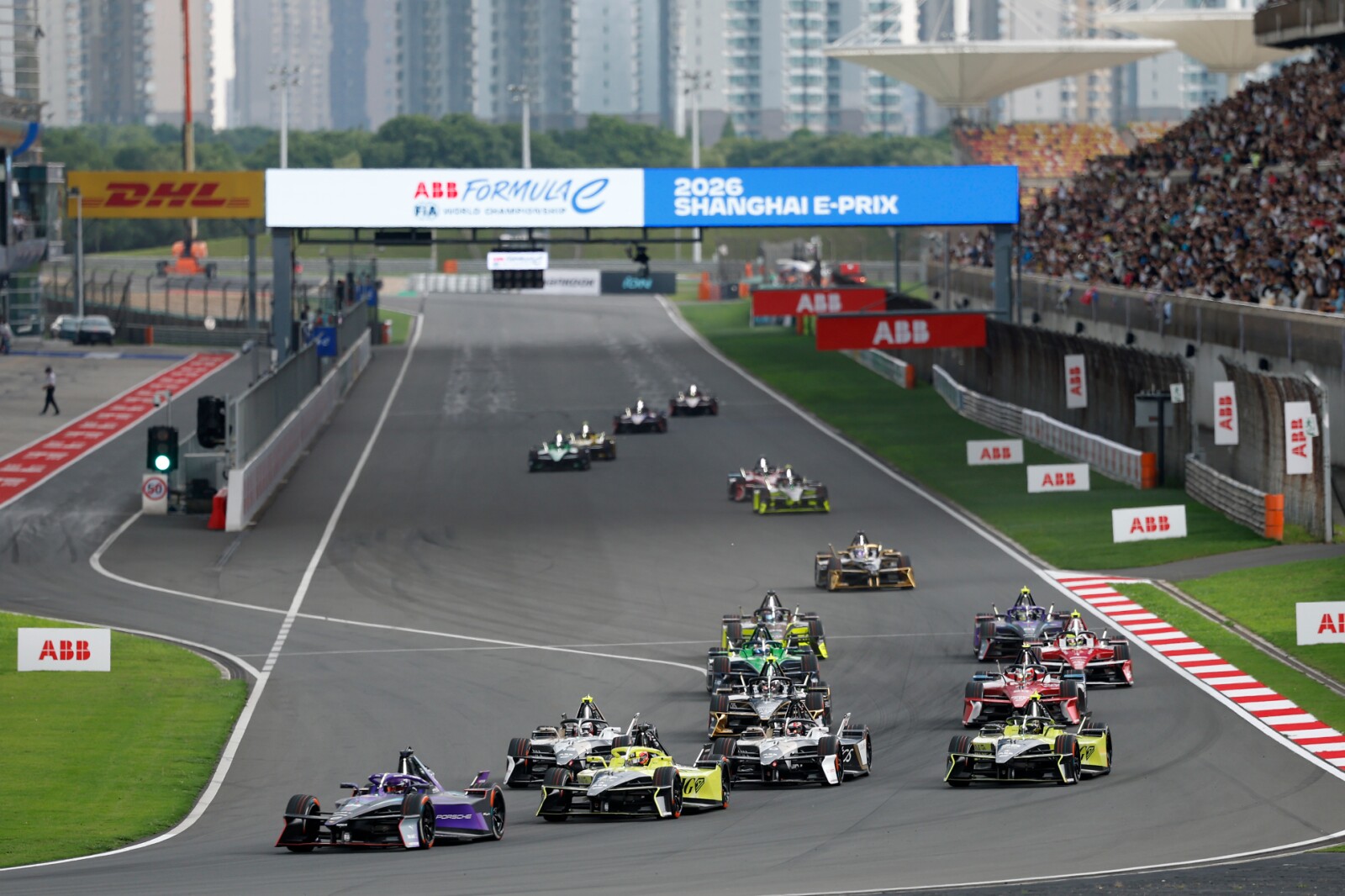
SHANGHAI, CHINA – Media OutReach Newswire – 7 July 2026 – As the ABB FIA Formula E World Championship returns to Shanghai for the 2025/2026 Season, the world’s premier all-electric racing Championship accelerates into its most ambitious chapter yet with a record 17 races across 11 global cities, including new circuits in Madrid and Miami.

ABB FIA Formula E World Championship returns to Shanghai for the 2025/2026 Season

Underscoring its commitment to sustainability and transparency, Formula E has also recently become the first global sport to achieve B Corp Certification, a globally recognised designation awarded to companies that meet high standards of social and environmental performance, accountability, and transparency. “Achieving B Corp Certification is a defining milestone for Formula E and reinforces our mission to drive sustainable innovation both on and off the track,” said Barry Mortimer, Paddock and Logistics Director, Formula E. “It reflects our commitment to operating responsibly as we continue to push the boundaries of electric mobility and sustainable sport on a global stage.”

DHL Powers the Global Movement of Formula E

Behind the high-speed action lies a complex global logistics operation. DHL, the Official Founding and Official Logistics Partner of the ABB FIA Formula E World Championship since 2013, plays a critical role in moving the Championship seamlessly across continents, ensuring that every race is delivered with precision, efficiency and sustainability.

Each race in this season requires the transport of approximately 400 metric tons of freight, including 21 electric race cars, charging infrastructure, broadcast equipment, and critical power systems, all orchestrated through tightly coordinated multimodal solutions spanning air, ocean, rail and road.

In the lead-up to the 2026 Shanghai E-Prix, DHL executed a three-day multimodal journey from Sanya, combining ferry and road transport. This required extensive planning and documentation to ensure full compliance across multiple transport regulations, highlighting the precision and intricate choreography required to meet unmovable race-day deadlines.

Battery Logistics at the Heart of Electrified Racing

Beyond motorsport, this partnership shines a spotlight on one of the fastest-growing and most complex areas of global trade: battery logistics. As electrification accelerates worldwide, the safe and compliant transport of lithium-ion batteries has become mission-critical and increasingly challenging.

Formula E offers a vivid real-world example. Each race involves transporting approximately 31 high-performance batteries, each weighing around 400kg—far exceeding typical consumer battery thresholds and classified as regulated dangerous goods. Their transport requires strict adherence to international regulations, including IATA and ICAO standards, covering specialized packaging, state-of-charge restrictions, certified handling procedures, and multiple layers of regulatory approvals from airlines and authorities.

The complexity is further amplified by varying customs requirements of different countries and cities, and stringent transport conditions across different modes. From certified aluminum containment units and non-stackable packaging to detailed documentation and risk classification requirements, every step demands precision and deep expertise.

“Every Formula E race may look seamless on track, but behind the scenes it is a highly complex logistics operation—especially when it comes to transporting lithium-ion batteries safely across borders,” said Federico Cavani, Head of Motorsports Italy, DHL Global Forwarding. “These are regulated dangerous goods that require meticulous planning, strict compliance with global standards, and specialized handling at every stage. Our partnership with Formula E showcases how advanced battery logistics can be executed safely at scale, and reflects the same challenges DHL customers face as electrification accelerates globally.”

China: The Engine Driving Global Battery Supply Chains

China has emerged as the undisputed hub of the global battery ecosystem, underpinning the rapid growth of electrification worldwide. In 2025, global electric vehicle battery deployment reached 1.2 terawatt-hours (TWh), with China accounting for around 60% of the total, reinforcing its position as the largest and most dynamic market. Beyond demand, China also leads across the manufacturing value chain. The country produces over 70% of the world’s lithium-ion batteries, with some estimates placing its share at more than three-quarters of global output in 2025.

The ability to move batteries safely, compliantly, and efficiently—both within China and across international markets—has thus become a critical differentiator.

“DHL Global Forwarding China partners with several of the world’s leading battery manufacturers, providing end-to-end battery transportation solutions across the entire logistics value chain. The company also supports the rapidly growing energy storage logistics sector, helping customers better manage and optimize their energy storage supply chains. Each year, we handle more than 10,000 TEUs of batteries and battery-related materials exported from China, with shipments destined for major markets such as the United States and Europe,” said Stephen Zhang, Vice President, Ocean Freight, Greater China, DHL Global Forwarding.

As global supply chains evolve alongside the energy transition, DHL’s role extends far beyond the racetrack. From supporting EV and battery ecosystems to enabling resilient, compliant and sustainable logistics solutions, the company continues to power the shift toward a low-carbon future—one race, and one shipment at a time.

DHL Group has made significant investments in its New Energy capabilities under its Strategy 2030: Accelerating Sustainable Growth. Through DHL New Energy Logistics, a sector brand driving electrification and the energy transition, the company delivers end-to-end solutions across the full value chain, spanning wind, solar, EVs and batteries, BESS, charging, grid infrastructure, alternative fuels, and hydrogen. Leveraging a global network covering more than 220 countries and territories and supported by over 20 DHL EV Centers of Excellence and a dedicated team of trained dangerous goods specialists, DHL ensures high-sensitivity cargo moves safely, compliantly, and on time.
Hashtag: #DHL

The issuer is solely responsible for the content of this announcement.

DHL – The logistics company for the world


DHL
is the leading global brand in the logistics industry. Our DHL divisions offer an unrivalled portfolio of logistics services ranging from national and international parcel delivery, e-commerce shipping and fulfillment solutions, international express, road, air and ocean transport to industrial supply chain management. With approximately 389,000 employees in more than 220 countries and territories worldwide, DHL connects people and businesses securely and reliably, enabling global sustainable trade flows. With specialized solutions for growth markets and industries including technology, life sciences and healthcare, engineering, manufacturing & energy, auto-mobility and retail, DHL is decisively positioned as “The logistics company for the world”.

DHL is part of DHL Group. The Group generated revenues of approximately 82.9 billion euros in 2025. With sustainable business practices and a commitment to society and the environment, the Group makes a positive contribution to the world. DHL Group aims to achieve net-zero emissions logistics by 2050.

28857

Hong Kong Residential Purchasing Power Released as Prices and Sales Rise, CRE Investment Momentum Sustains

Core Grade A Offices Lead Rental Recovery, Hong Kong Island High Streets Outperform Kowloon

  • Residential Market: Q2 residential transaction numbers increased by 19% q-o-q and 32% y-o-y to reach more than 22,150 units. Home prices rose by 2.5% during April and May, bringing a cumulative 7.4% increase for the first five months, with growth recorded across different segments.
  • Grade A Office Market: Citywide net absorption reached 396,100 sq ft in Q2, with new leases mainly driven by the banking & finance and insurance sectors. Core areas such as Greater Central witnessed significant rental pick up, offsetting rental corrections in non-core submarkets. Cushman & Wakefield expects the overall office market rental level to rise by +4% to +6% in 2026.
  • Retail Market: Overall retail sales maintained steady growth on the back of sustained rises in inbound visitors and a stronger RMB. High street vacancy rates in Causeway Bay and Central remained at 0% in Q2, with Hong Kong Island leading a rental growth recovery.
  • Capital Markets: Hong Kong’s commercial real estate investment market sustained the momentum carried over from late 2025. Supported by demand from end-users and still-attractive pricing levels across property sectors, total large-sized (>HK$100 million) non-residential transaction volume for the 1H 2026 period recorded HK$23.2 billion, up 84% y-o-y.

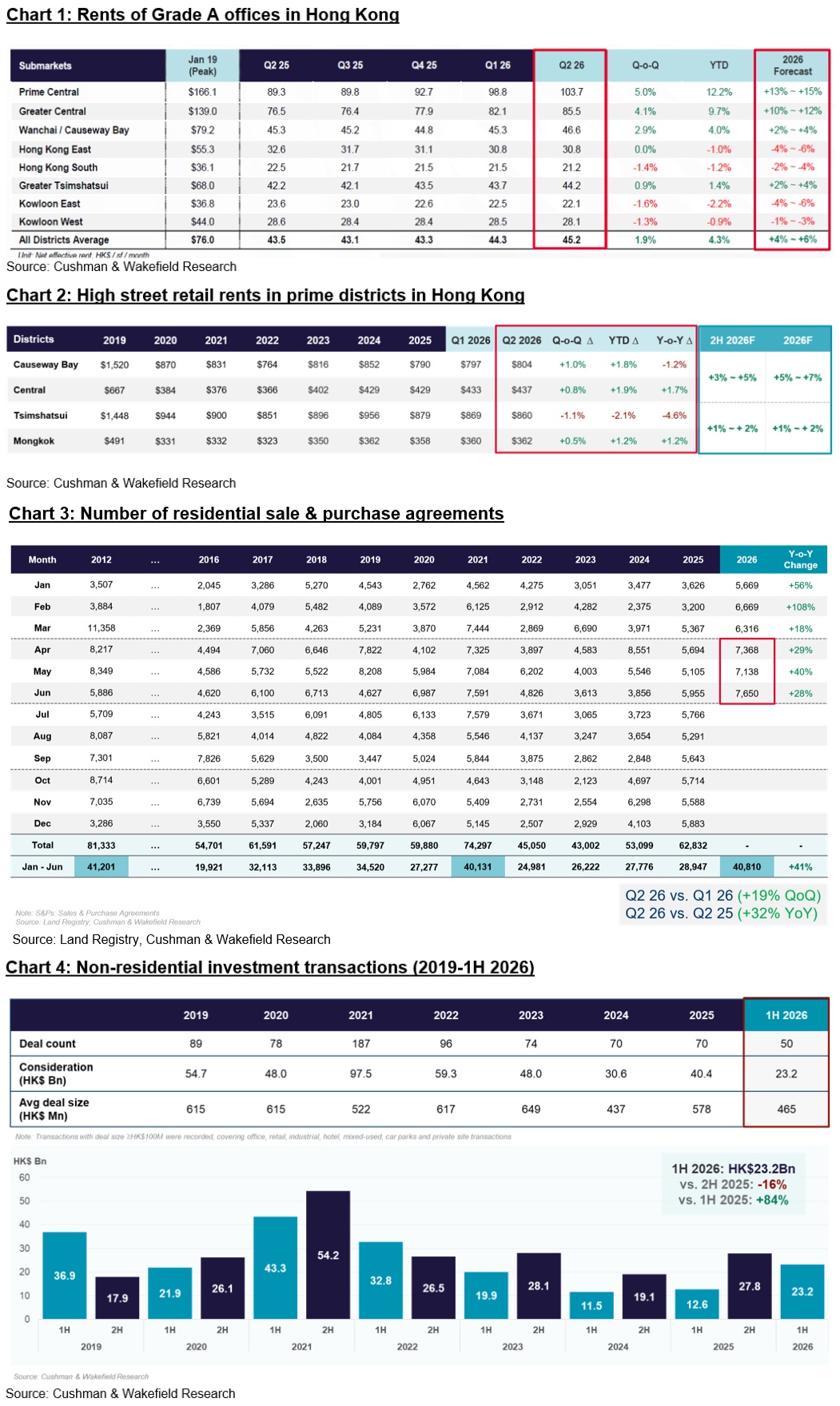
HONG KONG SAR – Media OutReach Newswire – 7 July 2026 – Global real estate services firm Cushman & Wakefield today held its Hong Kong Property Markets 1H 2026 Review and 2H 2026 Outlook press conference. Residential market activity remained robust as transaction numbers surpassed 22,000 cases in Q2, the highest quarterly record since Q2 2021. Grade A office market net absorption reached 396,100 sq ft in Q2, with rental level recovery mainly driven by core areas. Greater Central rents continued to pick up by 4.1% q-o-q in Q2, supporting the citywide rental level to grow by 1.9% q-o-q. In the retail sector, total retail sales continued to recover steadily, while high street store vacancy in Causeway Bay and Central returned to 0%, supporting stronger rental performance on Hong Kong Island and outpacing Kowloon. In the capital markets, end-users and well-capitalized investors bottom-fished amid attractive office asset pricing. Living sector and residential site transactions are expected to be the market focus in the upcoming months.

Cushman&Wakefield_Charts

Grade A office leasing market: Leasing momentum driven by banking & finance and insurance sectors, rental recovery led by core areas
Driven by take-up at recent new entrants into the market, citywide office market net absorption reached 396,100 sq ft in the quarter, mainly led by Greater Central and Greater Tsimshatsui. The total new leased area reached 1.2 million sq ft in Q2, underpinned by activities from the banking & finance and insurance sectors. Rents in Greater Central continued to pick up, rising by a further 4.1% q-o-q in Q2 for total growth of 9.7% in 1H 2026, while rental level growth of 2.9% q-o-q was seen in Wanchai/ Causeway Bay. In contrast, rents in non-core areas remained soft, with all four non-core submarkets experiencing rental corrections in Q2 and 1H. The recovery in core areas has supported citywide rental growth of 1.9% q-o-q in Q2 and 4.3% for 1H 2026. In the absence of new completions in Q2, the overall availability rate fell by 0.5 percentage points q-o-q to 19.5%.

John Siu, Managing Director, Hong Kong, Cushman & Wakefield, said, “Despite the uncertainties arising from recent stock market volatility and geopolitical tensions, leasing demand from the banking & finance and insurance sectors is expected to remain resilient, backed by ongoing wealth management activities, an active IPO pipeline, and long-term operational needs from finance-related institutions. These two sectors accounted for around 60% of Grade A office new leased area in 1H 2026, compared with 38% in 2024. Following strong rental growth in Greater Central in 1H 2026, the upwards momentum is expected to moderate in 2H. Full-year rental growth in the submarket is projected in the +10% to +12% range. This will help offset the impact of rental corrections in certain non-core submarkets, and support the citywide Grade A office rental level to rise by +4% to +6% in 2026, revised upward from the previous forecast of +1% to +3%.”

Retail leasing market: High street vacancy in Causeway Bay and Central holds at 0%, more overseas brands to establish presence in Hong Kong
Sustained rises in inbound visitors, along with the wealth effect from an improving residential market and a stronger RMB, have continued to support steady growth in Hong Kong’s retail market. As at May 2026, the city’s overall retail sales marked thirteen consecutive months of y-o-y growth, while total retail sales for the January to May 2026 period recorded HK$171.5 billion, up 10.6% y-o-y. Sales growth was recorded in all key retail categories. The Jewellery & Watches sector remained the most popular among tourists, posting y-o-y growth of 26.2%, followed by the Fashion & Accessories and Medicines & Cosmetics sectors, which grew 5.4% and 5.2%, respectively.

The overall high street vacancy rate rose mildly to 5.4% in Q2 from 4.2% in Q1, chiefly driven by greater vacancies in Kowloon. Causeway Bay and Central both continued to register zero vacancies through the quarter, while vacancy rates in Tsimshatsui and Mongkok rose to 8.3% and 8.6%, respectively. Despite this, new leasing activity was witnessed across core retail districts, with relatively strong leasing demand from pharmacies and jewellery & watches retailers.

As for high street retail rents, rental recovery in Hong Kong Island continued to outperform Kowloon. Causeway Bay and Central recorded q-o-q increases of 1.0% and 0.8%, respectively, with both local and international retailers displaying preferences for these two prime high-street hubs. At the same time, the relatively affordable and reasonable rental levels in Mongkok attracted a wider range of brand entries into the district, bringing q-o-q rental growth to 0.5%. However, with the slowdown among luxury retailers, rental levels in Tsimshatsui remained under pressure, declining by 1.1% q-o-q. In the F&B sector, landlords have been more willing to offer discounts amid high availability, resulting in F&B rents across four key retail districts recording q-o-q declines within a 1% range.

John Siu commented, “Looking ahead, we expect the Hong Kong retail market to remain on a steady recovery trajectory in 2H 2026, supported by continued growth in inbound tourist numbers and recovering tourist spending amid a stronger RMB. Given still-attractive rental levels, we also expect ongoing entries of new retailers, especially from international brands who view the Hong Kong market as a strategic launchpad for regional expansion in Asia. Causeway Bay and Central are likely to remain active for leasing activities, underpinned by strong tourist footfall. We forecast high street retail rents in Causeway Bay and Central to lead a recovery and increase by 3% to 5% in 2H 2026, while we project Tsimshatsui and Mongkok to pick up modestly in the range of 1% to 2%.”

Residential market: Prices and sales rise in 1H, interest rate uncertainty may weigh on 2H sentiment
The Hong Kong residential market continued to gain momentum in Q2, with overall sentiment and transactions remaining active despite the disruptions brought on by ongoing geopolitical uncertainties. Both primary and secondary sales were strong in Q2, with the total number of residential sales and purchases agreements reaching more than 22,150 cases in the quarter, up 19% q-o-q and 32% y-o-y (Chart 3), bringing the total transaction number for the 1H 2026 period to more than 40,800 cases, a new high for the same period since 2021. As at June, the monthly number of residential sales and purchases agreements exceeded 5,000 units for 16 consecutive months, reflecting sustained buyer confidence and demand from investors. Strong sales at new launches saw primary market transactions take a 32% share of total transactions between January and May.

Edgar Lai, Senior Director, Valuation and Advisory Services, Hong Kong, Cushman & Wakefield, highlighted, “Home prices continued to increase in Q2 2026. Rating and Valuation Department data suggests that the overall residential price index picked up 2.5% in the two months from April to May, bringing 7.4% YTD growth. Meanwhile, our Cushman & Wakefield mid-and-small size units price index shows that home prices rose by 4% q-o-q and 9% in 1H. Our tracking of popular housing estates shows that price growth was witnessed across different market segments. Prices at City One Shatin, representing the mass market, rose 4.7% q-o-q, while prices at Taikoo Shing, representing the mid-market, grew by 8.6% q-o-q. Residence Bel-Air, representing the luxury segment, also recorded a notable 6.7% q-o-q rise. However, following the sustained release of pent-up demand over the past year, coupled with rising stock market volatility in June and tighter cross-border capital controls from the Chinese mainland, our June Verbal Enquiry index indicates that buyer enquiries moderated towards the end of the quarter, compared with the peak seen in April and May.”

Rosanna Tang, Deputy Managing Director, Head of Research, Hong Kong, Cushman & Wakefield, added, “The Hong Kong residential market extended its positive momentum in Q2, with overall transaction activity remaining vibrant. Total residential transaction numbers in the quarter exceeded 22,150 cases, marking a new high since Q2 2021. Looking ahead to 2H, uncertainties in interest rate movements are expected to widen. Some potential buyers may again observe how geopolitical developments and stock market trends are affecting capital flow and market sentiment. Yet, given the resilient housing demand in the city, backed by rising numbers from incoming talent and non-local students, Hong Kong residential market is expected to remain stable in 2H. We anticipate full-year transactions in 2026 to reach approximately 75,000 units, while home prices to pick up by close to 10%. In terms of rents, rental index picked up by 1.8% in the first five months in 2026, rising 18% from the last bottom in 2023. Rental growth is expected to be moderate and stay within 5% y-o-y in 2026.”

Non-residential investment market (dealsexceeding HK$100 million): Transaction momentum sustains, with end-users leading office transactions
Amid the still-attractive pricing across property sectors, the Hong Kong commercial real estate investment market largely sustained the transaction momentum carried over from 2H 2025. The city’s non-residential investment market for deals exceeding HK$100 million recorded 50 transactions in 1H 2026, with total transaction volume rising 84% y-o-y to HK$23.2 billion, although down 16% from the HK$27.8 billion seen in the 2H 2025 period. (Chart 4). In 1H 2026, local buyers remained the major source of capital, accounting for more than 70% of the total consideration. Foreign capital comprised 19% of 1H 2026 total transaction volume, drawn by discounted property prices and conversion projects with value-added angles. By asset class, the office sector accounted for 54% of total investment consideration, followed by around 23% from the hotel / rental housing sector.

Tom Ko, Executive Director and Head of Capital Markets, Hong Kong, Cushman & Wakefield, concluded, “In 1H 2026, office sales transactions continued to account for the largest share of both consideration and deal count, indicating a recovery in the investment ecosystem. During this round of consolidation, end-user buyers acted to capture bottom-fishing opportunities, with multiple large-scale office deals concluded. Our recent publication in May 2026, Hong Kong Office Building Investment Back in Focus: A Market Reassessment, suggests the significant capital value adjustment has reset entry levels and reopened the market to end-users seeking bottom-fishing opportunities, especially for education institutions, banks and financial institutions, as well as leading Chinese mainland corporates.

“Notably, some end-user buyers are cash-rich and therefore less sensitive to banks’ cautious lending stance toward commercial properties, and to interest rate movements. Office capital values are projected to follow the recovery in rents. Coupled with the declining availability of distressed office assets, the current market encourages end-users to accelerate their decision-making to consider bottom-fishing ahead of the subsequent upcycle. Looking ahead to 2H 2026, we believe demand from end-users and the living sector will remain the major drivers of investment activity. The market has also witnessed growing momentum in private residential sites transactions, with investors strategically expanding land banks amid a buoyant residential market. We expect to see more transactions in this segment through the remainder of the year. Against this backdrop, the 2026 full-year investment volume is now forecast to reach more than HK$40 billion.”

Please click here to download photo and presentation deck.

(From left to right) Tom Ko, Executive Director and Head of Capital Markets, Hong Kong, Cushman & Wakefield; John Siu, Managing Director, Hong Kong, Cushman & Wakefield; Rosanna Tang, Deputy Managing Director, Head of Research, Hong Kong, Cushman & Wakefield and Edgar Lai, Senior Director, Valuation and Advisory Services, Hong Kong, Cushman & Wakefield.
Hashtag: #Cushman&Wakefield

The issuer is solely responsible for the content of this announcement.

Cushman & Wakefield (NYSE: CWK) is a leading global commercial real estate services firm for property owners and occupiers with approximately 53,000 employees in nearly 350 offices and 60 countries. In Greater China, a network of 23 offices serves local m

Cushman & Wakefield (NYSE: CWK) is a leading global commercial real estate services firm for property owners and occupiers with approximately 53,000 employees in nearly 350 offices and 60 countries. In Greater China, a network of 23 offices serves local markets across the region. In 2025, the firm reported revenue of $10.3 billion across its core services of Valuation, Consulting, Project & Development Services, Capital Markets, Project & Occupier Services, Industrial & Logistics, Retail, and others. Built around the belief that Better never settles, the firm receives numerous industry and business accolades for its award-winning culture. For additional information, visit www.cushmanwakefield.com.hk or follow us on LinkedIn (https://www.linkedin.com/company/cushman-&-wakefield-greater-china).

28857