Wednesday, 5 August 2026 Stay informed. No noise.

Zurich releases report addressing climate risks

Zurich Insurance Group (Zurich) releases the “Climate Risks: Strategies for Building Resilience in a More Volatile World,” report emphasising the urgent need for coordinated action against the rising threats posed by extreme weather and natural catastrophes. The report outlines the increasing costs of these events, highlights the role of insurance, and offers recommendations for policymakers to build resilient societies and economies.

Extreme weather events such as hurricanes, floods and wildfires caused about USD2 trillion in economic losses over the past decade according to the International Chamber of Commerce. The frequency and intensity of these events are increasing, potentially exacerbated by long-term climate shifts like temperature variations, rising sea levels and changes in precipitation patterns.

“The insurance industry is uniquely positioned to help strengthen resilience to physical climate risks,” said Alison Martin, CEO EMEA and Bank Distribution. “However, addressing the escalating costs of extreme weather and natural catastrophes requires collective and immediate action. Our paper provides a roadmap for how governments, insurers and communities can collaborate to meet the growing challenges posed by extreme weather and natural catastrophes.”

Insurance is crucial in protecting households, businesses and governments, helping them recover financially from the effects of natural catastrophes. However, insurance coverage is not keeping up with growing losses, leading to more underinsured or uninsured households and businesses.

Zurich advocates for a new approach that focuses on risk reduction and extending insurance coverage to protect communities and businesses. The insurance industry can provide risk management insights and capabilities to strengthen resilience to physical climate risks. By de-risking capital flows, the industry can also help unlock the necessary finance to build the infrastructure required to deliver that resilience, enhancing the protection provided by insurance.

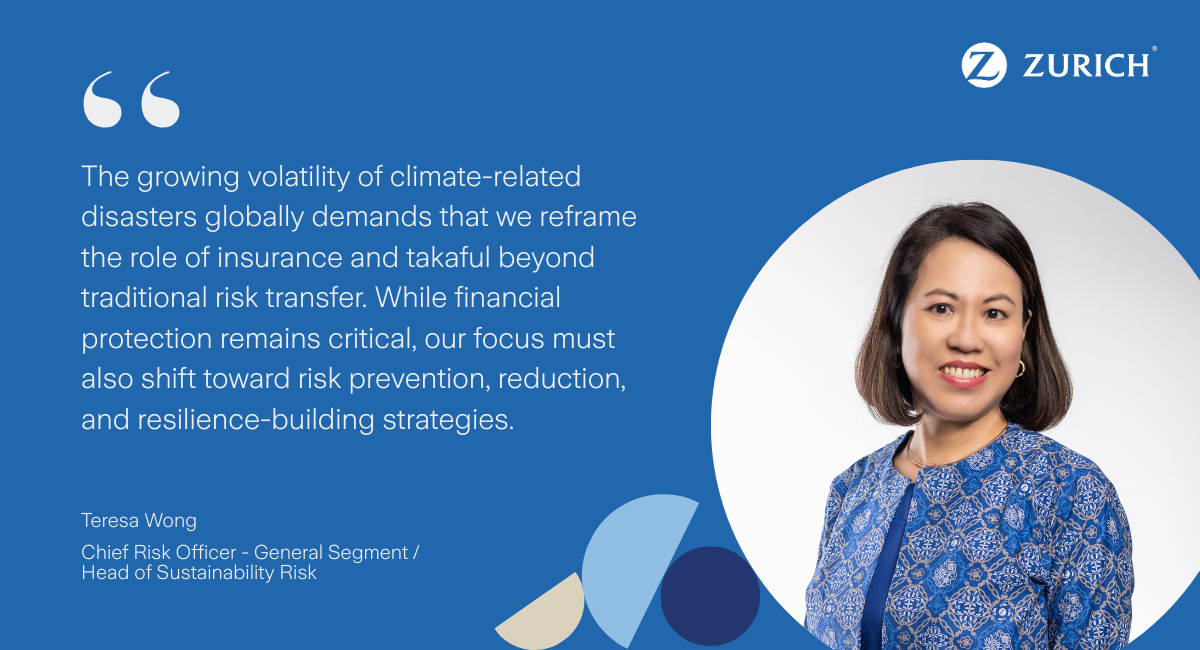
Teresa Wong, Chief Risk Officer – General Segment / Head of Sustainability Risk at Zurich Malaysia, emphasises “The growing volatility of climate-related disasters globally demands that we reframe the role of insurance and takaful beyond traditional risk transfer. While financial protection remains critical, our focus must also shift towards risk prevention, reduction, and resilience-building strategies. This is particularly relevant in Malaysia, where our Climate Resilience Survey highlights that more than half of respondents feel unprepared, with many citing financial constraints as a key barrier to readiness. As insurers, we must harness our risk expertise to support customers and communities not just in recovery, but in building long-term adaptive capacity. Now more than ever, strengthening climate resilience is fundamental to ensuring protection remains accessible and sustainable in the face of escalating risks.”

However, the insurance industry cannot tackle this challenge alone. A coordinated effort between the private and public sectors is needed. This paper makes three recommendations for policymakers:

  1. Invest in risk prevention and reduction: Governments should make formal commitments to strengthen climate resilience through robust strategies and the implementation of building codes and urban planning regulations. Measures include building climate resilience into national planning, establishing national centres of competence, and making more effective use of technology, data analytics and scientific research.
  2. Enhance insurance accessibility and affordability through supportive policy frameworks: Governments can raise awareness of extreme weather risks and offer incentives for households and businesses to obtain adequate insurance. This can be achieved by establishing a regulatory environment that sustains market capacity, attracts new entrants, and fosters competition and innovation to broaden coverage options for consumers.
  3. Develop public-private risk-sharing solutions to raise finance climate resilience: Innovative solutions such as blended finance and (re)insurance pools can help share resources and distribute risks, improving affordability and preventing the development of “insurance deserts.” Public-private partnerships (PPPs) can enhance insurance accessibility and affordability, especially in higher-risk areas.

Zurich remains committed to working with stakeholders worldwide to build a more resilient future, ensuring that communities and economies can thrive despite the growing challenges posed by climate risks.

For more information on Zurich Malaysia’s insurance and takaful plans, please visit zurich.com.my.


 

Microsoft’s 2025 Work Trend Index: Malaysian workforce and leadership align on intelligent agent integration

New data released from Microsoft’s 2025 Work Trend Index reveals how the rise of AI-driven intelligent agents is redefining the traditional organisational chart and transforming knowledge work across every job level – from the C-suite to frontline workers.

The latest data exposes a widening capacity gap, with 61% of Malaysian leaders saying productivity must increase, but 83% of the country’s workforce – both employees and leaders – saying they lack enough time or energy to do their work. This is supported by Microsoft 365 telemetry data, which shows that on average, employees are interrupted every two minutes by meetings, emails, or pings.

However, with the rise of agents that can reason, plan, and act as digital labour, roles and organisations will reshape to scale capacity as needed. Already, 89% of Malaysian leaders say this is a pivotal year to rethink core strategies and operations – and 86% say they’re confident they’ll use agents as digital team members to expand workforce capacity in the next 12 to 18 months – both notably above global averages.

“Malaysia is stepping up as a regional leader in AI transformation – and the latest Work Trend Index findings affirm that,” said Laurence Si, Managing Director of Microsoft Malaysia. “With 86% of business leaders confident in using AI agents to expand workforce capacity and more than half already automating entire workstreams, Malaysia is proving how organisations can turn ambition into action and scale impact through intelligent agents.”

Reimagining teams for higher impact

As AI continues to democratize access to expertise, the data shows an evolution from rigid and hierarchical organisational charts to more fluid “Work Charts”, where teams are formed around outcomes rather than siloed functions like marketing or finance – mirroring a model typically used on movie production sets today.

With agents acting as research assistants, analysts, or creative partners, companies can deploy lean, high-impact teams on demand. In fact, more than half of Malaysian leaders (51%) are already using agents to fully automate workstreams or business processes – above the global average of 46%.

But to maximise impact, organisations need to achieve the right ratio of human and digital labour for specific tasks. The report highlights that employees in Malaysia turn to AI to access capabilities humans can’t provide: 24/7 availability (44%), machine driven speed and quality (35%), and unlimited ideas on demand (31%).

The rise of the Frontier Firm

The report points to the emergence of Frontier Firms – a new type of organisation powered by hybrid teams of humans and agents – as proving what’s possible by scaling faster, moving with greater agility, and creating value in new ways.

Workers and leaders at these Frontier Firms are more than twice as likely to say their companies are thriving and that they can take on additional work. They are also more likely to report having opportunities to do meaningful work. In Malaysia, Frontier Firm workers report notably high levels of opportunity for meaningful work (92%) and ability to take on more work (58%) – far above the APAC average (77% and 21%, respectively).

Within the next two to five years, every organization is expected to begin the journey toward becoming a Frontier Firm. 44% of Malaysian leaders say expanding capacity with digital labour is a top priority in the next 12-18 months, second only to upskilling (48%). Beyond agents, 84% of Malaysian leaders also say their company is considering adding new AI-focused roles to prepare for the future, such as AI agent specialists, AI trainers, and AI workforce managers.

AI skills now a top priority

Both leaders and employees in Malaysia are rapidly building familiarity with AI agents. Nonetheless, countering last year’s findings, which showed employees leading in AI adoption, this year business leaders are ahead of the curve. 68% of Malaysian leaders report being highly familiar with AI agents, compared to just 39% of employees.

To bridge this gap, 59% of Malaysian managers expect AI training or upskilling to become a core responsibility for their teams in the next five years. Within the same period, Malaysian leaders have greater expectations than global peers that their team’s scope will expand to include redesigning business processes with AI (40%), building multi-agent systems to automate complex tasks (46%), as well as training and managing agents (48% and 44%, respectively).

Looking ahead

The findings suggest Malaysia’s early adoption of AI agents could translate into significant competitive advantages over the next decade. From the boardroom to the front line, success will increasingly depend on thinking like the CEO of an agent-powered startup – skillfully delegating to and managing teams of specialized AI agents.

Organisations embracing the Frontier Firm model are positioned to outperform traditional competitors in innovation speed, operational efficiency, and talent attraction. “AI is more than a shift in tools. It’s a strategic transformation that will be woven into the modern workplace,” adds Laurence Si. “Malaysia is emerging as a model for how AI-powered organizations can transform productivity, empower talent, and lead in the digital economy.”

Read the 2025 Work Trend Index on Worklab or visit the Microsoft blog and Microsoft 365 Blog to learn more. For all WTI blogs, videos, and assets, please visit our microsite.

UOB Malaysia reports record high NPBT of RM2.2 billion in 2024

UOB Malaysia reported a record net profit before tax (NPBT) of RM2.2 billion and total operating income of RM4.7 billion for the financial year ended 2024. The Bank’s net profit before tax increased by 15.9 per cent (2023: RM1.9 billion), while operating income grew by 2.3 per cent (2023: RM4.6 billion). The Bank’s financial performance for 2024 was disclosed in its Annual Report 2024.

The increase in operating income was backed by steady growth across all income streams, including net interest income, Islamic banking, net foreign exchange gains and fees and commissions. Meanwhile, total expenses decreased by RM22 million due to disciplined cost management, while total allowances for expected credit losses declined significantly by 52.1 per cent to RM159 million with improved asset quality and lower provisions for both impaired and non-impaired assets.

In 2024, UOB Malaysia’s gross loans, advances and financing grew by 2.1 per cent to RM109.5 billion (2023: RM107.2 billion), supported by steady growth across both its Wholesale and Retail segments. As the Bank continued to strengthen its balance sheet, it remained focus on growing and maintaining quality deposits, resulting in higher current account-savings account (CASA) ratio of more than 44%.

Ms Ng Wei Wei, Chief Executive Officer, UOB Malaysia, said, “We are pleased to report another year of strong financial performance, with record net profit before tax of RM2.2 billion. This achievement reflects the strength of our diversified business model, supported by prudent risk management, disciplined cost control and solid performance across our core businesses. Our Wholesale Banking business has made significant strides in advancing the Bank’s sustainability and connectivity agenda, delivering double-digit growth in both sustainable financing and trade loans. On the back of good trade flows, our Global Market income also grew strongly, as we assisted our clients in managing interest rate risks in a volatile environment. Additionally, our expanded retail franchise continues to deliver strong momentum, particularly in credit card and wealth management business, following the successful integration of the Citigroup’s Consumer Banking business.”

The Bank’s solid credit standing and stable outlook were also reaffirmed by its AAA rating by RAM Holdings Berhad (RAM Group), a distinction it has maintained since 2012. Its capital position remained strong, with a Common Equity Tier 1 ratio of 16.0 per cent and a Capital Adequacy Ratio of 19.4 per cent, well above regulatory requirements, providing a sufficient buffer to support future growth.

UOB Malaysia leverages its regional network and expertise, supported by 11 Foreign Direct Investment teams across Asia, to connect businesses to opportunities and drive cross-border investments. Aligned with national economic strategies, it supports key growth sectors – from Penang’s semiconductor industry to the Johor-Singapore Special Economic Zone and Sarawak’s renewable energy, contributing to Malaysia’s diversified economic growth and UOB Group’s goal of becoming a leading cross-border trade bank by 2026.

In the sustainability space, UOB Malaysia continues to actively champion sustainable financing through our comprehensive framework, validated by credible international second-party opinion providers. As a testament to its commitment to ESG within its operations, UOB Malaysia’s head office, UOB Plaza 1 Kuala Lumpur, was awarded the most energy efficient building at the National Energy Award 2024 and ASEAN Energy Award 2024.

Recognised for its long-term stability, technological innovation and excellence in service, UOB Malaysia was named Malaysia’s Best Bank at the 32nd annual World’s Best Bank Awards 2025 – Asia Pacific by Global Finance in March 2025. The Bank was also recognised as the Best Bank and Best Sustainable Bank in Malaysia for the International Categories (2025) by FinanceAsia.

UOB Malaysia’s Annual Report 2024 is available at uob.my/stakeholders/annual/annual.page.

Asia Vision Capital’s new Shariah fund connects investors to Johor’s investment opportunity

Asia Vision Capital Sdn. Bhd. (AVC), a licensed Venture Capital Company registered and regulated by the Securities Commission Malaysia (SC), has launched QJBCCI PLT, a Shariah-compliant Real Estate Fund offering accredited investors structured access to Quayside JBCC. It is an iconic mixed-use development located within the Johor-Singapore Special Economic Zone (JS-SEZ), one of Southeast Asia’s most dynamic cross-border corridors.

QJBCCI PLT complements AVC’s conventional real estate fund, QJBCCA PLT, which was launched in January 2025. Both funds operate under a regulated framework where the funds are lodged with SC, with TMF Group as the trustee and Tawafuq Consultancy serving as the Shariah adviser for the Islamic tranche.
These funds provide accredited investors with the opportunity to participate in the development of Quayside JBCC through Redeemable Convertible Preference Shares, standing benefits from quarterly dividend distributions and redemption options after a five-year lock-in period. Backed by institutional-grade governance and oversight, the fund is designed for investors seeking exposure to real estate income streams across hospitality, serviced residences, parking, retail, rooftop restaurants and the development’s prominent LED advertising display.

“JS-SEZ and Rapid Transit System represent one of the region’s most exciting growth opportunities, powered by cross-border connectivity and rising demand for integrated urban destinations. Through our funds, we are pleased to offer accredited investors a structured and professionally managed pathway to participate in this option. This initiative reflects our commitment to unlocking long-term value through disciplined investment, Shariah governance and institutional-grade oversight,” said Ian Khor, Chief Investment Officer of Asia Vision Capital Sdn. Bhd.

AVC targets to raise up to RM 300 million as the initial commitment goal for this development project. To enhance investor experience, AVC plans to launch a dedicated mobile platform by late 2025, offering fund performance updates of its portfolios through web and mobile-optimised dashboards.

As part of its long-term strategy, AVC is also exploring the potential conversion of this mixed-used hospitality development into a publicly listed Real Estate Investment Trust (REIT) by 2032, broadening liquidity options and expanding investor access through public markets.

SC alerts public on impersonation scam involving fake guarantee deposits

The Securities Commission Malaysia (SC) cautions the public on an impersonation scam demanding payment under the guise of the SC.

The scam involves the perpetrators falsely claiming that individuals are “under investigation” by the SC for market offences such as insider trading and market manipulation.

Victims will then be pressured to pay a “guarantee deposit” — purportedly up to RM500,000 — to avoid alleged legal action, including arrest or prosecution.

The modus operandi of this scam has the characteristics of a Macau Scam, where the SC’s name has been misused to deceive victims into making payments.

As a regulatory body, the SC does not endorse any investment schemes, solicit monies from the public or demand deposits in any form for regulatory investigations.

The SC would like to urge the public to be cautious and verify any investment offers through the SC’s Investment Checker at www.sc.com.my/investment-checker. If you receive any requests for payment claiming to be from the SC or its staff, please contact the SC’s Consumer and Investor Office at aduan@seccom.com.my or call 03 – 6204 8999 to verify or to report it.

Alibaba Cloud’s new whitepaper shows how AI can power sustainable business transformation

A new whitepaper released by Alibaba Cloud, Driving Sustainability with AI: A Guide to Partnering with Technology Service Providers, offers a forward-looking blueprint for how organisations can harness digital infrastructure — particularly AI and cloud computing — to accelerate their sustainable journey.

Based on insights from the Tech-Driven Sustainability Trends and Index 2024, which surveyed 1,300 business leaders across Asia, Europe, and the Middle East, the report combines industry data, actionable recommendations, and real-world case studies to explore how emerging technologies can close the gap between aspiration and execution.

The State of Sustainability: Progress, Gaps and Opportunity

The whitepaper highlights the growing urgency for businesses to act on sustainability, with 80% of surveyed organisations setting green targets. Yet only one-third of these have committed to science-based net-zero goals. Many companies still struggle to move from commitment to impact, citing gaps in technical understanding, measurement tools and concerns about the energy footprint of digital technologies.

Despite these barriers, a strong majority — 76% — see AI and cloud computing as essential tools to achieve sustainability outcomes. At the same time, 82% say it is critical that these technologies themselves are developed sustainably.

From Insight to Impact: Green AI in Action

Alibaba Cloud is helping organisations bridge this gap through platforms like Energy Expert, which uses AI to measure emissions and energy consumption in real time. The platform has already served over 3,000 organisations globally.

One standout case is its collaboration with Covestro, a polymer material company. Working together, the two helped Chinese beverage brand Nongfu Spring trace the full lifecycle emissions of its recycled water barrels — later repurposed into gel pens – offering supply chain transparency from production to reuse.

The whitepaper also showcases Alibaba Cloud’s commitment to low-carbon AI innovation. Its open-source Qwen series models are designed for efficiency and accessibility. Japanese AI start-up Lightblue, for example, used Qwen to build a localized high-performance Japanese-language model with lower development costs and energy use.

Five Strategies to Drive Recommendations for Sustainable Digital Transformation

The whitepaper identifies five strategic actions that businesses can take to align digital transformation with sustainability outcomes. First, organizations are encouraged to link their adoption of AI and cloud technologies with specific sustainability KPIs—for example, using predictive tools to optimise operations or monitor emissions across supply chains. Second, companies should partner with transparent, green technology providers that publish energy usage and emissions data, operate on renewable energy, and invest in energy-efficient infrastructure. Third, the paper highlights the importance of embedding security into sustainability strategies, noting that cybersecurity concerns remain a key barrier to wider adoption of digital sustainability tools.

Fourth, it recommends embracing open and trustworthy AI, such as open-source models that reduce costs, improve energy efficiency, and allow for localized applications. Finally, the paper calls for stronger public-private collaboration, with 82% of surveyed executives supporting more active government involvement to accelerate the adoption of sustainable technologies through policy, incentives, and education.

A Roadmap for Business Leaders

More than a guide, the whitepaper is a call to action. It emphasizes that sustainability is no longer a nice-to-have but rather a competitive differentiator and a catalyst for growth.

For companies navigating climate and digital transformation simultaneously, the message is clear: success depends on choosing the right partners, tools, and strategies to deliver measurable progress. With the right foundation, AI and cloud can power a greener, smarter, and more resilient future.

Scoot adds flight capacity to support travel demand

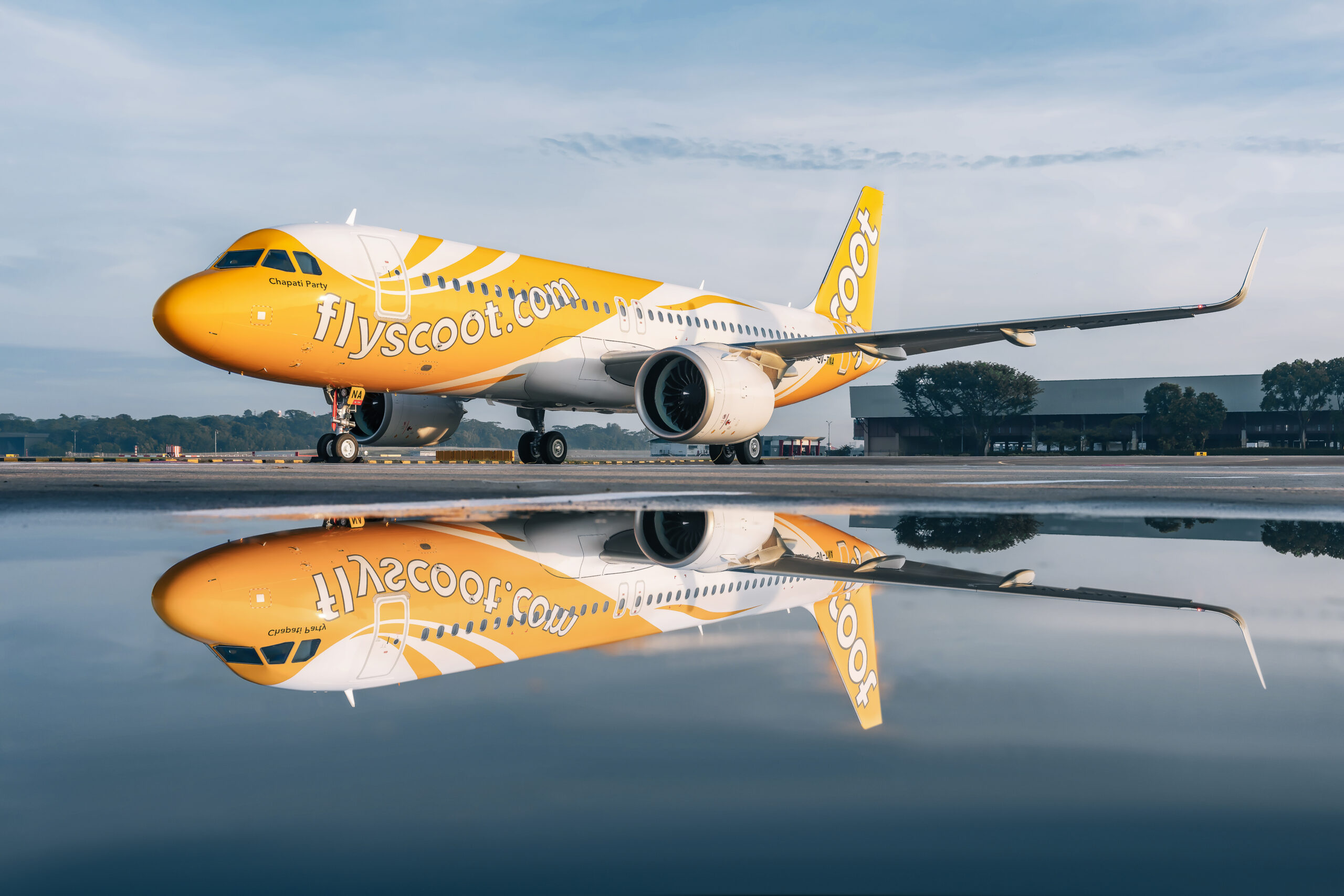
Scoot, the low-cost subsidiary of Singapore Airlines (SIA), announces increased flight frequencies and passenger capacity to support the strong demand for air travel in the upcoming months:

  • From 6 June 2025, flights to Iloilo City will increase from two to four times weekly
  • From 24 June 2025, flights to Cebu will increase from seven to 10 times weekly and services to Koh Samui from 21 times to 25 times weekly
  • From 2 August 2025, services to Taipei and Seoul (via Taipei) will increase from five times weekly to daily services
  • From 4 August 2025, frequencies to Perth will increase to 14 times weekly, up from 12 times weekly
  • From 30 August 2025, services to Davao will increase to 12 times weekly, up from nine weekly services
  • From 5 October 2025, frequencies to Sydney will increase to 14 times weekly, up from 10 times weekly

Flight schedules are subject to government and regulatory approvals or changes. Scoot remains committed to enhancing its network and connectivity. The airline will continue to remain nimble, regularly review its routes and align its capacity with the demand for air travel and evolving travellers’ needs.

Limited-time promotional fares to selected destinations are currently on offer on Scoot’s website and mobile application. Follow on social media and/or subscribe to Scoot’s newsletter to receive notifications on the latest promotions.