Wednesday, 5 August 2026 Stay informed. No noise.

Sponsor the Sustainable Action Conference 2024 and Transform Sustainability Commitments into Action!

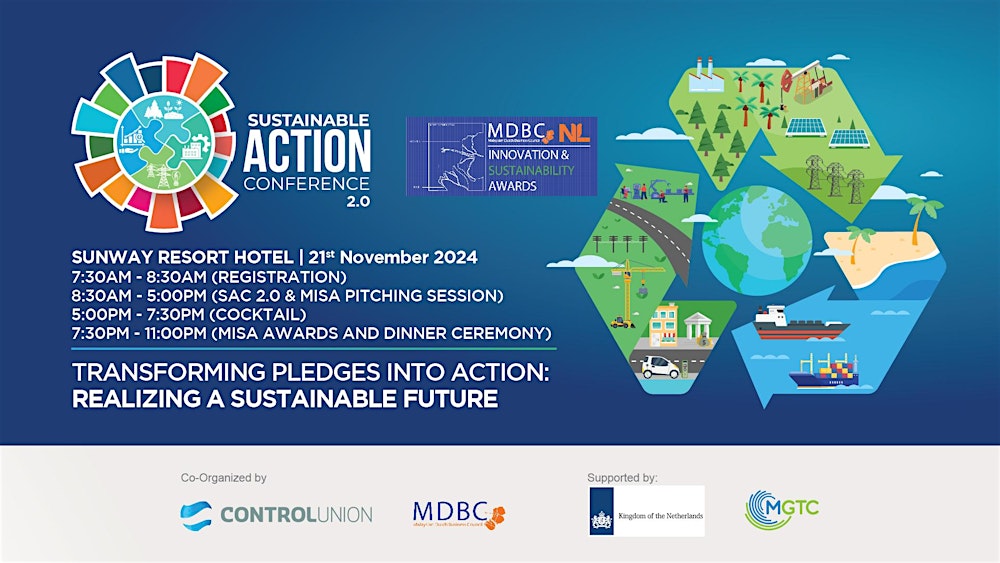
Control Union Malaysia will proudly host the second edition of the Sustainable
Action Conference (SAC 2024) on 21 st November 2024 at Sunway Resort Hotel.
The event is dedicated to transforming sustainability pledges into concrete action.
This event provides a platform for industry leaders from a wide range of
sectors—including government, state governments, municipal councils, finance,
manufacturing, plantations, forestry, energy, and construction—to come together,
share knowledge, and tackle pressing sustainability challenges.

At SAC 2024, attendees will have the opportunity to explore innovative solutions,
hear inspiring success stories, and foster meaningful collaborations. The conference
is designed to drive action by supporting the funding of sustainable projects and
raising awareness about the latest trends in sustainability. Whether youre looking to
elevate your brand, connect with industry leaders, or contribute to impactful projects,
SAC 2024 offers a unique opportunity to make a lasting difference in shaping a
sustainable future.

By sponsoring SAC 2024, you align your brand with sustainability and support Non-
Profit Organizations (NGOs) actively working on impactful projects. Sponsors not
only gain visibility but also have a direct hand in enabling sustainable
initiatives—as project pitches will be presented and voted on by the audience
during the event.

SAC 2024 is a non-profit event dedicated to driving sustainable transformation
across industries. With growing regulatory and social expectations, your participation
highlights your organization’s commitment to sustainability while positioning you as a
leader in this critical space.

The Sustainable Action Conference has proven to be a vital platform for connecting
sustainability experts, government officials, and company executives. It fosters
discussions and collaborations that lead to real, actionable solutions for companies
looking to make meaningful contributions to sustainability goals.

We are currently seeking sponsors to help bring this important event to life. If your
organization is interested in raising awareness, contributing to impactful projects,
and being part of a sustainable future, we invite you to join us.

We will be happy to customize a sponsorship proposal based on your company’s
objectives and budget.

Become a sponsor and join the movement toward a sustainable future today!

For collaboration opportunities, please contact us at
bdcumalaysia@controlunion.com

A Vast Majority of Businesses Have Established Sustainability Targets with More than Half Still Using Manual Tools for Measurement

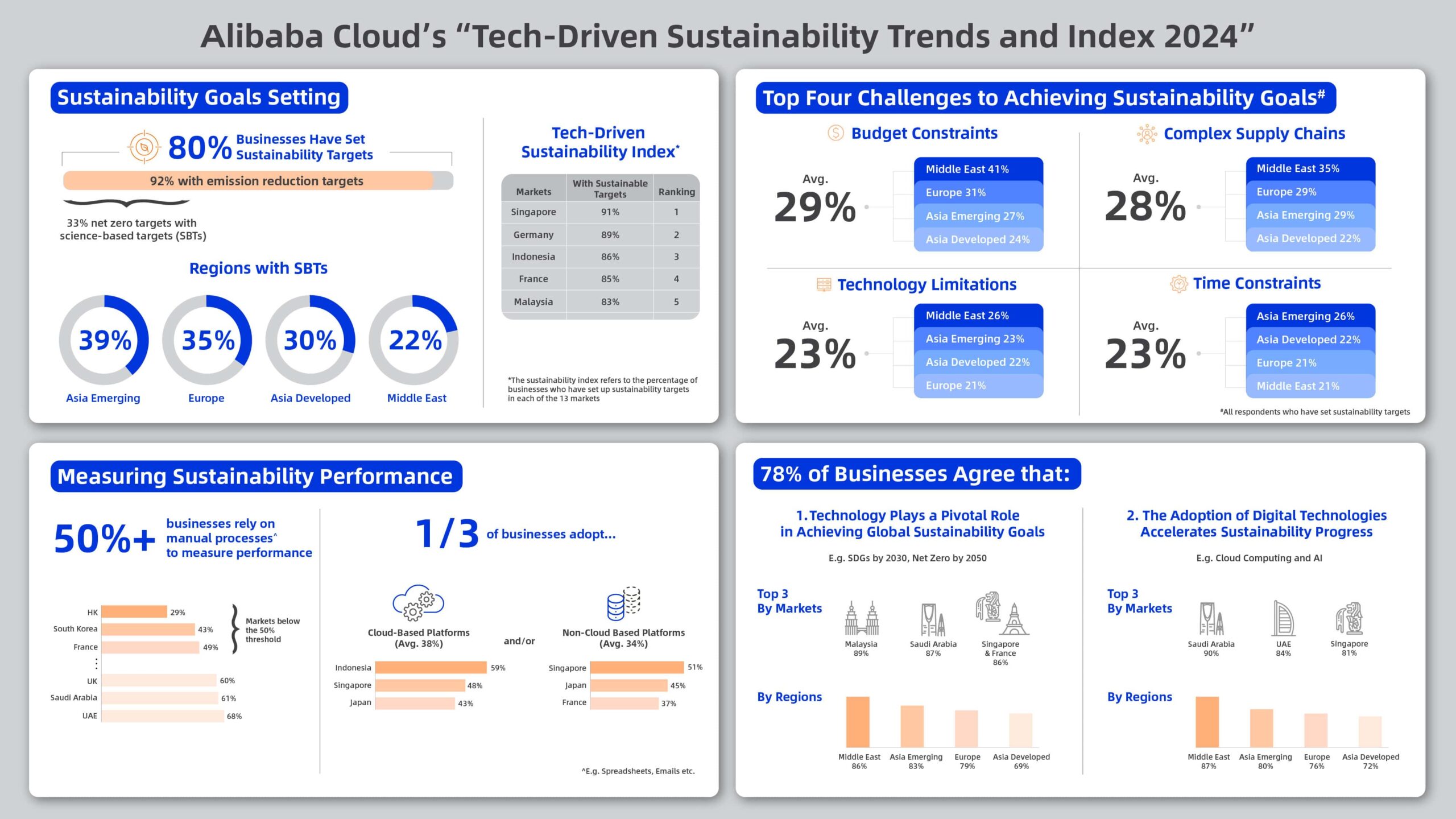
Kuala Lumpur, Malaysia, October 21, 2024 – A significant 80% of businesses surveyed across Asia, Europe and the Middle East have established sustainability targets. However, more than half (53%) of those businesses continue to rely on manual methods for measuring their progress, with Malaysia mirroring this trend with 56% of Malaysian businesses continue to use manual processes according to a survey report titled “Tech-Driven Sustainability Trends and Index 2024” commissioned by Alibaba Cloud, the digital technology and intelligence backbone of Alibaba Group. 

The report reveals that among businesses with sustainability targets, 92% have set emission reduction targets. However, only one-third of these organisations have committed to net-zero commitments with science-based targets (SBTs). The highest adoption of SBTs is in emerging Asian markets at 39%, followed by Europe at 35%, developed Asian markets at 30%, and the Middle East at 22%

Around half of the businesses with sustainability targets cite driving growth (56%), compliance with regulations (54%), and a strong corporate purpose (49%) as their key motivations for establishing targets. Notably, among all markets, Indonesia tops the list with 70% of businesses prioritising growth, Saudi Arabia leads with 73% emphasising compliance, and the UAE excels with 61% prioritising a strong corporate purpose.

A significant 78% of businesses agree that technology is crucial for achieving global sustainability goals, with top markets including Malaysia (89%), Saudi Arabia (87%), Singapore (86%) and France (86%). Regionally, this belief is strongest in the Middle East (86%) with emerging Asian markets a close second (83%). Similarly, 78% believe that adopting digital technologies such as cloud computing and AI will accelerate progress toward meeting sustainability goals, with Saudi Arabia leading at 90%, followed by the UAE (84%) and Singapore (81%). 

Market Commitment Levels and Challenges

When assessing market commitment levels, Singapore ranks highest with an impressive sustainability index of 91%, followed closely by Germany at 89% and Indonesia at 86%. Malaysia, in fifth place, has 83% of businesses setting sustainability targets. The sustainability index refers to the percentage of businesses that have established sustainability targets in the 13 markets. 

Businesses encounter various barriers in meeting their sustainability targets. Budget constraints emerge as the most significant obstacle, affecting 29% of organisations, particularly pronounced in the Middle East (41%) and Europe (31%). Complex supply chains further complicate efforts, impacting 28% of businesses, especially in the Middle East (35%) and Europe (29%). Additionally, technology limitations hinder 23% of companies, with the Middle East facing a slightly higher rate at 26%. Time constraints also present significant challenges across all regions, affecting 23% of organisations. For those yet to set sustainability targets, budget constraints (32%) and technology limitations (29%) remain the primary barriers to meeting sustainability targets.

Reliance on Manual Measurement

As businesses strive to enhance their sustainability efforts, the necessity for effective digital tools is evident. The survey emphasises the necessity for businesses to improve their understanding of digital tools, as 59% of respondents acknowledge a gap in their knowledge regarding how technology can help achieve sustainability goals. This sentiment is particularly evident in Singapore (83%),  Hong Kong (75%) and Thailand (70%).

The report also shows a general reliance on traditional practices among businesses, which may present challenges in effectively achieving sustainability goals. In Malaysia particularly, the study indicated that 56% of businesses depend on manual processes to measure sustainability performance using spreadsheets, emails, and similar methods. All markets, except for Hong Kong (29%), South Korea (43%) and France (49%), exceeded the 50% threshold, with the highest percentages in the UAE (68%), Saudi Arabia (61%), and the UK (60%). Meanwhile, only around a third of businesses use digital software tools including cloud platforms for the sustainability progress and measurement. Indonesia (59%), Singapore (48%) and Japan (43%) demonstrate a higher adoption of cloud-based solutions, while the average usage is at 38%.

“The survey findings underscore the urgent need for organisations to reassess their sustainability measurement methodologies and embrace advanced technological solutions like cloud-based platforms and AI services. These digital tools not only streamline the measurement process but also provide actionable insights that can drive meaningful progress for sustainability,” said Selina Yuan, President of International Business, Alibaba Cloud Intelligence.

“As a dedicated cloud service provider, we are committed to providing innovative and AI-powered solutions such as Energy Expert to enable enterprises to effectively measure and analyse carbon emission and energy consumptions to advance their sustainability goals. By addressing existing barriers and investing in such advancements, organisations can better align their sustainability initiatives with established targets,” she added. 

“Tech-Driven Sustainability Trends and Index 2024” aims to provide valuable insights into the evolving landscape of corporate sustainability while highlighting how technology can be applied to drive impactful change.

About the Survey

Alibaba Cloud’s “Tech-Driven Sustainability Trends and Index 2024” was independently conducted by Yonder Consulting, a UK-based consulting firm, with advisory, design and analytical support from The Purpose Business, an Asia-based sustainability consultancy with offices in Hong Kong and Singapore. The survey collected feedback from May 10 to June 19, 2024, involving 1,300 business leaders and senior management from various industries, including technology and communications, finance, infrastructure, renewable resources, healthcare, transportation, retail, and manufacturing.

Respondents were located across 13 markets in Asia (Malaysia, Indonesia, the Philippines, Thailand, Hong Kong SAR, Japan, Singapore and South Korea), Europe (France, Germany, and United Kingdom), and the Middle East (Saudi Arabia and UAE). In this survey, developed Asian markets refer to Hong Kong SAR, Japan, Singapore, and South Korea, while emerging Asian markets include Indonesia, Malaysia, the Philippines, and Thailand.

About Alibaba Cloud

Established in 2009, Alibaba Cloud (www.alibabacloud.com) is the digital technology and intelligence backbone of Alibaba Group. It offers a complete suite of cloud services to customers worldwide, including elastic computing, database, storage, network virtualization services, large-scale computing, security, big data analytics, machine learning and artificial intelligence (AI) services. Alibaba has been named the leading IaaS provider in Asia Pacific by revenue in U.S. dollars since 2018, according to Gartner. It has also maintained its position as one of the world’s leading public cloud IaaS service providers since 2018, according to IDC.

Appendix: Key survey findings

Technology’s Role in Sustainability:

  • 78% of businesses agree that technology plays a pivotal role in achieving global sustainability goals, and the adoption of digital technologies can accelerate progress. 
  • 89% of Malaysian businesses agree that technology plays a pivotal role in achieving global sustainability goals. This highlights a strong recognition of the importance of digital solutions in driving sustainability efforts in the country.


Understanding of Digital Technology:

  • 63% of businesses from Asia acknowledge a gap in understanding how digital technology can aid in achieving sustainability goals. This suggests that while there is recognition of the importance of technology, there may be a need for more education and resources to bridge this gap. 
  • 56% of Malaysian businesses still use manual processes to measure and track sustainability performance and only a third use cloud and/or non-cloud tracking software/application platforms.

These findings indicate that while there is a strong belief in the role of technology for sustainability in Malaysia, there are also challenges related to understanding and adoption that need to be addressed to fully leverage these digital tools.
TALENTCORP APPLAUDS BUDGET 2025’S FOCUS ON WORKFORCE READINESS, TALENT GROWTH AND INCLUSIVE DEVELOPMENT

KUALA LUMPUR, 21 OCTOBER 2024 – Talent Corporation Malaysia Berhad (TalentCorp) welcomes the progressive initiatives presented in Budget 2025, which aim to position Malaysia as a leader in technology, sustainability and innovation. The initiatives strike a crucial balance between driving economic progress and promoting the well-being of the people, ensuring that societal needs remain a priority. With a strong emphasis on government efficiency and improving public services, Budget 2025 sets the foundation for a more resilient nation ready for long-term success.

“Aligned with national goals, allocations in Budget 2025 support TalentCorp’s ongoing efforts to cultivate a skilled and resilient workforce capable of meeting evolving industry needs. As the strategic think tank of the Ministry of Human Resources (KESUMA), we collaborate closely with stakeholders to align Malaysia’s talent development strategies with the nation’s growth ambitions. Initiatives such as the MyMAHIR Future Skills Talent Council (FSTC) and the Malaysia Critical Occupations List (MyCOL) play crucial roles in identifying and addressing skills gaps, and taking steps to build a globally competitive workforce,” commented Thomas Mathew, Group Chief Executive Officer, Talent Corporation Malaysia Berhad.

Bridging Talent Gaps through Structured Internships

A prominent measure in Budget 2025 is the extension of the National Structured Internship Programme (MySIP) until 2030, now also incorporating students interning in regulatory bodies. This expansion aims to provide young talents with critical hands-on experience, enhancing their employability and ensuring a stronger alignment between education and industry requirements. The focus on expanding internship opportunities reflects a broader strategy to bridge the gap between academia and the professional world.

Another key initiative that supports this strategy is the Internship Matching Grant for SMEs and Start-ups (LiKES). Launched in March 2024, LiKES has received an additional RM10 million to support quality internships, particularly in STEM fields. By early October 2024, over 774 companies had registered under LiKES, hiring 6,000 interns across Malaysia. This funding aims to empower SMEs and start-ups, especially those outside major urban areas, providing them with the resources to nurture young talent and drive innovation.

Preparing the Workforce for a Changing Landscape

In parallel, the RM7.5 billion allocation towards Technical and Vocational Education and Training (TVET) is evidence of the government’s commitment to workforce readiness, with a focus on key sectors such as Maintenance, Repair and Overhaul (MRO), Electric Vehicles (EV), aerospace, and Artificial Intelligence (AI) to prepare Malaysians for the evolving landscape of emerging industries and economic demands. 

“By equipping the workforce with specialised skills, the government aims to future-proof Malaysia’s talent pool and strengthen its competitiveness in high-value industries. TalentCorp remains dedicated to supporting these efforts through initiatives that nurture high-value employment opportunities and foster a resilient talent ecosystem,” he added.

Promoting Work-Life Sustainability and Inclusive Practices

Budget 2025 extends tax incentives for employers hiring women returning to work after a career break. These incentives, valid for applications from 1 January 2018 to 31 December 2027, offer a 50% additional deduction on employment expenses for a 12-month period, encouraging greater female workforce participation.

Recognising the challenges faced by working caregivers, the government has introduced a 50% additional deduction for employers who provide paid caregiving leave of up to 12 months. This policy aligns with Malaysia’s broader care economy efforts to support job retention and promote work-life balance for employees fulfilling caregiving responsibilities for children, ill or disabled family members.

To further enhance workplace flexibility, Budget 2025 offers a one-off tax incentive for employers investing in capacity building and digital tools to implement flexible work arrangements (FWA). The expenses eligible for the incentive are capped at RM500,000 and must be verified by TalentCorp. “We are further playing a part in supporting work-life balance through TalentCorp’s Work-Life Sustainability advocacy programme, where we offer free workshops to assist employers in effectively implementing FWAs, reinforcing our commitment to fostering a healthier and balanced workforce,” Thomas Mathew remarked. 

Commited to Long-Term Success

Looking ahead, TalentCorp is geared up to maintain a robust pace in empowering Malaysia’s workforce to adapt and thrive in an evolving economic landscape. “By collaborating with industry leaders and stakeholders, we aim to catalyse a talent ecosystem that integrates innovation, sustainability and inclusivity, positioning Malaysia as a global hub for talent and innovation,” he concluded.

JEFFREY CHEAH FOUNDATION CONTRIBUTES TO NATION BUILDING THROUGH EDUCATION WITH RM75 MILLION IN SCHOLARSHIPS

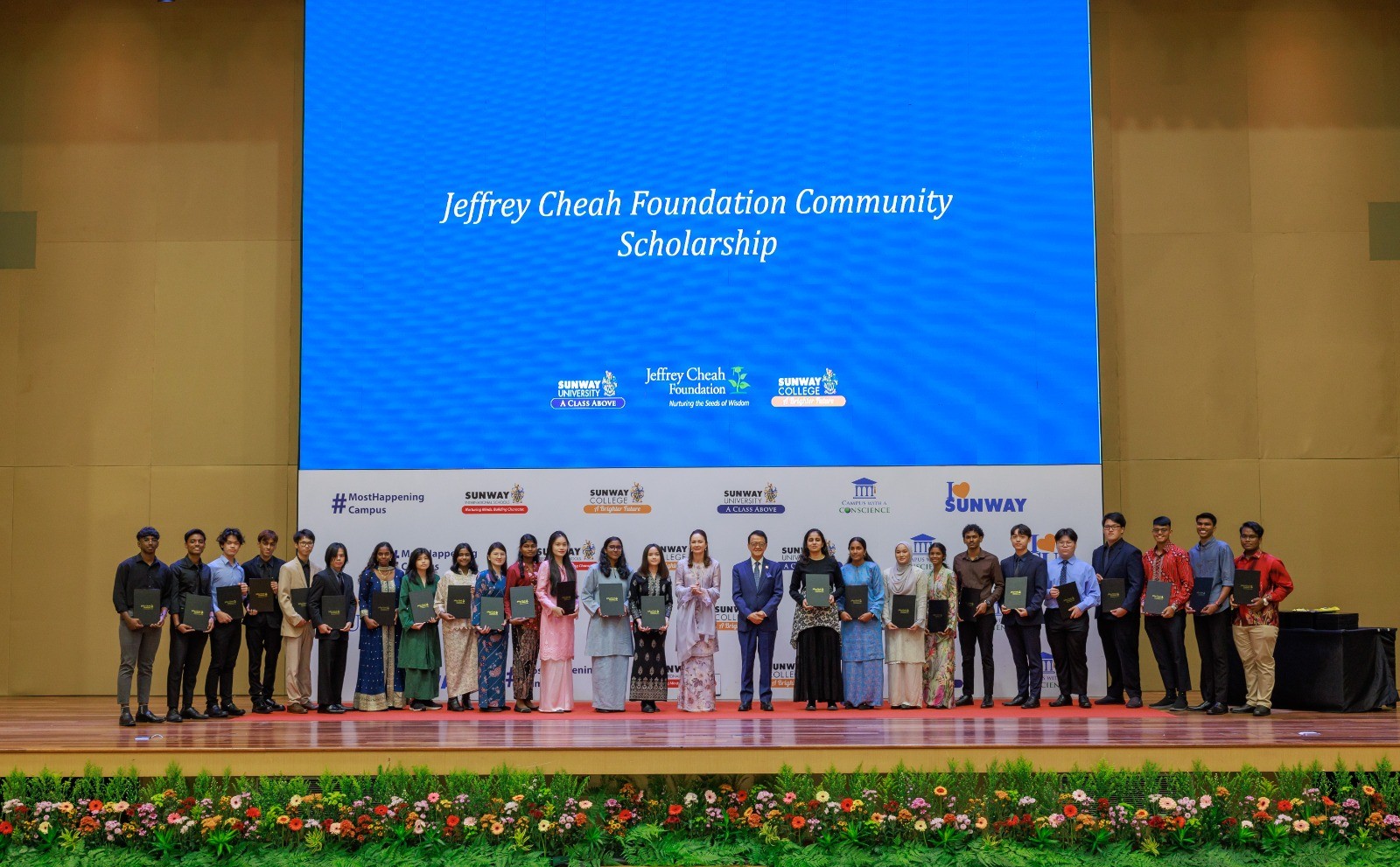
Sunway City Kuala Lumpur, 22 October 2024 – The Jeffrey Cheah Foundation
(JCF) today held its Scholarships & Awards Ceremony 2024, awarding RM75 million
in scholarships this year.

The foundation, Malaysia’s largest education-focused social enterprise, has
disbursed more than RM745 million in scholarships to date, benefitting thousands of
deserving students throughout the years.

Her Royal Highness Raja Permaisuri of Perak Darul Ridzuan Tuanku Zara Salim,
and Tan Sri Dato’ Seri Sir Dr. Jeffrey Cheah KBE AO, founder and trustee of Jeffrey
Cheah Foundation, presented the scholarships and congratulated the recipients on
their achievement.

The award ceremony saw the presentation of scholarships in various categories,
including Sunway University Postgraduate Studentships, Sunway University
Postgraduate Scholarships, The Chancellors Scholarship, Sunway Excellence
Scholarship, Tun Dr Siti Hasmah Mohd Ali Scholarship for Creative Arts And Music,
Jeffrey Cheah Foundation Community Scholarship, as well as Sunway – Victoria
University Excellence Scholarship.

“The Jeffrey Cheah Foundation’s commitment to nation building, exemplified by the
Foundation’s tagline Nurturing the Seeds of Wisdom, is founded on our belief that
making quality education affordable and accessible is crucial in creating a more
progressive, sustainable and inclusive future for all Malaysians,” shared Cheah, who
is also the founder and chairman of Sunway Group.

As a strong advocate of quality education, world-class research and sustainable
development, Cheah’s personal aim is to award several billion Ringgit worth of
scholarships in his lifetime.

Cheah also paid tribute to Her Royal Highness Raja Permaisuri of Perak Darul
Ridzuan Tuanku Zara Salim’s firm dedication to elevating the Malaysian education
system and Tuanku’s promotion of ethical values.

As part of JCF’s commitment to nation-building through quality education, a teacher
professional development programme was launched to advance Education for
Sustainable Development (ESD) in Malaysia, earlier this year.

JCF is funding the development and delivery of a capacity-building development
programme on ESD for teachers in national and national-type school nationwide, as
well as the expansion of the programme to 30 more schools, involving more than
2,500 teachers nationwide.

This programme will advance Mission 4.7, a global initiative to advance
transformative education for the United Nations Sustainable Development Goals
(SDG), which calls upon governments to ensure learners obtain the necessary
knowledge, skills, values and attributes to achieve the SDGs.

In line with JCF’s steadfast commitment to advancing the SDGs, the foundation has
gifted US$20 million to the United Nations Sustainable Development Solutions
Network (UN-SDSN) to establish the Jeffrey Sachs Center on Sustainable
Development at Sunway University, as well as UN-SDSN’s Asia Headquarters in
Sunway City Kuala Lumpur, which coordinates continent-wide sustainability
initiatives alongside the New York and Paris offices.

THE SMARTINVESTOR AS THE OFFICIAL MEDIA PARTNER FOR THE SUSTAINABLE ACTION CONFERENCE 2024

The Sustainable Action Conference (SAC) 2024 and The SmartInvestor (TSI) magazine are partnering up towards a more sustainable future!

Control Union Malaysia is proud to announce the second edition of the Sustainable Action Conference 2024 (SAC 2.0) and is excited to welcome TSI as its primary official media partner! The event will take place on 21st November 2024 at the Sunway Resort Hotel, Malaysia, with the support of the Embassy of the Kingdom of the Netherlands and the Malaysia Green Technology and Climate Change Corporation (MGTC).

The SAC 2024, with the overarching theme “Transforming Pledges into Action: Realizing a Sustainable Future,” aims to provide a platform to showcase industry case studies, demonstrating successful sustainability initiatives and delivering actionable solutions that can be implemented across various industries – including Manufacturing, Plantations, Forestry, Energy, Oil & Gas, Tourism, Construction, Finance, and others – to effectively address sustainability efforts.

The media partnership underscores a shared commitment of both parties that brings diverse people together, sparking the action needed for real change. Online platforms will feature detailed interviews with speakers, organisations, and attendees, while also keeping you updated on the programme and offering behind-the-scenes insights into the event. Through these efforts, we aim to broaden the event’s reach and provide you with comprehensive information on the key topics discussed. After all, sustainability is a matter that affects us all!

The Sustainable Action Conference is hosted with the generous support of sponsors with remaining proceeds being donated to a charitable organisation selected by the audience during the conference. Participation is by invitation only and should you be interested to attend, kindly register on our website at www.sustainableactionconference.com.


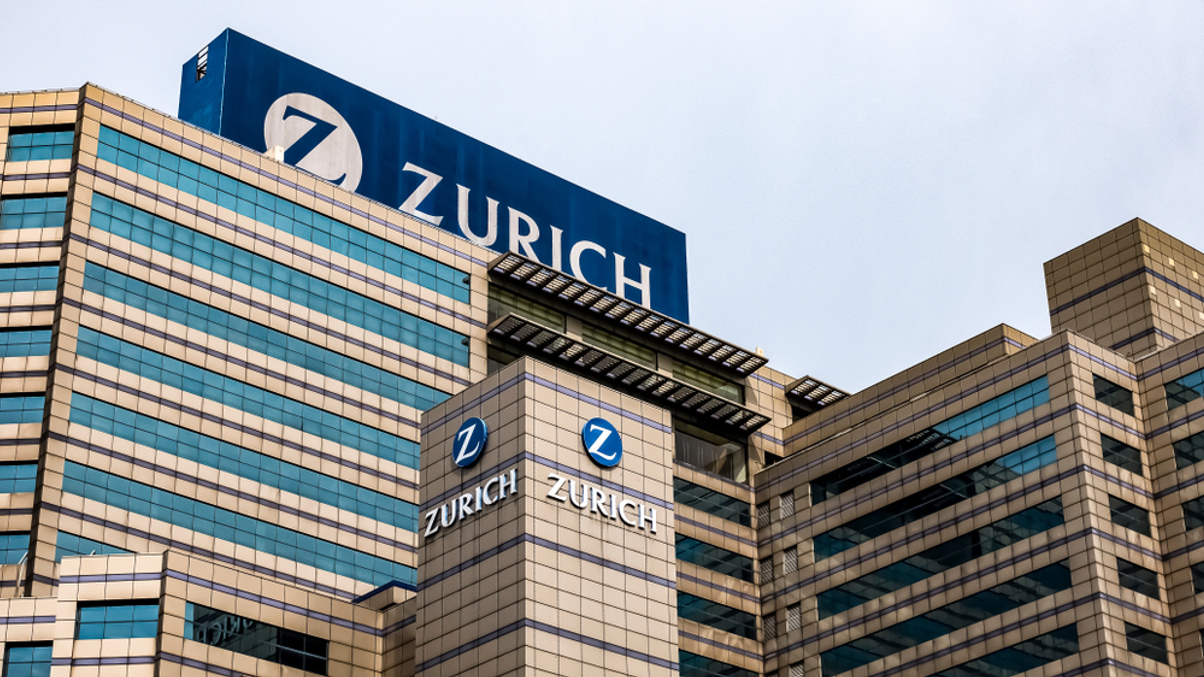
54% Malaysians unprepared for climate risks, according to Zurich Malaysia’s Climate Resilience Survey

KUALA LUMPUR, 23 October 2024 – Climate Resilience Survey by Zurich Malaysia found that
86% of Malaysians are concerned over climate change impacts, with younger individuals (aged 18-
29) showing the highest levels of concerns (up to 90%). Financial constraints are a significant barrier
to preparedness for 38% of respondents, with 54% feeling unprepared for climate events such as
floods, heatwaves, and landslides.

Zurich Malaysia’s Climate Resilience Survey was launched in support of National Preparedness
Month (BKN) 2024, themed “Malaysia Madani, Siaga Bencana”. The survey aims to promote disaster
preparedness awareness through collaboration between local communities and the government.

Junior Cho, Country CEO/Head of Zurich Malaysia, said, “Our Climate Resilience Survey aims to
gain a deeper understanding of the public’s current perceptions, preparedness, and experiences with
climate change impacts. By understanding the community’s perception of climate risks and their
preparedness levels, we can develop tailored strategies to strengthen climate resilience, enhance
local adaptation efforts, and promote sustainable practices across diverse urban settings.”

Awareness and concerns are high, but greater support required
Overall, 53% of Malaysians are very concerned about climate change impacts on future generations.
However, this level of heavy concern decreases with age, from 56% in the 18-29 group to 25% in the
65 and above group. This indicates a greater focus on climate education and engagement among
younger Malaysians, who are more likely to face the longer-term consequences of increasing climate
events.

Floods (75%), heatwaves (74%), and landslides (70%) are the top worries, with urban infrastructure
risks (e.g., fallen trees, sinkholes) becoming an emerging concern (67%), following recent cases in
urban downtown Kuala Lumpur. Similar age patterns are observed, with overall concerns decreasing
as age increases.

In the past 12 months, almost a third of respondents (32%) reported being directly impacted by
severe climate events, with 38% citing their families as victims. On the community front, 58% reported
that their local communities were most affected by severe climate events, indicating a concern for
climate events that extend beyond individual experiences.

The survey found an inverse correlation between monthly household income levels and
preparedness. 49% of B40 respondents reported having sufficient provisions, savings, evacuation
plans, and emergency support for their households against potential climate events. However, this
decreases to 44% for M40 households and 39% for T20 households. This suggests that higher-
income households may have higher expectations for preparedness, resulting in a perception of being
less ready or prepared.

The survey also indicates strong support and adoption of sustainable practices by Malaysians, who
are taking the initiative towards a greener lifestyle. They prioritise sustainable waste management
(63%), purchase eco-friendly products (60%), and reduce energy usage (60%). These trends suggest
an emphasis on tangible, everyday actions that can be easily integrated into daily life.

Building on from existing sustainability commitments

Zurich Malaysia’s Climate Resilience Survey builds on the Urban Climate Resilience Program
(UCRP) launched by the Z Zurich Foundation to support urban communities in nine countries across
the globe. The UCRP expands on Z Zurich Foundation’s ongoing climate change work with the Zurich
Climate Resilience Alliance, which has primarily focused on rural environments, by extending its
efforts into urban spaces and populations.

Zurich Malaysia successfully rolled out the UCRP locally, kicking off in November 2023 with Kampung
Morten and Pantai Peringgit in Melaka, through a multipartite collaboration between Zurich Malaysia,
Z Zurich Foundation, the Resilient Cities Network (R-Cities), as well as the Historic City Council of
Melaka (MBMB). In March 2024, Zurich Malaysia and Z Zurich Foundation collaborated with C40
Cities and the Kuala Lumpur City Hall (DBKL) to expand the UCRP in the capital, to PPR Beringin
and Kampung Pasir.

Earlier this year, the 2024 Global Risks Report – presented by the World Economic Forum (WEF) in
collaboration with Marsh McLennan and Zurich Insurance – found that two-thirds of respondents
ranked extreme weather as a top risk. Findings from Zurich Malaysia’s Climate Resilience Survey
align with these global realities and will be leveraged to further strengthen community resilience
against climate events, as part of Zurich Malaysia’s ongoing mission to care for what matters most to
our planet’s wellbeing.

Zurich Malaysia’s Climate Resilience Survey was conducted in September 2024, with 1,100
Malaysians taking part in the study. For further insights into Zurich Malaysia’s holistic approach to
building a brighter tomorrow, please visit https://www.zurich.com.my/.

SoftwareOne Launches New Cloud Competency Centre in Malaysia to Accelerate Digital Transformation for Clients Across Southeast Asia

SoftwareOne Holding AG, a leading global software and cloud solutions provider, has launched a SoftwareOne Cloud Competency Centre in collaboration with Amazon Web Services (AWS) in Kuala Lumpur, Malaysia.

Serving businesses across Southeast Asia, this new centre will provide clients with local expertise and support in AWS cloud services, including generative artificial intelligence (AI) tools Amazon Bedrock, a fully managed service that provides a single API to access and utilise high-performing foundation model from leading AI companies, and Amazon Q, a generative AI-powered assistant for business and developers, to drive digital transformation. By establishing the SoftwareOne Cloud Competency Centre in Malaysia, SoftwareOne further expands its global delivery network across fast-growing technology markets to help local businesses innovate with the latest technology advancements. The SoftwareOne Cloud Competency Centre opening follows AWS’s own recent announcement of cloud infrastructure expansion in Malaysia.

“As an AWS Premier Tier Services Partner, we are thrilled to continue our collaboration with AWS through the opening of our new SoftwareOne Cloud Competency Centre in Malaysia,” said David Tan, Regional Services Leader, APAC at SoftwareOne. “This is strategically aligned with AWS’s commitment to Asia and will make SoftwareOne’s global expertise and resources readily accessible to local clients. Businesses of all types will be able to accelerate their digital journeys more efficiently, benefiting from on-the-ground support in cloud migration, application modernisation, end-user computing, and FinOps.”

“AWS is committed to enabling global organisations across industries with the world’s most comprehensive and broadly adopted cloud, and AI technologies to innovate, scale, and achieve their business and digital transformation objectives with efficiency and resilience. The recent launch of our AWS Region in Malaysia deepens that resolve,” said Peter Murray, Country Manager, AWS Malaysia. “As a Premier Tier AWS Partner, SoftwareOne is well-positioned to help businesses adopt and optimise their AWS use. Establishing the SoftwareOne Cloud Competency Centre in Malaysia aligns our goals of expanding cloud accessibility and compliance capabilities locally for customers.”

The SoftwareOne Cloud Competency Centre experts will guide clients in implementing the SoftwareOne Landing Zone for AWS, a comprehensive pre-configured and automated framework that provides a foundation for building a secure, multi-account AWS environment. Featuring cloud infrastructure, policies, and guardrails, including centrally managed services, it is designed to help organisations quickly set up a secure and scalable environment with a consistent set of AWS best practices.

Leveraging industry-leading infrastructure as code tool Terraform, SoftwareOne’s Landing Zone for AWS gets clients up and running from a zero footprint to AWS workload deployment within days. It also helps clients improve the operational efficiency of their AWS environments with SoftwareOne’s ongoing management and expertise in implementing patching and updates.

“The launch of the regional SoftwareOne Cloud Competency Centre demonstrates SoftwareOne’s continued dedication to empowering digital transformation globally,” said Sean Pope, Global Leader, SoftwareOne Centre of Excellence for AWS. “This Centre will be a cornerstone in our global portfolio development, enhancing our ability to deliver cutting-edge solutions and support to businesses in SEA. The innovations and best practices we establish here will also be pillars upon which to build, benefitting other regions by enhancing our global AWS service offerings.”

For more information about the SoftwareOne Cloud Competency Centre in SEA and its support of digital transformation initiatives, please visit www.softwareone.com.

RHB ASSET MANAGEMENT UNVEILS ENHANCED INCOME STRATEGY TO CAPITALISE ON A TRANSFORMATIVE INVESTMENT ERA

KUALA LUMPUR – RHB Asset Management Sdn. Bhd. (“RHBAM”), a wholly-owned subsidiary of RHB Investment Bank Berhad, today unveiled its enhanced Asian Income strategy comprising RHB Asian Income Fund, RHB Asian Income Fund-SGD and RHB Asian Income Fund – Multi Currencies (herein referred to as “RHB Asian Income Funds”). This enhancement marks a significant evolution of RHBAM’s flagship product, which has maintained a successful track record for over 12 years.

The RHB Asian Income Funds feed into the Schroder Asian Income Fund (“Target Fund”), managed by Schroders Singapore (“Schroders”). The Target Fund features a more dynamic asset allocation strategy, with a broadened investment scope that now spans global and alternative assets, in addition to Asian multi-asset investments. This comprehensive diversification allows Malaysian investors to tap into broader growth opportunities while enjoying stable income and capital appreciation over the medium-to-long term, amid a rapidly evolving investment landscape.

The RHB Asian Income Funds’ income distribution policy is now more flexible, allowing for monthly income distribution. It targets a higher income distribution of 6% to 6.5% per annum1, a notable increase from the previous 4.0% to 4.5% per annum. This improvement is designed to offer flexibility and provide a more regular income stream, especially valuable in times of market volatility.

The enhancement aligns with the current economic environment, characterised by easing monetary policies and lower interest rates, which have brought dividends back into focus. Coupled with ongoing corporate reforms across Asian capital markets, these factors are poised to drive stronger investor confidence and favourable dividend outcomes over the medium term.

The Target Fund’s diversified strategic investment universe now extends beyond Asian multi-asset investments to include global and alternative asset classes, aiming to boost alpha generation and enhance yields by tapping into income and growth opportunities worldwide. With a balanced approach that combines income generation and capital growth, the RHB Asian Income Funds aims to deliver stability and long-term potential. Investors gain access to high-quality companies globally, positioning them to benefit from major growth themes such as artificial intelligence, which are reshaping the market landscape.

Today, RHBAM manages an extensive range of unit trust funds, wholesale funds, private retirement schemes and private mandates for Malaysian investors, both retail and sophisticated investors at large. Our range of investment solutions encompasses both conventional and Shariah-compliant, sustainability focused and thematic strategies to cater to the differing risk appetite for out investors. Our assets under management (AUM) is in excess of RM50bil, with the support of our clients, appointed distributors and our agency force. Our product offerings are distributed by our list of appointed Institutional Unit Trust Agents (IUTAs), Corporate Unit Trust Agents (CUTAs), agency force and through our very own online portal, RHBAM MyInvest. Investors are able to access the RHB Asian Income Funds through www.rhbgroup.com/myinvest.

Retail investors can participate in RHB Asian Income Fund with a minimum investment of RM100, making this diversified approach to income and growth accessible to a broad range of investors.

Chze How Ng, Managing Director and CEO of RHB Asset Management, said:
“At RHB Asset Management Sdn. Bhd., we are committed to delivering innovative investment solutions that meet the evolving needs of our clients. The enhanced Asian Income strategy are designed to provide consistent income and capital growth during volatile market cycles. We are optimistic that it will play an essential role in every investor’s portfolio. We are proud to continue our 12-year partnership with Schroders, leveraging their proven expertise to navigate this dynamic investment landscape.”

Lily Choh, Head of South Asia and CEO Singapore, Schroders, said:
“As we steer through an era of transformative change, we are delighted to partner with RHB Asset Management Sdn. Bhd. on the enhanced Asian Income strategy, which is exclusively designed to benefit from Asia’s burgeoning influence and pivotal trends driving growth. Schroders, as one of the largest offshore managers in Malaysia, combines our regional expertise with a global perspective to deliver income stability while tapping into the next wave of growth opportunities. Our robust and forward-thinking investment strategies are well-positioned to adapt to the rapidly evolving market landscape, making this fund an ideal addition for investors seeking to navigate the future with confidence.”

Schroders plc
Schroders is a global investment management firm with £773.7 billion (€912.6 billion; $978.1 billion) assets under management, as at 30 June 2024. Schroders continues to deliver strong financial results in ever challenging market conditions, with a market capitalisation of circa £6 billion and over 6,000 employees across 38 locations. Established in 1804, the founding family remains a core shareholder, holding approximately 44% of Schroders’ shares.

Schroders has benefited from a diverse business model by geography, asset class and client type. It offers innovative products and solutions across four core businesses; Public Markets, Solutions, Wealth Management and our private markets business Schroders Capital. Clients include insurance companies, pension schemes, sovereign wealth funds, high net worth individuals and foundations. Schroders also manages assets for end clients as part of its relationships with distributors, financial advisers and online platforms.

Schroders aims to provide excellent investment performance to clients through active management. It also channels capital into sustainable and durable businesses to accelerate positive change in the world. Schroders’ business philosophy is based on the belief that if we deliver for clients, we will deliver for our shareholders and other stakeholders.

About the RHB Banking Group
The RHB Banking Group, with RHB Bank Berhad as the holding company, is one of the largest fully integrated financial services group in Malaysia. The Group’s core businesses are structured into five main business pillars, namely Group Community Banking, Group Wholesale Banking, Group Shariah Business, Group International Business, and Group Insurance.

Group Community Banking comprises Retail Banking and SME Banking, while Group Wholesale Banking comprises Group Investment Banking, Group Corporate Banking, Group Treasury & Global Markets, Group Asset Management, Commercial Banking, Transaction Banking, and Economics.
All five Strategic Business Groups offer their financial solutions through RHB Bank Berhad and its main subsidiaries – RHB Investment Bank Berhad, RHB Islamic Bank Berhad and RHB Insurance Berhad, while its asset management and unit trust businesses are undertaken by RHB Asset Management Sdn. Bhd. and RHB Islamic International Asset Management Berhad.

The Group’s regional presence now spans seven countries including Malaysia, Singapore, Indonesia, Thailand, Brunei, Cambodia, and Lao PDR.

Malaysia’s Budget 2025: Revitalising the Economy, Generating Change and Ensuring the Welfare of the People

Budget 2025 was the largest Budget allocation ever at RM421 billion, with the objective of revitalizing the economy, catalyzing transformative change and improving the overall well-being of the Rakyat. The Budget strikes a strategic balance, reinforcing the nation’s commitment to fiscal resilience while navigating the challenges of the global and regional economic landscape and setting the foundation for long-term growth.

Riding the wave of robust growth from 2.9% in Q4 of 2023 to 5.9% in Q2 of 2024 and with a vision to further invigorate the economy to achieve a leading status in Asia, Budget 2025 has unveiled impactful and targeted measures, charting a course for sustainable prosperity and enhanced competitiveness.

Fiscal Sustainability, Economic Growth, and Debt Management

The Government has increasingly demonstrated its commitment to fiscal discipline, as evidenced by the enactment of the Public Finance and Fiscal Responsibility Act in December 2023 and the continued emphasis on reducing the fiscal deficit and national debt levels.

Following the rationalization of the diesel subsidy, Budget 2025 provides additional clarity on the Government’s approach and timeline for addressing the RON95 petrol subsidy. The RON95 rationalization exercise will be implemented in mid-2025 in a manner similar to the targeted electricity subsidy program, such that 85% of the Rakyat will not be adversely impacted. The savings from this exercise will be channeled to public welfare.  Whilst rationalization is fraught with complexities, we commend the Government for its efforts in taking this necessary and urgent action.

Broadening the tax base

In light of the decision not to reintroduce Goods and Services Tax (GST) at this stage, as expected, the Government will mobilize various other levers to bolster revenue collection. These include a 2% tax on dividend income exceeding RM100,000 received by individual shareholders (from the year of assessment 2025) and the expansion of the Sales Tax and Service Tax (SST) (effective May 2025) to encompass additional services and non-essential goods.

It is encouraging that the Government will involve stakeholders from the relevant industries to seek feedback before finalizing the SST scope expansion and tax rates, which will smoothen the implementation of the progressive SST system and avoid any unintended consequences.

In addition, there were other proposed tax measures such as carbon tax on iron and steel, and energy sectors (in 2026) and increase in the “sugar tax” starting from 1 January 2025. The revenue from such taxes will be earmarked for specific purposes (e.g. to finance research and green technology programs, cover public health expenditure).

Competitiveness in the Global Landscape

One of the key themes of the Budget is to attract more impactful investments, by introducing the New Investment Incentive Framework (NIIF) which focuses on high-value activities with positive economic spillover to the nation, moving away from existing incentives based on specific products. The NIIF is expected to be implemented in the third quarter of 2025.

Specific focus areas include the diversification of the Electrical and Electronics (E&E) sector through high-value-added activities, creating high-level income job opportunities in the field of artificial intelligence (AI), strengthening the local supply chain and primary sector ecosystems, state-specific economic clusters and ESG-driven investments. Through this more targeted approach, it is hoped that the implementation will attract the right kind of investments. We look forward to the details of the new framework.

The Government has noted that the introduction of Global Minimum Tax (GMT) rules in Malaysia will result in additional top-up taxes on low-taxed income of large multinational groups of companies, which may negatively impact the investment environment. To address this, the Government has committed to streamlining existing tax incentives, introducing non-tax incentives and studying the introduction of a “Strategic Investment Tax Credit”.  We expect this credit to be designed as a ‘Qualified Refundable Tax Credit’ (QRTC) that would be less affected by GMT rules, to give Malaysia a competitive edge in attracting foreign direct investments.

In parallel, there is also continued focus on public service reforms and good governance, including the proposed public administration efficiency commitment Bill which will cover three critical areas i.e. reducing bureaucracy, expediting processes, and improving service delivery.

These initiatives are a continuation of measures from previous MADANI Budgets to enhance Malaysia’s competitiveness. The results of the efforts taken to-date are evident from the increase of foreign direct investment (FDI) numbers, with Malaysia’s ASEAN ranking improving from 6th to 4th between 2020 and 2022.

Redistributing income and reducing inequality

Malaysia is poised to enact a series of fiscal reforms to strengthen its economy and advance its vision for sustainable and inclusive growth. In response to the rising cost of living and to narrow the wage gap, the Government plans to increase the minimum wage to RM1,700 and further enhance various cash assistance programs, as well as maintaining the RON95 subsidy for 85% of the Rakyat.

To boost national productivity and encourage inclusiveness, the Government is introducing incentives to expand the workforce while supporting diverse family and work arrangements. Employers will benefit from a 50% additional tax deduction for hiring women returning to work, implementing flexible work arrangements, and providing additional paid caregiving leave for employees caring for children or ill or disabled family members. We are optimistic that these incentives will accelerate an upward trend in female labor force participation.

Special tax rates will be introduced in 21 economic sectors in states such as Perlis, Kedah, Kelantan, Terengganu, Sabah and Sarawak, aimed at reducing regional economic disparities and promoting equitable development throughout the country. Various financing facilities are available to support the women, youth and people with disabilities to venture into business. These measures reflect Malaysia’s dedication to creating a robust economy that benefits all citizens.

Digital economy and Artificial Intelligence

Budget 2025 marks a significant step in Malaysia’s journey towards a digital future, with a series of initiatives aimed at strengthening the digital economy and accelerating the adoption of AI. These targeted measures, together with the USD16.9 billion of digital investments already secured by the country, will help propel Malaysia to the forefront of the digital economy and AI, ensuring the nation’s readiness for the opportunities and challenges of the digital age.

Recognizing the importance of digital skills, the proposed NIIF will include incentives to encourage development of qualifying new courses for AI, robotics, Internet of Things (IoT), data science, FinTech, and sustainable technology at Private Higher Education Institutions and private skills training institutions over the next 5 years.

To support digitalization of various industries, the Government has also announced tax incentives such as accelerated capital allowance to encourage use of drones and AI technology in plantation operations, thereby reducing dependence on foreign labor. Investors in Smart Logistics Complexes (SLCs) will be incentivized with a proposed 60% investment tax allowance for a period of 5 years, to be utilized against 70% of statutory income, aimed at stimulating growth and activity in this critical area. These initiatives underscore Malaysia’s dedication to maintaining a competitive edge in the digital era and equipping its workforce for the future.

In conclusion, Budget 2025 is a testament to the Government’s decisive policy making. This expansionary budget reflects a strong commitment to steering the nation towards a sustainable and thriving future by catalyzing growth in key sectors, revitalizing the economy and prospering the Rakyat. We look forward to the positive outcomes these initiatives will bring to the nation.

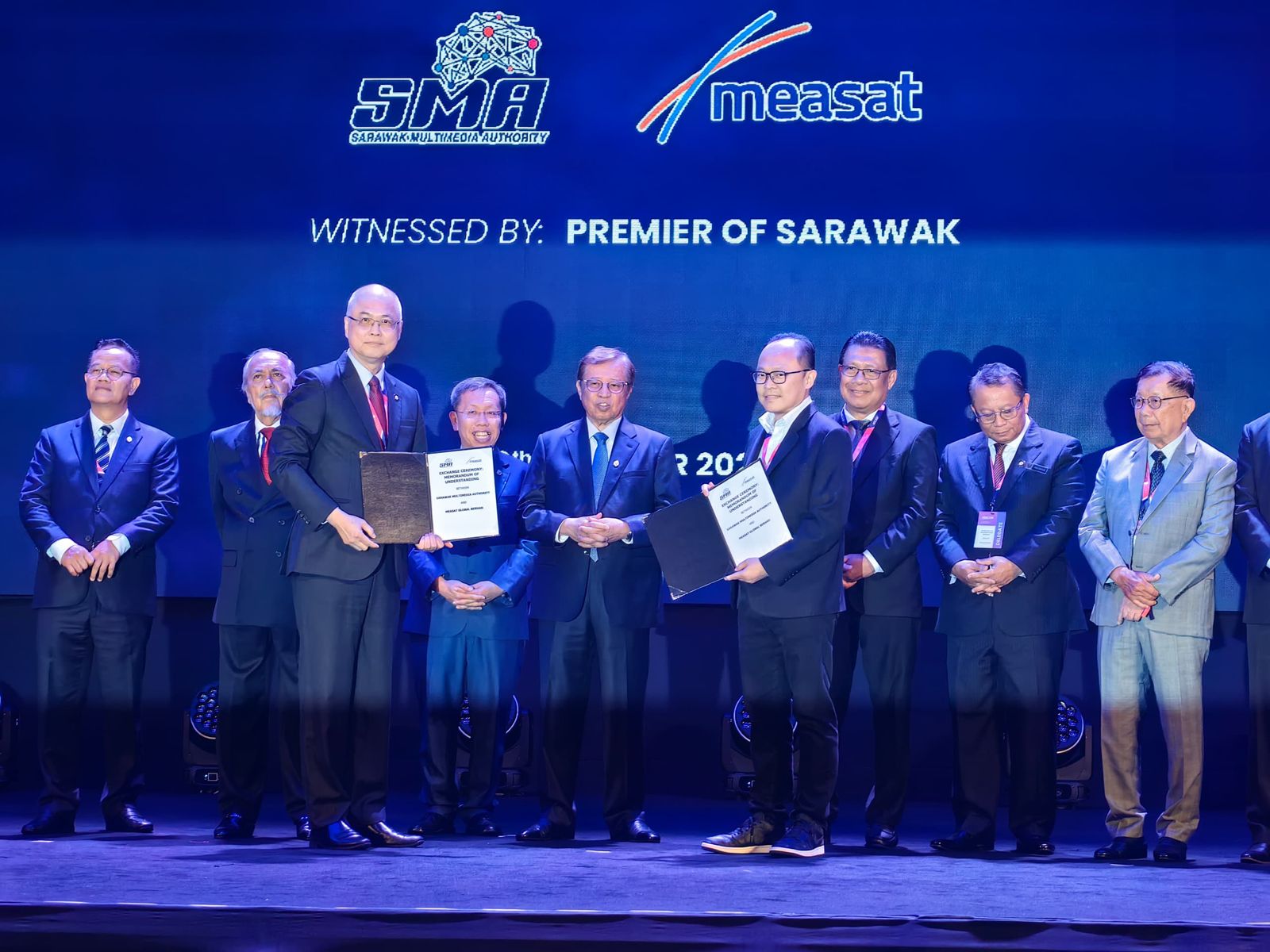
Sarawak Signs MoU with MEASAT to Support Space Industry Development

Kuching, 15 October 2024 – The Sarawak Multimedia Authority (SMA) has signed a
Memorandum of Understanding (MoU) with MEASAT Global Berhad (MEASAT),
Malaysia’s premier satellite solutions provider to enhance Sarawak’s space industry
development. The signing, witnessed by YB Dato Sri Julaihi Narawi, Minister for Utility
and Telecommunication. The MoU exchange ceremony will follow during the
International Digital Economy Conference Sarawak (IDECS) 2024 on 16 October 2024,
officiated by YAB Datuk Patinggi Tan Sri Abang Johari Tun Openg, Premier of Sarawak,
at the Borneo Convention Centre Kuching.

Under this MoU, MEASAT will serve as a consultant to the Sarawak Space Industry and
Satellite Committee (SISCOM) and offer industry expertise to shape policies, guidelines
and the future of space and satellite industries in Sarawak. This also includes training
and talent development, leveraging MEASAT’s 30 over years of experience in satellite
management and service commercialisation.

As part of the collaboration, SMA and MEASAT will explore joint projects, including
satellite operations and management, the development of space, satellite, and launching
policies, guidelines, training, and industry development. The private-public partnership
will bring economic benefit to the State while enhancing Sarawak’s satellite capabilities.

“The collaboration between SMA and MEASAT marks a pivotal moment for Sarawak’s
ambitions in the space industry. By harnessing MEASAT’s satellite expertise, we are
paving the way for greater connectivity, particularly in rural areas, while laying the
foundation for Sarawak to manage its own satellite systems. This partnership is key to
achieving our 2030 goals of satellite self-sufficiency, which will also contribute towards
elevating our policymaking capabilities with advanced data collection and analysis,”
commented YB Dato Sri Julaihi Narawi, Minister for Utility and Telecommunication.

“SMA is committed to fostering open collaboration to explore innovative strategies for
enhancing Sarawak’s connectivity and strengthening its digital infrastructure. SMA’s
partnership with MEASAT is a significant step forward in building a robust space industry
in Sarawak. With MEASAT’s vast experience, this collaboration will allow us to undertake
joint projects, nurture local talent and expertise in Sarawak’s nascent aerospace sector,
and position the state as a leader in satellite technology, besides driving overall
economic growth,” said Dato Dr Anderson Tiong Ing Heng, General Manager, Sarawak
Multimedia Authority.

“MEASAT is honoured to be part of this initiative with SMA to advance Sarawak’s space
ambitions. By providing our industry expertise, we aim to contribute to the development
of satellite technologies that benefit Sarawak’s communities and government operations,
ultimately supporting the state’s broader objectives,” added Yau Chyong Lim, Chief
Operating Officer, MEASAT.