The choices we make – the things we buy, the neighbourhoods we live in, the restaurants we go to – are influenced by our social networks. Our financial and investment choices are no exception. Thousands of behavioural studies have shown that community members’ and peers’ savings and investment decisions tend to have a causal effect on individual decisions.
These effects are propagated through direct social interactions such as word of mouth or, as we highlighted in our last article, through online channels, including social media platforms like TikTok and Instagram. Be it online or offline, social pressures such as the implicit desire for conformity, acceptability, and social identity can powerfully affect investment decision-making.
Trust Matters For Young People
It is not surprising that ICMR’s survey of millennials and Gen Z found that most respondents prefer online sources for information about investment products. Nonetheless, the people closest to them in real life still play a role in shaping their financial decisions. Indeed, friends and family ranked as the second most popular source of information in ICMR’s survey.
Figure 1: Sources to know about different capital market investment products owned (Data Source: ICMR)
During qualitative interviews with the respondents, one aspect that frequently came up was the importance of trust to millennials and Gen Zs. Most seek out financial advice from family and friends that they personally trust. Financially literate investors may add on their own online research, but those with lower financial literacy tended to immediately heed advice from friends they trust.
Moreover, previous studies have shown that millennials and Gen Z tend to lack trust in traditional institutions like news media and business, political, or religious leaders. Thus, it makes sense why they might turn to the people around them instead for financial or investment advice, regardless of whether their advice is actually good or bad.
“I definitely need to talk to friends before I invest, especially if they’ve also invested in the same thing. Recently, a friend told me he had cashed out his unit trust investments after making 15% gains. I will invest in that same unit trust once I have a bit more money.”
– Zaim, 34, Lalamove driver
Relatability Is A Key Driver Of Trust
The rise of social media influencers over the past decade has reshaped how younger generations form opinions, buy from brands, and get their questions answered. Financial and investment companies have leveraged the popularity of influencers through collaborations, sponsorships, and paid-for advertisements to promote their investment products and services.
Personal finance influencers are using social media platforms like TikTok and Instagram to offer financial tips, investment advice, and other information that can influence decision making
Nonetheless, ICMR notes that when it comes to personal finance, some respondents preferred talking to their peers as they found many personal finance influencers unrelatable. This was due to the perception that most personal finance influencers had financial goals that seemed unattainable, which ended up being demotivating.
Relatability is thus a critical trust driver for millennials and Gen Z investors. The notion of relatability goes deeper than relevancy by tapping into fundamental human truths: the need for belonging, to feel seen and valued, and to be accepted by a social group. In the end, people are highly social beings that are influenced by social norms and social identity when making key financial decisions.
“I stopped following influencers because they had goals like save RM100,000 before 30. I knew my savings was nowhere near there and it just demotivated me even more.” – Calvin, 29, performance marketing manager
More Talk About Money
While many old-school cultural taboos have been broken or at least softened, the stigma surrounding money talk is still prevalent today. For older generations, finances are often perceived as the final conversational frontier among friends and family members. However, ICMR found that millennials and Gen Z want to break this taboo and discuss money matters more openly.
Many of our interviewees felt that conversations among friends about money should be normalised, and that it can help each other navigate financial decisions. This is in line with other global studies, which found that millennials and Gen Z are a lot more transparent with peers about their money compared to previous generations.
Millennials and Gen Z are more openly talking about money matters with their peers compared with older generations (Image Source: MembersFirst Federal Credit Union)
Being more open and transparent about money might be the result of younger generations being less filtered about other aspects of their lives as well on social media. Yet even among close friends, it can be uncomfortable for young people to bring up topics like salary or earnings (not to mention financial hardships), especially if they were taught never to ask someone how much they make.
“I think we should normalise talking about our finances with friends. I’ve learned so much from talking with my friends. That’s how I first learned about StashAway and Luno. But I think I’ll only be comfortable talking with friends of similar income levels. It might get awkward if the other party makes a lot more or a lot less.”
– Sofia, 29, engineer
Promoting Financial Security And Independence
Understanding how social preferences can influence individual decision-making has wider societal implications. Herding behaviour, or when investors behave like their peers instead of using their own information or making independent decisions, can lead to individuals being involved in scams, being misled, or creating investment bubbles.
Young investors must learn to seek advice from various sources to gain the knowledge and confidence they need to make sound investment decisions that promote their financial security and independence. Establishing open and transparent communication about personal finances can empower the next generation to achieve their financial goals and enhance their well-being.
This article is part of a content series by the Institute for Capital Market Research (ICMR). Follow ICMR’s Facebook page to stay updated on behavioral tips and insights for better investing habits. To learn more about ICMR’s research on millennials and Gen Z, visit www.icmr.my or download the full report.
About the Authors
Datin Aida Jaslina Jalaludin, Head of Research, ICMRNadhirah Ibrahim, Research Analyst, ICMR
As a busy working professional, startup investing can be an exciting and financially rewarding journey. It also allows you to diversify your investment portfolio. Early stage startups are usually not “bankable” as they cannot fulfil banks stringent loan requirements. So raising funds by selling their shares tend to be the usual way to extend their cash runway.
As a startup lawyer, I have acted for both investors and companies seeking to raise funds using equity crowdfunding (ECF), one of the increasingly popular alternative fundraising method. In this article, I want to share 5 steps to invest in ECF in Malaysia.
But before we get started on the 5 steps to invest in ECF in Malaysia, let us cover what is ECF and how does it work in the context of the Malaysian regulations.
What Is ECF And How Does It Work In Malaysia?
ECF is an alternative fundraising method for entrepreneurs seeking to raise funds for their business. As an investor, you will receive new shares to be issued by the company in exchange for buying shares in the business.
In Malaysia, ECF is a regulated activity under the purview of the Securities Commission of Malaysia (SC). Therefore, every ECF platform needs to be licensed by the SC before a business is permitted to raise funds and be hosted on such an ECF platform.
5 Steps To Invest In ECF In Malaysia
As promised, here are the steps to invest in ECF in Malaysia.
1. Get Registered As An Investor
Before finding and investing in a campaign, you must register and get verified as an investor. To date, ten ECF platforms are regulated by the SC. Different ECF platforms may have different businesses seeking investments. Do the necessary research on these ECF platforms and find out their past and existing campaigns to see if they are aligned with your risk appetite and interests.
After filling up the personal details, your investment limit will be fixed based on your investor category. The SC’s rules prescribed three investor categories, namely retail investor, angel investor or a sophisticated investor. An angel investor who is accredited by the Malaysian Business Angels Network can invest up to RM500,000 per campaign while there is no investment limit for a sophisticated investor (i.e. high net worth individual or high income earner).
You can register as an investor in multiple ECF platforms.
2. Choose A Business To Invest
Once verified as an investor, you can invest in campaigns hosted on the platform. The platforms usually send newsletters to your email and updates on social media on new businesses looking for funding, so be sure to keep checking for new businesses that may interest you.
Generally, as a non-professional investor, you may want to invest in a company that you understand based on your industry’s knowledge and aligned with your value.
3. Read The Disclosures About The Business And Carefully
One of the next steps to invest in ECF in Malaysia, is not to get hyped out due to the ‘FOMO’ ‘Fear of Missing Out’ factor. Like any asset class, you need to figure out the features and characteristics of the investment and the risks involved.
As an investor you get the go through the find a list of documents known as the disclosures displayed on the campaign page. They usually include the latest audited financial statements, management accounts, an investment pitch deck containing the business plan, management team, their expertise, funding amount requested, and the breakdown of how the funds will be used for the business.
If there is anything that you need further input, you can ask the management team during the pitching sessions hosted by the platform or even ask the platform to set up a meeting with the company’s representatives to ask further questions on certain matters.
Also, all the material legal documents and agreements such as the term sheet (setting out the investment offer), subscription agreement and shareholders agreement are also uploaded on the website. Be sure to read them and understand your rights as a crowdfunding investor.
At this stage, you may want to engage your professional advisers (i.e. legal counsel, auditors and financial planner) that you usually work to help you conduct the necessary due diligence on the business to help you decide whether to invest in a company.
4. Transfer The Funds Into The ECF Trust Account
Once you have decided how much to invest in a campaign based on the investment offer, you will need to transfer the cash into a trust account using online transfer. The platform usually sends an email within a few working days to confirm that they have received your investment.
All the funds raised will be held by a custodian as an escrow agent and will only be disbursed to the company once the campaign is successful. If the company fails to raise the minimum targeted sum, the platform will refund back the money.
5. Monitor Your Investments
The final steps to invest in ECF in Malaysia, is to monitor your investments. Usually, the company’s management team will send you periodical (usually on a semi-annual or annual basis) updates setting out the progress of the business growth to the latest financials.
As an investor, you will also get regular updates and meet-ups with the management team to discuss about the business progress.
Conclusion On The 5 Steps To Invest In ECF In Malaysia
Investing in high-growth companies via equity crowdfunding can be a great way to diversify your investment portfolio. But like all types of investments, equity crowdfunding is risky, and you can lose all your capital. As an investor, read and understand the risks before investing in a crowdfunding campaign.
But if you are raring to go, those are the steps to invest in ECF in Malaysia. It’s not that hard is it?
Izwan Zakaria is a lawyer at Izwan & Partners, a corporate law firm helping startups do business and raise capital in Malaysia and overseas. He can be contacted at izwan@izwanpartners.com
The following story is based on an actual series of events, with some names and circumstances fictionalised. Any similarity to any person’s name, character, or history is coincidental and unintentional. It is about special needs trust and how it works in the real world.
Elsie thought she had it all when she walked down the aisle with her beau and then to be blessed a year later with a beautiful bouncy baby, Ann.
Little did she reckon that life would be cruel. It all started one afternoon when little Ann turned blue. It was heart-wrenching for her to see the baby so sickly with her life hanging on a thread. But Ann was a fighter. She survived but became mentally handicapped.
A much relieved Elsie prepared herself for the long haul of bringing up a special needs child. Her whole life was now dedicated to Ann, which took a toll on her relationship with her hubby. They grew more and more apart, and it eventually led to a divorce.
As a single parent of a child whose condition requires special attention, Elsie juggled between work and caring for her child. We were always overhanging and worried that Ann should not be around to care for her.
A friend advised her to set up a Trust for her daughter, but she brushed off the idea, mistakenly thinking that it was something in the League of the Rich. She took comfort that she had many siblings and started to set aside money for her brother to use for Ann’s maintenance, just in case.
Unfortunately, Elsie and her brother both died in a car accident. The money kept by the brother for Ann was frozen in his bank account, pending a letter of representation from the courts. In the meantime, the immediate needs of the special child were left unattended while the uncles and aunties bickered about who should take care of her and who should advance the money for the maintenance costs. Ann became nobody’s child.
Elsie could have averted such a situation by setting up a Special Needs Trust with a trusted company to take care of her medical needs and maintenance. With increasing awareness and understanding, more people now know it is not true that a Trust can only be set up by wealthy people.
In this case, she could have started by using her life insurance policy, unit trust investments, or even money in her bank account as the source to fund her Special Needs Trust instead of placing it in her brother’s account. Even if the sum is modest, she could set it up first and then increase it over time. In fact, the cheapest and fastest way to set up a trust is to fund it with a life insurance policy.
Through the Special Needs Trust, she can also instruct the trustee to use the trust properly to pay for the upkeep of the house where her child is staying and maintenance costs for supporting the child. Instead of relying on help from relatives, she could also have instructed the trustee to make regular maintenance payments out of the income earned from the trust property.
Generally, it is also better to appoint a licensed trust company instead of an individual to be the trustee because an individual is liable to die, fall ill or meet with an accident, become incapacitated, or even become bankrupt.
Besides these problems, other possible risks may arise, such as monies being handled dishonestly or incompetently and failing to cater to the child’s care. For those parents who have children, whether with special needs or not, give them a good head start in life by planning and setting a special needs trust specifically for them, especially if you are a single parent.
Rockwills International Group, now in its 28th year, pioneered professional will writing in 1995 and has since evolved into the leading estate planning specialist in the country. It is today the largest provider of solutions and support services in trusts, succession, management, and distribution of wealth. It has shareholders’ funds exceeding RM50 million. It has done over 280,000 wills and 15,000 trusts and holds more than RM25 billion in assets under trust.
Millennials and Gen Zs are increasingly becoming the main players in the economy. They are the future of our country, but these younger generations face challenges that have never been experienced before.
On the education side, did you know that 390,000 out of 560,000 SPM candidates opted to join the workforce immediately after the exam, while the remaining 170,000 students were interested in continuing their studies?
This goes to show that the Malaysian education sector is taking a back seat. Instead, they are eager to earn money as fast as they can and as much as they can.
With that in mind, Smart Investor spoke to Dr Sanjay Sarma, the new CEO, president, and dean of Asia School of Business (ASB), to get his insights on his plans at ASB and about the youths.
Dr Sanjay Sarma, CEO, president, and dean of Asia School of Business (ASB)
Smart Investor: Congratulations on your appointment as the CEO, President, and Dean of the Asia School of Business. What makes you join this prestigious organization
Dr Sanjay Sarma: Thank you! Several reasons. First, the previous deans, the staff, and the students have built an amazing platform. Second, Malaysia is, in my view, a geopolitical epicenter, given everything happening in supply chains, sustainability, innovation, and energy systems.
Third, Malaysian education sector will transform in the coming years for many reasons: the growth of online education, the growth of micro-credentials, the emergence of artificial intelligence, and the changes in how we work. With all this, ASB is a unique platform from across the world from which to embrace the future.
SI: What do you plan to achieve during your time here? And what are some of the ideas that you want to push through?
DSS: The points above set the direction. First, I want to double down on a central tenet of ASB: a pedagogy based on action, which we call action-learning. This pedagogy extends to how we deliver materials (we don’t deliver typical ‘lectures’), how classes become studios, and how we engage with the real world.
Second, ASEAN is a fascinating case study in progress with a diversity of all kinds. This includes cultural, economic, geopolitical, biological, and social forms — and our research-oriented faculty continue to deliver great insights on all fronts. I want to expand that.
Third, I would like to increase our focus on the education of working professionals. I believe that the Malaysian education sector cannot end with a degree. At MIT, we called it agile, continuous education. I would like to embrace that mantra — something the School has already made great strides in — and expand it greatly.
SI: How do you see Malaysia’s education compared to its peers in the region?
DSS: What can be done to improve the situation further? I am of the belief that the way we educate has to change quite fundamentally. The rise of tools such as ChatGPT means we need a new class of graduates who can outperform technology.
Education worldwide — Malaysia, China, India, and the US — is not prepared for these challenges. And it needs to evolve and evolve rapidly. We need problem solvers, critical thinkers, and doers to solve the problems we are leaving for the next generation.
SI: With AI gaining traction (ChatGPT as an example), it opens up many possibilities. Instead of asking Google, we can ask AI and get a comprehensive answer. What will this mean to the future of the Malaysian education sector?
DSS: Well, it vividly points out the pole star we should shoot for. What are the things that AI and robotics, and other technologies cannot do that we should be preparing our graduates for? Of course, if we prepare robots, we cannot lament the loss of jobs to robots.
But the human mind is boundless. We must break the curricula we have trapped ourselves in — often remnants of the colonial era — and create people who can provide the creativity, ethical frameworks, and inspiration to take on the rising inventory of challenges.
This might all seem like empty inspirational talk, but our students at ASB have convinced me that we have this potential. And at events we have hosted, such as the International Women’s Day and the Leadership for Enterprise Sustainability Asia (LESA) Conference, we saw precisely the sort of role models we could aspire for.
SI: How do you see the importance of education in today’s youth? Are they still interested in furthering their studies?
DSS: I have never met a young person disinterested in learning. Curiosity is the most fundamental aspect of learning and is impossible to extinguish. I have, however, met many people who are disaffected with how we teach. That’s a different matter; as I said earlier, we need to fix that urgently.
That was true before COVID, climate change concerns, and ChatGPT. It is even more urgent today. As mentioned, at ASB, we are all about action – and I believe classrooms need a more engaging, thought-provoking nature for the next generation to be prepared.
SI: What are the different ways of making money today compared to the ’90s and 2000s? Is higher education still necessary to be making a decent living these days?
DSS: The last century saw the growth of corporations — scale was achieved through size. Now we are seeing the rise of the gig economy. Moreover, more and more approaches to generating income are technology and innovation-driven. Just ask a taxi cab medallion owner from a decade ago who did not see Uber coming.
Subscription models are another trend — services are more and more subscription-driven, whether it is Amazon Prime or Netflix. Living and thriving in this world requires mental agility. Education — done right — is one way to ensure that. You can no longer assume you will be employed for life and live in a company town.
You have to become the CEO of your own life. In many ways, the MBA is about that too. (Ergo, ASB).
SI: In your opinion, what’s the major concern on their minds? (unemployment, low salary, high cost of education, the high price of a property, etc)
DSS: All of the above, but we also see a much greater emphasis on social, and indeed planetary, good. I recommend reading about the Ubuntu philosophy: “I am because we are.”
Young people are similar to young people a generation ago, with one key difference — a sense of the collective good.
SI: What are your thoughts on YOLO (you only live once) and the financial independence, retire early (FIRE) movement that is hugely popular with the youths?
DSS: We live in an era of unicorns. That drives this partly. But unicorns are mythical creatures, and the valuations of some of these unicorns have been mythical too. How can a young person who lives in this era not be tempted? I don’t blame them, though I don’t recommend it.
It’s no different from buying lottery tickets today; these young people must bet everything in that YOLO moment. It is up to educational professionals to draw them back into reason and away from betting their lives away.
SI: Are the youths of today more financially savvy? And where do they normally invest?
I don’t believe they are more or less than a generation ago. It’s just the opportunities are different. They live in a far stormier sea and are often likely to bet on extremes (swing for the fence, as Americans might say). Crypto is an example.
Again, it comes down to educators to fix the Malaysian education sector so that our youth enter the next decade prepared to take on the challenges we are leaving them.
SI: Any advice to the youths out there facing the future?
DSS: Money chases intelligence, not impulsiveness, and luck sides the brave, not the reckless. Education can help you find the dividing lines.
We would like to wish Dr Sanjay Sarma and ASB all the best!
The recent collapse of Silicon Valley Bank (SVB) triggered mass panic in which the contagion effect have unfurled ramifications across the traditional finance industries. One of the main reasons in the SVB post-mortem is the lack of advanced cutting edgetechnologies for risk and regulations in the fintech sector.
In light of SVB and the FTX collapse, people started flocking toDeFi (Decentralised Finance) platforms. the recent collapse of FTX and bank runs actually underscores the need for a more decentralized financial system. When centralized institutions fail, there is no safety net to protect investors. DeFi distributes the risk across a network of users and smart contracts, making it less vulnerable to individual failures. traditional banks started to feel the pressure.
They realized that they needed to adapt or risk becoming obsolete. They started to explore the use of blockchain technology and DeFi, incorporating these systems into their existing infrastructure.
In other words, the collapse of FTX and the subsequent bank runs marked a turning point for the banking industry. It showed that traditional banks were no longer the only option for financial services. DeFi offered an alternative that was transparent, secure, and accessible to everyone. And as more people embrace this new system, the future of banking looks brighter than ever.
Smart Investor recently interviewed Terrence Hooi, CEO and Co-Founder, Singular Technologies to find our more about this topic. But before that, let’s begin by understanding more about non-custodial DeFi.
Terrence Hooi, CEO and Co-Founder, Singular Technologies
Non-Custodial DeFi
Non-custodial DeFi does not require regulatory controls because it is designed to be trustless and decentralized. Unlike centralized financial systems, where a central authority controls the flow of funds and is responsible for ensuring compliance with regulations, non-custodial DeFi operates on a peer-to-peer basis without intermediaries.
In non-custodial DeFi, users have complete control over their funds and can transact directly with each other using smart contracts. These contracts are self-executing and enforceable, meaning that transactions are executed automatically without the need for human intervention.
Since there is no central authority or intermediary involved, there is no need for regulatory controls to ensure compliance. Instead, the rules of the system are built into the code of the smart contracts, which are transparent and auditable by anyone. But again, Singular wants to actively work with regulators like DFSA and MAS Singapore.
Additionally, non-custodial DeFi is designed to be permissionless, meaning that anyone can participate in the system without needing permission from a central authority. This makes it more accessible to a wider range of users and reduces the potential for discriminatory practices or exclusionary policies.
Overall, non-custodial DeFi’s trustless and decentralized design makes it less vulnerable to fraud, hacking, or other forms of malfeasance that regulatory controls are designed to prevent. Instead, its transparent and auditable nature allows the system to self-regulate and enforce compliance with its own rules.
Singular Technologies recently launched a new institutional gradeatomic settlement platform – aptly called “Singular” – that is built on decentralized finance (DeFi) infrastructure. Atomic settlement is a technology that allows for simultaneous execution of multiple transactions or exchanges, reducing the risk of failed transactions or malicious attacks.
Singular’s DeFi platform has been recognized with numerous awards, including the Bold Awards 20’ Europe, Top 10 Fintech Startup, APAC, StartupWorldcup Regional Top Winner 22’, Alibaba Cloud Innovation Awards 22’, and ORIGIN Web 3 Top Disruptor 22’.
Smart Investor: What is the outlook on Stablecoins with looming recessionary and geopolitical pressures?
Terrence Hooi: With regards to the outlook on stablecoins in the face of looming recessionary and geopolitical pressures, there are a few different factors to consider:
1. Potential for increased demand: During times of economic uncertainty, people may turn to stablecoins as a safe haven asset. This could lead to increased demand for stablecoins, which in turn could drive up their value.
2. Potential regulatory challenges: Stablecoins are still a relatively new and unregulated asset class, and regulators may become more concerned about their potential to destabilize financial systems during times of crisis. This could lead to increased scrutiny and regulation, which could impact the growth of the stablecoin market.
3. Impact of inflation: If the recessionary pressures lead to high inflation, stablecoins could become more attractive to investors as a hedge against inflation. However, if stablecoins are not properly backed by assets, they could lose their peg and become vulnerable to inflation.
4. Geopolitical risks: Geopolitical risks can have an impact on the value of stablecoins. For example, if a country decides to ban the use of stablecoins or restrict their circulation, this could lead to a decrease in demand and value.
SI: Why did you and your co-founders decide to launch this product? What are 3 pain points or areas that Singular Technologies’ product addresses which other digital banking solutions or cryptocurrencies do not? How are you unique?
TH: The current state of DeFi Apps are notoriously complex to use and it is not a skill everyone can master. One of the main challenges facing DeFi today is the accessibility and scalability with subpar UX.
The very wealthy have always been able to afford to pay expensive money managers to manage and invest in Crypto, but financial APIs and DeFi in the late ‘Tens’ let Singular extend a similar service to people with a ~$10k net worth instead of ~$5M using Distributed Ledger Technology for the unbankable in emerging markets.
The current financial system is slow and expensive. For example, if you look at global remittances today using ACH or SWIFT, it is often slow and expensive ~2–3days. Compare that to stablecoins like USDC, which maintains a peg to the US dollar, it takes ~3 minutes without relying on any intermediaries.
Singular (SD) is an all-in-one banking and financial services platform for cryptocurrency users. Singular aims to outperform banks using the best elements of DeFi.
SI: Which markets are you currently active in? Any new entries planned in the near term? How has MRANTI assisted you in growth and expansion plans?
TH: US, Singapore & Japan. Japan have always been a hub for innovation, and we are excited to be a part of this thriving community with the help of MRANTI & MaTrade. Our new office will allow us to provide even better support and services to our Japanese users, as well as to collaborate with local partners and experts in the DeFi space.
The Founding team has expertise in building institutional-grade Crypto Exchanges capable of processing 2 million orders per second and building decentralized finance platforms for institutions.
SI: How is your new product purpose-built to promote financial inclusiveness ie banking of the unbankable?
TH: One of the key features of our platform is that it allows users to easily convert between traditional fiat currencies and cryptocurrencies. This makes it easy for users to participate in the global financial system and take advantage of the benefits of decentralized finance.
Our platform is different from traditional financial institutions in that we do not require users to have a traditional bank account or credit history. Instead, our platform is designed to be user-friendly and accessible to anyone with a smartphone and an internet connection. This is particularly important for the unbankable, who may not have access to traditional financial services due to a lack of documentation or credit history.
SI: So how does a person “buy” a stablecoin / Singular Token? What’s the minimum sum / volume or amount?
TH: Min can be as little as RM 100 and can it be traded, exchanged, borrowed, lent to only those w “stablecoins” or is it open to participate in any other crypto exchange?
We’re currently working with an internationally compliant fiat-gateway Xanpool, to allow users from Indonesia, Malaysia, Singapore , Hong Kong, Thailand, Vietnam, south Korea, India, Phillipines to easily use a bank account or CC to purchase Stablecoins like USDC or major cryptos like BTC and ETH.
SI: How do you ensure that your stablecoin remains stable and maintains its peg to the underlying asset, especially during periods of market volatility?
TH: The potential benefits of Stablecoins like USDC or Tether, which are now available on the Singular App. One of the key advantages of Stablecoins is their ability to maintain their peg to the underlying asset, even during periods of volatility. Assets backed USDC for instance is registered with FinCEN and regulated by 46 regulators.
This is particularly important in the context of decentralized finance (DeFi), where users are increasingly turning to Stablecoins as a way to mitigate the risk of market fluctuations. By providing users with access to Stablecoins, platforms like Singular App are helping to make DeFi more accessible and user-friendly for a wider range of users.
Stablecoins like USDC or Tether are designed to maintain their value through a number of mechanisms, such as backing the coin with a reserve of the underlying asset or using algorithms to adjust the coin’s supply in response to changes in market conditions. This ensures that the value of the Stablecoin remains stable, even in the face of market volatility.
In addition, Stablecoins can be used for a wide range of purposes, such as trading on decentralized exchanges, paying for goods and services, or as a store of value. This versatility has made them increasingly popular among users who are looking for a reliable and stable alternative to traditional cryptocurrencies.
Overall, the availability of Stablecoins like USDC or Tether on the Singular App represents a significant step forward for the DeFi industry. By providing users with access to Stablecoins, platforms like Singular App are helping to make DeFi more accessible and user-friendly for a wider range of users.
SI: Can you explain the process of creating and redeeming the stablecoin, and how do you ensure that the collateral backing your stablecoin is secure?
TH: The process of creating and redeeming Stablecoins on the Singular App is relatively straightforward. To create Stablecoins, users can deposit the underlying asset (such as USD) into a collateral pool on the Singular App. The app then mints an equivalent amount of Stablecoins, which can be used for trading or other purposes within the platform. To redeem the Stablecoins, users can simply exchange them back for the underlying asset in the collateral pool.
To ensure the security of the collateral backing of the Singular token, the platform uses a number of mechanisms. One of these is a smart contract that is designed to automatically liquidate collateral in the event that its value falls below a certain threshold. This helps to ensure that the value of the collateral backing the Singular token remains stable and secure.
In addition, the platform uses a combination of on-chain and off-chain mechanisms to monitor the value of the collateral pool in real-time. This helps to ensure that the collateral backing the Singular token is always sufficient to maintain the value of the token.
As Singular continues to develop its platform, it plans to roll out its own native token that is privacy-based. This token will be backed by a collateral pool, similar to the Stablecoins, and will provide users with even more flexibility and functionality within the decentralized finance ecosystem.
Overall, the use of Stablecoins on the Singular App represents a significant step forward for the decentralized finance industry. By providing users with a stable and reliable means of transacting, Singular is helping to make DeFi more accessible and user-friendly for a wider range of users.
SI: How do you plan to scale your decentralized finance solution to accommodate a growing user base, and what challenges do you anticipate in the process?
TH: Singular Milestones 2023
i.Smart Contract based Privacy Token.The Singular Token will be implemented with a smart contract that is ERC-20 compatible as well as privacy-preserving features such as zero knowledge proofs.
ii. To ensure The Singular Token on theSingular DeFi platform are private, the privacy token will utilize zero-knowledge proofs. Allowing two parties to prove the validly of transaction without revealing any information about the transaction while maintaining the integrity of the blockchain.
iii. To facilitate the trading of Singular Token, a KYC baseddecentralized exchange (DEX) will be built on Singular’s DeFi platform. Holders of Singular Token will be able to use Singular Token for zero fee global transfers, high-yield staking, and access to professionally managed decentralized assets. The platform will have robust security and compliance measures to ensure users funds are safe and secure and that the platform is compliant with regulators.
iv. Lending and Borrowing. To enable landing and borrowing of Singular Token, users can lend and borrow the privacy token, with interest rates determined by supply and demand. The protocol will be implemented as a smart contact on the Ethereum blockchain , ensuring the transactions are completely private while operating in a completely decentralized manner.
SI: How do you plan to handle regulatory challenges related to decentralized finance, and what steps have you taken to ensure compliance with relevant laws and regulations?
TH: Singular aims to submit a regulatory sandbox application with the Monetary Authority of Singapore (MAS) and the Dubai Financial Services Agency. A regulatory sandbox is a testing environment that allows companies to experiment with new technologies and business models while still being subject to regulatory oversight.
By participating in regulatory sandboxes, Singular can work with regulators to ensure that its platform meets all regulatory requirements and is safe and secure for users. It also provides an opportunity for Singular to demonstrate the value of DeFi to regulators and policymakers, potentially paving the way for broader adoption of DeFi in the future.
SI: How do you address concerns around transparency and auditability in your stablecoin decentralized finance solution, and what measures do you take to ensure the integrity of your platform?
TH: Every year, more money is lost in DeFi without the hackers being held accountable, resulting in a diminished sense of security with users. Currently, the largest drivers of crypto adoption are centralized exchanges (CEX) like Coinbase who integrate KYC processes. These regulatory measures issue accountability that lead to consumer confidence which DeFi currently lacks.
The Singular DeFi platform facilitates proper regulatory compliance while maintaining privacy by adhering to critical aspects of the users identity. Singular aims to solve these two major barriers that could led to large scale crypto adoption:
Lack of accountability and security in Web 3
Preserving investor privacy while interacting across DeFi protocols
SI: How do you plan to incentivize liquidity providers to participate in your stablecoin decentralized finance solution, and what benefits do they stand to gain?
TH: Firstly, as a liquidity provider, holders of Singular Dollar will be able to earn a share of the transaction fees generated by the network. This means that the more assets you contribute to the liquidity pool, the more fees you will earn. Our platform also offers additional rewards for early adopters and long-term holders, so you can earn even more as you continue participating in the network.
SI: What future developments do you have in mind for Singular, and how do you see the industry evolving in the next few years?
TH: 2023-2024 Singular DeFi platform that supports DeFi applications, including lending and borrowing protocols, automated market makers (AMMs) and decentralized exchange. The smart contracts will be written in a high-level programming language, such as Solidity, and replied on the blockchain network.
The DeFi platform will earn revenue through fees charged on professionally managed DeFi funds programmed on a smart contract. The platform will charge a management fee for the funds under management, typically ranging from 0.5% to 2% per annum. In addition, the platform may also charge a performance fee of 10% to 20% of profits generated by the fund. The revenue will be used to cover operational costs, pay the management team, and generate profits for the platform.
SI: What advice would you give to someone looking to enter the stablecoin decentralized finance space, and what key factors should they consider before getting started?
TH: Before investing in any stablecoin or DeFi project, it’s important to research the market and understand the risks and potential rewards. This includes looking at the track record of the stablecoin, the team behind the project, and the market demand for stablecoins.
DeFi is a relatively new and complex technology, and it’s important to have a solid understanding of how it works before investing. This includes understanding the basics of blockchain technology, smart contracts, and decentralized exchanges.
As with any investment, it’s important to carefully consider the risks and potential rewards before making a decision.
SI: Some transparency in terms of your reserves – how much is cash, how much is treasury?
TH: Singular Dollar privacy token is not yet launched.
PolicyStreet, an emerging regional insurtech company, has recorded exponential growth in FY22, with its topline growing by five times compared to the previous financial year (FY21) and attaining sum insured of more than USD 6 billion.
Despite the challenging business environment in FY22, PolicyStreet has continued to innovate and deliver tailor-made insurance products and services to its customers. Growing its topline by 500% compared to the previous financial year is a testament to its commitment to technology advancements and its ability to adapt to changing market conditions affected by the rising cost of living and threats of a global recession.
“We pride ourselves in understanding and addressing the unique challenges faced by our customers during these uncertain times, and our success is a testament to our agility and customer-centric approach. With over six years of operational excellence, we’ve amassed a sizable customer base and established ourselves as a rising star in the insurtech industry,” says Lee Yen Ming, Co-founder and Chief Executive Officer of PolicyStreet.
Lee Yen Ming, Co-founder and Chief Executive Officer of PolicyStreet
The increase of PolicyStreet’s sum insured to over USD 6 billion is attributed to the company’s unwavering commitment to making insurance Purposeful and Simple for consumers and businesses.
PolicyStreet’s strong performance has been fueled by its ability to provide tailored insurance products that meet the specific needs of its customers. The insurtech company has identified and served underserved market segments by leveraging technology and industry expertise.
Since obtaining the Reinsurer and General Insurer license from the Labuan Financial Services Authority (LFSA) in 2021, PolicyStreet has been the reinsurer in its partnerships with onshore insurers, enabling the launch of innovative insurance solutions.
The key insurance solutions that drove the positive financial performance include the Digital HR Solution and the Gig Worker’s Claims Platform in collaboration with p-hailing service providers. The two innovative insurtech solutions cater to the underserved and growing gig and digital economy within Southeast Asia, which is expected to reach up to USD 1 trillion by 2030.
“Stakeholders within the digital economies are drivers of the region’s growth, yet they are the most at risk for financial instability. Gig workers are not offered employee benefits due to their freelancing status. In contrast, employees within SMEs can often fall through the cracks due to the lack of access to Group Medical Insurance for SMEs.
“We aim to continue serving the underserved within this market segment, ensuring the gig and digital economy is sustainable in the long run through embedded insurance and the development of insurance platforms. We believe the insurance industry is ripe for disruption, and we are proud to be at the forefront of this transformation,” says Yen Ming.
PolicyStreet is committed to providing inclusive insurance solutions and remaining competitive in its insurance offerings by continuing to leverage its capabilities as a regional full-stack insurtech company.
“By tapping into our underwriting and tech development capabilities to expand our partnership network with leading industry brands and protect more underserved communities, we are confident that we will register strong growth this financial year (FY23) compared to FY22,” says Yen Ming.
The insurtech company specialises in creating effective embedded insurance solutions that address the pain points of both consumers and businesses while incorporating its in-house tech capabilities and strategic partnerships with industry leaders. PolicyStreet is poised for continued success in the years to come and is confident in its ability to deliver value to its customers and stakeholders.
For more information about PolicyStreet and its innovative insurance solutions, please visit https://www.policystreet.com/.
PolicyStreet Co-founders
About PolicyStreet
PolicyStreet is a regional full-stack insurance technology (insurtech) group of companies providing cutting-edge digital insurance solutions to businesses and consumers in Southeast Asia and Australia.
PolicyStreet works directly with over 40 life, general, and takaful providers globally to offer a comprehensive range of products and services, which includes but is not limited to embedded insurance, customised employee benefits, financial advisory and aggregation of insurance, as well as the development of digital solutions to make insurance purposeful and simple for businesses and consumers.
As a licensed Reinsurer and General Insurer by the Labuan Financial Services Authority (LFSA), an approved Financial Adviser and Islamic Financial Adviser by Bank Negara Malaysia (BNM), and a licensee of the Australian Financial Services License by the Australian Securities and Investments Commission (ASIC), PolicyStreet is able to underwrite, customise policies, and provide unbiased advice to its clients and partners worldwide.
Through its regional group of companies, it serves over 5 million customers with over US$ 6 billion in sum insured. In 2022, it was named as one of the 100 Leading Emerging Giants in the Asia Pacific by KPMG and HSBC and was recognised at the Top in Tech Innovation Awards 2022 for Most Value Creation. It was also awarded the Young Entrepreneurs’ Award in 2020 by ASEAN Business Advisory Council (ASEAN-BAC).
Technical analysis is an important tool that traders use to identify potential buying and selling opportunities in the stock market. Support and resistance levels and trendlines are two key concepts in technical analysis that can help traders make informed decisions about when to buy or sell stocks.
In this article, we will explore what support and resistance levels and trendlines are, how they are plotted on a chart, and how they can be used to identify potential trading opportunities.
But is that true by mastering support, resistance & trendline you can make money from the stocks market? Technically yes, if you are using technical analysis to trade a stock and if you are looking to trade in short term.
For longer term, you are advisable to use fundamental analysis as well to study on the company financial health.
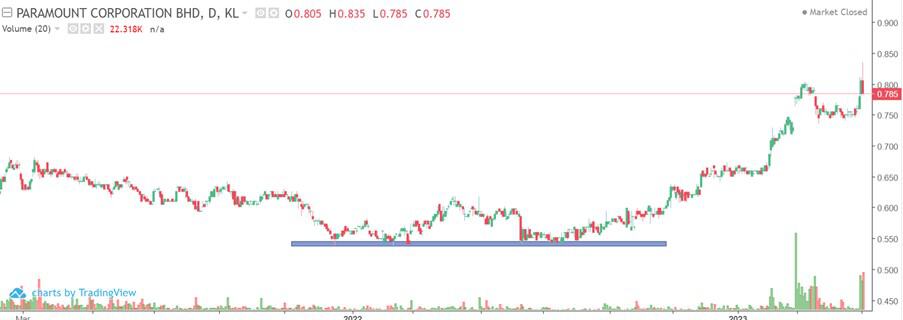
Support is a price level where a downtrend is expected to pause due to demand or buying interest. As the price drops, demand for the shares increases and thus forming a support at that area.
It can be seen as an area or zone that is strong enough to stop the stock from falling any further. Therefore, traders and investors use support as part of their decision-making tool.
Buy At Support
Some investors buy shares at support level as they expecting the share price will bounce back upward if the price does not break the support level
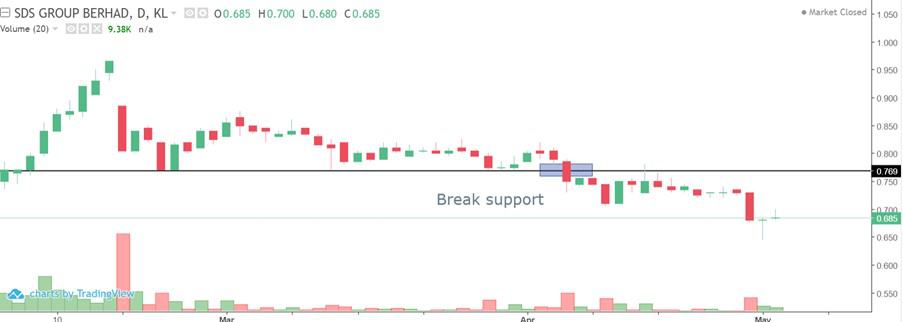
Sell When Price Break The Support Level
Investors also use support level as a cut loss point if the price keep falling and break the support
Resistance is opposite to support. Resistance is a price level an uptrend is expected to pause due to selling pressure. As the price increasing, early buyer starts to sell the shares to take profit and thus forming a resistance at that area.
It is an area or zone that is strong enough to stop the stock from getting higher. If the resistance level is very strong, the price may reverse and drop lower.
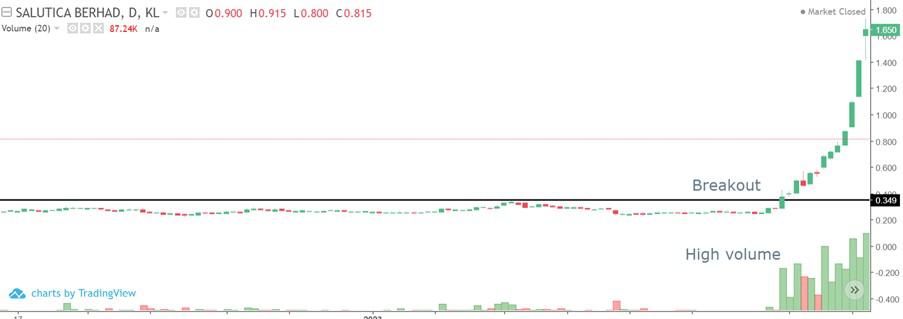
But what if the price breaks the resistance? When the price breaks the resistance level, this is called as breakout.
A quality breakout is when the price breaks the resistance with high volume. This indicates high demand in the stock as more buyer attracted to the stock and willing to pay higher price.
Sometimes breakout happens when there is positive catalyst related to the company such as increase in earnings, strong quarter / annual result, good news and etc.
What Is Trendline?
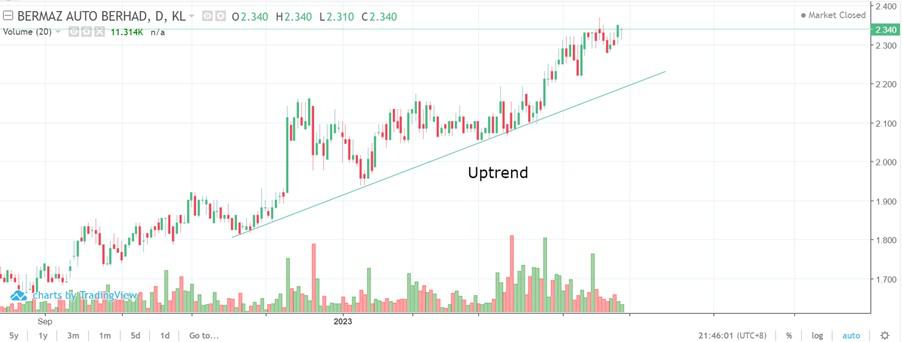
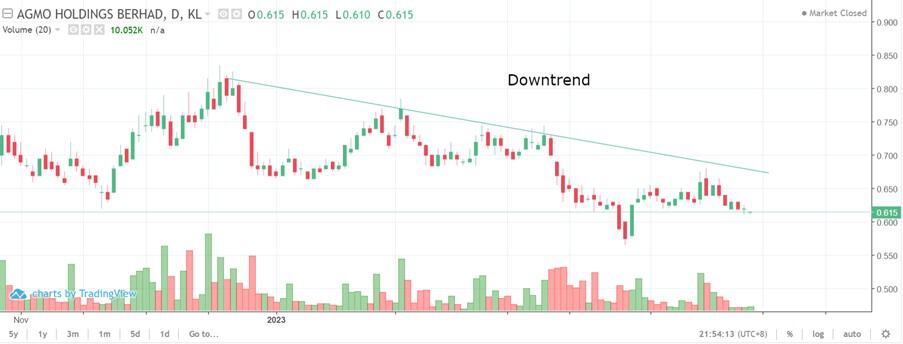
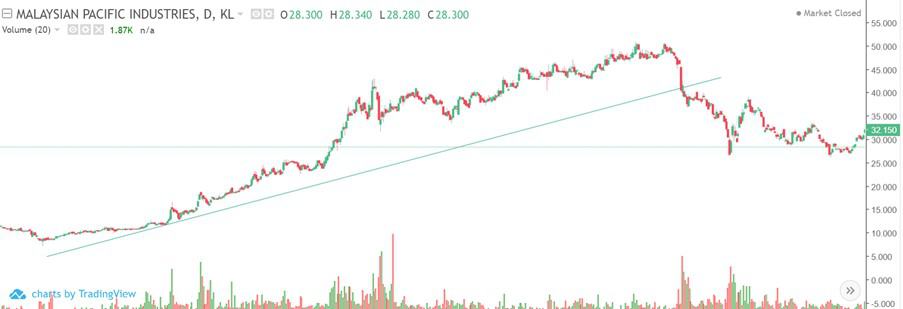
Sometimes trendline can be considered as trendline support and resistance levels. Trendline can be upward sloping or downward sloping. Since the stocks market move in trend, trendlines are often used to identify uptrend and downtrend.
Trendlines connect significant highs together or significant lows together. For a trendline to form we need to see at least three touches.
Why It Is Important To Identify Trendline?
The answer is to help determine the current direction of market prices. Have you heard from technical analysts saying trend is your friend until it bends? Identifying uptrend stocks is the first step to perform a good trade. Look for an uptrend stocks, hold the stocks and exit when the trend starts to bend.
Conclusion
Support, resistance levels and trendlines are powerful tools in a trader’s arsenal that can help them identify potential buying and selling opportunities in the stock market. By understanding these concepts and how they can be used, traders can make more informed decisions about when to buy or sell stocks.
As with any trading strategy, it is important to conduct thorough research and analysis before making any trading decisions based on support and resistance levels and trendlines. With practice and experience, traders can become more proficient in using these tools to navigate the complex and ever-changing landscape of the stock market.
The world of stocks may be thrilling and terrifying for an investor or trader. However, it is crucial to understand what a stock is and how it functions before diving into the 3 types of stocks.
A unit of ownership in a firm is represented by a stock, also called a share. Purchasing a stock makes you a shareholder, giving you a stake in the company’s success or failure.
The stock price will typically increase if the business does well, allowing you to sell your shares for a profit. If the business performs poorly, the stock price could drop, and you could lose money.
Now you know what a stock is, let’s examine the 3 types of stocks and who they might be good for.
Investments in speculative stocks have a high risk/high reward ratio. These stocks are typically linked to tiny or fledgling businesses with great growth potential but entail many risks.
Investing in speculative stocks can include risk due to the fact that they are frequently unproven and don’t have a successful track record. However, there is a sizable chance for profit if the business succeeds.
Generally, speculative stocks are best suited for aggressive investors who don’t mind taking on more risk. This kind of investor is prepared to take the risk of substantial gains in exchange for the possibility of sizable losses.
Penny stock less than RM1 per unit, or even valued at just a few cents (hence the name penny), is more prone to speculation. Even though the fundamental of the company is not good, even though the company is making losses, these kinds of penny stocks can be manipulated and make huge returns in hours or days.
The next stock in the list of 3 types of stocks are called defensive stock. Compared to speculative stock, defensive stocks are more stable and less risky. These kinds of stocks are frequently found in sectors of the economy that offer goods or services that consumers will continue to utilise even when circumstances are hard.
Healthcare, utility, and consumer goods companies are a few examples of defensive stocks.
Typically, conservative investors who want to protect their wealth and produce stable, dependable income should stick with defensive stocks. These investors tend to be less risk-tolerant and are prepared to accept lesser returns in exchange for more security.
Cyclical stocks tend to perform well during periods of economic boom but poorly during periods of economic contraction since they are correlated with the performance of the general economy.
Construction, automobile, and travel-related businesses are a few examples of cyclical stocks.
Investors who have a solid grasp of the general economic cycle and are able to predict when certain industries are likely to perform well or poorly are the greatest candidates for cyclical stocks. These kinds of investors are prepared to assume some risk in exchange for the chance of greater profits.
In conclusion, a key component of becoming a good investor or trader is understanding the 3 types of stocks and who they are best suited for. You may allocate your resources wisely and create a well-diversified portfolio by understanding the risks and benefits of each type of stock.
Whether you favour defensive, cyclical, or speculative stocks, you must do your homework and make wise choices based on your unique investment objectives and risk tolerance.
Now that you know the 3 types of stocks, you can make a more informed decision.
Investing in the stock market can be a great way to grow your wealth over time. However, the process of buying stocks can seem daunting to many beginners. Fortunately, trading platforms have made it easier than ever to invest in the stock market from the comfort of your own home.
In this article, we will look at how to deposit money and buy stock on the trading platform. Whether you are a complete beginner or an experienced investor looking to switch to a new trading platform, it will provide you with the information you need to get started.
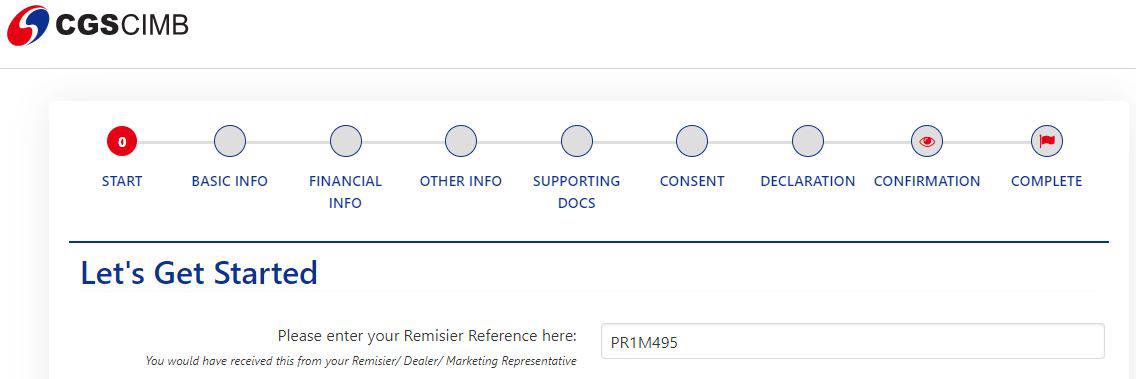
But before that, do you have a shares trading account? If you have yet to have an account, you are invited to open an account with one of the brokers available in Malaysia.
Don’t forget to key in PR1M495 in the Remisier Reference section. A designated Dealer’s Representative will attend and assist you with your account opening.
Now, let’s assume that your account has been created. Next of course you would like to know how to deposit money and buy stock on the trading platform.
2. Next, select your account and click ‘Online Cash Deposit’.
3. Select which bank you would like to transfer your money from, key in the amount and click ‘Confirm’.
4. Key in your Trading Pin and click ‘Submit’.
The money will be updated in your trust account on the following day. Please contact your Dealer/Remisier if you wish to buy stocks as soon as possible. Let’s move on to the next step on how to deposit money and buy stock on the trading platform.
Steps to Buy Stock in CGS-CIMB iTrade Platform
1. Key in the stock code or stock symbol to search for the stock.
2. Right-click on the stock name and click ‘Buy’.
3. Ensure the stock that you intend to buy is correct. Next, follow the steps below:
Insert quantity (in lot)
Insert price
Choose validity
Insert trading pin
Click buy
4. Under ‘Order Book’, select ‘Order Status’ to check on the order made.
5. If your order status shows ‘filled’, it means the order that you placed has been matched. The shares purchased will be showed in ‘Equities Portfolio’ under ‘Portfolio’.
Conclusion
Investing in the stock market can be a rewarding experience, but it requires knowledge, patience, and discipline. Through this article, we hope to have provided you with a comprehensive guide on how to deposit money and buy stock on the trading platform. Different trading platforms may have different layouts and user experiences.
An interactive trading platform may give a better user experience to the users.
Remember to always do your research, diversify your portfolio, and stay informed about market trends and news. By following these principles, you can make informed decisions and build a successful investment strategy.
With the right approach, investing in the stock market can help you achieve your financial goals and secure your future. But it all starts with the first step, which is how to deposit money and buy stock on the trading platform.
For an investor to start investing in Bursa Malaysia, they must open a CDS and share trading account. These two accounts serve different functions. Normally, when you open an account with any broker, these two accounts will be created together.
The whole application process can be done by completing physical offline forms or some brokers will provide online applications. With this online application process, opening a share trading account will be hassle-free.
But before we look at how to open a CDS and share trading account, read below for a deeper understanding of what is a CDS account and a trading account.
What Is A CDS Account?
Central Depository System (“CDS”) is a system that is fully owned and operated by Bursa Malaysia Depository Sdn Bhd (“Bursa Depository”), which provides central bookkeeping of securities and facilitates the settlement of securities transactions in a scriptless manner.
Putting it simply, a CDS account acts like a wallet where you keep the shares that you purchased.
Investors who wish to trade in securities listed on Bursa Malaysia Securities Berhad must open accounts on CDS. Securities bought or sold will be credited or debited into the CDS accounts of depositors accordingly.
There are a few ways you can open a CDS account such as walking into any investment bank/broker, registering online via a website and you can also open a CDS account via the Bursa Anywhere mobile app.
For those who are wondering, an individual investor is allowed to open only one CDS account with each broker. It means that you can have 1 CDS account with different brokers such as Maybank, CGS-CIMB, Malacca Securities, RHB, and many more.
However, a corporate investor may open multiple accounts with the same broker.
It is very easy to open a CDS and share trading account. You have to ensure you have the necessary documents, so the process can be smooth.
Required Documents
There are a few documents that you have to prepare in order to open a CDS and share trading account for an individual. You are required to provide:
Photocopies of NRIC/Passport
Latest 3 months’ bank statements
A copy of the latest 3 months’ payslip
Do you have a trading account? If not, you are invited to open an account with one of the brokers available in Malaysia.
Don’t forget to key in PR1M495 in the Remisier Reference section. A designated Dealer’s Representative will attend and assist you with your account opening. All the best in your investment journey!
Now you know how to open a CDS and share trading account? It is very easy, let’s get started today.