Wednesday, 5 August 2026 Stay informed. No noise.

Here’s The Reason Why Kenanga Investors Won This Coveted Morningstar Award

Congratulations to Kenanga Investors Berhad for winning the Best Malaysia Large-Cap Equity Fund. In a tough market last year, Kenanga manages to put in a stellar performance and outperform all others.

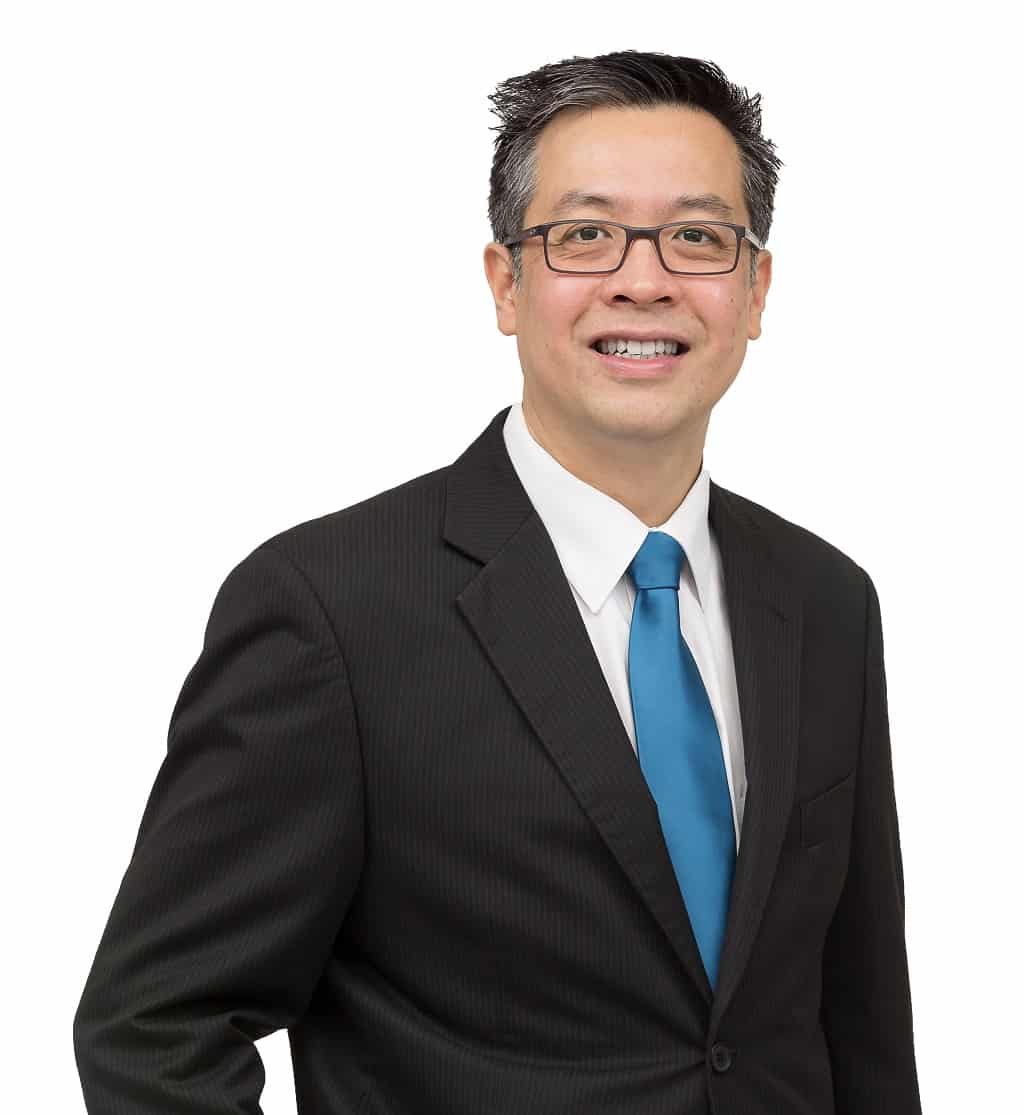
We spoke to Lee Sook Yee, Chief Investment Officer of Kenanga Investors Berhad to share more about their secret for success.

Key Factors Behind The Success Of This Fund?

Lee Sook Yee Chief Investment Officer Kenanga

We are honoured to have received this award from Morningstar. This award reflects our team’s dedication and perseverance to continuously go above and beyond for our clients.

As a bottom up stock picker, our investment is underpinned by comprehensive fundamental research combined with a relative value approach to create superior risk adjusted returns.

In formulating a company’s investment thesis, we usually run channel checks on the company’s competitive advantages and also attempt to model out the growth drivers. Some of the key areas we look at include management quality, sustainable business model, industry dynamics and balance sheet strength.

By consistently applying this strategy, our funds have achieved continuously outperforming returns throughout the last 3,5 and 10 years.

Strategies To Maximise The Chance Of Success For The Fund

Man Giving Business Presentation Using Futuristic Digital Pen

Half recovering from the pandemic-stricken crisis, 2021 presented both challenges and opportunities. One of the biggest challenges was having to grapple with the lingering impact of the pandemic, as persistent waves of Covid resurgence triggered intermittent lockdowns and containment measures, which when happened pulled the markets down with them.

Although such corrections became less intense as vaccination gathered pace, new sources of fear took shape in the form of worries over rising inflationary pressure attributed to severe supply chain disruption, talent and component shortage, power rationing which impacted our investments in varying degree.

We navigated through these speed bumps by constantly reviewing our investment theses to make sure they stayed relevant, identified the “relative winners” from sectors which were deemed resilient, consistently-growing and reasonably priced. Tech sector was one key sector which ticked most boxes and contributed immensely to our outperformance last year.

Can We Expect New Investment Products By Kenanga Investors?

We look forward to expanding our Kenanga Sustainability Series, a suite of multi-asset class products rooted in sustainability considerations to advance long-term financial growth for investors and to generate social and financial value for surrounding communities, in 2022. We introduced the first fund under this series in 2021 which was the Kenanga Sustainability Series: Frontier Fund. It provides investors with a range of opportunities in boosting not only the future development curve through the reduction of carbon emissions, new medical discoveries that may propel patient empowerment, and greater societal benefits while driving sustainable returns.

Morningstar Announces Winners for 2022 Morningstar Fund Awards Malaysia

KUALA LUMPUR, 7 April 2022 — Morningstar Asia Limited, a subsidiary of Morningstar, Inc. (NASDAQ: MORN), a leading provider of independent investment research, has announced the winning funds for its 2022 Morningstar Fund Awards Malaysia.

The annual Morningstar Malaysia Fund Awards recognise retail funds that have added the most value for investors within the context of their relevant peer group in 2021 and over longer time periods. Morningstar selects the winners using a quantitative methodology, along with a qualitative overlay. Weightings to one-, three-, and five-year risk-adjusted performance are factored into the methodology.

WingChan Morningstar Head Of Manager Research Europe And Asia Pacific

Wing Chan, Morningstar’s Head of Manager Research, Europe and Asia Pacific, remarked: “Our 2022 winners have proven themselves to be excellent stewards of investors’ capital. They have demonstrated their abilities to navigate through market volatility and deliver excellent returns over the longer term. We applaud all winners for their outstanding achievements.”

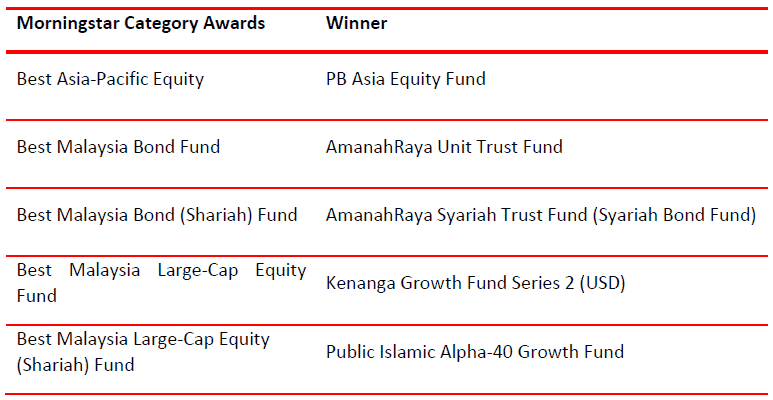
The 2022 Morningstar Awards winners in Malaysia are:

Morningstar 2022 Awards

Methodology

The Morningstar fund category awards are based on Morningstar fund data as of 31 December 2021. The awards methodology emphasises the one-year period, but funds must also have delivered strong three- and five-year returns after adjusting for risk within the awards peer groups in order to obtain an award. In selecting winners, fund returns are adjusted for risk using the Morningstar Risk, a measure which imposes a higher penalty for downside variation in a fund’s return than it does for
upside volatility. For the full methodology, please click here. The full methodology for the awards is available here.

Morningstar Asia Limited is a subsidiary of Morningstar, Inc., a leading provider of independent investment research in North America, Europe, Australia, and Asia. The Company offers an extensive line of products and services for individual investors, financial advisors, asset managers and owners, retirement plan providers and sponsors, and institutional investors in the debt and private capital markets. Morningstar provides data and research insights on a wide range of investment offerings, including managed investment products, publicly listed companies, private capital markets, debt securities, and real-time global market data. Morningstar also offers investment management services through its investment advisory subsidiaries, with approximately US$265 billion in assets under advisement and management as of Dec, 31. 2021. The Company has operations in 29 markets.

For more information, visit www.morningstar.com/company. Follow Morningstar on Twitter @MorningstarInc.

©2022 Morningstar, Inc. All Rights Reserved.

Insurance Affordability vs Need, 6 Factors You Should Consider

How can you determine your insurance requirements for better financial risk management?

We often encounter young members of the workforce looking to embark on their financial planning journey with a simple life insurance coverage. This move should be lauded as it makes a lot of sense to play defense before offense, so to speak. To kick start the conversation, the question of affordability will inadvertently crop up – how much can you afford to pay? While this is a practical approach for young career starters, is there a more optimal way to determine your insurance needs for better financial risk management?

Before sharing some thoughts on risk mitigation needs that should be addressed by leveraging on insurance tools, perhaps it is best that I briefly touch on the types of life insurance coverage that individuals can consider.

The most basic is to address concerns in the event of death. The idea is that should financial dependents and family members face a premature or untimely departure of a main breadwinner, there will be a financial payout to help the next of kin recover from this setback by ensuring that living expenses and financial commitments can continue to be met with minimal disruptions for an extended period thereafter.

Related to this is the need to provide financial relief if the breadwinner is still alive but no longer able to generate income due to a total and permanent disability (TPD).

In this scenario, funding is required to replace the revenue of the income earner while also considering any additional living expenses that can arise due to the disability.

The third area is for critical illness (CI) needs where a lump sum is paid to the insured if there is a diagnosis of a covered serious illness. This payment can be used to fund non-hospitalisation related medical expenses as well as rising living expenses to aid a faster recovery.

It is no secret that medical inflation is rising rapidly. The escalating medical costs and the fact that life expectancy is prolonging means that it is more important now than ever to have our own hospitalisation & surgical (H&S) coverage (also known as medical card). Lastly, we are also exposed to the risk of all forms of accidents that might partially incapacitate us for a short period or permanently. Personal accident (PA) coverage provides payment for accidental related risks.

Having an appreciation of these five types of coverage will enable us to address our personal risk management need through insurance planning more comprehensively. However, as alluded to earlier, trying to address these areas based on affordability alone might give one a false sense of having effective risk mitigation in place.

So how then should one go about calculating the more accurate amount of insurance coverage for the respective funding needs?

1. Family Income

Asian Extended Family With Baby Toddler Posing Together Around Couch Home

Family income refers to the amount of money required to provide sufficient levels of funds to surviving financial dependents, so long as they remain financially reliant on the breadwinner. This will need to cover expenses such as living expenses for the whole family including dependent parents (ideally until the youngest child reaches the age of 25 and for nonworking spouse for their remaining life expectancy), education fees and related costs for minor children up till tertiary education and insurance premiums for family members.

It can include funeral expenses and estate administration costs of the deceased also. The sum of these costs will give you a more precise indication of the amount required for death insurance coverage.

2. Income Replacement

This refers to the need for funding if one is no longer able to work due to TPD and is calculated based on how much expenses are incurred in a year for normal living expenses. In the ideal scenario, the calculation should be from now till one’s life expectancy. However, this could be a tall order for most people, particularly young employees, as such a simple guideline is that TPD coverage should amount to at least five years of income or until one’s retirement age (assuming that one is able to fund retirement expenses separately).

3. Debt Cancellation

Top View Woman Hands Cutting Paper With Word Debt Written It

For those who have outstanding loans, especially a mortgage on the family home, or any other loans, this may reduce the amount of money the family will receive and should be considered. Some clients will expect investment properties to be sold while others would prefer to transfer the assets to their loved ones free from encumbrance.

As such, depending on your wishes, you should consider the loan cancellation needs to ensure that your estate has sufficient funds to pay off these loans as well as providing the required funding for the family. You have the option to self-insure (if there are sufficient assets to settle the loan) or transfer that risk to the insurance company. The sum assured needed can be provided for utilising potentially cheaper products such as a term insurance policy over the outstanding loan period.

4. Critical Illness

If you are diagnosed with CI, you may need to stop work temporarily to undergo the necessary treatment and take a break to have a successful recovery. If you need to cover your living expenses during the recovery period due to concerns over non-covered medical expenses or higher cost of living, then CI funding will help to defray these expenses. To ensure that you are not over-paying in premiums for this need, you can use the rule of thumb to providea sum assured of between 3-5 years of your current annual income.

5. Medical Expenses

Blur Hospital

As mentioned earlier, medical costs particularly for private hospitalisation needs is rising. While one can depend on public hospitals for treatment, it is better to have alternatives via the private medical route. We do have some clients who work with multinational companies providing comprehensive medical card coverage and question the need for their own medical card.

However, our advice is always to obtain your own medical card early so that the premiums are lower while you are in better health. Purchasing one only upon retirement may make you ineligible (due to pre-existing medical conditions) or having to pay a hefty premium due to your age or loading due to medical factors. Ideally one should have a medical card providing a room and board of at least RM200 with an annual medical limit of minimum RM1 million and no lifetime limit.

6. Personal Accident

Lastly, one should also have coverage for the risk of accidental injury, TPD or accidental death which may not be covered by the above policies. It does not help that the statistics do not favour the young – a higher percentage of youths meet with accidents resulting in the inability to carry on employment, permanent disablement or even death.

One should not only rely on payment from SOCSO for accidental claims as there are terms and conditions to be met. Often forgotten (as they are rarely sold due to low premium costs), PA policies are generally very cost effective especially with the attractive renewal bonus offered. Similarly, you can use the guideline of providing a sum assured of between 3-5 years of your current annual income for this need as well.

In summary, the path to having the right insurance coverage is indeed a balancing act of sorts. Too much, and you might make it more daunting to save and invest to achieve your desired financial goals. If you are underinsured, then you or your dependents might be in a financial quandary. So good on you for getting the ball rolling by purchasing insurance policies based on what you can currently afford as a
fresh member of the workforce, but do recognise that you will need to review your needs over time to ensure that you have an effective financial risk management plan in place.

About the author

Felix Neoh Profile Pic

Felix Neoh CFP CERT TM is the director of financial planning at Finwealth Management Sdn Bhd and can be contacted at enquiry@finwealth.com.my.

We at Smart Investor and Finwealth is committed to help you better manage your financials. Get a free consultation from an expert by filling in your details here: https://www.smartinvestor.com.my/SIxFinwealth

Digital Art (NFT), Is It A Prudent Investment Or A Bubble Waiting To Burst?

If you have paid any attention to investing news over the past year, you would almost certainly have come across the term NFT (non-fungible token). Often linked to digital art, it is responsible for some of last year’s biggest investment headlines, with jaw-dropping amounts being spent on them.

But what exactly is an NFT?

In A Nutshell

As the phrase “non-fungible” suggests, it is a one-of-a-kind, irreplaceable token that acknowledges a person’s ownership over a digital asset. Think of it as a digital certificate that recognises ownership, similar to a certificate of authenticity for valuable artwork or timepieces. Although NFTs are commonly linked to art, it can be used to prove ownership of any digital assets such as memes, songs or even tweets!

The assets being sold can be freely viewed, or even saved to their own devices, by anyone, which is often what detractors point at when denouncing NFTs. However, just like how there are knockoff versions of famous art pieces, there is only ever one original, which is where it gets its perceived value.

Like cryptocurrencies, owners of assets are documented on a publicly shared ledger, also known as the blockchain, that cannot be tampered with or altered by any single individual or party. Any changes to this ledger must be acknowledged and ratified by all members of the blockchain before being made permanent, making it close to impossible to tamper with.

The most popular platform to buy or list NFTs is OpenSea but there is a raft of competing marketplaces that are all aiming to carve their own slice of a very lucrative pie. Local NFT marketplaces have also sprung up, with Pentas.io being the most prominent.

Do They Have Any Use?

Metaverse Blockchain Technology Concepts Person With Experiences Metaverse Virtual World Via Smart Phone Futuristic Tone Conceptual Photo
Metaverse and Blockchain Technology Concepts. Person with an Experiences of Metaverse Virtual World via Smart Phone. Futuristic Tone. Conceptual Photo

Although copies can be made of these digital artworks (memes, tweets, music etc.), the NFT is the sole acknowledgement of who is the “owner” of the piece. Art has long been used as a store of value, and this easily extends to digital art, with the value stored in the certificate of ownership.

But whether this has any tangible value depends solely on the market. Many are of the belief that NFTs are in a bubble, including artists themselves.

Digital artist Beeple, also known as Mike Winkelmann, holds the current record for the most expensive NFT, with his piece EVERYDAYS: THE FIRST 5000 DAYS, auctioned off by Christie’sforUS$69,346,250, but he thinks that NFTs are a bubble waiting to burst.

Speaking to the New York Times Sway podcast last year, he said “This stuff will absolutely go to zero.”

He believes the key aspect of NFTs is proving ownership which is why popular pieces trade for millions.

“The more something is widely shared, the more popular it becomes, the more valuable it will become.”

“When you go to The Louvre and take a picture of the Mona Lisa and share it on the internet no one is like ‘Wow, I just devalued the Mona Lisa.’”

However, he does believe NFTs serve a purpose and that an eventual bubble burst will simply remove the deadweight, much like how the dotcom bubble did not cripple the internet’s functionality and its now ubiquitous influence on the world.

Money-Spinning Endeavours

Ethereum

Jack Dorsey, the former CEO of Twitter, sold his first ever tweet on the platform as an NFT for just over 1,630 ETH or US$2.9 million to Malaysian businessman Sina Estavi, the CEO of Bridge Oracle. Famous memes have also been put up for sale for life-changing amounts, with originators eager to strike while the iron is hot.

The trend is already being jumped on by local artists as well. Graffiti artist Abdul Hafiz Abdul Rahman, better known as Katun, sold two NFT collections in August 2021, titled Apes Stand Strong, with a limit of 50 pieces (1 ETH each) and Mystical Fruits, an open edition that sold 776 pieces at 0.1 ETH each. This raised a total of 127.6 ETH (over RM1.6 million at the time, now worth over RM2.1 million at the time of writing).

Another well-known local artist, Red Hong Yi, sold her Doge to the Moon NFT for 36.3 ETH (approx. RM325,000 at the time, now worth RM620,000 at the time of writing) in July 2021, while local rapper Namewee made 209 ETH (approx. RM3.5 million) from selling 100 NFTs of his song Go NFT in November.

Many buyers of NFTs also immediately list it at a higher price in a bid to make a quick profit. Whether these prove to be prudent investments or not, it is clear that there is a demand for NFTs, either for speculative purposes or as stores of wealth.

What is less certain though is whether NFTs are a bubble or if it will ever become a popular method of investment. Whatever happens, digital natives are making moves and it is up to the rest of the world to get up to speed or possibly be left behind.

NFTs In Numbers To Date

  • Number of NFTs sold: 19,390,873
  • Total sales of NFTs: US$13.95 billion
  • Average value per sale: US$719.77
  • Primary sales: 11,244,153
  • Secondary sales: 8,146,720
  • Active market wallets: 1,510,331
  • Most popular project (volume): CryptoPunks – US$1.8 billion
  • Most expensive NFT sold (ETH): CryptoPunks (Ͼ #3100) – 4,200 ETH
Cryptopunk 3100
  • Most expensive NFT sold (US$): EVERYDAYS: THE FIRST 5000 DAYSBeeple (aka Mike Winkelmann)US$69,346,250
BEEPLE EVERYDAYS THE FIRST 5000 DAYS 3k

Statistics are accurate as of December 2021.

Higher Minimum Wages Causes Unemployment And Steep Inflation? Not Necessarily

The Malaysian experience seems to suggest that raising the minimum wage has been good for us.

The need to implement minimum wages is based on the protection it offers to workers at the lowest income strata. These often tend to be workers from groups often marginalised in society such as youth workers and women. They may not have the bargaining power to demand higher wages without direct government intervention.

For several decades there was a near-consensus among economists that raising minimum wages just like any other floor would substantially reduce employment. Some persist on the potential employment costs argument. However, that view has changed where a majority now view a significant rise to be a good idea.

To understand the shift, it is important to appreciate the natural experiments conducted by Nobel Laurette David Card, who found that increasing minimum wages did not lead to increased unemployment[1]. In fact, it was found to lift many out of poverty and benefit those in the bottom half, including those making more than the minimum wage[2].

There are those who view the implementation of a higher minimum wage as harming low-wage workers as it is an artificial value imposed by the government rather than determined via market forces. This is because those with lower skills or experience tend to have lower productivity levels. Hence, a higher cost structure would put-off hiring of these workers rather than employing them at lower wages until they become more experienced.

Cityscape Kuala Lumpur City Skyline Sunrise Malaysia

However, my opinion is that the wage policy in Malaysia should be based on the domestic context. In 2013, the minimum wage was first set to be at RM 900 per month for West Malaysia and RM 800 for East Malaysia. The rate has since gone up in stages over the years. About a decade later, it is set to reach RM 1,500 per month effective 1st May 2022.

This seems to be a fair rate given that the International Labour Organisation reported that the average minimum wage around the world for developing and emerging nations to be about 67% of the median wage[3].  At the end of 2019 before the pandemic, according to the Department of Statistics Malaysia (DOSM), the median income in Malaysia was at RM 2,442 where the minimum wage was set at RM 1,200 (about 49%). However, according to data from DOSM, the pandemic has lowered the median income to RM 2,206, a minimum wage of RM 1,500 represents about 68% which is in-line with the global average. Given that the economy is expected to see a strong rebound of more than 5.5% in 2022, the median wage can be expected to surpass 2019 levels by 2024. This would eventually represent a minimum wage representing 60% of the median wage.

Research on the implementation of previous minimum wage levels in Malaysia shows that it tends to increase labour productivity, act as a motivator, and reduce employee turnover[4]. In fact, longer terms studies have shown that it reduces unemployment and increases labour participation rates[5]. Research also documents that the previous increase in 2016 also did not result in any significant reduction in labour demand[6].

There have been views that increase of minimum wages may lead to inflationary pressures. For example, if a restaurant owner is suddenly forced to pay his workers RM 1,500 instead of RM 1,200, he needs to raise the price of his product to account for this increase in costs.

People Holding Malaysia Flag Celebrating Independence Day

malaysia people holding flag celebrating independence day together

But in the Malaysian context, it is likely that most employees in urban areas are already being paid close to the proposed rate of RM 1,500. Thus, there might be very little additional price pressure in these areas.  It is likely that the new rate would account for the difference in wages and costs in urban versus rural areas, in-line with the current approach.

In addition, inflation tends to be insignificant as a determinant of employment in Malaysia[7]. In fact, research in Malaysia shows that labour markets in Malaysia tend to follow the efficiency-wage theory where the increase of costs (of higher wages) would be recouped through greater productivity as well as increased employee retention[8]. Thus, inflationary pressures are unlikely to be severe, given that increased productivity would then counter the potential increase in price levels. Thus, it seems that the new higher rate may point towards a positive picture overall.

However, given the potential that it may harm SMEs which are unable to offer higher wages, there is a need to explore a mechanism beyond minimum wages going forward. Imposing minimum wage laws puts the role of reducing poverty on the business owner. But a different approach via social welfare programmes for low-wage workers would allow all taxpayers to share the financial burden.  Among areas that would be beneficial to B40 households would include part cover for housing costs, healthcare as well as childcare costs.

About the Author

Taylors University Professor Dr Hafezali Bin Iqbal Hussain

 Professor Dr Hafezali bin Iqbal Hussain is the Head of Research at the Faculty of Business and Law, Taylor’s University and a member of the Centre for Industrial Revolution and Innovation (CIR4I). Taylor’s Business School is the leading private business school in Malaysia for Business and Management Studies based on the QS World University Rankings by Subject 2021 edition.


[1] Microsoft Word – aea3.docx (nber.org)

[2] Minimum Wages and the Distribution of Family Incomes – American Economic Association (aeaweb.org)

[3] Global Wage Report, 2020-21.

[4] Minimum Wage Policy: Is There Any Impact on Low Skilled Workers in Electrical and Electronics Companies in Malaysia? | International Journal of Business and Society (unimas.my)

[5] http://myscholar.umk.edu.my/bitstream/123456789/2586/2/ICBT2020_039_MW.pdf

[6] Minimum Wages: Helping or Hurting Producers? | SpringerLink

[7] ICBT2020_039_MW.pdf (umk.edu.my)

[8] The effect of real wages and inflation on labour productivity in Malaysia: International Review of Applied Economics: Vol 28, No 3 (tandfonline.com)

What Protection Does A High-Net-Worth Individual Needs?

Insurance plans for high-net worth individuals are often beyond what is available to the everyday man.

For many Malaysians, the importance of insurance is drilled into their minds early on in their lives or careers, and it is likely that most have a friend or relative that is an insurance agent. However, in terms of pure numbers, insurance penetration in the country is still low.

A survey commissioned by Zurich Malaysia last year showed that 38% of Malaysians remain uninsured; another survey conducted by the Health Ministry in 2020 found that only 22% of Malaysians had personal health insurance.

According to Dennis Chin, director at Harveston Wealth Management, life insurance needs usually start with self-protection such as medical cost and critical illnesses, which is then followed by financial security for family such as family income protection and credit protection.

And while it may be the norm to be uninsured, for high-net-worth individuals (HNWI), this is likely to border on sacrilege!

“For HNWI, the abovementioned is essential as well even though they have more financial resources to take care of the medical bills and family income need,” says Chin.

He adds that the typical insurance planning for such individuals goes beyond personal risk as there are often other assets and collateral that may be used as guarantors in business borrowings, for example if a key person in the business suddenly leaves.

“These borrowings will risk their personal assets being used for paying off in the event of sudden departure of the key person in the business or guarantor for the loan.”

Protection For HNWI

The main difference when it comes to insurance coverage for HNWI usually comes down to two things – the required sum assured and the type of risk.

If the person requires RM10 million in life coverage, insurance plans can come in the form of offshore universal life policies denominated in US dollars while also being more cost efficient. Such offshore policies are not accessible to lower/middle income individuals as the minimum sum assured is usually beyond reach, often starting at US$500,000 and above.

dennis chin harveston hnwi“This type of plan may offer different health and financial underwriting requirements which are offered differently by insurance companies locally,” says Chin.

He shares that “asset protection is also essential” for HNWI as they tend to own wide varieties and classes of assets. Typically, such assets would include real estate, jewellery, or art collections to name just three. Often, these may also make up the bulk of their net worth.

For example, a standard house insurance will not hack it when it comes to covering a bungalow that is constructed with exotic woods and expensive, custom-made furniture and fittings. Special coverage will be required for such a home in the event of fire or burglary explains Chin.

“Therefore, the scope of insurance needs for HNWI is much wider than lower- and middle-income individuals,” he adds.

Healthcare is another area in which HNWI are usually well-covered in. For those that travel regularly around the world, international medical coverage is key in order to counter the risk of being forced to seek medical services in a foreign country.

“This type of medical plan comes with high medical limit in US dollars and the premium is also payable in US dollars as well,” he shares.

“It also provides peace of mind while travelling globally as usually it comes with services on international consultation for medical services and evacuation back to their home country.”

For The Next Generation

HNWI with highly sought-after professional skills may also choose to take “future economic value” into consideration when setting up their life coverage. For example, in the event that a person is no longer able to work through total or permanent disability, or death, this will ensure that his or her projected earnings over a set number of years will be paid out to the family.

There are notable examples of celebrities doing this, such as footballer Cristiano Ronaldo getting insured for £90 million in 2009, while singer Taylor Swift reportedly insured her legs for US$40 million in 2015.

Chin explains that utilising insurance as a tool for wealth management is not a foreign concept to HNWI, with family trusts and family offices usually set up for wealth preservation for the benefit of the next generation and even beyond.

Insurance For Wealth Creation

Once the basic protection needs covering medical costs or critical illnesses are in place to ensure future financial security for HNWI, “a large sum assured is usually a tool in wealth management for wealth creation” Chin says.

Alvin Yap, managing director at A.D. Financial, adds, “For family offices, insurance is also treated as a tool for estate planning, risk diversification and even wealth creation.”

He gives an example on how a patriarch owning several offshore real properties may purchase life insurance with proceeds to cover any tax liabilities (e.g. inheritance tax, etc.) upon his demise, ensuring that the offshore real properties will be transferred to his family office smoothly after his passing.

Using another example, he says, “Let us assume a matriarch purchases life insurance and makes it a point that the family office will manage and invest the insurance proceeds which will be treated as an education fund for many generations to come. She bequeaths her personal wealth to her children and her family office manages the insurance proceeds (education fund) upon her demise.”

The mechanics of a family trust makes it useful for liquidity purposes as “insurance proceeds will be paid directly to the family trust”, providing an immediate source of cash flow to beneficiaries of the trust as opposed to individual nominees.

“This is because in the event the nominee does not survive as well, the insurance paid out will fall into estate which can only be used after obtaining grant of probate,” highlights Chin.

This can also help to prevent any squabbles among beneficiaries when the head of the family passes on. It is not uncommon to hear of huge lawsuits which entail siblings and other family members fighting in court to claim their piece of the pie. Hence, in most families, there will be a need for such a structure to be in place.

To illustrate this point, Chin uses a scenario where there are multiple properties to be passed down to several beneficiaries.

“What if these properties are not identical and each of them carries a different value? This might create some issues about fairness whereby the value of inheritance of each beneficiary is not the same,” he says.

“In this case, a method of wealth equalisation can be adopted by buying life insurance that eventually creates the cash to compensate those beneficiaries that inherited lower value properties.”

Charitable Endeavours

Apart from taking care of their families, many HNWIs also engage in the practice of philanthropy through monetary gifts or donations to those in need, utilising the mechanics of life insurance to achieve this purpose.

“Apart from donating existing resources and funds, such as allocating a pre-determined amount of profit from businesses, one can plan by using life insurance proceeds to make charitable donations,” explains Chin.

“There are many family offices which have a foundation in place for philanthropy purposes, consisting of existing assets and cash, as well as life insurance.”

“By paying premiums from existing resources every year, this eventually increases the assets in the 

foundation by claiming the sum assured for charity purposes which can help more people,” he adds.

What Are Family Offices?

HNWI often have a family office to manage their financial affairs, but not much is known to the general public. We speak to Alvin Yap, managing director at A.D. Financial, to learn more.

alvin yap a.d. financial hnwi

Smart Investor: Can you describe how the various structures of family offices work?
Alvin Yap: Family office is originally from the concept of preserving generational family wealth for European royalty and it is increasingly popular among high and ultra-high net worth Asian families. However, there is still much puzzlement as to what defines them and their primary functions.

Briefly, a family office is about effectively preserving, growing and transferring wealth across generations. It can be treated as a legal entity that houses professionals in various areas such as administration, legal, investment, corporate finance, real estates and so forth to achieve the abovementioned primary functions. Some family offices are more investment oriented; others could be driven by philanthropic causes. In terms of establishments, there is single-family office servicing one individual family and also, multi-family office that service several families benefiting from economies of scale.

SI: Can you explain the role that insurance plays in family offices as a form of generational wealth management or preservation?
AY: Primarily, insurance is used to mitigate financial damages caused by loss of life or properties. For family offices, insurance is also treated as a tool for estate planning, risk diversification and even wealth creation.

SI: How do you determine the type and amount of insurance coverage that different family offices require?
AY: It can be complex but it all boils down to family business needs and family lifestyle.

In Malaysia, term life insurance can be purchased as keyman insurance, meaning insuring the key person such as the owner or someone who is critical to the business; some family offices will source for offshore term life insurance that comes with a lower premium. There is also a variety of universal life insurance that offer very low initial cash outlay for insurance premium or options to fund the premium with movable/ immovable assets and many other flexible premium financing features. Family offices take advantage of these features and purchase universal life with very high insurance coverage.